
Unbeknownst to most, the speck of emerald terra firma centered amongst the emerald waters of Peconic Bay—known as Shelter Island, is one of America’s greatest conservation success stories. Over 40% of the island is locked away from the bitter claws of human development for the benefit and enjoyment of future generations in many small, scattered nature preserves and one huge chunk of the island called Mashomack Preserve.
It is considered one of the richest wildlife habitats in northeast North America by many biologists for quite a few reasons. It’s a sanctuary for many endangered plants and animals, harboring rare old-growth pine swamp and mature hardwood forest. Over 200 species of birds including iconic species like wild turkey, osprey and piping plover make the island their home, and nearly a thousand individual wild deer run rampant! I feel very lucky to spend my summers in a place like this: 3 generations of my family including myself are regular summer visitors to the island, starting with my grandparents over 30 years ago.

Covering just under one-third of the island is the famed Mashomack Preserve. For over two hundred years it was a private piece of property– initially a slaveholding plantation to supply sugar estates in Barbados, then a hunting club for the ultra wealthy, and finally, a housing developer’s dreamland. Fortunately, his fantasy of a Disney-esque playground for the rich never came to pass. A little more than 5 decades ago, the Nature Conservancy informed the people of the island about the biological treasures of Mashomack, as well as the endless outdoor recreational opportunities they would lose if the property became private housing. It was the people of the island who banded together to buy the land so they could enjoy it, and their kids could enjoy it, and their kid’s kids could enjoy it. It was the people of the island who prevented an ecological treasure trove from being destroyed so a few rich Hamptonites could spend their summers in luxury. And because of their efforts, both islanders and tourists can still be immersed in the same coastal wilderness that enchanted Native Americans, hunters, conservationists, fishermen, farmers and sugar merchants alike.

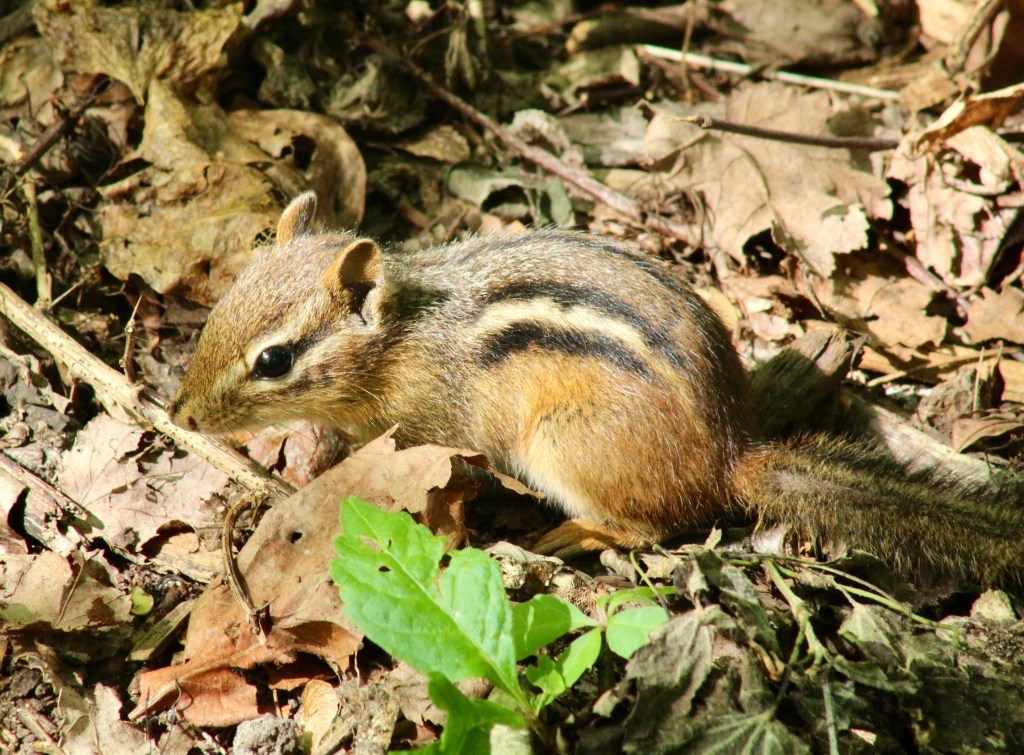
After arriving in the US on the afternoon of June 3rd, I was happy to be back at my summer home and to reunite with family for a few days. I also took up some of my other hobbies besides wildlife watching with my dad, including fishing and road biking. On June 6th, (last Monday) I was free for a birding trip. The obvious choice for a birding location for me was Mashomack. It’s been a special place for me to explore nature since I was really young and I know most of the trails like the back of my hand. I embarked on the 6-mile bike ride over to the preserve entrance, gathered all my gear up, and hit the trails to see what I could find. I decided to take the Green Trail, a 5-mile dirt track that loops around kettlehole bogs, old-growth woodland, salt marsh and open meadows and starts and ends at the reserve entrance. Throughout my entire 3-hour birding trip to the preserve, the dappled sunlight filtering through the tall deciduous trees along with the breezy views out to glittering Peconic Bay were truly breathtaking. Copious amounts of frenzied Eastern Chipmunks and quite a number of heavily-built Eastern Gray Squirrels kept me company throughout my expedition as they dashed from one side of the path to the other.

I’ve seen some interesting, non avian animals before at Mashomack including Snapping Turtles, Ribbon Snakes and Muskrats, just to name a few. In the first few minutes of my expedition in Mashomack, I had run-in with another interesting animal, this time a reptile, near a kettlehole bog. Kettlehole bogs, which are very common features of any northeast forest, were formed during the most recent glaciation– about 20,000 years ago– when massive ice sheets that covered the entirety of Canada and the northern United States started to retreat. In doing so, they carved shallow depressions in the ground that eventually filled with plant material and rainwater, and became known as kettlehole bogs. These small wetlands are Meccas to the animals of the forest, especially herpetofauna. As I strolled by a bog that was caressed by the trail, providing views into its lush interior, I spotted 3 Eastern Painted Turtles, an animal I’d never seen before on Shelter Island.


Afterward as I passed by a salt marsh, I saw a Great Egret foraging for fish (it was like a scene out of Mai Po and provided some nostalgia). Farther on, I observed a gaggle of Canada Geese a little ways out at sea, and a Downy Woodpecker amongst the twisted branches of Mashomack’s rich forest. All of these birds I’ve seen innumerable times prior, but they’re indigenous to the tiny sliver of America that I call home which makes them a special sight to see every summer I return here. I saw my first lifer of the day about a mile down the trail I took, in a deeper part of the woods– a large handsome sparrow known as an Eastern Towhee. They’re apparently common in New York State: it’s a shame I’d never seen one before then. The male towhee I startled was quite tame and put on a show for me as he attempted to impress a nearby female. Unfortunately, his actions didn’t pay off! As I walked through the preserve’s trails, I also ran into two large and protective Wild Turkey mothers and their babies (poults). I always love seeing Wild Turkeys– they’re really an iconic American animal, and are super common on Shelter Island!


The trail led me into one of Mashomack’s large open meadows that gives hikers and birders a break from the buggy, dense brush. These grassy clearings that litter the preserve are actually centuries-old farmland that has been recolonized by native grasses, shrubs and wildflowers over many decades and provides a superb habitat to multitudes of native birds. I saw quite a few neat species here including brilliantly-colored Eastern Bluebirds (a target species of mine; its a shame I couldn’t get a good photo of one), Yellow Warblers, Osprey, American Redstart, Barn Swallows, Chipping Sparrows and Tree Swallows.

Afterwards, I followed the snaking trail back into the woods for the remainder of the hike, until I reached the Manor House, a 19th-century farmhouse constructed by one of Mashomack’s owners. It was used as a hunting lodge in the 1960’s and 70’s but is now a meeting place for conservation officials from around the world. It is open to the public twice a year, and unfortunately today wasn’t one of those days, however it was still a beautiful scene last Monday with pleasant sea breezes and plenty of sun. Near the Manor House, I came across a Northern Mockingbird and had a brief encounter with my second lifer of the day, an Eastern Phoebe. There many grazing geese on the nearby lawn that were fun to follow and photograph. Until one hissed and charged full sprint in my direction for no apparent reason! (I was like 20 feet away from them) Geese are mean!


After getting my fair share of the geese and other local birds, I turned tail and headed home in the gathering dusk. In total, I would definitely say my first birding trip of Summer 2022 was a success, though nothing like a trip to Mai Po (although then again, there are extremely few places with a bird diversity like Mai Po!). I managed to nab 23 species including 2 lifers and a few target species. I also got some Northeastern specialties like Wild Turkeys, Eastern Bluebirds and Ospreys. I really enjoyed my walk through the beautiful mature hardwood forest of the preserve, the kettlehole bogs, the salt marsh, and the open meadows that define Mashomack. I leave for Utah on the 22nd for Boy Scout Camp and for one last chance to hang out with my Hong Kong Troop. But before then, I’ll be sure to return to Mashomack for some more wildlife watching. I probably won’t post again until July due to time constrains with people visiting and my Eagle rank. Thanks for reading as always and I hope you enjoyed!
-Bennett
Bird Species Recorded: (23 total, including 2 lifers)
Eastern Towhee (Lifer)
Eastern Phoebe (Lifer)
Osprey
Northern Cardinal
Downy Woodpecker
Great Egret
Chipping Sparrow
Blue Jay
Wild Turkey
Canada Goose
Mourning Dove
American Robin
Gray Catbird
Eastern Bluebird
Tree Swallow
Northern Mockingbird
Red-Winged Blackbird
Common Grackle
White-Breasted Nuthatch
American Redstart
Yellow Warbler
Barn Swallow
Brown-Headed Cowbird
Mammal Species Recorded: (2 total)
Eastern Gray Squirrel
Eastern Chipmunk
 Bennett Gardner Wildlife Watching
Leave a comment