
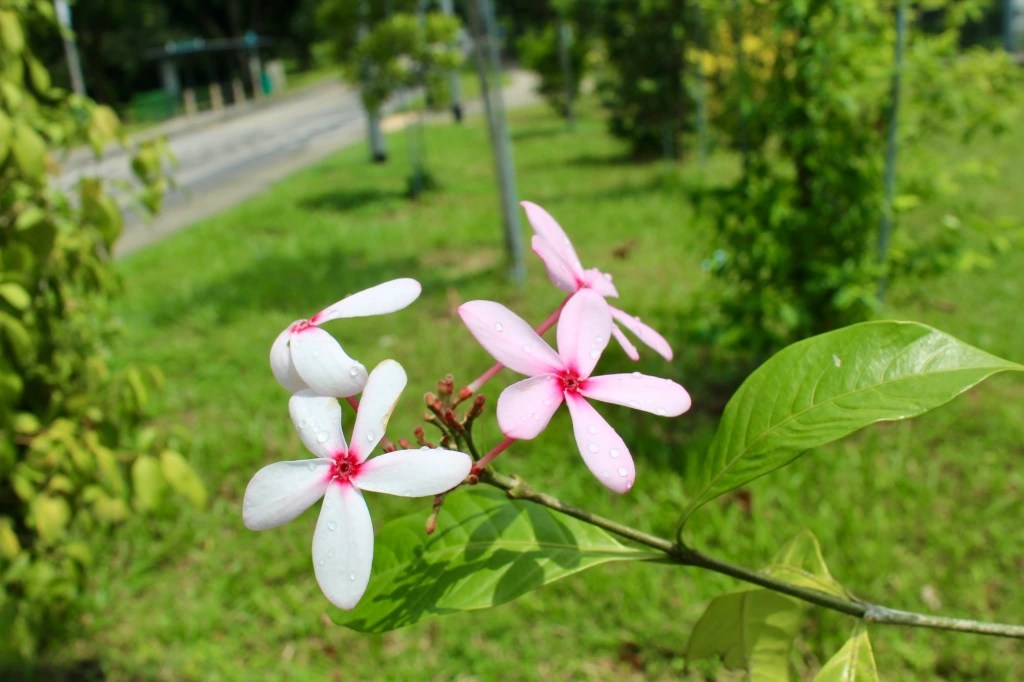
I arrived in Singapore with my family for the first time very early in the morning on the 31st of July, 2022. As of the publication date of this post (August 3rd, 2022), we’d already managed to see some of the sights and sounds of the city despite being jetlagged and grumpy. I for one was full of excitement to now be living in a city containing pristine tropical rainforest and diverse and abundant Indomalayan fauna.
Upon arriving to Singapore, I quickly planned a solo outing to Sungei Buloh Wetland Reserve, a coastal nature preserve housing numerous migratory birds, crocodiles, snakes, owls, and otters. This outing turned out to be a fantastic introduction to Singapore’s rich and varied biodiversity, and led me to embarking on countless more wildlife-watching expeditions in Singapore over the following four years.


I started my expedition to Sungei Buloh Wetland Reserve on the morning of August 1st, pumped to see some cool critters. Among my target species were monitor lizards, crocodiles and exotic birds as well as otters. The public transportation I took to the reserve (especially the MRT) was incredibly smooth, even when compared to Hong Kong, and after about an hour on 2 busses and a train, I found myself at the gate to these biodiverse wetlands.
It was noon and the midday tropical heat (although not as bad as I worked it up to be) caused me to pour with sweat as I pulled out my gear. Already I was enveloped in the cacophony of the rainforest; the ring of cicadas was simply overpowering. I could already see some distant birds as I made my way to the visitor center, eyes peeled for wildlife. My first avian species included some Javan Mynas foraging on the ground, followed by a lone Yellow-Vented Bulbul chirping on a tree branch.

Next to the visitor center was a small lake encrusted with water lilies. I almost immediately spotted a cool critter that I wasn’t expecting to see this soon: an Asian Water Monitor basking in the sun. One of the world’s largest lizards, these prehistoric-looking reptiles can grow to over 2.2 meters or 7 feet long! They are as comfortable in the water as they are on land, and seeing one in the wild was awesome. After the first monitor swam away, I took a stroll around the lake and found a few more before heading back to the main path.

As I strolled through the reserve, I kept my eyes peeled for more wildlife. Sungei Buloh Wetland Reserve is basically Singapore’s version of the Mai Po Marshes in Hong Kong, where I used to go birding. Both Mai Po and Sungei Buloh are parts of a network of wetland reserves stretching from Japan to Australia that protect migratory bird stopovers. Over 200 bird species, including many of the birds I observed in Mai Po, have been recorded at Sungei Buloh.
Having just moved to Singapore from Hong Kong after five years in the latter, I was excited that Singapore also had a premier wetland reserve for birding!

I made my way onto the Coastal Trail, which leads through coastal secondary rainforest, one of the four main habitats at Sungei Buloh along with mudflats, mangroves and brackish marshes. The rainforest was incredibly dense and damp, with towering Banyans and abundant Fishtail Palms making up the majority of the vegetation. I saw Ashy Tailorbirds, Sunda Pygmy Woodpeckers and more bulbuls here, along with some unique-looking butterflies and dragonflies.


After several minutes of walking through the rainforest, I reached the coastline. Almost as soon as I arrived there I spotted the partially submerged body of a colossal reptile swimming out in the bay. This was none other than my very first wild Estuarine Crocodile!
These astonishing creatures are part of a small resident population in Northwest Singapore. Experts think that the population of crocs here is the result of a few transient animals that migrated from Malaysia to Singapore in the 1990s. Crocodiles had previously been hunted and persecuted to near extinction in Singapore during the 20th century, so it’s great that they are returning.
Estuarine Crocodiles are the world’s largest reptiles and are infamous for being man-eaters, but are generally unwilling to attack humans unprovoked and prefer to prey on fish, other mammals and birds. The crocodile I saw disappeared too fast for a photo, however it was an amazing sighting, and one I won’t easily forget about!
As I walked along the Coastal Trail, tall mangrove trees began popping out on both sides, with many well-maintained boardwalks leading out onto the bay providing some nice vistas of Johor, Malaysia. On one of them I spotted a few Black-Nest Swiftlets in flight. Back on the main trail, a feral dog began following me for a bit which made me a little uncomfortable– feral animals in the wild can be dangerous, but the dog was relatively shy and departed into the nearby foliage shortly after.
There were many turquoise-hued Collared Kingfishers along the trail, some deep in the mangrove forest. Though kingfishers are notoriously hard for me to photograph, I managed to get a shot of one. Later on, I ran into two guys who were herping along the trail, keen on finding some snakes. We quickly ran into an Oriental Whip Snake, a cute, slender, tree-dwelling serpent. My camera wouldn’t focus so I wasn’t able to snap a photo, but it was another awesome reptile sighting, my third one of the day. Singapore has some seriously impressive herpetofauna for its size!

Along the coast, it was upsetting how much trash was washed up from nearby Malaysia. Poor trash disposal services in rural areas are a primary cause of such pollution in many oceans around the world.

I started walking with a friendly Bengali guy who spoke very broken English, but enough that I was able to understand him. Like me, this was his first time in Sungei Buloh and he was game to spot some animals as we trekked into the most biologically rich part of the reserve– a collection of former shrimp ponds that have since been reclaimed by nature. The area is carpeted in mangrove forest and speckled with bird hides, which have views out onto open marshes where many resident and migratory wading birds congregate.
A beautifully-designed second visitor center near this part of the reserve had some interesting birds, including Common Flamebacks (a type of woodpecker), Pink-Necked Green Pigeons, and Zebra Doves, all three of them lifers. We ran into tons of House Crows and many colorful, lively Plantain Squirrels as we walked around one of the biggest open marshes in the reserve. A tropical rainstorm began, although the canopy of the nearby trees provided more than enough cover to observe wildlife without getting soaked. I saw quite a few monitor lizards swimming in nearby bodies of water and crossing the path.


The walk around the marsh took about an hour, and as for wading birds we saw, I was not disappointed with the diversity or abundance of species, especially given that the migratory season in Singapore is winter.
I spotted Little Egrets, Gray Herons, Common Redshanks (a lifer), and reintroduced Milky Storks. The resident Milky Storks at the reserve are part of a reintroduction program that aims to bring this locally extinct and globally endangered bird back in Singapore. Some of the storks have hybridized with feral Painted Storks, which threatens the genetic purity of the small reintroduced population.


I finished the trail, which led back to the visitor center, and the guy (who’s name I didn’t catch), departed. I took a longer route back to the bus station at the reserve’s entrance to try and find the crocodile, but to no avail. I caught the bus and within an hour, I was back at my family’s hotel– hot, sweaty and tired, but satisfied. I was impressed with the wildlife I saw today (especially the crocodile), and I will certainly be back to Sungei Buloh in the future.
For a large city in particular, Singapore has absolutely loads of cool wildlife. Due to its greening efforts, its location near the equator and its preserved swathes of wildlife habitat, Singapore is among one of Earth’s most biodiverse cities. It is unsurprisingly a birding haven, with a large population of East Asian migratory birds (like Hong Kong), as well as a number of fascinating Southeast Asian rainforest species like hornbills, barbets, parrots and pittas.
The diversity and abundance of mammals and reptiles here exceeds Hong Kong and has opened doors for me to explore different types of wildlife watching other than birding– I look forward to going mammal watching more often and to start herping (reptile watching) here in the future! Note that for the first time I included a list of reptiles I saw on my outing, a testament to how impressed I was with their abundance in. Singapore.
I wish someday to work as a zoologist/conservationist in Southeast Asia (Borneo and the Malay Archipelago in particular), and Singapore could be a gateway to this career path due to its location and similar biodiversity, so it’s cool to be living here! Thanks for reading as always, and stay tuned for more posts,
-Bennett
*A lifer is a first time observation of a certain species for me
Bird Species Recorded: (17 total, including 10 lifers*)
Pink-Necked Green Pigeon (Lifer)
Zebra Dove (Lifer)
Milky Stork (Lifer)
Black-Nest Swiftlet (Lifer)
Sunda Pygmy Woodpecker (Lifer)
Common Flameback (Lifer)
Ashy Tailorbird (Lifer)
Javan Myna (Lifer)
Yellow-Vented Bulbul (Lifer)
Common Redshank (Lifer)
House Crow
Gray Heron
Little Egret
White-Breasted Waterhen
Collared Kingfisher
Asian Koel
Rock Pigeon
Reptile Species Recorded: (5 total, including 3 lifers)
Estuarine Crocodile (Lifer)
Asian Water Monitor
Oriental Whip Snake (Lifer)
Common Sun Skink (Lifer)
Red-Eared Slider
Mammal Species Recorded: (1 total)
Plantain Squirrel
 Bennett Gardner Wildlife Watching
Leave a comment