
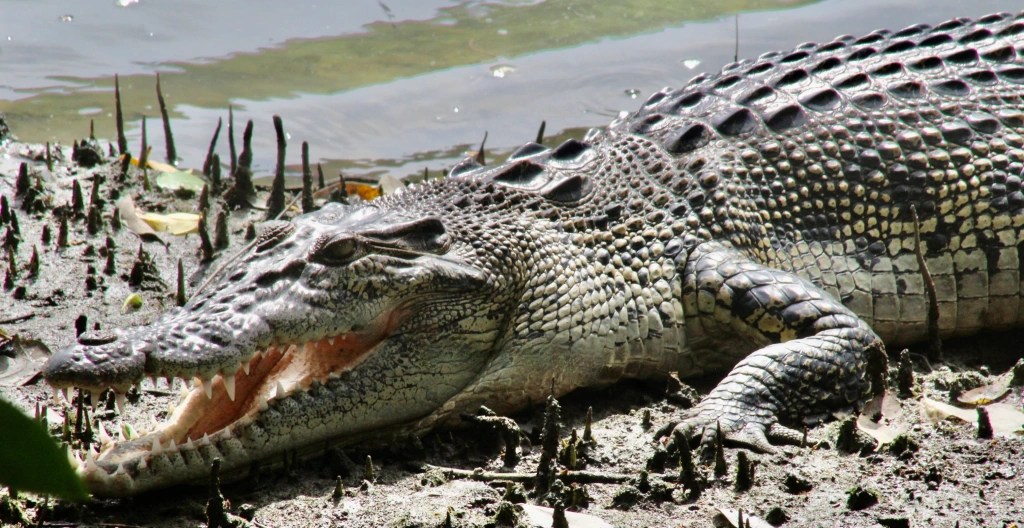
On the 30th of October, 2022, I embarked on a morning birding quest to Sungei Buloh Wetland Reserve with my then-girlfriend, determined to log some lifers. We planned to arrive at low tide, around 8:30am, in time to see Sungei Buloh’s famous migratory wading birds foraging on intertidal mudflats.
Altogether, we had a productive outing— 26 bird species including a bunch of lifers, 2 Estuarine Crocodiles, and possibly the greatest treat of the day: a male Smooth-Coated Otter! Singapore continues to prove to me how amazingly biodiverse Southeast Asia is, and every time I spend time in nature here it motivates me further to work in this area of the world someday.

My girlfriend and I made our way over to Sungei Buloh around 8:00am. As we were driving across Kraji Dam, which blocks off Kranji Reservoir (a former coastal estuary) from the ocean, a completely unexpected mammal made an appearance, running across the dam and into the reservoir: the globally threatened Smooth-Coated Otter! It was a really welcome treat to see in the wild.
As you probably know by now from reading my blog, seeing new and interesting species of animals, especially mammals and birds, is something I get real joy out of, and I was ecstatic as I snapped photos of the otter before it swam into the distance. What a cool encounter.


At 8:30am, we began our jaunt into the reserve. The migratory season in Singapore is here officially, and with Palearctic waders and other birds arriving in Southeast Asia in full-force, we were ready to take full advantage of the best month of the year for birding here: November.
The first leg of our walk yielded nothing really of note, beyond some squirrels, monitor lizards and common songbirds. The weather was rather nice and the lack of rain clouds was certainly a plus (especially in Singapore’s hot, wet, equatorial climate). As soon as we reached the second visitor center, the entrance to Sungei Buloh’s mudflats, we geared up and got into bird-spotting mode. We spied some Barn Swallows (a first-time sighting for me in Singapore), and Pacific Swallows catching insects near the bridge over to the mudflats and main wetland area.
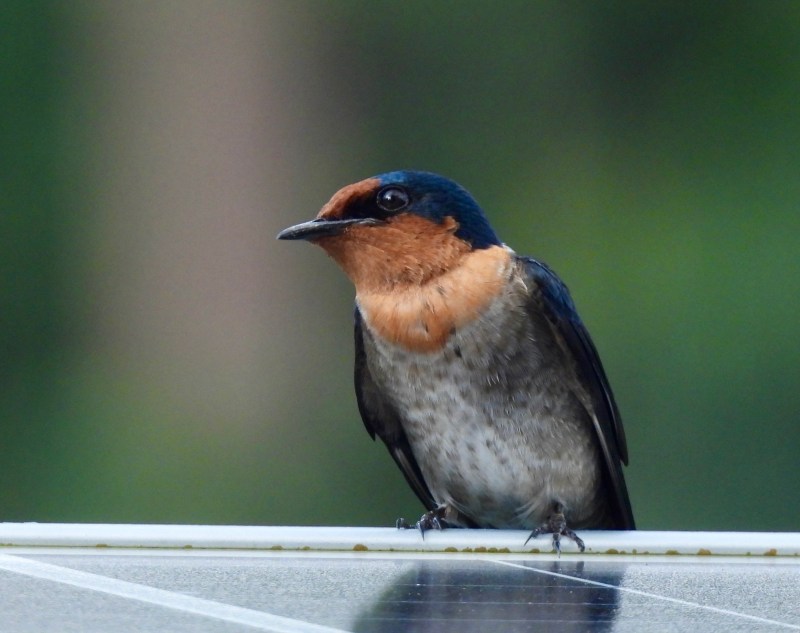
As we crossed the bridge, we scanned the shoreline for crocodiles. As it was low tide, the reptiles would be using the exposed land to bask in the morning sun before it became submerged with the rising tide. Right off the bat we noticed one of these toothy predators under a mangrove tree; a smaller individual but nonetheless an awesome sighting. It’s remarkable that crocodiles can coexist with people here in Singapore. At the same time, the presence of massive, prehistoric predators gliding through the water channels of a major city understandably makes many uneasy.
Our second crocodile was across the bridge and resting in between some mangrove roots. This one was larger than the first and much closer to my girlfriend and I. A small, wooden fence separated us from the croc but we nevertheless exercised caution while observing the toothy reptile. My girlfriend dubbed this one “Cornelius”:

Along the trail that circumvents the mudflats, there are many bird hides for observing avians in. Quite a few fellow birders were out and about today, and they helped with species identification while scanning the silty expanse for waders. The birds were here though! My last trip to Sungei Buloh in August yielded a few resident waders, but today was a different story.
There were absolutely mountains of birds spread far and wide over the mudflats, giving me nostalgia of the mudflat hides last spring in Mai Po. Not only was the sheer quantity of waders high, but the diversity wasn’t disappointing either. In the hour and a half or so that we spent skirting around the mudflats, going in and out of hides and noting species we saw with excitement, we listed a total of 18 bird species. Additionally, we were lucky today, seeing several uncommon birds among the more common wader species. Some interesting species we saw included….

….Tons and tons of Common Redshanks, Whimbrels, Pacific Golden Plovers, egrets, herons and Milky Storks. My girlfriend found the Pacific Golden Plovers adorable; when we stopped at a hide next to a flock of these cute little shorebirds, we enjoyed watching them go about their business for a few minutes……


……We also saw a few Common Sandpipers, Terek Sandpipers and Common Greenshanks (all of these are firsts for me in Singapore, I marked them as “Singapore Lifers” in the bird list at the end of the post)…..


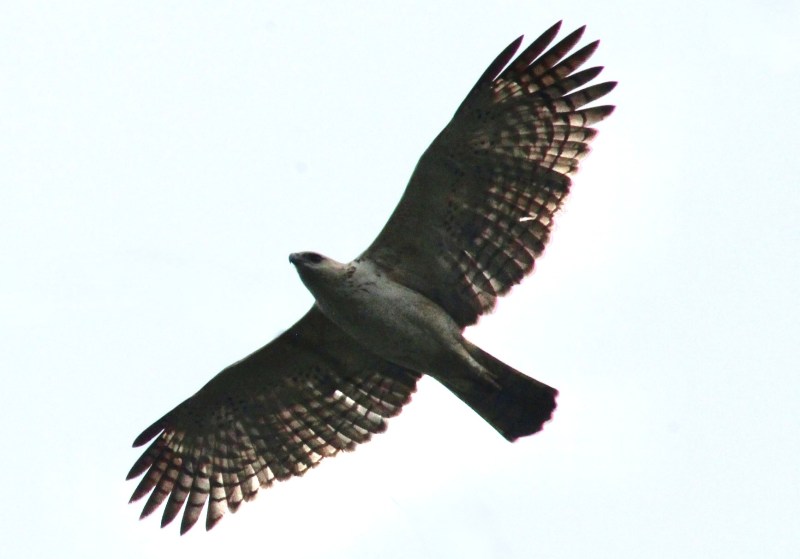
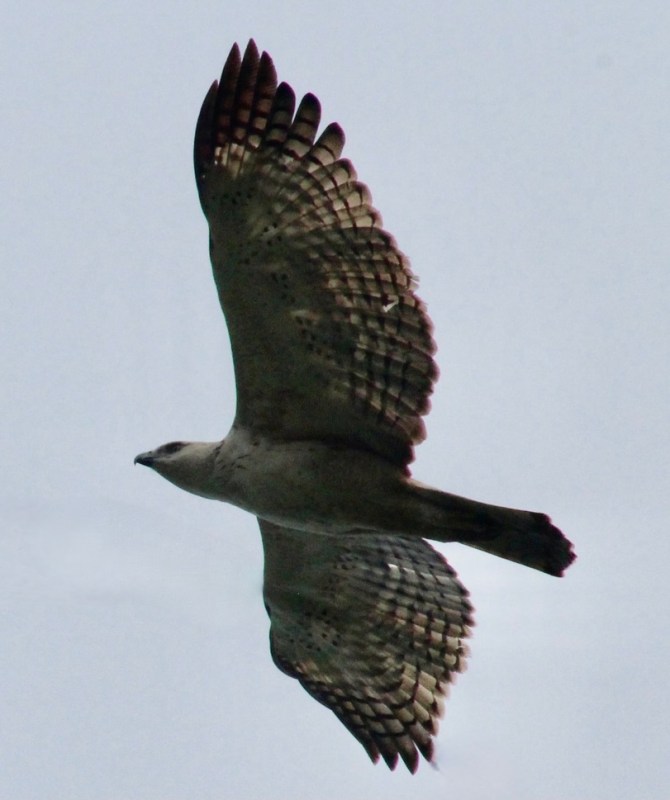
After we circled the mudflats, both of us thoroughly satisfied with our bird count, we headed over to the reserve’s Mangrove Boardwalk, which, as the name implies, brings visitors through one of the deepest parts of Sungei Buloh’s dense mangrove forests. On the way there, as we crossed the bridge over to the visitor center, a Changeable Hawk-Eagle, a lifer for my girlfriend, swooped down almost to ground-level, allowing for me to get some nice photos. These raptors are quite common in Singapore but are still a pleasant sight to see.
The tide was incoming and had flooded the roots of the mangroves already; we were on the lookout for birds. I had seen a Collared Kingfisher at the mudflats but my girlfriend had missed it, so I wanted to spot another.
However, we were both in for a surprise as a White-Bellied Sea Eagle flew overhead. Another first for me in Singapore and a beautiful bird in all aspects, the raptor was gone as quickly as it appeared.
We headed back to the wetlands visitor center, spotting a Pink-Necked Green Pigeon on our way out. But we weren’t done seeing interesting species yet. As we walked along the path that led to the parking lot from the visitor center, past some tall rainforest trees, a group of birders was stopped and was snapping photos of something high up in the vegetation.
Peering through our binoculars, we were shocked to see two Buffy Fish Owls resting on a branch some 50 feet up a tree! While widespread in Singapore and one of few diurnal owls, Buffy Fish Owls are secretive and uncommon, so seeing two in one place was really lucky. We soaked in the encounter for a few minutes before departing, very happy with how lucky we were. We walked to the main road and were picked up shortly after.


I would say without a doubt that this has been my best birding and even wildlife watching outing in Singapore so far! The sheer luck we had in seeing so many iconic and elusive creatures in one place at one time is proof of the sheer amount of biodiversity of Singapore. I look forward to taking full advantage of the migratory season for staking out new spots for birding in search of amazing avians! Thanks for reading as always, and stay tuned for more adventures,
-Bennett
*A lifer is a first time observation of a certain species for me
Bird Species Recorded: (26 total, including 1 lifer and 7 Singapore lifers*)
Buffy Fish Owl (Lifer)
Changeable Hawk-Eagle (Singapore Lifer)
White-Bellied Sea Eagle (Singapore Lifer)
Terek Sandpiper (Singapore Lifer)
Common Sandpiper (Singapore Lifer)
Pacific Golden Plover (Singapore Lifer)
Common Greenshank (Singapore Lifer)
Barn Swallow (Singapore Lifer)
Little Heron
Common Redshank
Whimbrel
White-Breasted Waterhen
House Crow
Javan Myna
Asian Koel
Ashy Tailorbird
Pacific Swallow
Milky Stork
Gray Heron
Great Egret
Little Egret
Pink-Necked Green Pigeon
Zebra Dove
Spotted Dove
Collared Kingfisher
Black-Naped Oriole
Mammal Species Recorded: (2 total, including 1 lifer)
Smooth-Coated Otter (Lifer)
Plantain Squirrel
 Bennett Gardner Wildlife Watching
Leave a comment