
Back in mid-October of this year, after our fall break family trip to India was unfortunately cancelled (we didn’t have visas!), my family left it to me to plan a backup trip. Though I had more than a few wildlife-rich localities in mind, I decided on one spot in particular that I believed would appeal to everyone.
Located 1,300 meters (4,300 feet) above sea level in the misty central mountain range of Peninsular Malaysia, the summit of Fraser’s Hill is heaven on Earth for birders. Home to a myriad of jewel-like montane birds, I’ve wanted to explore the region since moving to Singapore. My target species before the trip included the gorgeous Long-Tailed Broadbill, Fire-Tufted Barbet, and Red-Headed Trogon. In addition to hitting my targets, I aimed to add as many new birds to my life list as possible. Needless to say, I was certainly successful, ending the trip with 18 lifers, 2 of my 3 target birds and a surprise mammal sighting!
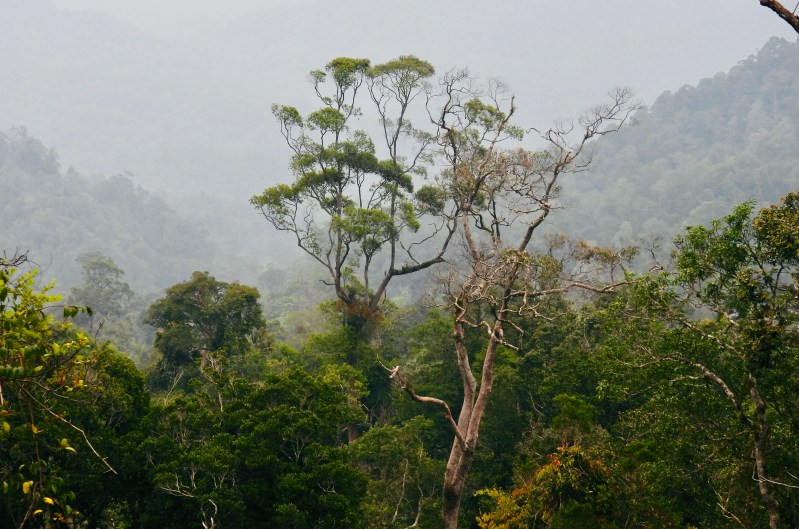
As for Fraser’s Hill itself, the dome-shaped mountain was discovered by a Scottish tin prospector in the late 1800s and later became a leisure destination for British aristocrats and officials during Malaysia’s colonial era. Much of the original architecture remains, and together with its lush vegetation and mild highland climate, it is reminiscent of the English countryside. My family loved this aspect of Fraser’s Hill: a break from the oppressive sauna of Singapore was a welcome treat!
After figuring out our accommodations (the lovely Smokehouse Inn), and our method of transportation (private car), we set off. Although initially worried about our family car’s ability to pull its weight on the occasionally rough roads of Malaysia, my parents agreed it would be the best mode of travel. We decided to break up the journey with a night in Kuala Lumpur (Malaysia’s capital). It was around five hours from Singapore to KL on relatively well-maintained highways, then another two hours uphill through virgin cloud forest; one of the last great expanses of it Malaysia.
I’d never been on a road trip in Asia before, and it was an interesting experience. We cleared customs at the Singapore Woodlands checkpoint, drove through the city of Johor Bahru, then four hours through rural countryside and palm oil plantations to the capital. We took our time the next day, setting off for Fraser’s Hill a little after noon.
As we meandered up the forest-clad mountains that form Malaysia’s central spine, the temperature steadily dropped and the vegetation gradually transitioned from farmland to pristine rainforest. This protected block of habitat is one of the very last homes of the Malayan Tiger, Malayan Tapir, Asian Elephant, and Siamang gibbon in Malaysia. It was a trip back in time to when virtually the entire country was cloaked in virgin jungle.
At around 4pm, we entered the mist-shrouded Fraser’s Hill and gazed upon its many inns and gardens. A 10-minute or so drive from the entrance of the hill station was our homestay, the Smokehouse Inn. The inn is an aesthetic piece of colonial architecture built 100 years ago, overlooking forested slopes and distant peaks.
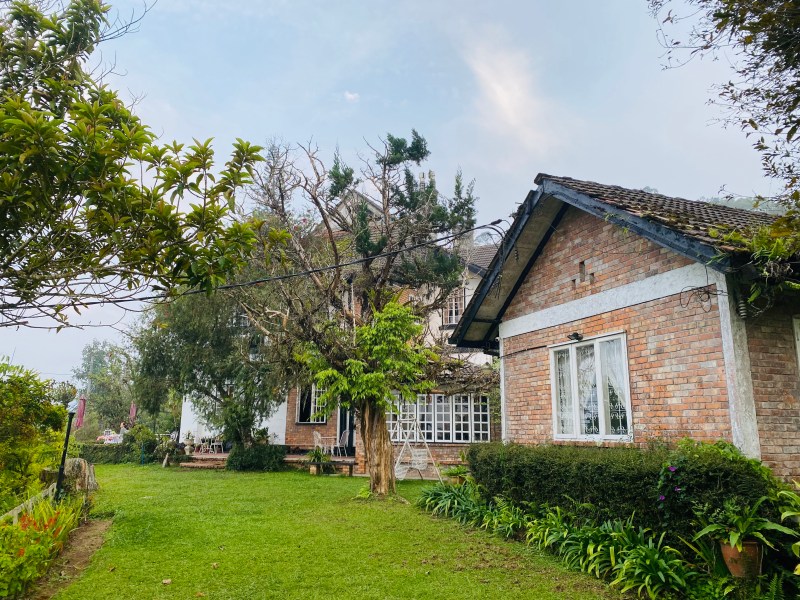
The staff at the Smokehouse were pleasant and helpful and did their part to ensure we had a good experience. The inn manager even lent me a copy of the Birds of Fraser’s Hill after questioning him about the bird species around us!
The food at Smokehouse Inn was excellent and consisted of a variety of homemade dishes inspired by classic UK delicacies. I can’t recall having better British cuisine anywhere.
Our rooms were comfy, though a bit musty due to the humid climate of the region. Despite the inn having no air conditioning, we slept like babies for the two nights we stayed there. Open windows provided all the chilly, refreshing mountain air we needed for a decent night of sleep! The mild days and cool nights of the hill station were beloved by my entire family.
Overall, the Smokehouse was great and I highly recommend it to anyone planning a trip to Fraser’s Hill. At the same time though, I was there for the birds, not the accommodation!
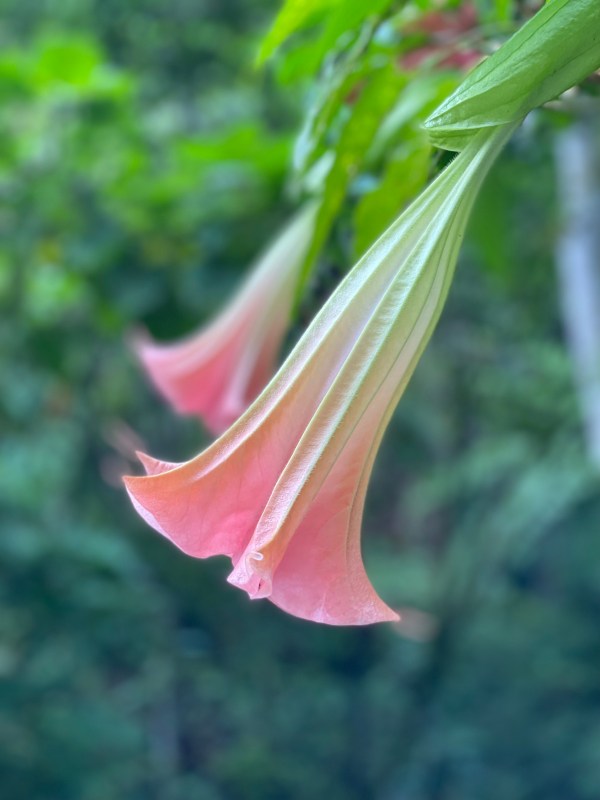
Most of the birding I did the next few days was solo, although I often asked other birders staying at the Smokehouse for tips of where different avian residents were hiding. I sometimes trailed the birders for a few minutes to increase my chances of locating rarities either by call or sight.
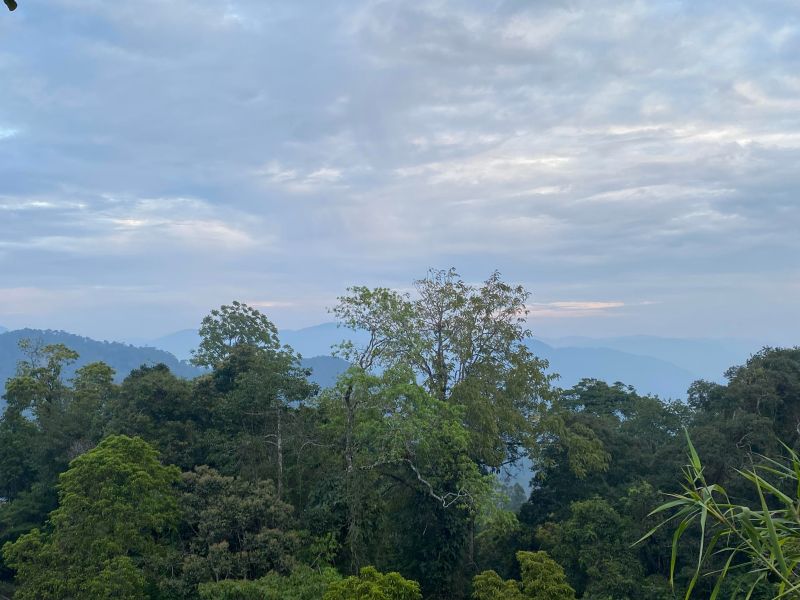
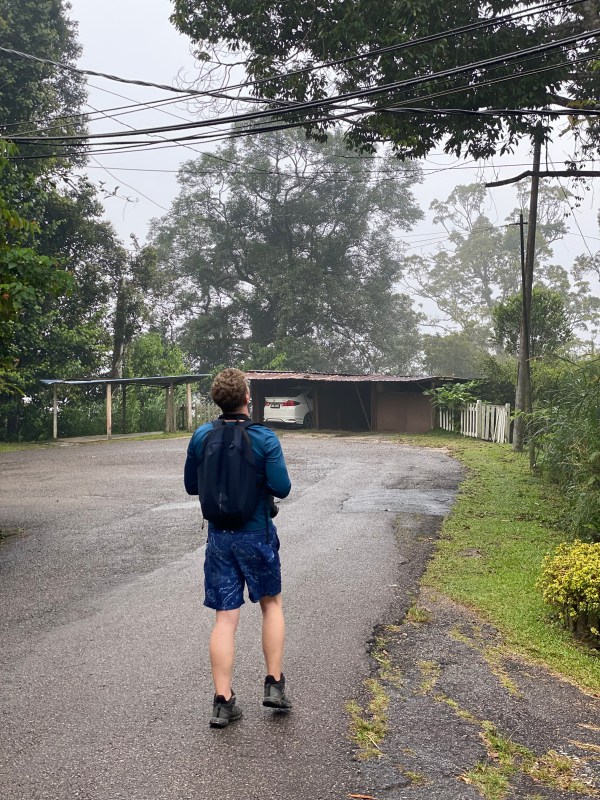
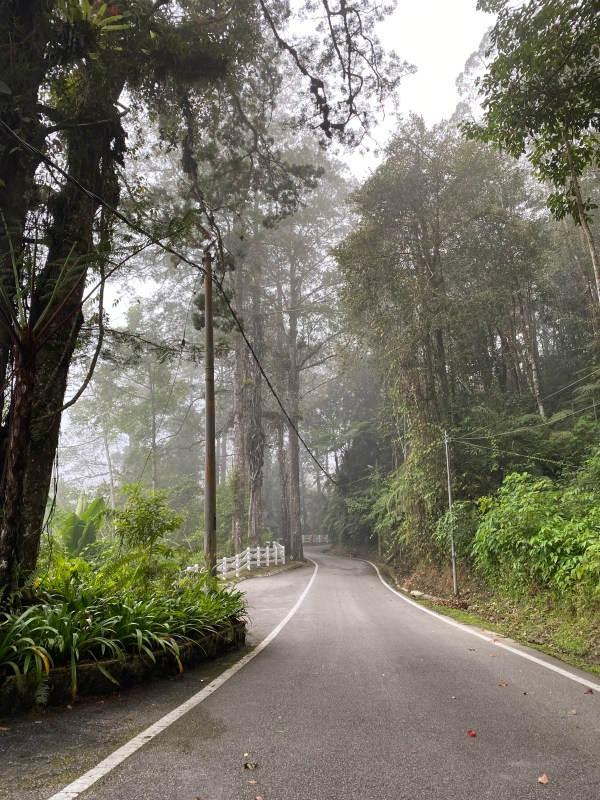
There was something truly therapeutic about strolling up and down the asphalt roads of the hill station, enclosed by cloud forest, with my binoculars and camera in-hand. The only thing breaking the stillness of the cool, misty air was raucous birdcall or an occasional vehicle.
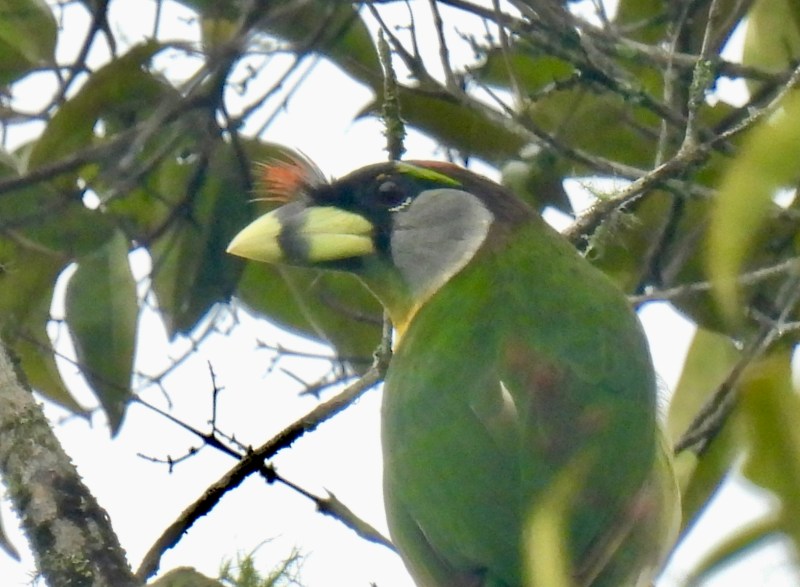
On my own, it was quite hard to locate and identify the often skulking and fast-moving birds of the forest. The trees would go quiet until I happened upon a multi-species flock. And as soon as that happened, the birds would would disappear as fast as they appeared. I often barely had enough time for a quick photo. As was the case with this gorgeous Fire-Tufted Barbet I tracked down on the second day. I followed its cicada-like call to a tree rather far from the road; it perched long enough for a grainy portrait. I was really stoked to have seen one of my targets, though!
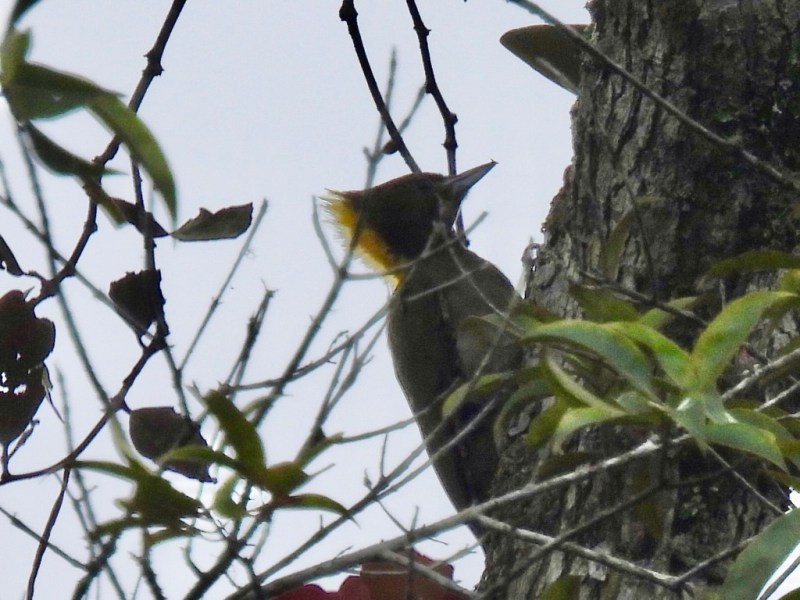
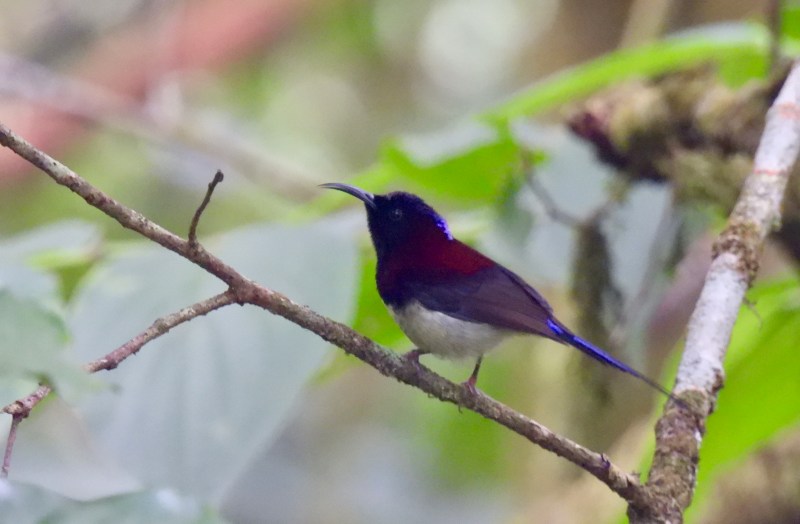
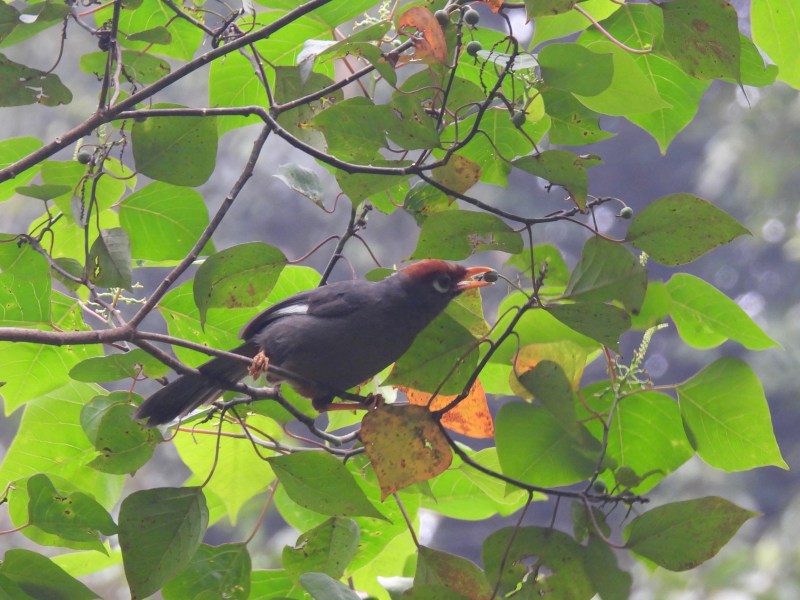
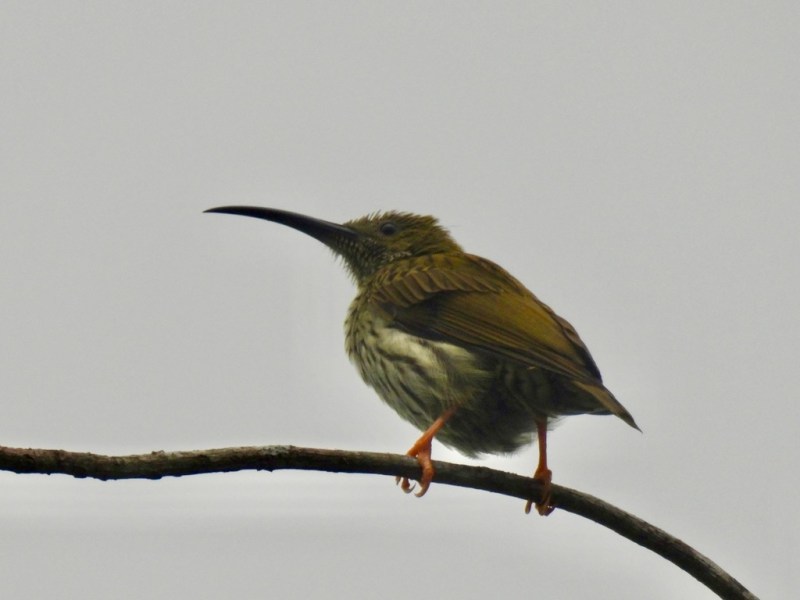
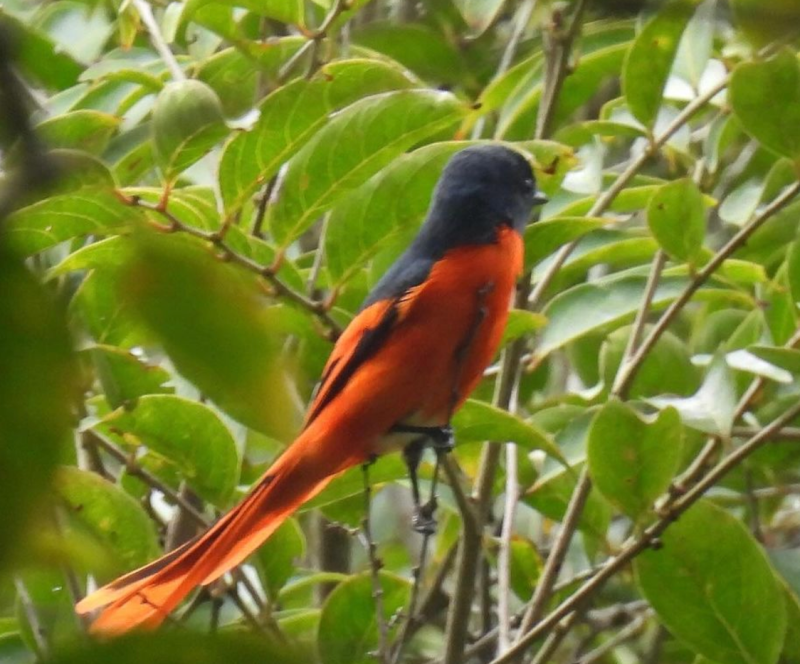
The first afternoon, I spotted a variety of montane birds within relatively close proximity to the inn. My finds included Black-Throated Sunbirds, Streaked Spiderhunters, Gray-Chinned Minivets, Mountain Bulbuls, Fire-Breasted Flowerpeckers, a Greater Yellownape, and Chestnut-Capped Laughingthrushes.
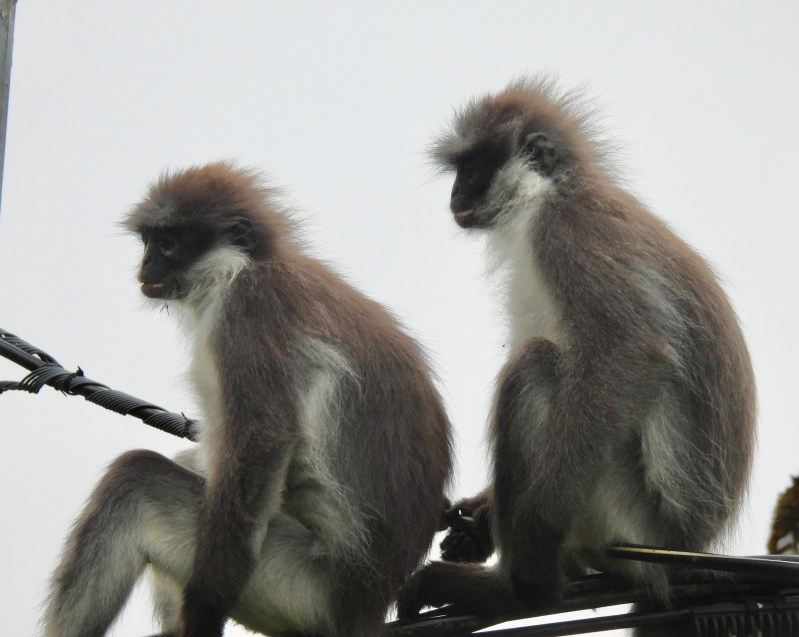
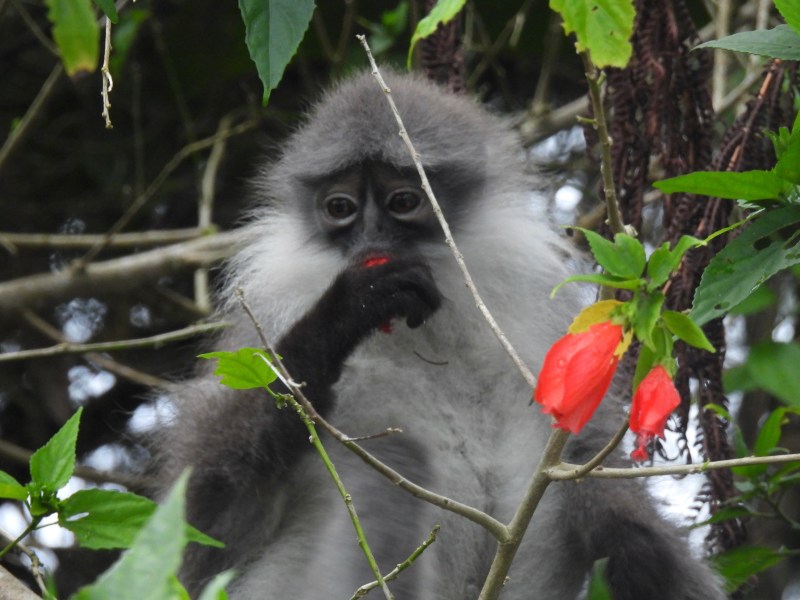
When I got back to the Smokehouse, I was in for a show. Two White-Thighed Surilis, a locally common species of colobine (leaf-eating) monkey were using the inn’s garden to cross between two patches of forest. I actually saw that particular troop of surilis multiple times over the next two days, and even spent 20 minutes watching them chow down on hibiscus flowers on the nearby roadside.
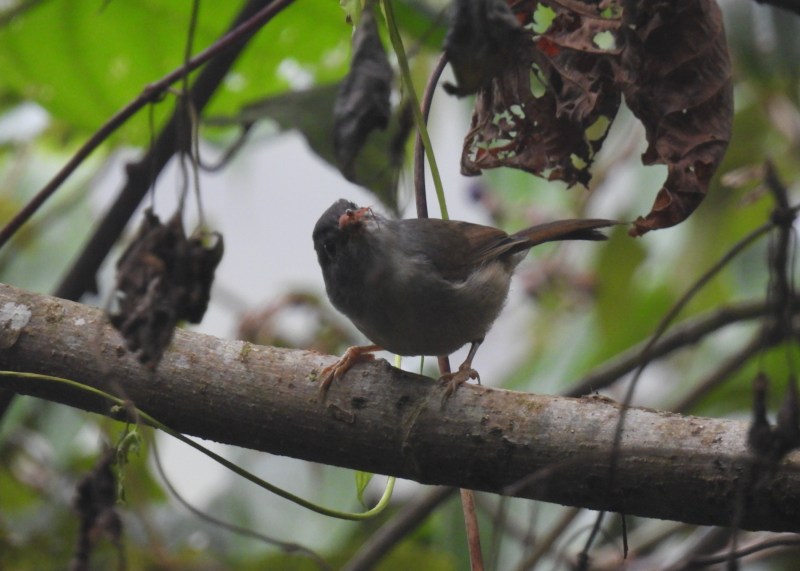
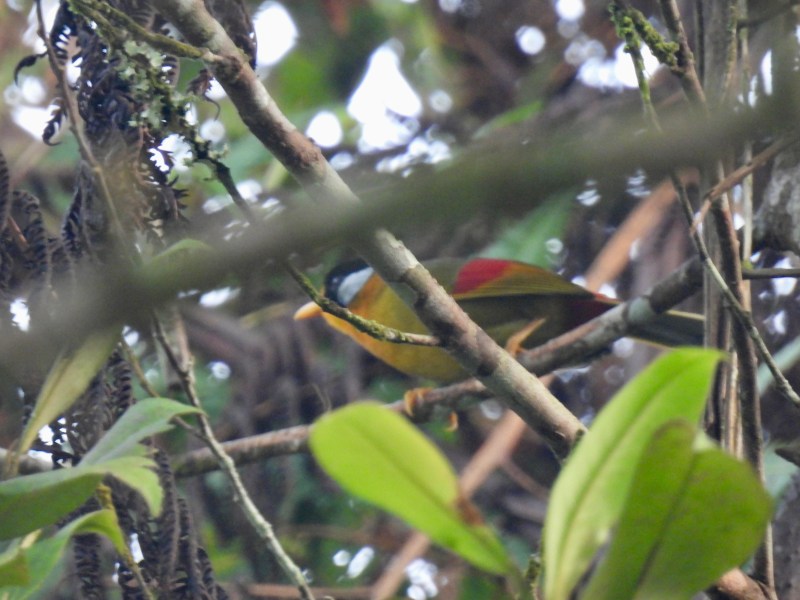
The day ended well, and I got myself up early the next morning for more birding. I ventured much farther out than the previous afternoon, and saw a new array of avians. Mountain Fulvettas, probably the most numerous bird of the hill station, formed foraging flocks with Long-Tailed Sibias, Lesser Racket-Tailed Drongos, and colorful Silver-Eared Mesias, a species I enjoyed observing in the forests of Hong Kong. In addition, I spotted a massive Mountain Imperial Pigeon on a tree branch, and a Little Cuckoo-Dove lapping up minerals on an exposed patch of sediments.


Back at the Smokehouse, I was wolfing down breakfast with my family when along came one of my most indelible wildlife encounters since moving to Singapore: a group of wild Siamangs!! These endangered primates are the largest of the gibbons (lesser apes), and maintain treetop family territories with loud calls that signify to other groups of Siamangs to stay out. Their calls are distinctive, and start with mellow “wow” notes, progressively elevating in volume and tempo until consuming the entire forest in a lively chorus.
I heard the Siamangs calling about midway through breakfast, and quickly leaped to my feet, running down to the road that overlooks part of the forest to try to pick out any individuals. And there! About 200-300 feet away, rapidly moving through the canopy, were two jet-black Siamangs.
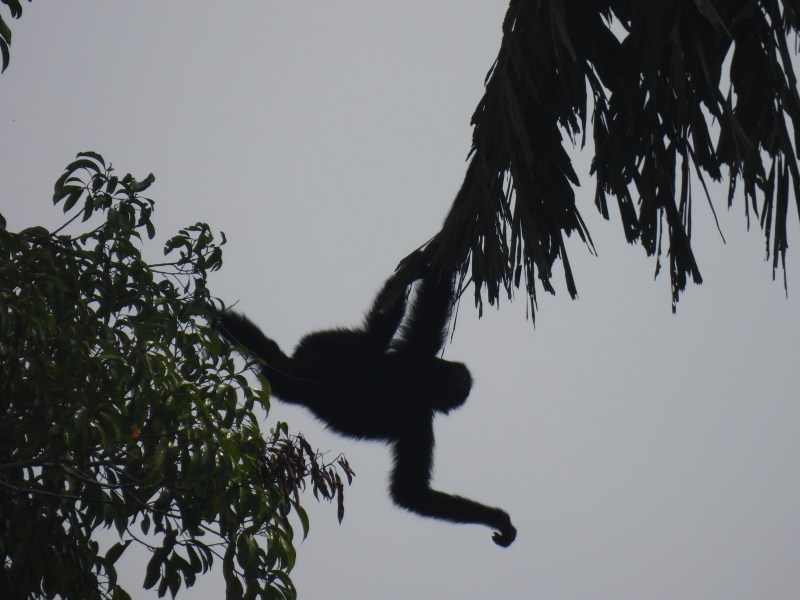

It was such a treat to see these guys in the wild, a dream of mine since I was a kid. But they weren’t the only primates around. Troops of Long-Tailed Macaques and Dusky Leaf Monkeys started filling the trees nearby the Siamangs. It was a sight to behold.
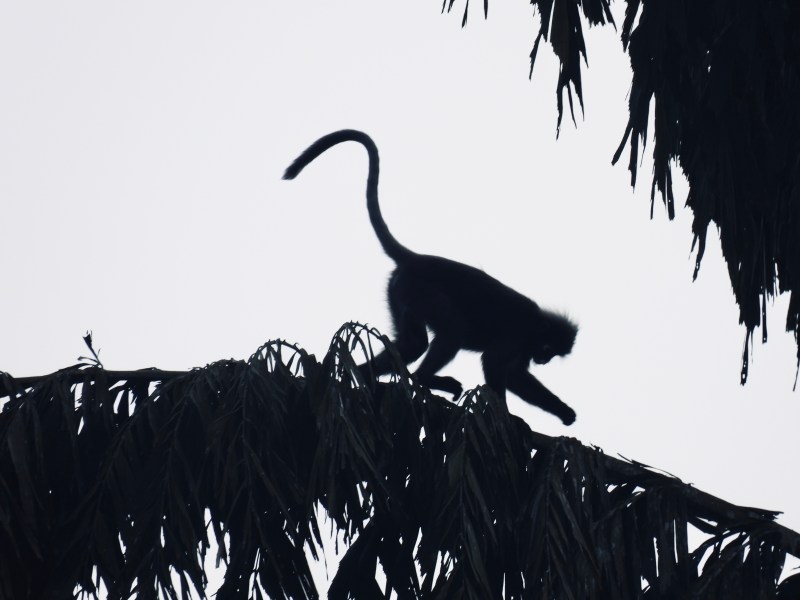
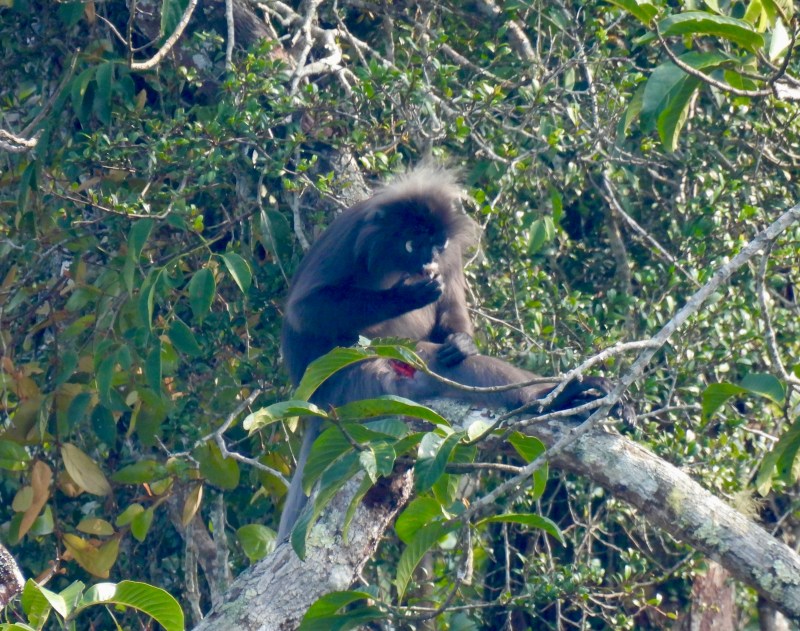
The Siamangs and langurs were excellent However, it wasn’t our first breakfast at Fraser’s Hill that was interrupted by wildlife. The next morning, a huge male stag beetle fell onto the table of a family next to us! Though it understandably scared them, I was fascinated, and carried the beetle over to safety, spending a few moments handling the captivating insect. This particular stag beetle species was Odontolabis castelnaudi, as I later found out after using iNaturalist for an ID.
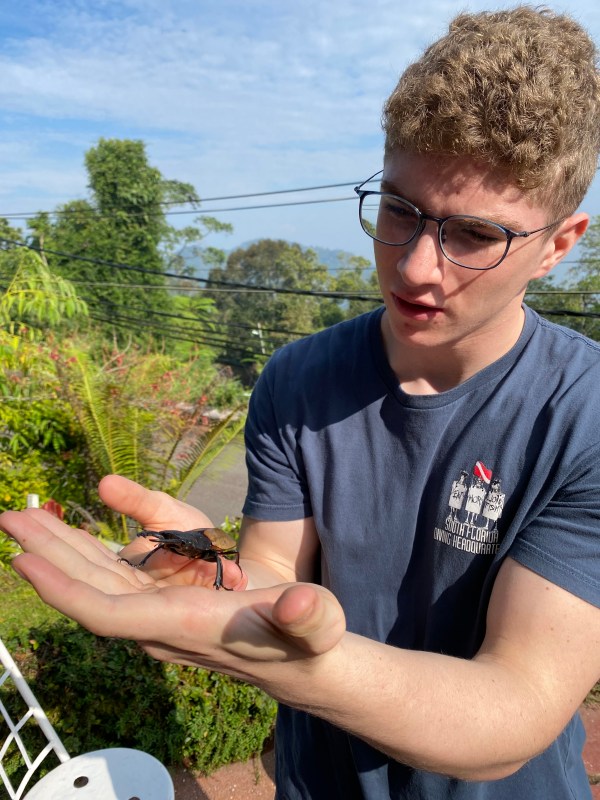
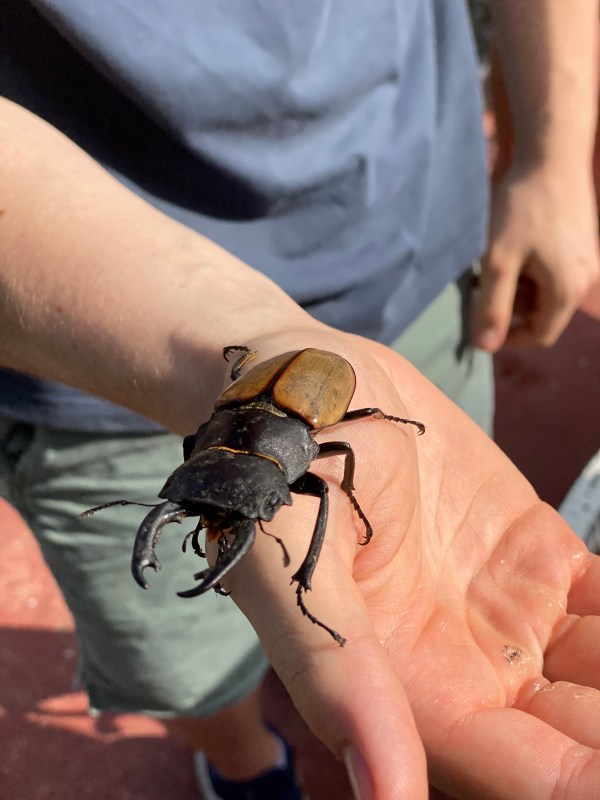
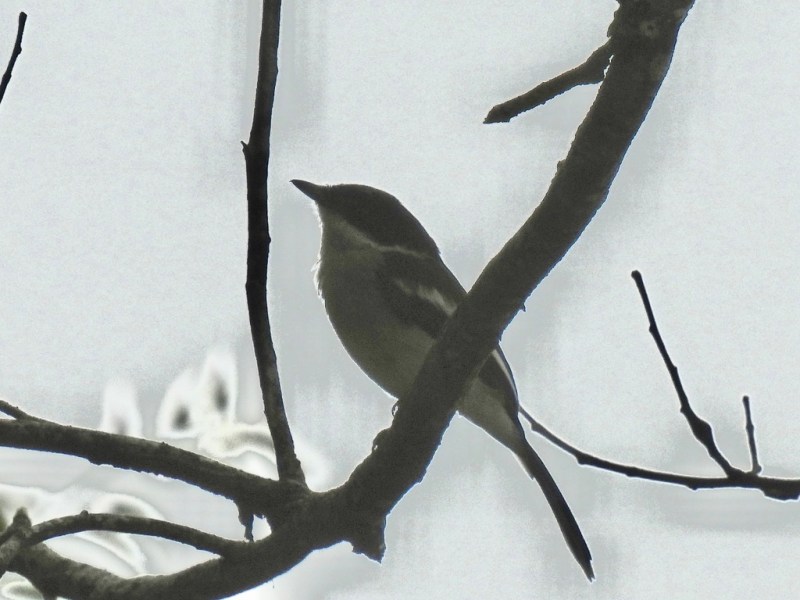
The afternoon of our second day at the hill was rainy. My family did a short hike, attempting a longer one, but opting out due to the poor condition of the trail and numerous leeches. I spend the latter part of the afternoon birding, and saw two Fire-Tufted Barbets along with a couple of new species, like this Bar-Winged Flycatcher-Shrike:
That night, the rain and chilled air made our inn feel very cozy. I slept better than I had in months.
The next morning, I was up at dawn to track down at least one more of my targets for the trip: either a broadbill or trogon. I walked to the trailhead my family visited yesterday, after hearing it was a productive spot for the species I wanted to see. A couple birders I met the day before were there, and we scuffed along the edge of the forest, listening for the calls of broadbills and green jays.
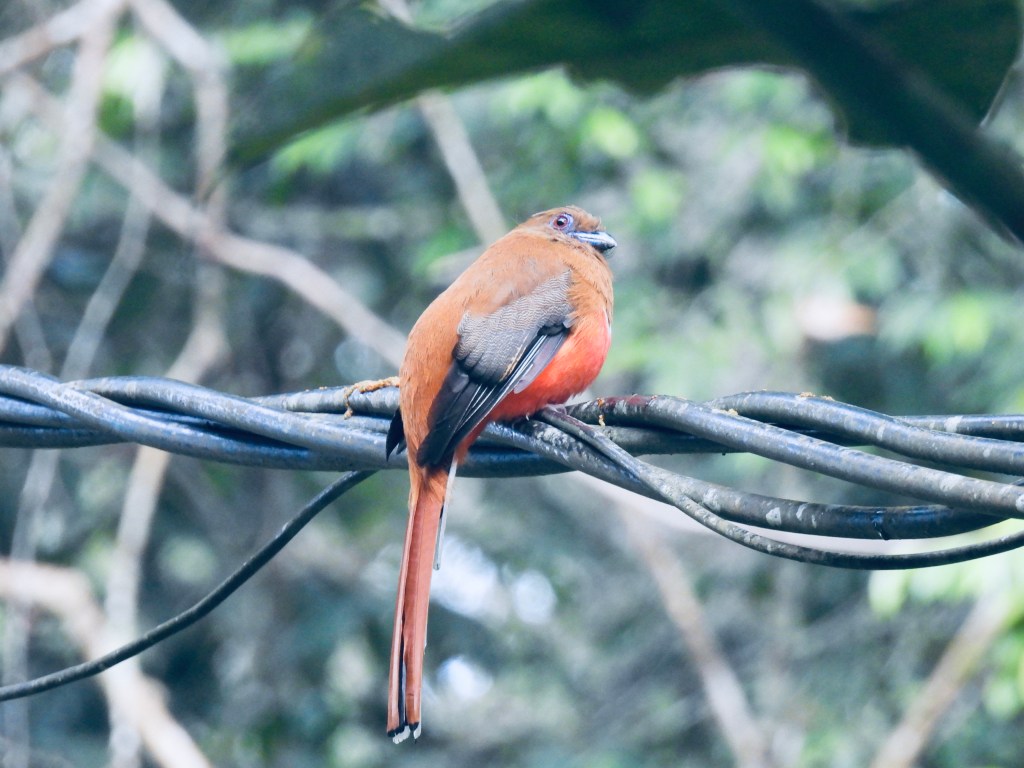
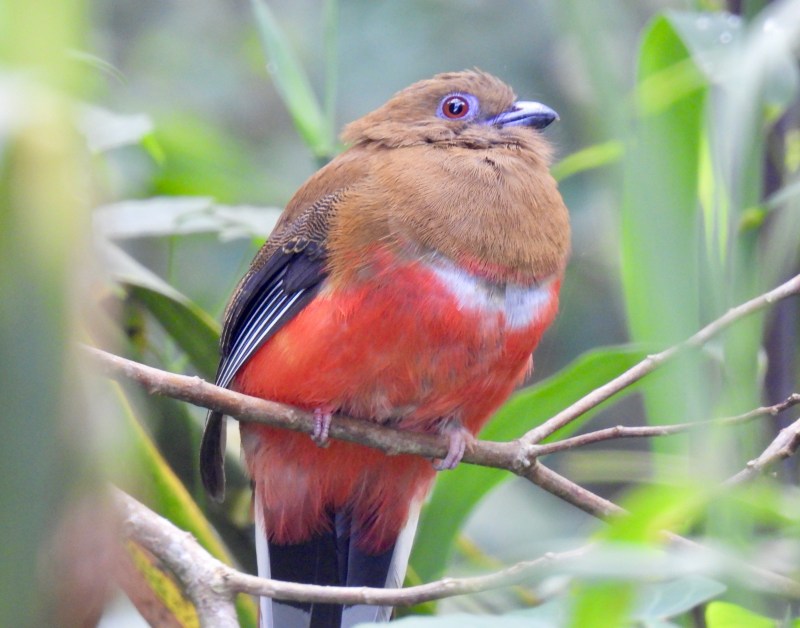
At a certain point, several chattering songbirds flew past us in a mixed-species flock, and during this time I noticed another, larger bird perched on a slim branch. Upon farther inspection, it was a female Red-Headed Trogon, one of my targets! Trogons are one of the true avian gems of the rainforest, both elegant in appearance and difficult to locate due to their reclusive, stationary nature. I spent probably 10 minutes photographing the near-motionless Red-Headed Trogon before she took off deep into the forest.
After getting my final fill of montane birds that morning, I walked up the road to the Smokehouse Inn. After breakfast, my family embarked on the long drive back to Singapore, concluding our productive 3-day trip to Fraser’s Hill. Not only was it an excellent birding vacation, but a chance to see a habitat and ecosystem on the very brink of collapse. As I’ve mentioned in previous posts, the Southeast Asian/Oceanian region is probably my favorite place on Earth to explore due to its incredible collection of unique species found nowhere else. I really hope to study here as a zoologist and conservationist.
Sadly, so much of the natural vegetation of Southeast Asia has already been, and continues to be, thoughtlessly destroyed for quick money in the form of palm oil or timber. The pristine rainforests and diverse wildlife of areas like Fraser’s Hill are now such a rare sight across the region, and I was grateful to have seen this montane ecosystem in a relatively unaltered state.
Unfortunately, Fraser’s Hill too is under threat of careless and unnecessary commercial tourism development that jeopardizes its fragile montane biota. As forest is converted into hotels and golf courses, encountering Siamangs and elusive montane birds while strolling through majestic, virgin cloud forest may soon only be distant memories of the Fraser’s Hill that I visited. The government of Malaysia must step up and enforce stricter conservation measures around the hill station so the planned destruction of this endangered ecosystem doesn’t come to fruition.
On a side note, if you’re wondering why I haven’t posted in awhile, it’s because I’ve been really busy this semester and didn’t spent as much time as I wanted to pursuing my interests. That is set to change next semester with my SAT and a lot of school coursework finally out of the way. Australian universities (my target schools) are a straight shot away! Thank you for reading as always and stay tuned for my next post,
-Bennett
Bird Species Recorded: (30 total, including 18 lifers)
- Red-Headed Trogon (Lifer)
- Fire-Tufted Barbet (Lifer)
- Large Cuckooshrike (Lifer)
- Greater Yellownape (Lifer)
- Mountain Fulvetta (Lifer)
- Black-Throated Sunbird (Lifer)
- Streaked Spiderhunter (Lifer)
- Mountain Bulbul (Lifer)
- Orange-Bellied Leafbird (Lifer)
- Lesser Racket-Tailed Drongo (Lifer)
- White-Browed Shrike-Babbler (Lifer)
- Fire-Breasted Flowerpecker (Lifer)
- Chestnut-Capped Laughingthrush (Lifer)
- Long-Tailed Sibia (Lifer)
- Mountain Imperial Pigeon (Lifer)
- Little Cuckoo-Dove (Lifer)
- White-Throated Fantail (Lifer)
- Bar-Winged Flycatcher-Shrike (Lifer)
- Gray-Chinned Minivet
- Asian Brown Flycatcher
- Large-Billed Crow
- Glossy Swiftlet
- Silver-Eared Mesia
- Oriental Magpie-Robin
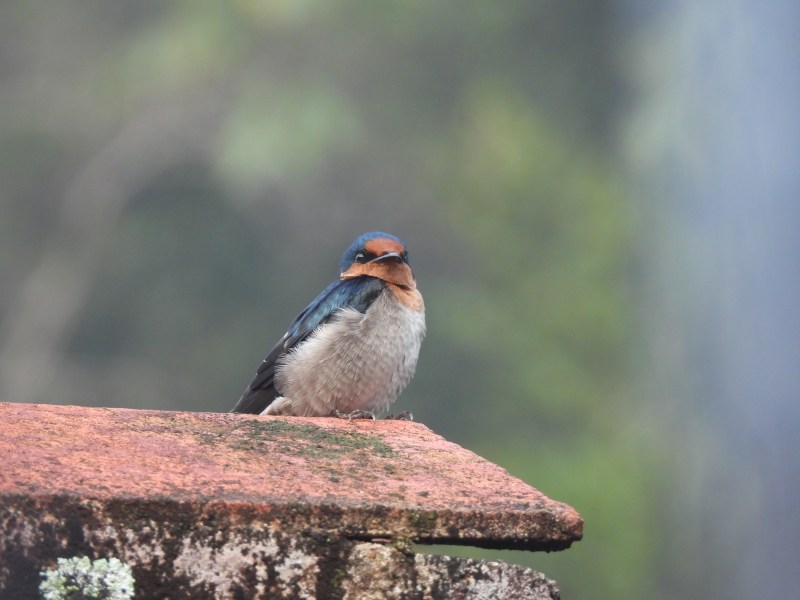
- Pacific Swallow
- Oriental Honey Buzzard
- Emerald Dove
- Yellow-Vented Bulbul
- Gray-Throated Babbler
- White-Bellied Erpornis
Mammal Species Recorded: (8 total, including 5 lifers)
- Siamang (Lifer)
- White-Thighed Surili (Lifer)
- Gray-Bellied Squirrel (Lifer)
- Himalayan Striped Squirrel (Lifer)
- Dusky Leaf Monkey
- Sunda Pig-Tailed Macaque
- Long-Tailed Macaque


 Bennett Gardner Wildlife Watching
Leave a comment