
Out of the three reserves I visited on my 2024 Sulawesi mammal adventure, my favorite by far was Hungayono Forest. This rarely-traversed but spectacular expanse of hilly primary rainforest, hot springs, and limestone caves constitutes part of the western section of 2,871 km² Bogani Nani Wartabone National Park, and is a paradise for Sulawesi’s endemic wildlife. I spent one full day in Hungayono on my Sulawesi trip (Day 3) and saw five mammal species, including Celebes & Whitish Dwarf Squirrels, Gursky’s Spectral Tarsier, Sulawesi Horseshoe Bat, and my main target species, the Gorontalo Macaque.

Hungayono Forest boasts stunning scenery, is a world-class birding destination, and is also surprisingly good for mammal-watching. With very few foreign visitors to the reserve, Ono, myself, and our mandatory park ranger guide, Upan, had the place entirely to ourselves!
It was an adventure just getting to Hungayono Forest from Tangkoko—first a twelve-hour overnight drive to the village outside the park, followed by a ten-minute motorbike ride across a rickety suspension bridge over a roaring river, and lastly a muddy, three-kilometer trek up and down lush hills to the ‘official’ entrance to the forest (marked by a large ranger station building).
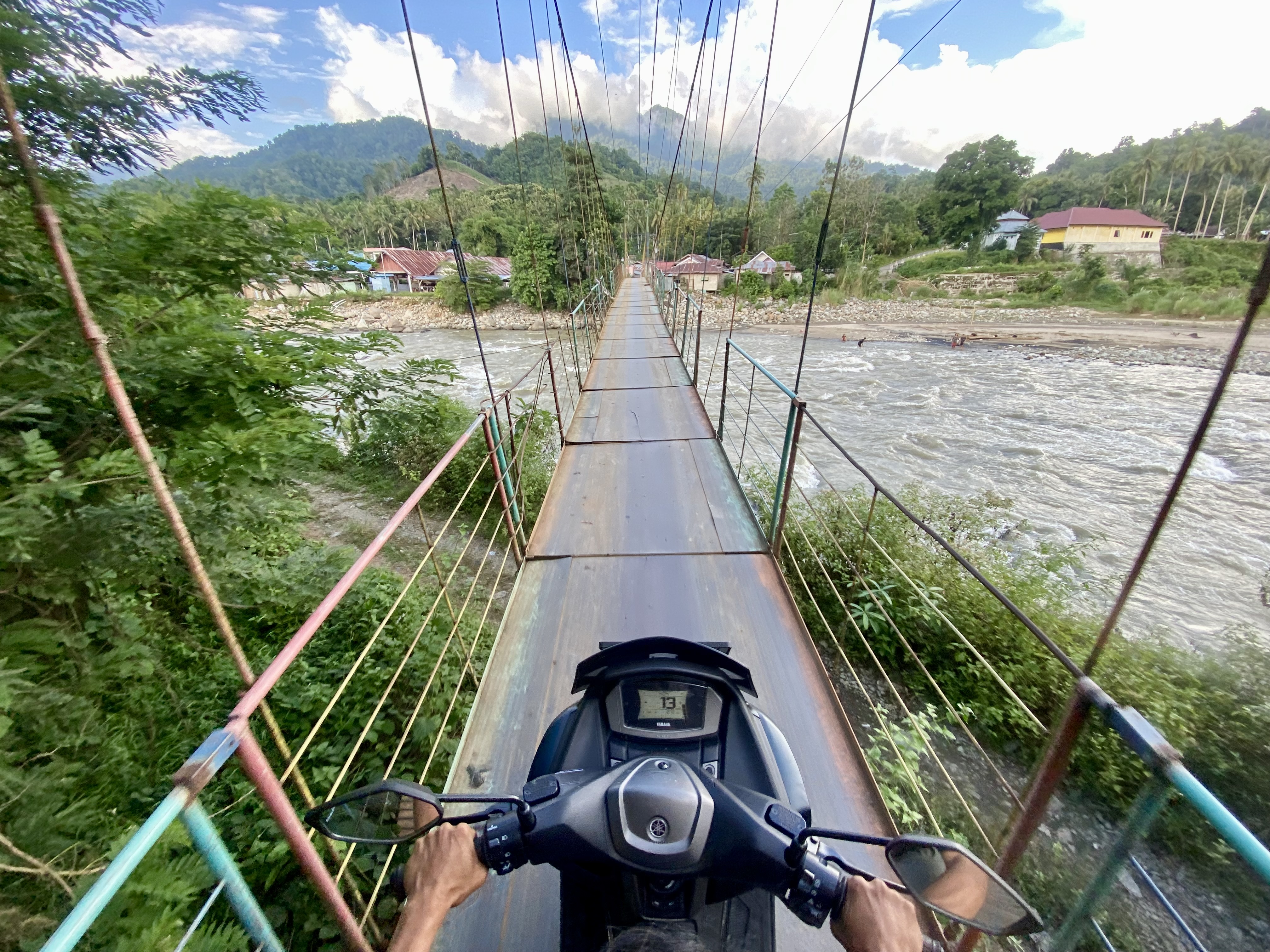
Motorbike ride to the entrance of Hungayono Forest! (And the sketchiest bridge I’ve ever driven across)
I was very grateful to have Ono with me to translate for the Hungayono portion of the trip, as my local ranger-guide Upan spoke barely any English (though surprisingly he knew all of the English common names for the birds we saw).
Upan was an attentive and competent guide, eager to find everything I wanted to see in Hungayono—and he largely succeeded. My only real criticisms were his limited English, which made communication challenging, and his tendency to light a cigarette every time we stopped for more than two minutes. I have nothing against smokers, but my main gripe was trying to spot a bird or mammal while being blasted with industrial-strength secondhand smoke……

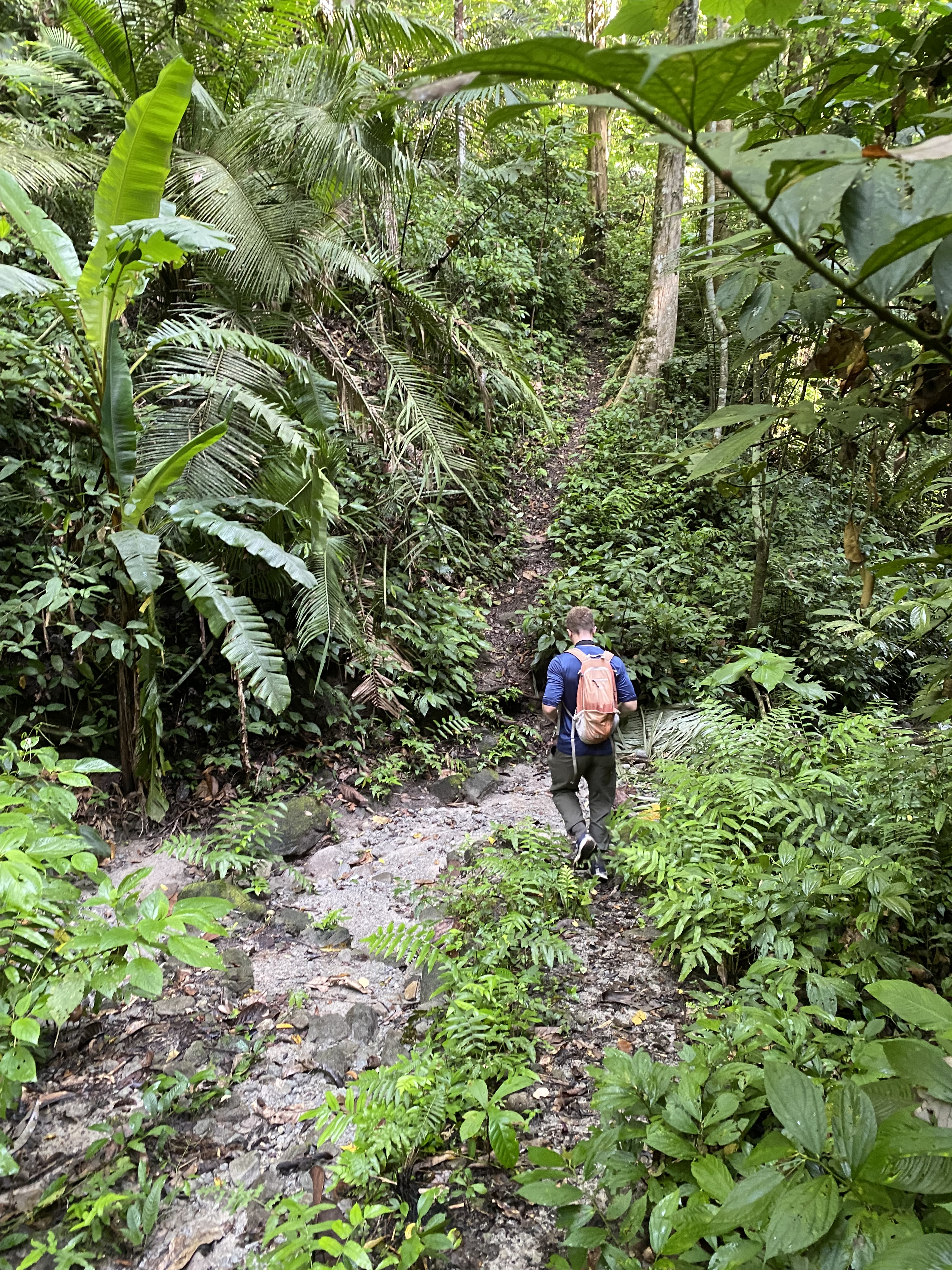
Ono & I at the Hungayono overlook (left), and me walking toward the ranger station (right)
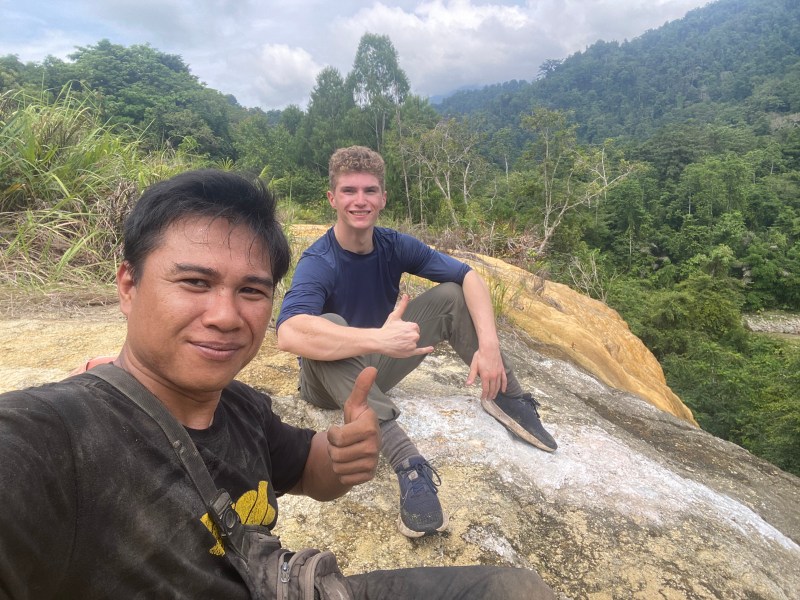
Upan & I at the Hungayono overlook
Ono, Upan and I started our trek toward the Hungayono ranger station at 7:00am, and the first hour of hiking alone produced large numbers of Gorontalo Macaques & Whitish Dwarf Squirrels, along with great views of two Celebes Dwarf Squirrels. Hungayono is undoubtedly one of the most reliable places on Earth to see Gorontalo Macaques—I saw a troop of 30 individuals just minutes after entering the reserve, as well as several other troops of various sizes throughout the day.
They are handsome monkeys with a lot of personality, and one of seven macaque species endemic to Sulawesi.
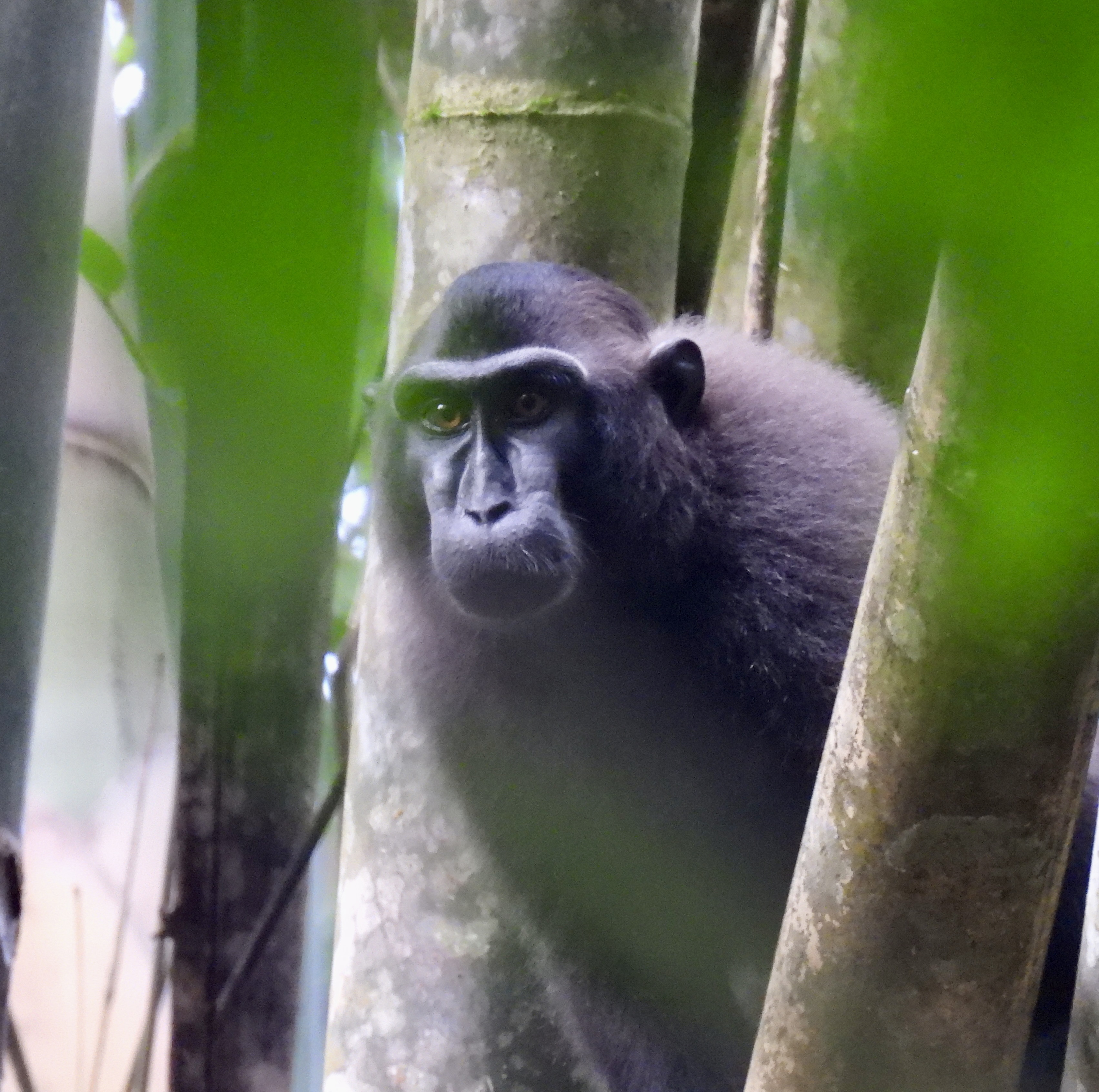
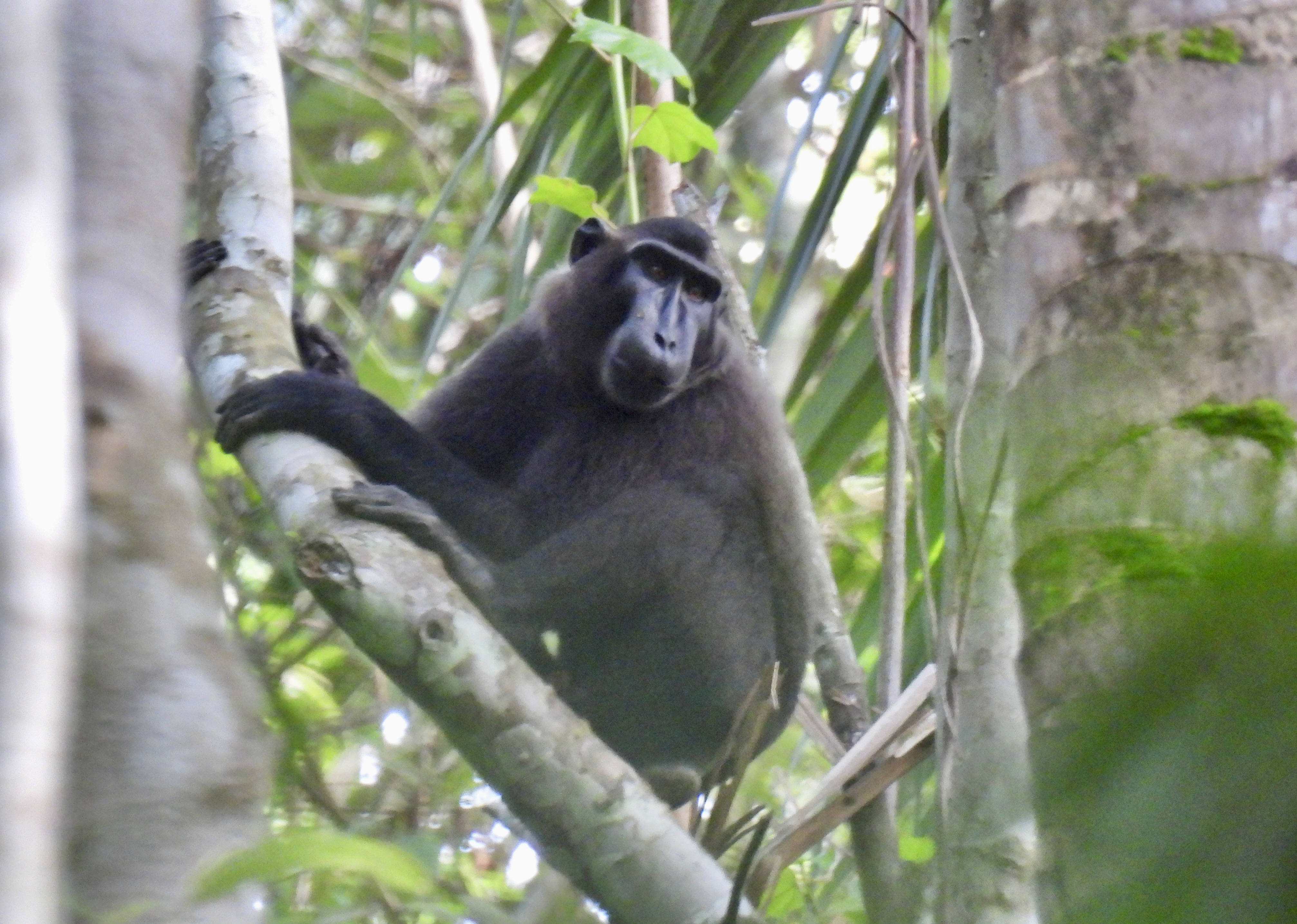
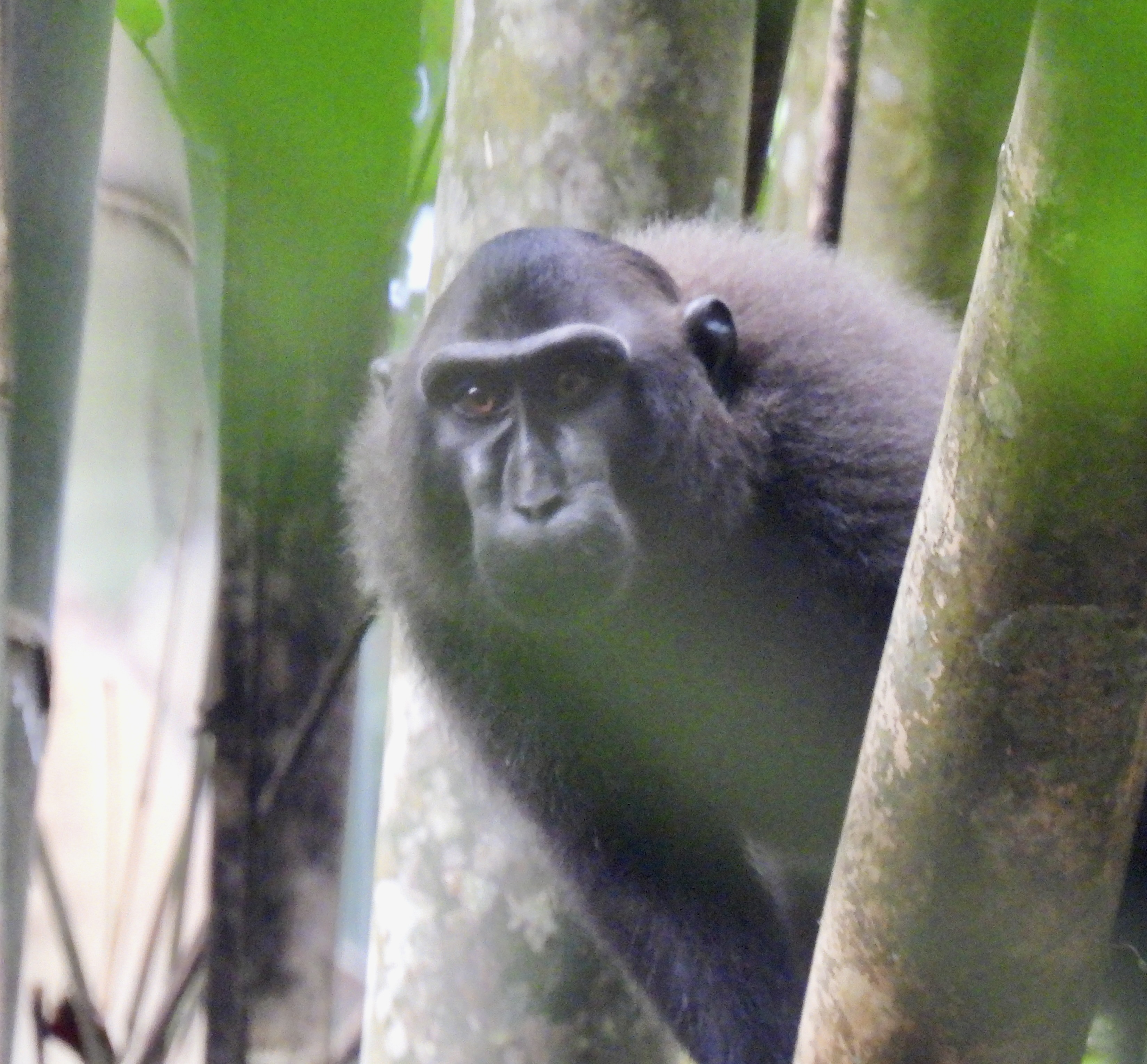
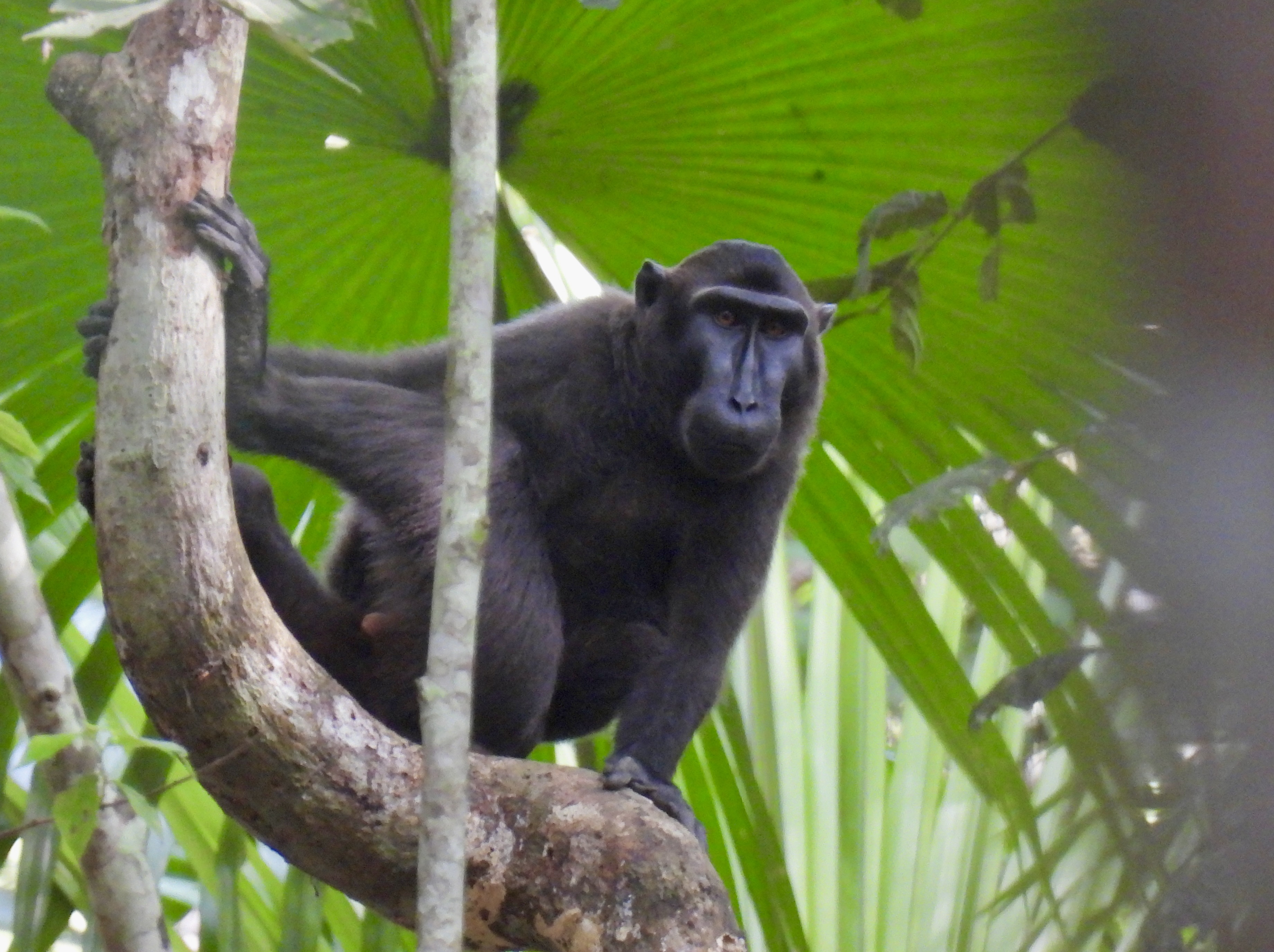
Gorontalo Macaques!
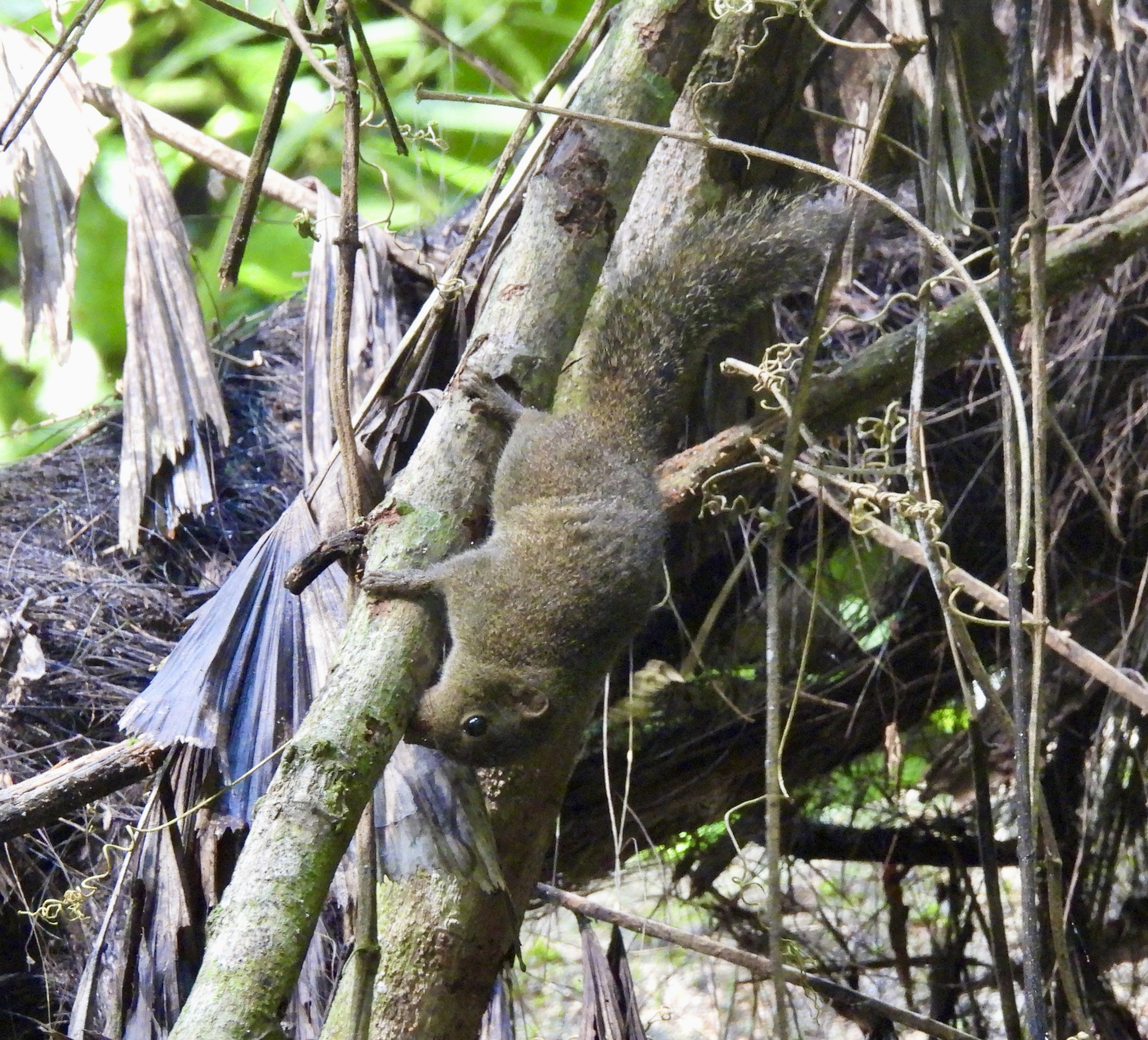
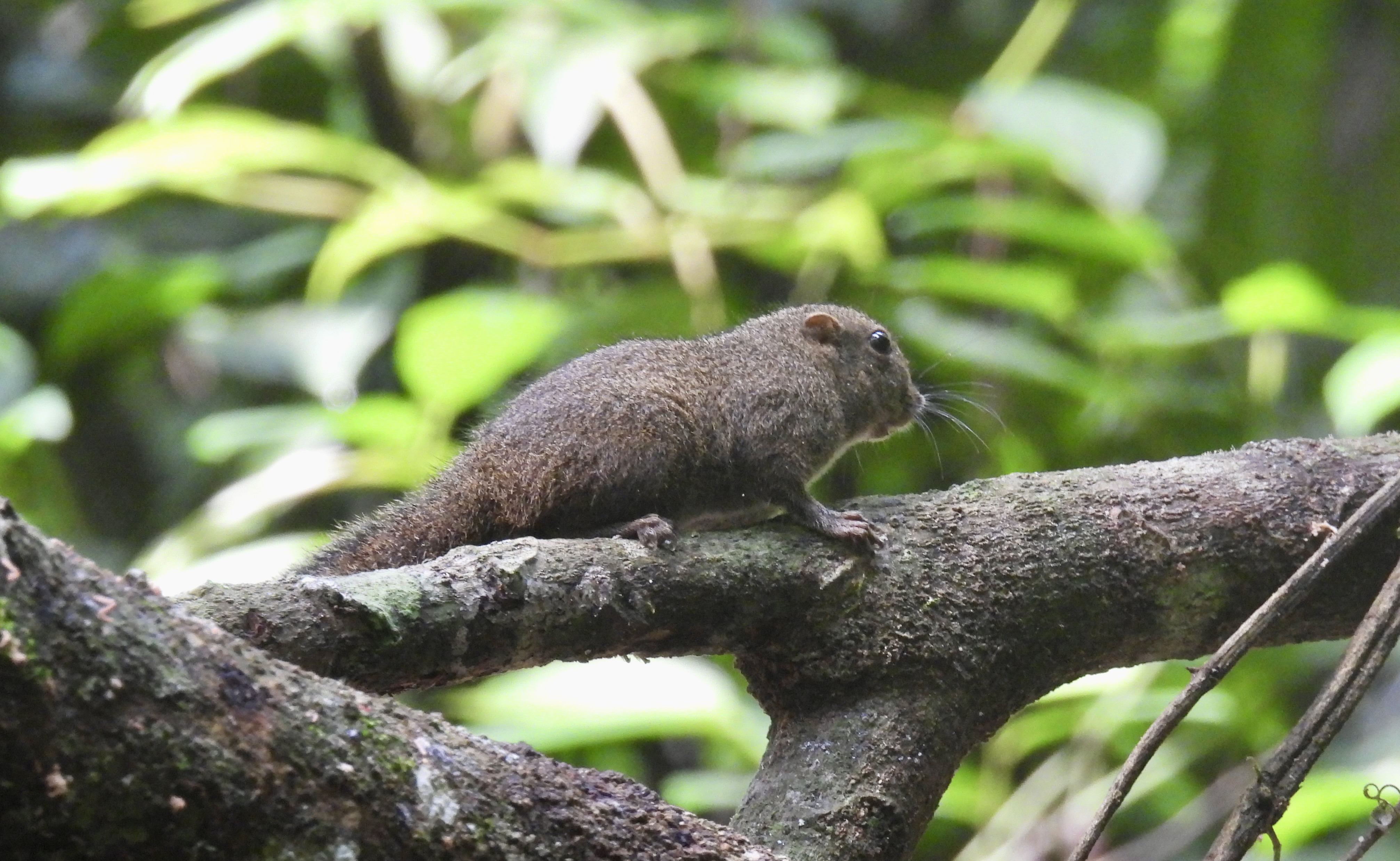
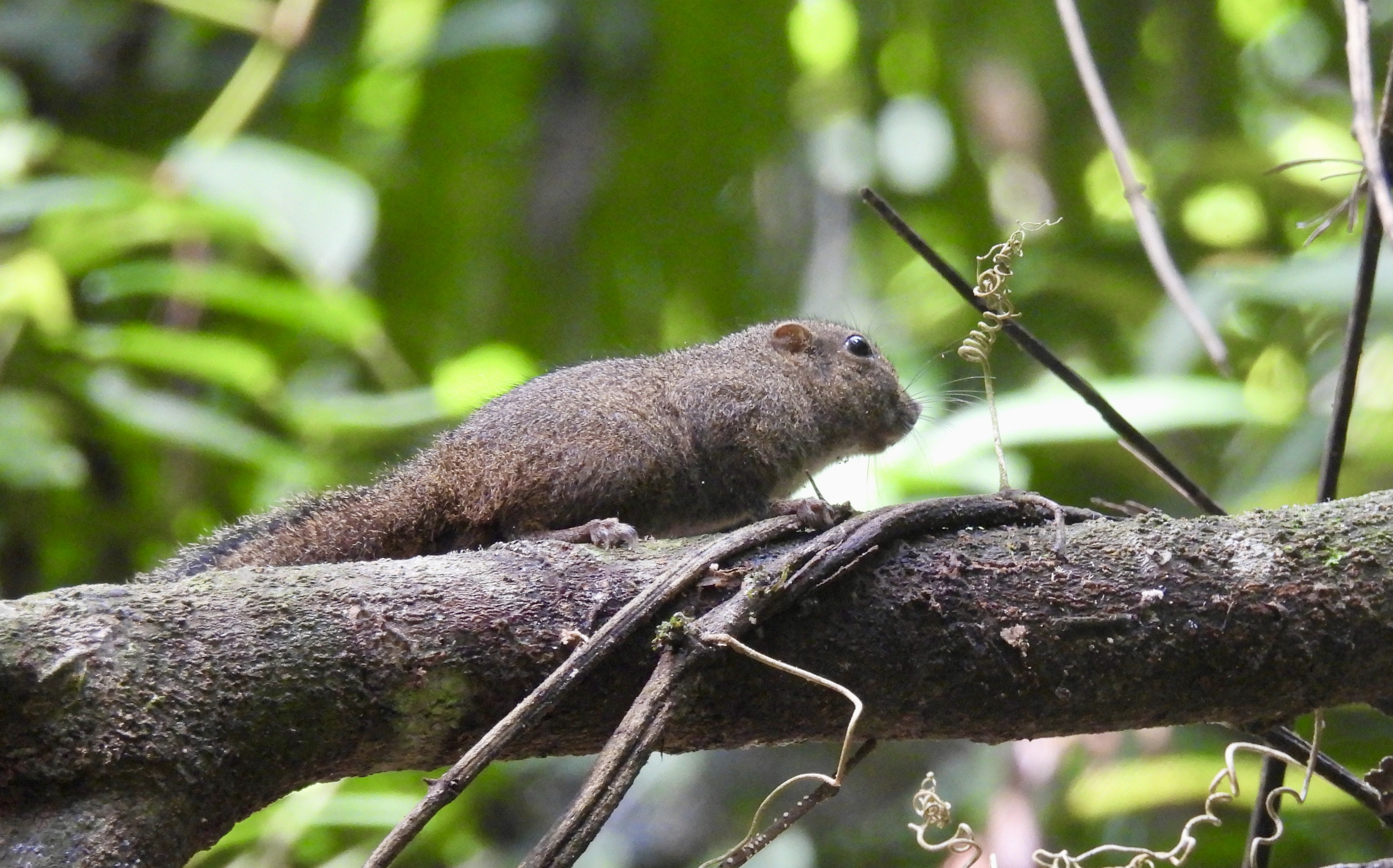
A very nice find: the endemic Celebes Dwarf Squirrel
At 9:00am, as we neared the ranger station, Upan brought me off-trail into the rainforest to a tarsier roost. He halted just before a bamboo grove, pointed at something in front of us, and whispered to me in broken English,” Tarsius climb, look!”
Sure enough, there was a Gursky’s Spectral Tarsier climbing a bamboo stem, not four meters away from us! We were able to watch this particular individual for several minutes before it scampered away.
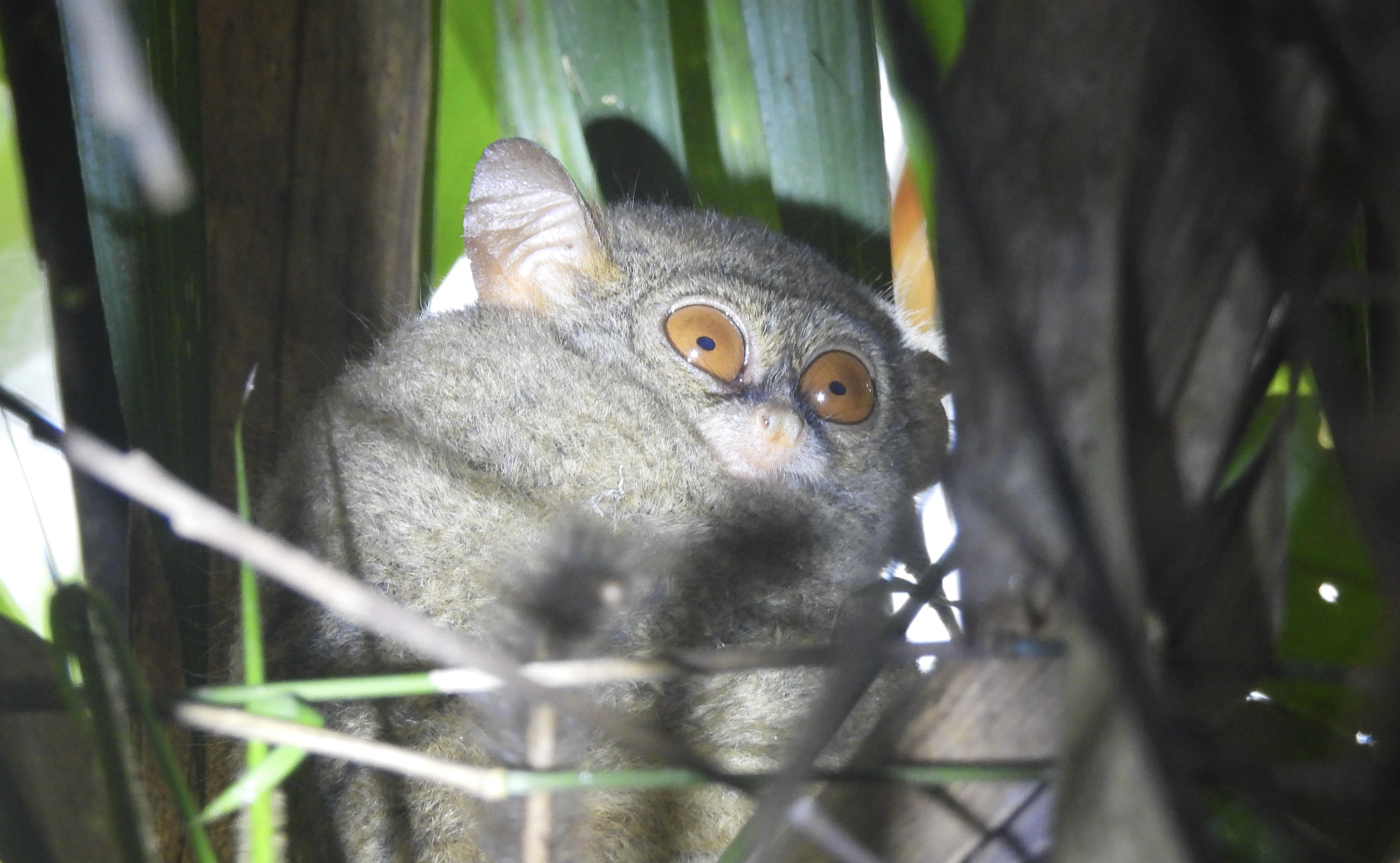
Gursky’s Spectral Tarsier
We ate breakfast between 9:15-10:00am at the ranger station, and afterwards Upan took me batting & squirreling in the forest. Ono was feeling unwell, and sat most of the day out at the ranger station.
While eating breakfast, Upan showed me two Babirusa tusks he collected off of deceased individuals that had fallen victim to a recent outbreak of African Swine Fever. This deadly disease, transmitted to wild pigs via domestic swine, is currently sweeping through the Indonesian archipelago. As I found out firsthand from my 2024 trips to Sumatra & Sulawesi, swine fever is causing the local extinctions of endemic/native suids like Eurasian Wild Pig in Way Kambas National Park, Sumatra & Babirusas in Sulawesi.
Babirusas, which were once prevalent in Hungayono Forest, are sadly on the brink of extinction in the region nowadays.
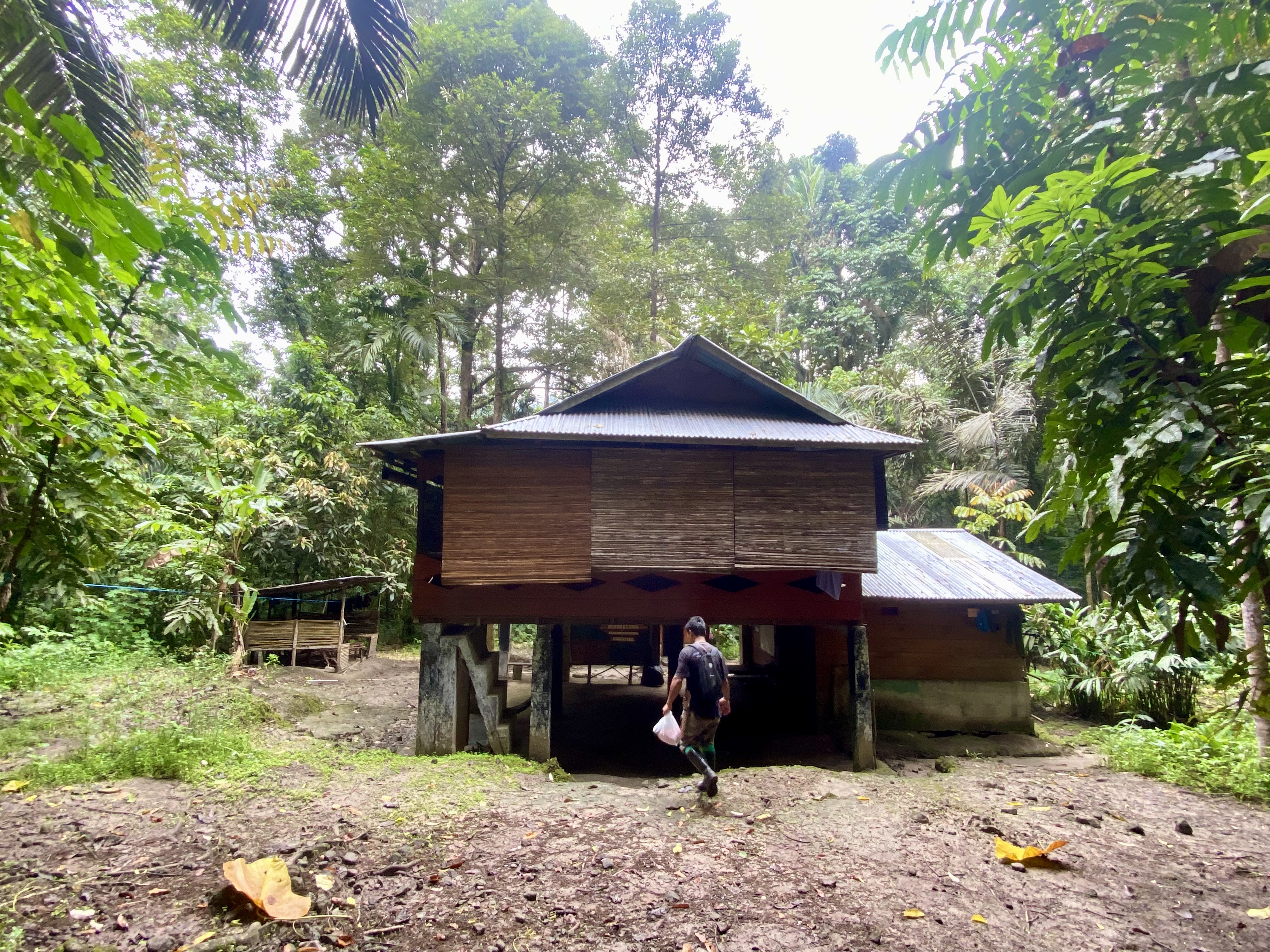
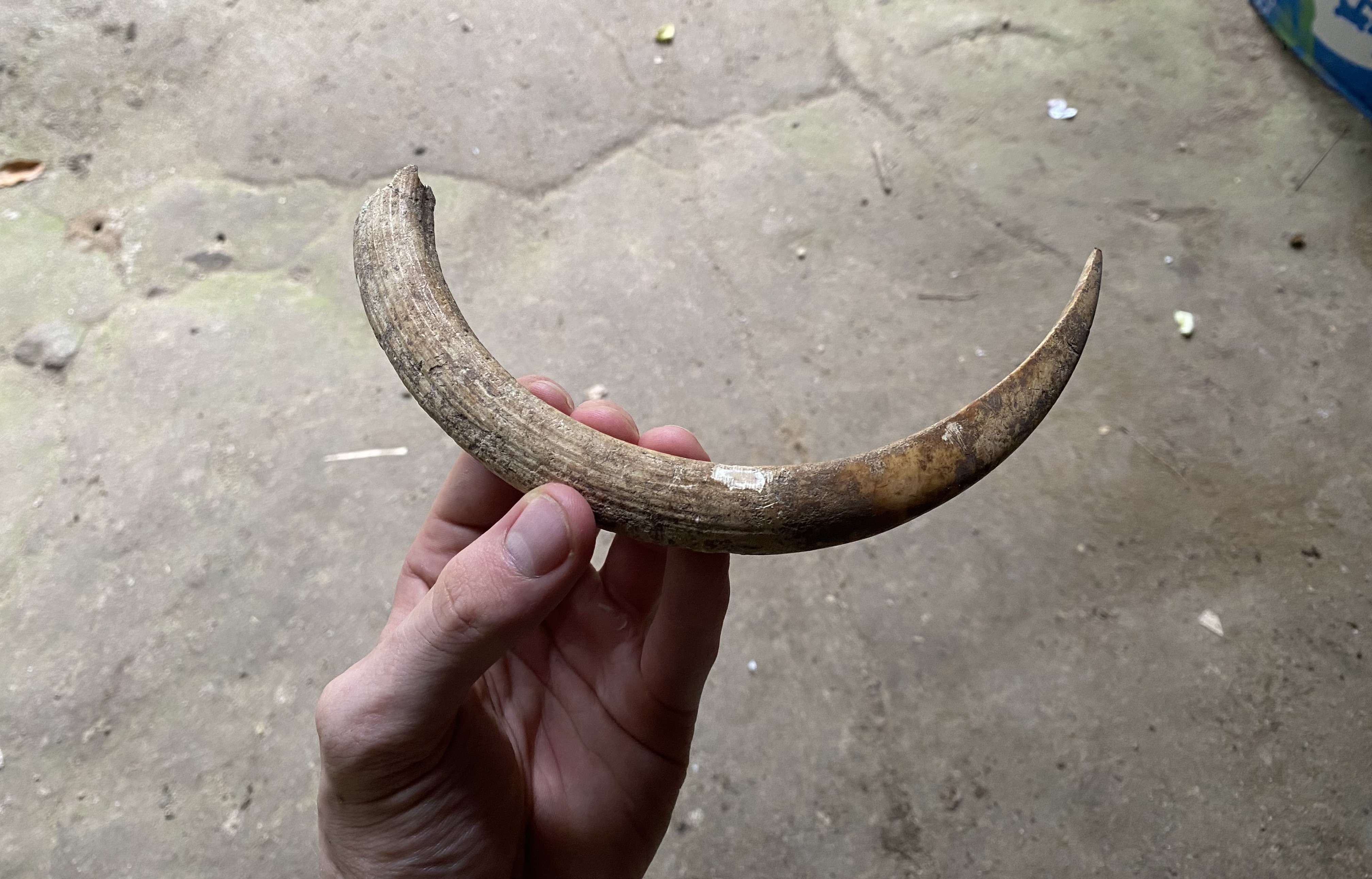
Hungayono Ranger Station (left), and a Babirusa tusk that Upan showed me (right)
On that depressing note, I began scanning the forest for mammals with Upan shortly after breakfast. Between 10:00am-1:00pm, Upan and I checked six hollowed-out trees and one small cave for bats, also inspecting the surrounding vegetation for squirrels.
I spotted and photographed a roosting Sulawesi Horseshoe Bat in the largest hollowed-out tree we checked & another one in the small cave. I wasn’t expecting to find any chiropterans in the cave as its interior is heated to over 40° by nearby hot springs!
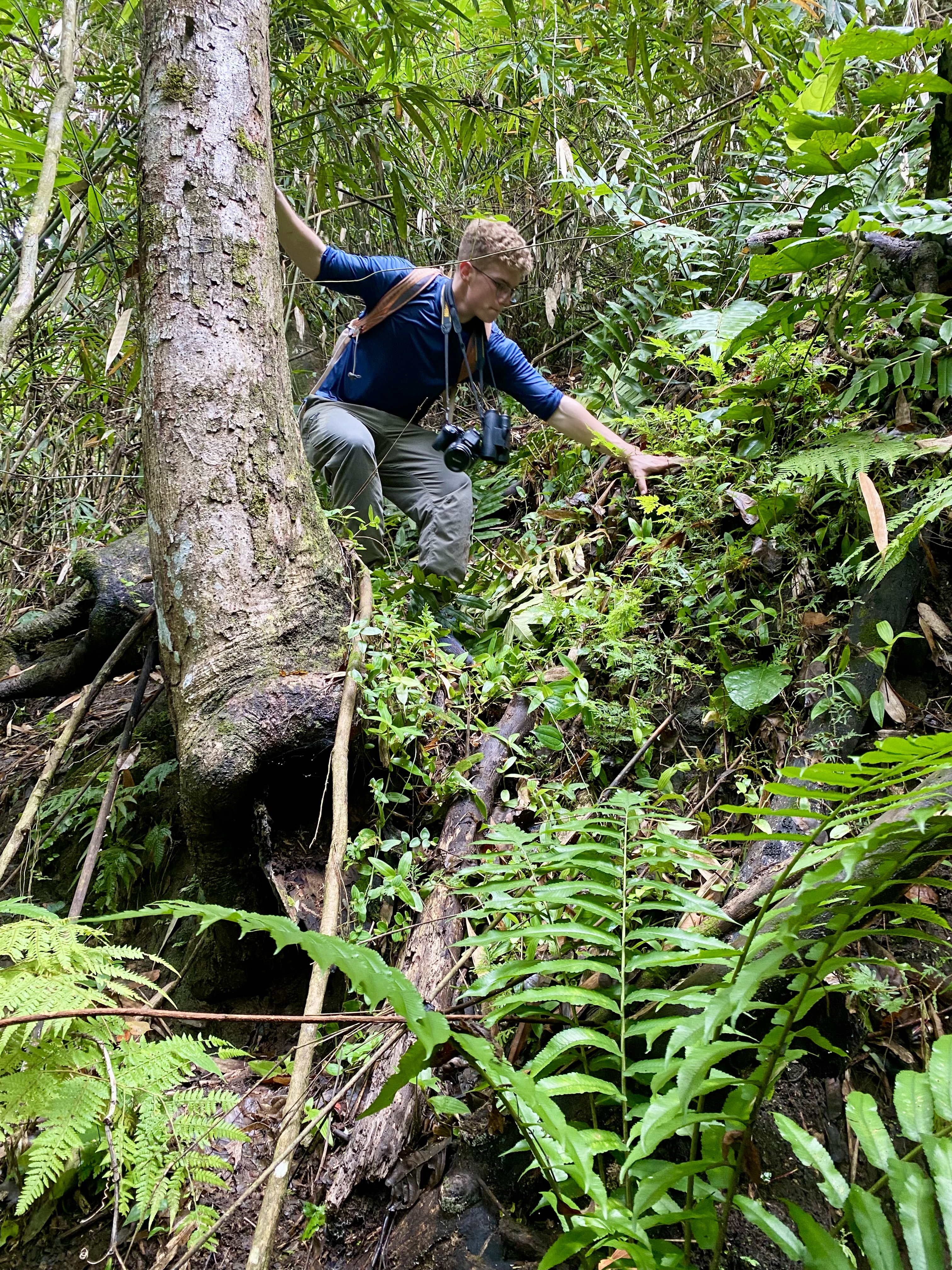
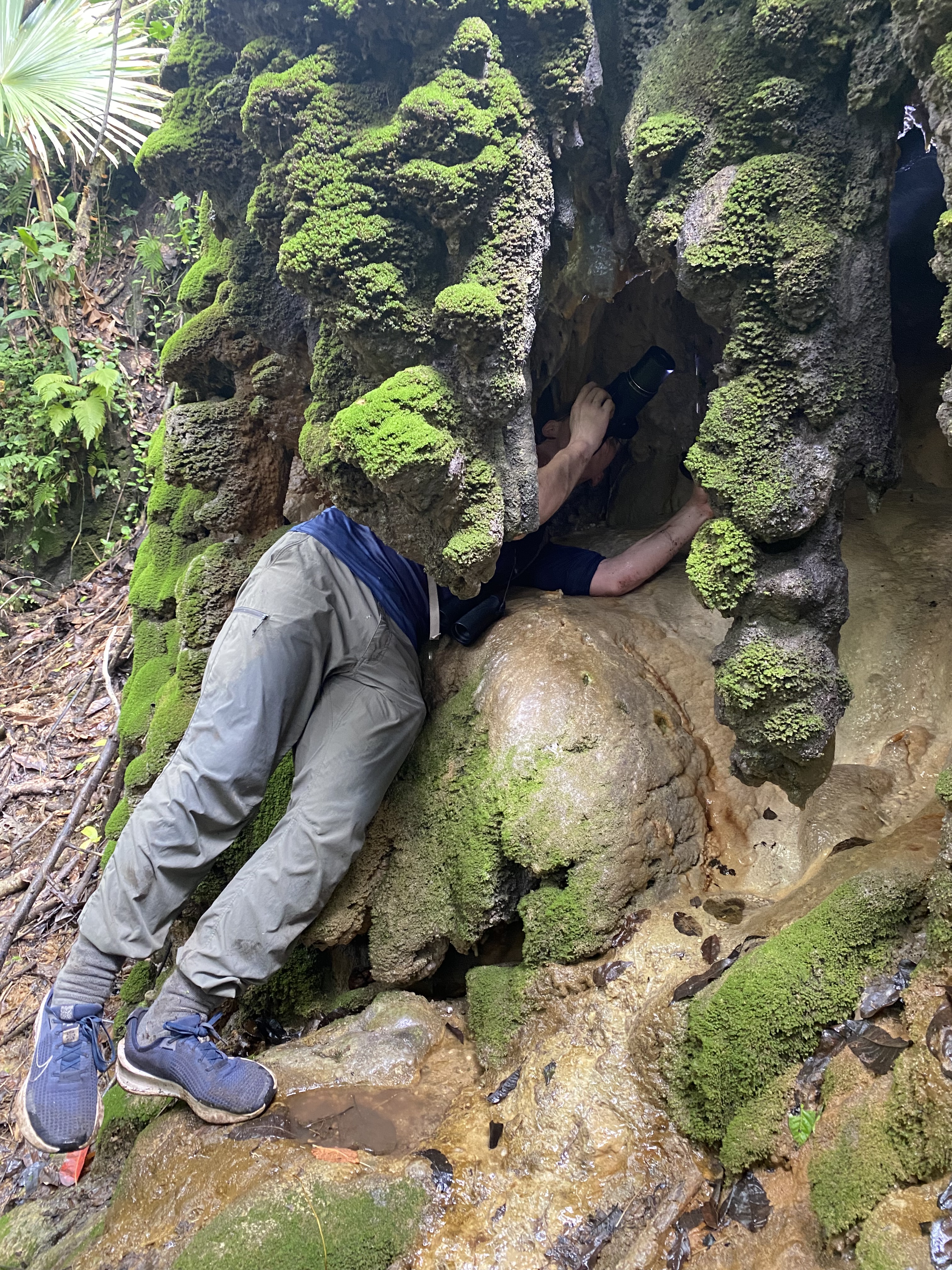
Batting in Hungayono….lots and lots of sweating and sliding down hillsides
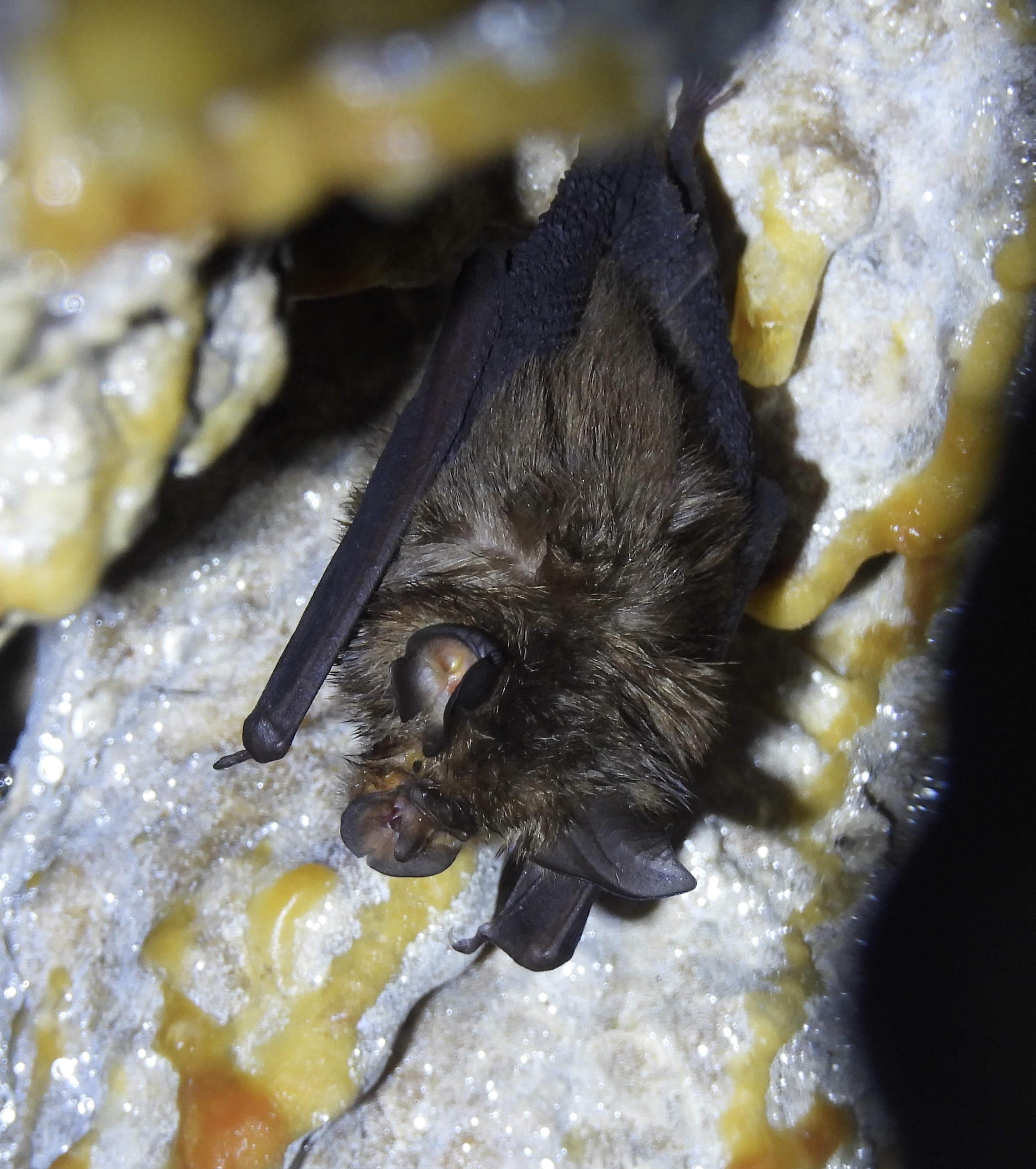
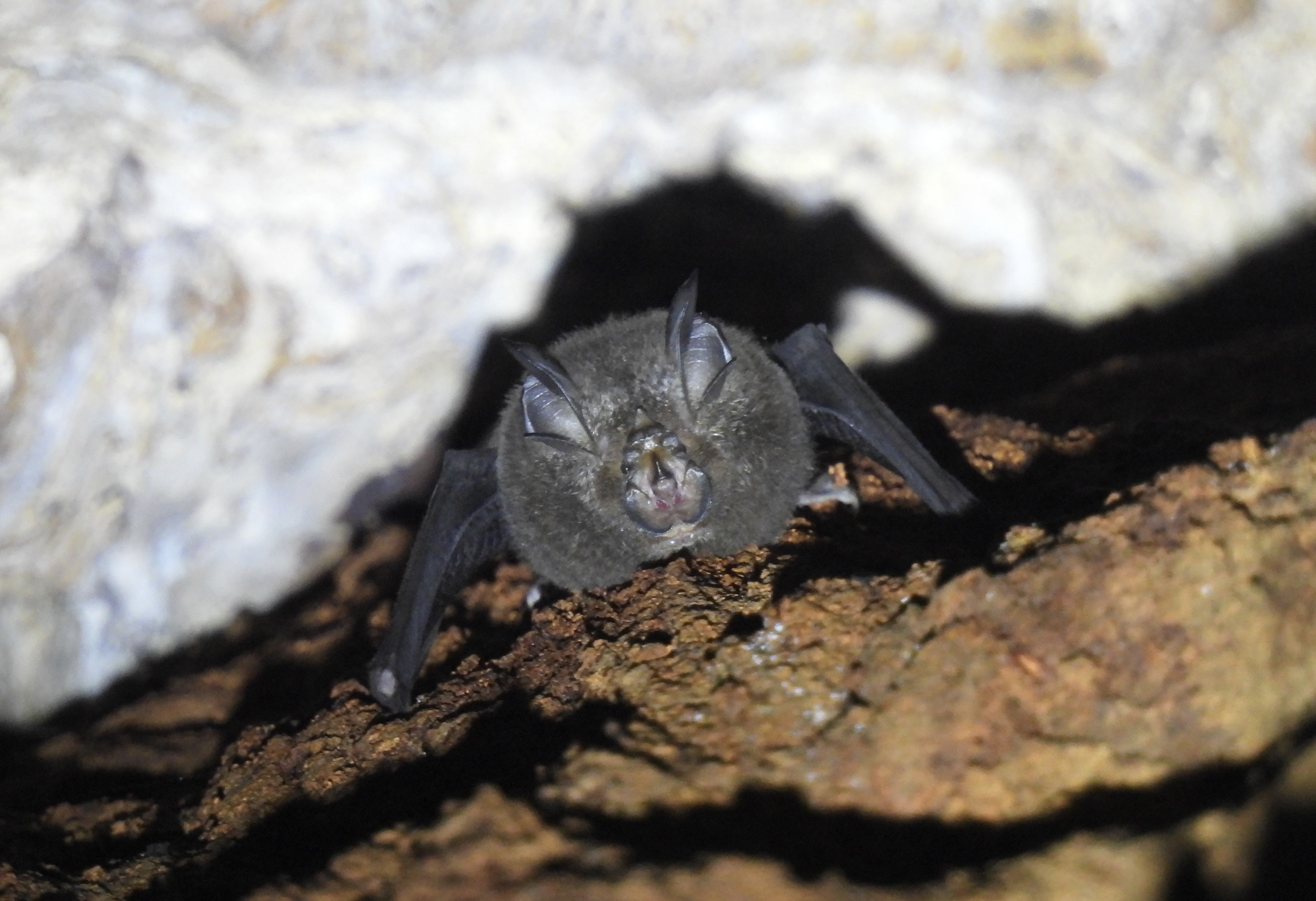
Sulawesi Horseshoe Bats
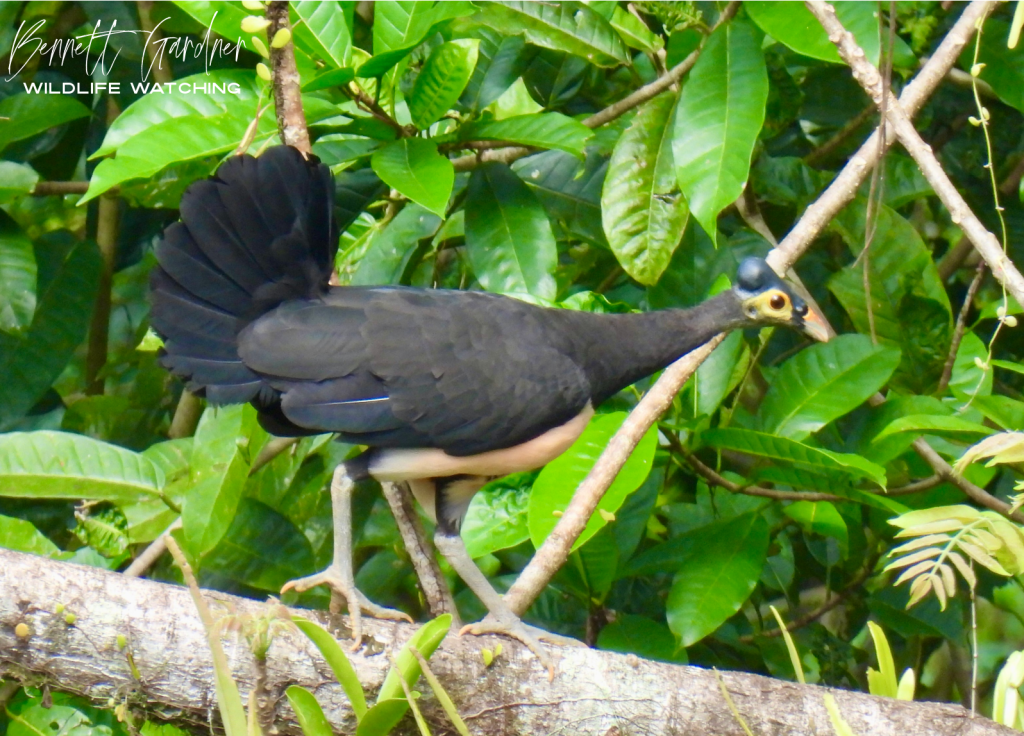
At around 11:00am, between our batting sessions, Upan took me to the Maleo (Volcano Bird) nesting grounds near the Hungayono Hot Springs to demonstrate the local conservation efforts geared toward this critically endangered bird.
Maleos bury & incubate their eggs in geothermally-heated patches of sand—a feature Hungayono has in abundance due to its hot springs. Park rangers like Upan excavate the buried eggs and transfer them to caged hatcheries, later releasing the chicks into the wild.
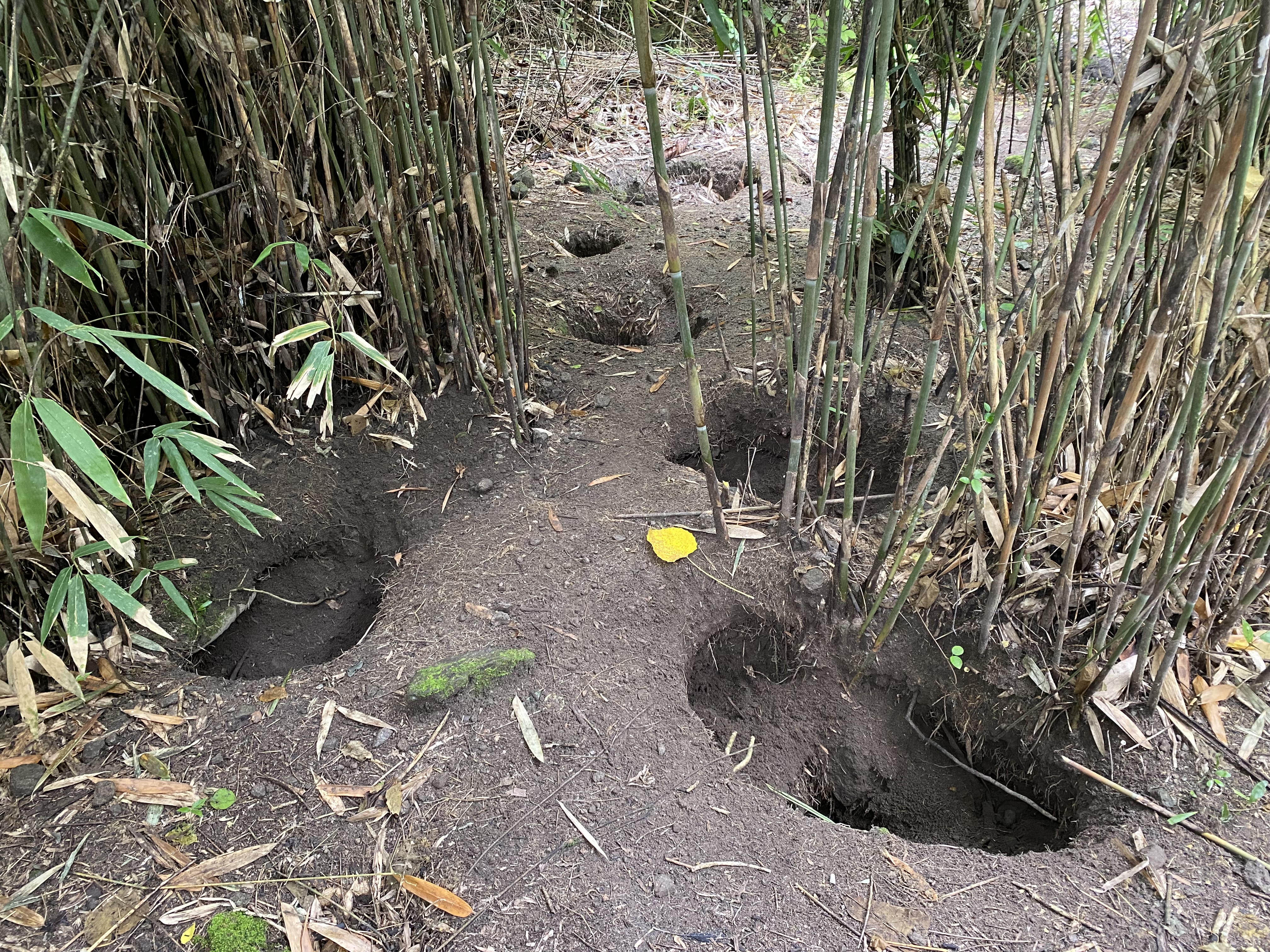
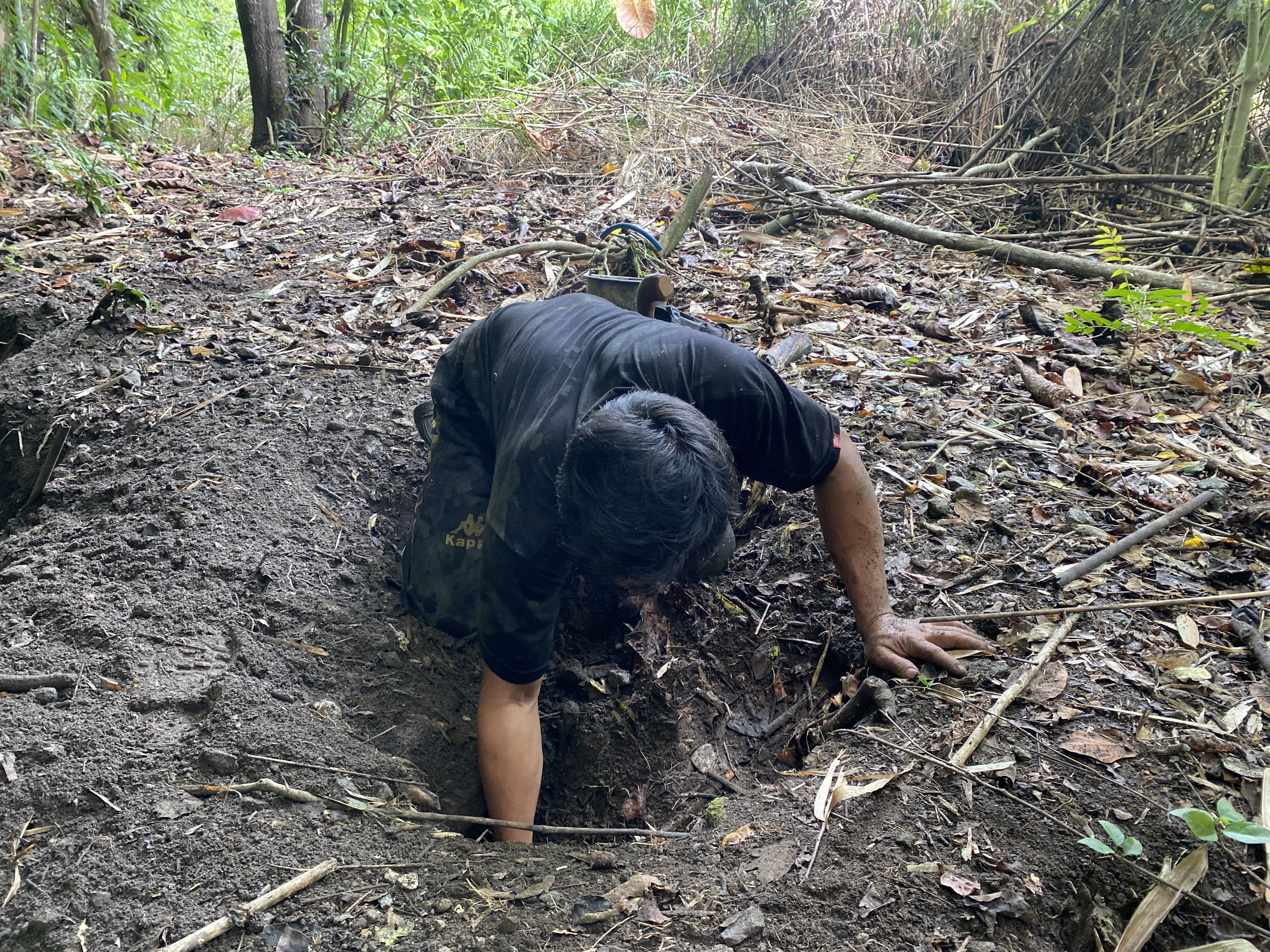
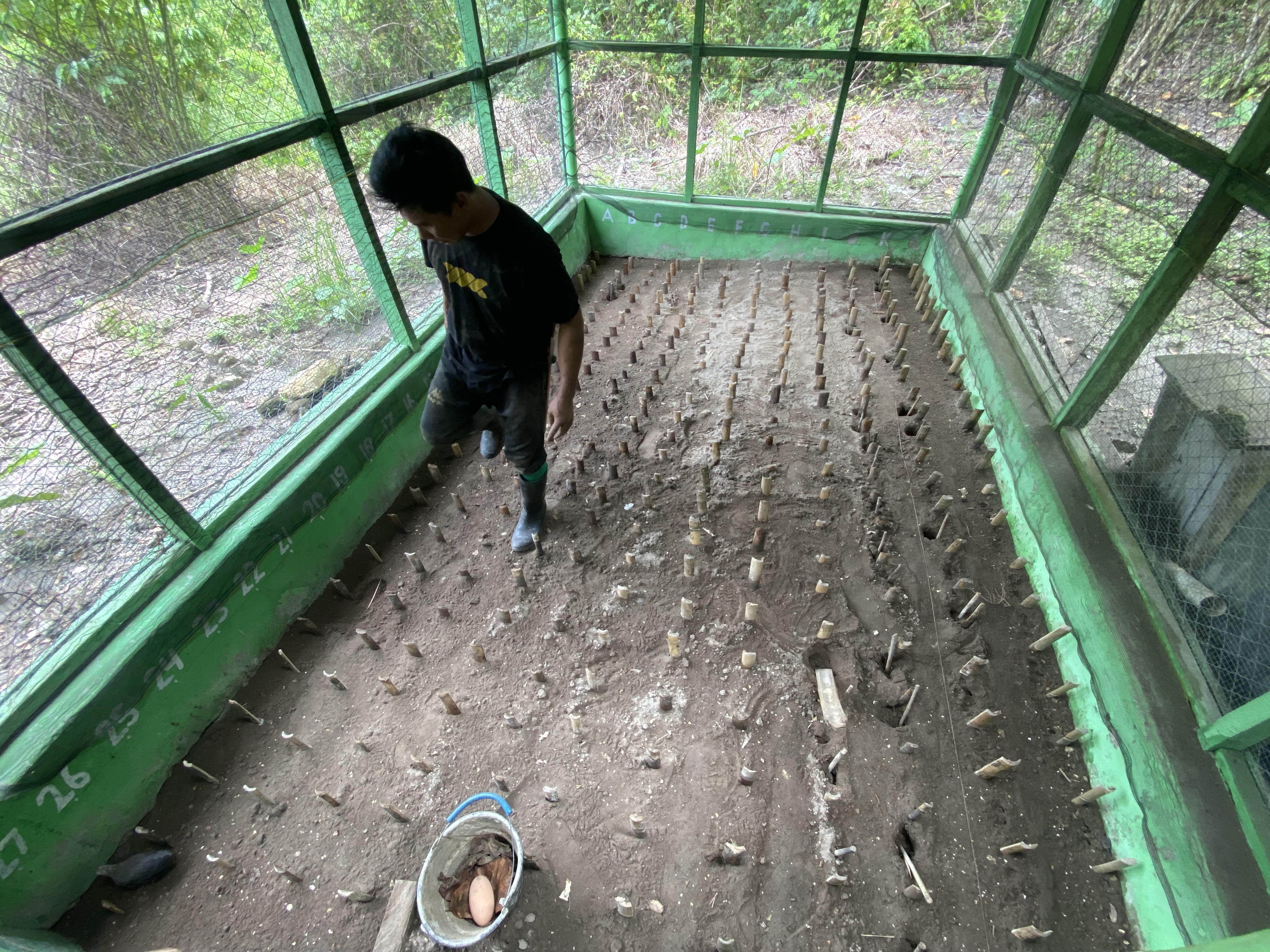
Maleo nesting ground (left), Upan excavating Maleo eggs (top right), & the Hungayono Maleo Hatchery (bottom right)
Conservation efforts undertaken by rangers like Upan are globally important for the long-term survival of Maleos, especially since Hungayono Forest possesses one of the largest remaining wild nesting colonies.
During my visit, I watched Upan excavate four Maleo eggs and transfer them to the hatchery. To my delight, I even had the unexpected opportunity to release a captive-born Maleo chick into the wild! It was thrilling to play a small part in conserving such a unique and threatened species.
In addition, I had several excellent encounters with wild Maleos at Hungayono later in the day…..and this was despite prioritizing mammals over birds!
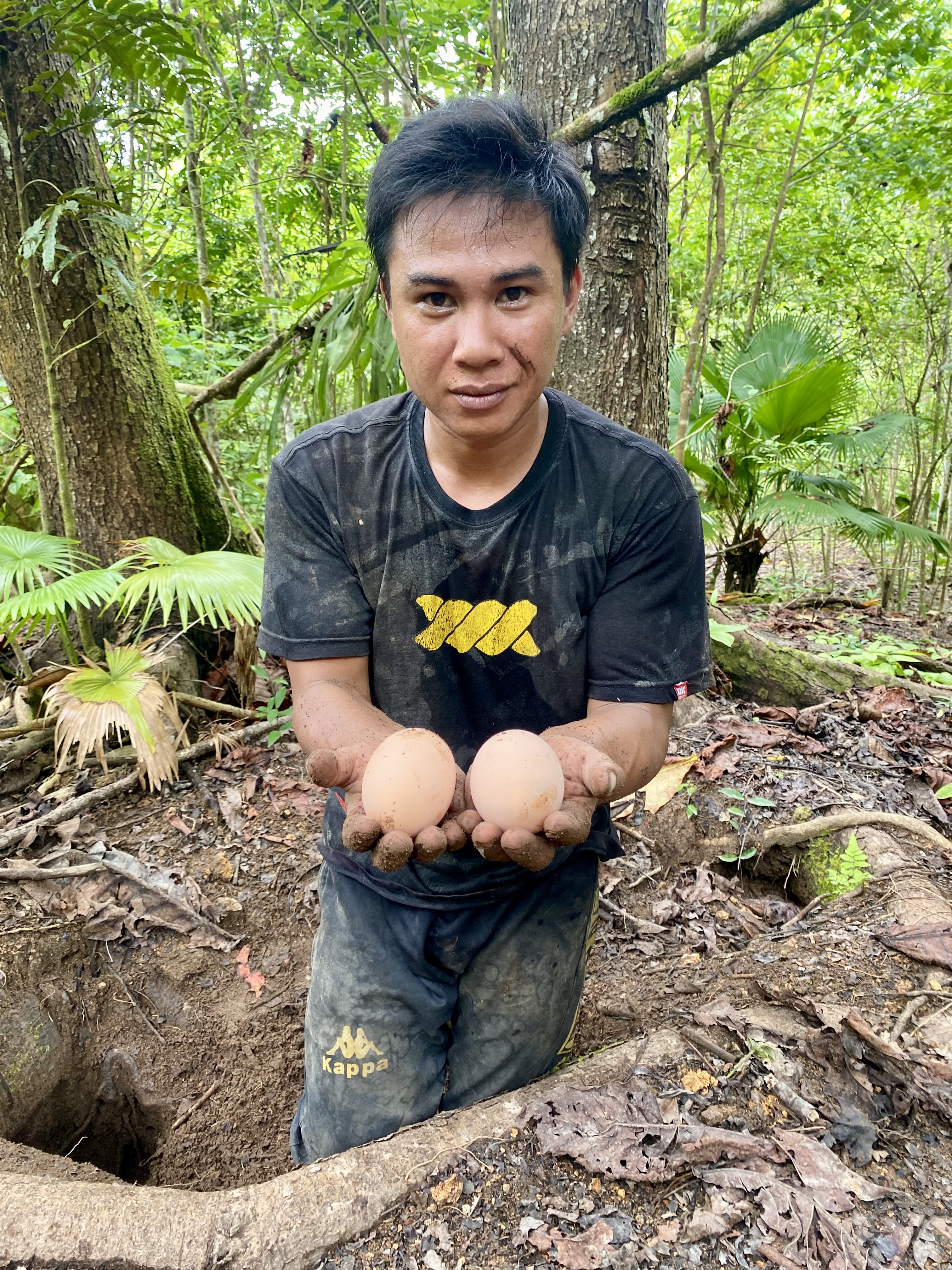
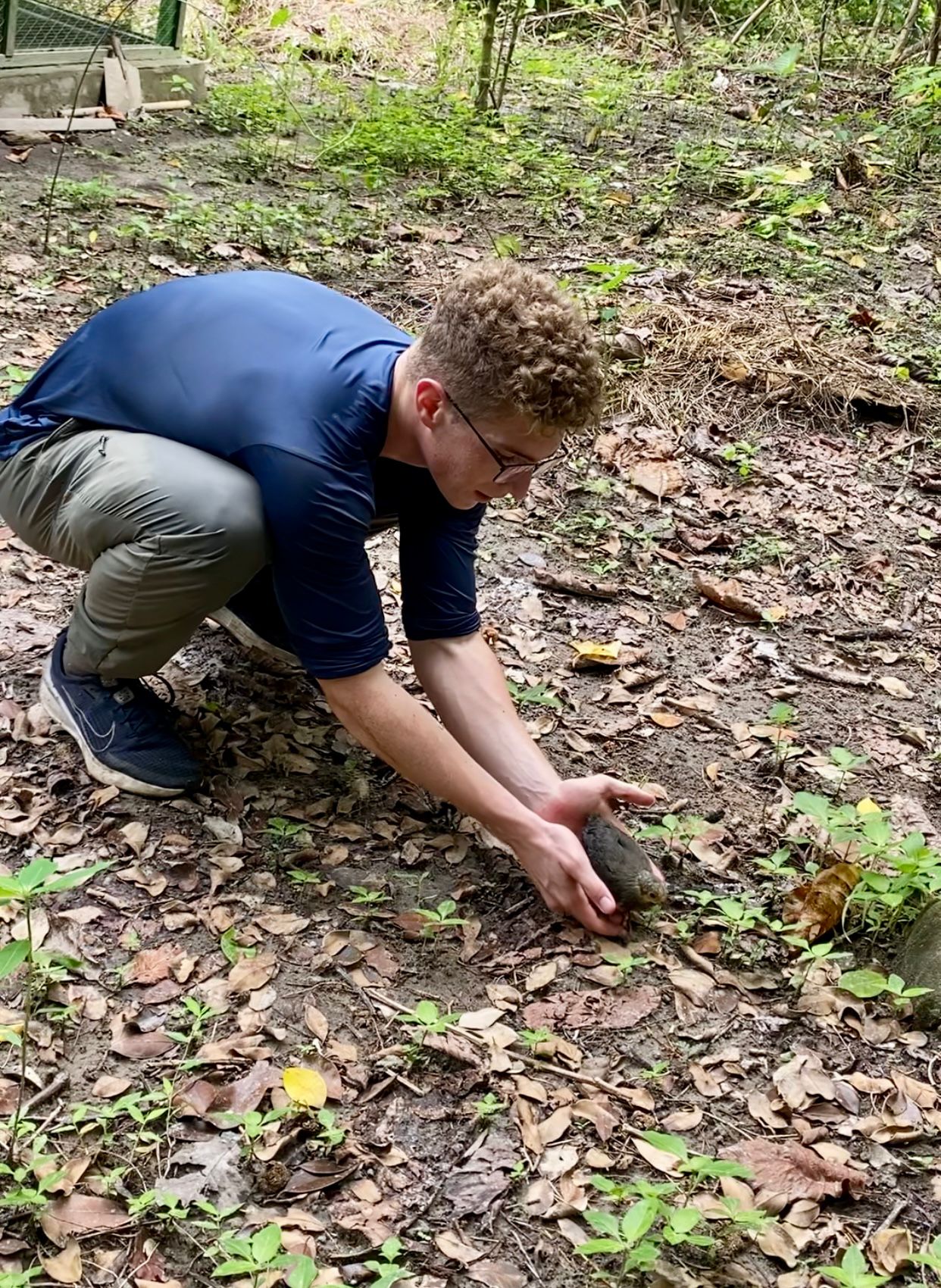
Upan with two freshly-dug Maleo eggs (left) and me releasing a Maleo chick into the wild (right).
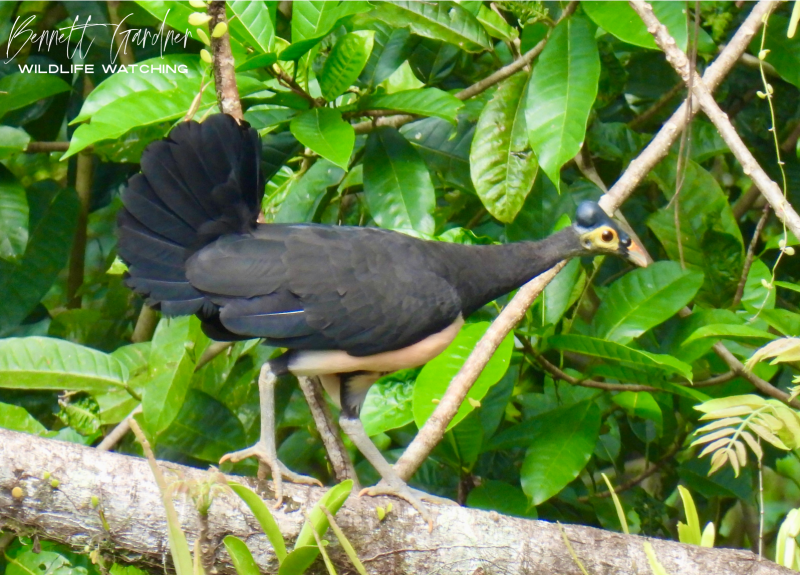
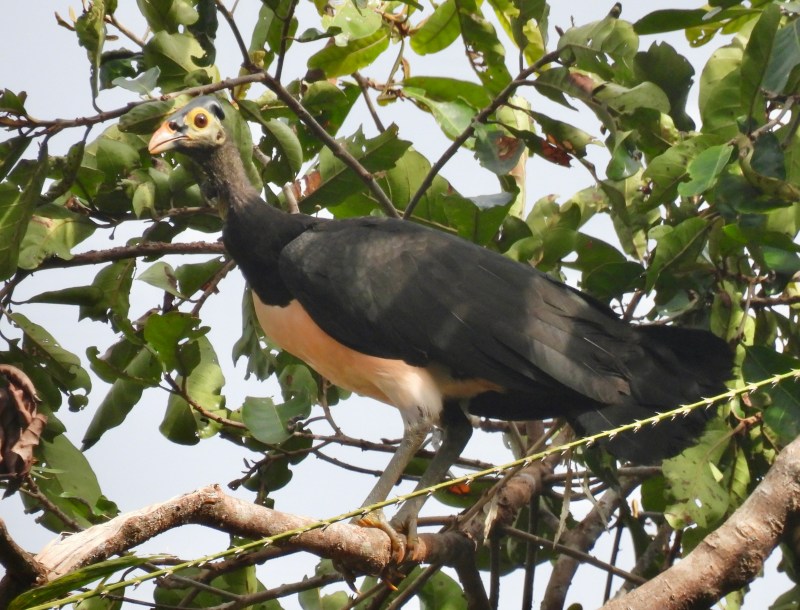
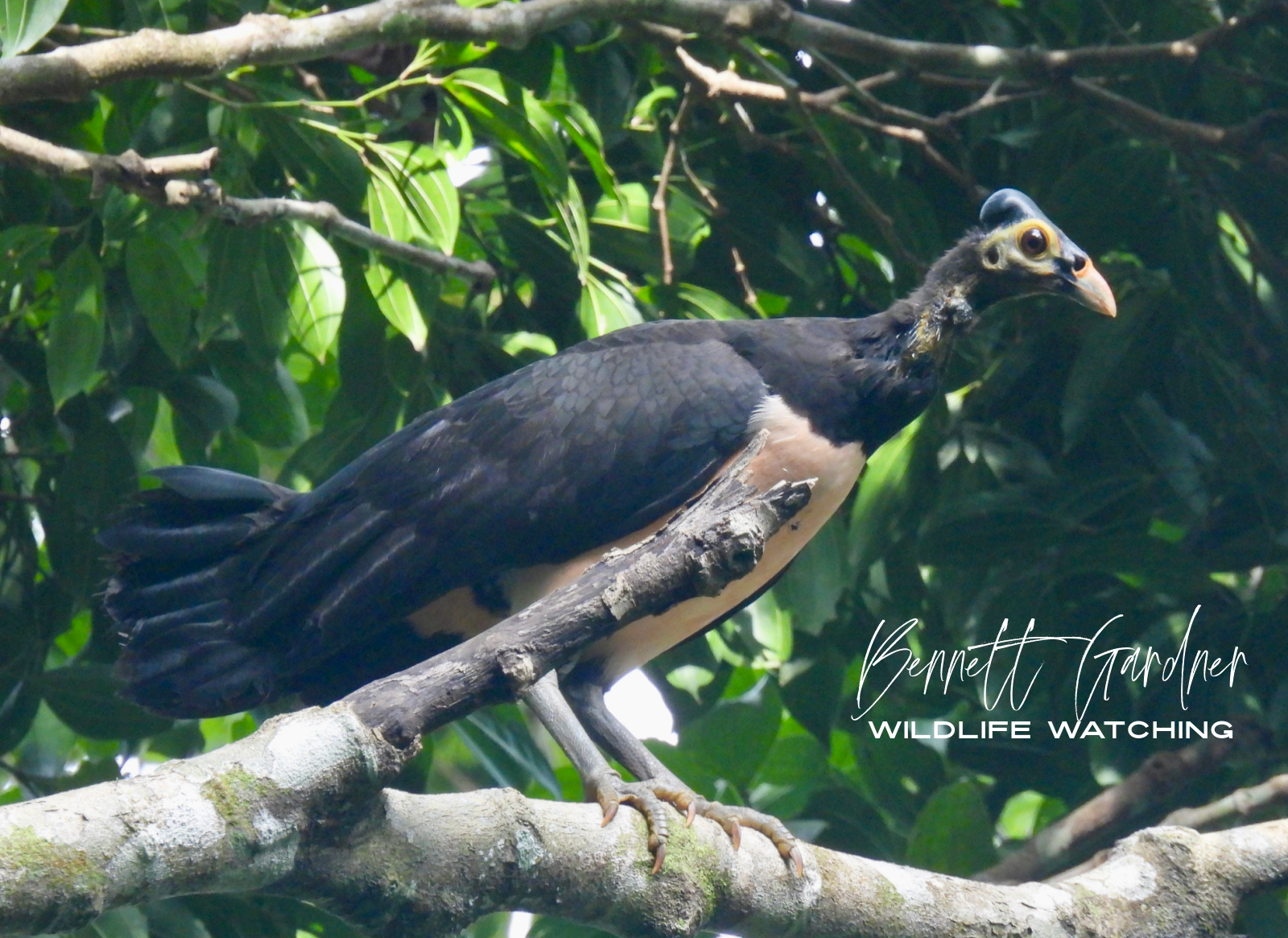
Maleo #3–what a lucky day!
Aside from bats and Maleos, we saw many Whitish Dwarf Squirrels, and (possibly) a few Celebes Dwarf Squirrels in the forest, though I took no record shots of either species. We also stumbled across a couple very nice endemic birds while mammalwatching, including Sulawesi & Knobbed Hornbills, Sulawesi Blue Flycatcher, Ivory-backed Woodswallow, Sulawesi Ground Dove and Sulawesi Dwarf Kingfisher.
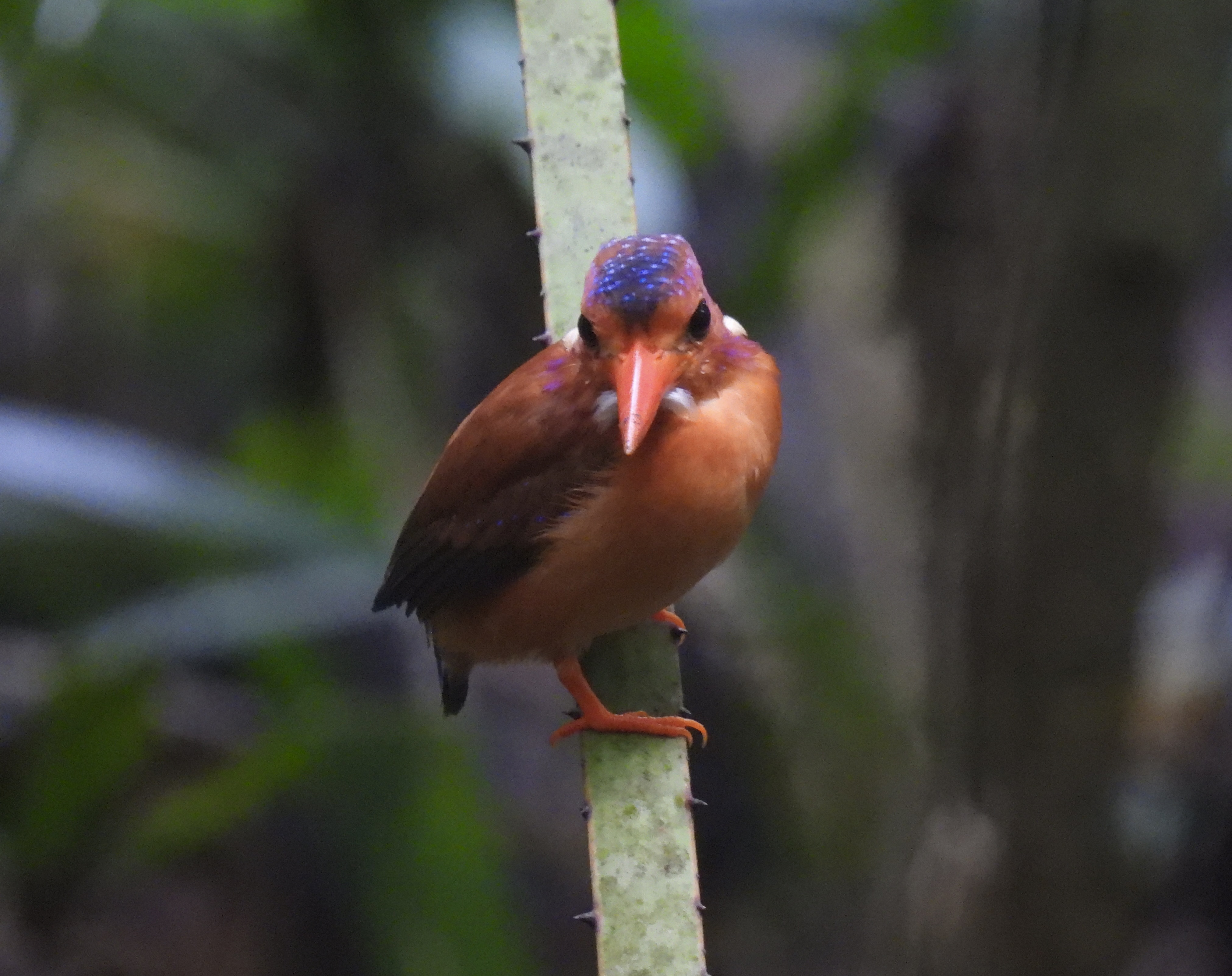
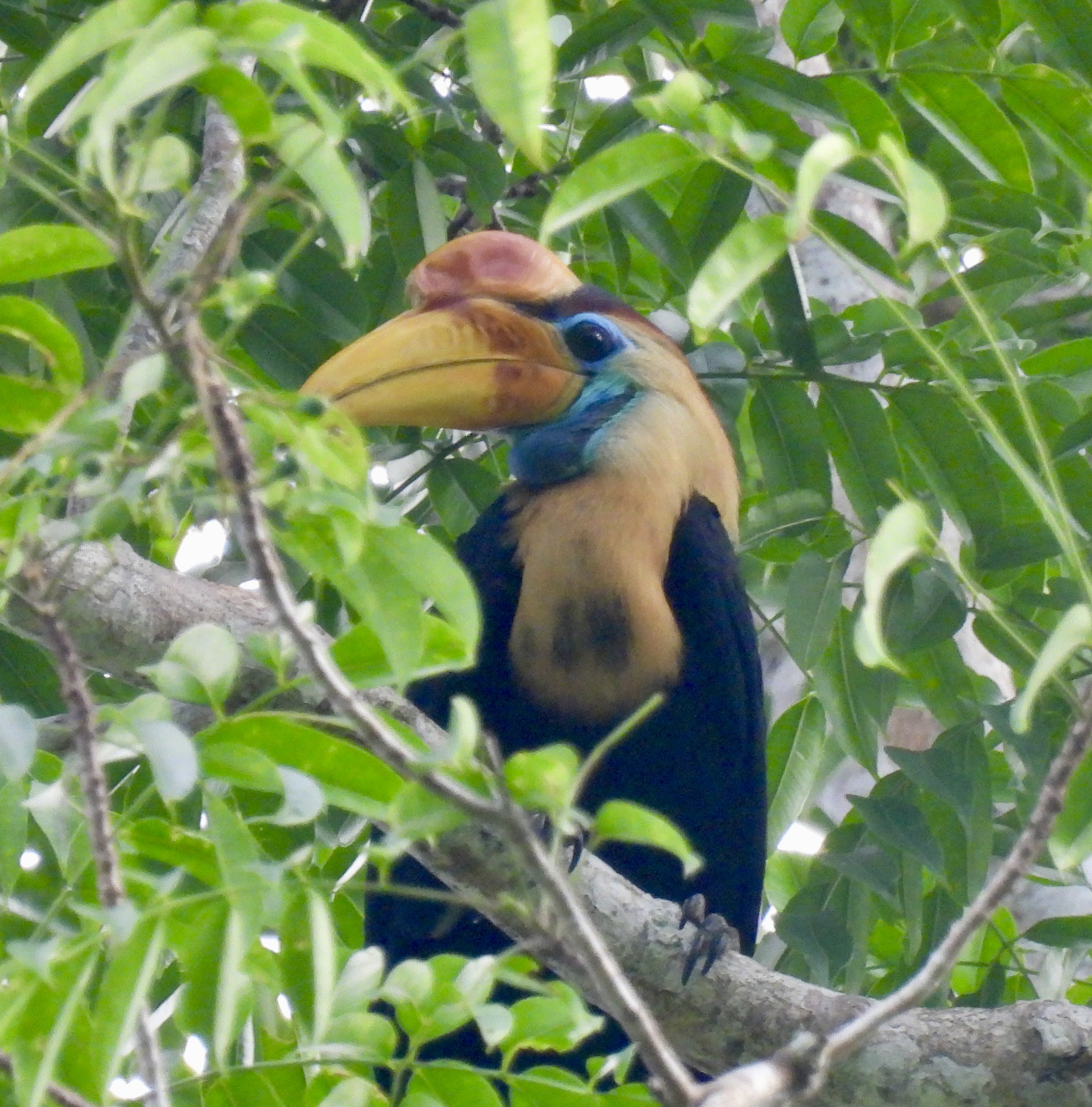
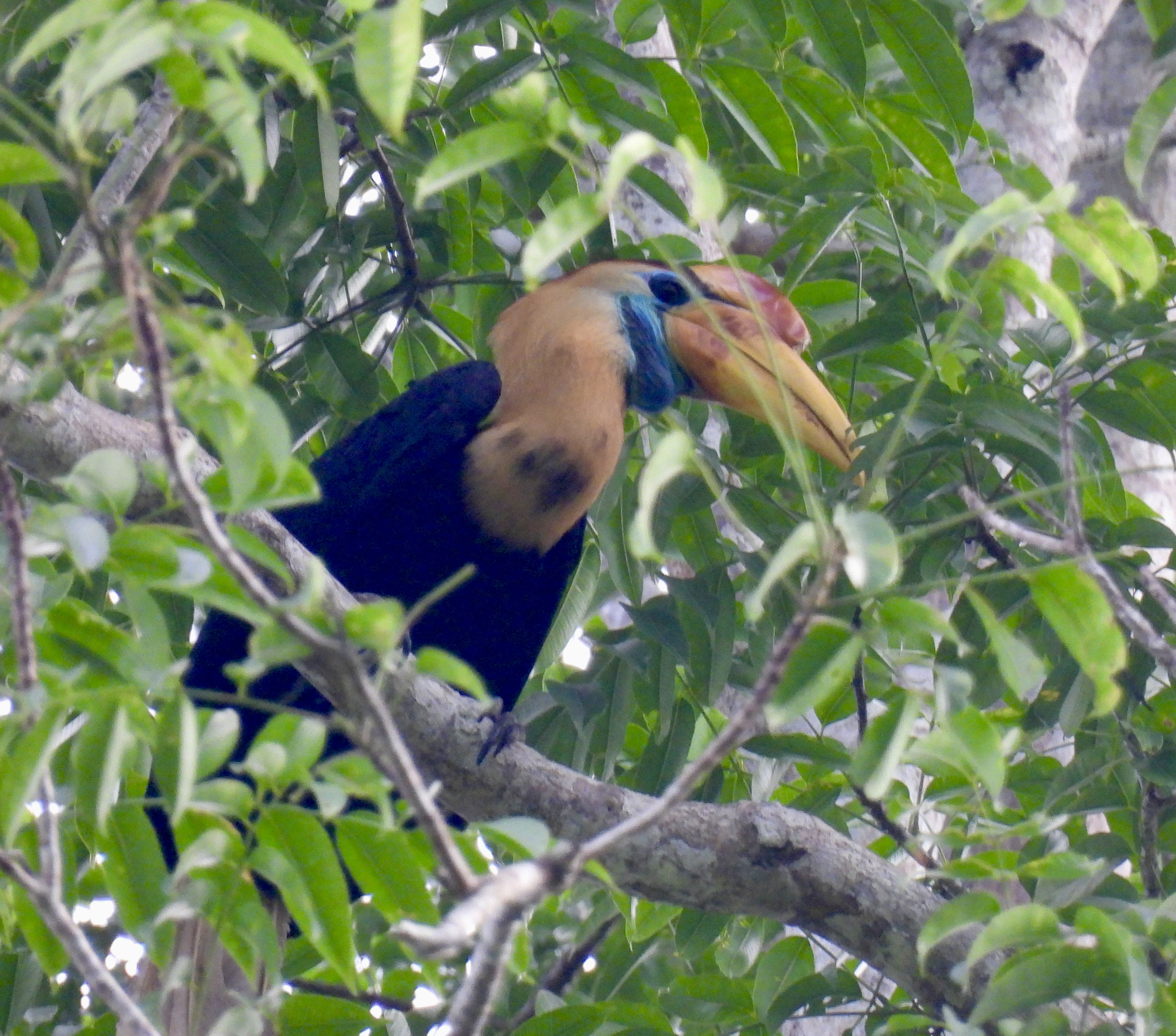
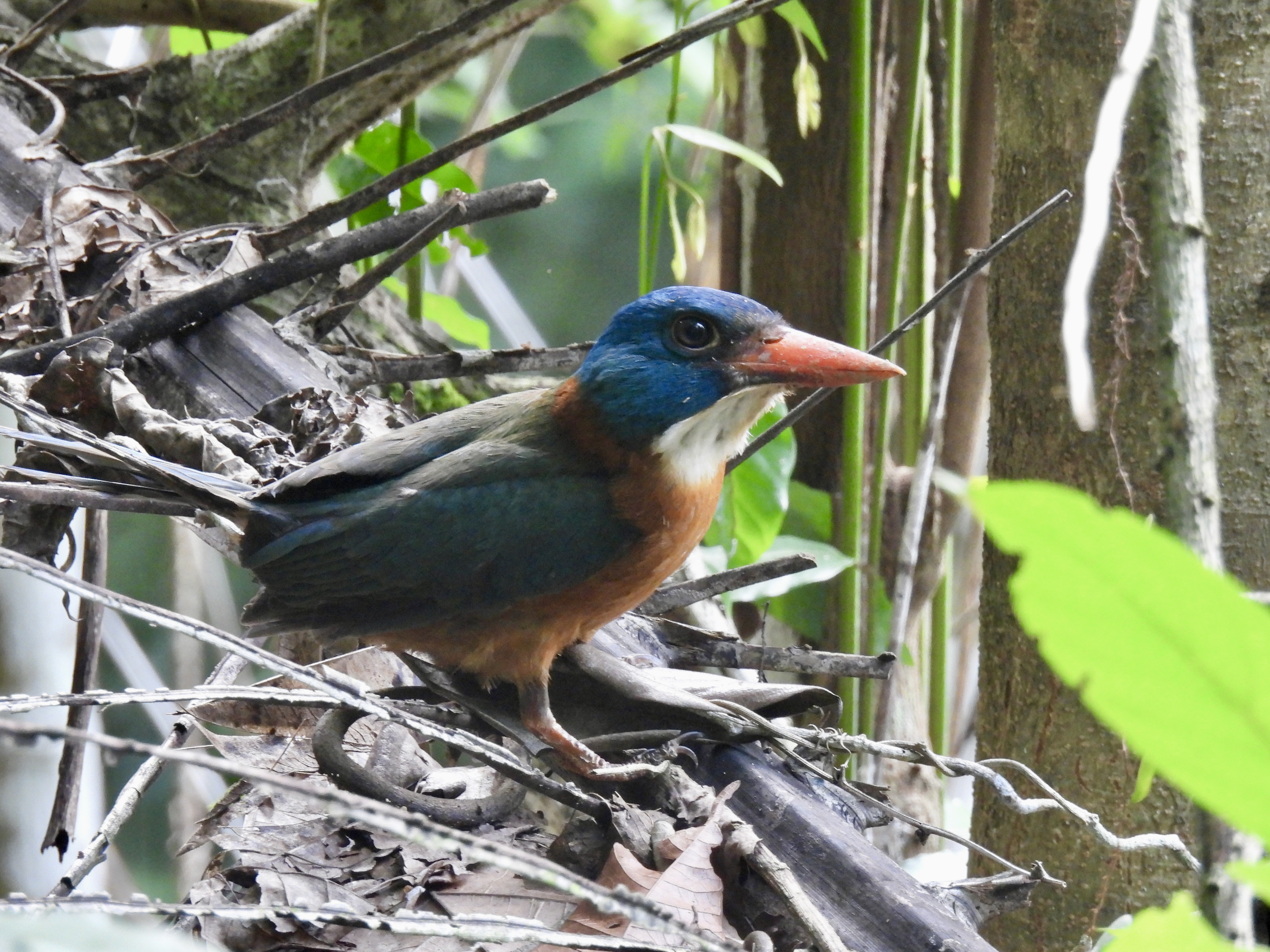
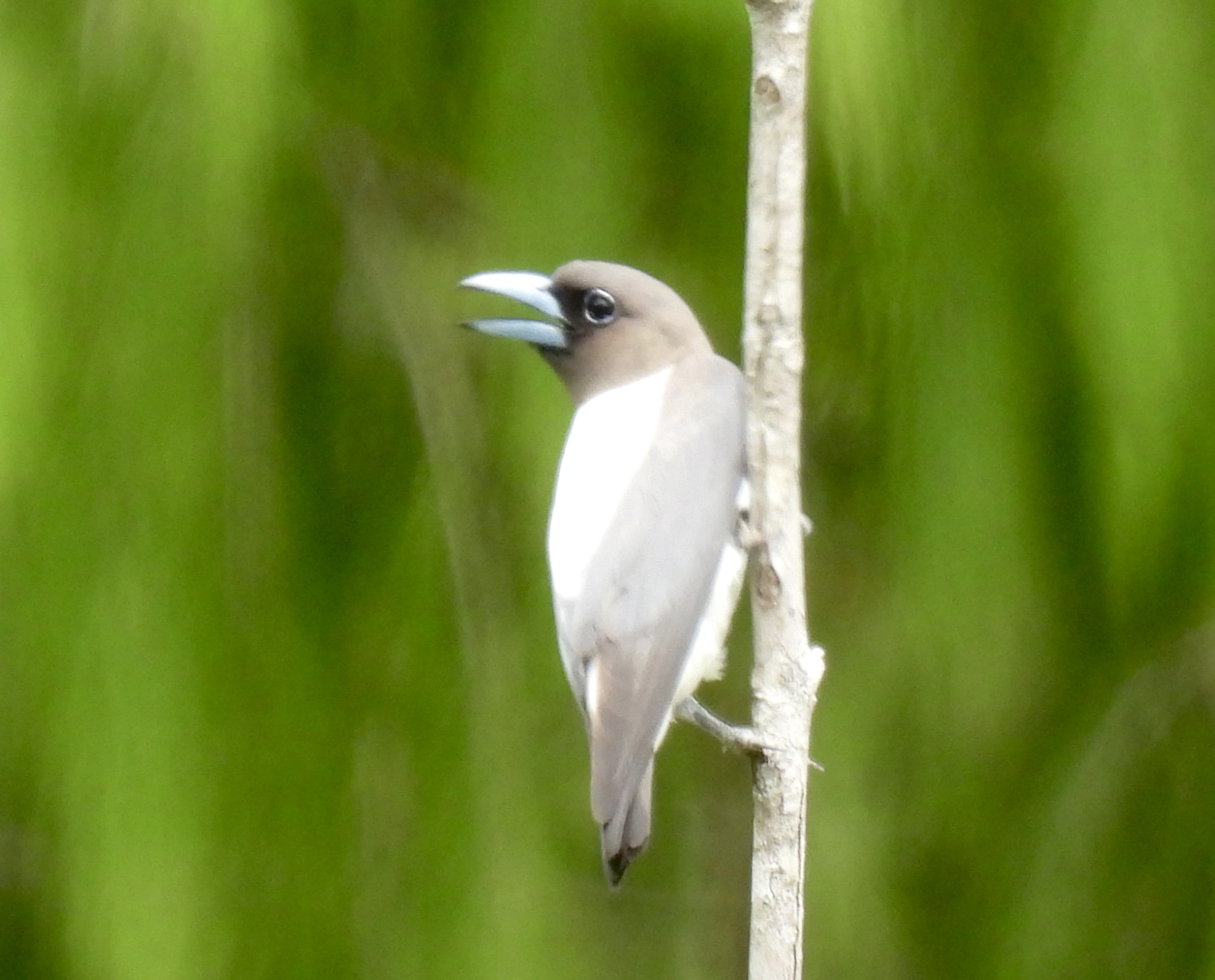

Birds of Hungayono Forest (left to right): Sulawesi Dwarf Kingfisher, Knobbed Hornbill (top row); Green-backed Kingfisher, Ivory-backed Woodswallow, & Sulawesi Hornbill (bottom row).
Upan and I concluded our intense, off-trail expedition at around 2:00pm. At this point, I was sweating out enough salty water to fill a small ocean, and I’d seen most everything I’d wanted to, so we trekked back to the ranger station. The freshwater tap there was a lifesaver—the well water in Hungayono is surprisingly safe to drink without filtration.
On the hike back to the park entrance, between 2:30-4:00pm, I did some additional mammalwatching with Upan. We noted some more Whitish Dwarf Squirrels—and this time I got good record shots—along with a large troop of Gorontalo Macaques.
We also had good views of a Maleo just off the side of the trail, along with a flock of 40 Knobbed Hornbills clustered around a fruiting tree.
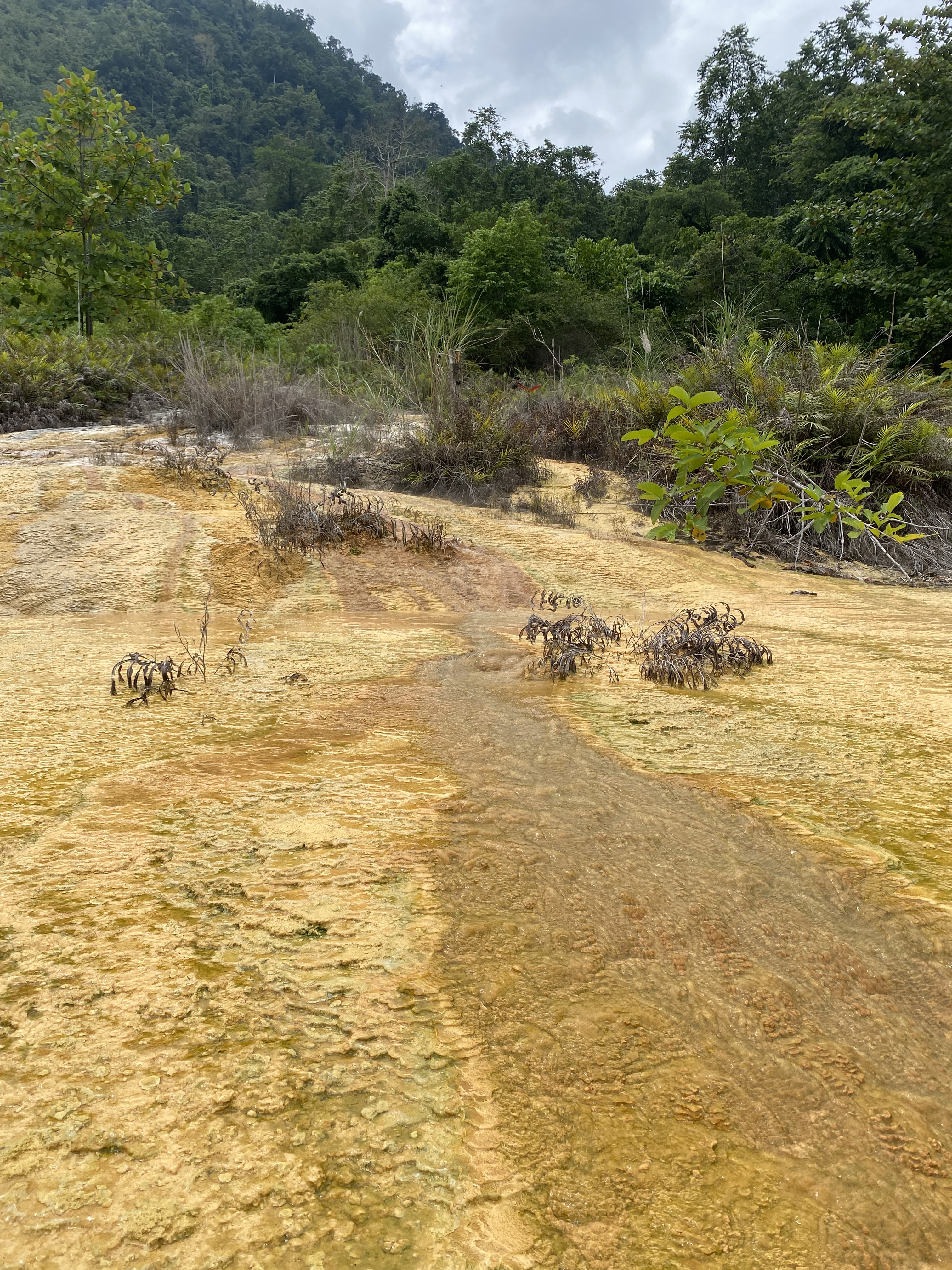
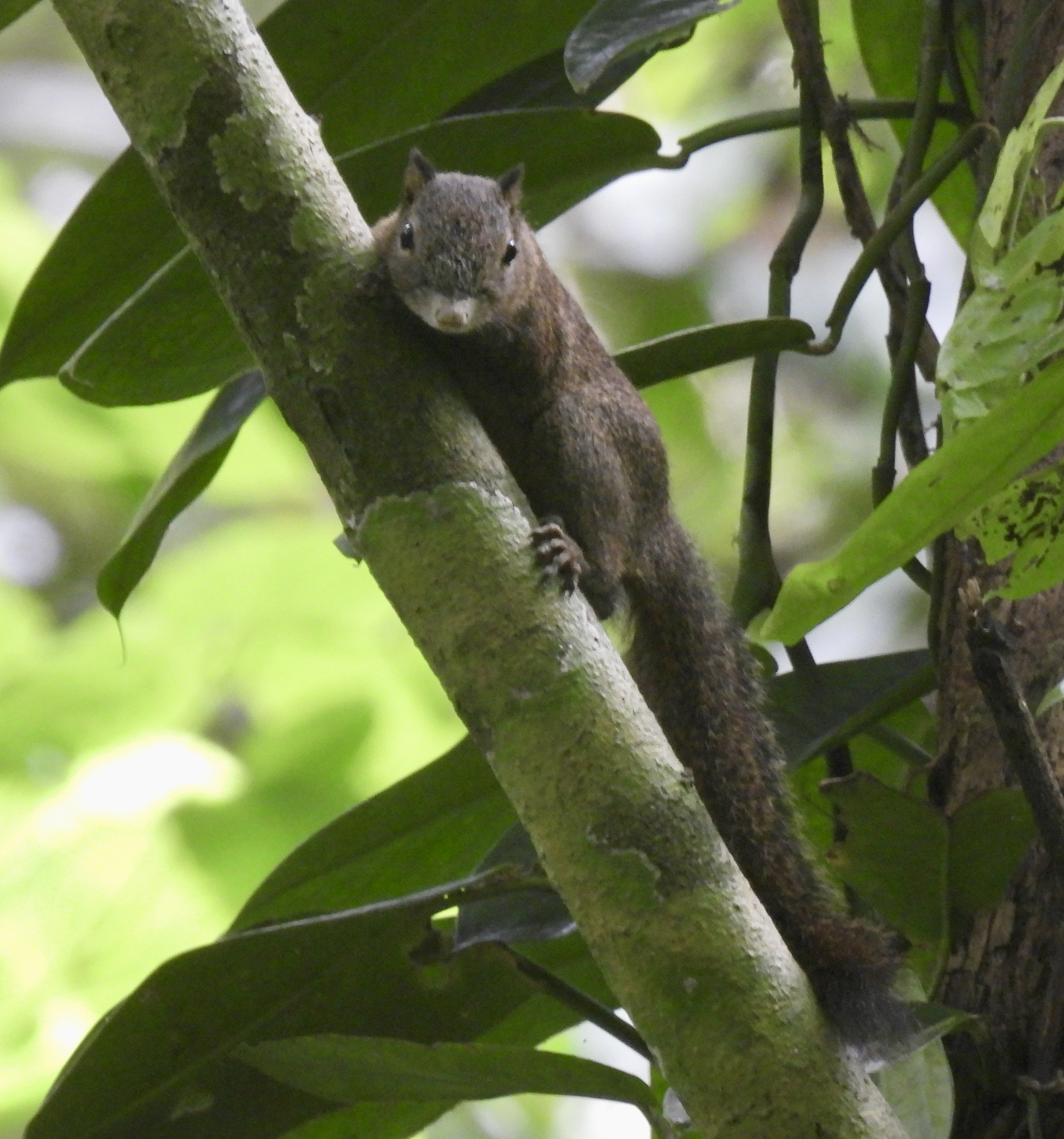
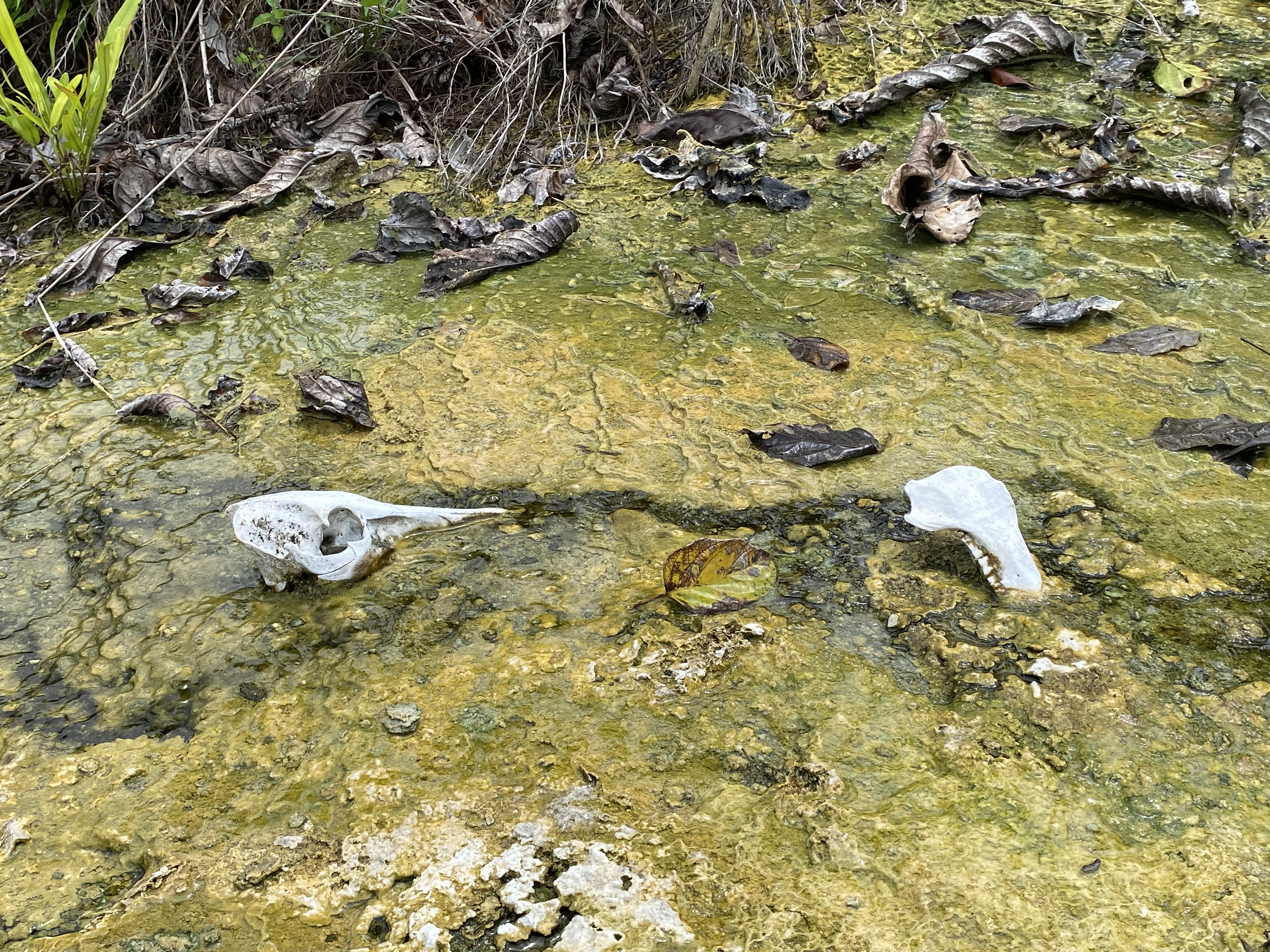
Hungayono Hot Spring (left & bottom right), & Whitish Dwarf Squirrel (top right)
I looked around for Sulawesi Giant Squirrels, which are present in Hungayono, but had no luck. We checked some hollowed-out trees and undersides of palm fronds along the trail for more bats, but couldn’t find any. At 4:15pm, I bid farewell to Upan and journeyed back to the village outside the park on a different rangers’ motorbike. From the village, Ono and I drove off to the nearby city of Gorontalo for the night before heading to Nantu Forest Reserve in the morning.
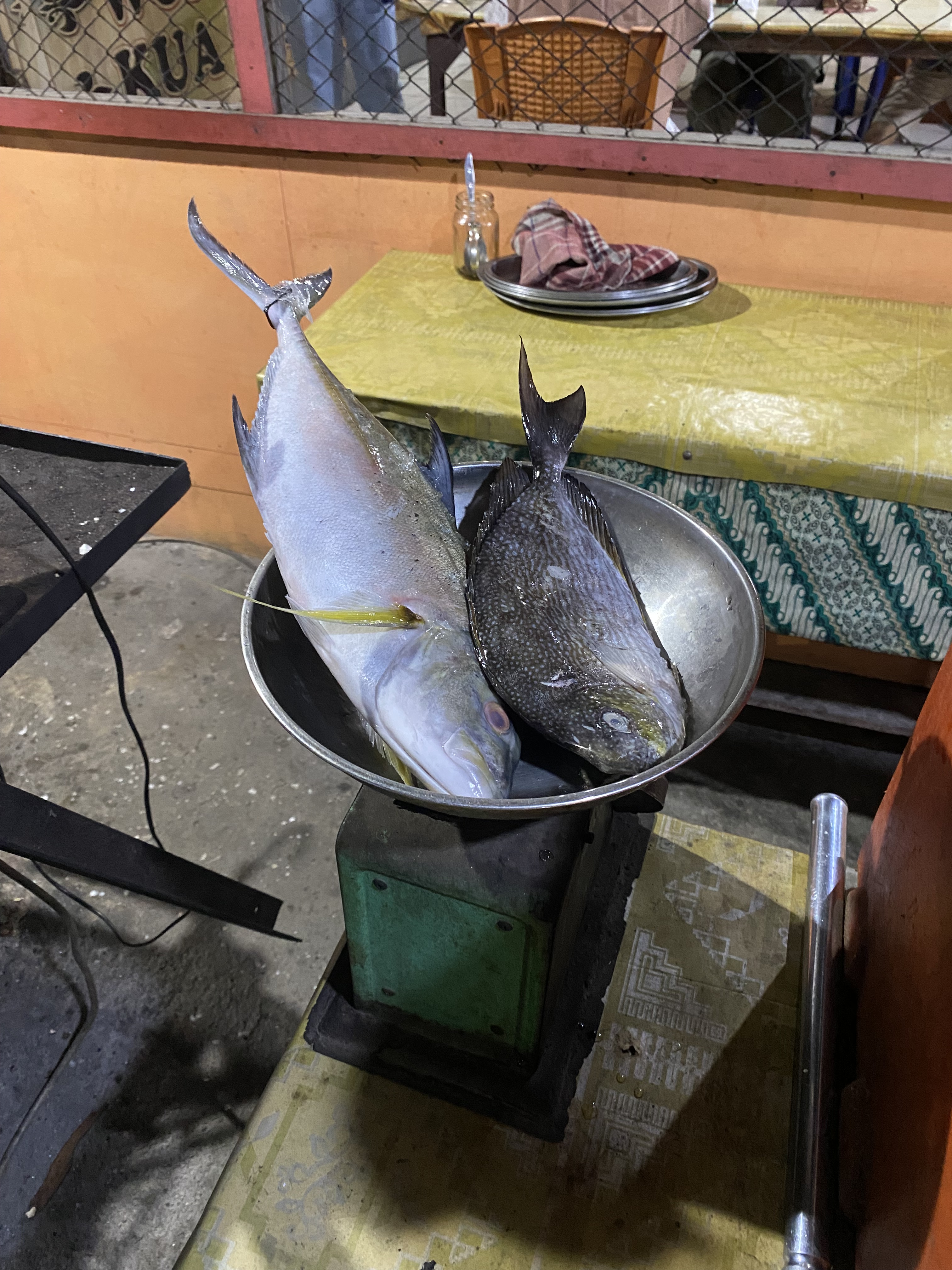
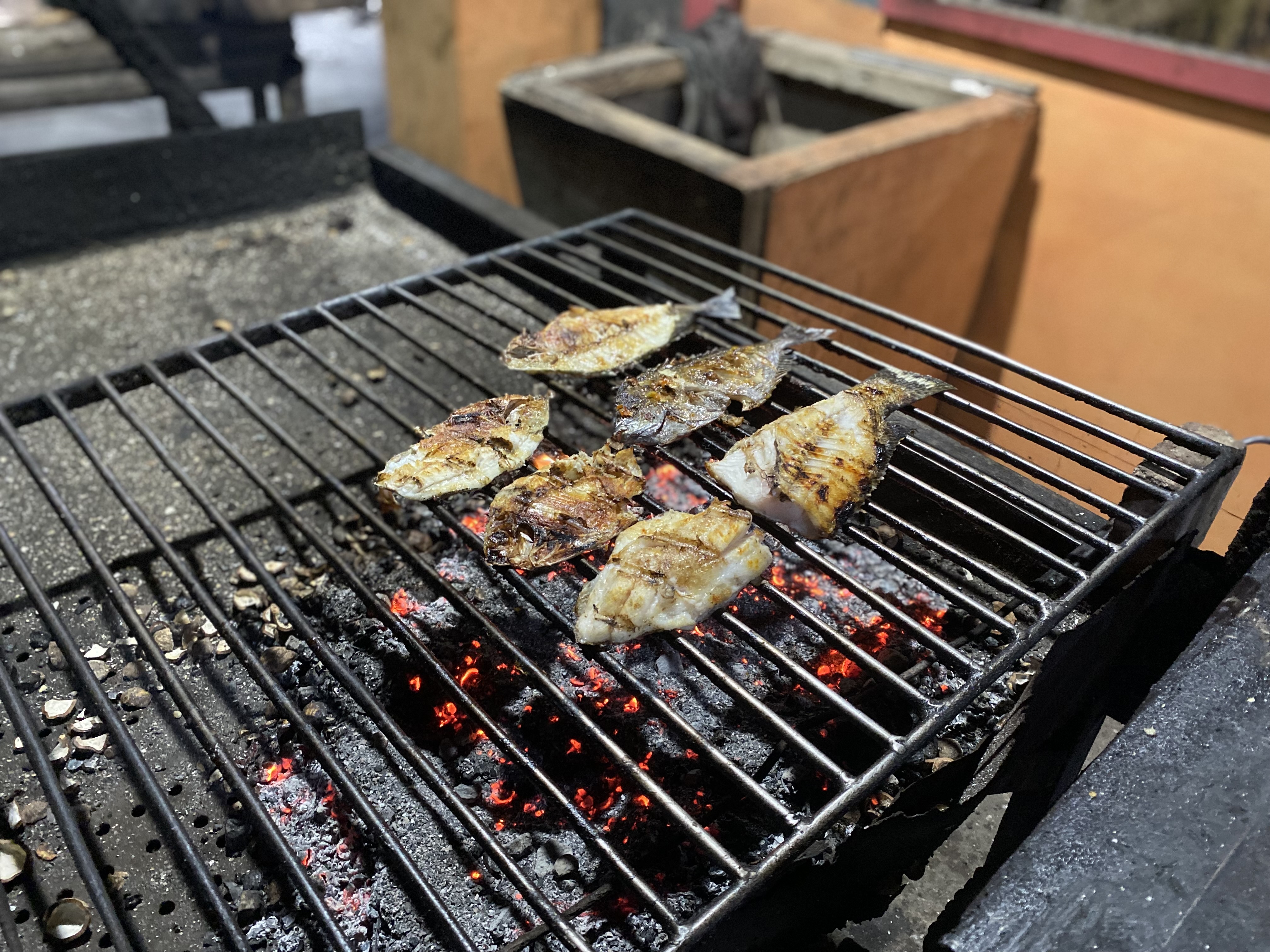

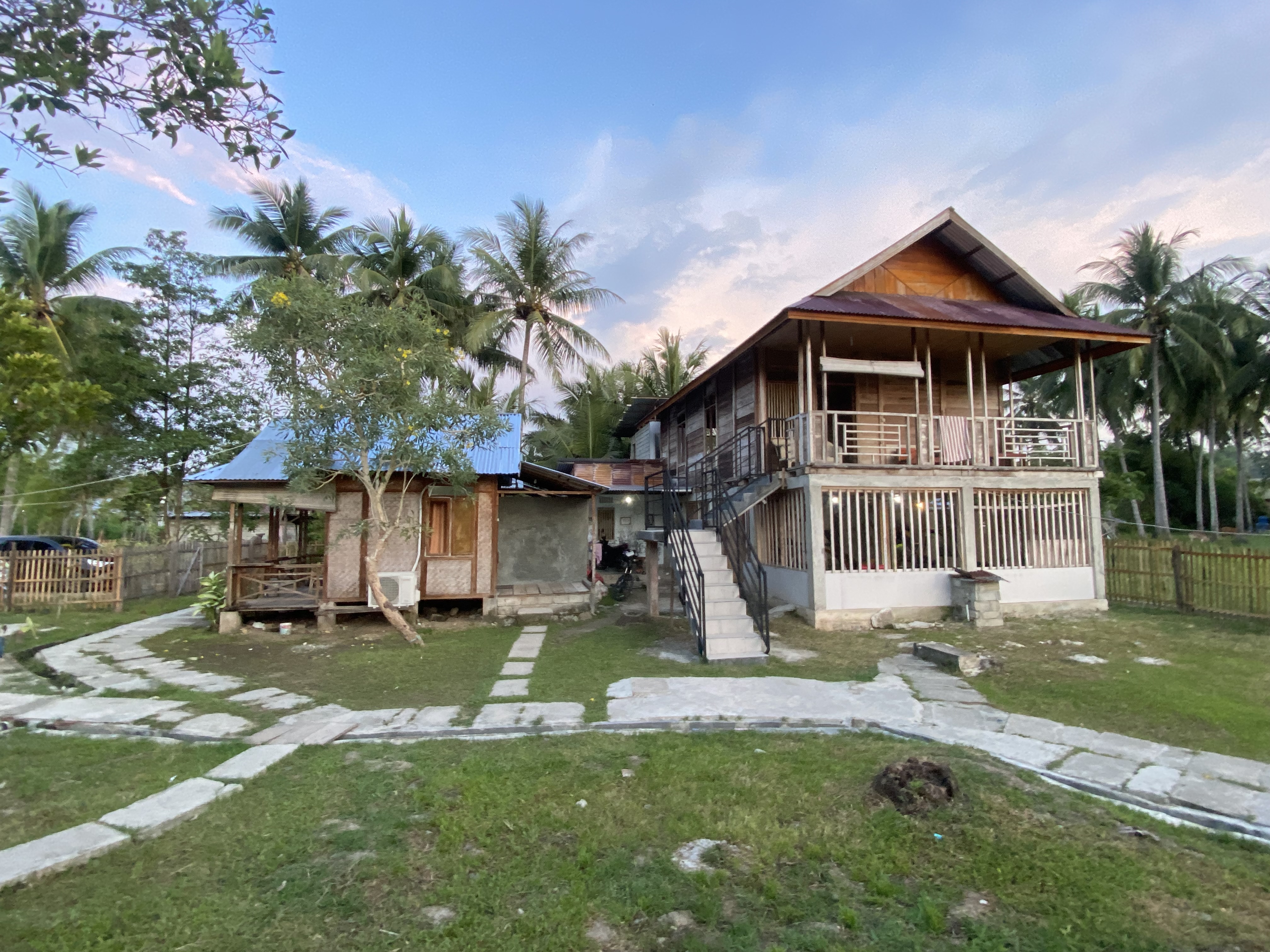
Sunset Homestay, our humble abode in Gorontalo (right center & bottom right), and local fish dinner (left & top right)
All in all, I loved every second of my sweaty, muddy, buggy, thorny thrill-ride through the pristine, wildlife-filled Hungayono Forest. It was absolutely worth popping over to Hungayono on my Sulawesi trip, and I really wish I’d spent the night. Overnight mammal/birding trips to the forest are definitely possible, and can be organized through my guide, Ono. Had I stayed overnight, I’m almost certain I would’ve nailed a couple more bats, some rats, and possibly Dwarf Cuscus or Sulawesi Warty Pig.
Next stop…..Nantu Forest Reserve, to try my luck at spotting the fabled Babirusa! Stay tuned for the third and final chapter of my 2024 Sulawesi wildlife adventure.
Sulawesi Mammals: (Lifers bolded)
| Common Name: | Scientific Name: |
| 1. Sulawesi Bear Cuscus | Ailurops ursinus |
| 2. Celebes Crested Macaque | Macaca nigra |
| 3. Gorontalo Macaque | Macaca nigrescens |
| 4. Heck’s Macaque | Macaca hecki |
| 5. Gursky’s Spectral Tarsier | Tarsius spectrumgurskyae |
| 6. Long-tailed Taeromys (Celebes Rat) . | Taeromys celebensis |
| 7. Celebes Dwarf Squirrel | Prosciurillus murinus |
| 8. Whitish Dwarf Squirrel | Prosciurillus leucomus |
| 9. Sulawesi Horseshoe Bat | Rhinolophus celebensis |
| 10. Sulawesi Rousette | Pilonycteris celebensis |
| 11. Hardwicke’s Woolly Bat | Kerivoula hardwickii |
| 12. Lesser False Vampire Bat | Megaderma spasma |
Sulawesi Birds: (Lifers bolded)
| Common Name: | Scientific Name: |
| 1. Maleo | Macrocephalon maleo |
| 2. Knobbed Hornbill | Rhyticeros cassidix |
| 3. Sulawesi Hornbill | Penelopides exarhatus |
| 4. Sulawesi Scops Owl | Otus manadensis |
| 5. Sulawesi Dwarf Kingfisher | Ceyx fallax |
| 6. Green-backed Kingfisher | Actenoides monachus |
| 7. Sulawesi Lilac Kingfisher | Cittura cyanotis |
| 8. Pale-blue Monarch | Hypothymis puella |
| 9. White-faced Cuckoo-Dove | Turacoena manadensis |
| 10. Sultan’s Cuckoo-Dove | Macropygia doreya |
| 11. Silver-tipped Imperial Pigeon | Ducula luctuosa |
| 12. Stephan’s Dove | Chalcophaps stephani |
| 13. Sulawesi Ground Dove | Gallicolumba tristigmata |
| 14. Green Imperial Pigeon (Chestnut-naped subspecies) | Ducula aenea paulina |
| 15. Yellow-sided Flowerpecker | Dicaeum aureolimbatum |
| 16. Sulawesi Babbler | Pellorneum celebense |
| 17. Yellow-billed Malkoha | Phaenicophaeus calyorhynchus |
| 18. Black-billed Koel | Eudynamys melanorhynchus |
| 19. Ivory-backed Woodswallow | Artamus monachus |
| 20. Finch-billed Myna | Scissirostrum dubium |
| 21. White-necked Myna | Streptocitta albicollis |
| 22. Azure-rumped Parrot | Tanygnathus sumatranus |
| 23. Ashy Woodpecker | Mulleripicus fulvus |
| 24. Sulawesi Blue Flycatcher | Cyornis omissus |
| 25. Sulawesi Nightjar | Caprimulgus celebensis |
| 26. Sahul Sunbird | Cinnyris frenatus |
| 27. Black-faced Munia | Lonchura molucca |
| 28. Chestnut Munia | Lonchura atricapilla |
| 29. Gray Wagtail | Motacilla cinerea |
| 30. Hair-crested Drongo (White-eyed Sulawesi morph) | Dicrurus hottentottus leucops |
| 31. Collared Kingfisher | Todiramphus chloris |
| 32. Philippine Megapode | Megapodius cumingii |
| 33. Spotted Dove | Spilopelia chinensis |
| 34. Eurasian Tree Sparrow | Passer montanus |
| 35. Little Egret | Egretta garzetta |
| 36. Eastern Cattle Egret | Bubulcus coromandus |
| 37. Pacific Reef Heron | Egretta sacra |
| 38. Eastern Red-rumped Swallow | Cecropis daurica |
| 39. Barn Swallow | Hirundo rustica |
 Bennett Gardner Wildlife Watching
Leave a comment