
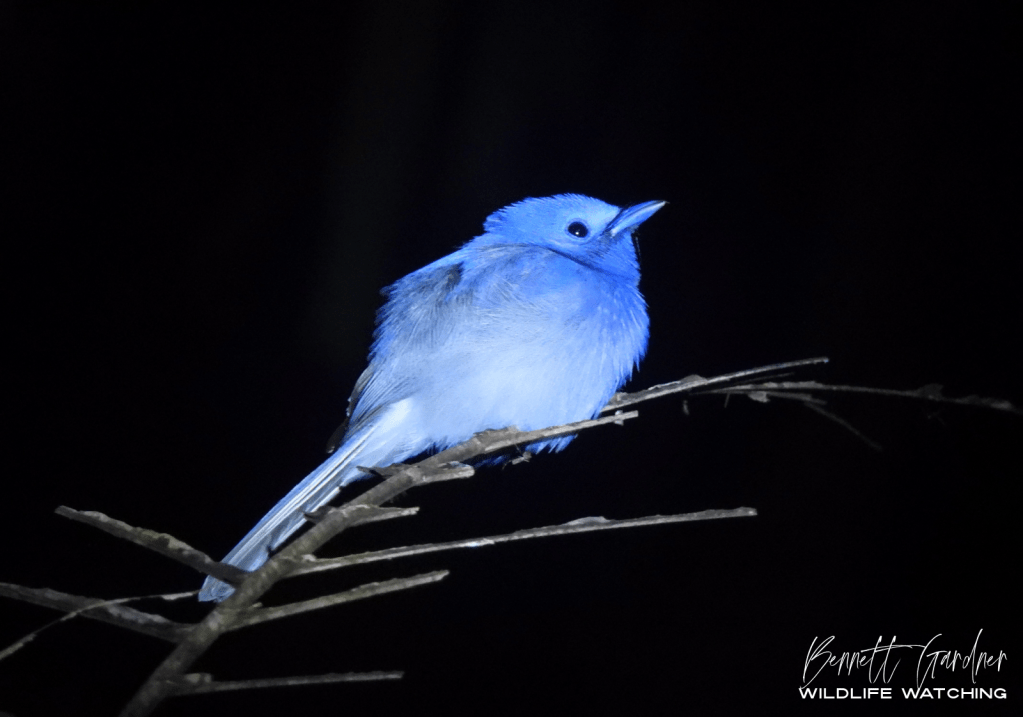
I spent two days and one night (Days 4 & 5) of my Sulawesi trip exploring the verdant, 520 km² Nantu Forest Reserve in Gorontalo Province, Sulawesi, where I obtained a total of one hundred million bug bites, mud-soaked shoes, and zero sightings of Babirusa, Sulawesi Warty Pig, or Lowland Anoa (my target mammals).
Prior to my trip, I had read many mammalwatching reports (some even as recent as 2023) about this legendary reserve; once the best (only?) spot on Earth to reliably see wild North Sulawesi Babirusas. I was extremely keen on visiting Nantu for the possibility of seeing Sulawesi’s endemic ungulates, even after hearing from my guide Ono that it was a thirteen-hour drive from Tangkoko on rough roads out into the middle of nowhere and was no longer a good spot for my targets.
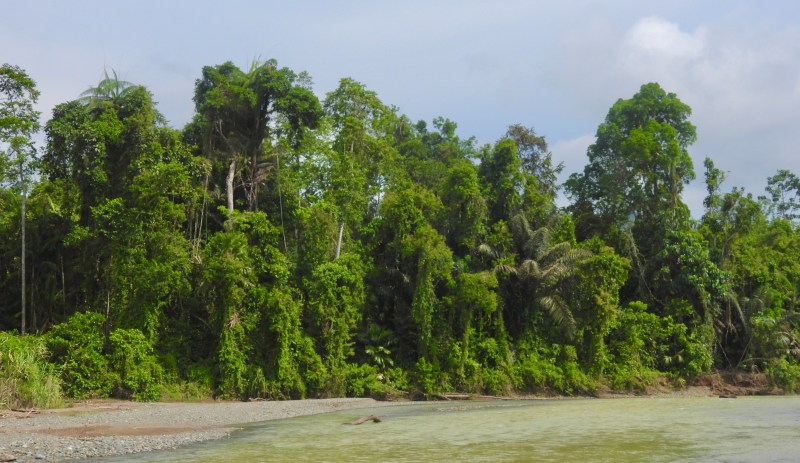
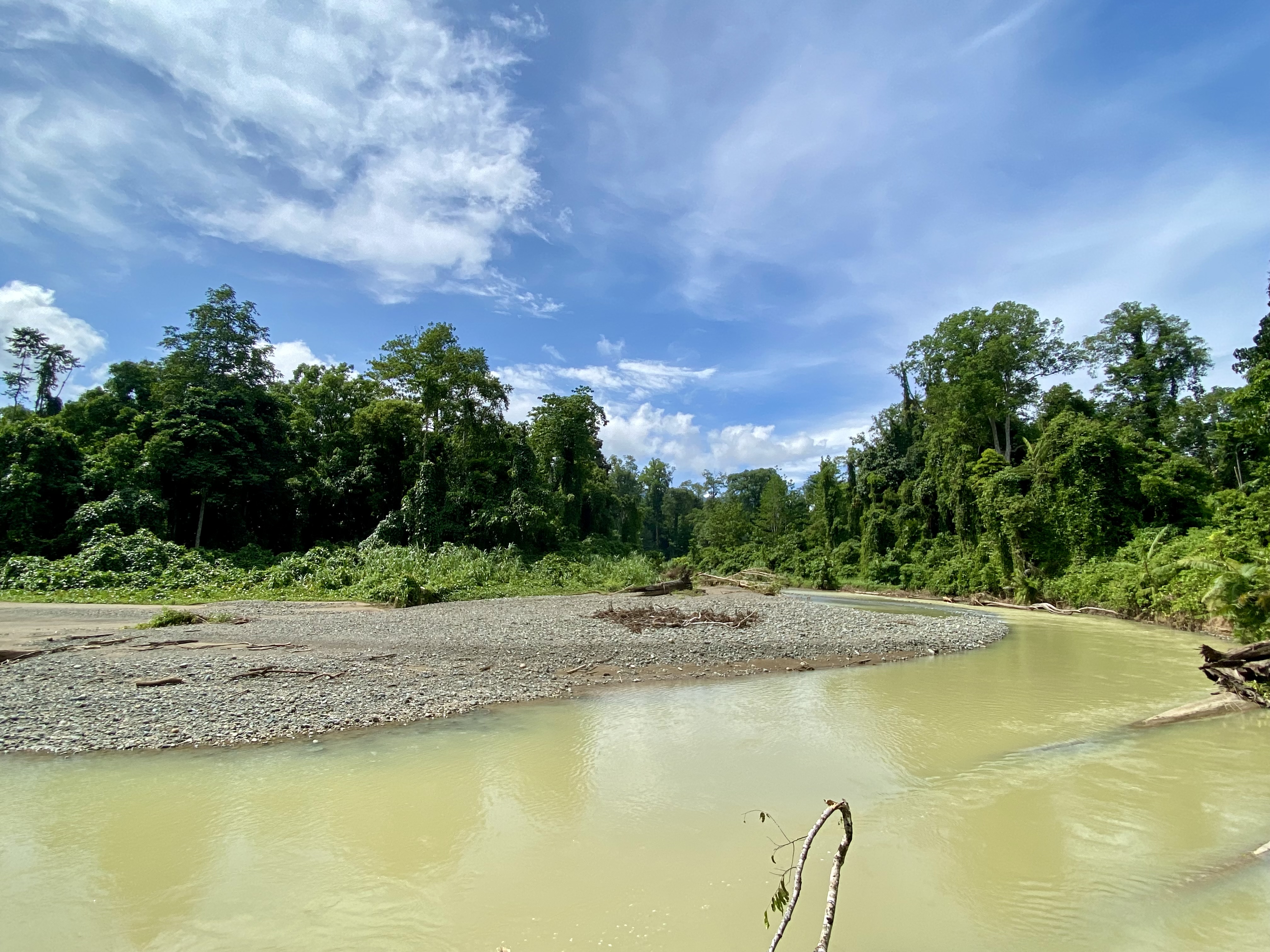

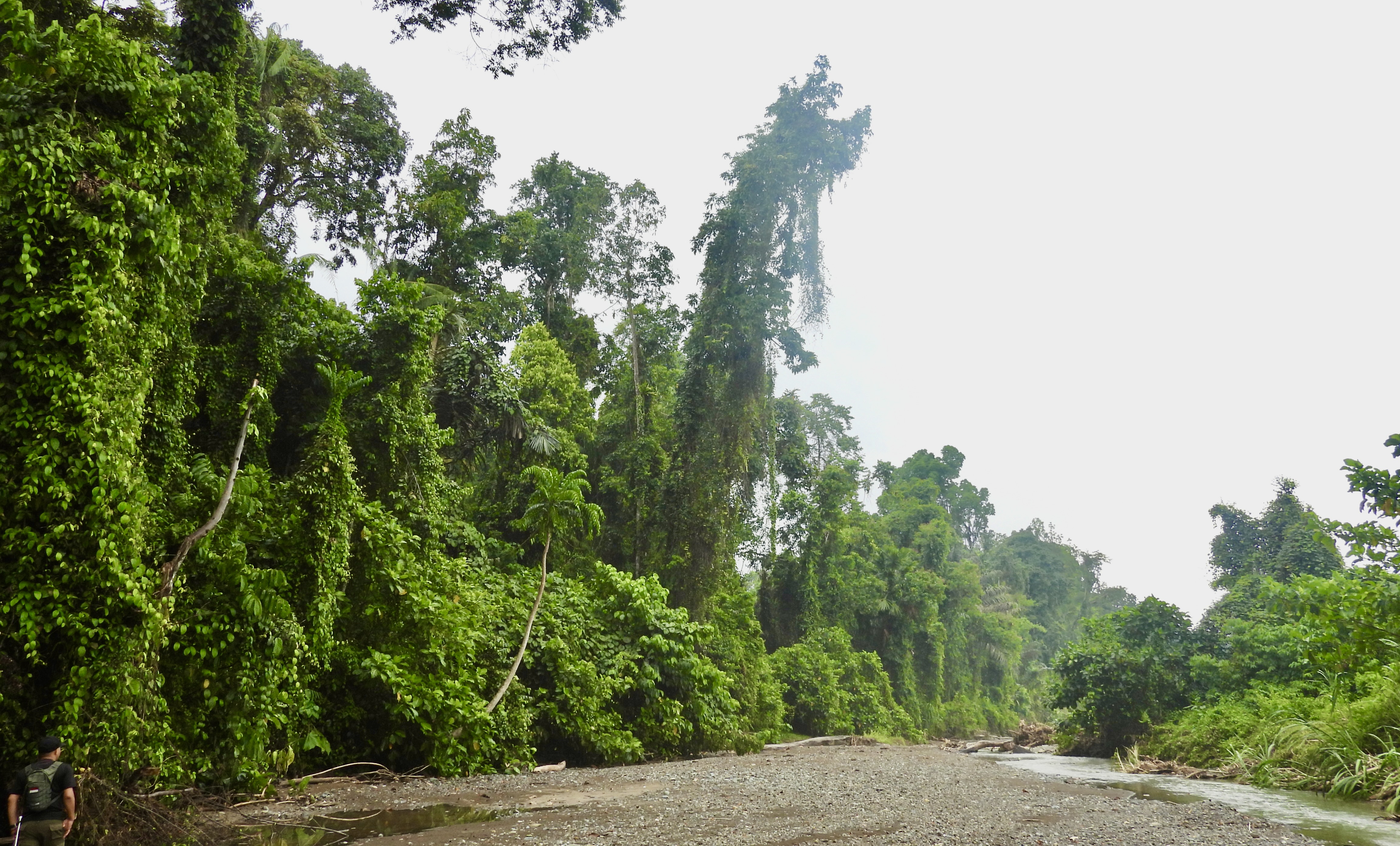
Nantu Forest Reserve
I probably should’ve listened to Ono. In retrospect, my visit to Nantu Forest was mainly a series of upsets & disappointments. The main upset was witnessing the damage that the gold mining and palm oil industries are causing to the local ecosystem.
In fact, over this past year (2024), Nantu’s famously conspicuous wild Babirusa population has completely disappeared from the forest area surrounding the Nantu Salt Lick (where they were once common). No park ranger has seen them on camera traps or in person for over four months as of my visit. Their tracks, foraging trails, and other signs of presence have gone missing inside the forest.
And the reason why?
A massive, illegal gold mining operation INSIDE Nantu Forest Reserve, that blocks all previous foraging routes used by the Babirusas, has scattered the pigs deep into the forest. And who knows how many have been poached by the gold miners……
What’s worse, far worse, about this already upsetting situation is that the Indonesian government does NOTHING to shut down the mine! In fact, the Nantu park rangers mentioned that government officials are getting payouts by the mine operators as extra incentive to leave them be. It proves how egregiously corrupt the local government is there, and they should be totally ashamed about letting one of the last intact Wallacean ecosystems be destroyed in the name of capitalism.
On that note, the broader gold mining industry in Sulawesi and its environmental misdeeds are appalling. All three forest reserves I visited were either in the process of being destroyed by gold mining or were under dire threat of being encroached upon by mining companies. Tangkoko Nature Reserve was an example of the latter— the huge Toka Tindung Gold Mine stretches right up to the border of the park.
In Nantu Forest Reserve, the gold mining situation has reached new heights. Not only is there the huge mine inside the forest, but also plenty of smaller illegal mines operating on the fringes of the reserve. I walked past one of these mines on my way into the reserve on Day 4 (November 18th), and though we reported it to the park rangers it wasn’t shut down until the next day…..
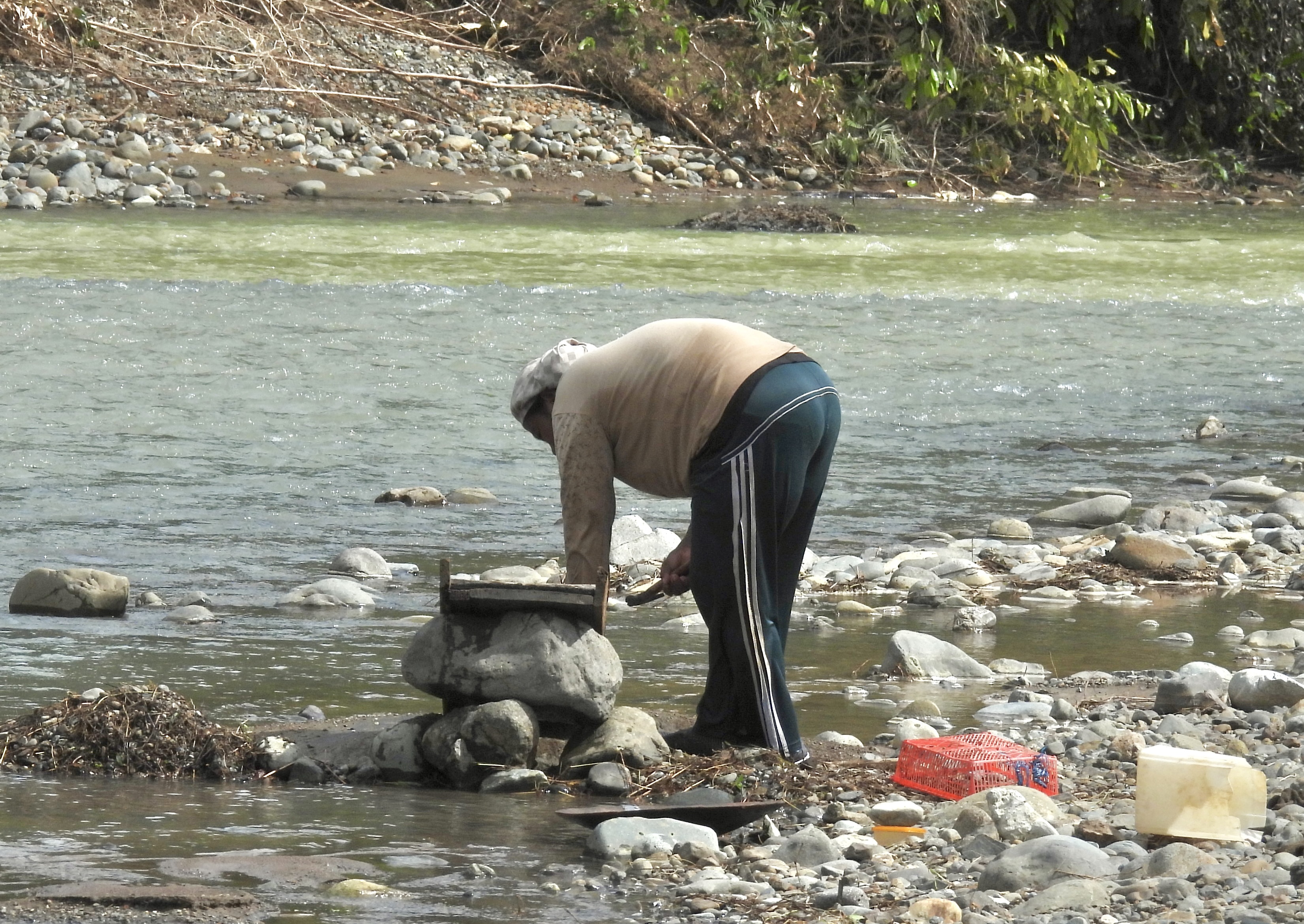

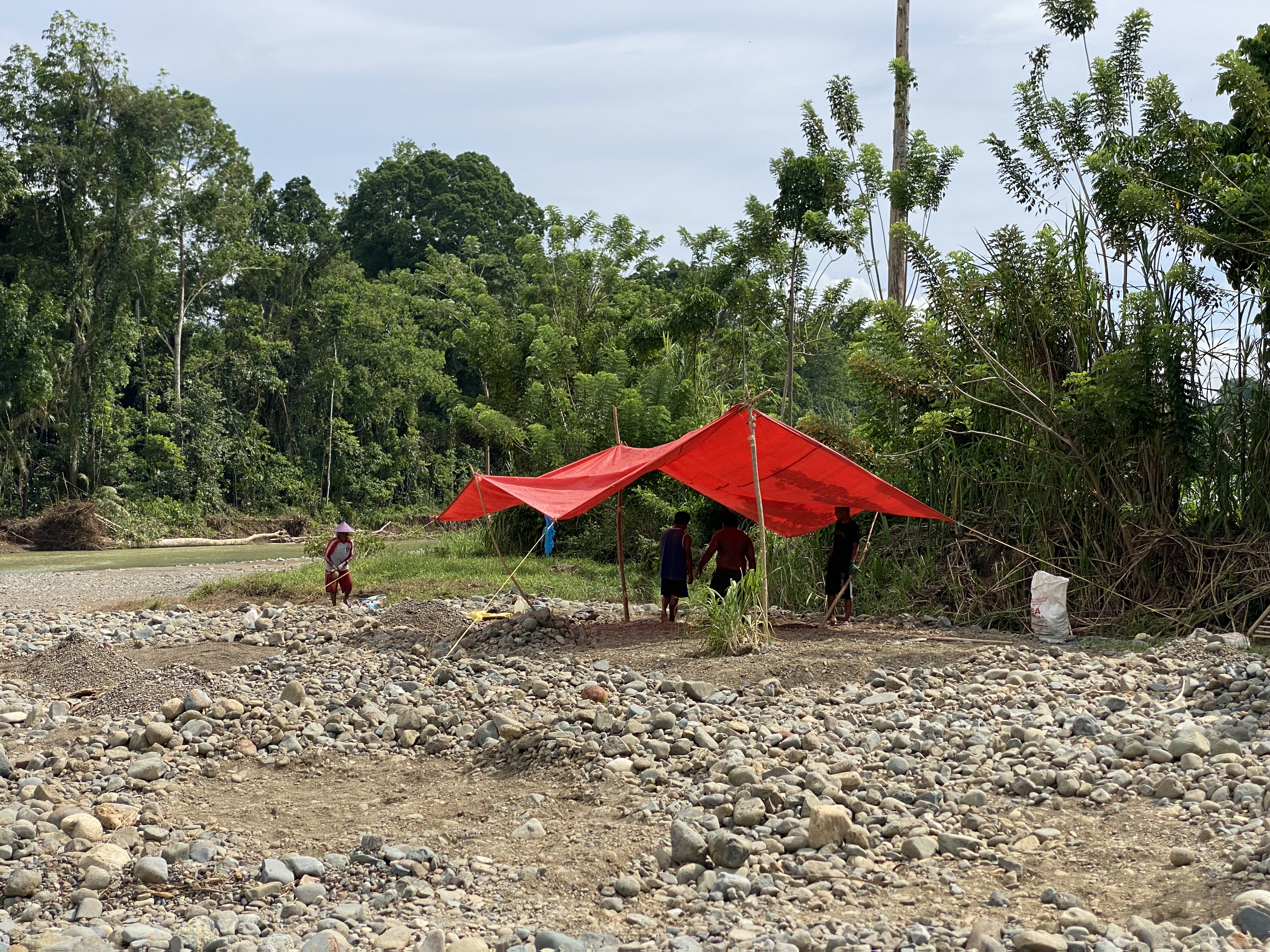

Illegal gold mine on the border of Nantu Forest Reserve; November 18th, 2024.
As if the illegal gold mining wasn’t bad enough news for Nantu’s wildlife, oil palm monocultures are taking over the forests on the fringes of the reserve. And man do I hate the palm oil industry—the leading cause of the ‘ecocide’ currently plaguing Southeast Asia’s remaining rainforests. The islands of Borneo and Sumatra have borne the worst of forest conversion to palm oil over the past 50 years, but it seems like this environmental curse is now spreading to remote regions of Sulawesi too.

Palm oil encroachment into the hilly rainforests of Nantu Forest Reserve; November 18th, 2024.
My 2024 visit to Nantu Forest Reserve was the first time in my life that I’d experienced a ‘protected’ ecosystem stripped of its iconic wild mammals by humans before I could have a chance to see them for myself. It was a sobering experience for an eighteen-year-old aspiring zoologist.
Right now, the future of Nantu’s Babirusas and other wildlife hangs by a thread. If nothing is done to halt the expansion of gold mines or palm oil plantations inside the reserve, the ecosystem might well be destroyed or permanently altered within a couple decades.


The palm oil industry seems to be thriving in Sulawesi…..
Witnessing the destruction of a pristine ecosystem was upsetting enough, but it was also dissatisfying to see very few mammals in Nantu besides a single bat and some extremely shy Heck’s Macaques after reading about the ‘Babirusa paradise’ described by other mammalwatchers.
To add to my bad experience, the permanent hide at the Nantu Salt Lick (the former congregation site of Babirusas), a favorite of mammalwatchers for over a decade, had been crushed by a fallen tree in a recent flood. Ono and the park ranger we were with had to build me a makeshift hide out of palm fronds that was about as comfortable as sitting in a cramped, mosquito-filled steambath for hours on end. Oh yeah, and it was raining half the time too….
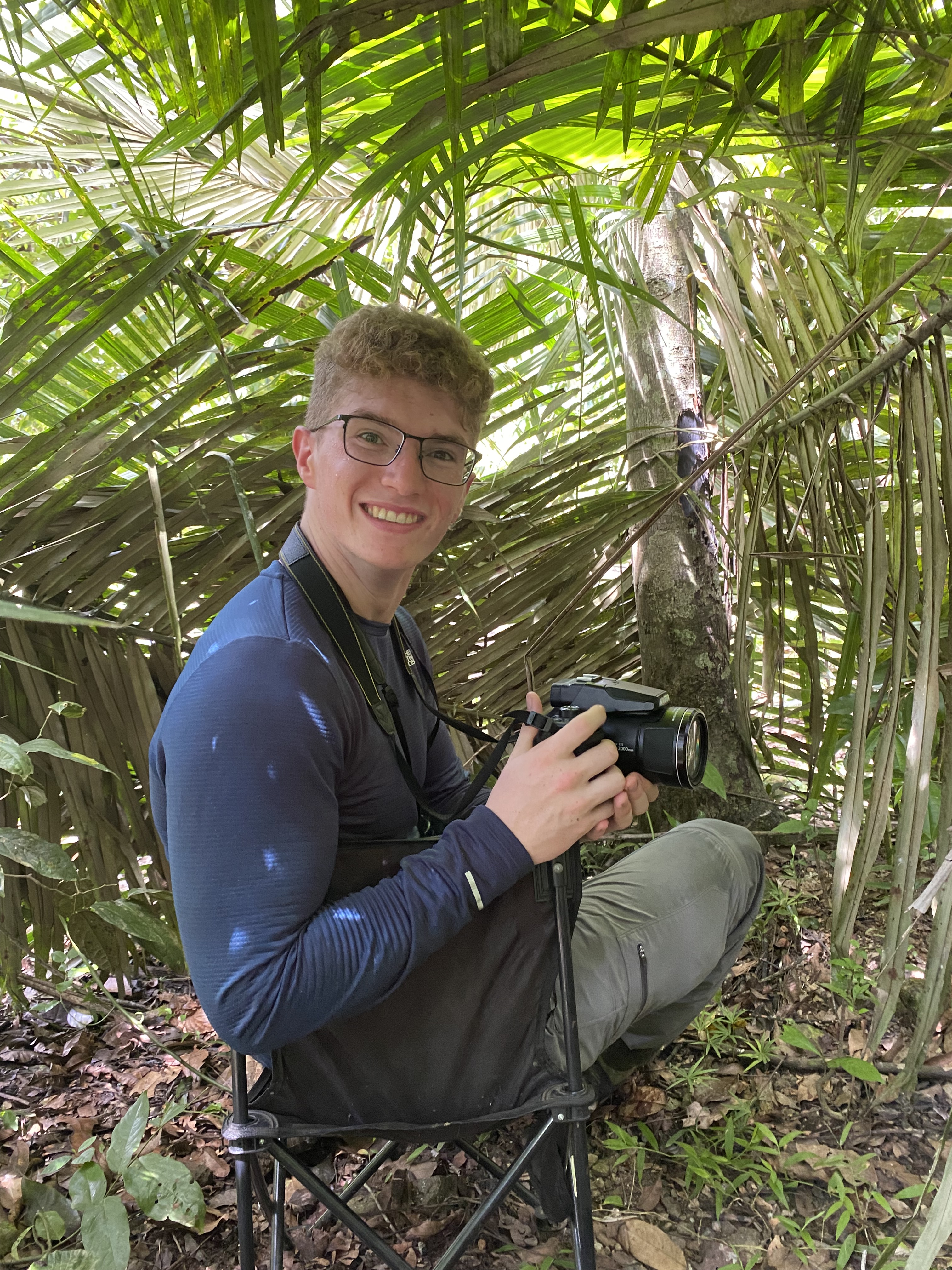
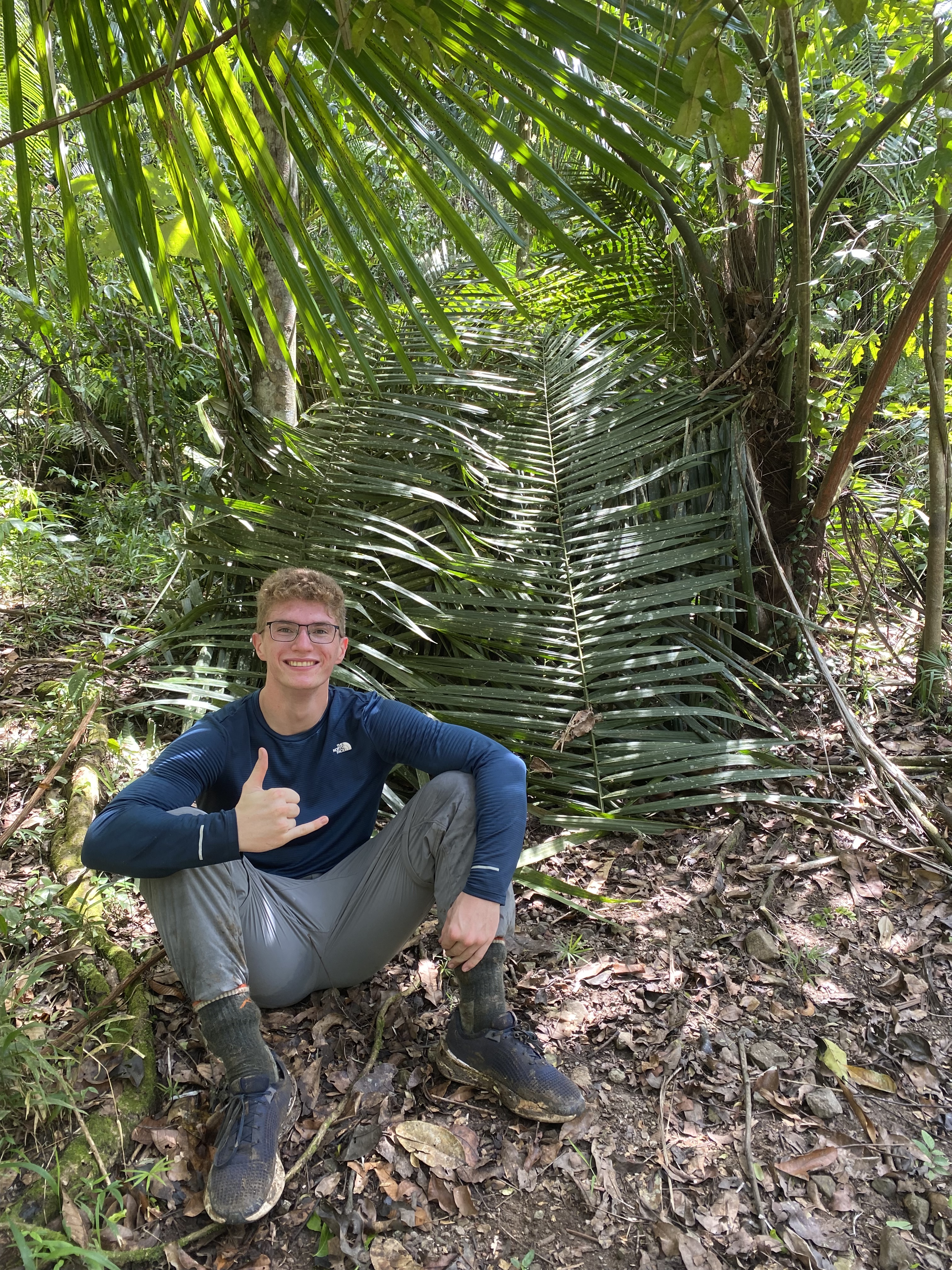
My Nantu hide! I graciously bought Ono a Bintang for building this masterpiece from scratch

Nantu Salt Lick
The worst part was seeing no mammals at the lick in seven combined hours of sitting in my hot, leafy hide, with the exception of a single Heck’s Macaque at 7:40am on Day 5. The monkey bolted into the forest as soon as it saw me peeping my mug out of the hide, and never returned. I tried to stay hopeful— there were a couple Anoa tracks scattered across the muddy section of the salt lick—but by my second day at the lick it felt like I was staring at a mud puddle and praying a Unicorn would manifest itself. Copious but beautiful White-faced Cuckoo-Doves & Stephan’s Emerald Doves at the lick alleviated some of my frustrations about the lack of mammals there, but not all of them.
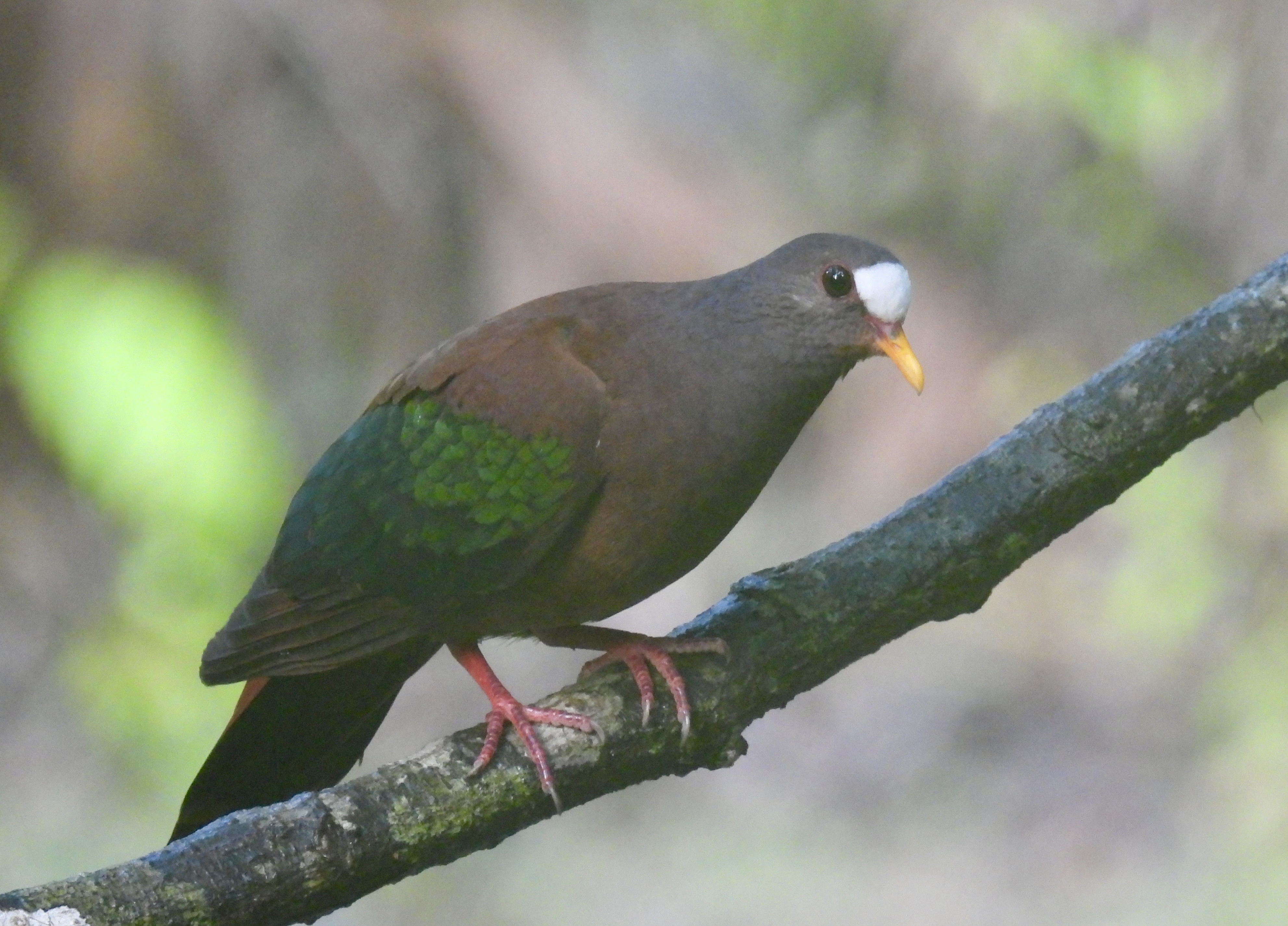


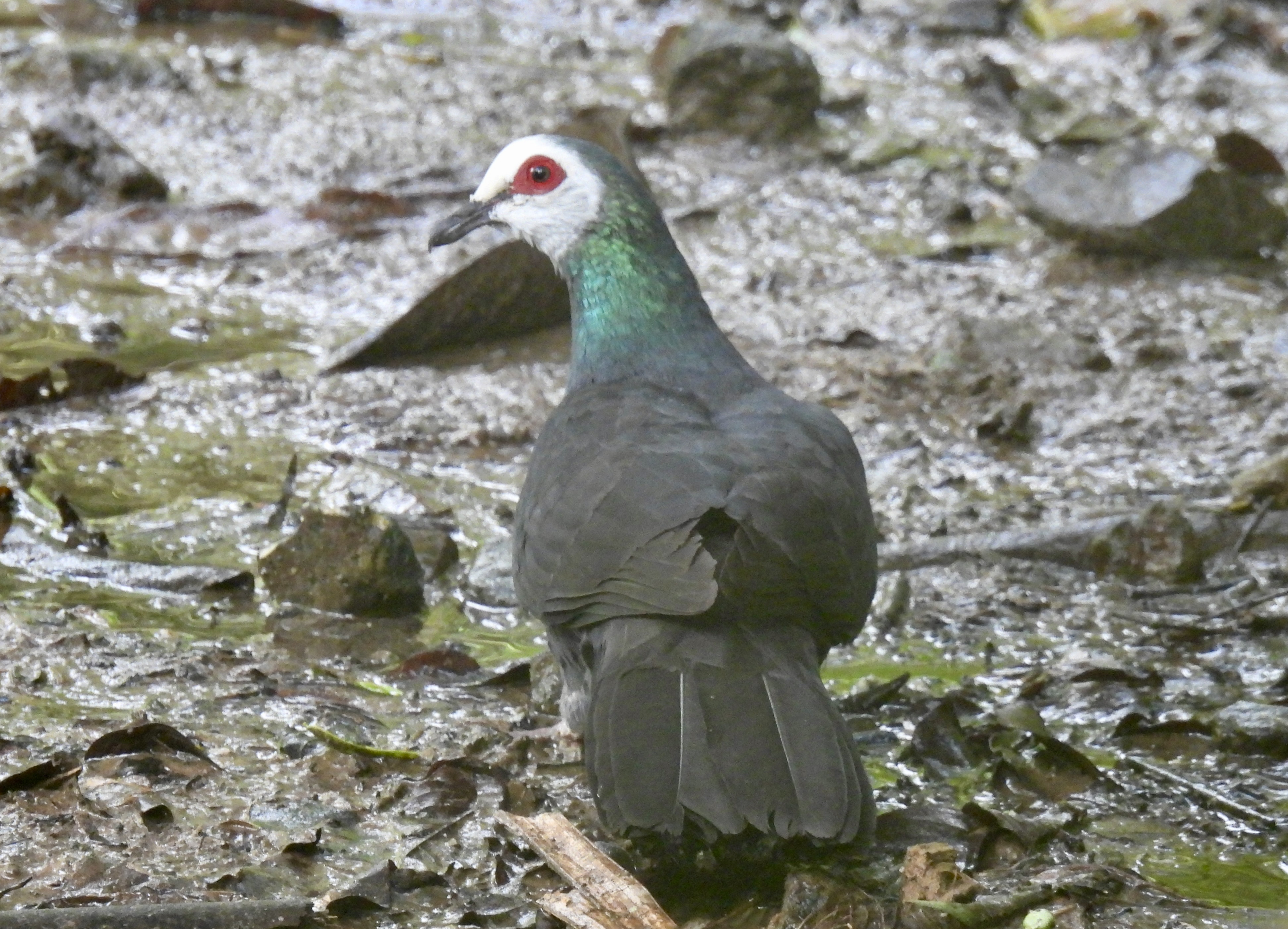
Birds of the Nantu Salt Lick: White-faced Cuckoo-Dove (bottom & top right), Stephan’s Emerald Dove (top left), and Gray Wagtail (bottom right)
There are a couple endemic primate specialities in Nantu that can still be spotted with some effort—those being Jatna’s Tarsiers and Heck’s Macaques. Ono knew a spot for Heck’s Macaques along the riverbank, and we saw a troop very briefly crashing through the forest at 3:00pm on Day 4. I got no good views or record shots of the primates.
Ono and I also spent an hour and a half spotlighting for Jatna’s Tarsiers on the evening of Day 4, in an area where the rangers apparently see them frequently, but no luck. I did have a nice sighting of a Hardwicke’s Woolly Bat hanging on a liana from 2m away, though. And also a close-up view of a beautiful Sulawesi Scops Owl.
The next morning, after another 3-hour spotting session in the hide, we tried once again for Heck’s Macaques along the riverbank but saw no mammals. There were, however, some beautiful butterflies, and flocks of endemic Finch-billed Mynas & Azure-rumped Parrots in the trees where macaque troops are regularly seen.
It was great to add a couple birds to my life list to compensate for meagre mammal sightings in Nantu. And in fact, I was thoroughly impressed by the overall number of Sulawesi-endemic birds I encountered on my trip given how little time I dedicated to birding. In fact, of the 39 bird species I recorded in Sulawesi, 21 of them were endemics! Aside from my trip to the Galapagos Islands in 2017, I’ve never racked up such a large list of avian endemics on a single trip.

Sulawesi Scops Owl at Nantu
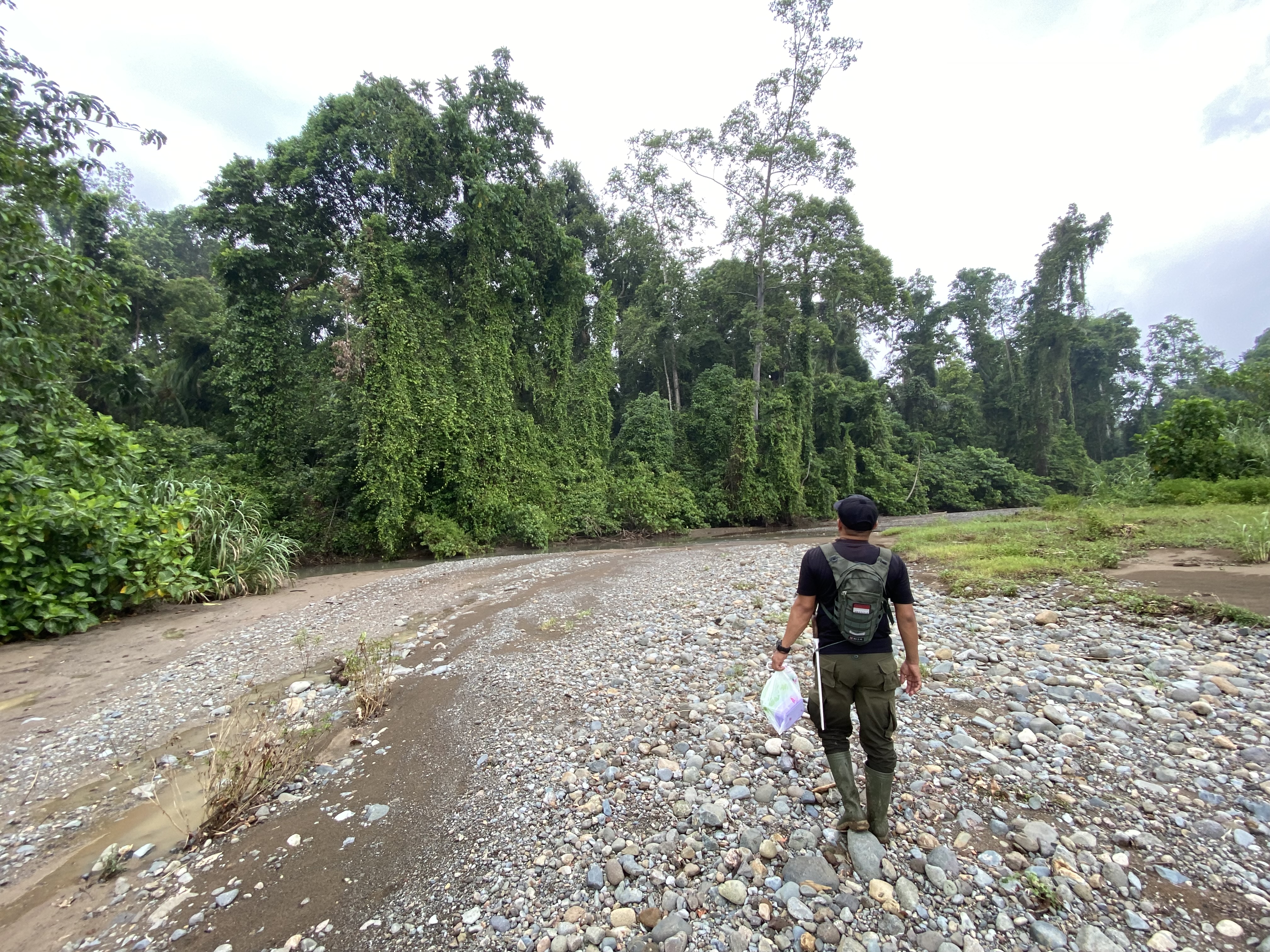
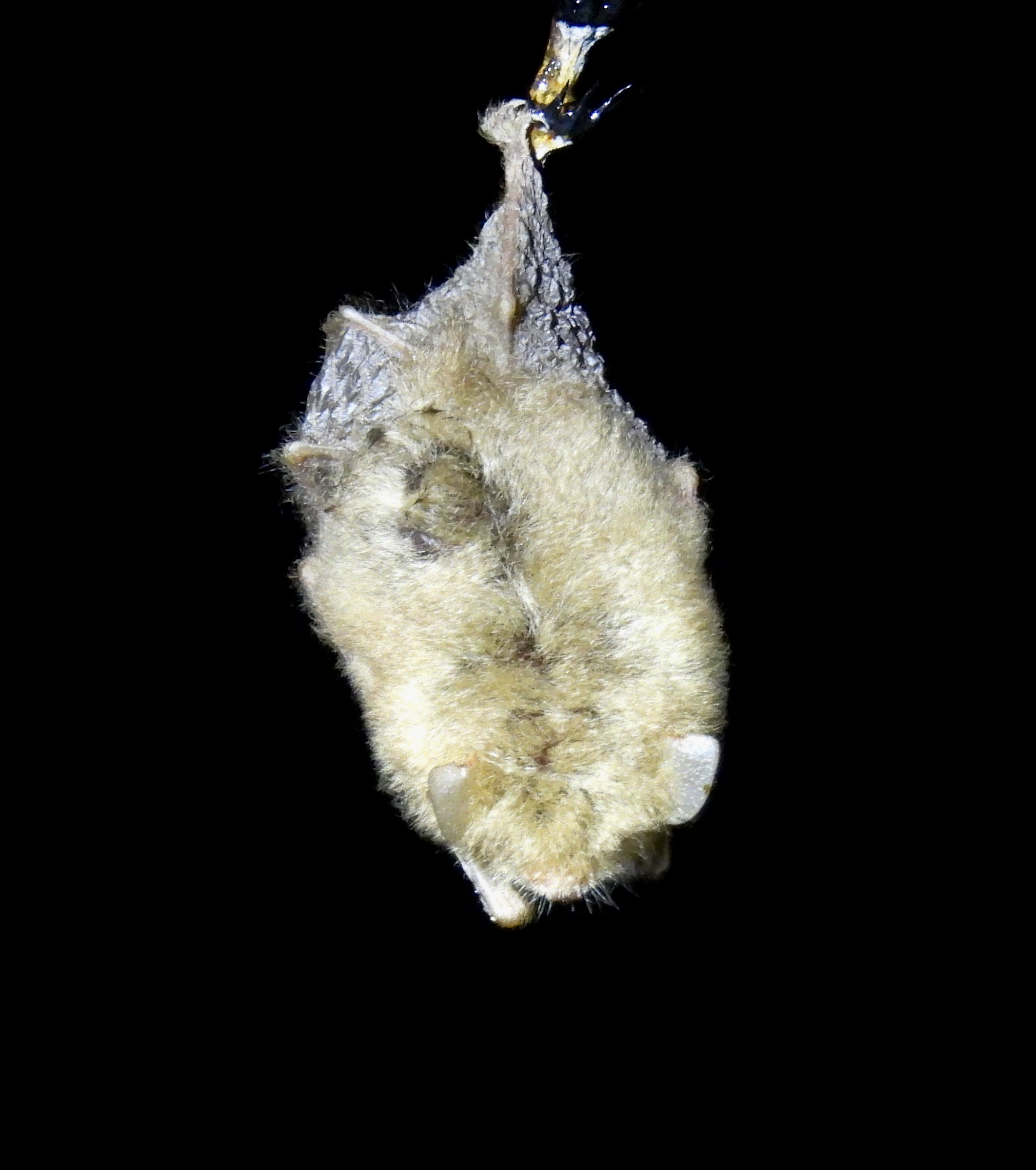
Heck’s Macaque spotting with the Nantu ranger (left) & Hardwicke’s Woolly Bat (right)

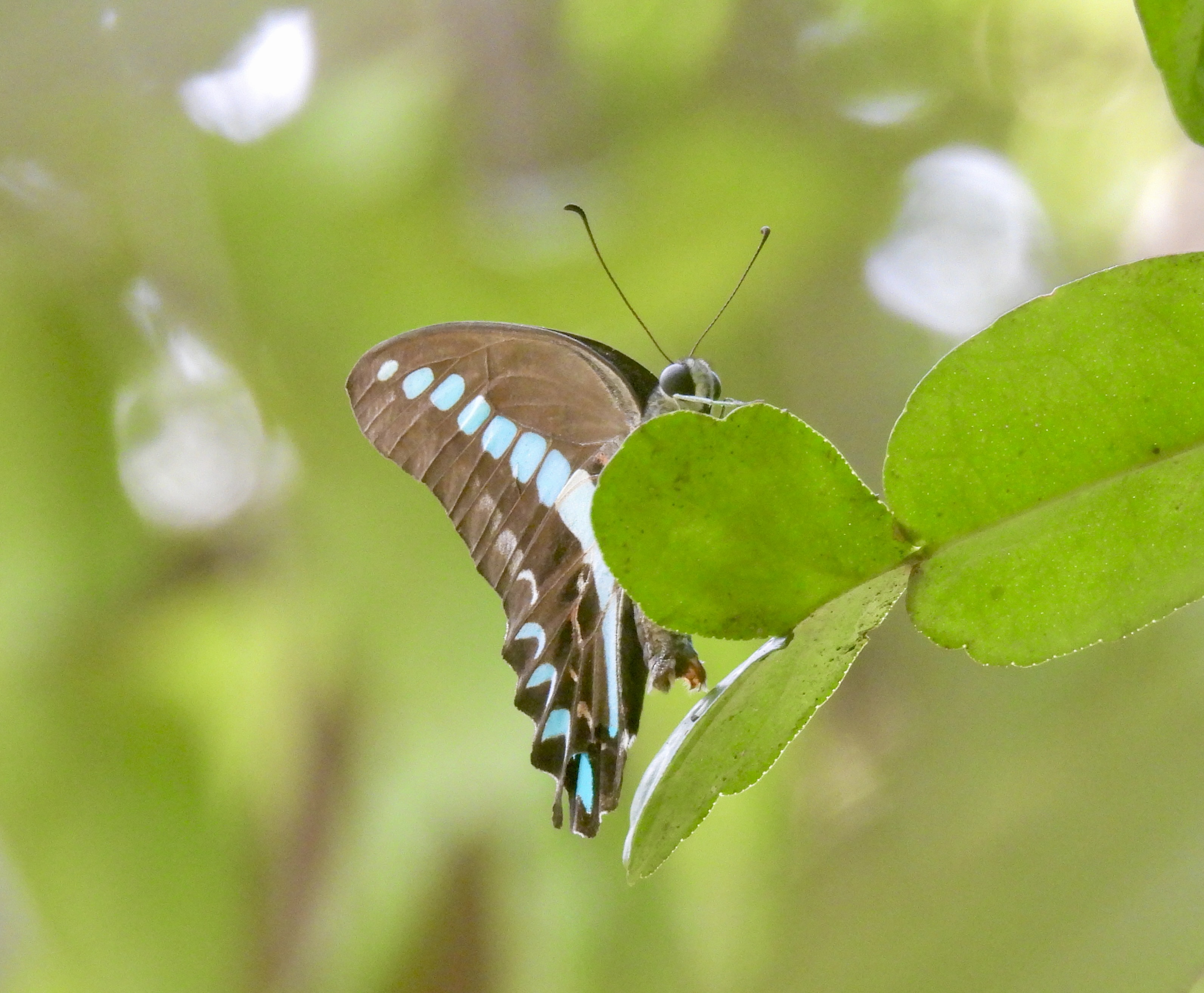

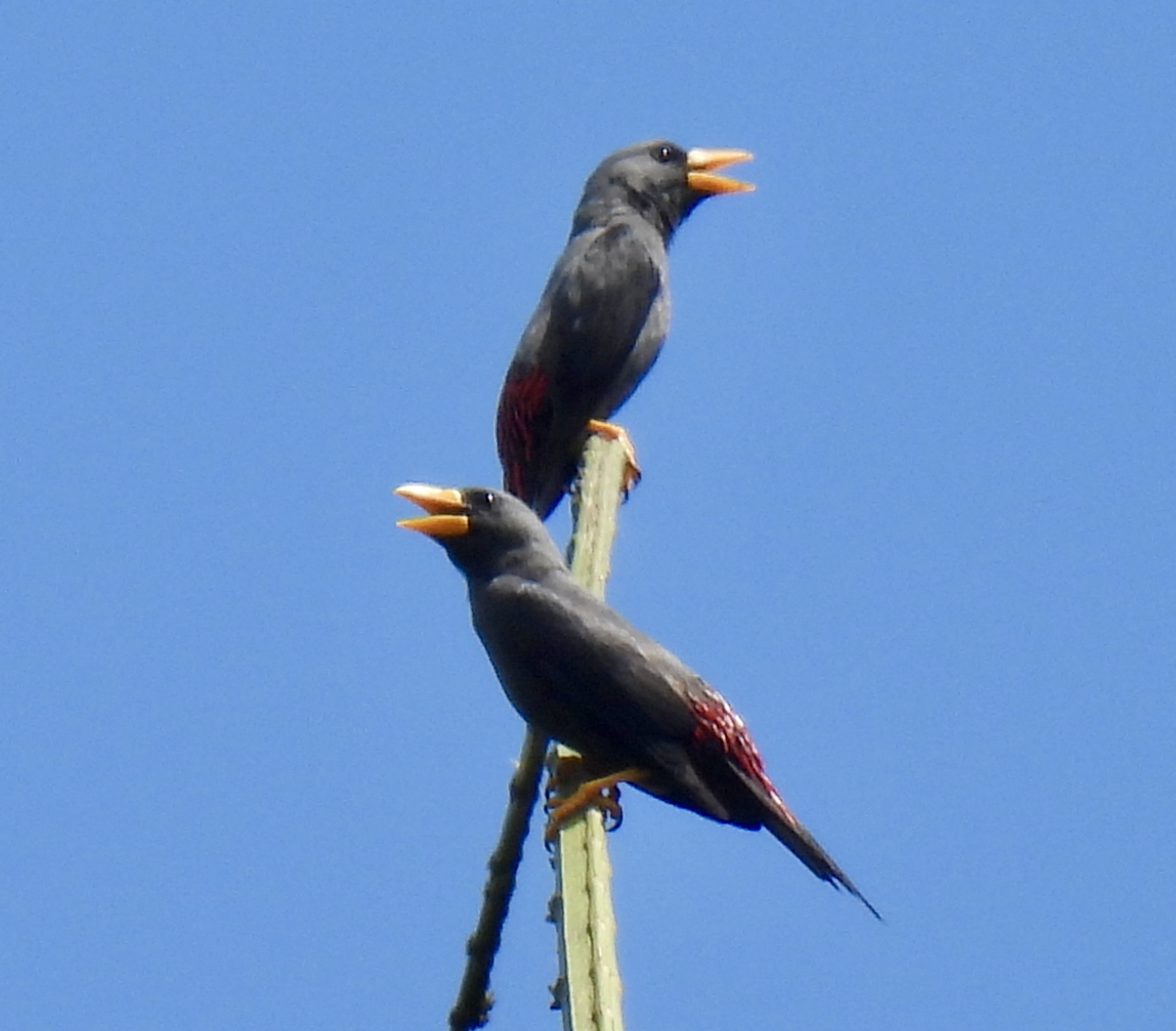
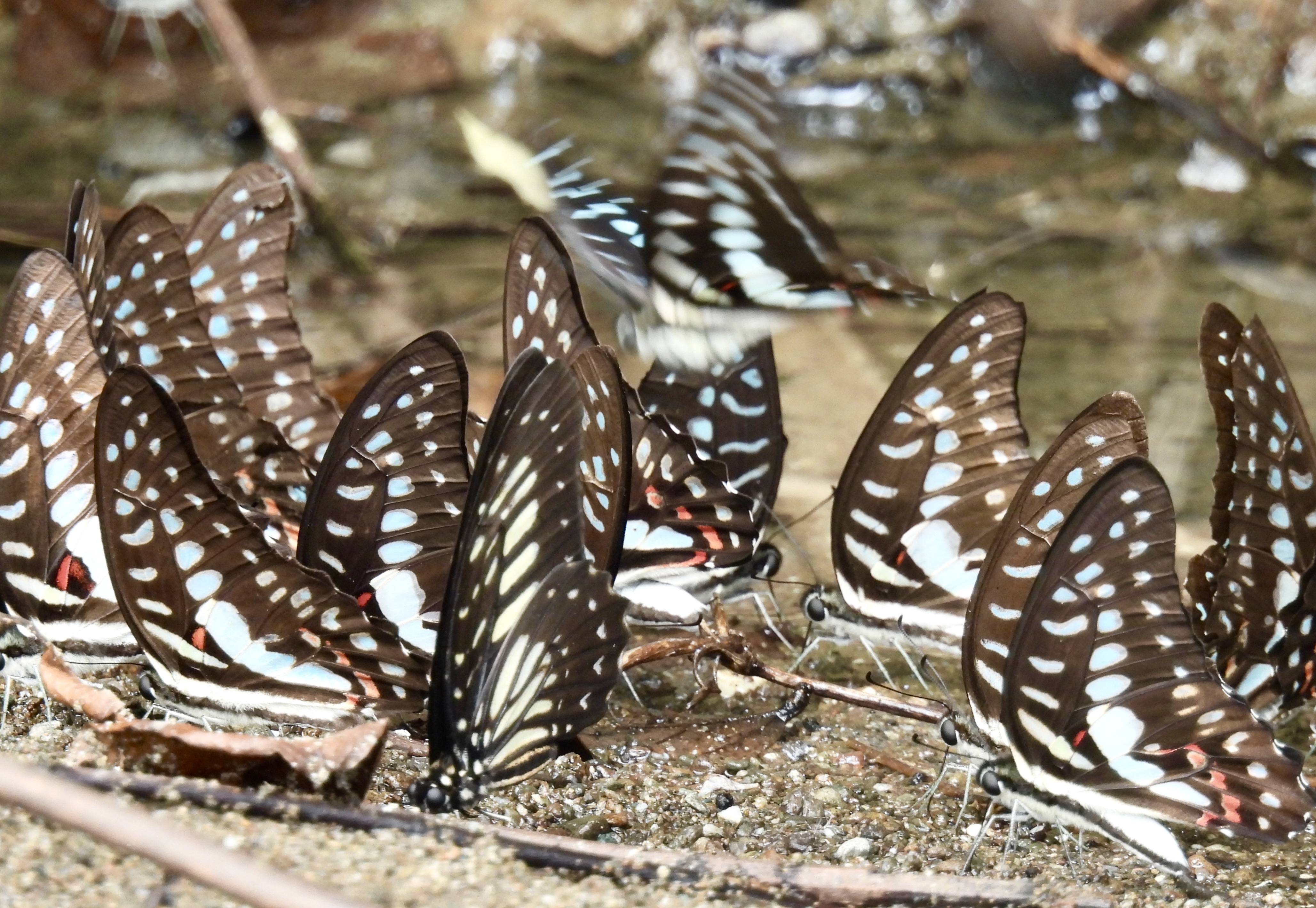
Azure-rumped Parrot (top left), Finch-billed Mynas (bottom left), & Milon’s Bluebottles (Graphium milon) (bottom right)
Thinking back, my best memories of Nantu weren’t of the wildlife I saw, but of traversing the forest itself.
Fording the river that separates nearby agricultural land from the forest reserve was a thrilling experience for me. Especially when Ono and I crossed the river at night in the pouring rain with only rattan canes for balance! The muddy ‘trails’ in Nantu were also exciting to wander, especially the freshly bushwhacked tracks courtesy of my machete-wielding park ranger-guide.
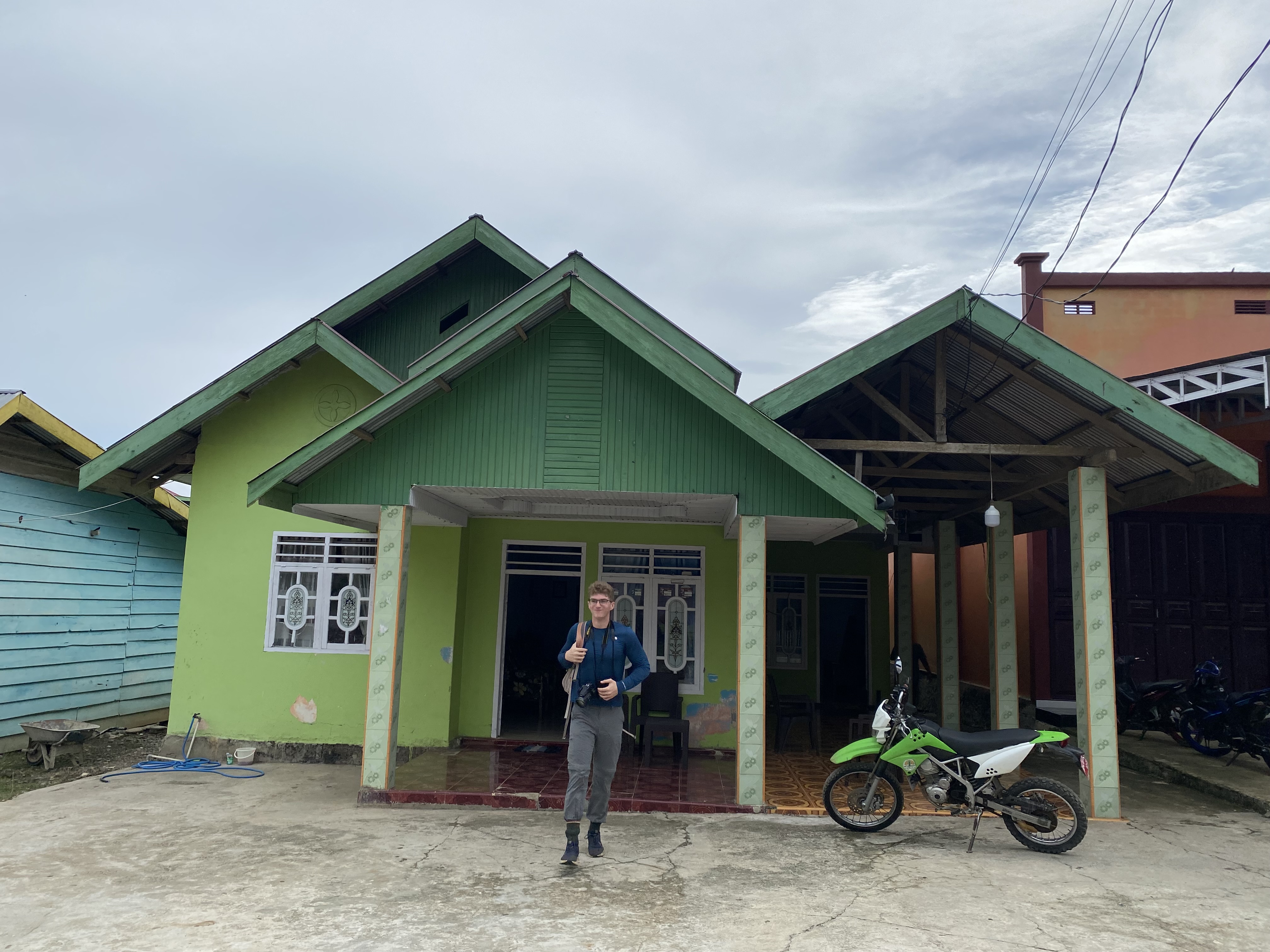
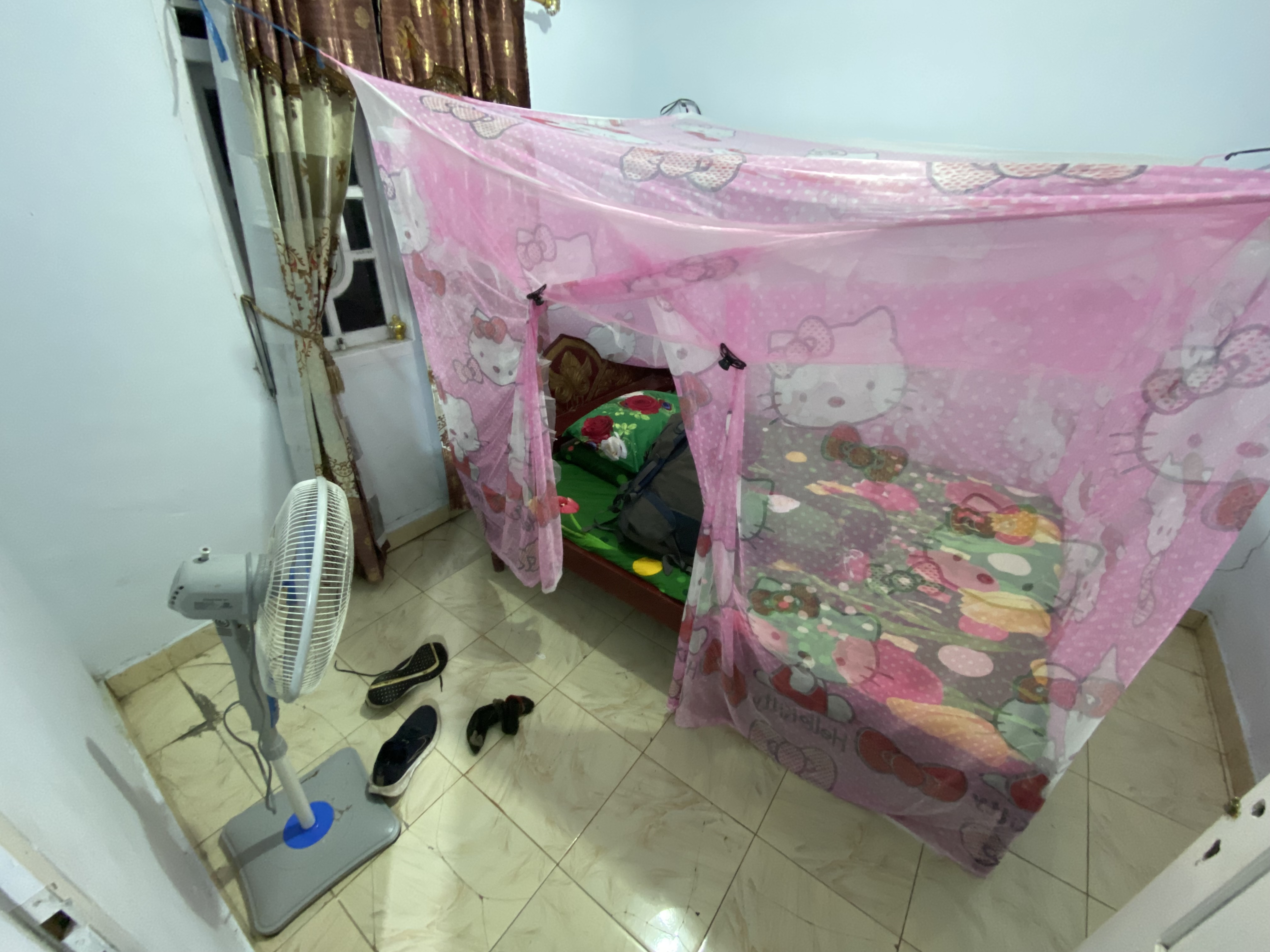
I stayed at a cute little homestay about a thirty-minute walk from the river bordering the reserve. The accommodation was basic, but I’m not a stickler for luxury as long as I can see wildlife!

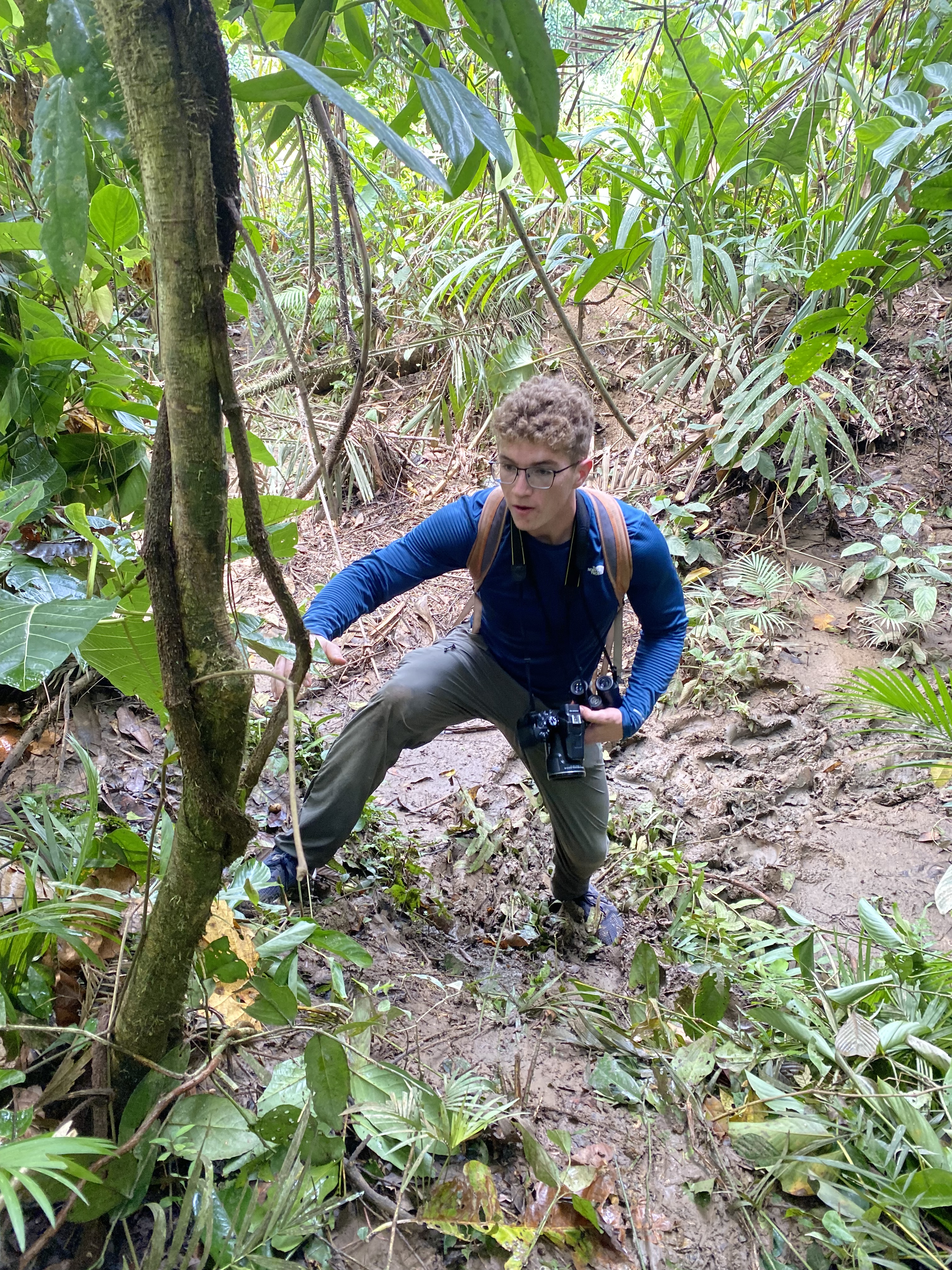

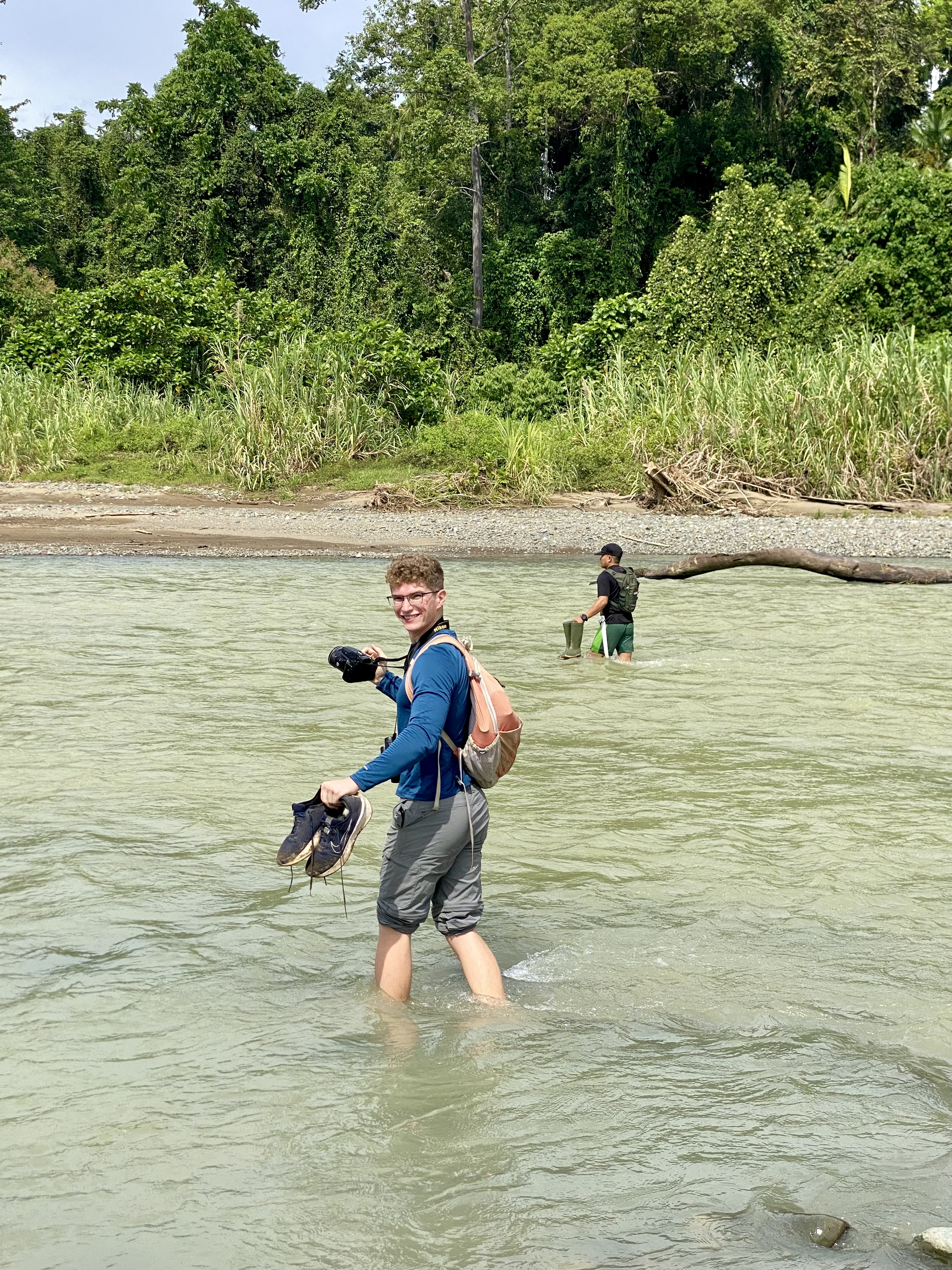
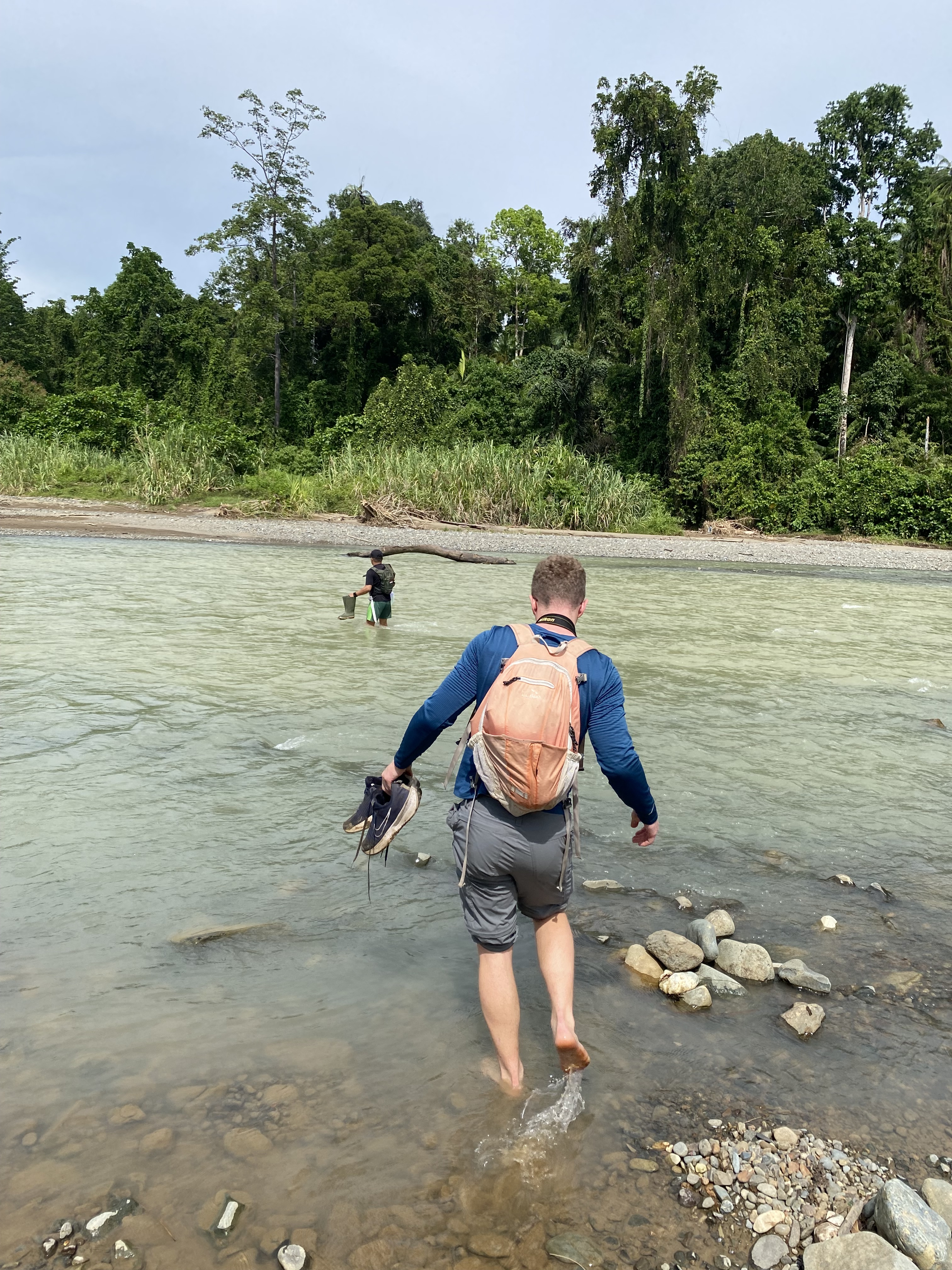
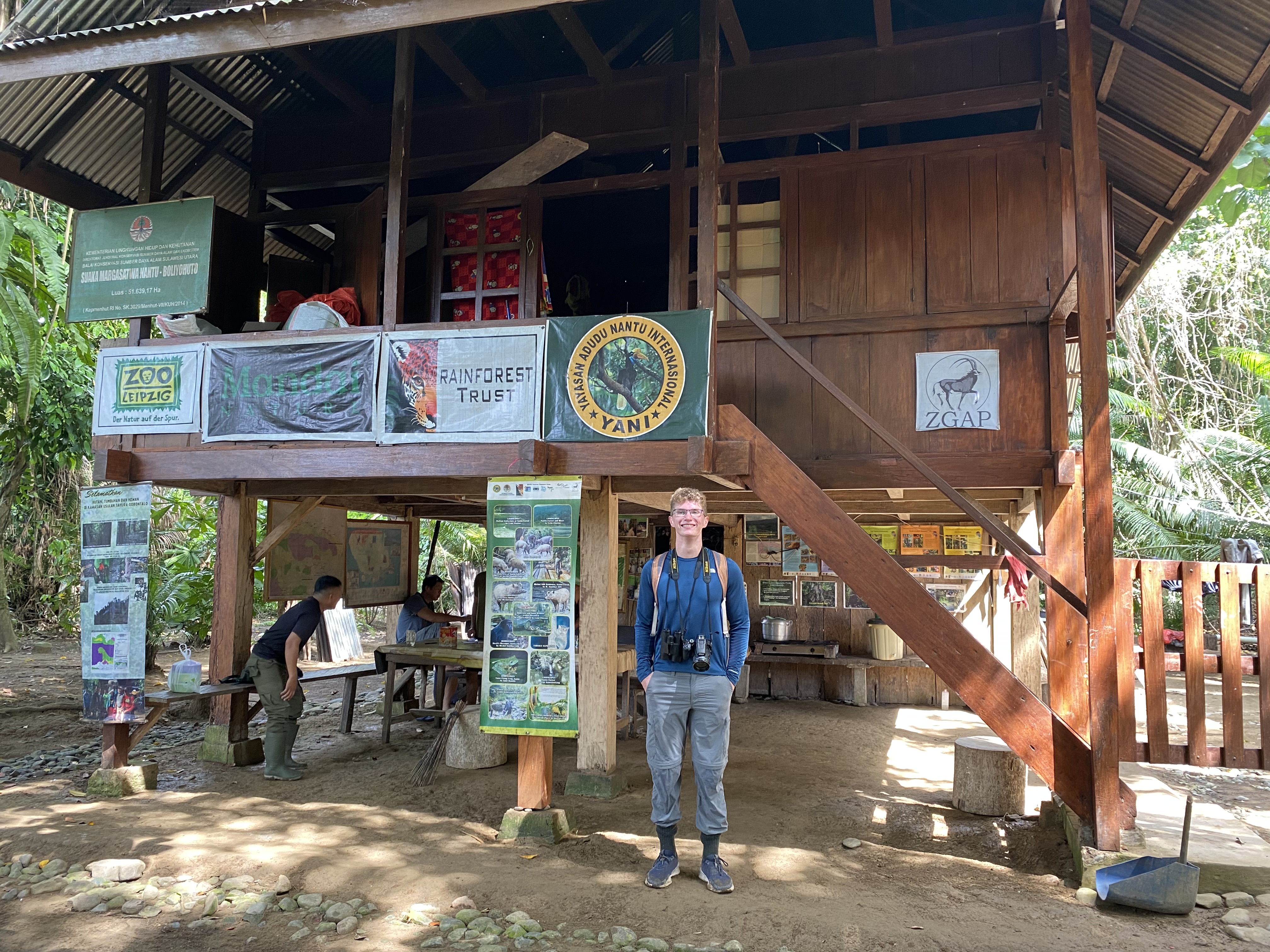
River fordin’ and trailblazin’ in Nantu Forest Reserve
Overall, I walked away from Nantu with mixed emotions. On the one hand, it is still a magnificent, pristine block of rainforest with good populations of endemic primates and birds, but on the other hand I cannot recommend that wildlife-watchers make the trek out there anymore.
The destruction caused by illegal gold mining in the past year in Nantu is very upsetting. There is almost no chance of spotting a wild Babirusa anymore, and Lowland Anoas & Sulawesi Warty Pigs are also rare nowadays. Additionally, there is no permanent wildlife hide at the lick anymore, and I don’t have a clue if or when the park rangers will build a new one.
Basically, unless you have the similar interest I did in spotting the two specialty primates, with the slim off-chance of encountering an anoa or warty pig, I wouldn’t visit Nantu. It’s not worth the time or money anymore.
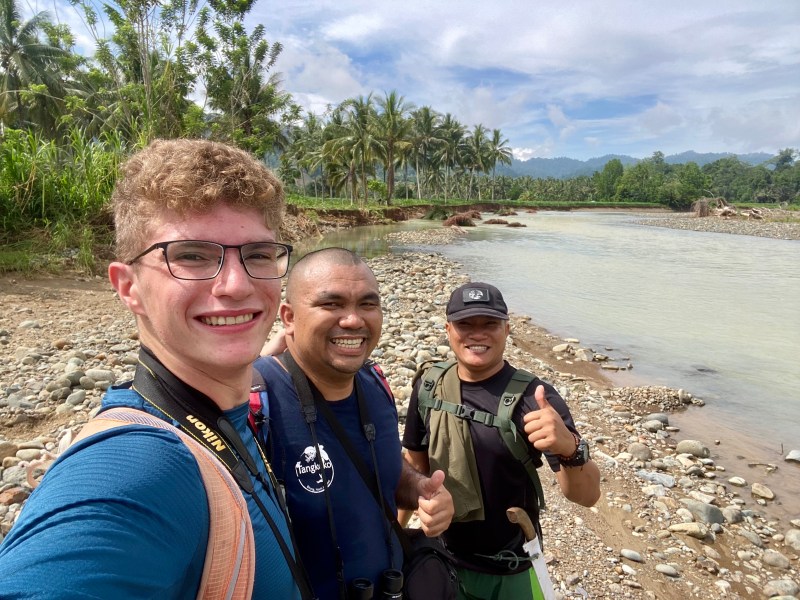
Team Babirusa!
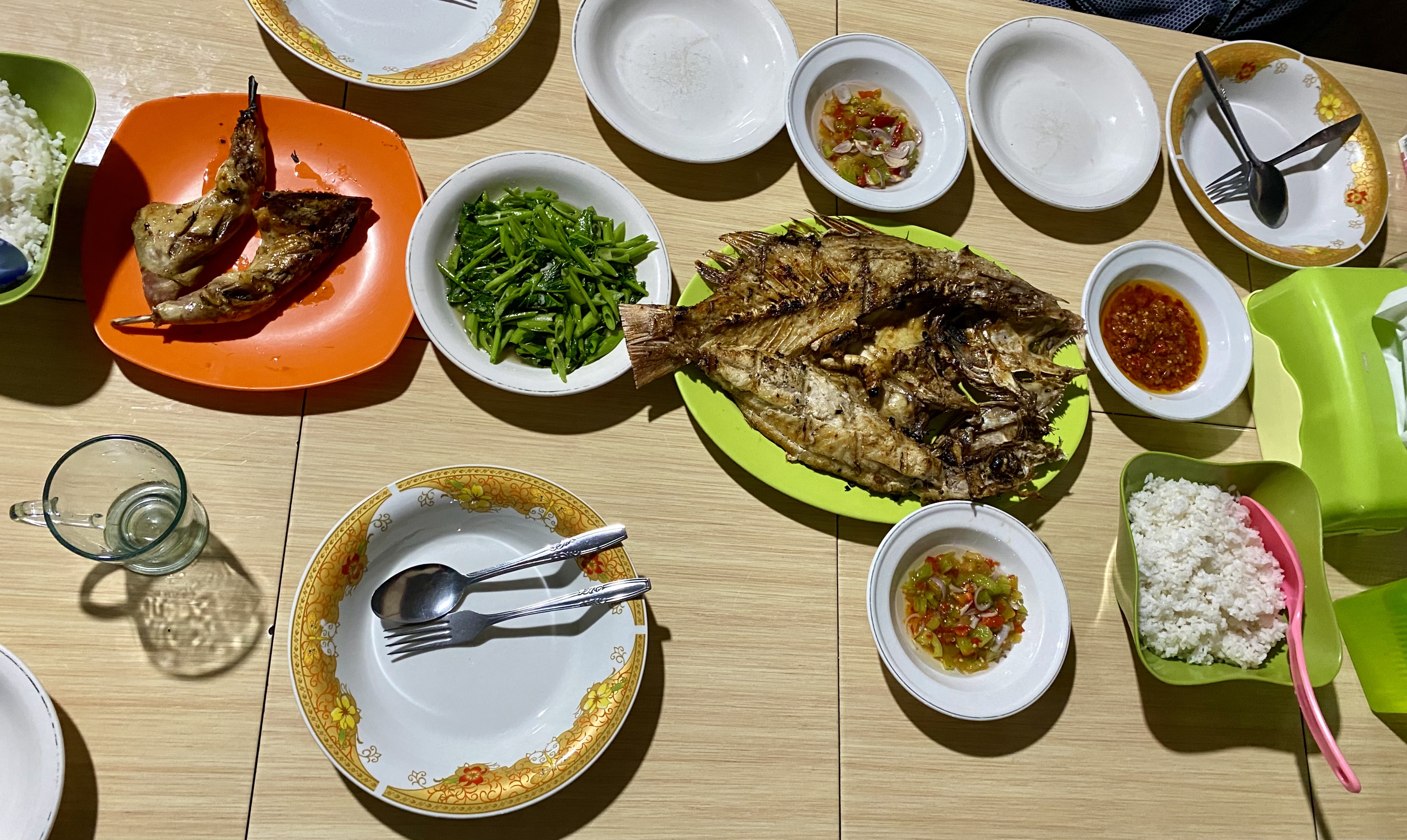
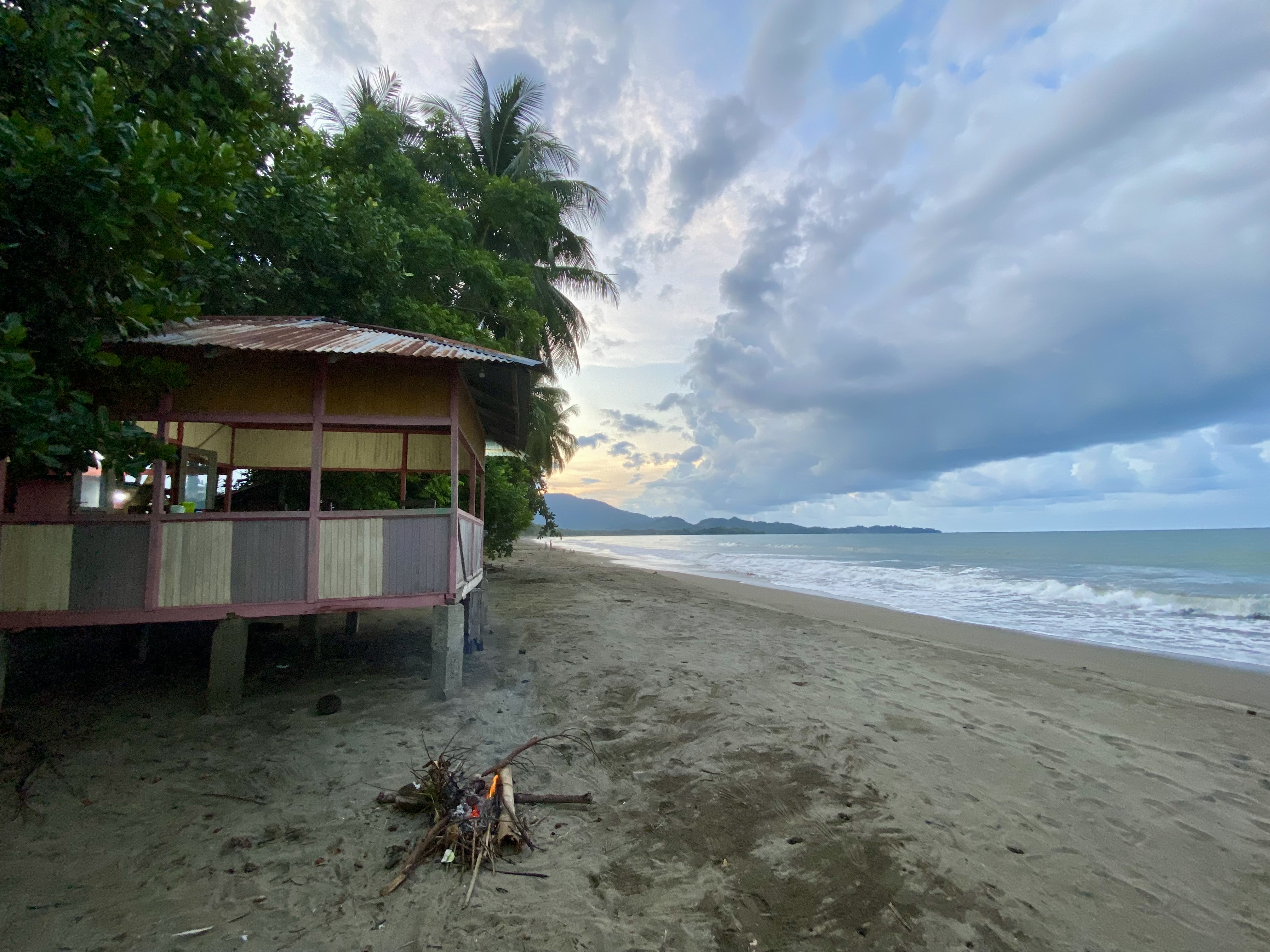
At around noon on Day 5, Ono and I departed Nantu and began the arduous drive back to Tangkoko. I passed the time by napping and peering out at the view, which helped ease the nausea I experienced as we bumped up and down the rustic roads of Gorontalo. We ate dinner in the rural beachside town of Kaidipang, North Sulawesi province, but not before I went for a quick dip in the refreshing ocean.
We arrived back in the Tangkoko region at around 1:00am, a full thirteen hours after departing Nantu. About twenty minutes out from Tangkoko Sanctuary Villa, Ono and I made one last attempt at spotlighting a Dwarf Cuscus, but luck was not on our side. Upon arriving back at the hotel, I thanked Ono & Taufik for everything, then dashed into my room for a much-needed shower and full night of sleep.
The next morning, I did a final stroll along the Tangkoko black-sand beach (seeing no new wildlife species), before heading off to the airport, which about concludes my superb 2024 Sulawesi wildlife adventure.
Exploring the wild Indonesian islands of Sumatra & Sulawesi this November was a genuine privilege, and I am extremely grateful to have seen so many spectacular, endemic creatures in their natural habitats, many of which teeter toward the brink of extinction.
My two solo Indonesia trips have made it even clearer to me that a career in zoology/wildlife conservation at least partially spent in Southeast Asia is what I must strive for.
Thank you for reading as always, and stick around for my 2024 Sumatra blog post!
Sulawesi Mammals: (Lifers bolded)
| Common Name: | Scientific Name: |
| 1. Sulawesi Bear Cuscus | Ailurops ursinus |
| 2. Celebes Crested Macaque | Macaca nigra |
| 3. Gorontalo Macaque | Macaca nigrescens |
| 4. Heck’s Macaque | Macaca hecki |
| 5. Gursky’s Spectral Tarsier | Tarsius spectrumgurskyae |
| 6. Long-tailed Taeromys (Celebes Rat) . | Taeromys celebensis |
| 7. Celebes Dwarf Squirrel | Prosciurillus murinus |
| 8. Whitish Dwarf Squirrel | Prosciurillus leucomus |
| 9. Sulawesi Horseshoe Bat | Rhinolophus celebensis |
| 10. Sulawesi Rousette | Pilonycteris celebensis |
| 11. Hardwicke’s Woolly Bat | Kerivoula hardwickii |
| 12. Lesser False Vampire Bat | Megaderma spasma |
Sulawesi Birds: (Lifers bolded)
| Common Name: | Scientific Name: |
| 1. Maleo | Macrocephalon maleo |
| 2. Knobbed Hornbill | Rhyticeros cassidix |
| 3. Sulawesi Hornbill | Penelopides exarhatus |
| 4. Sulawesi Scops Owl | Otus manadensis |
| 5. Sulawesi Dwarf Kingfisher | Ceyx fallax |
| 6. Green-backed Kingfisher | Actenoides monachus |
| 7. Sulawesi Lilac Kingfisher | Cittura cyanotis |
| 8. Pale-blue Monarch | Hypothymis puella |
| 9. White-faced Cuckoo-Dove | Turacoena manadensis |
| 10. Sultan’s Cuckoo-Dove | Macropygia doreya |
| 11. Silver-tipped Imperial Pigeon | Ducula luctuosa |
| 12. Stephan’s Dove | Chalcophaps stephani |
| 13. Sulawesi Ground Dove | Gallicolumba tristigmata |
| 14. Green Imperial Pigeon (Chestnut-naped subspecies) | Ducula aenea paulina |
| 15. Yellow-sided Flowerpecker | Dicaeum aureolimbatum |
| 16. Sulawesi Babbler | Pellorneum celebense |
| 17. Yellow-billed Malkoha | Phaenicophaeus calyorhynchus |
| 18. Black-billed Koel | Eudynamys melanorhynchus |
| 19. Ivory-backed Woodswallow | Artamus monachus |
| 20. Finch-billed Myna | Scissirostrum dubium |
| 21. White-necked Myna | Streptocitta albicollis |
| 22. Azure-rumped Parrot | Tanygnathus sumatranus |
| 23. Ashy Woodpecker | Mulleripicus fulvus |
| 24. Sulawesi Blue Flycatcher | Cyornis omissus |
| 25. Sulawesi Nightjar | Caprimulgus celebensis |
| 26. Sahul Sunbird | Cinnyris frenatus |
| 27. Black-faced Munia | Lonchura molucca |
| 28. Chestnut Munia | Lonchura atricapilla |
| 29. Gray Wagtail | Motacilla cinerea |
| 30. Hair-crested Drongo (White-eyed Sulawesi morph) | Dicrurus hottentottus leucops |
| 31. Collared Kingfisher | Todiramphus chloris |
| 32. Philippine Megapode | Megapodius cumingii |
| 33. Spotted Dove | Spilopelia chinensis |
| 34. Eurasian Tree Sparrow | Passer montanus |
| 35. Little Egret | Egretta garzetta |
| 36. Eastern Cattle Egret | Bubulcus coromandus |
| 37. Pacific Reef Heron | Egretta sacra |
| 38. Eastern Red-rumped Swallow | Cecropis daurica |
| 39. Barn Swallow | Hirundo rustica |

 Bennett Gardner Wildlife Watching
Leave a comment