
While much of Europe lures travelers with its historic landmarks, vibrant cultures, and world-renowned cuisine, Iceland stands apart as a destination defined by raw natural beauty. This rugged, volcanic island-nation captivates visitors not with castles or cathedrals, but with its natural beauty—ranging from steaming geysers and active volcanoes to sprawling glaciers and abundant marine life. Fittingly known as “The Land of Fire and Ice,” Iceland offers a stunning contrast of volcanic terrain and frozen wilderness, all nestled just below the Arctic Circle.
I recently returned from an incredible weeklong trip to Iceland with my dad, where we spent eight adventure-filled days exploring active volcanoes, immense glaciers, towering basalt cliffs, and turbulent seas teeming with whales and fish. After a deeply challenging and ultimately disheartening university experience in Australia—one that led me to fully withdraw and leave the country indefinitely—I found this adventure to be exactly the reconnection with the natural world that I needed. It was a journey not only through one of Earth’s most dramatic landscapes, but also a personal reset at a time when I needed it most.
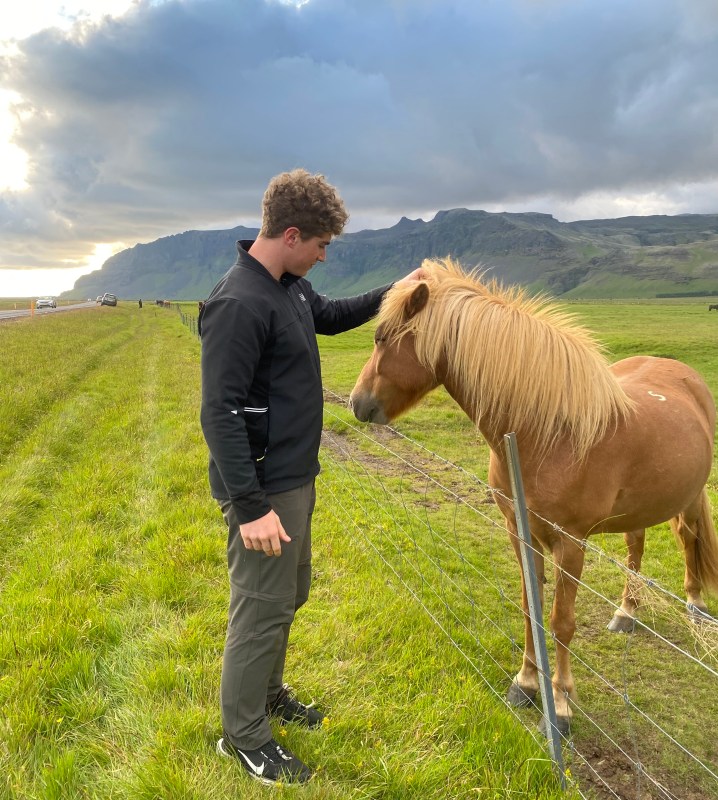
Befriending an Icelandic horse on the roadside
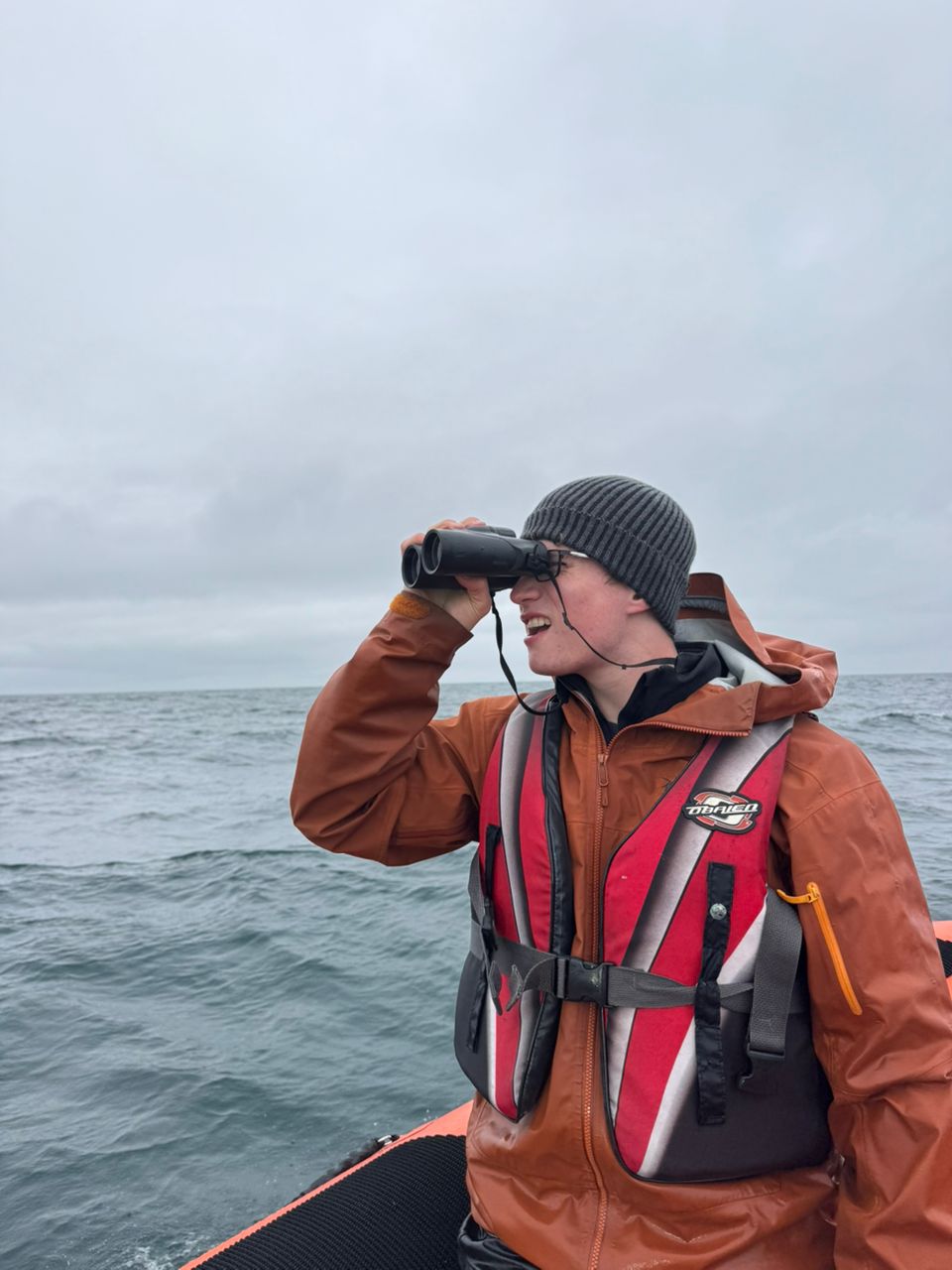
A large portion of my time in Iceland was spent with Biggi, a close friend of my dad’s and an Icelandic entrepreneur based in Shanghai. Though he lives most of the year in China, Biggi devotes his summers to reconnecting with nature in Iceland. Together, we took several cod-fishing and whale-watching trips in his 18-foot (6 m) RIB boat through Faxaflói Bay near Reykjavík—a nutrient-rich hotspot that draws hungry humpback whales during the summer.
The rest of my trip to Iceland was spent exploring the country’s wild side with my dad. On Days 1, 2, 4, 5, and 7, we ventured through natural wonders like the Vatnajökull Glacier, Westman Islands, Snæfellsnes Peninsula, and Reykjadalur Hot Spring River. With basically 24 hours of daylight, there were few time constraints to summer sightseeing in Iceland on our trip.
While wildlife wasn’t the primary focus of the trip—and I didn’t rack up an especially impressive number of bird or mammal species—Iceland’s relatively low terrestrial biodiversity played a role as well. Owing to its northern latitude and geographic isolation, the island hosts just 85 land bird species and only one native terrestrial mammal: the Arctic Fox.
Still, that didn’t stop me from encountering some incredible species. I saw iconic seabirds like the Atlantic Puffin, multiple species of whale, and was even treated to a rare, extended sighting of an Arctic Fox. These encounters offered a glimpse into the magic of Iceland’s rich marine life, sustained by the island’s pristine, nutrient-packed seas.
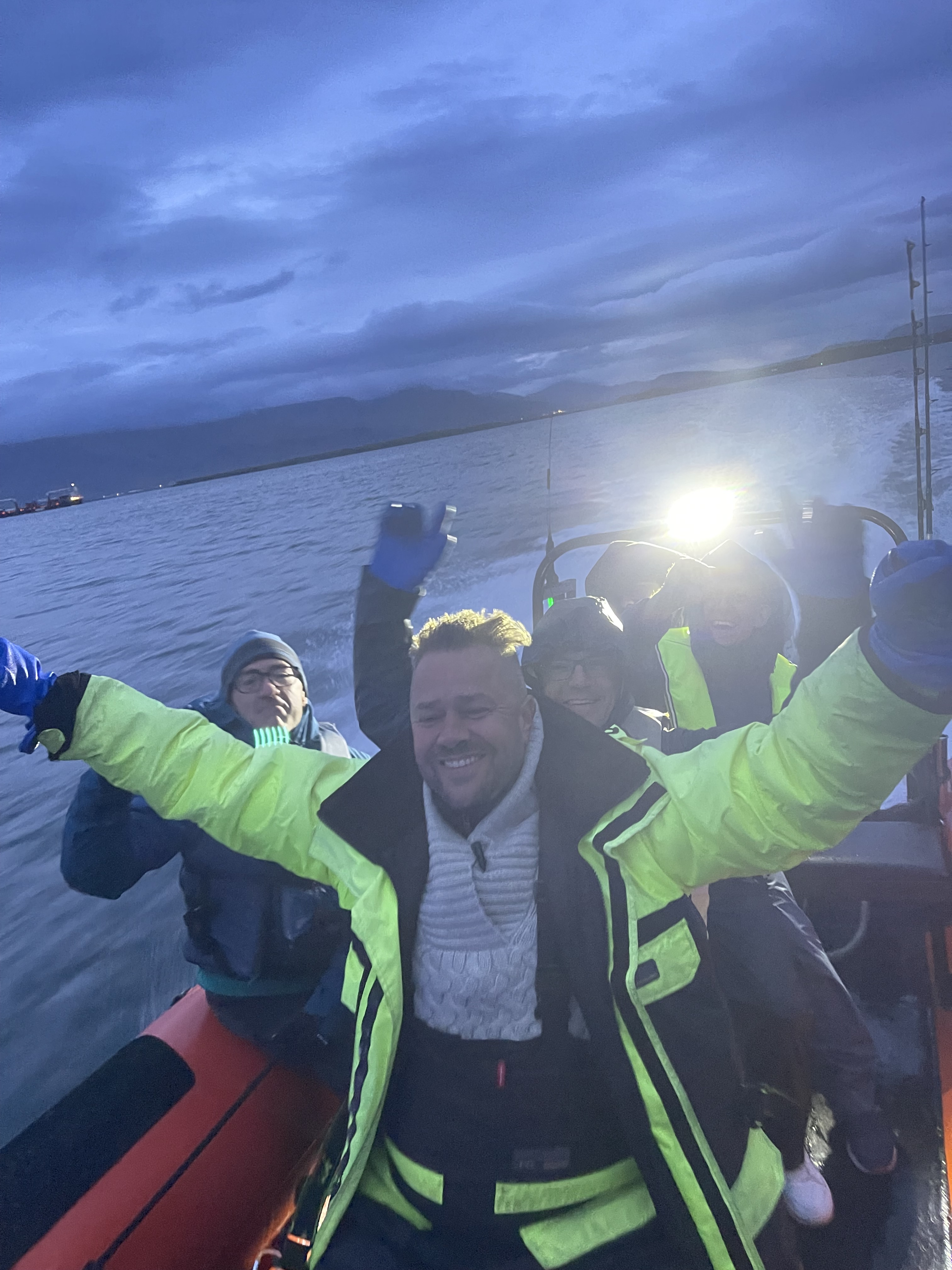
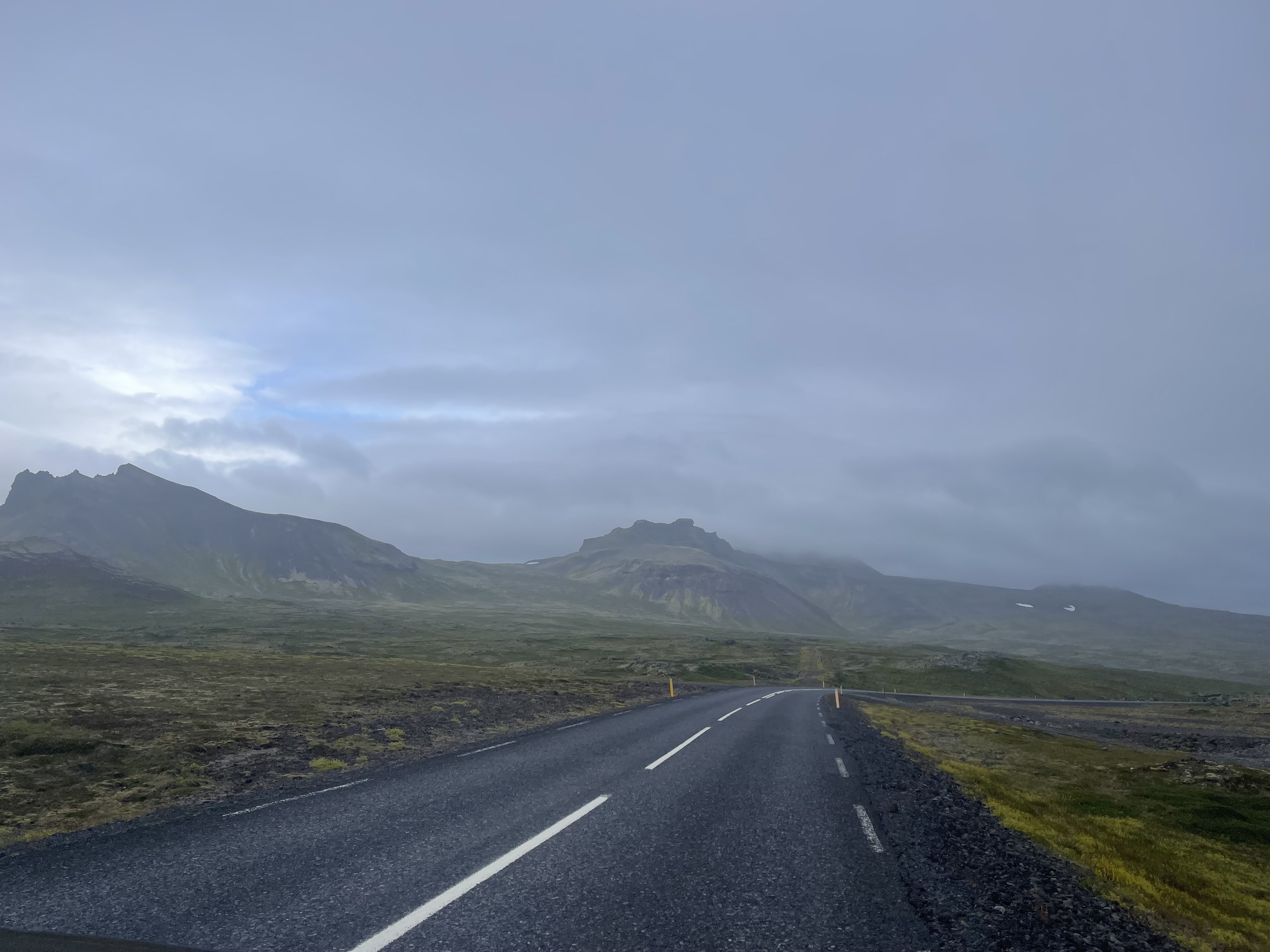
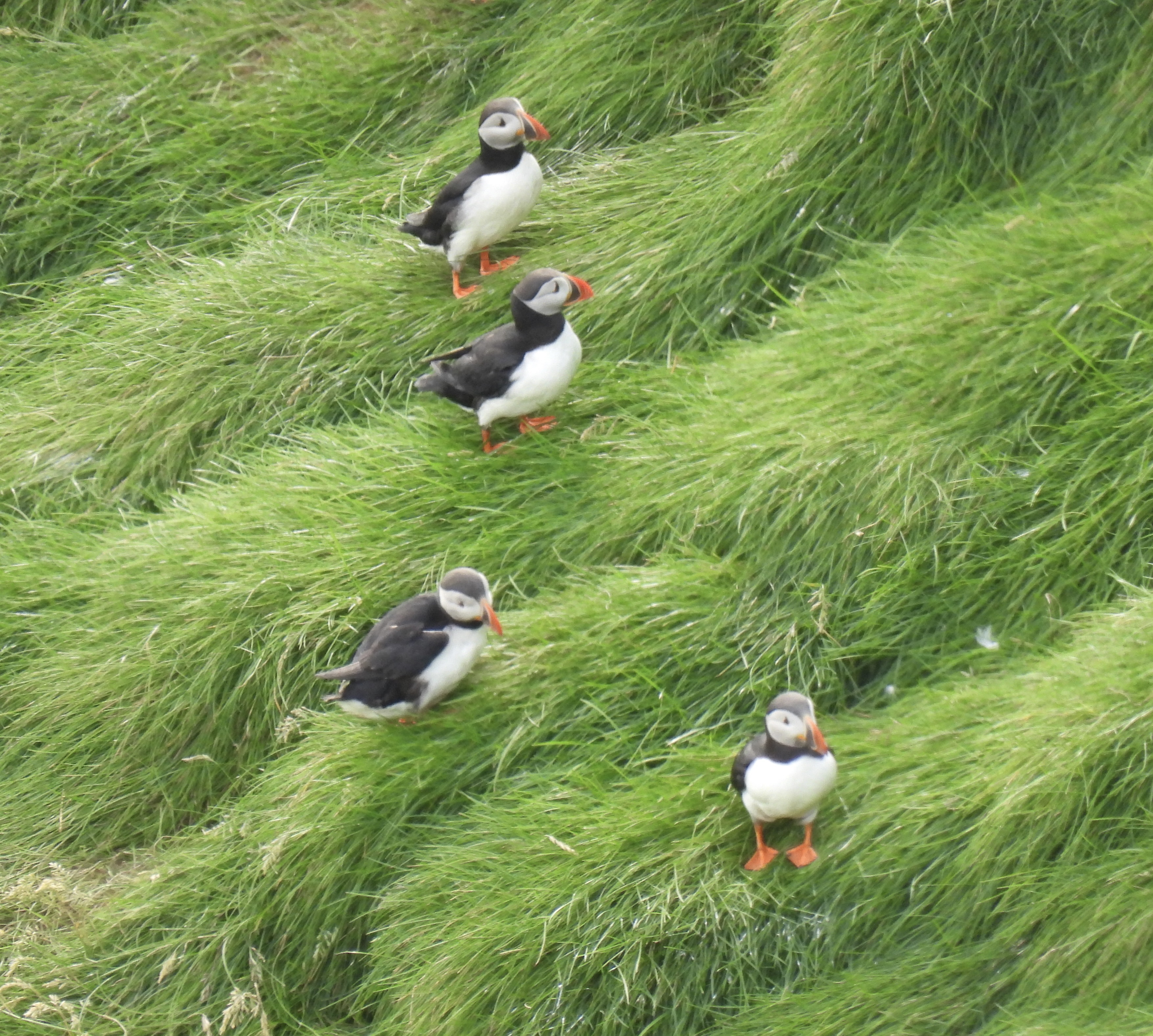
Top Row: Biggi, my dad, and some friends cruising along in his RIB boat (left), some dramatic roadside scenery (top right), and an Atlantic Puffin colony on Heimaey Island (bottom right)
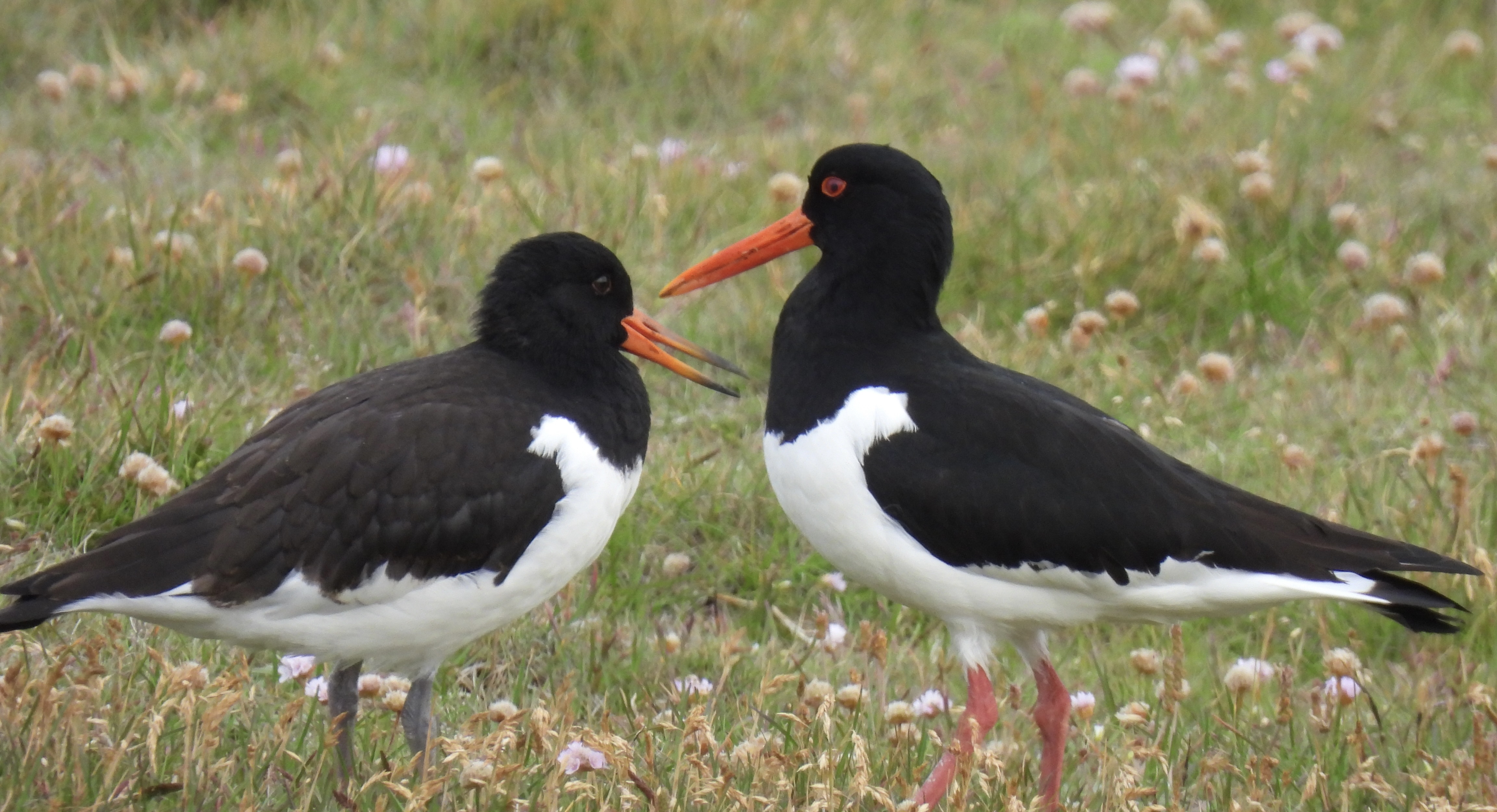
Bottom Row: Me whale-watching on Biggi’s boat (left) & Eurasian Oystercatchers on Heimaey Island (right)
On Day 1 of our trip (July 3rd), after a red-eye flight from New York, my dad and I arrived exhausted and exhilarated in Reykjavik. We were picked up by Biggi and promptly driven to his apartment outside the city. Because Biggi was busy that afternoon, my dad and I decided to conquer 1,109-foot-high (338 meter) Helgafell, or Holy Mountain in Icelandic, an extinct volcanic mountain near Reykjavik. The hike was an excellent introduction to Iceland’s stark, barren, and unforgiving, yet stunningly beautiful volcanic landscapes.
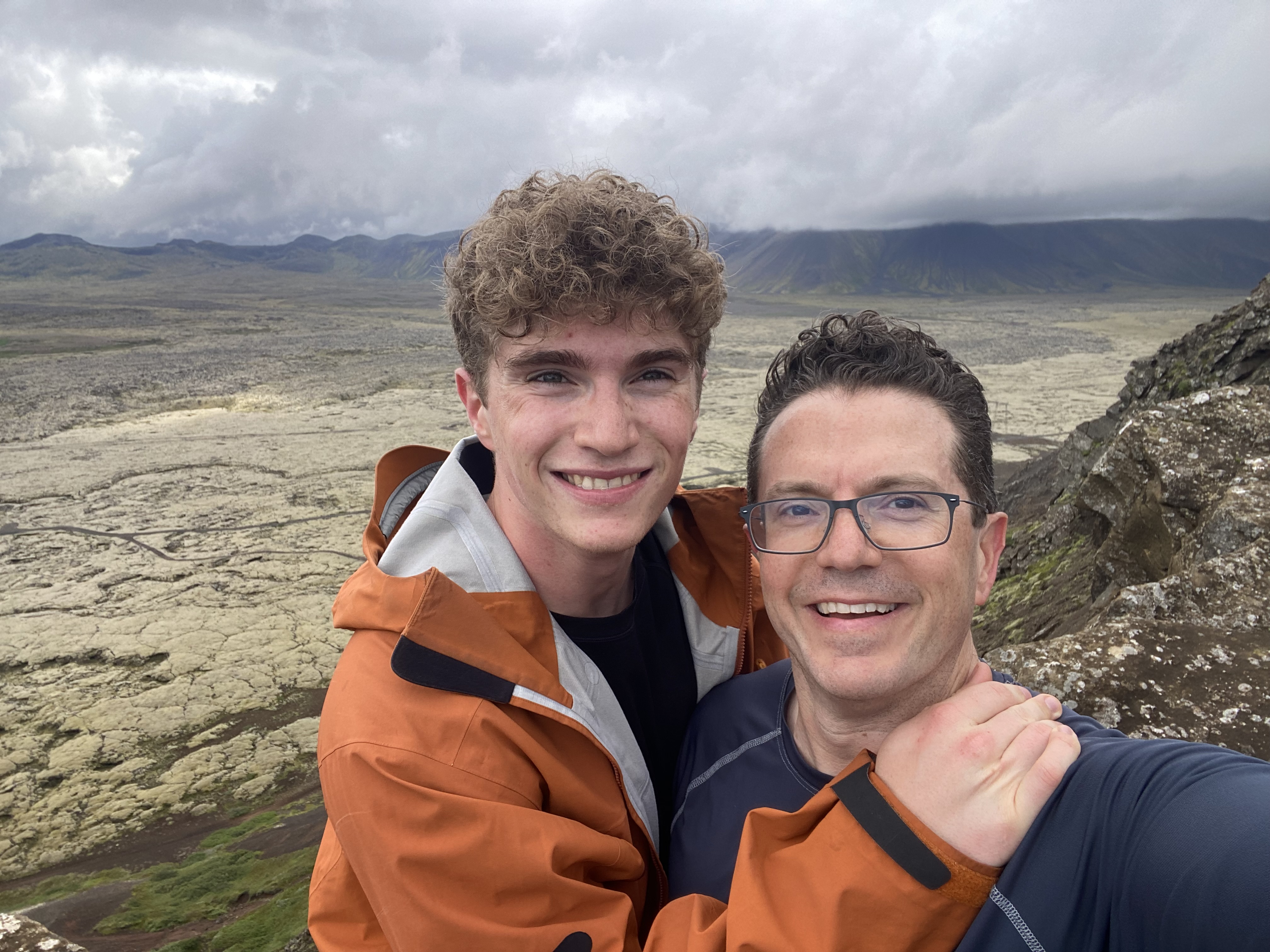
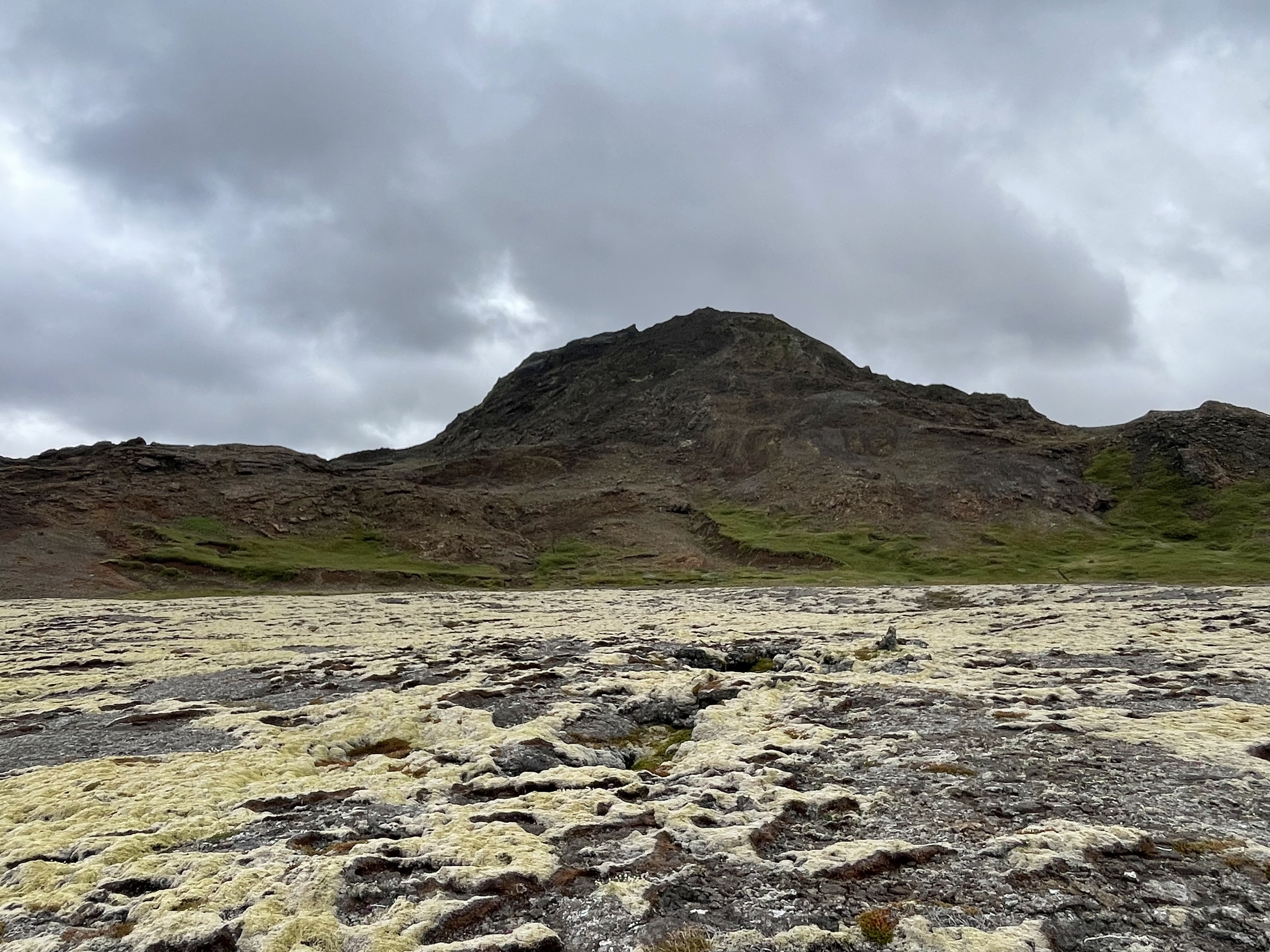
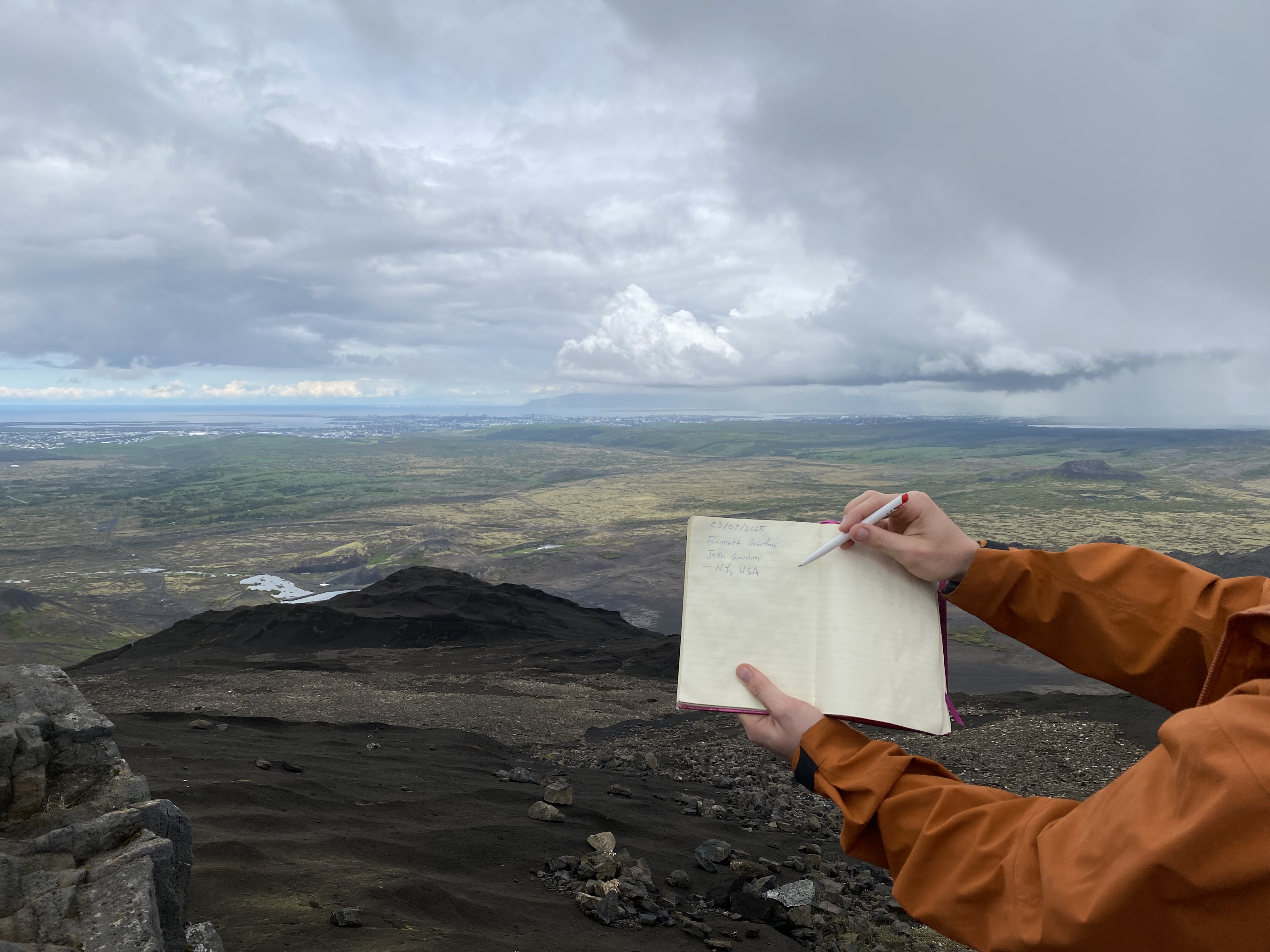
Helgafell
The hike was slightly technical in the rocky areas, and also windy and cold. The views at the top were well worth the climb. On the way back, we stopped in a moss-covered lava field to examine a tectonic fissure where the North American and Eurasian plates meet.
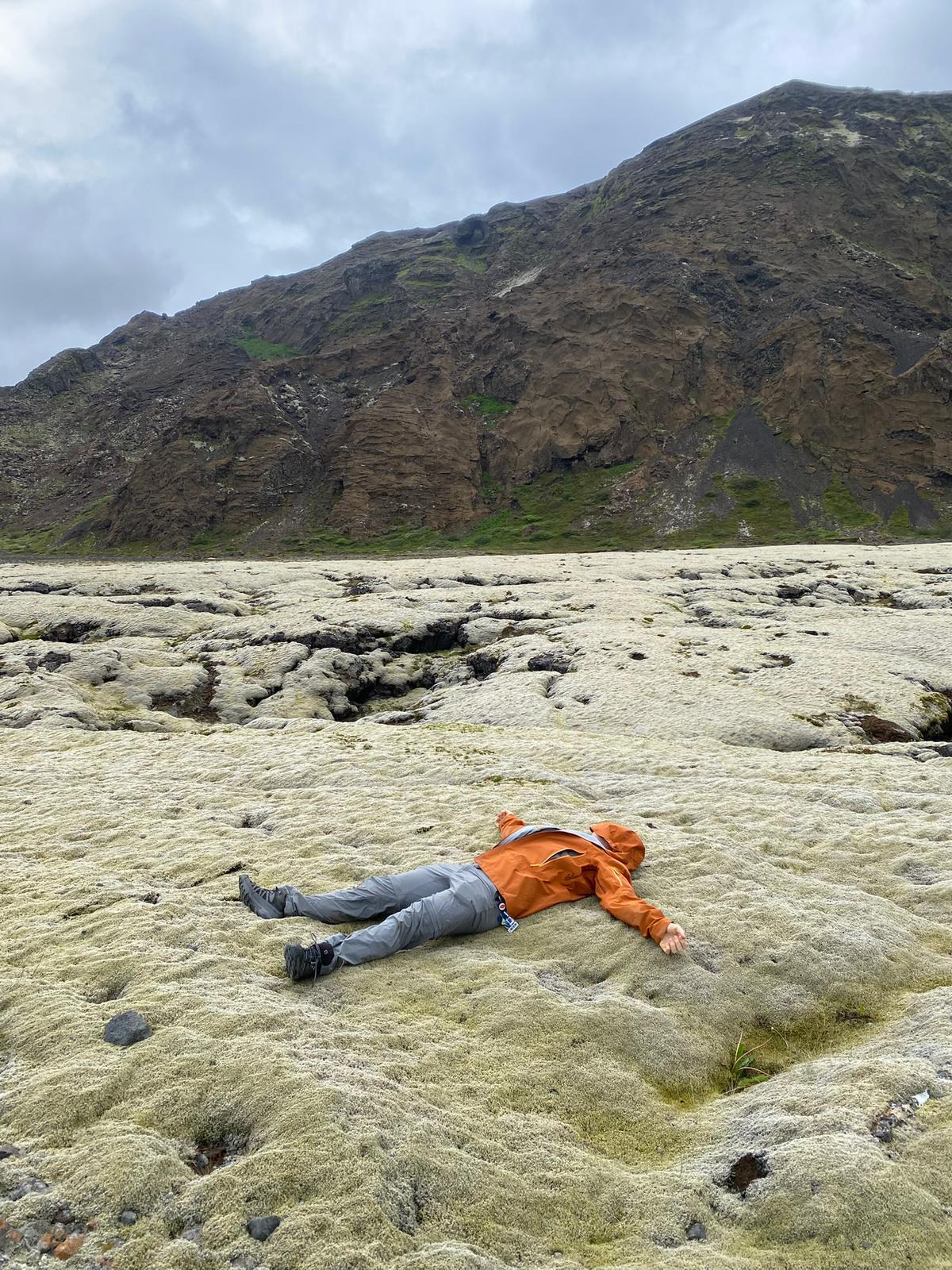
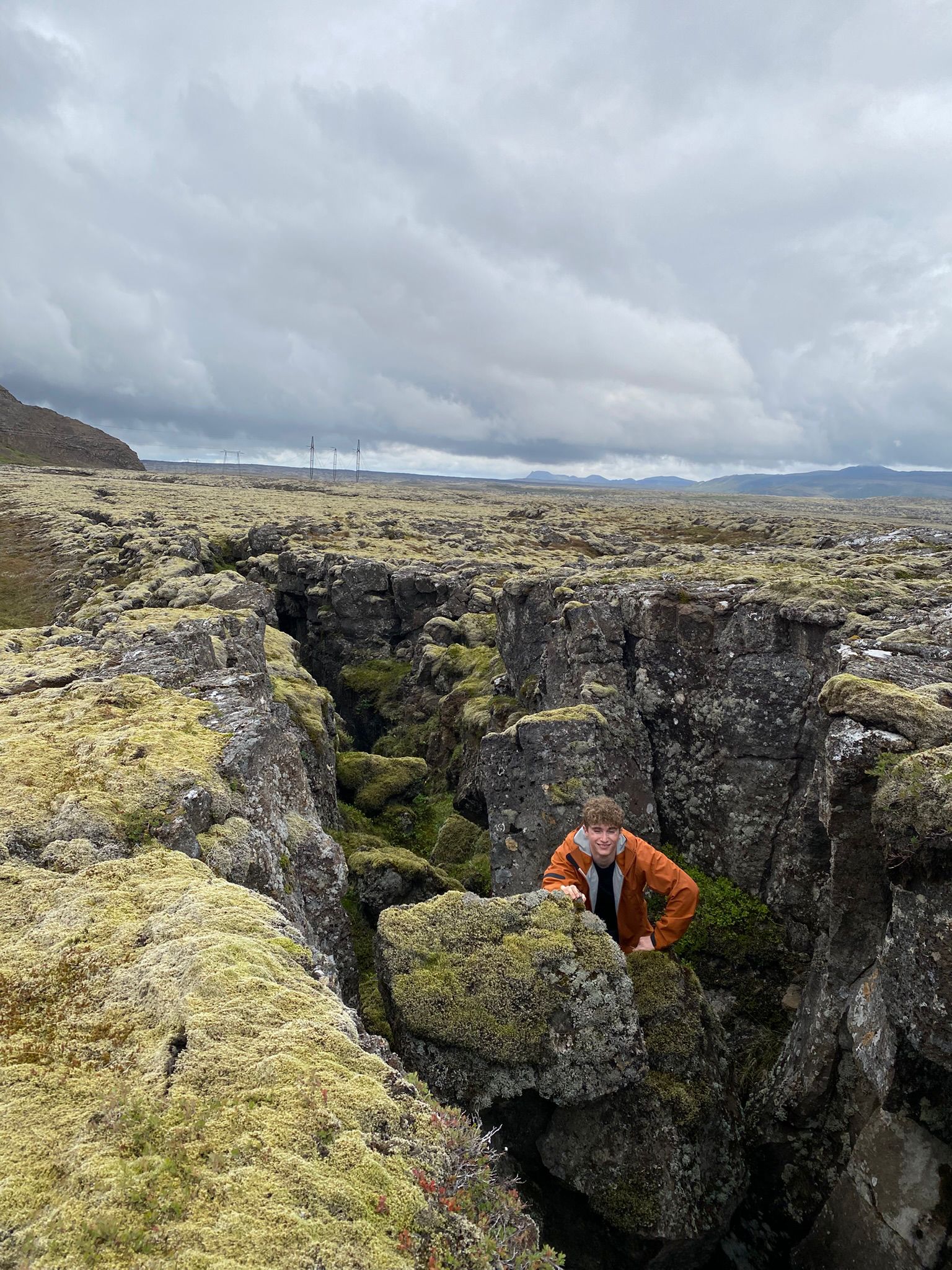
Napping on a comfy moss carpet (left), and exploring the tectonic fissure (right)
The next day, we departed Biggi’s apartment for his family’s home in the Westman Islands off the coast of southern Iceland. The drive was around two hours, and along the way we stopped at Geysir Geothermal Park to see its famous Strokkur Geyser. The area was crowded (I’m not a huge fan of touristy areas), and while we did see the geyser erupt once, we didn’t stick around long. Another pit stop along the way to Westman Islands was Gullfoss Waterfall, the largest waterfall by volume in Europe. We were short on time and spent only a few minutes at Gullfoss, which was just as crowded as Geysir.
The number of congested scenic areas in Iceland is very high during the summer—a combination of peak tourist season and a large number of tourists concentrated into a few areas of a fairly small island nation.
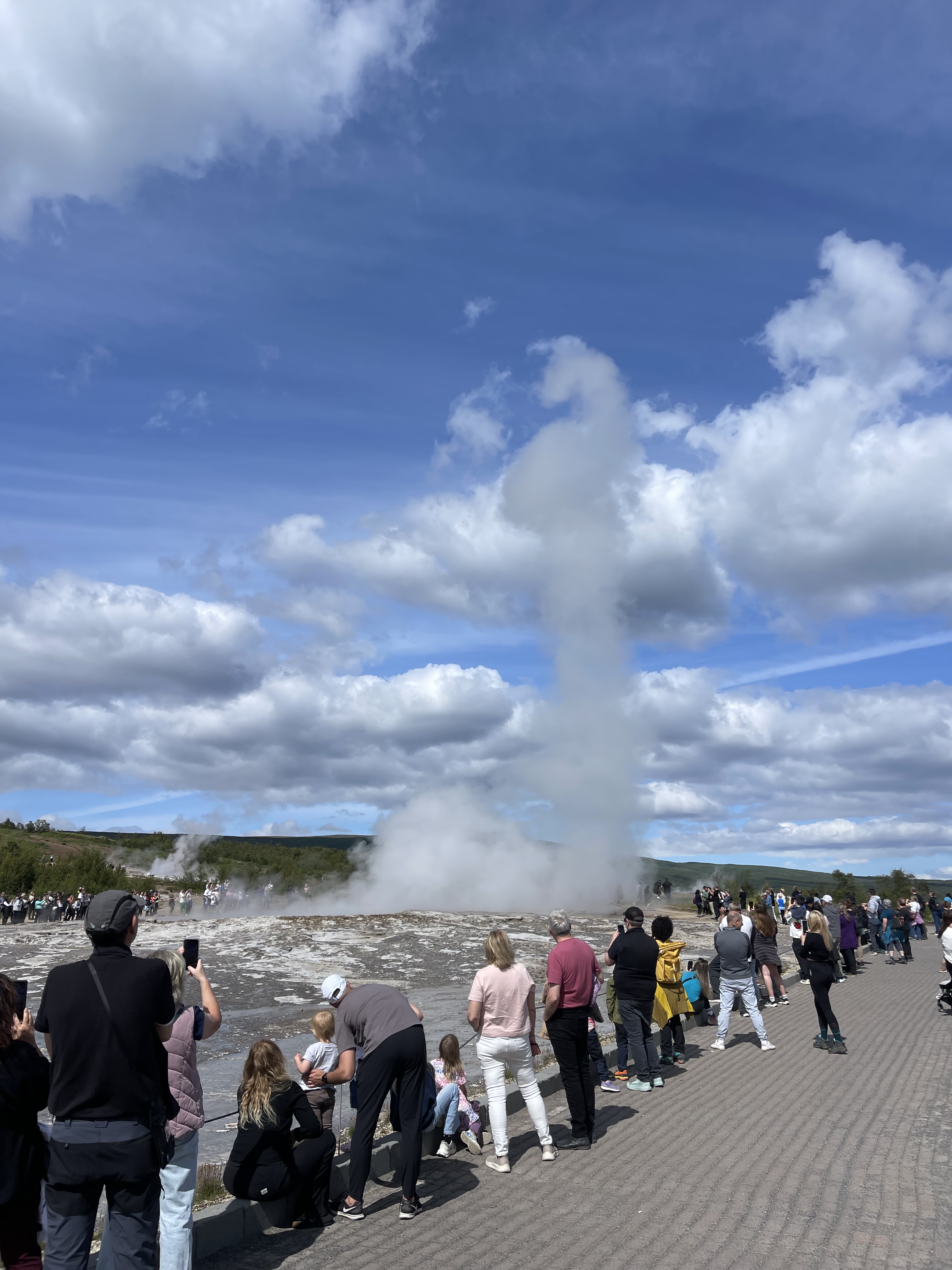
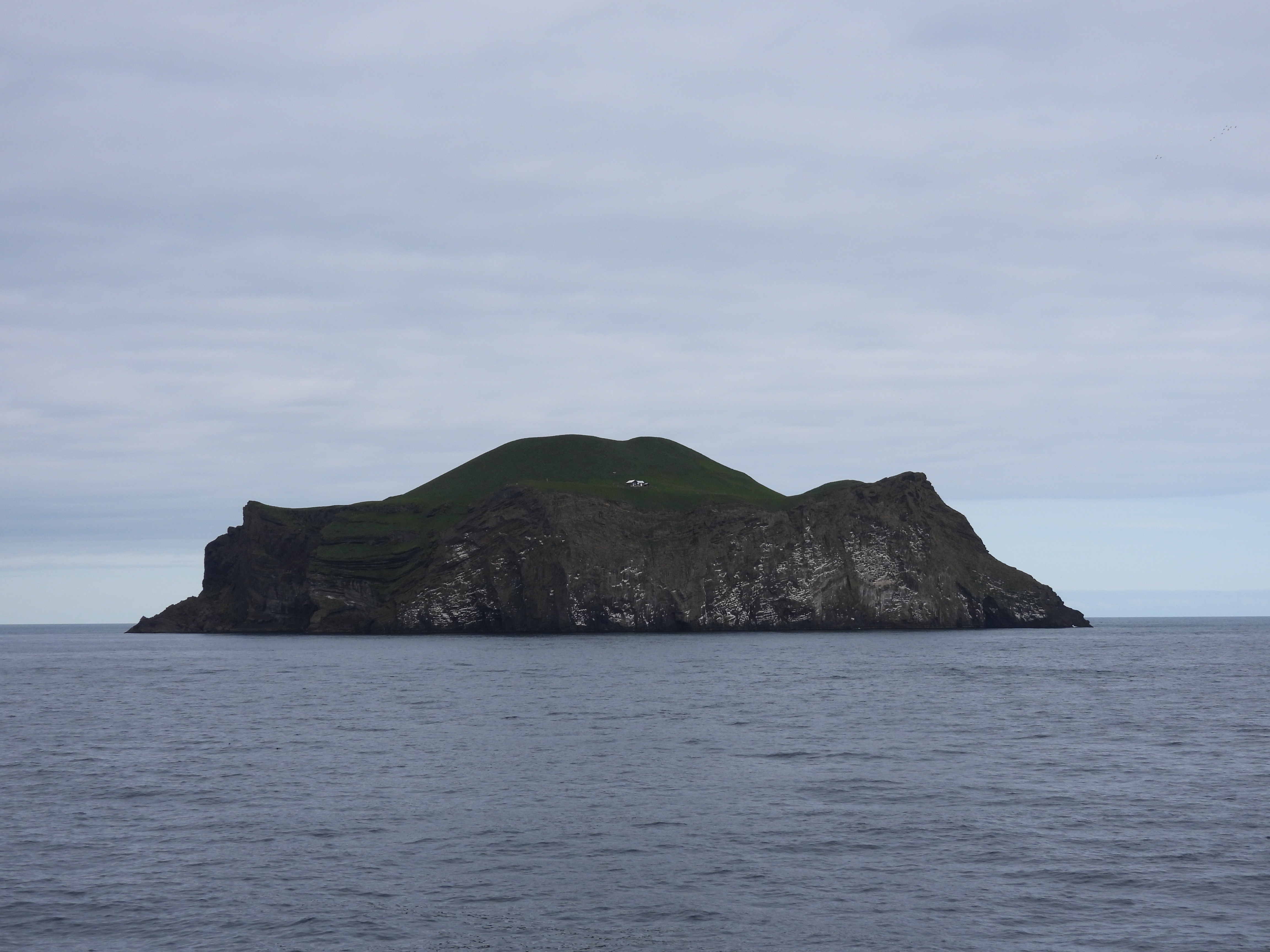
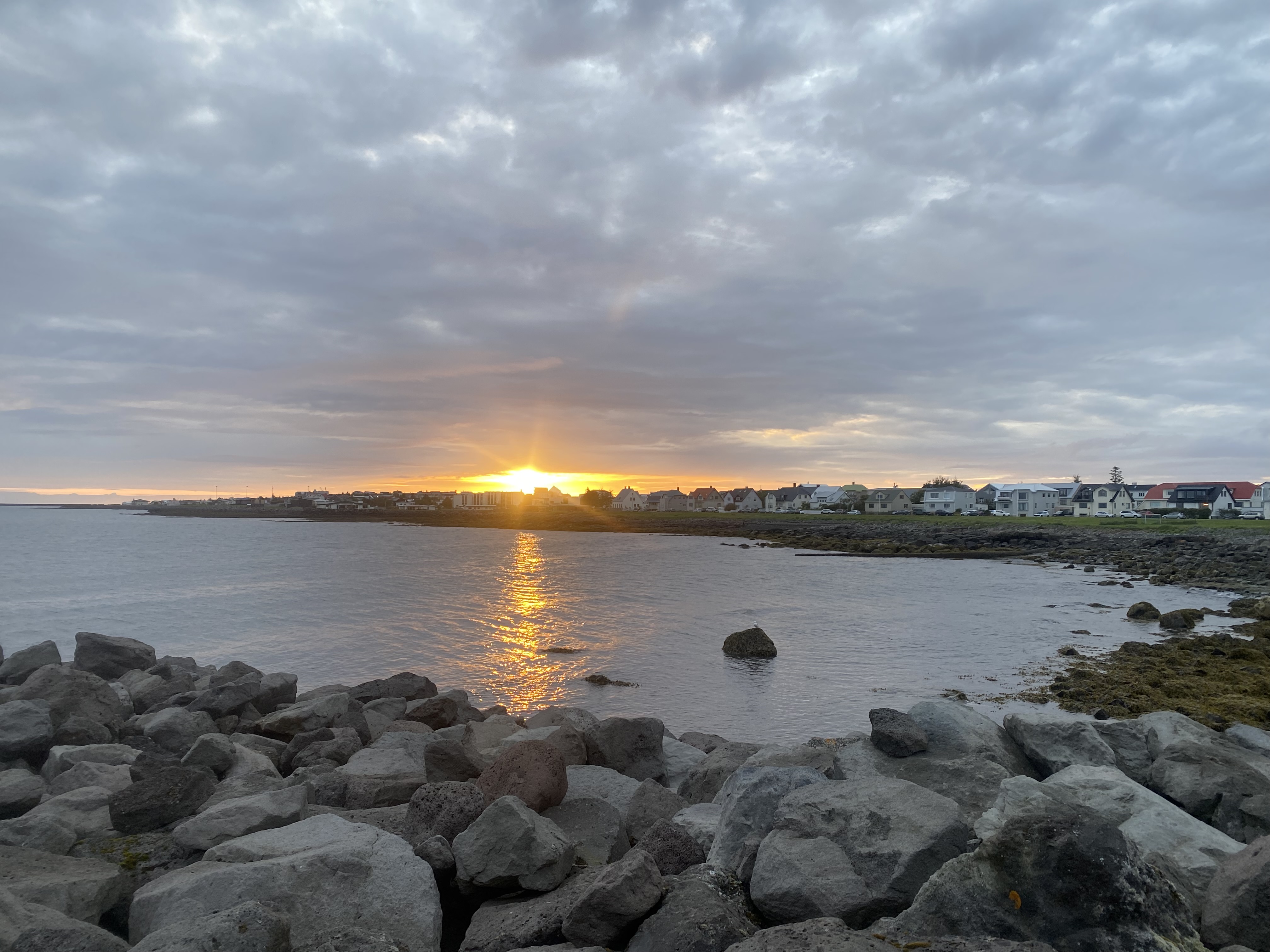
Strokkur Geyser erupting (left), one of the 18 Westman Islands (top right), and a midnight sunset near Reykjavik (bottom right)
We took a car ferry to Westman Islands from the mainland, which took about 45 minutes. The largest island in this small archipelago is Heimaey Island, which is home to around 4,000 people and is the only one of the Westman Islands with paved roads. Biggi’s family home is located here.
Heimaey Island is a dramatic landscape composing sheer basalt cliffs where sheep graze and thousands of seabirds breed, and the cinder cones of recently-erupted volcanoes. The most recent eruption on Heimaey was in 1973, when Eldfell Volcano erupted without warning and caused a temporary, year-long evacuation of the island.
Over the next two days (Day 2 & 3), my dad and I explored almost every inch of Heimaey Island, with and without Biggi as our guide. Hiking 928-foot-high (283 meter) Heimaklettur, or Home Rock, was one of the highlights of our stay on Westman Islands. The climb involved multiple ladders and some tricky scrambling but the spectacular, panoramic views made it all worth it.
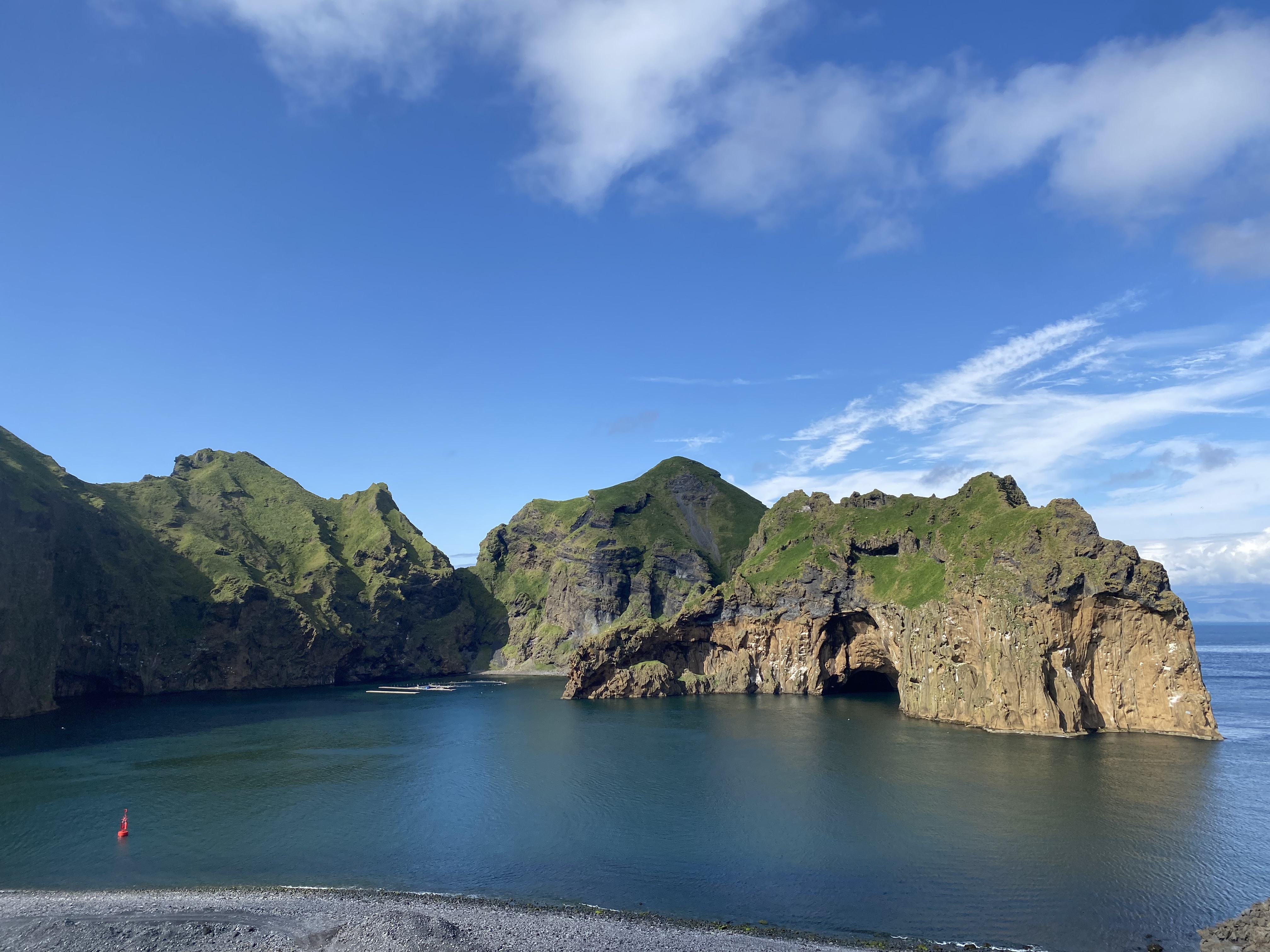
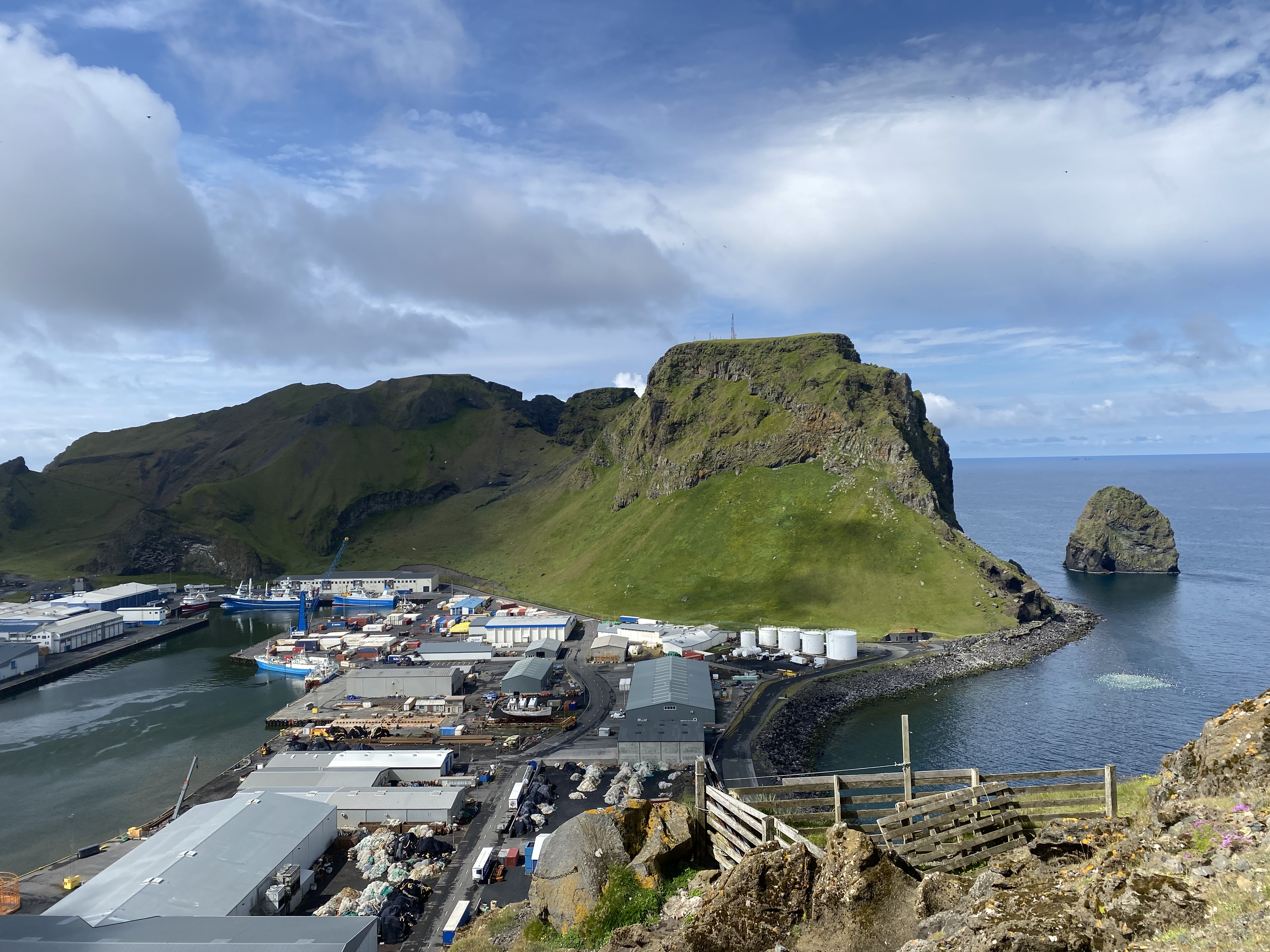
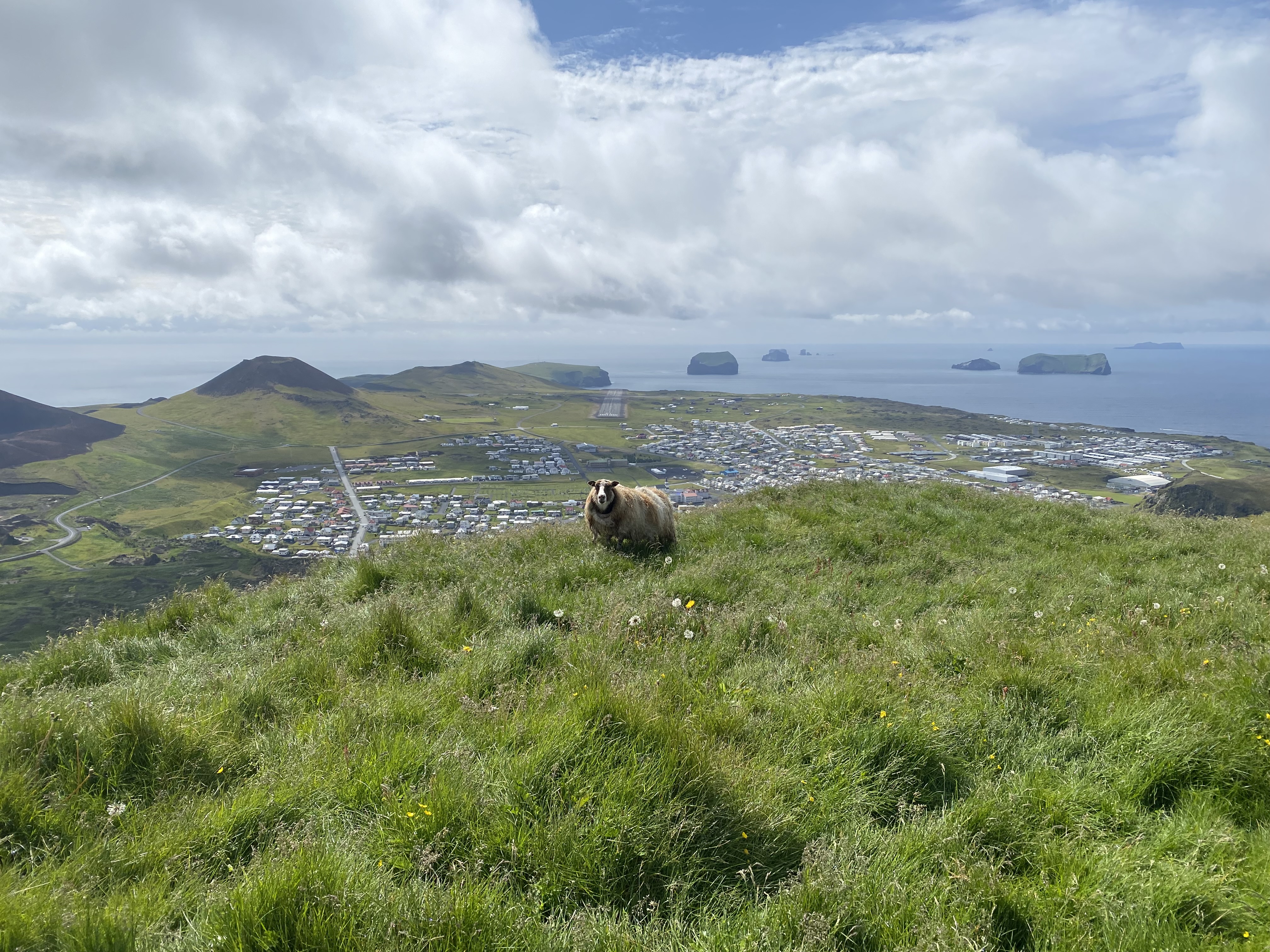
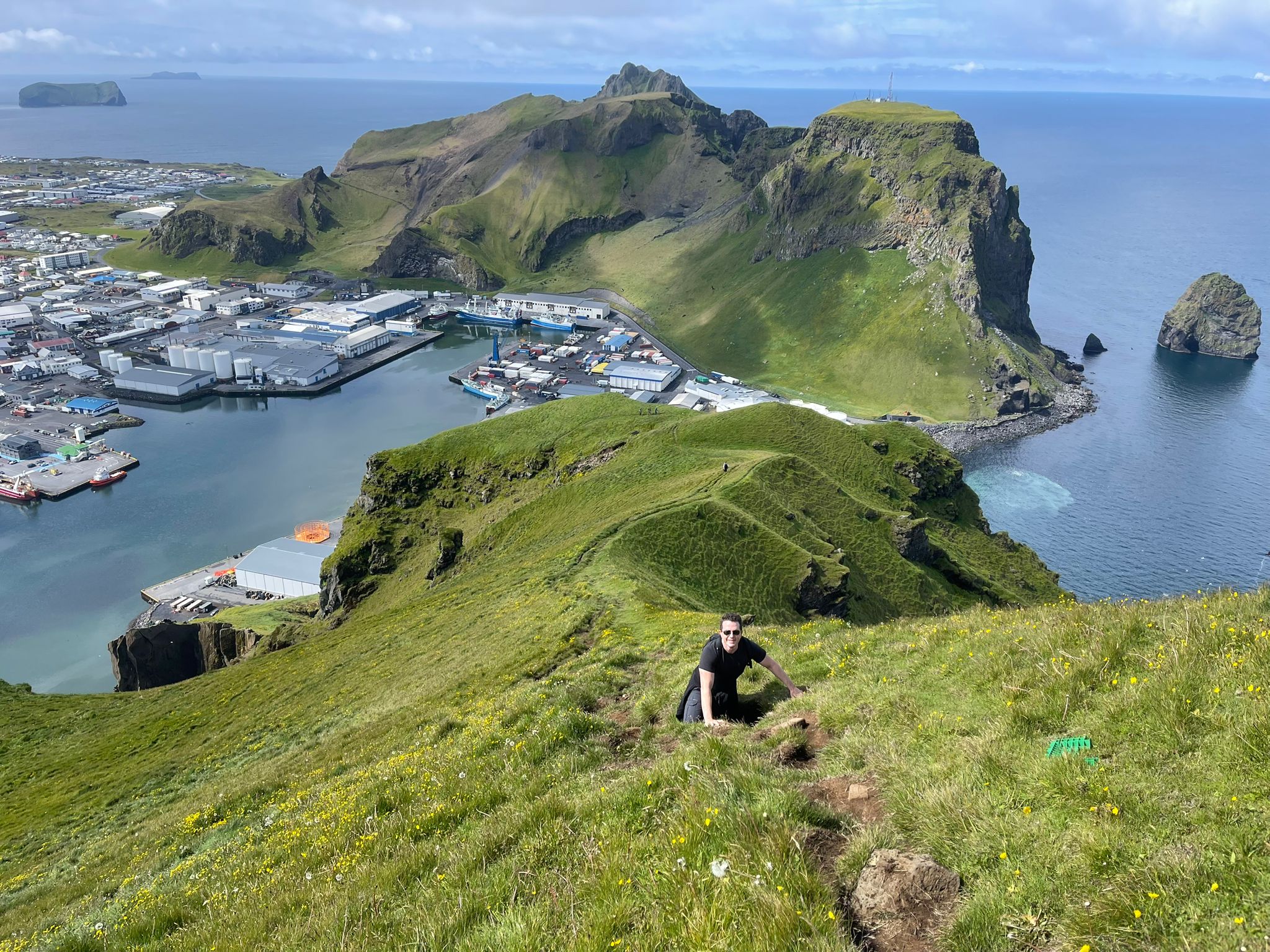
Spectacular Heimaey Island & Heimaklettur (Home Rock)
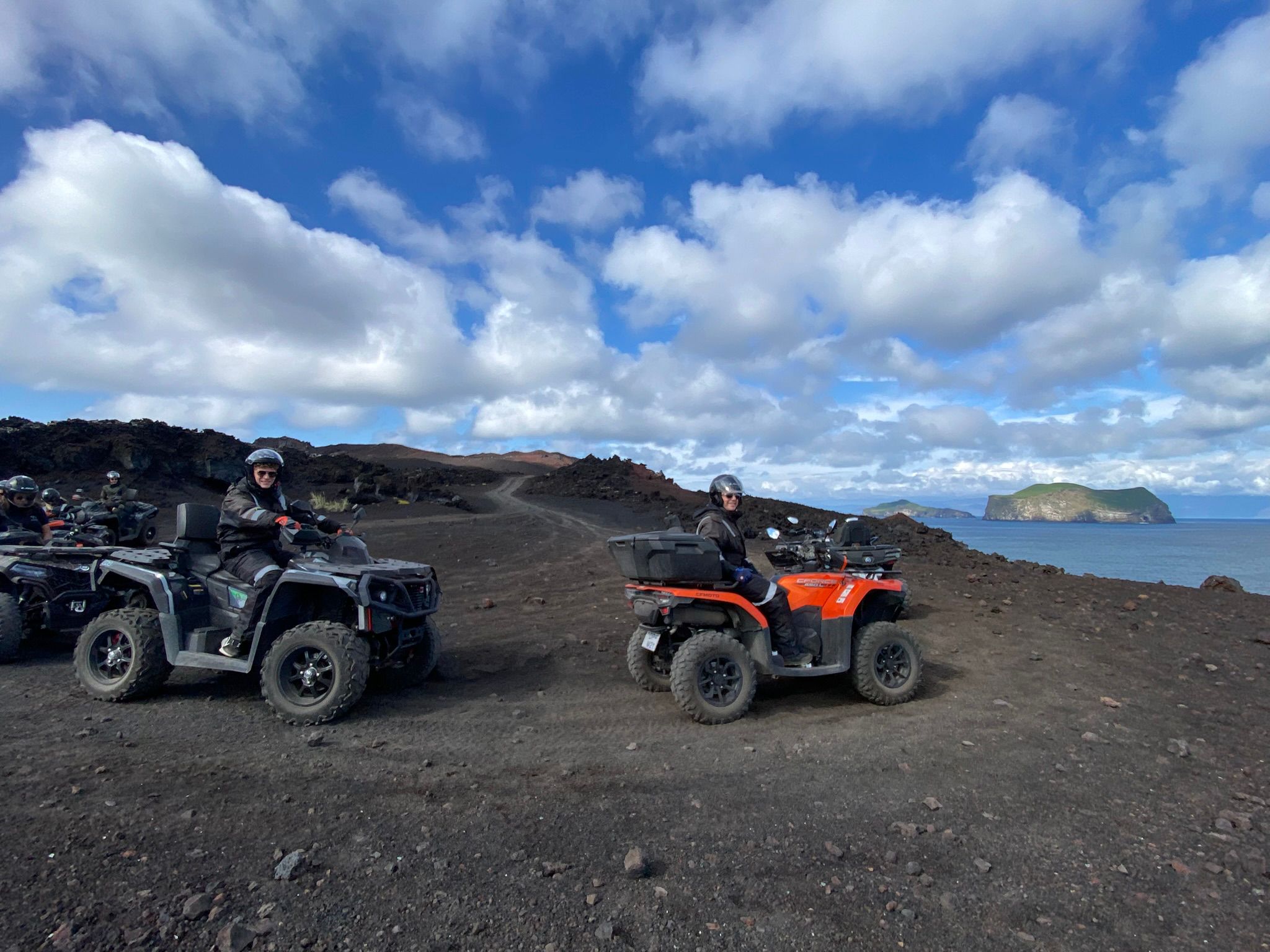
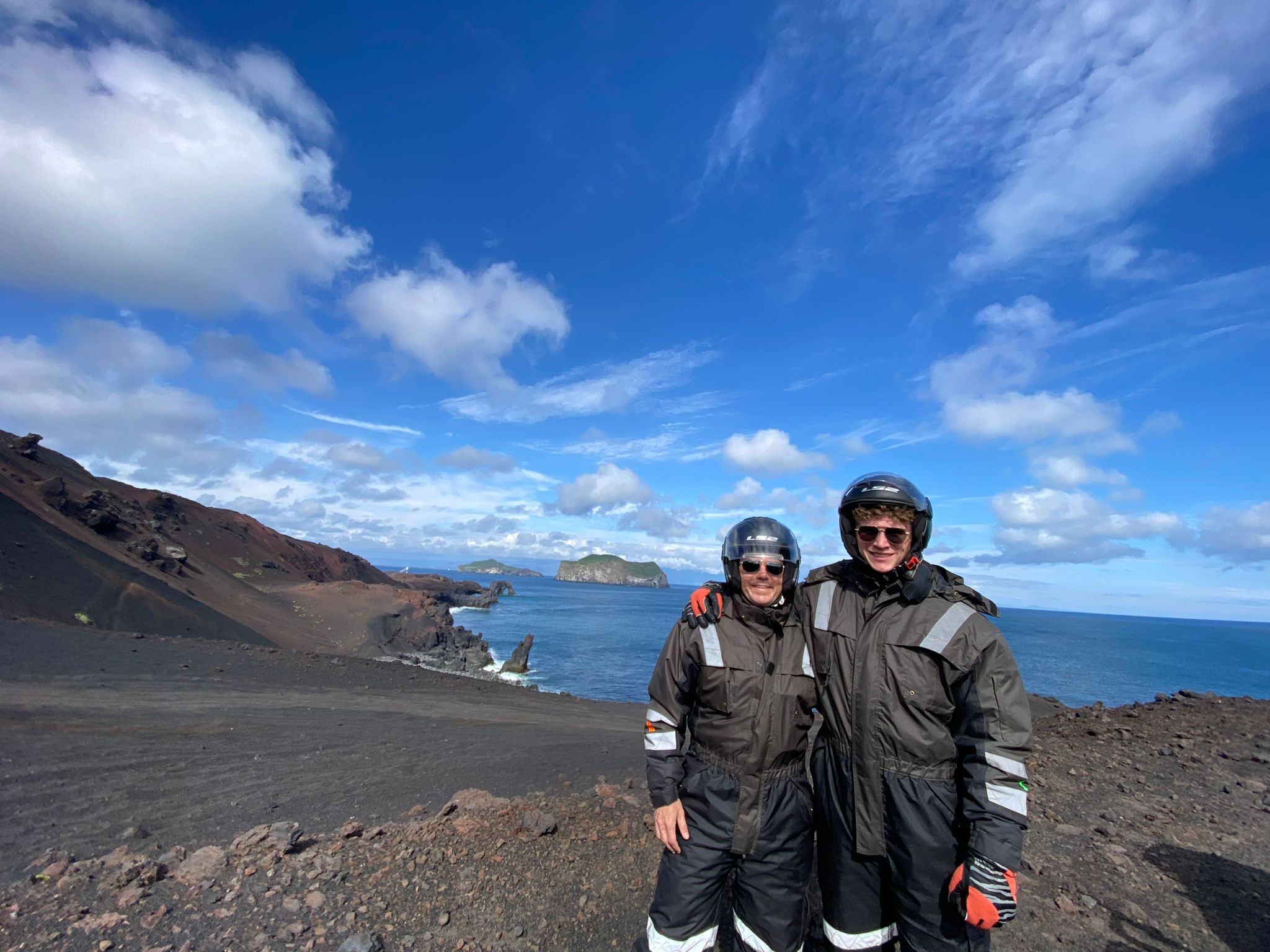
Another highlight was taking a guided ATV tour through the lava fields surrounding Eldfell volcano. Driving through the site of such a recent natural disaster was uncanny and a bit surreal.
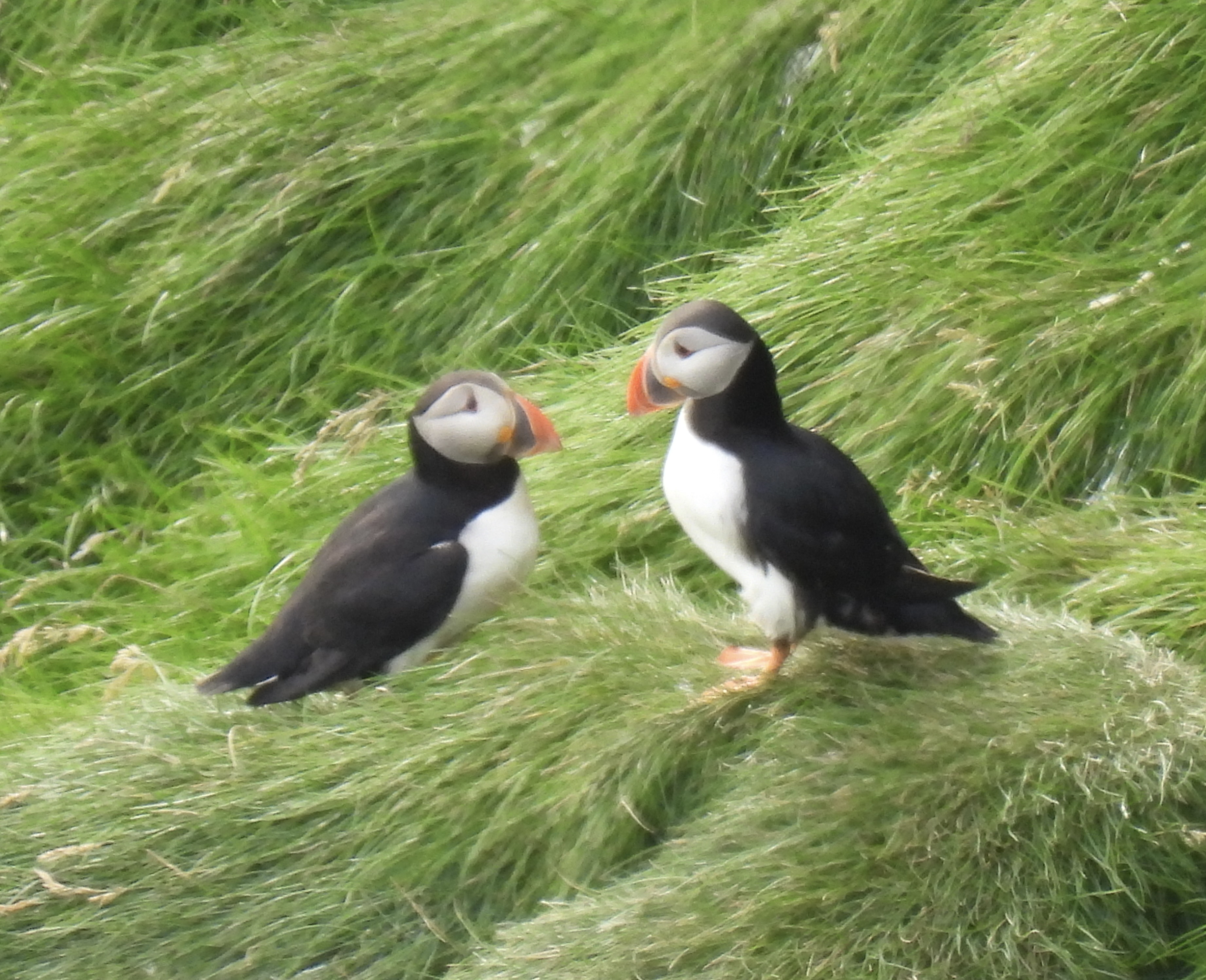
During both days on Heimaey Island, I thoroughly enjoyed various encounters with the island’s breeding colony of Atlantic Puffins, along with other breeding seabirds like Black Guillemots, Black-legged Kittiwakes, Northern Fulmars, Common Murres, and Northern Gannets. Atlantic Puffins have to be Iceland’s most charismatic bird species. I mean how can you not love their dazzling bills, penguin-like plumage, and adorable demeanor?
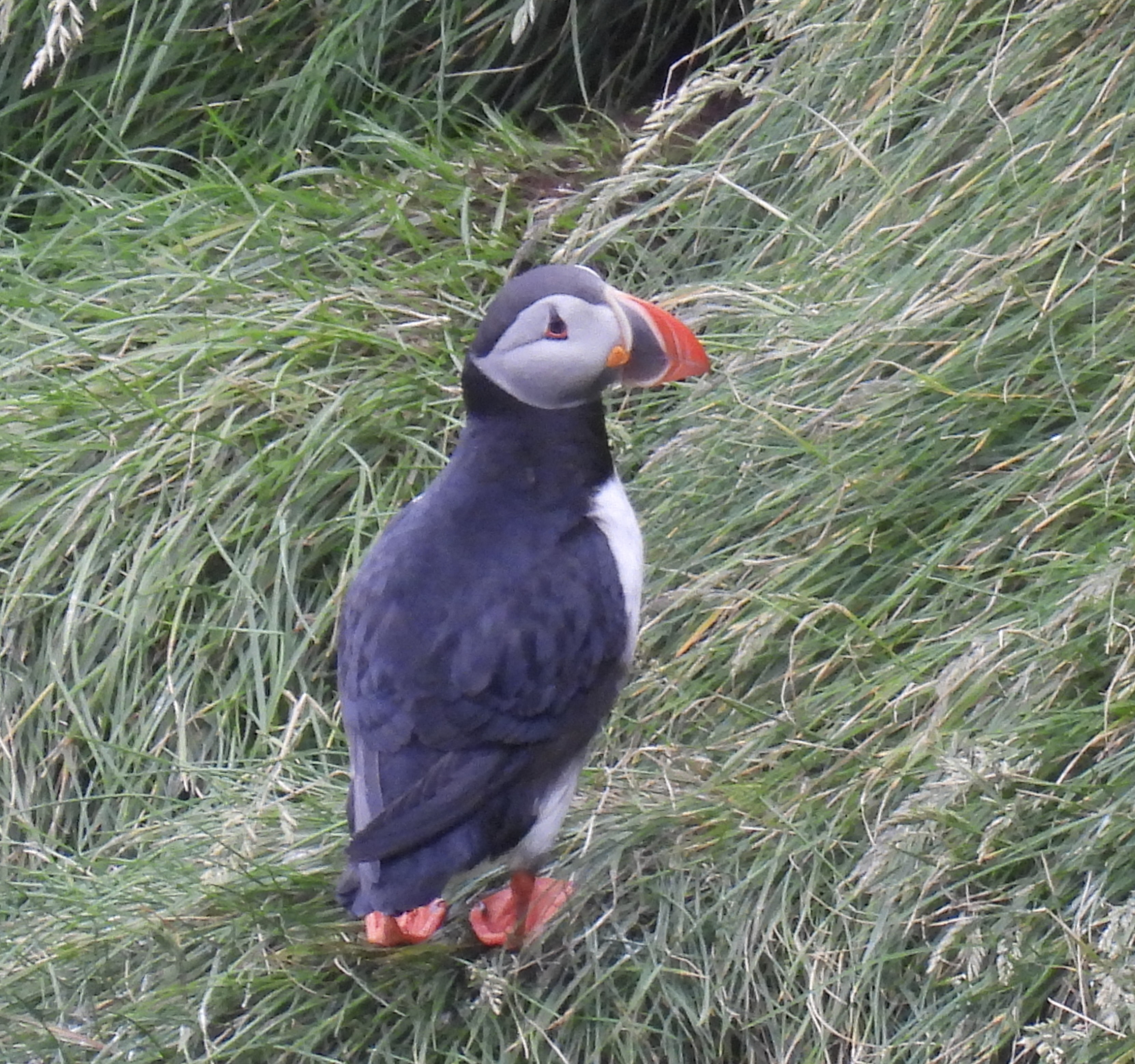
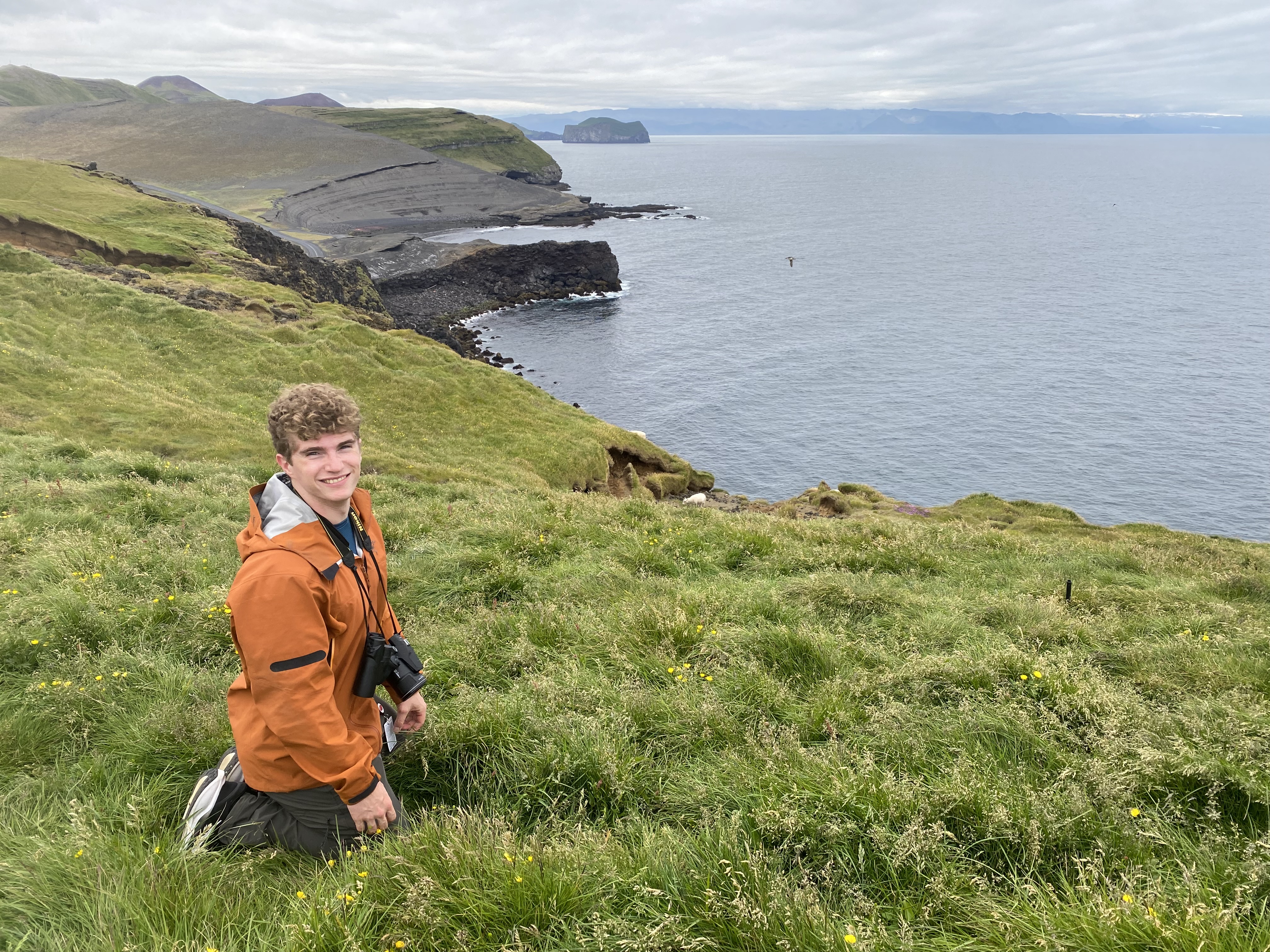

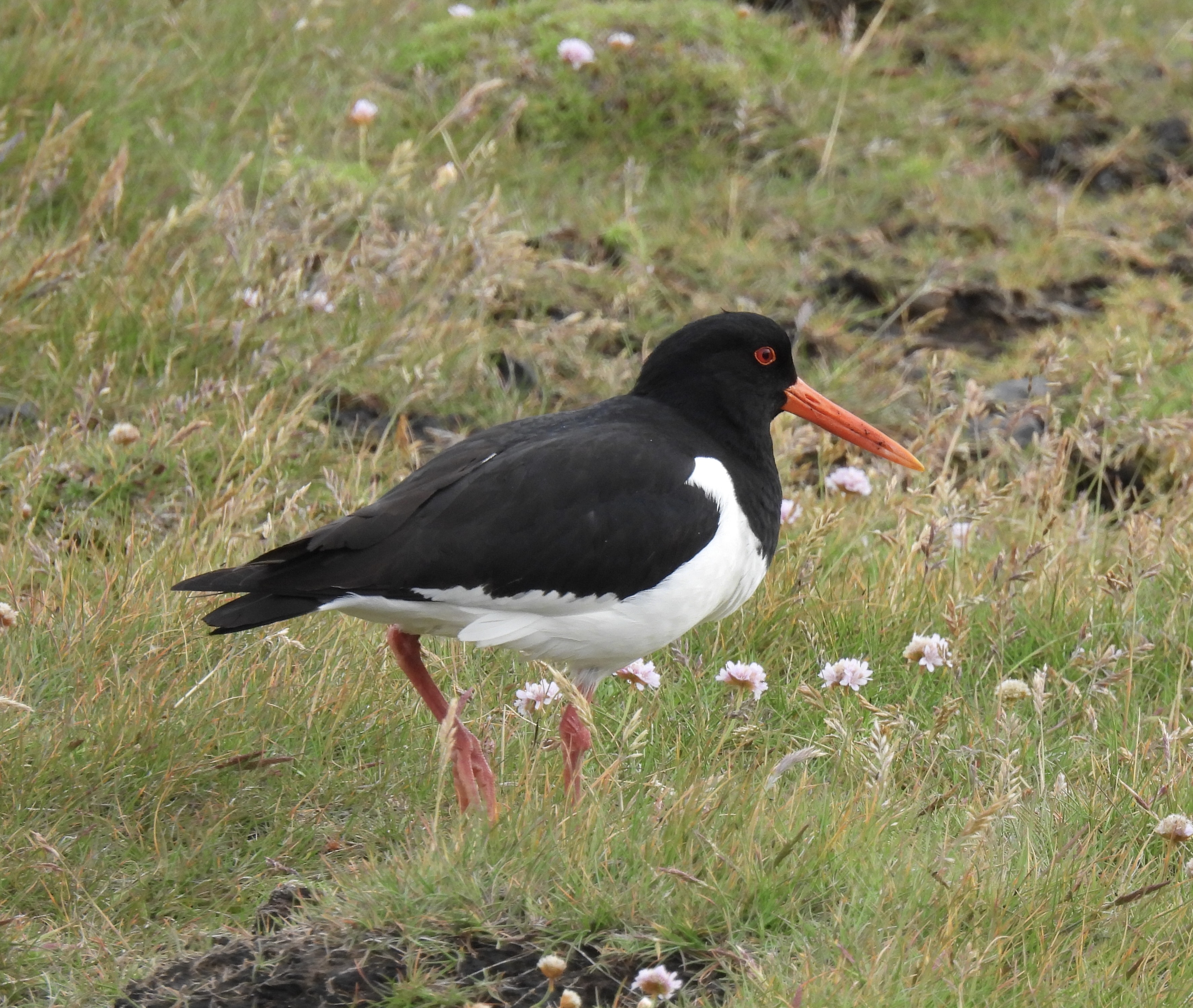
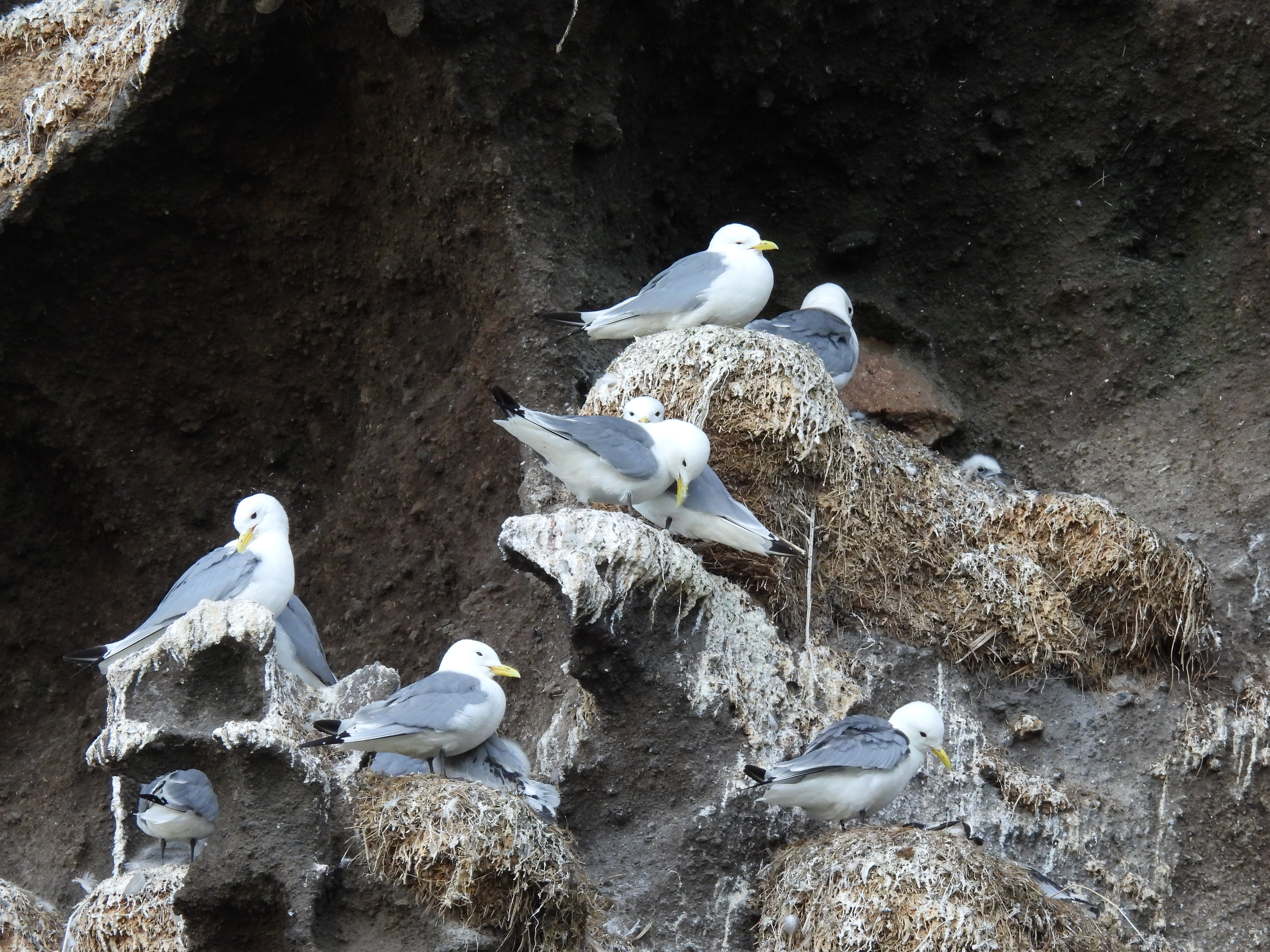
Top Row: Atlantic Puffin (left), Puffin-watching on the cliffs of Heimaey Island (top right), and a Black-legged Kittiwake mother and chick (bottom right)
Bottom Row: A pair of puffins (left), Eurasian Oystercatcher (middle) and a kittiwake colony (right)
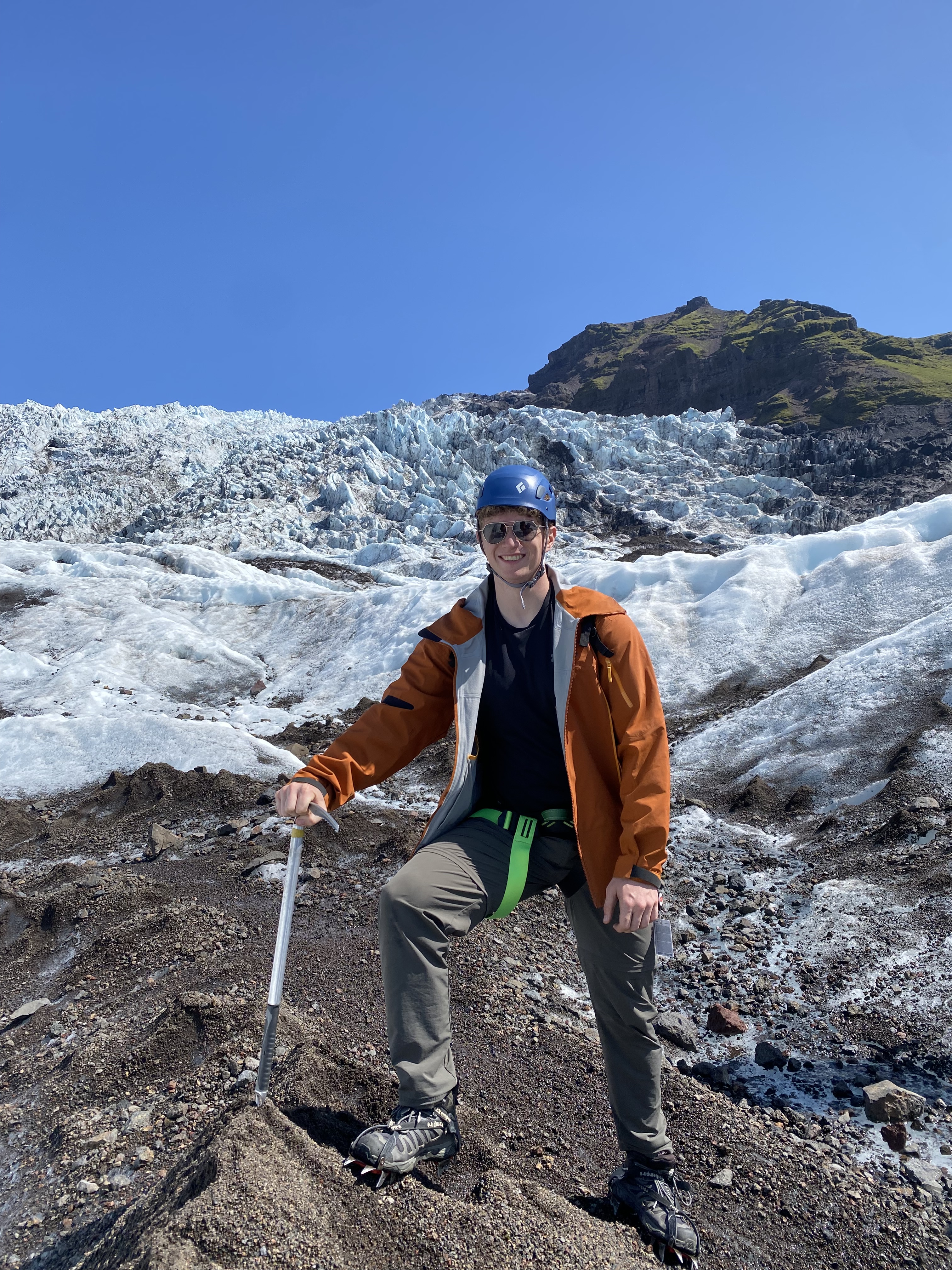
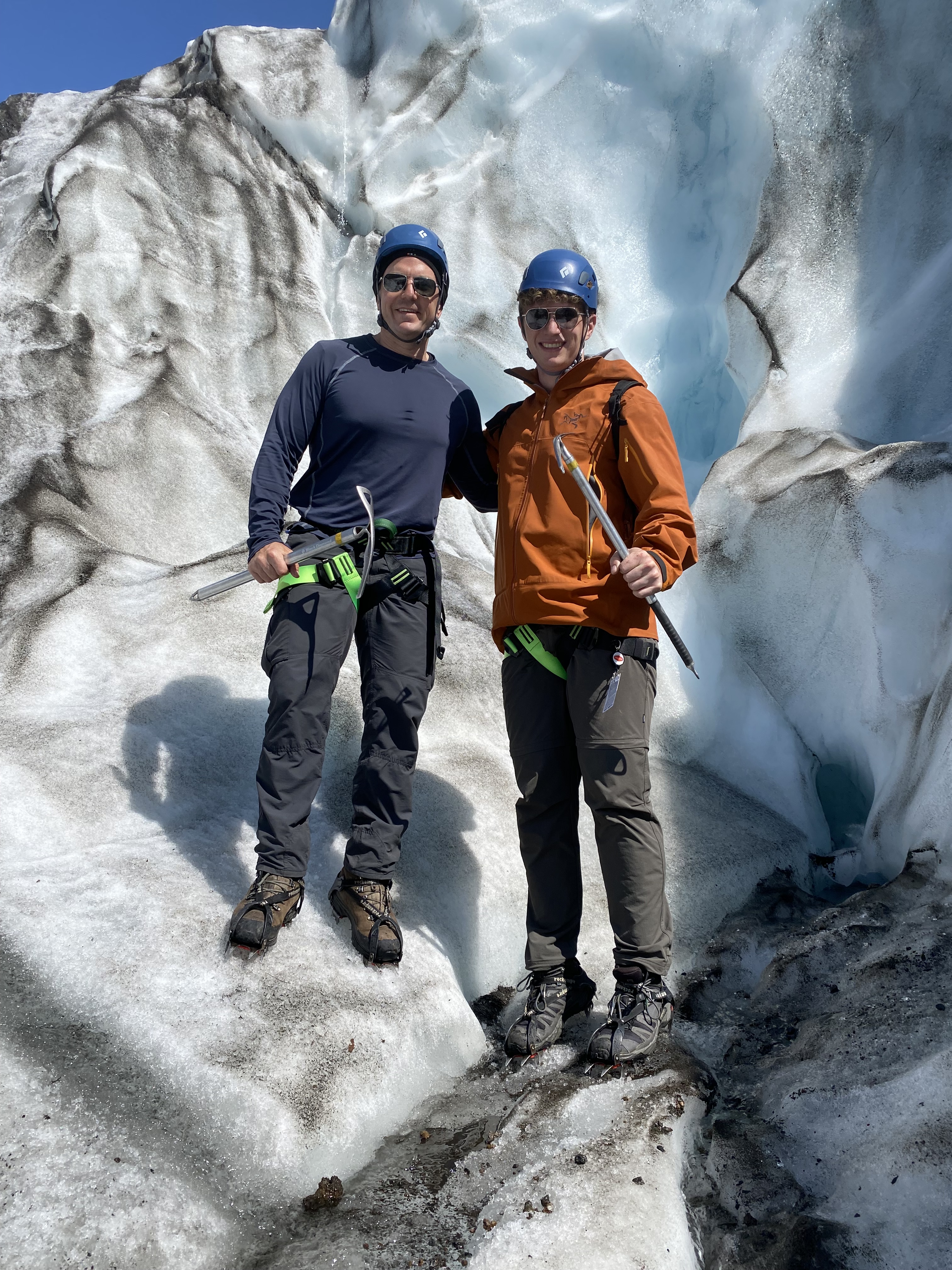
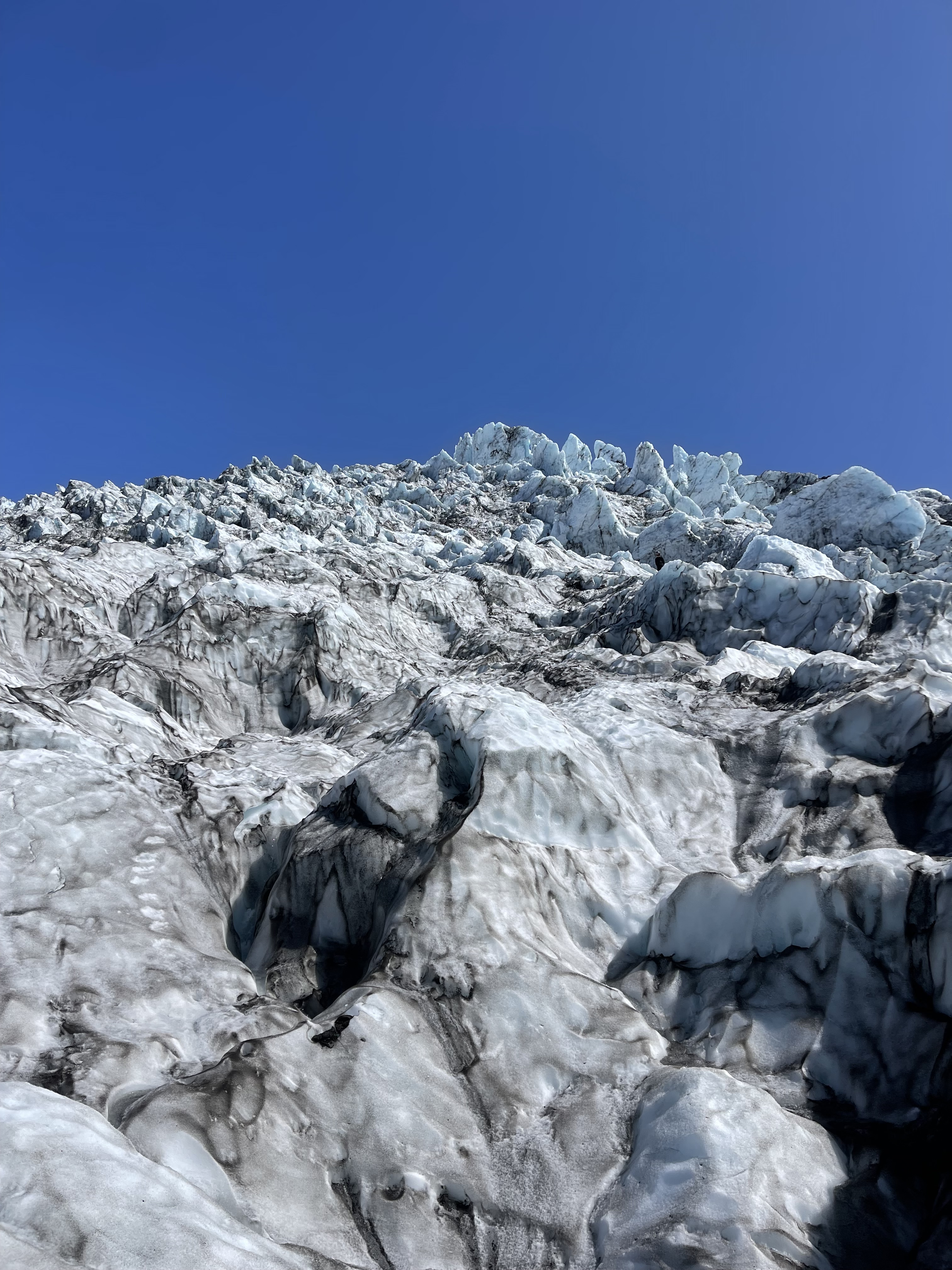
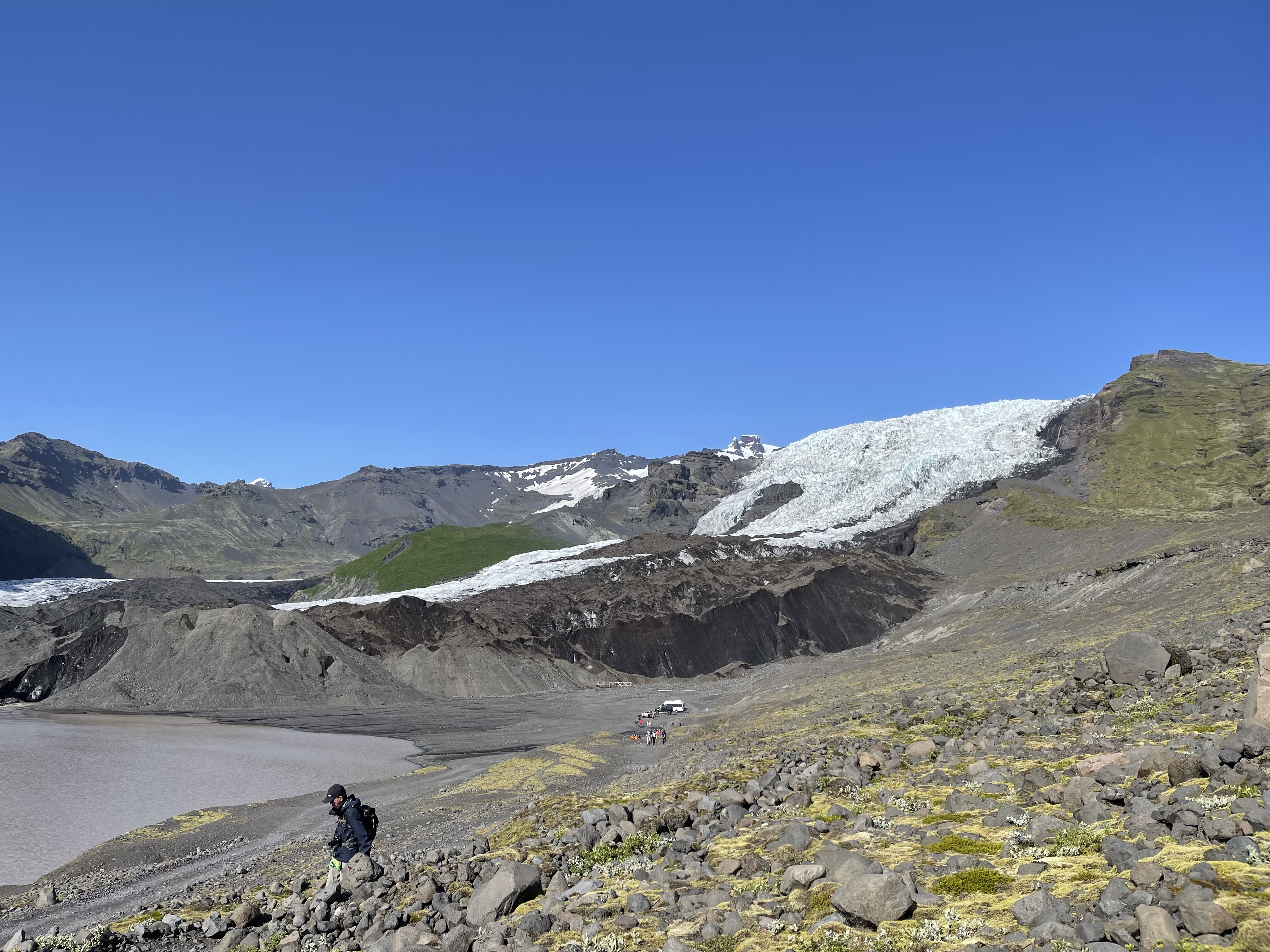
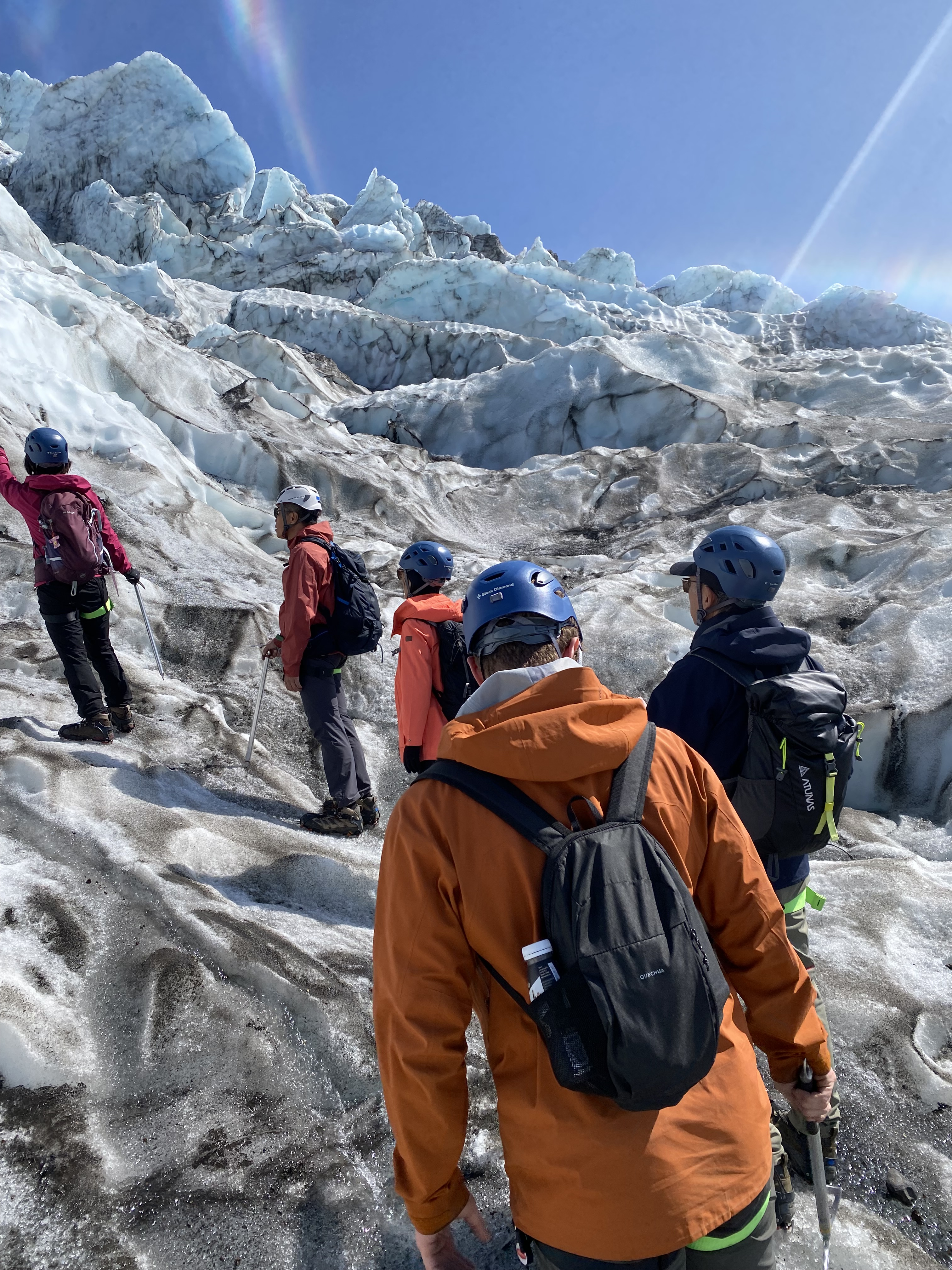
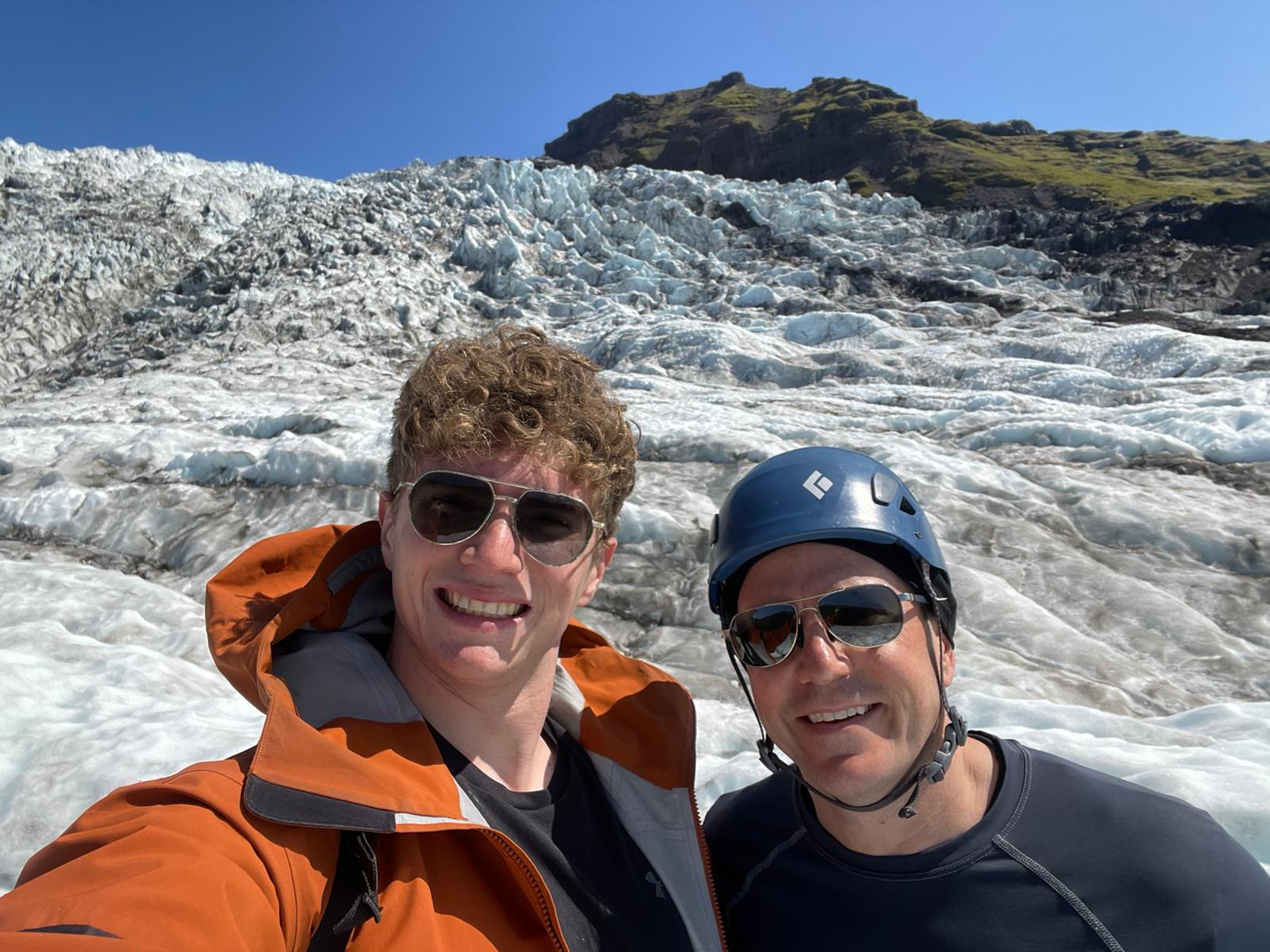
On the evening of Day 3, my dad and I departed the Westman Islands and returned to the mainland, driving three hours east toward Vatnajökull Glacier—the second-largest glacier in Europe. We stayed at a nearby lodge, and the next morning joined a glacier hike led by Arctic Adventures. The seven-hour trek (which my dad thought was a bit too long) took us across a portion of the vast 3,000-square-mile (7,800 km²) icefield.
I had never seen a glacier before, and hiking across the frozen landscape was an otherworldly experience. The surface was laden with meltwater streams, jagged ice formations, and gaping crevasses. Vatnajökull is rapidly retreating due to climate change, and I felt grateful to experience this natural wonder firsthand—knowing that, someday in the near future, it may no longer be accessible to tourists.
We were both tired after the tour concluded, and after a late lunch we departed from Vatnajökull HQ in Skaftafell for Jökulsárlón Glacier Lagoon to the southeast. The lagoon is a primary ice spillway for Vatnajökull Glacier, and during any given time of the year thousands of icebergs dot the lagoon and nearby ocean.
The views were very pretty— my dad was particularly enchanted by Jökulsárlón, saying it was one of his favorite stops of the trip. For me, the lone Harbor Seal we saw briefly in the lagoon was the cherry on top of an excellent few days exploring Vatnajökull Glacier.
On the way back toward Reykjavik, nearby Jökulsárlón, my dad and I made another stop at the famed Diamond Beach, where tourists gawk at the hundreds of icebergs per day that float out to sea from the lagoon. Some of the ice washes up onto the volcanic-sand beach, providing a unique contrast between fiery and icy forces of nature.

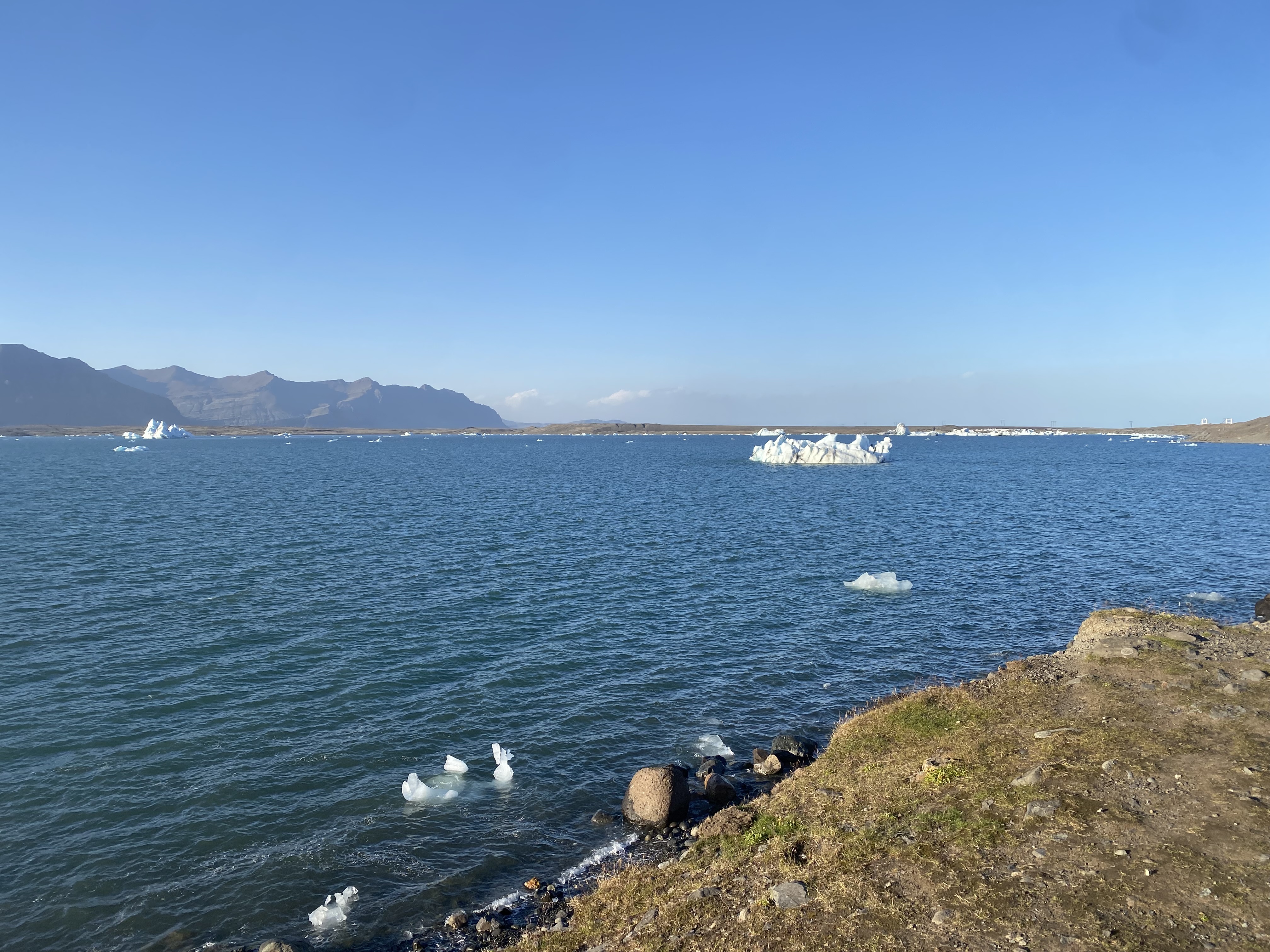
Me holding up a piece of ice at Diamond Beach (left) and Jökulsárlón Glacier Lagoon (right)
On the way back to Reykjavik, my dad and I briefly paused at scenic landmarks like Seljalandsfoss & Skógafoss Waterfalls and Fjaðrárgljúfur Canyon (I can’t pronounce it either). Even at nearly midnight, there were big crowds of tourists and locals at each scenic area.
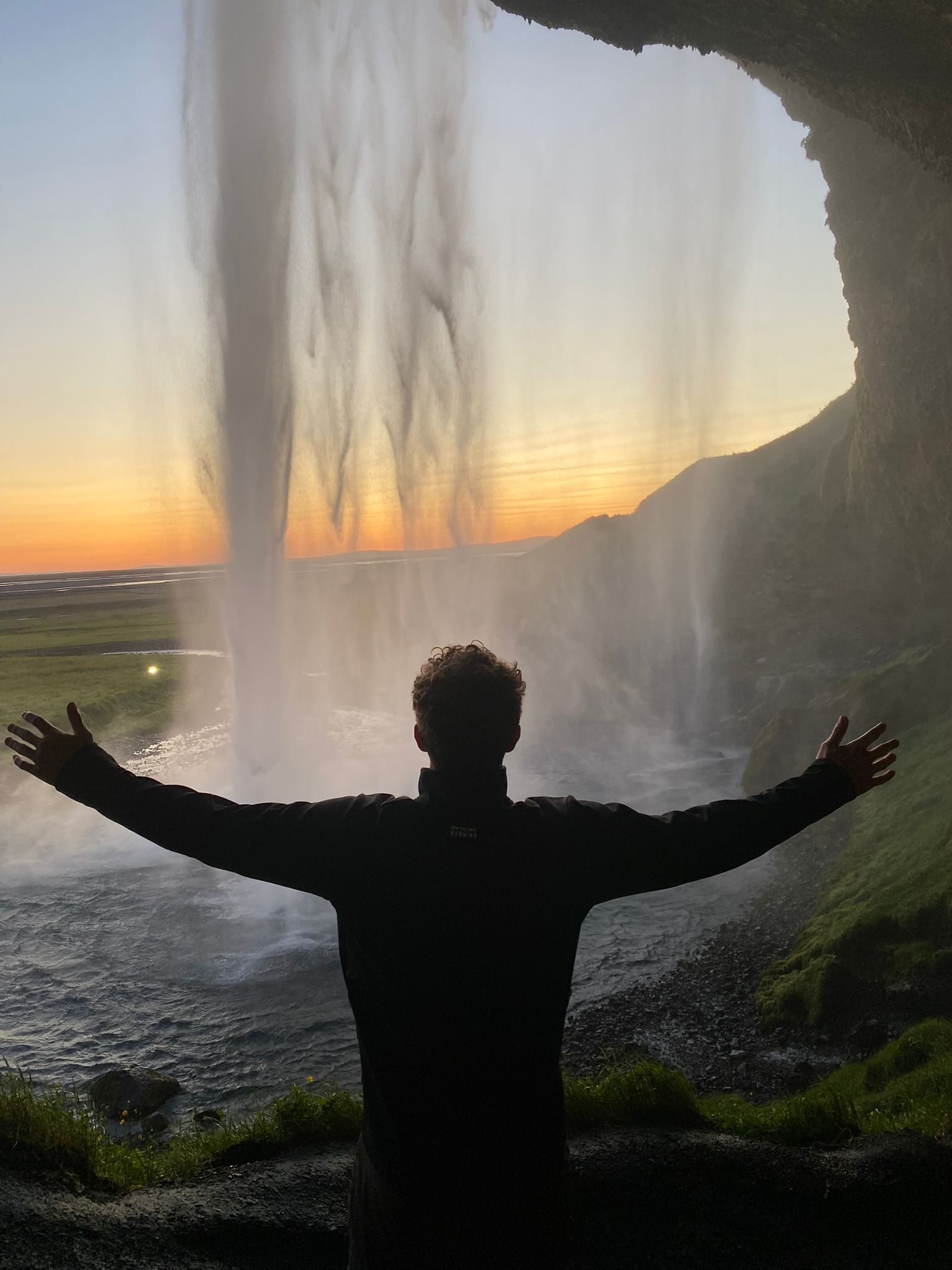
Seljalandsfoss Waterfall
As it was very late in the evening once we neared the vicinity of Reykjavik, and Biggi wanted a full night of sleep at his apartment, my dad and I decided to spend the night at the hot spring town of Hveragerði. We stayed at the lovely Greenhouse Hotel, which I highly recommend to fellow tourists.
Before arriving at the hotel, I was particularly antsy to take a dip in the famed Reykjadalur Hot Spring River near the town. My dad (annoyed at me) and myself stopped at the trailhead for a couple minutes so I could take my swim— I, however, failed to realize that the part of the river accessible to swimmers was a 4.5-mile (7.4 kilometer) out-and-back hike! We smartly saved the hike for the next day.
Though the river & trail were quite congested with people, both of us agreed the thermal river was worth the hike and crowds.
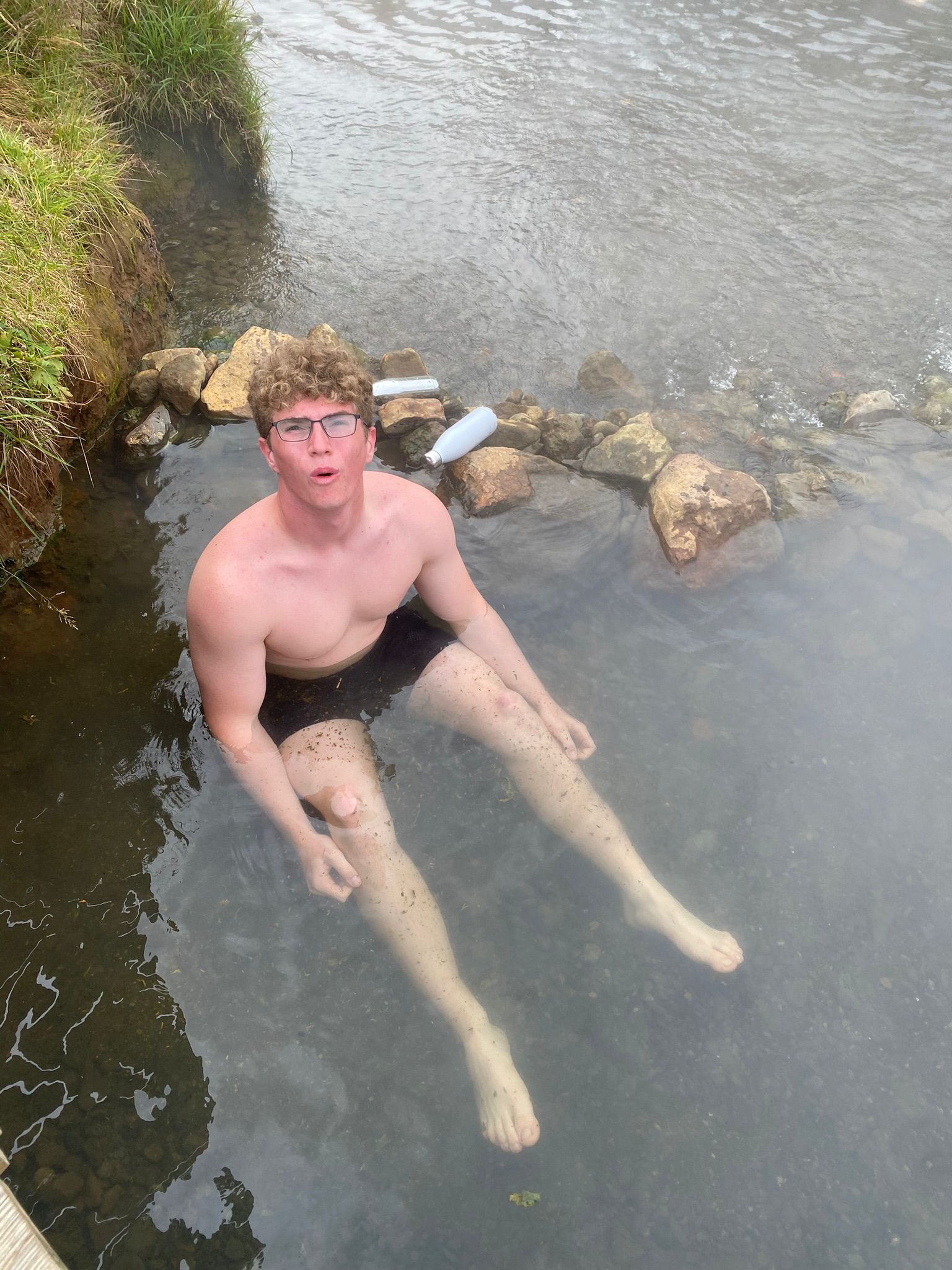
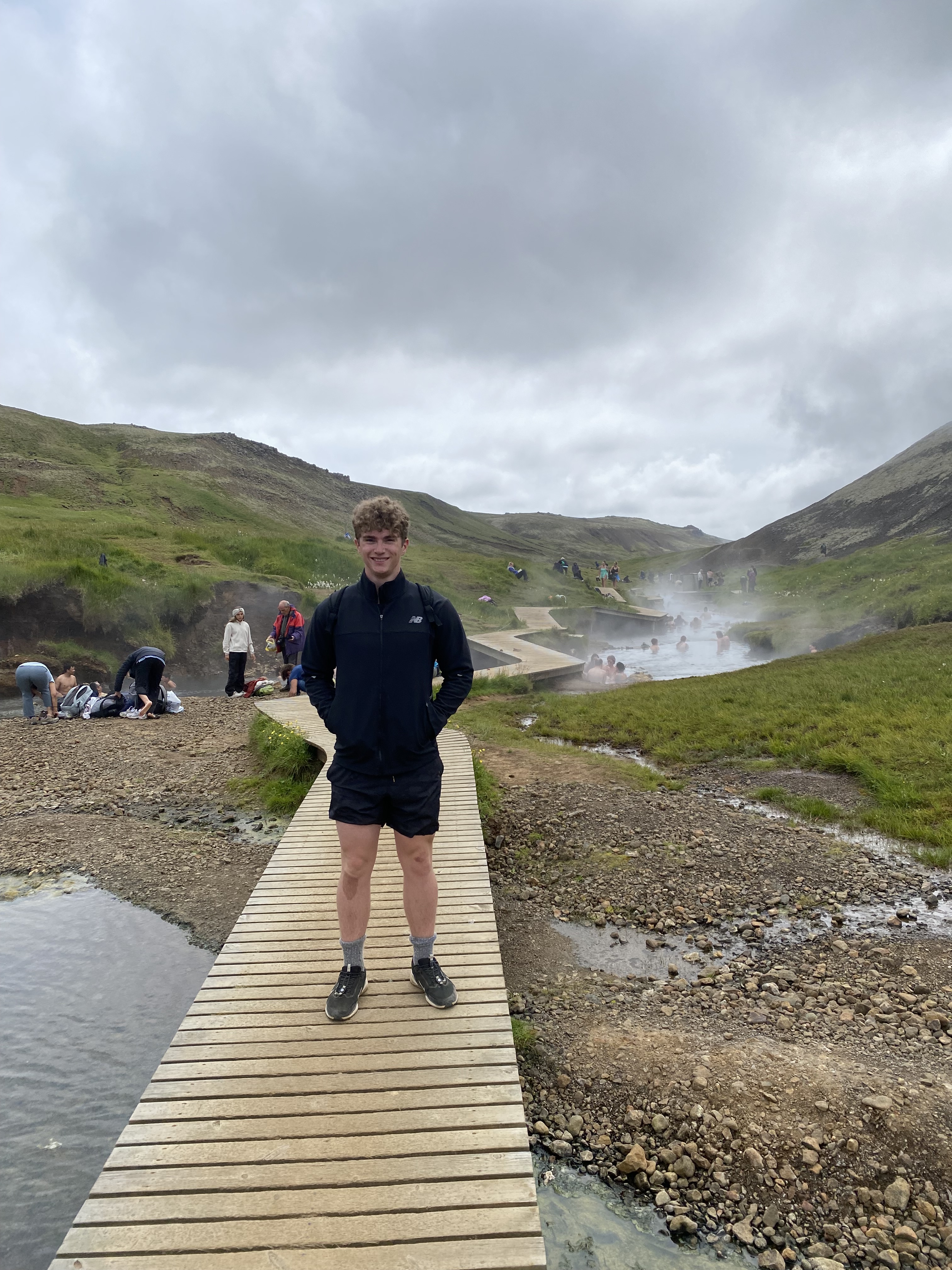
Reykjadalur Hot Spring River
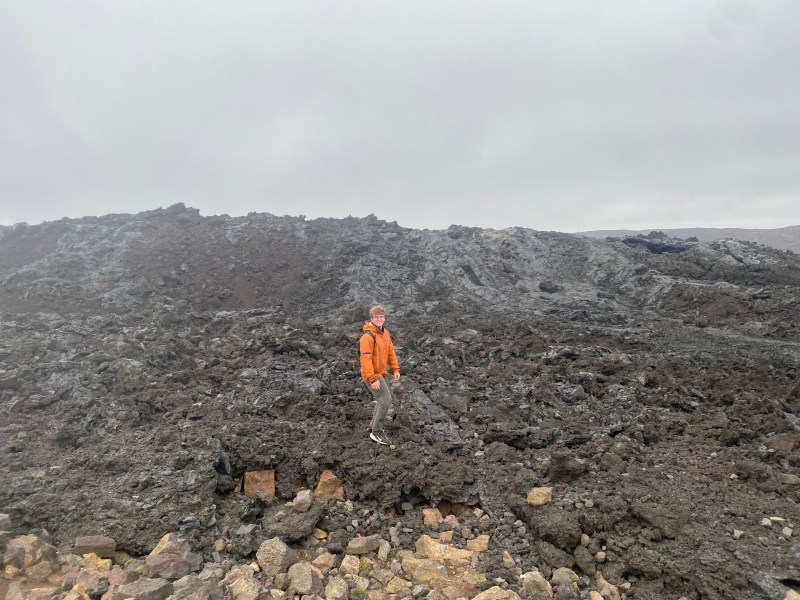
Our last stop on the way to Reykjavik was Geldingadalir Volcano, which had last erupted a mere ten months prior to our visit. During our drive to the volcano, a storm blew in from the Atlantic, bringing 30 mph (50 kph) winds and near-freezing windchill values which made it feel less like July and more like January.
Though we weren’t able to see glowing-hot lava or plumes of volcanic gases at Geldingadalir Volcano, scrambling across brand-new lava rock in bitter, gale-force winds was a memorable experience in of itself.
That evening, after purchasing waterproof jackets, pants, boots, and hats, Biggi offered us an outing on his RIB boat to try our luck fishing for Atlantic Cod (Gadus morhua). It was still cold and windy, but my dad and I wanted badly to cod fish with our friend. What all three of us didn’t realize was how rough the conditions were at sea—7-foot-high (2m) waves, blustery winds, and biting rain. It took about thirty minutes after leaving the harbor for Biggi to turn the boat around due to the bad weather, which only got worse as we careened over mountainous whitecaps. Lucky for us, Biggi is an experienced and talented captain and we made it back to shore safely. All three of us later managed to find the humor in such a crazy outing.
The next day, the winds and waves had died down, but the cold rain was still omnipresent. We again decided to try our hand at cod fishing, and weather permitting, whale watching. For the first few hours of the boat trip, at least, our cheap rain gear kept us dry.
As an Icelandic native and the son of a fishing captain, Biggi knows the waters of Faxaflói Bay like the back of his hand, and likewise the first fishing spot he brought us to was phenomenal. In no more than an hour, my dad and I had pulled about fifty fish out of the chilly ocean. Not only did we catch dozens of sizeable cod, but also plenty of Pollock (Pollachius virens), Haddock (Melanogrammus aeglefinus) and Ling (Molva molva). All these fish are great eating, but Biggi had us throw them back as he prefers to take only larger codfish.
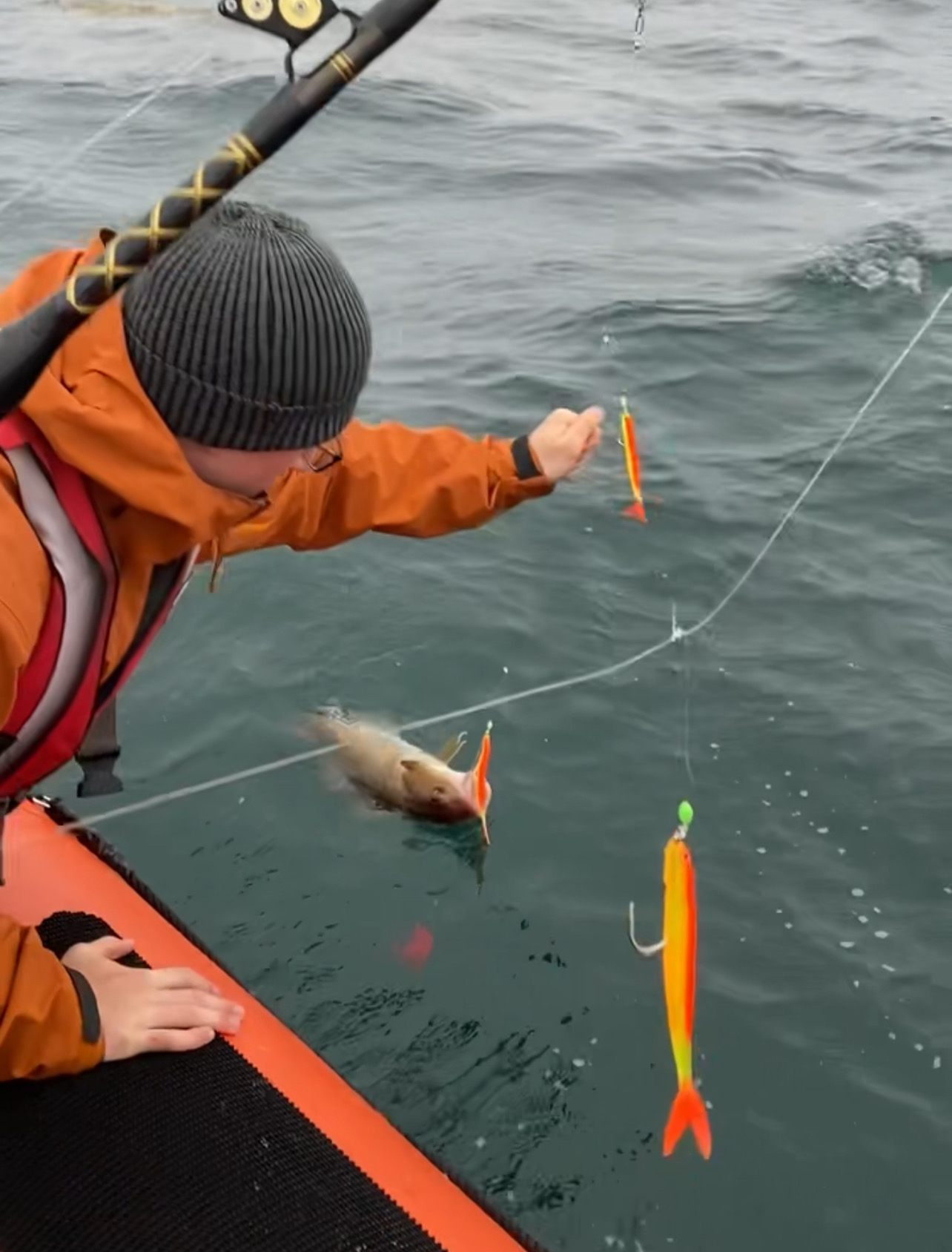
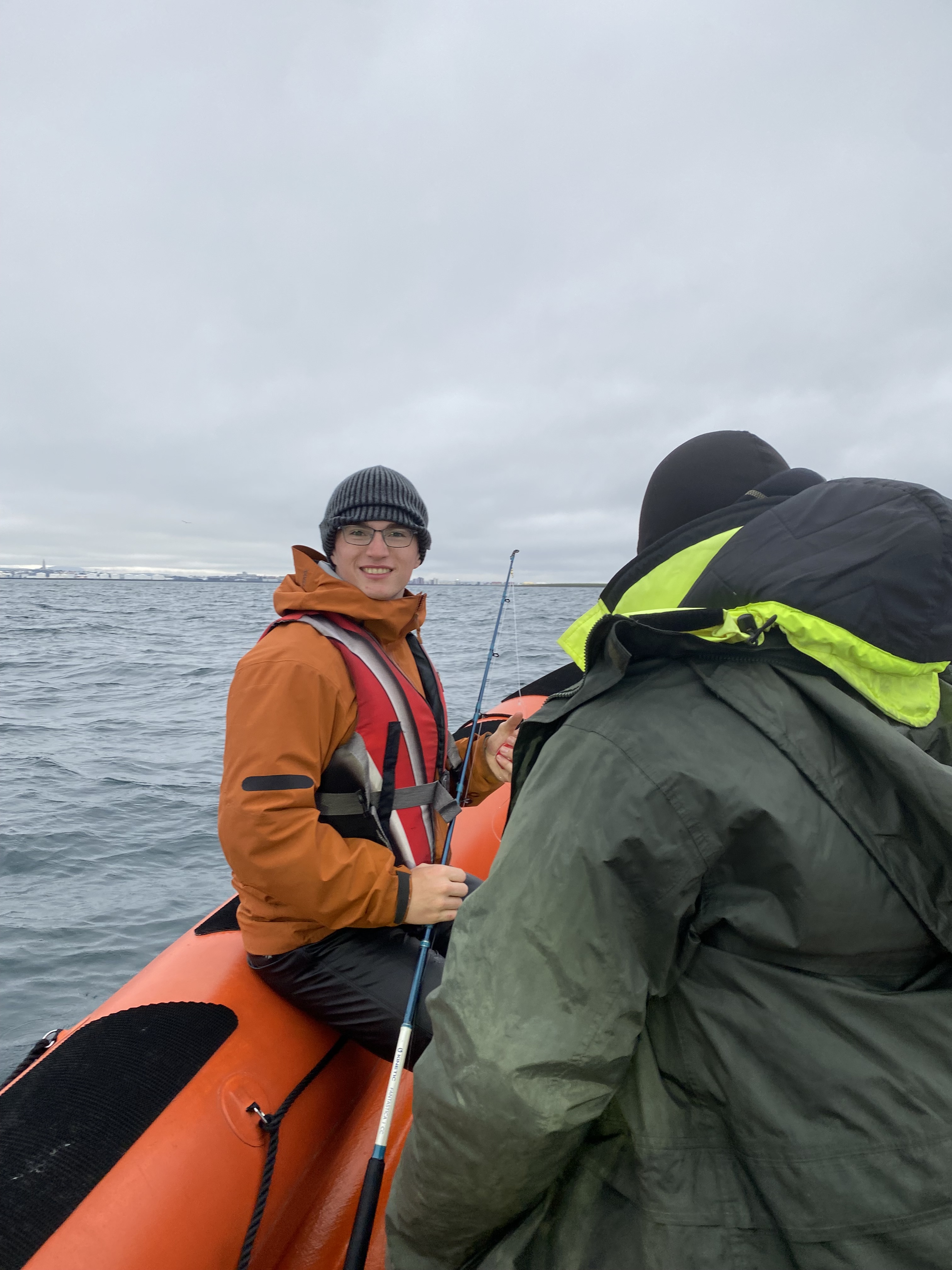
Cod fishing in Faxaflói Bay
My dad and I, as lifelong hobbyist fishermen, had never experienced such a pristine fishery, where a single fisherman could fill an entire boat with meter-long cod in a couple hours. It gives me much hope for the future of threatened fisheries around the world—simply taking fewer fish out of the water in certain areas by limiting commercial fishing could allow for fish stocks to rebound to levels comparable to Iceland.
Whale watching was not as productive as fishing, and though my hopes were high for White-beaked Dolphin and Humpback Whale sightings, alas we were not in luck on this particular day. Biggi, who loves watching cetaceans from his boat, was also slightly disappointed. My dad and I were soaked and freezing after six hours on the water, when Biggi brought us back to Reykjavik for a warm bowl of soup.
While we were eating, Biggi heard from a tour company over the radio that they were watching a huge pod of 15 Humpback Whales congregating together in the bay, but my dad was too seasick to head out again and we instead returned to the harbor. Biggi slipped while exiting the boat and sprained his knee, and after rushing him home and applying multiple ice packs to his injury, it was clear we wouldn’t be going out on his boat the next day.
My dad and I pivoted our plans, and decided to drive two-and-a-half hours north of Reykjavik to the rugged Snæfellsnes Peninsula, home to sheer lava cliffs, a glacier-capped volcano, and multiple cinder cones. It was also my best chance of spotting a wild Arctic Fox, my #1 target species of the trip.
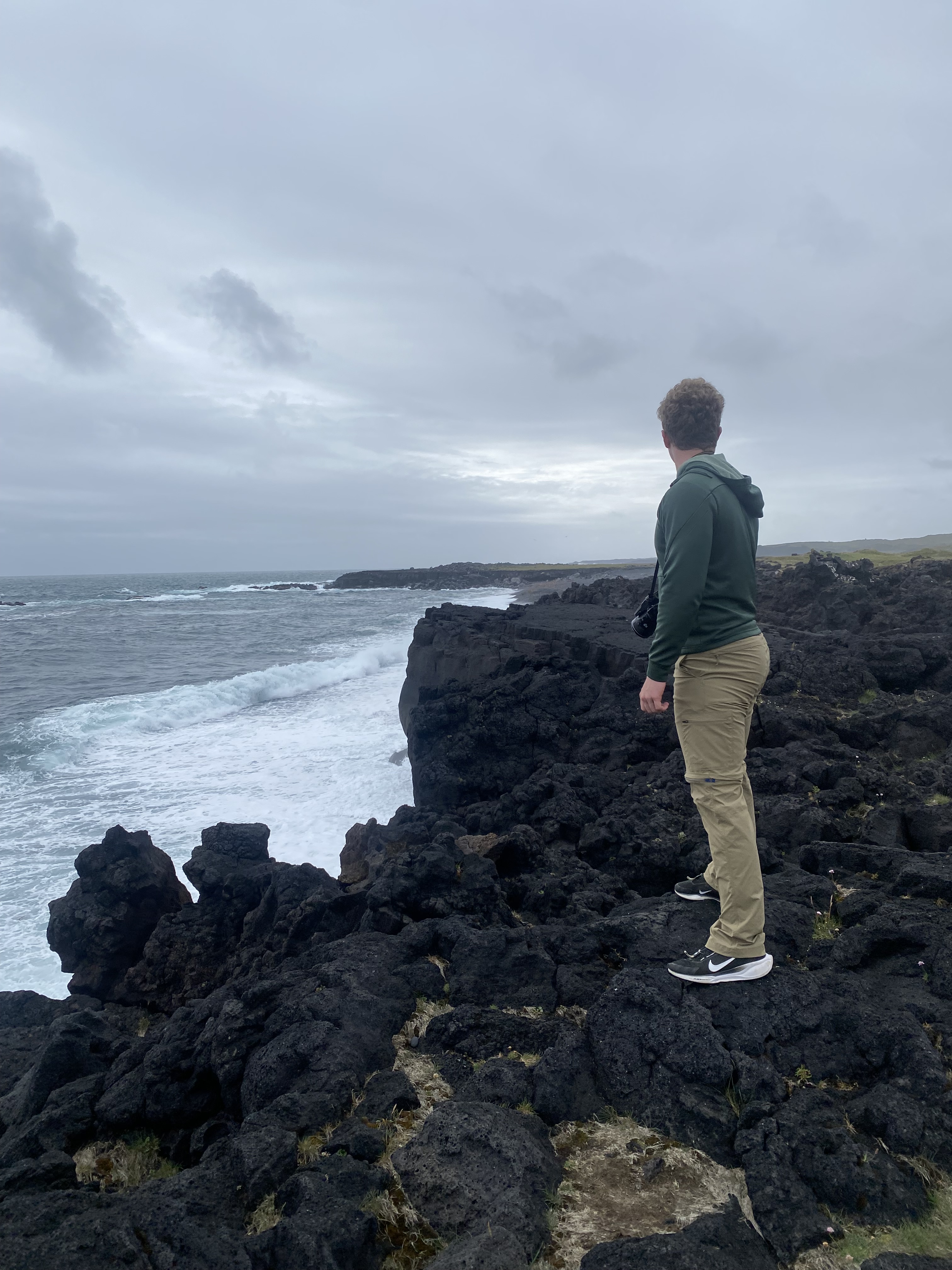

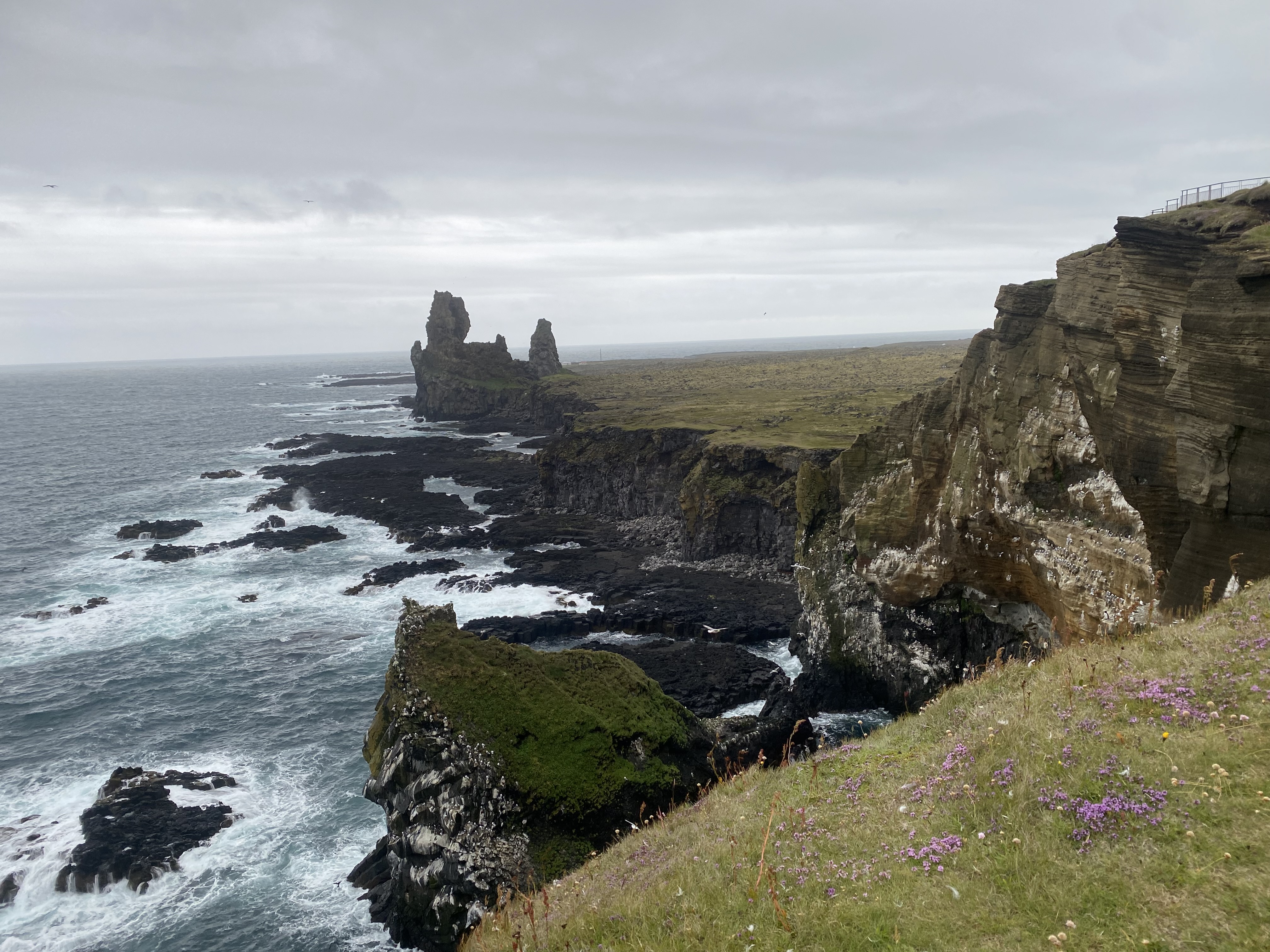
Barren and beautiful Snæfellsnes Peninsula
Though Arctic Foxes are distributed throughout Iceland, there are only a couple spots where they aren’t hunted and can be reliably seen. The best area for fox-watching is undoubtedly Hornstrandir Nature Reserve in the northwest extremity of Iceland, but we didn’t have the time on our trip to pay the reserve a visit. A lesser-known, but perhaps equally reliable spot for Arctic Fox sightings is the Snæfellsjökull National Park on the tip of the Snæfellsnes Peninsula, where we spent Day 7 of our trip.
My expectations of actually seeing a fox were very low, for several reasons. First, Arctic Foxes are the only native land mammal in Iceland and, unlike their mainland relatives that feed on abundant lemmings, they have access to fewer prey species—limiting their population density. They are also legally hunted in Iceland, which further reduces their numbers and encourages elusive behavior around humans. Finally, Arctic Foxes are masters of camouflage: in winter, they sport snow-white coats; in summer, their fur shifts to a mottled brown that blends seamlessly into the landscape—making them extremely difficult to spot.
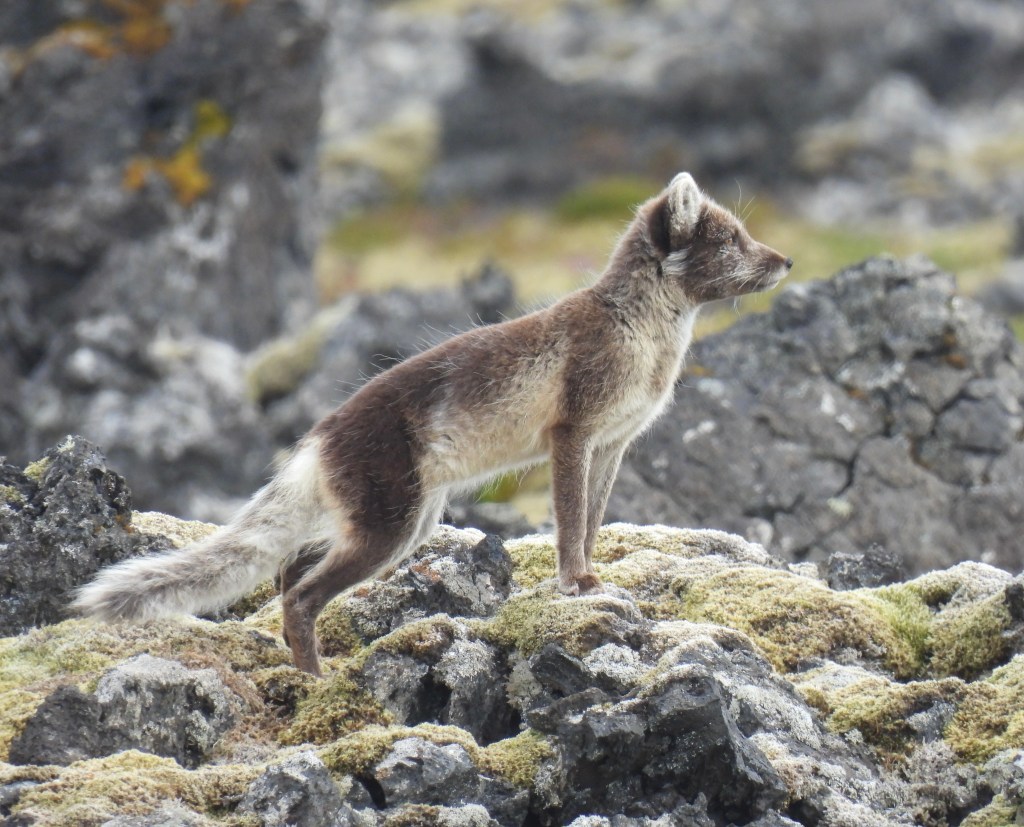
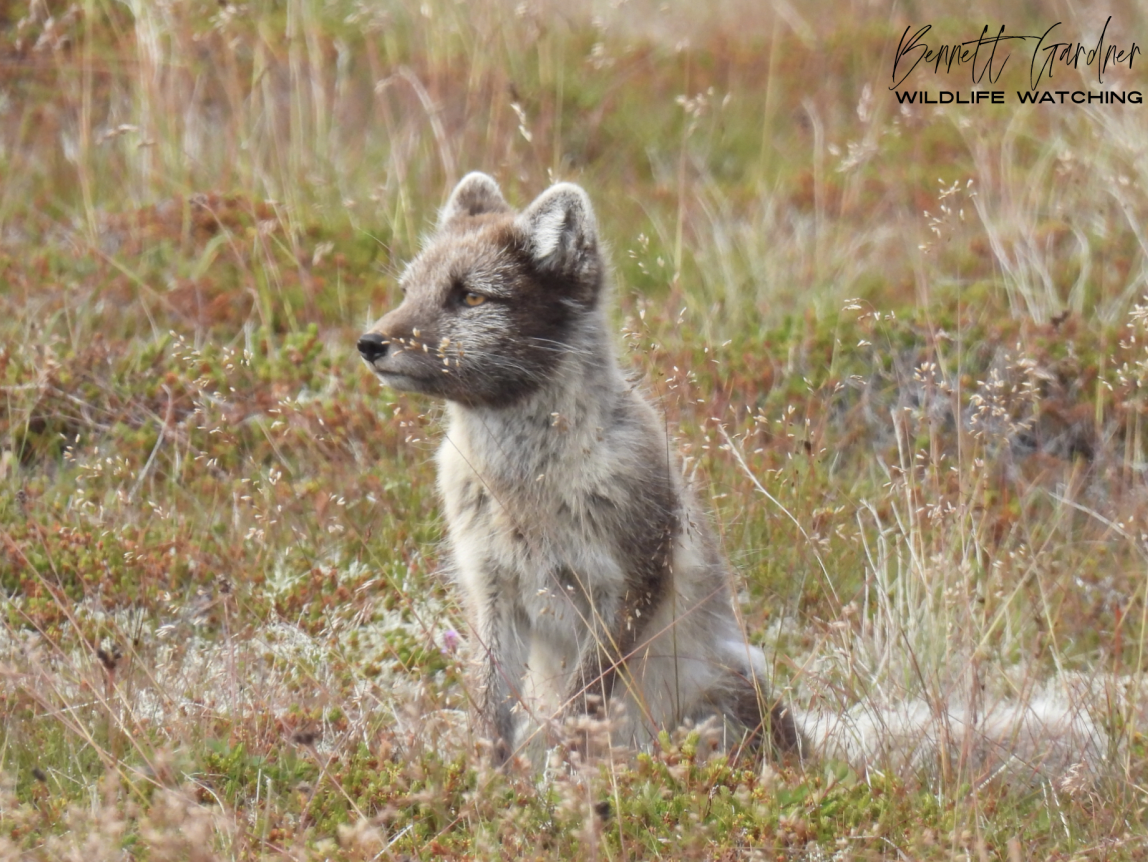
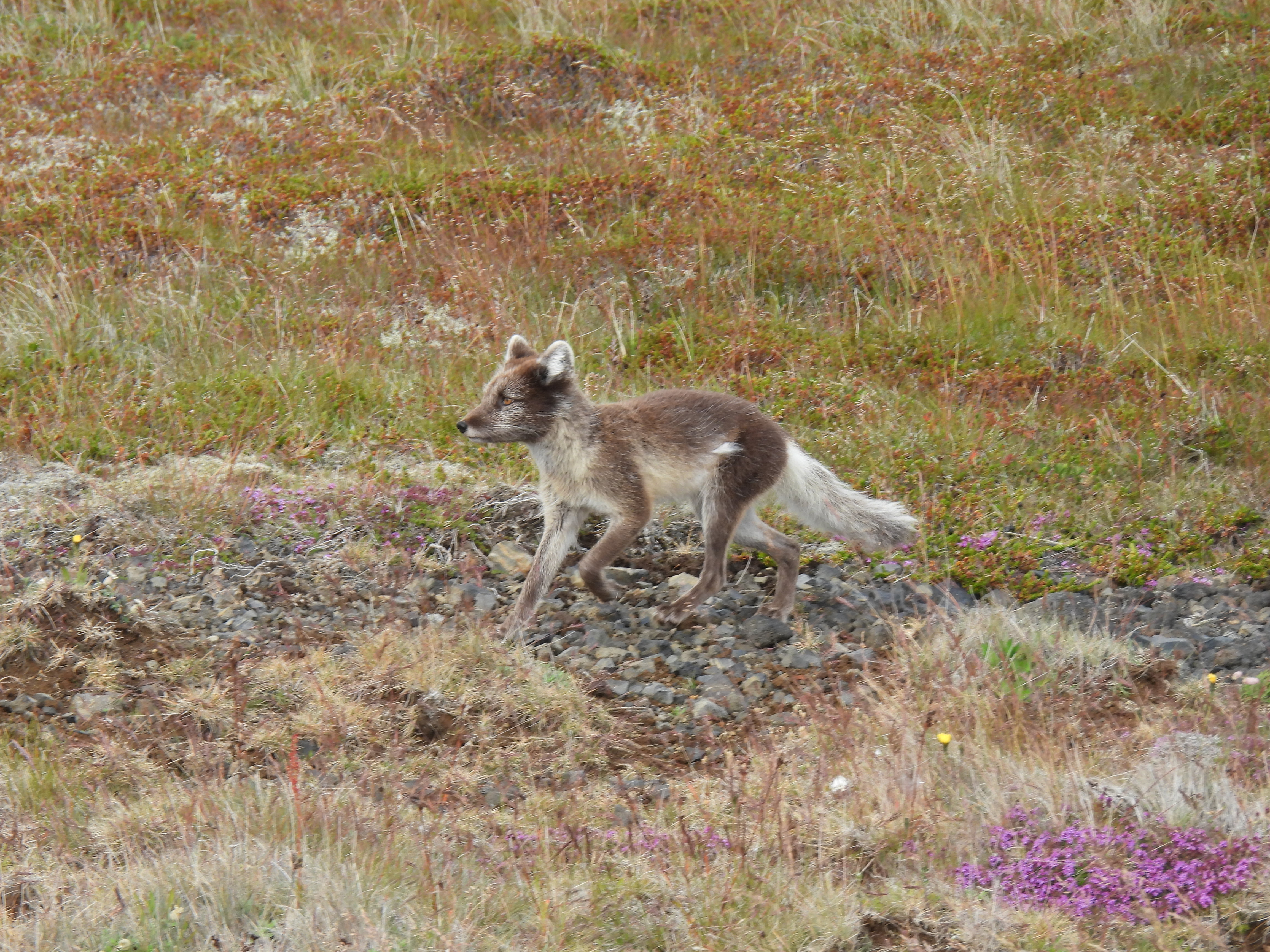
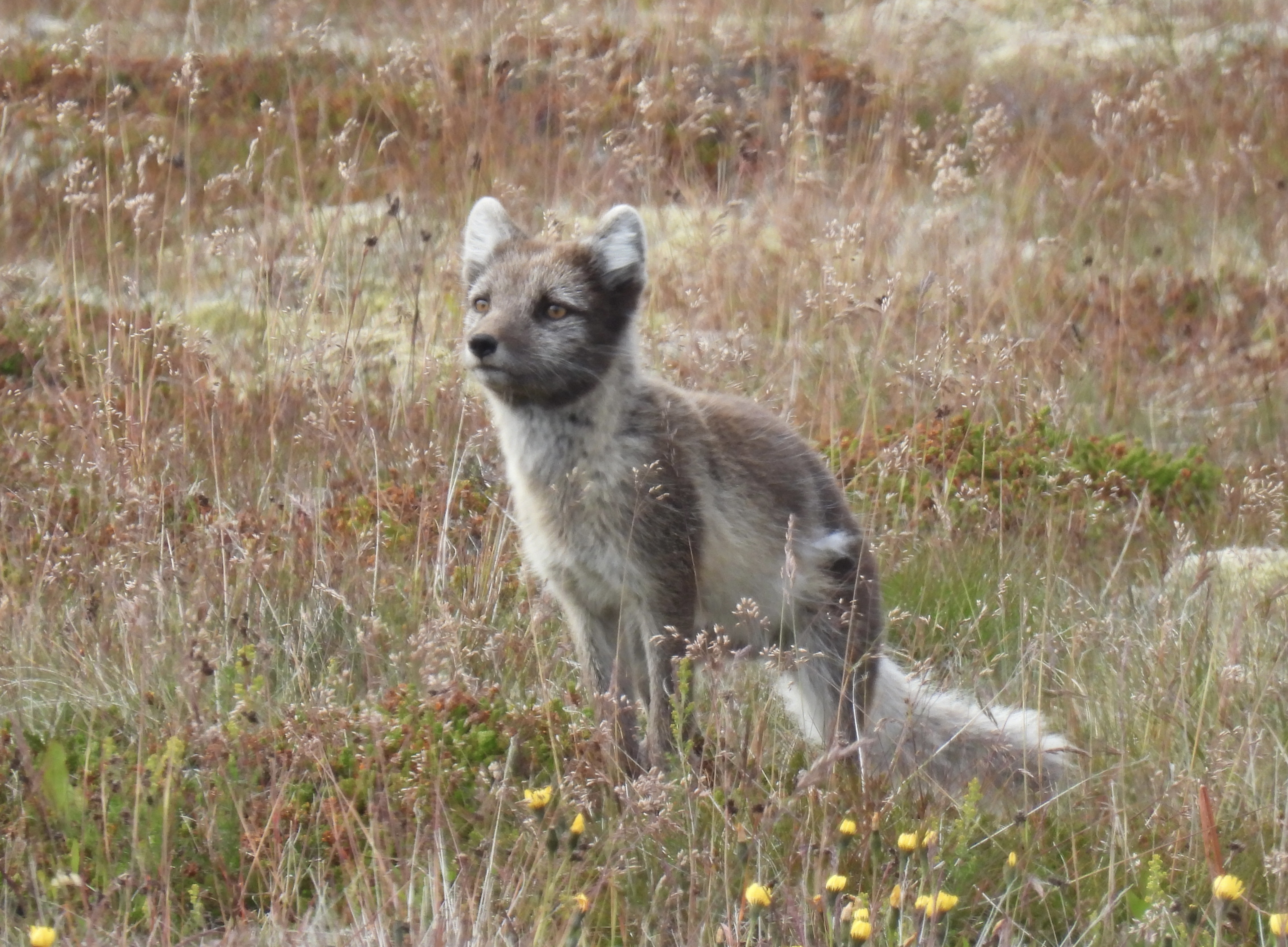
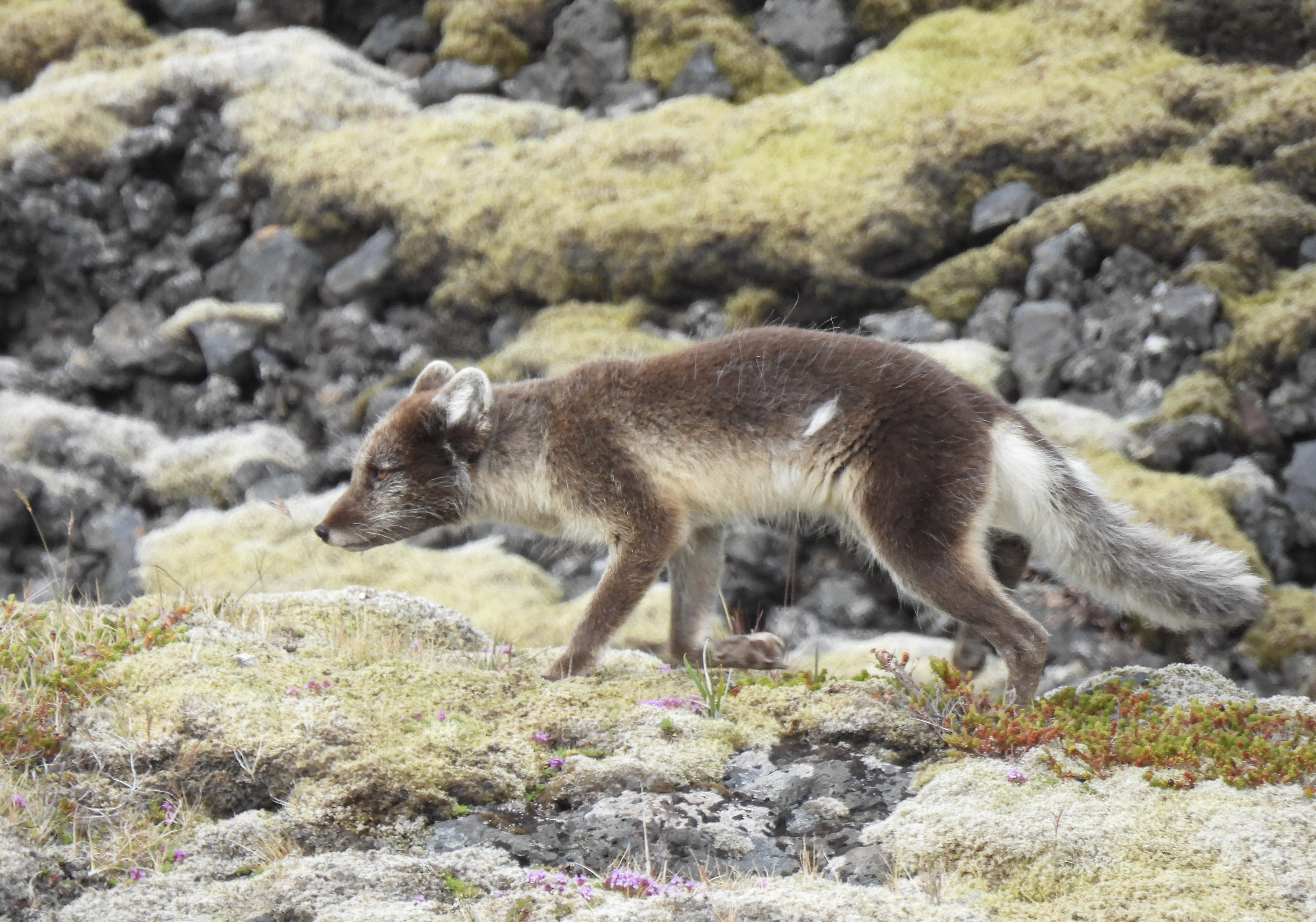
On Day 7 of my Iceland trip, however, the clouds parted and an Arctic Fox appeared on the roadside next to the Malarrif Visitor Center in Snæfellsjökull National Park!!
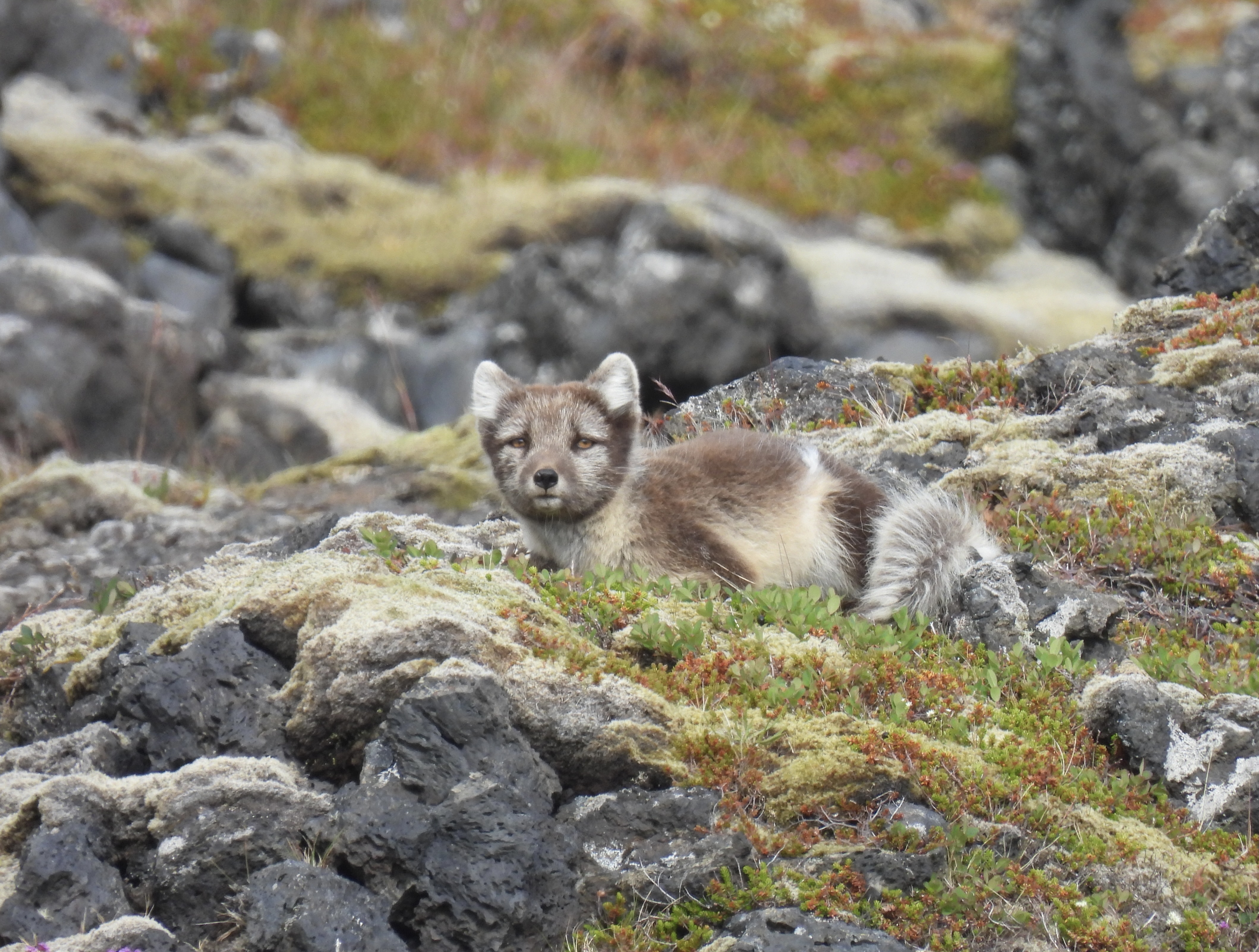
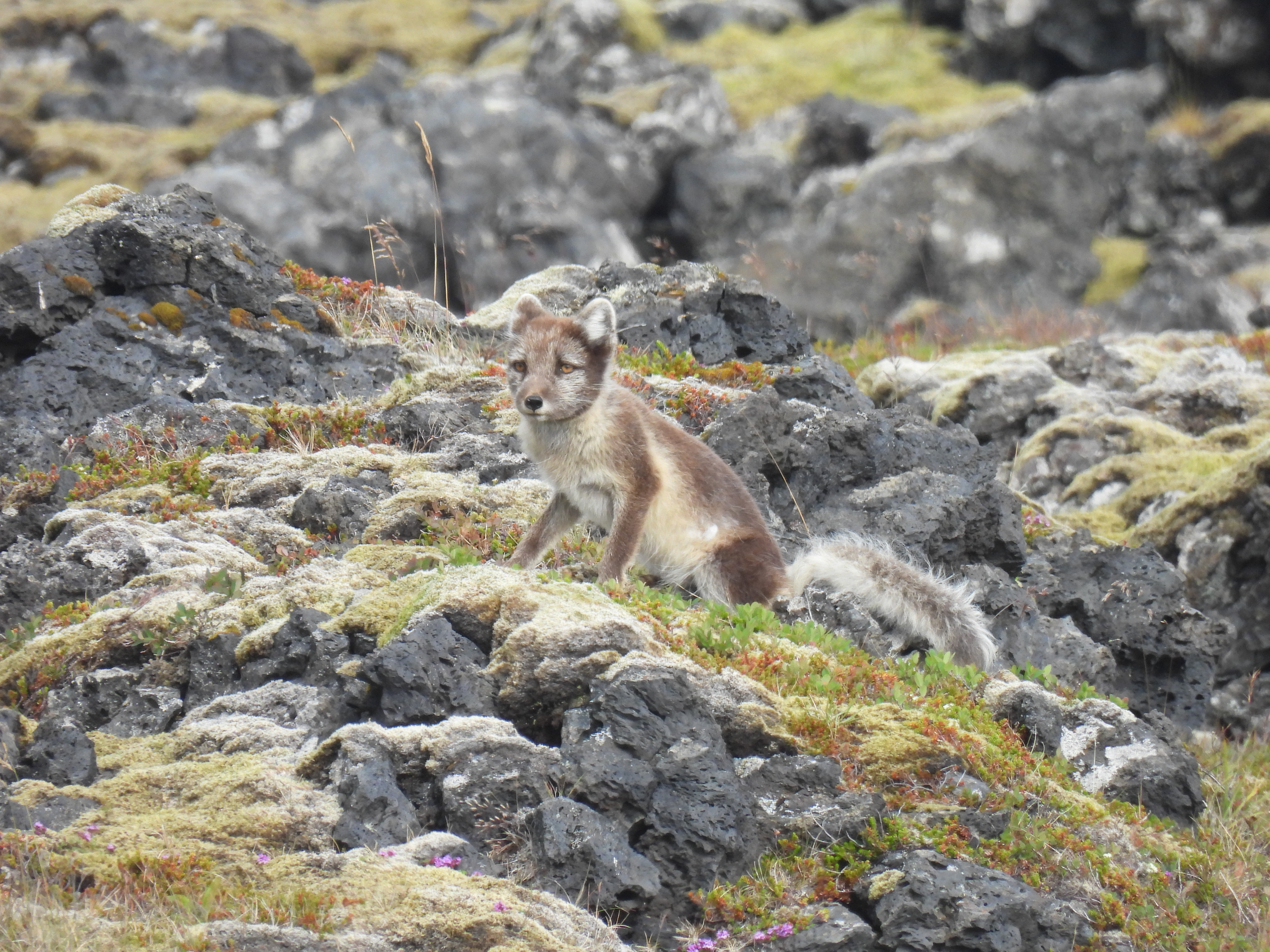
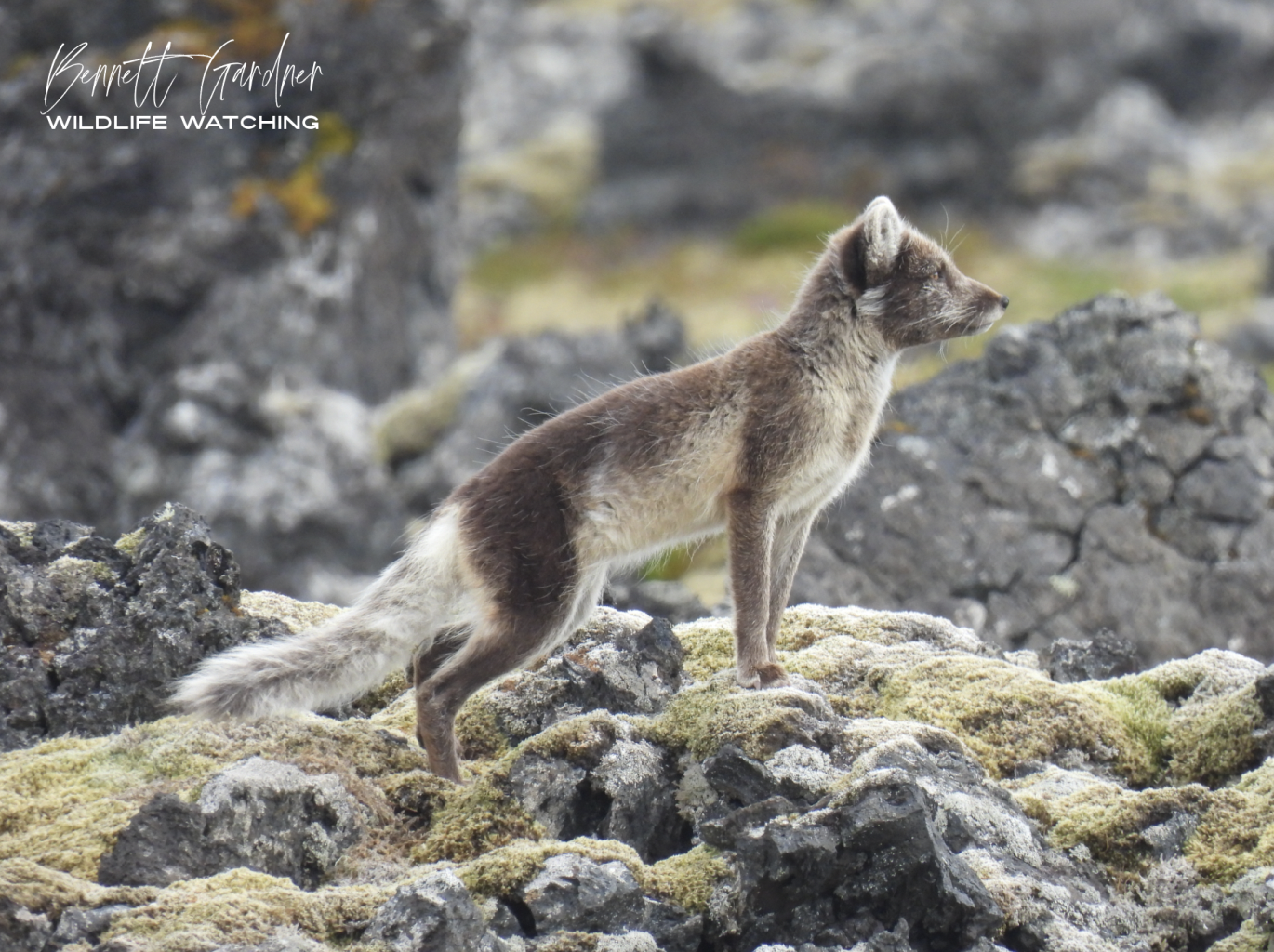
Arctic Fox sighting!
As soon as my dad spotted the fox running across the road in front of our car, I quite literally lept out of the vehicle and ran/crawled through the nearby lava field for photographic opportunities with the adorable canine. My dad was close behind me, peering through my binoculars at the swift little carnivore. This fox wasn’t particularly shy, and though it kept its distance from us, it cautiously approached groups of tourists watching it from the visitor center before dashing away into the nearby lava field after about fifteen minutes.
My guess as to why the fox lacked much fear of humans is that this wild individual is probably fed by tourists to entice it into close proximity for photo-ops, which is never an admirable way to observe or treat wildlife.
Nevertheless, I was treated to spectacular views of one of the Arctic’s most charismatic and hardy mammal species—definitely the highlight of my Iceland trip. My dad was also very satisfied to have seen the fox, and remarked that the sighting made the five-hour round-trip drive worth it.
After seeing the fox at the visitor center, my dad and I drove around the park, stopping at several interesting areas, including Saxhóll Crater, a cinder cone, and the tiny Eyvindarhola Lava Cave. On the way out of the park, I did some birding off of the Lóndrangar Cliffs view point.
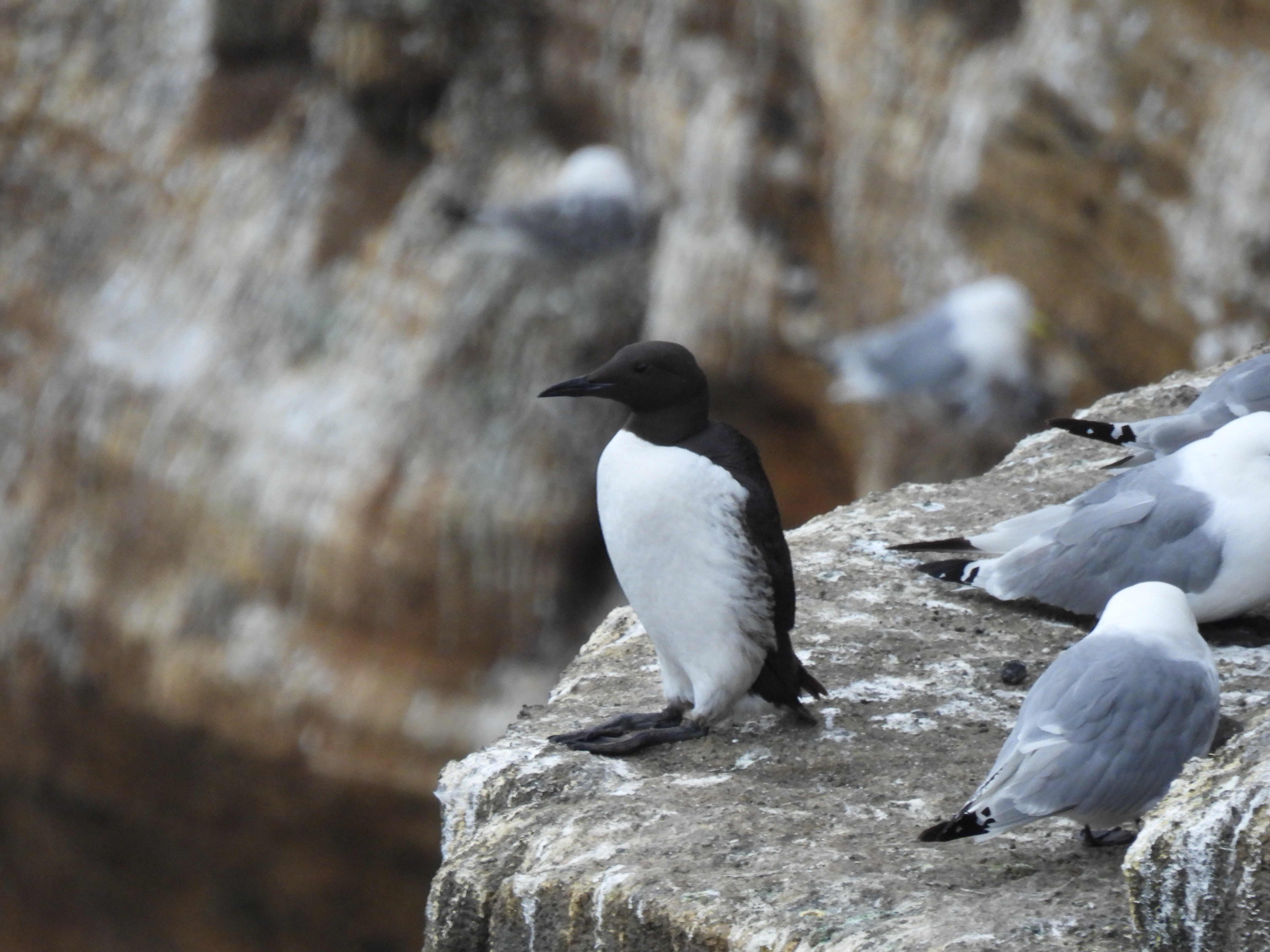
The breeding colonies of seabirds here include familiar Icelandic species like murres, puffins, kittiwakes, gulls, and guillemots, along with Meadow Pipits, Whooper Swans, Greylag Geese, Common Ravens, Black-tailed Godwits, and Northern Wheateaters foraging on the clifftops, and one of my favorite bird species of the trip, the Razorbill. These unique seabirds are the closest living relative of the extinct Great Auk, a large, penguin-like bird once found around Iceland’s coasts.
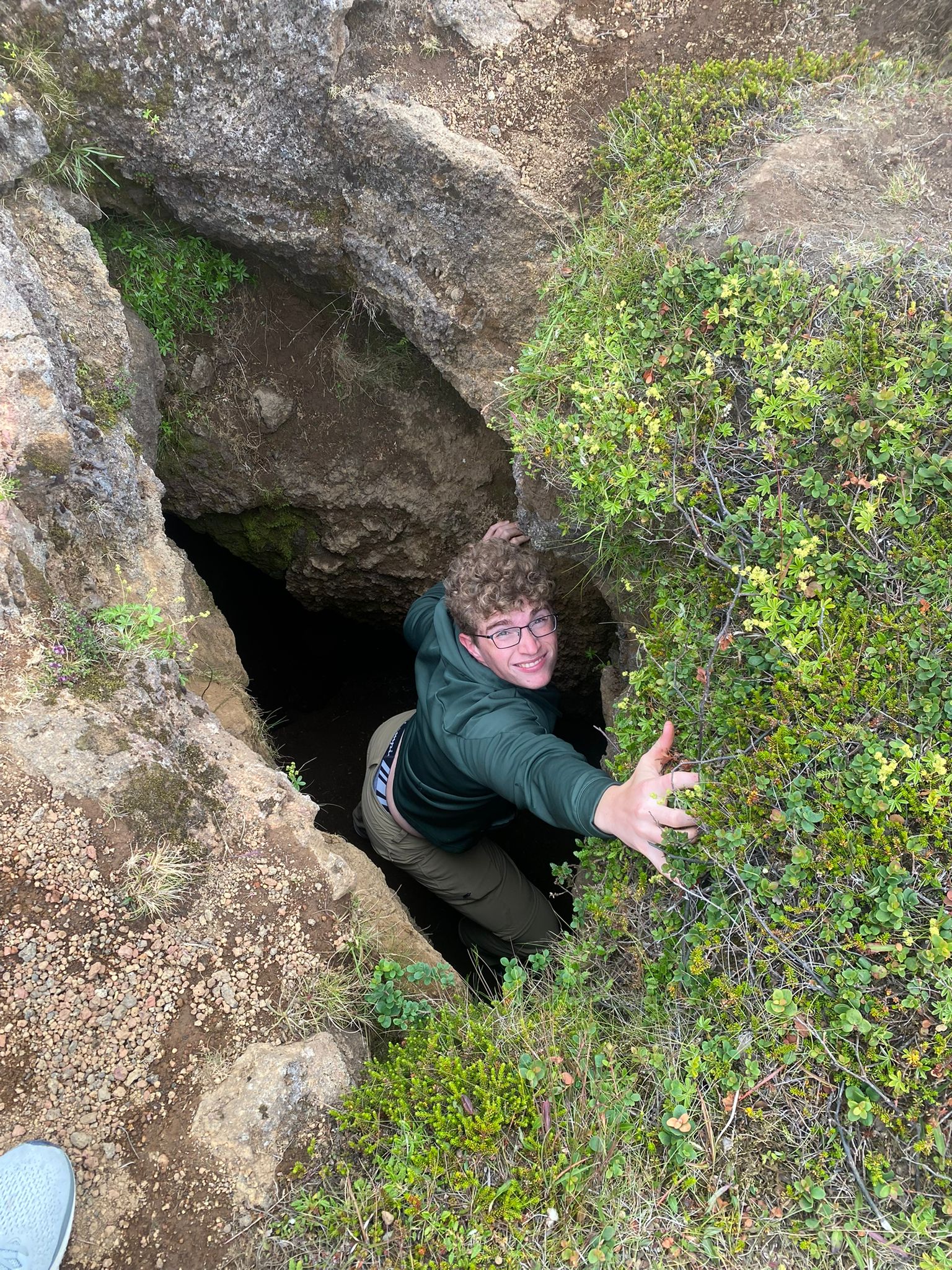
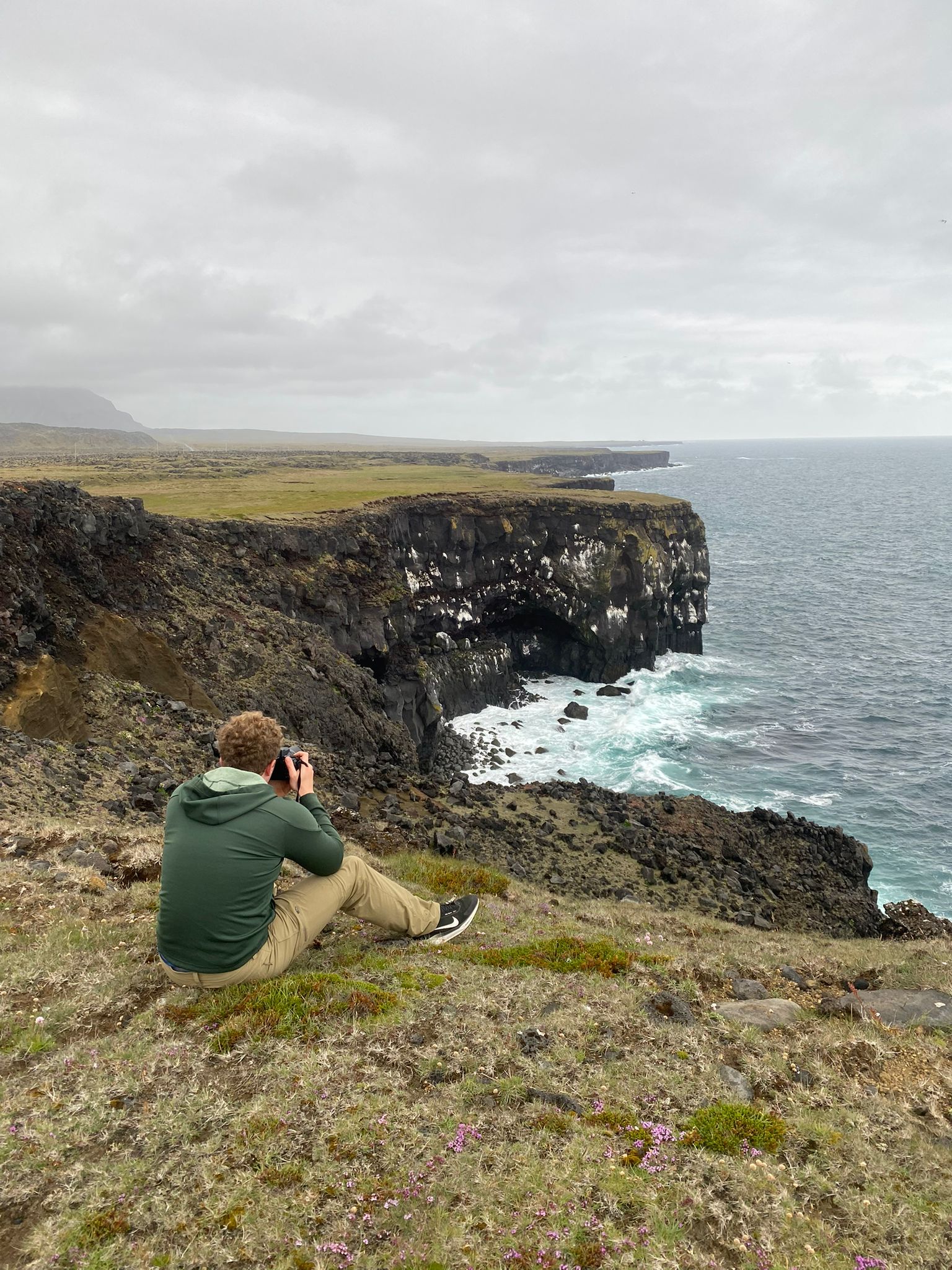
Climbing out of Eyvindarhola Lava Cave (left) and birding off the Lóndrangar Cliffs (right)
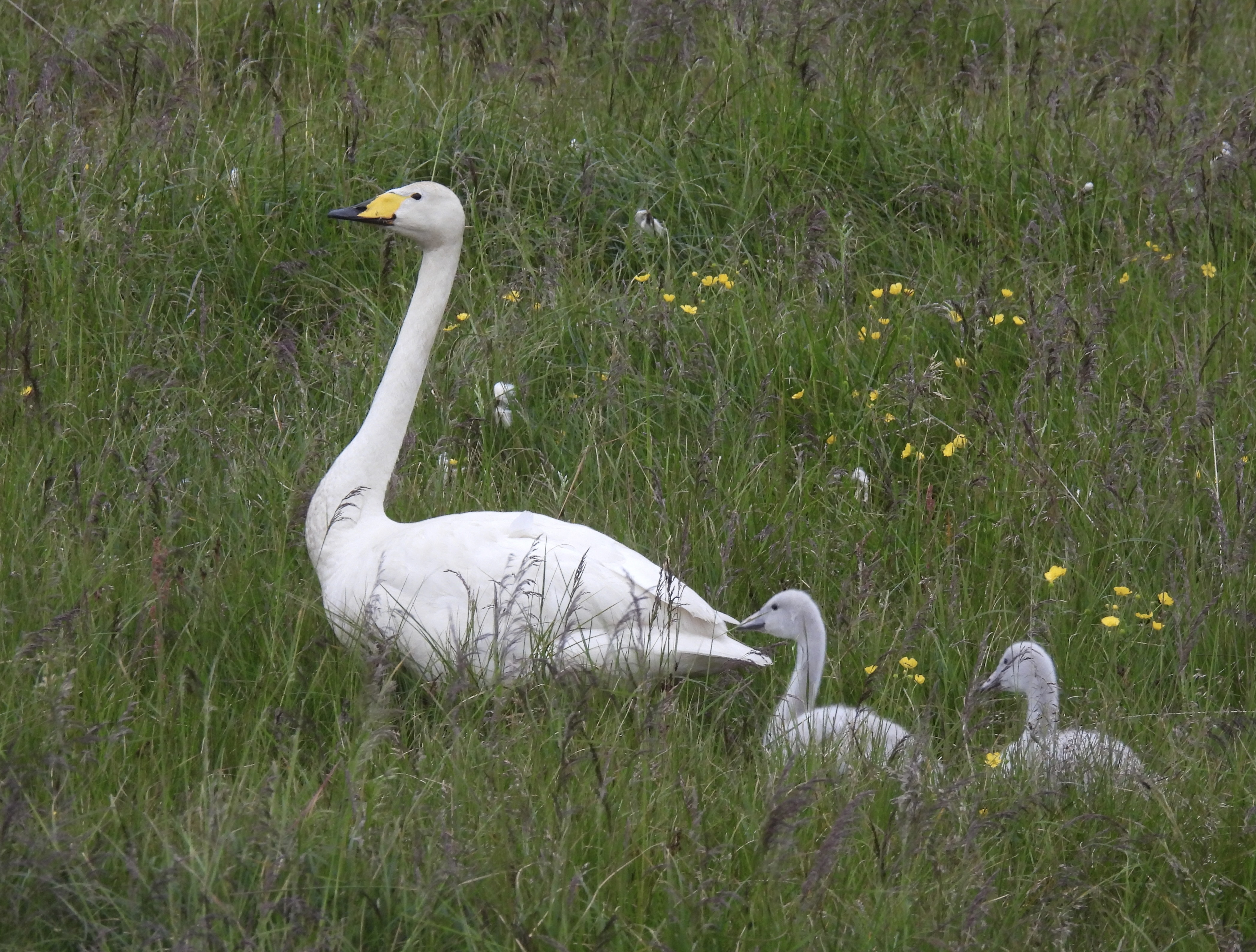


Top Row: Whooper Swan with cygnets (left), Black-tailed Godwit (top right), and a Meadow Pipit (bottom right)
Bottom Row: Common Murre (left) and Greylag Geese (right)


Razorbills (left & right)
The next morning, Biggi was still out of commission and we once again had to pivot our plans. I had yet to get my full mammalwatching fix in, and was dying to see some of Iceland’s famous cetaceans. My dad was also interested in a whale watching tour, one that included a heated cabin with restrooms and not a bouncy RIB boat……
That morning, I made the mistake of also booking a horseback riding tour at the stable near Biggi’s apartment. Don’t get me wrong—I love horses—but the tour was too long and the weather couldn’t have been worse. It was basically two hours of bumping down dirt roads in freezing-cold rain on an intensely stubborn animal that would stop whenever it felt like to graze on lupine flowers. The experience was admittedly quite fun for me, but my dad didn’t exactly have the time of his life.
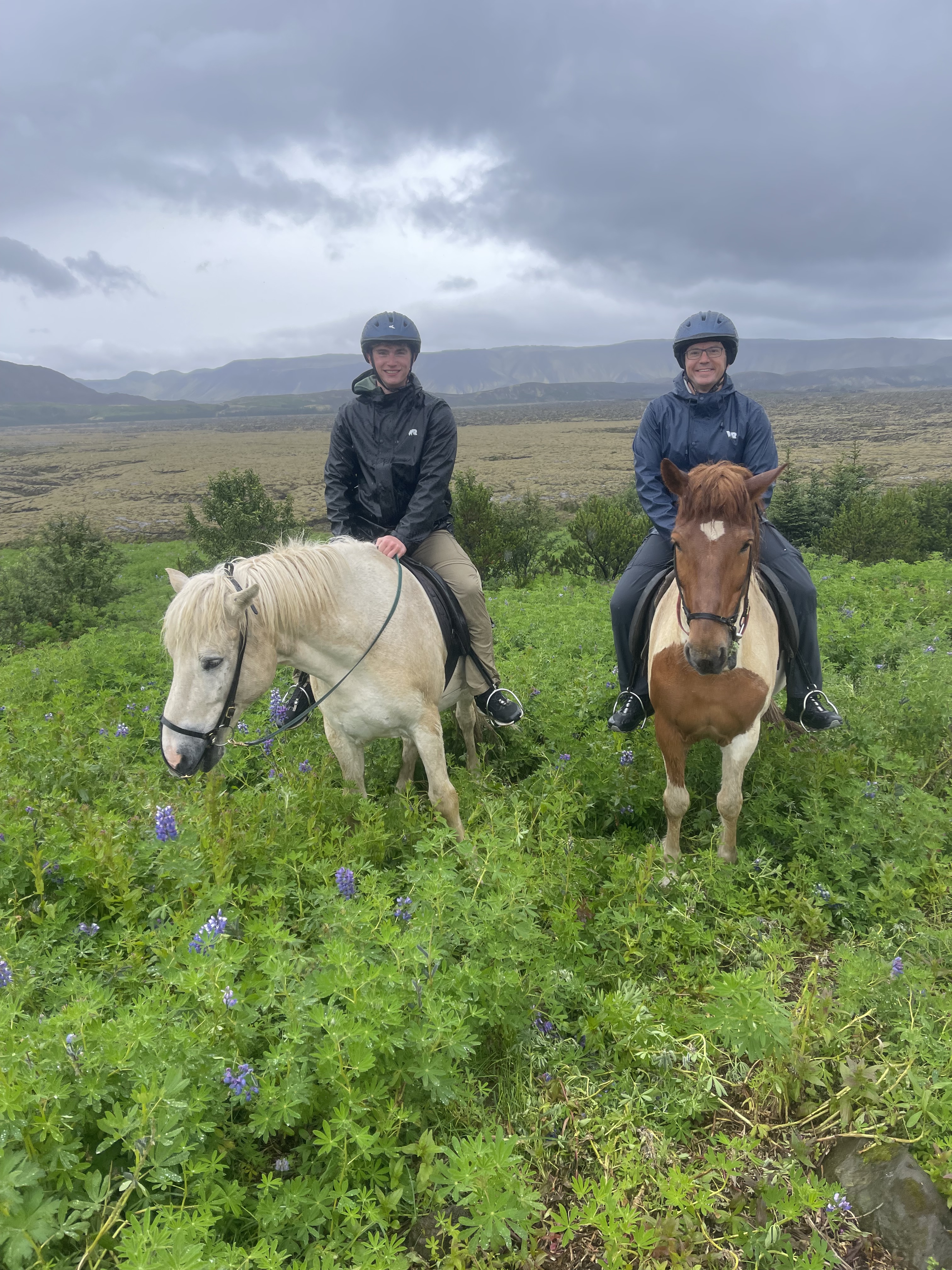
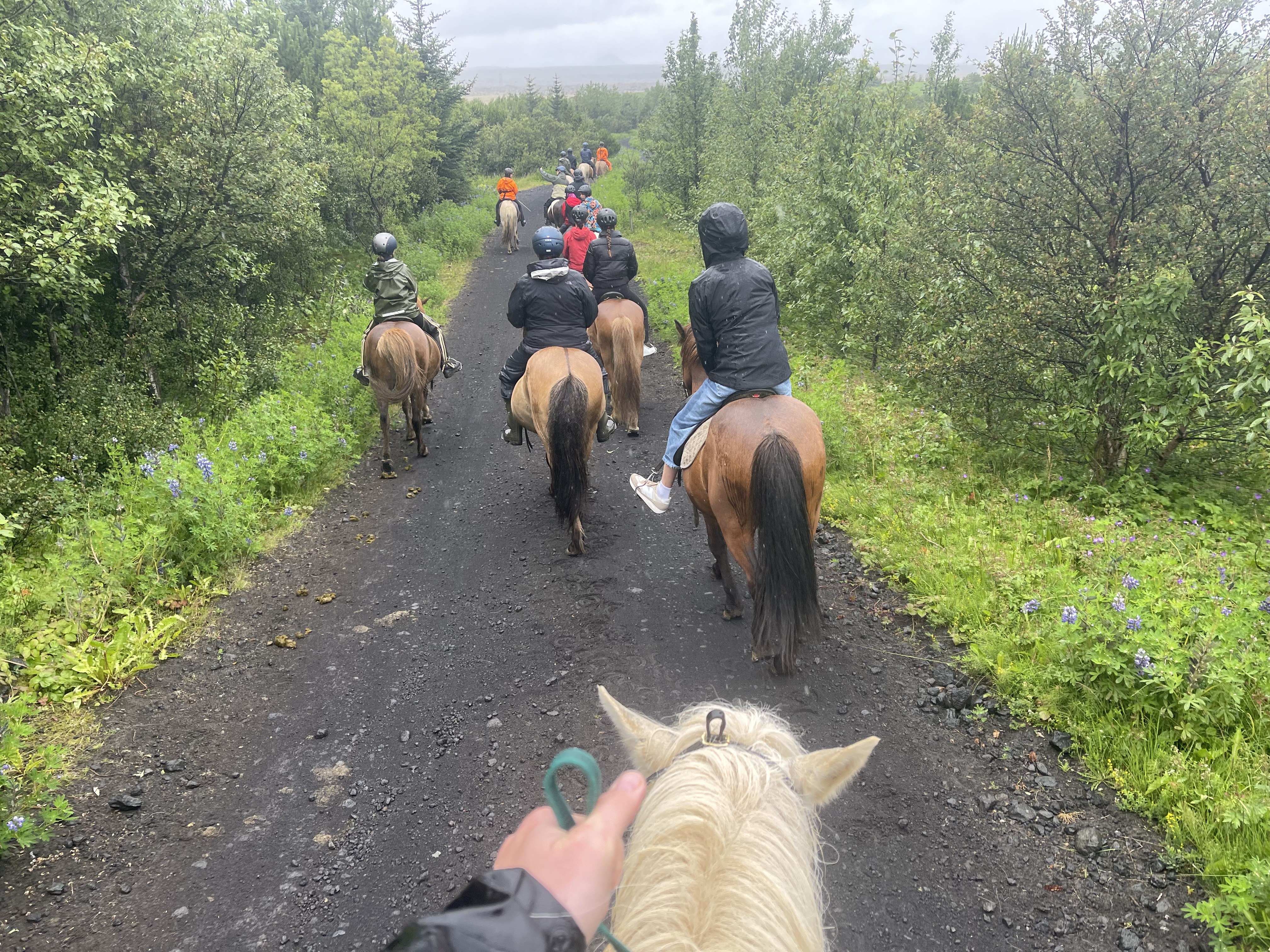
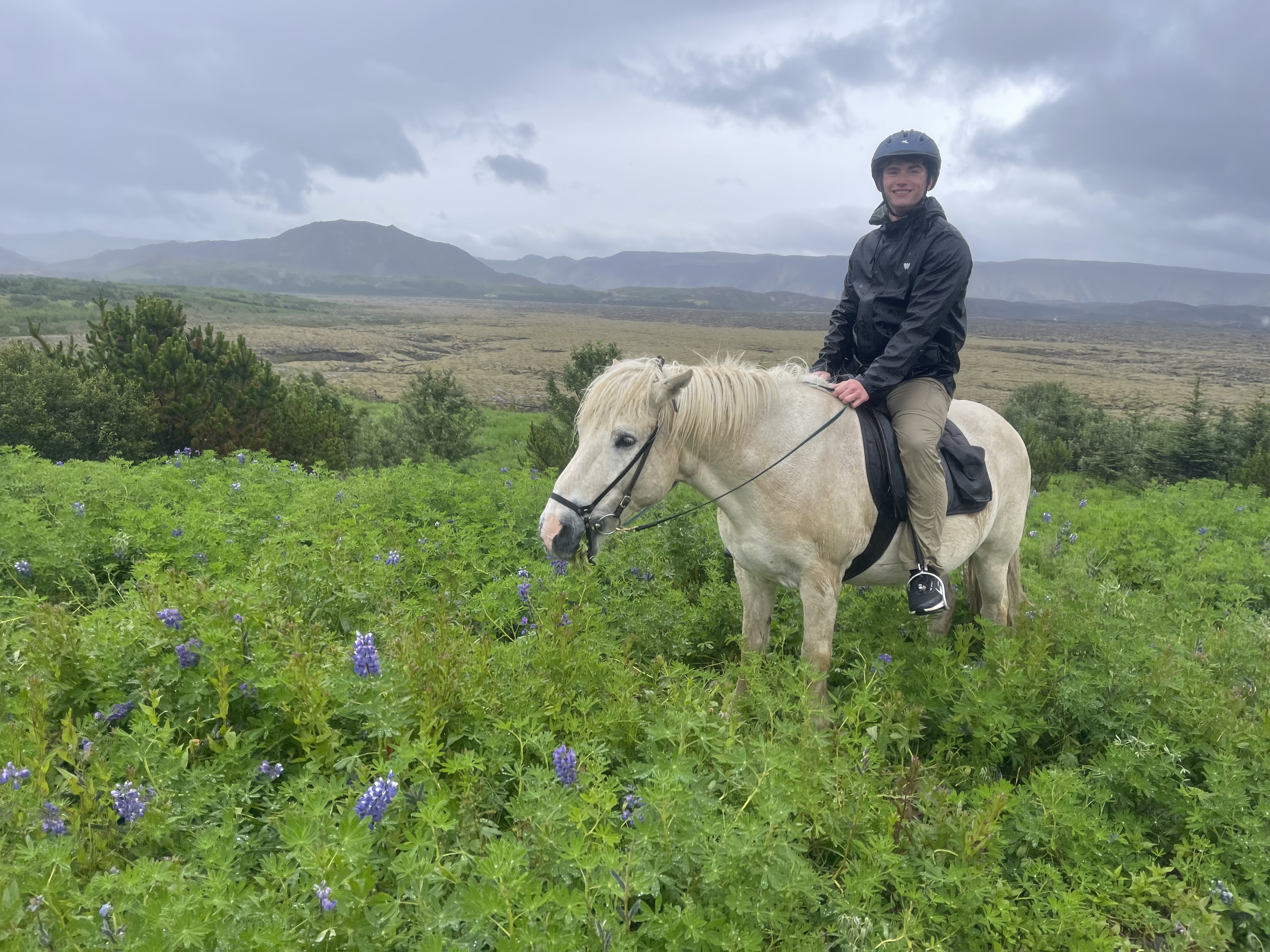
Icelandic horseback riding—it’s about the journey, not the destination
For our whale watching tour, we chose to go with Elding Whale Watching, a popular and well-established company that promotes ethical viewing of cetaceans and has a 98% success rate finding whales.
The whale watching trip was much more pleasant than the horseback riding, and the dreary weather even lifted for some time while we were out in Faxaflói Bay. It didn’t take the lady on the ship’s PA system long to spot our first few Humpback Whales. They surfaced and spouted about four or five times each, before lifting their tail flukes out of the water and making a deep dive.
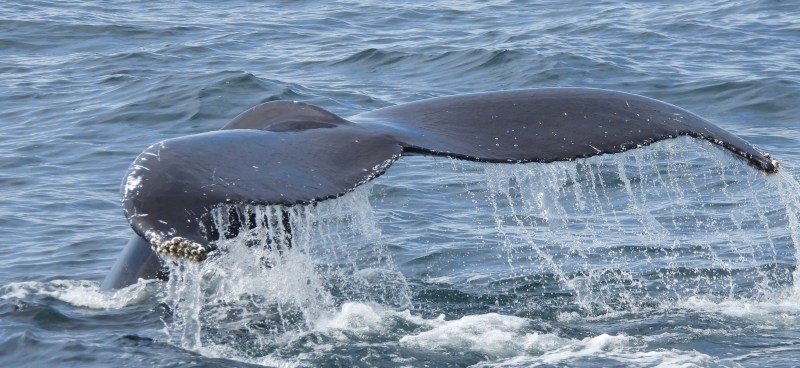
Humpback Whale fluke-diving
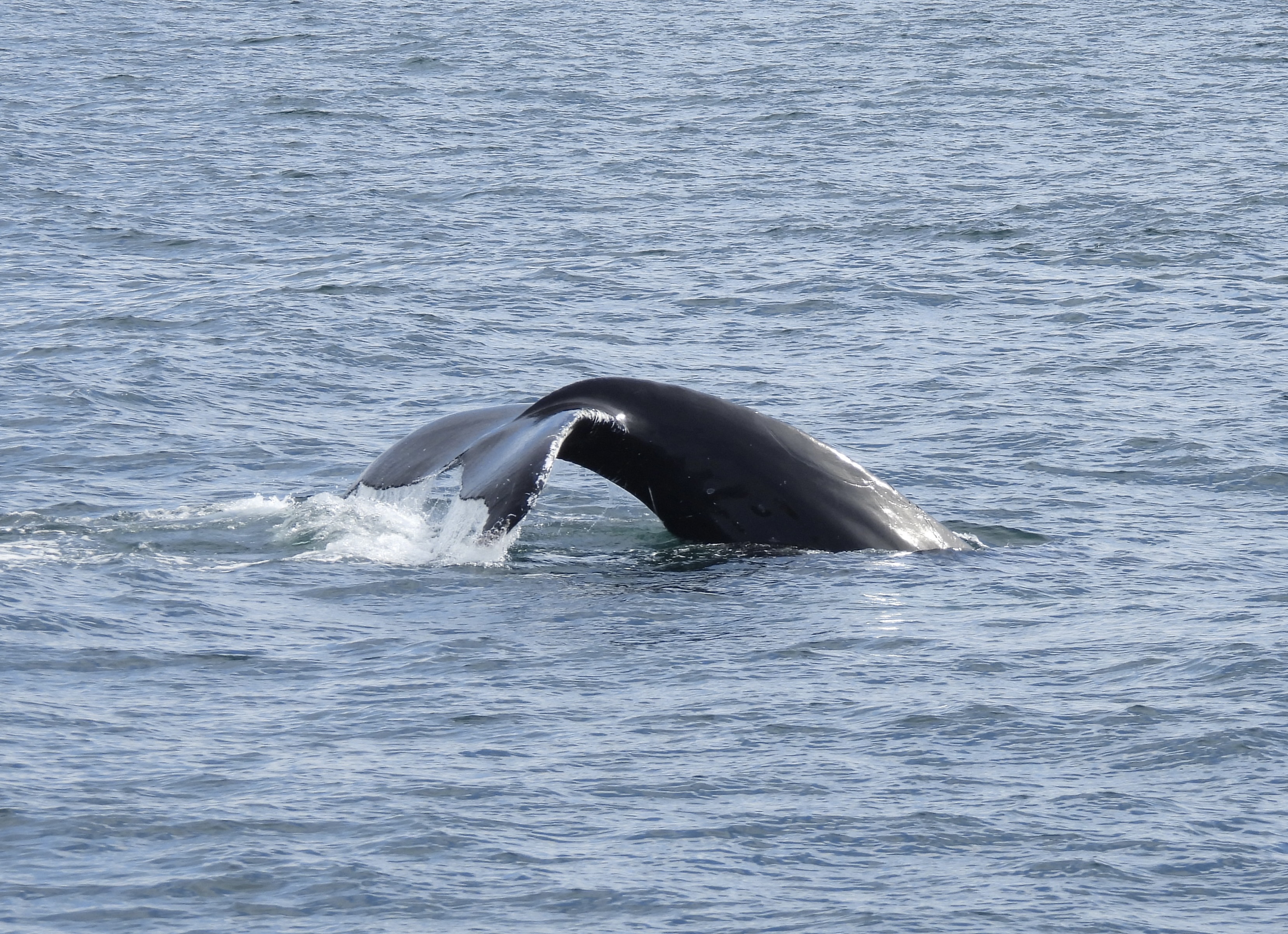
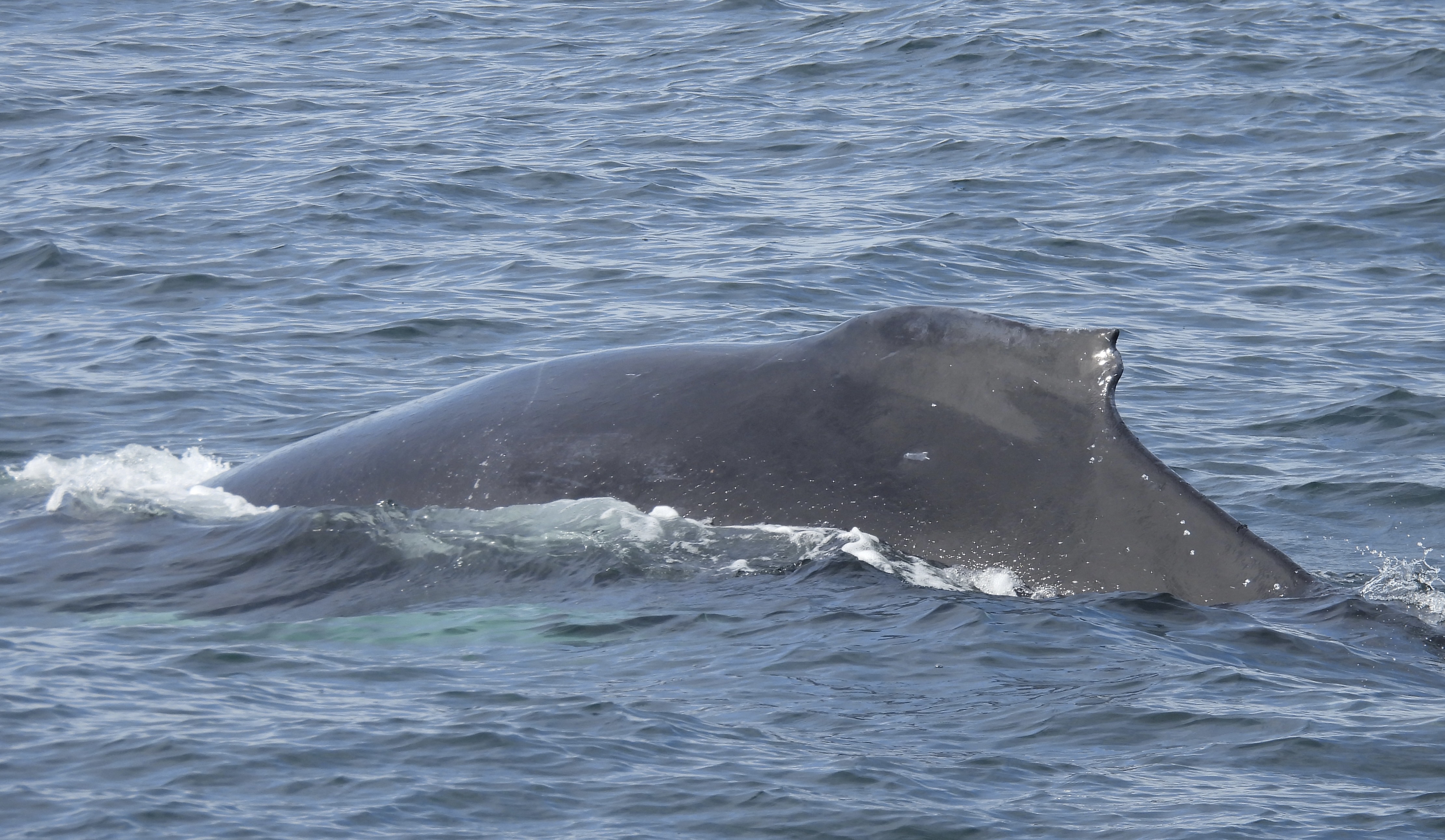
We weren’t fortunate enough to witness any classic Humpback Whale behavior like breaching or flipper-slapping on our tour; the whales became nervous as we approached them and quickly retreated into the depths after getting a breath of air. Biggi says he sees active behaviors from humpbacks more often on his RIB boat, as the whales are less afraid of smaller vessels approaching them.
Along with numerous humpbacks, we also spotted the much smaller, swifter, and shyer Minke Whale, which made several surprise appearances as we cruised through the bay.

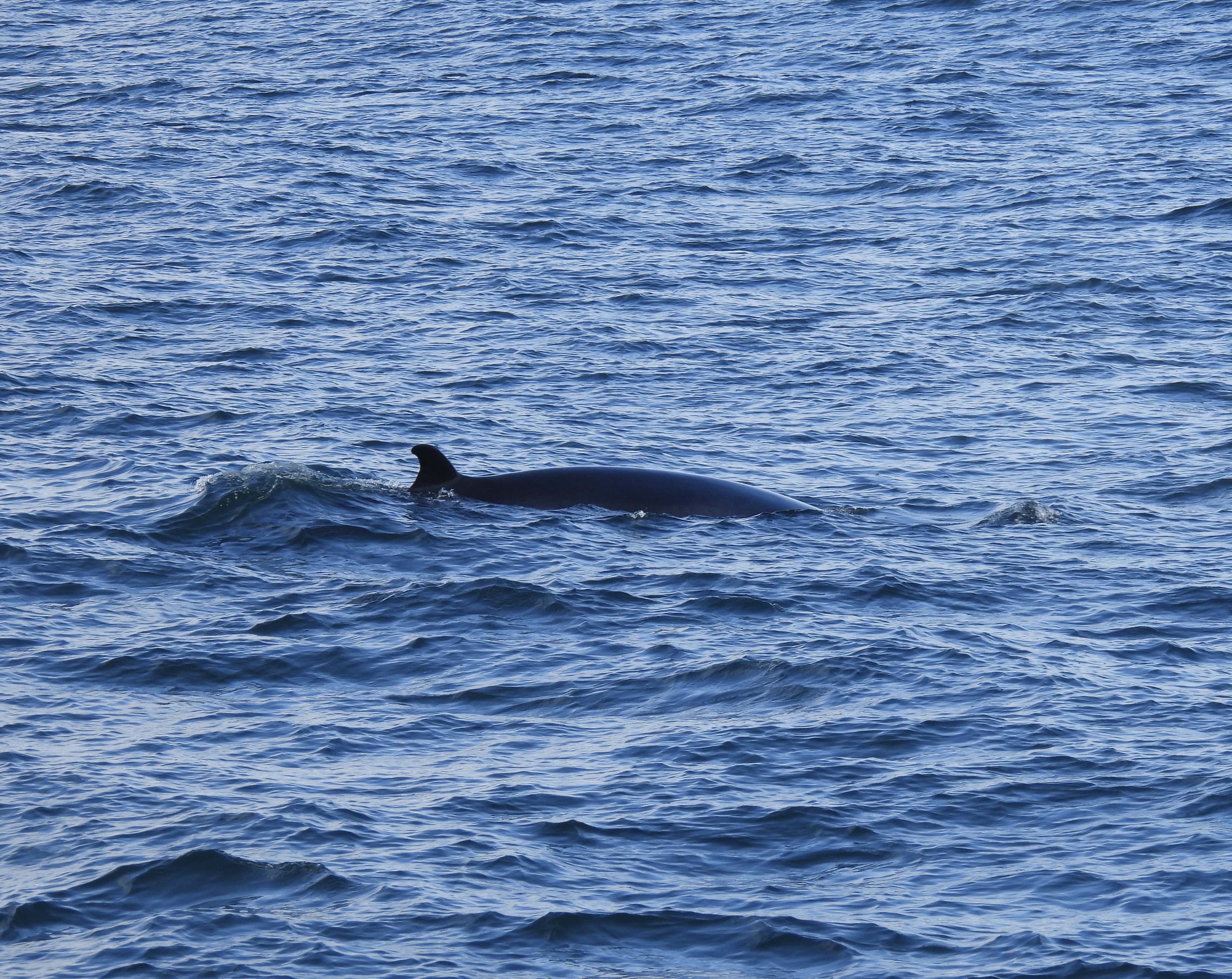
Minke Whales
In total, we saw around eight Humpbacks and five Minke Whales, with about half of the cetaceans observed within 300ft (100m) from our boat. Not bad for a three-hour tour!
Following the whale watching tour, I had dinner with some of my dad’s and Biggi’s friends from Shanghai, and a final late-night excursion on Biggi’s RIB boat (his knee was feeling better). We then bid farewell to Biggi and Iceland and made our way to the airport.
In summary, Iceland wasn’t the most biodiverse destination I’ve visited, but it was undoubtedly one of the most awe-inspiring. Blessed with abundant marine life and shaped by vast, interlocking forces—volcanic, tectonic, and glacial—Iceland stands as one of the true natural wonders of the world. I’m beyond grateful to have spent a week here with two people who care deeply about my well-being: my dad and Biggi. After a difficult and disheartening university experience in Australia, this trip—and the time spent with them—helped me realize that there are other fulfilling paths for me beyond becoming a zoologist in Australia. I’m excited to explore what lies ahead.
Stick around for what’s to come—and stay wild.
—Bennett
Iceland Mammals: (Lifers bolded)
| Common Name: | Scientific Name: |
| 1. Arctic Fox | Vulpes lagopus |
| 2. Humpback Whale | Megaptera novaeangliae |
| 3. Minke Whale | Balaenoptera acutorostrata |
| 4. Harbor Seal | Phoca vitulina |
Iceland Birds: (Lifers bolded)
| Common Name: | Scientific Name: |
| 1. Atlantic Puffin | Fratercula arctica |
| 2. Razorbill | Alca torda |
| 3. Rock Ptarmigan | Lagopus muta |
| 4. Black Guillemot | Cepphus grylle |
| 5. Common Murre | Uria aalge |
| 6. Whooper Swan | Cygnus cygnus |
| 7. Greylag Goose | Anser anser |
| 8. Barnacle Goose | Branta leucopsis |
| 9. Arctic Tern | Sterna paradisaea |
| 10. Black-legged Kittiwake | Rissa tridactyla |
| 11. Lesser Black-backed Gull | Larus fuscus |
| 12. European Herring Gull | Larus argentatus |
| 13. Northern Gannet | Morus bassanus |
| 14. Northern Fulmar | Fulmarus glacialis |
| 15. Eurasian Oystercatcher | Haematopus ostralegus |
| 16. Black-tailed Godwit | Limosa limosa |
| 17. European Golden Plover | Pluvialis apricaria |
| 18. Meadow Pipit | Anthus pratensis |
| 19. Northern Wheateater | Oenanthe oenanthe |
| 20. Common Eider | Somateria mollissima |
| 21. Redwing | Turdus iliacus |
| 22. Common Snipe | Gallinago gallinago |
| 23. Black-headed Gull | Chroicocephalus ridibundus |
| 24. White Wagtail | Motacilla alba |
| 25. Whimbrel | Numenius phaeopus |
| 26. European Starling | Sturnus vulgaris |
| 27. Common Redshank | Tringa totanus |
| 28. Icelandic Raven | Corvus corax varius |
| 29. Mallard | Anas platyrhynchos |
| 30. Rock Pigeon | Columba livia |
 Bennett Gardner Wildlife Watching
Leave a comment