
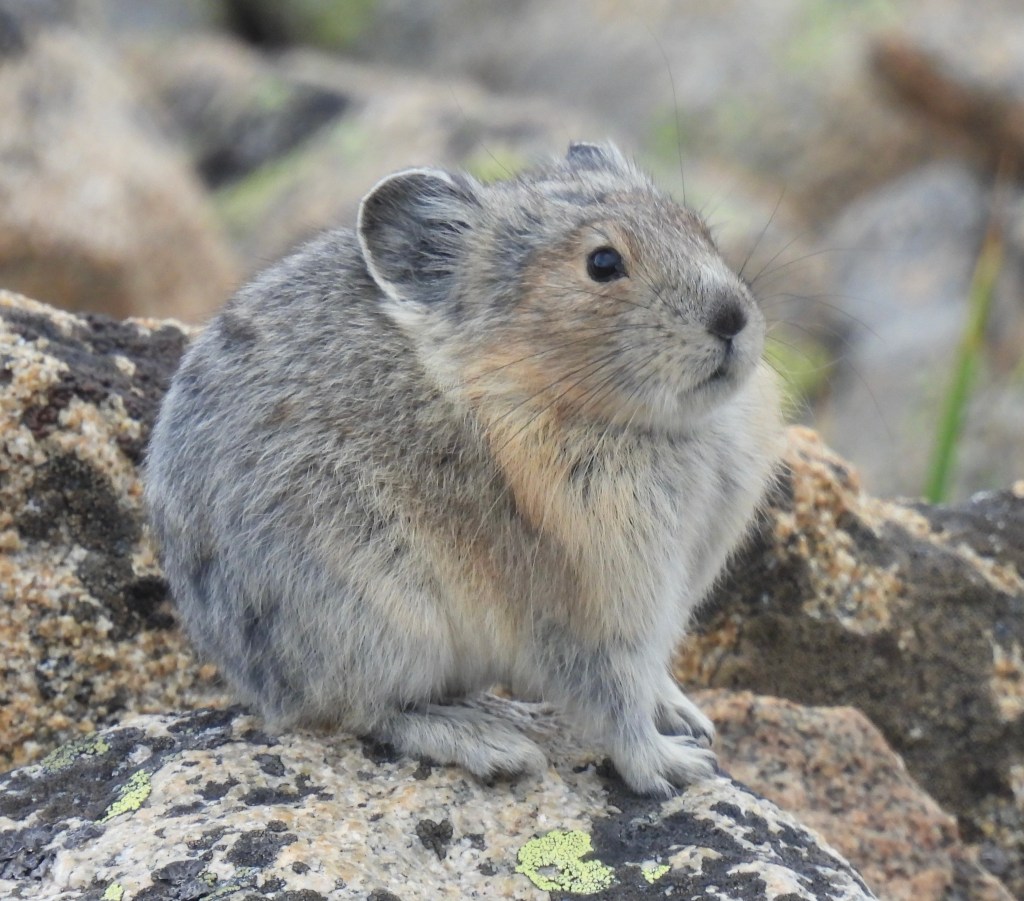
If there were ever a region of the world designed for a person like me, Colorado might be it. This large, square, state in the Western US is a broad expanse of rugged, high mountains, vast prairies, lush forests, windswept steppe, and some of the most spectacular scenery I’ve ever laid eyes on.
My recent trip, from July 30 to August 6, 2025, gave me a chance to explore Colorado for myself and tour CU Boulder, which I consider a very viable option for my next chapter of university life. As I mentioned in my July 2025 Iceland post, I left the University of Queensland in Australia with a bad taste in my mouth, and have spent the summer reevaluating my life plans. Experiencing Colorado in all its glory, and weighing the pros and cons of attending CU Boulder, has left me feeling reassured that my decision to leave Australia was the right one and that Colorado could be the start of something new and great.
Something about those Colorado Rocky Mountains got to me—maybe John Denver was onto something!
I began my 2025 Colorado adventure on July 30th, flying from Jacksonville to Denver in the afternoon with my mom. She accompanied me throughout this trip, and did all of the driving (which there was a lot of). After leaving the airport, we made our way to the car rental place and drove off in our Kia Forte hybrid toward Rocky Mountain Arsenal National Wildlife Refuge near Denver.
I insisted on visiting the Rocky Mountain Arsenal for a couple reasons—for one, it’s among the biggest conservation success stories in American history. The refuge was once a highly contaminated chemical weapons manufacturing site for the US Army, but twenty years and $2 billion of cleanup efforts later, it has become a veritable wildlife paradise complete with American Bison, Black-footed Ferrets, and thousands of prairie dogs that roam a restored shortgrass prairie.
I was excited for the opportunity to see this success story of a preserve for myself, along with its semi-wild bison and other wildlife.
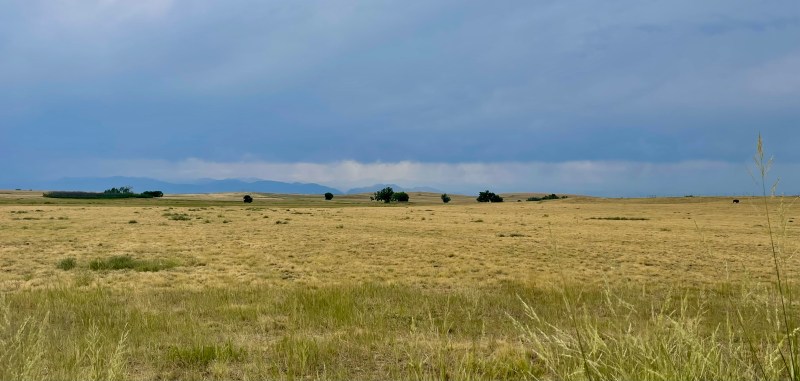
There are a couple different hiking trails that snake through parts of the 15,988-acre (6,400 hectare) refuge, but the 11-mile-long (18km) Wildlife Drive is by far the most popular way to traverse the Rocky Mountain Arsenal. The drive takes visitors through the fenced-off bison ranges, where the refuge’s 250 Plains Bison (Bison bison spp. bison) live.
My mom and I didn’t have enough time to do any of the walking trails, so we opted instead for an hour-long self-driven safari along the Wildlife Drive. There were downpours to the west of us, but luckily it stayed dry and overcast throughout our visit to the refuge.
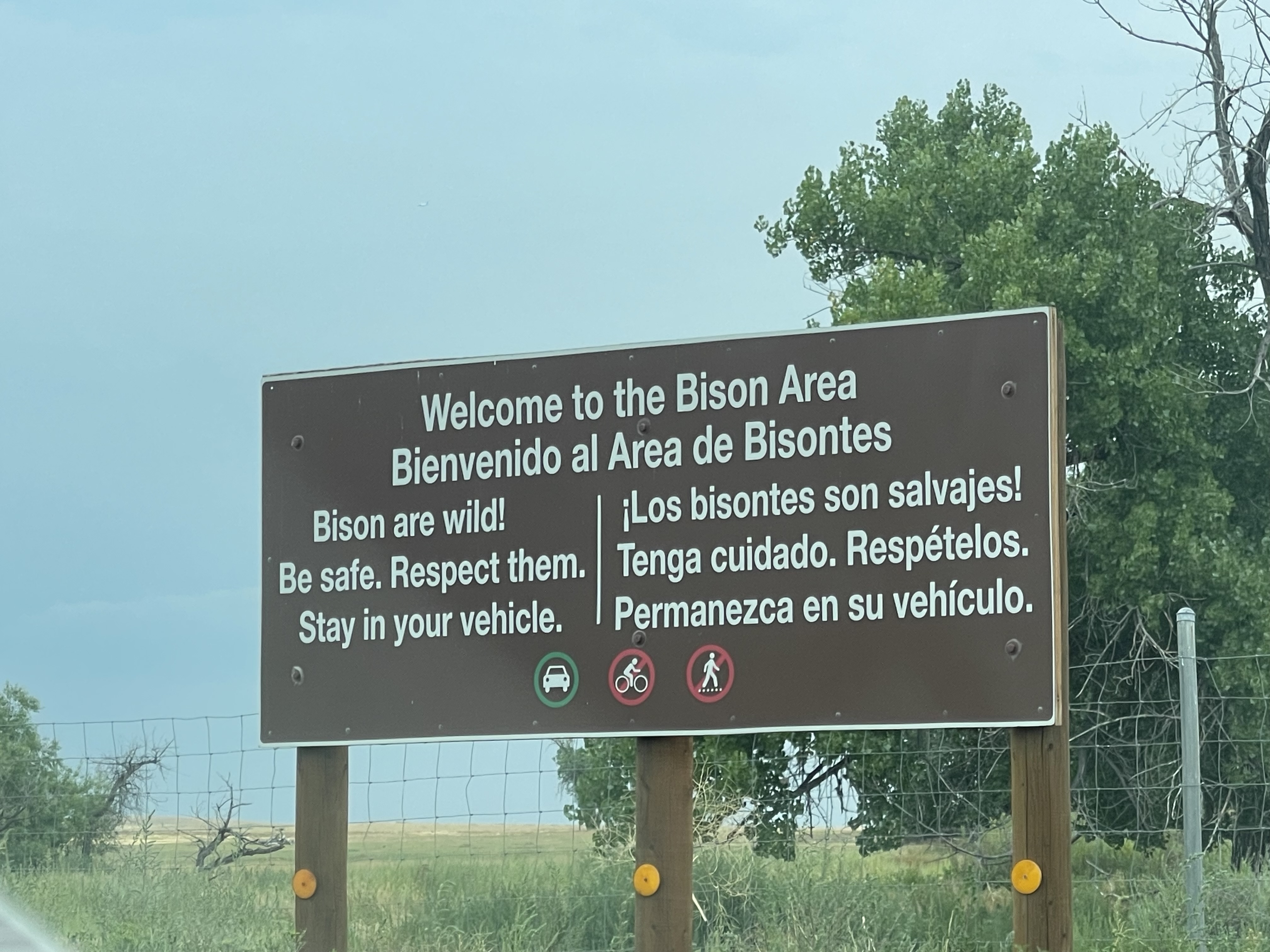
The first animals we saw in the cottonwoods along the start of the drive were birds. Many were too fast to ID while we were in motion, but several stayed in view long enough for record shots.
My first bird sighting of note was a distant American Kestrel, a small reddish falcon of open habitats across North America. It was perched on a dead tree about a quarter-mile from our car. Shortly thereafter, my mom and I observed abundant Black-billed Magpies, European Starlings, Western Kingbirds, Red-winged Blackbirds, and even flocks of Lark Buntings, Colorado’s state bird species.
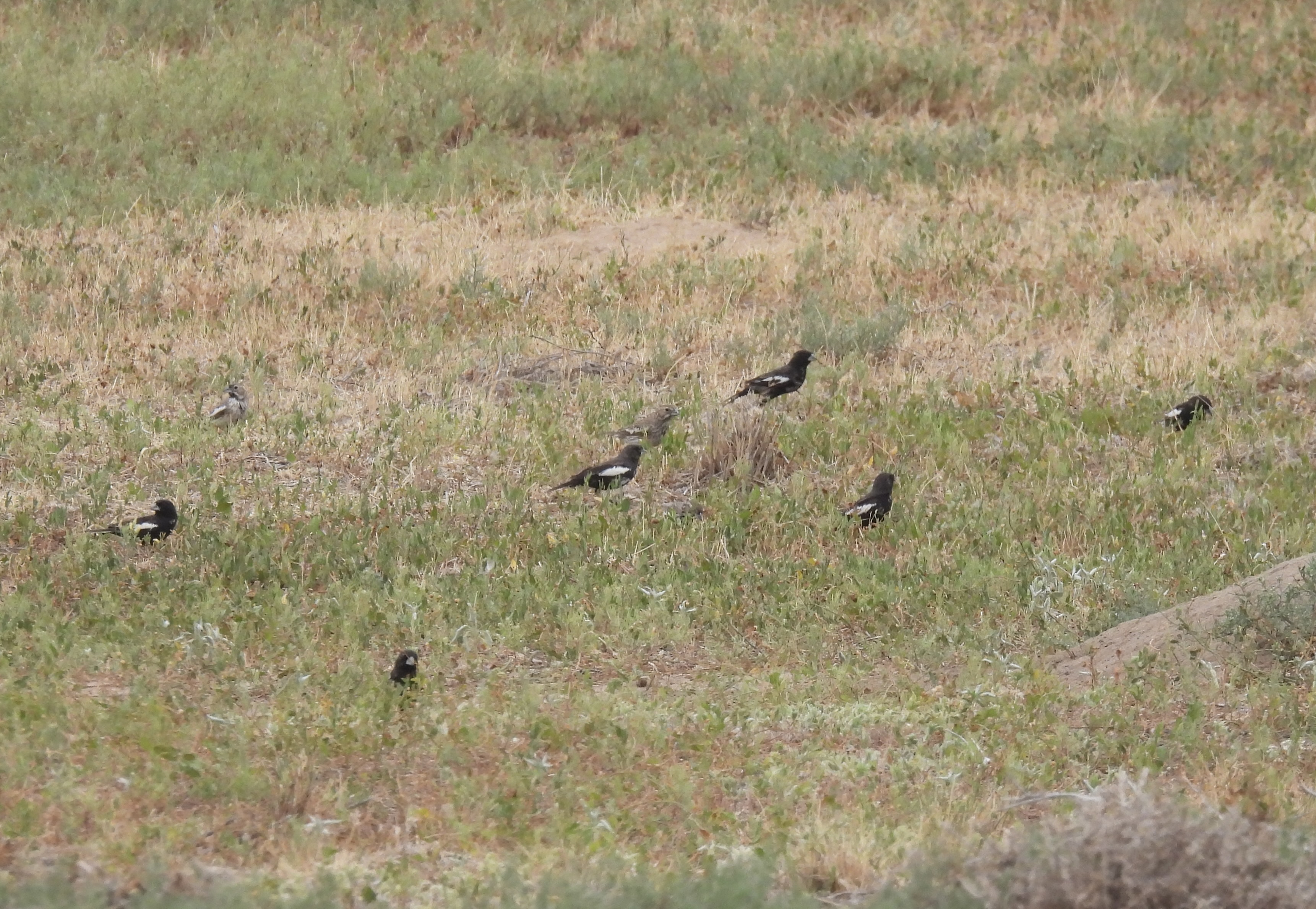
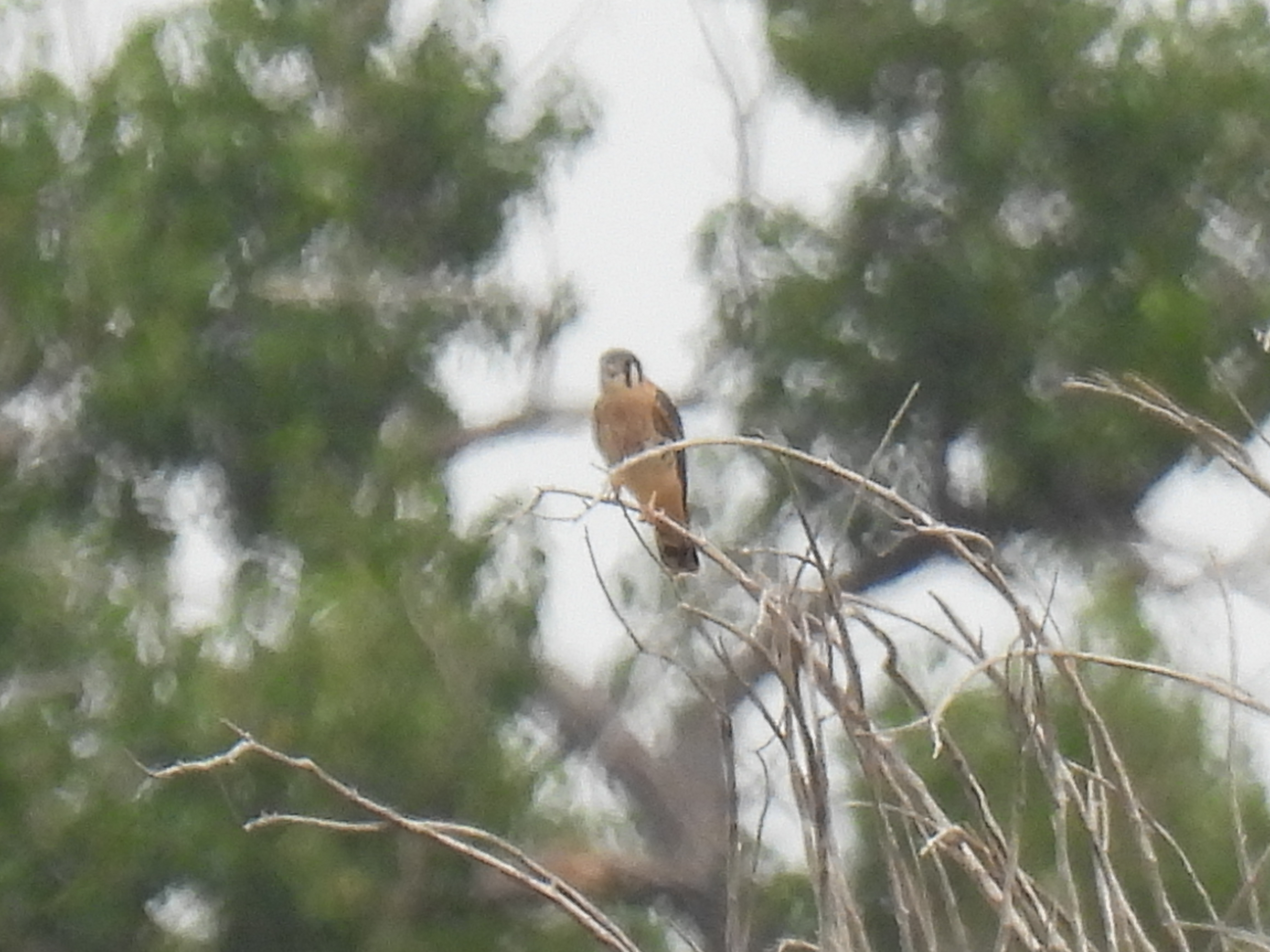
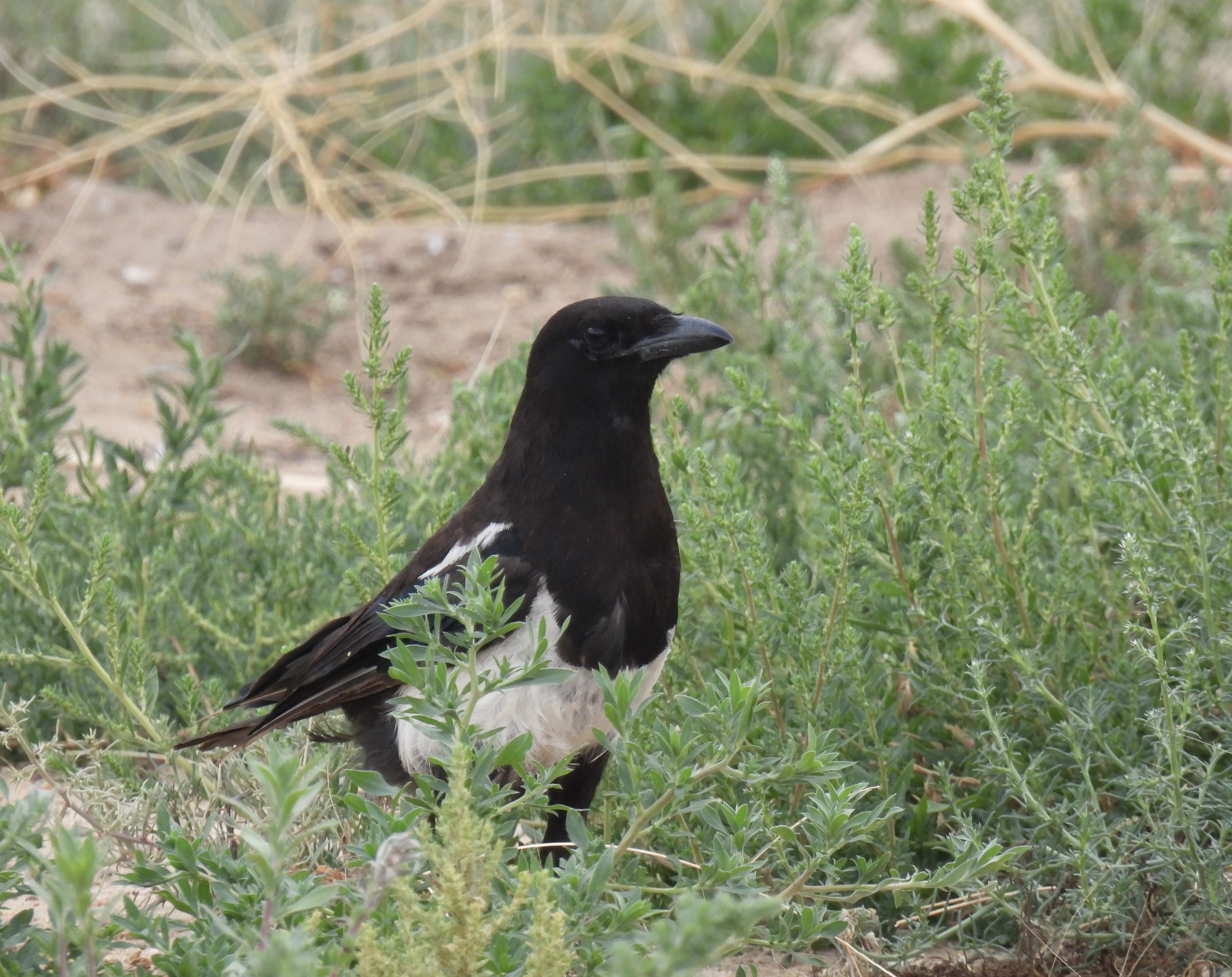

Top Row: Lark Buntings (left), American Kestrel (top right), and Black-billed Magpie (bottom right)
Bottom Image: European Starling
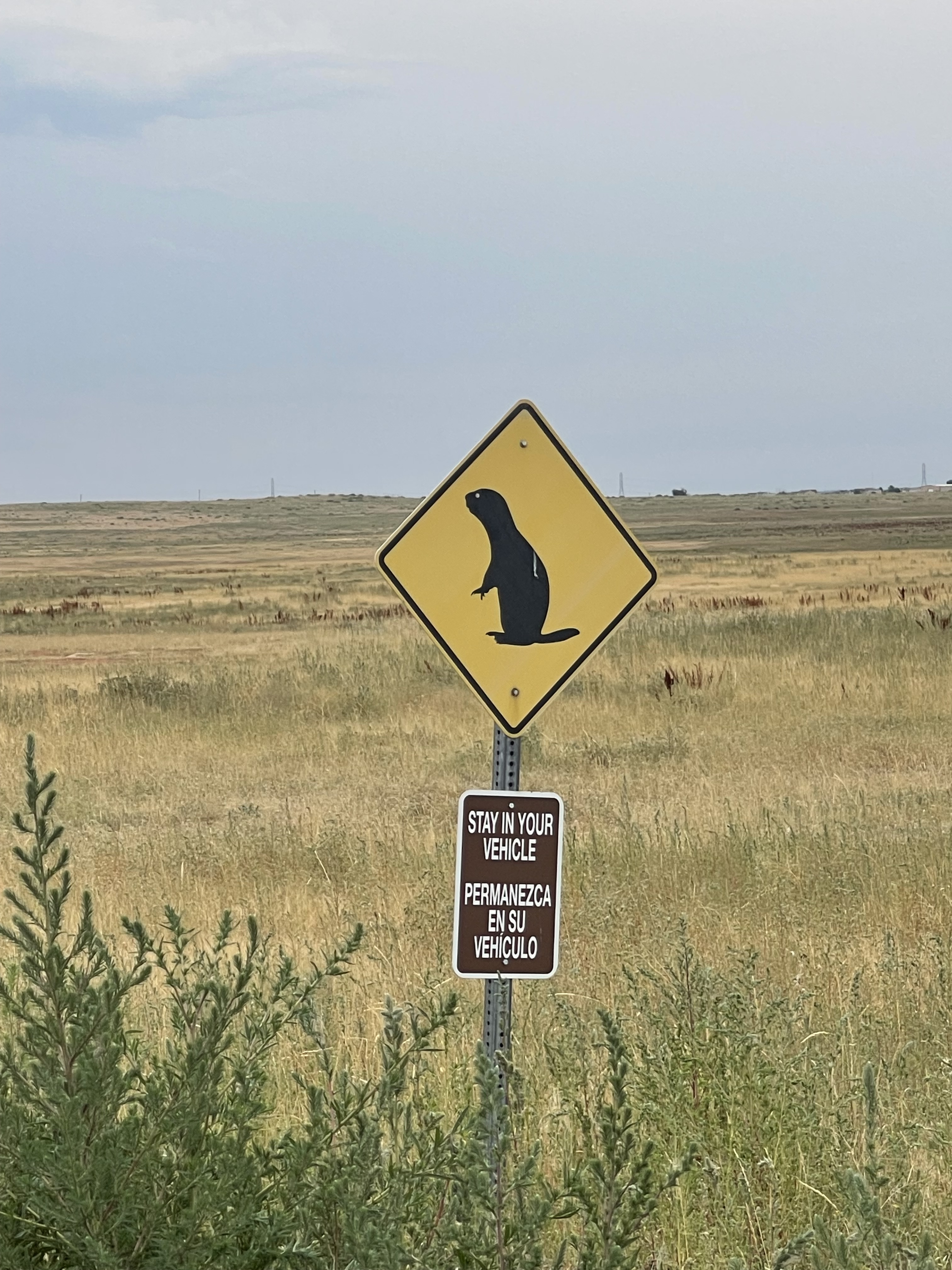
Other animals whose presence become obvious as we drove along were the local colonies (or ‘towns’) of Black-tailed Prairie Dogs. These barking burrowers were one of the most abundant animals in the American prairie at the time of European settlement, with over 5 billion estimated to have lived there. Prairie dog populations have since been decimated by habitat conversion and sylvatic plague, but they remain common in reserves like Rocky Mountain Arsenal.
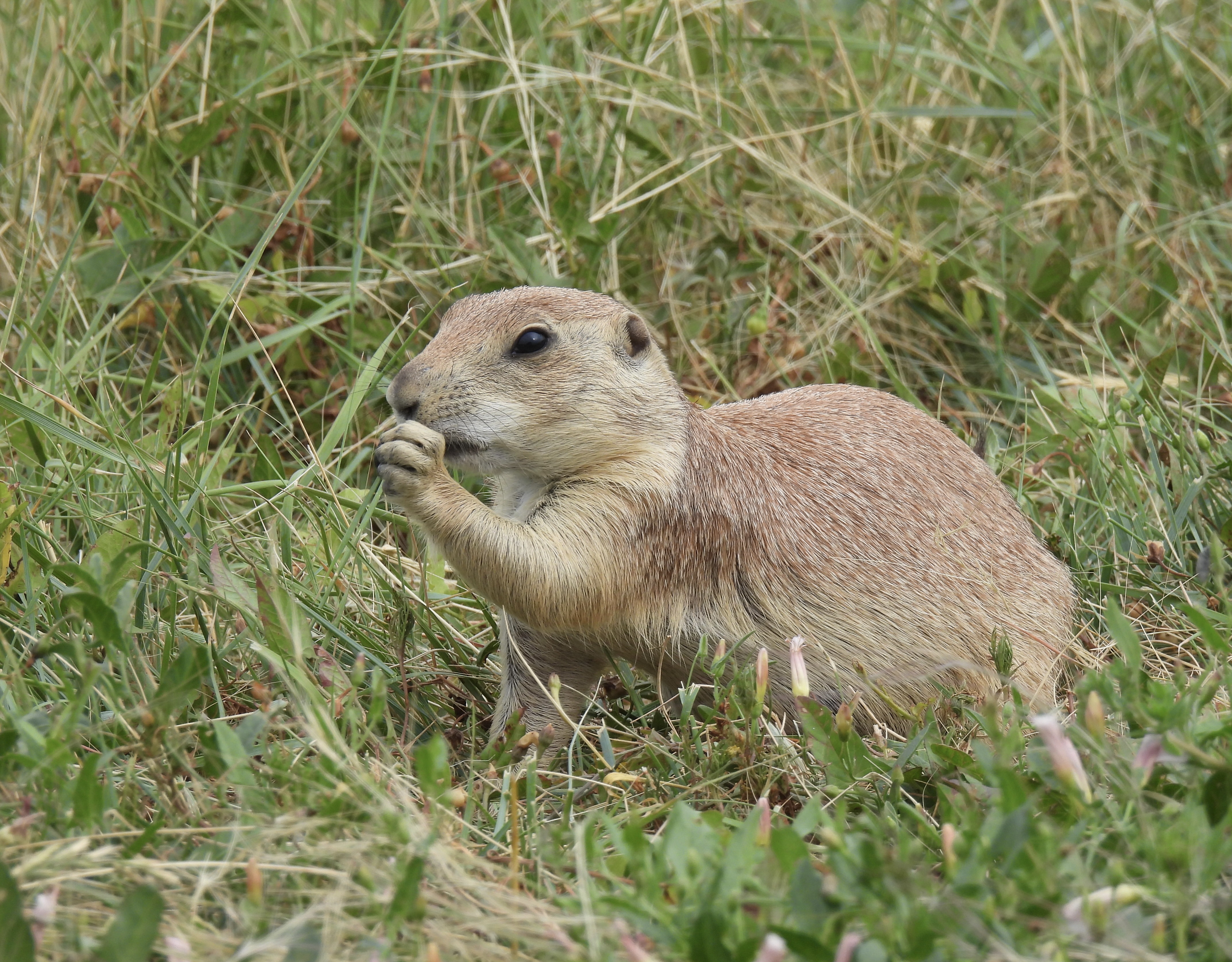
Black-tailed Prairie Dog
As we entered the fenced bison ranges in the open prairie, our first herd of semi-wild Plains Bison appeared in the distance. A lone bull was grazing a ways away from the herd, and started to make his way toward us. We were treated to excellent views of the majestic bovid as he crossed the road in front of us—a memorable encounter with one of America’s most iconic species.

Plains Bison bull
Towards the end of the Wildlife Drive, we spotted two Rocky Mountain Mule Deer (Odocoileus hemionus spp. hemionus) bucks in velvet. Mule Deer have noticeably larger ears & antlers than their White-tailed cousins I often see back east. The two bucks at Rocky Mountain Arsenal were particularly eye-catching.
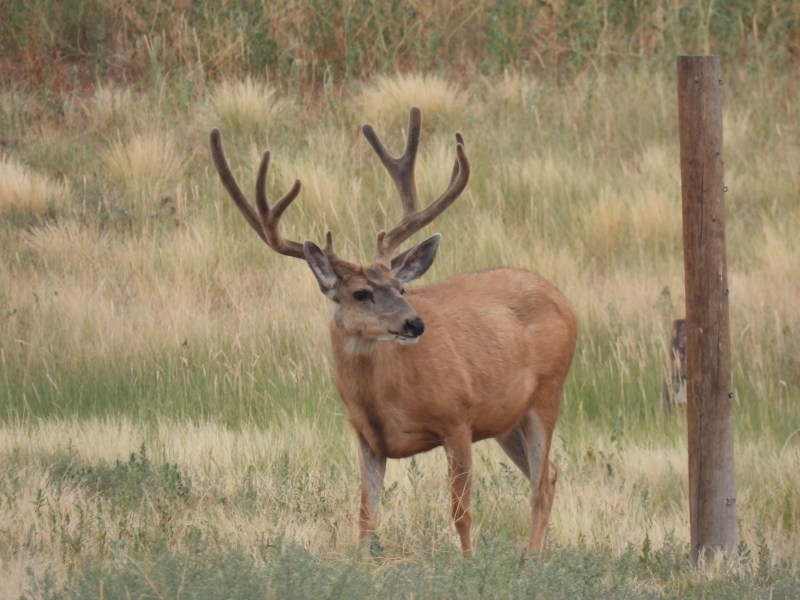
One of the Mule Deer bucks
After finishing the Wildlife Drive, my mom and I drove to dinner outside of Denver and then to our motel in Boulder at the foot of the Front Range of the Rocky Mountains. The next morning, we were up early to get a quick breakfast before our campus tour of CU Boulder.
The tour and information session lasted about two-and-a-half hours and was very informative. I’m in the process of picking out a major, but Boulder’s Ecology & Evolutionary Biology (BS/BA) program, as well as their Environmental Studies (BA) program both look good. I suppose I’ll have time to figure it all out.
The campus itself is a gorgeous array of pink sandstone buildings interlaid with lush gardens, watched over by the iconic Flatiron formations in the mountains above. It was the most beautiful university campus I’ve ever laid eyes on, though I am a sucker for pretty views of mountains and nature.
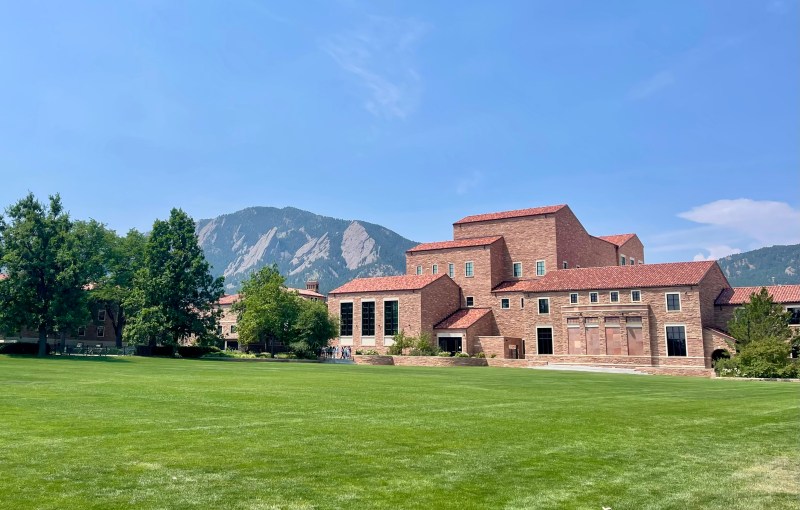
After the tour, we went to ask the admissions department about transferring credits from another university (as I might go somewhere else before CU Boulder). While walking there I spotted several sprightly Eastern Fox Squirrels and a lone Desert Cottontail. The former is an invasive species in eastern Colorado, which is too bad—it would’ve been an addition to my mammal life list except that I don’t put invasive species there.
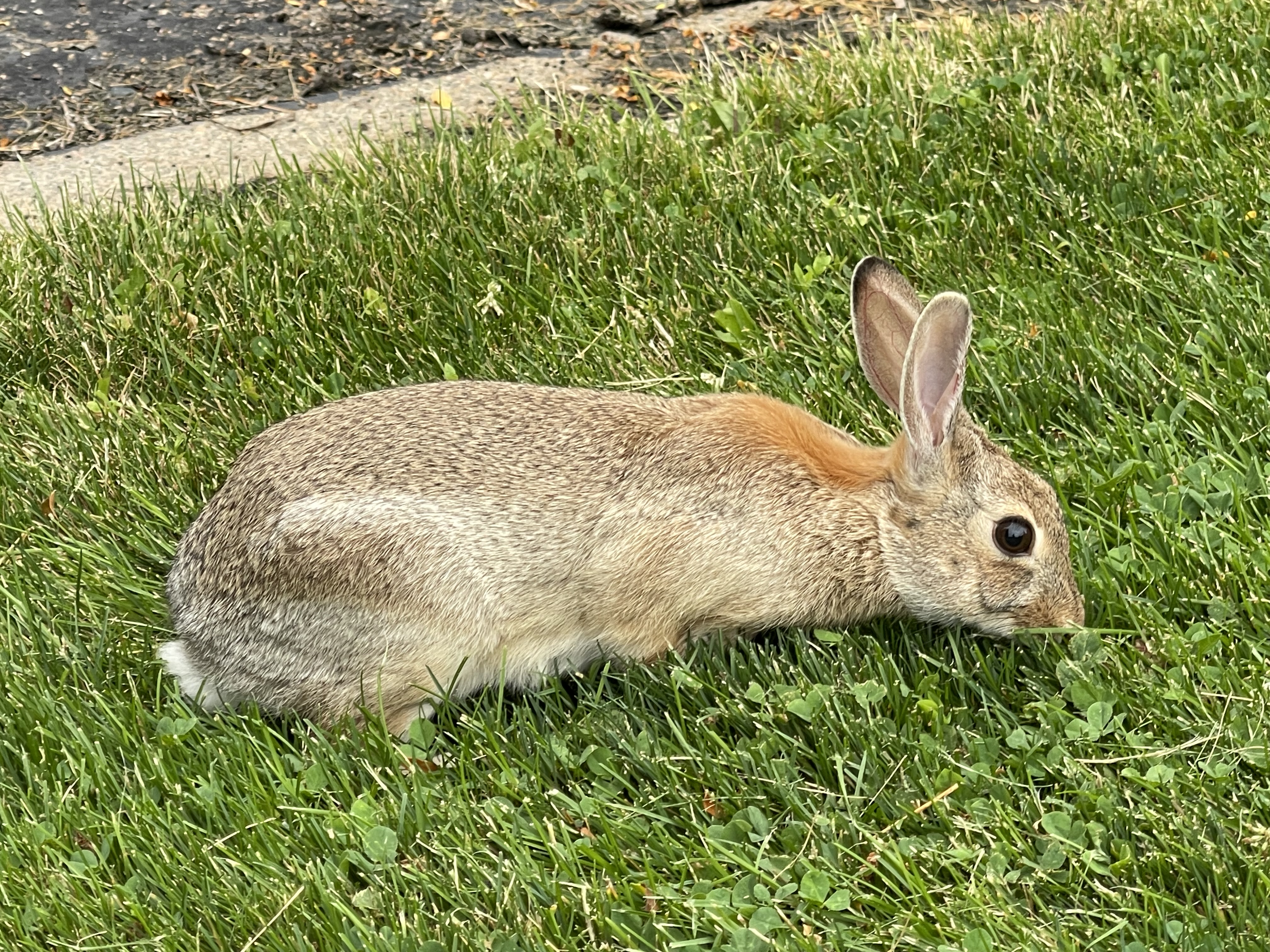
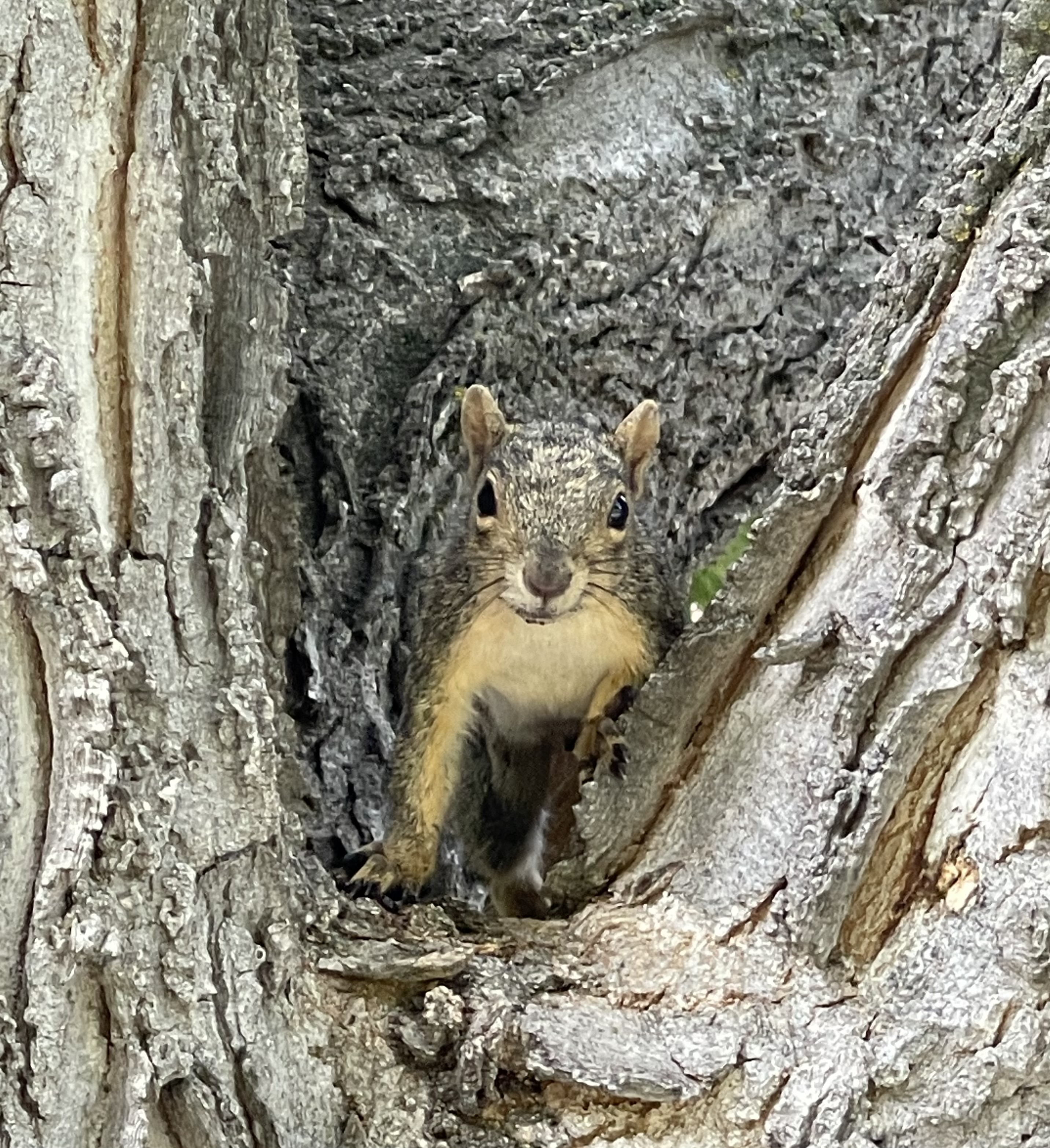
Desert Cottontail (left) and Eastern Fox Squirrel (right)
We left Boulder in the middle of the afternoon and promptly drove west, into the foothills of the Rockies. The terrain and ecosystems quickly transitioned from flat high prairie to spruce-dominated forest as we climbed from 5,000 to 9,500 feet (1,500-2,900m). The crappy weather we’d avoided the day prior had caught up to us as we were driving through the mountains—a thundery deluge of rain & hail that sent the mercury plummeting from a balmy 68 degrees Fahrenheit to a blustery 42 degrees in just under fifteen minutes!
At around 4:00 PM, the rain ceased and we arrived at our motel in Estes Park, a town just outside the famous Rocky Mountain National Park. In the field behind our motel there was a rather large colony of Wyoming Ground Squirrels, relatives of the larger White-tailed & Black-tailed Prairie Dogs found elsewhere in Colorado.
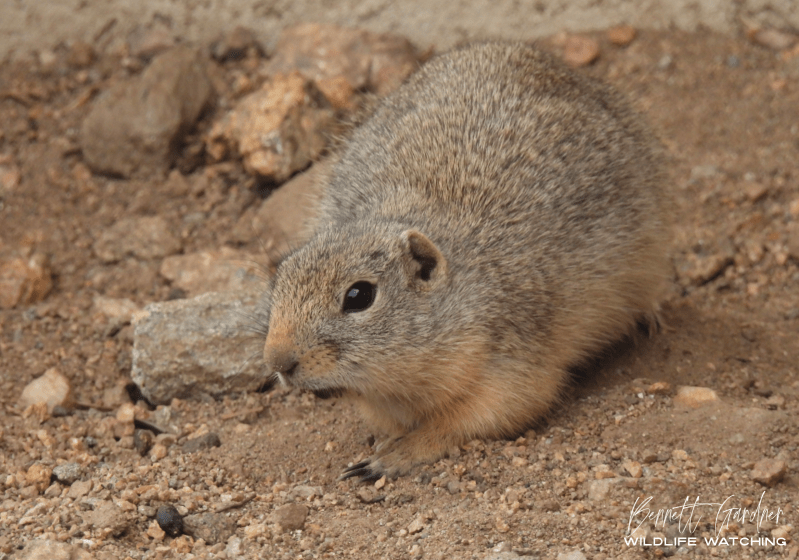
Wyoming Ground Squirrel
We ate a quick dinner in Estes Park (I ashamedly had a tasty Elk burger), and then made our way into Rocky Mountain National Park at around 5:30 PM. The national park receives millions of visitors annually, most of them during the summer season and the National Park Service enforces a timed entry quota that limits the number of visitors between 9:00 AM and 2:00 PM. My mom and I avoided the timed entry requirement on both days we spent in the park by arriving before and after the peak hours.
Even though it was cold, drizzly, and dark, the park was still packed when we arrived. People were to be expected, though—it’s America’s fourth-most visited national park, after all—and the crowds were nowhere near as bad as they were in Zion National Park when I visited there back in 2022.
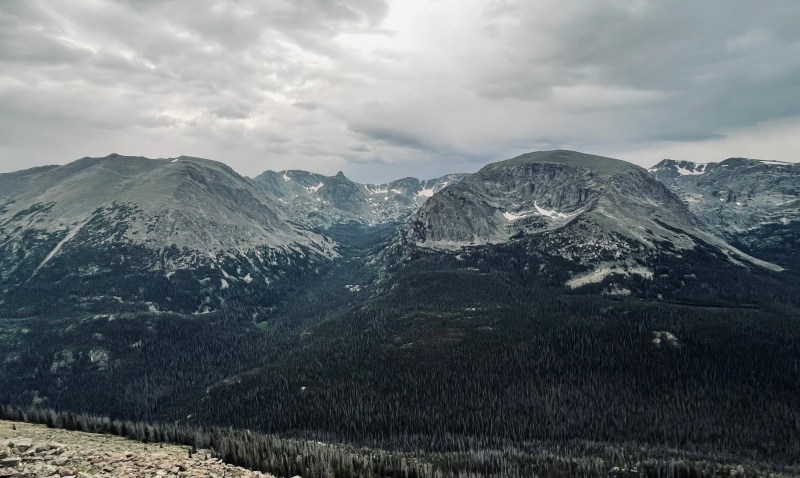
We drove up Trail Ridge Road, a highly-trafficked road that bisects the 415-square-mile (1,075 km²) park. It snakes along forested ravines, and climbs past the treeline to over 12,250 feet (3,733m) in elevation, the highest above sea level I’d ever been before. The looming Rocky Mountains, forested on their lower slopes and bald toward their summits, were nothing short of spectacular.
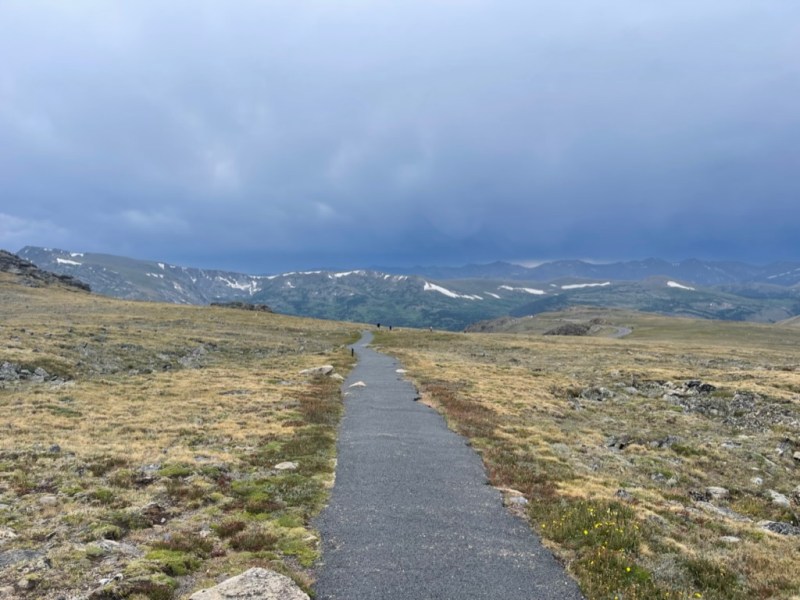
My mom and I parked at the Tundra Communities Trail, located in the alpine tundra zone at around 12,000 feet (3,657m) above sea level. As we started up the trail, the first thing that hit me was the bitter breeze coming off the nearby high peaks. Next was the heavy breathing associated with exerting oneself at high altitudes.
The area was pretty damn beautiful though—one of the prettiest places I’ve had the pleasure of exploring. Alpine tundra was one habitat I’d never experienced before, and traversing the chilly uplands of Rocky Mountain National Park was an absolute joy.
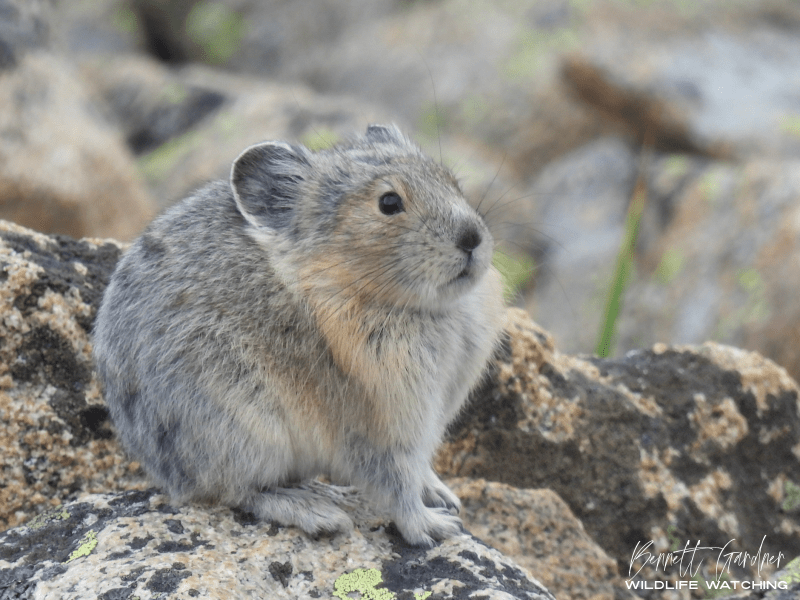
The first animals I saw (or rather, heard) were American Pikas among the scattered rocks along the trail, one of my target mammal species. Pikas are alpine relatives of rabbits & hares that spend all summer storing and collecting plant material in rock crevices for the coming cold months. It was awesome watching them at work.
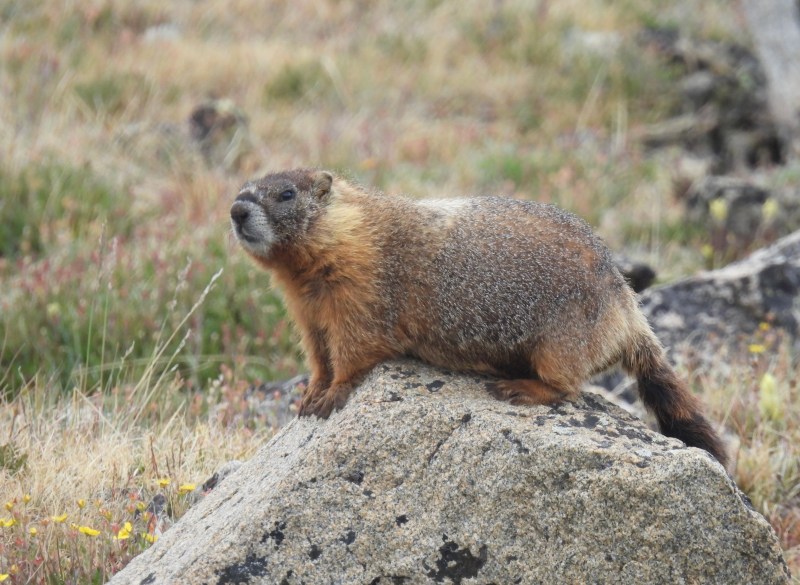
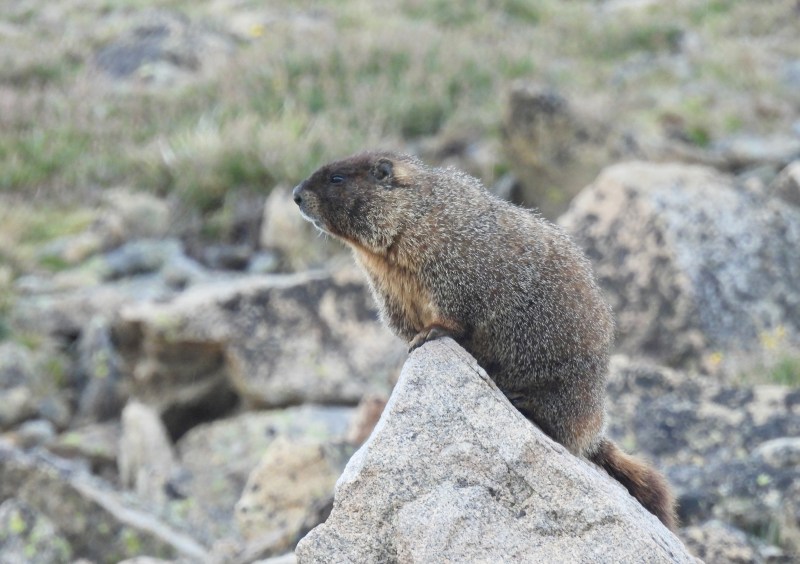
The next most obvious animals along the trail were chunky Yellow-bellied Marmots—ground squirrels on a never-ending quest to bulk up as much as possible for winter. These furry lard-balls have mastered the art of gorging themselves silly for weeks on end during the summer, which in their defence is crucial for surviving seven to eight months of hibernation. The alpine tundra is not an easy place to survive for any animal.
I kept an eye out for endangered Brown-capped Rosy Finches, a Colorado near-endemic bird species that breeds in the alpine tundra during the summer, but had no luck seeing one. I also scanned large parts of the tundra with my binoculars, attempting to locate a White-tailed Ptarmigan, a chicken-like bird of Arctic & alpine tundras across North America. I also struck out on seeing one.
There were still some interesting birds to be found, though, and I spotted quite a few male & female Horned Larks, as well as a couple American Pipits. Both species were lifers for me, and the male Horned Larks in particular were quite unique-looking songbirds.


Horned Lark (left) and American Pipit (right)
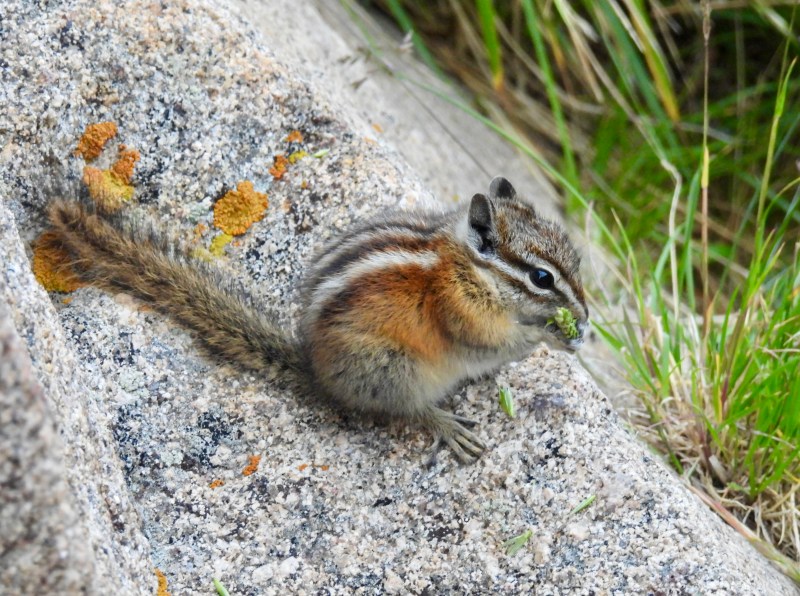
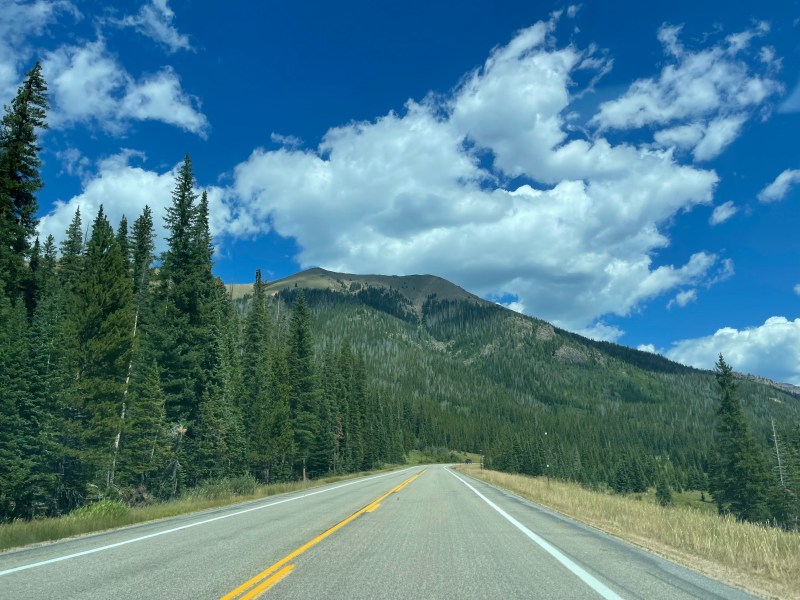
By the time my mom and I had completed the Tundra Communities Trail, our hands were ice-cold and the chilly winds had penetrated our pants and fleeces. It was now around 7:00 PM, and the sky was darkening quickly. We headed back down Trail Ridge Road toward Estes Park, and along the way made a couple stops. Our first stop was at the stunning Forest Canyon Overlook (see the photo at the beginning of this post), where I watched two lively Uinta Chipmunks forage for seeds.
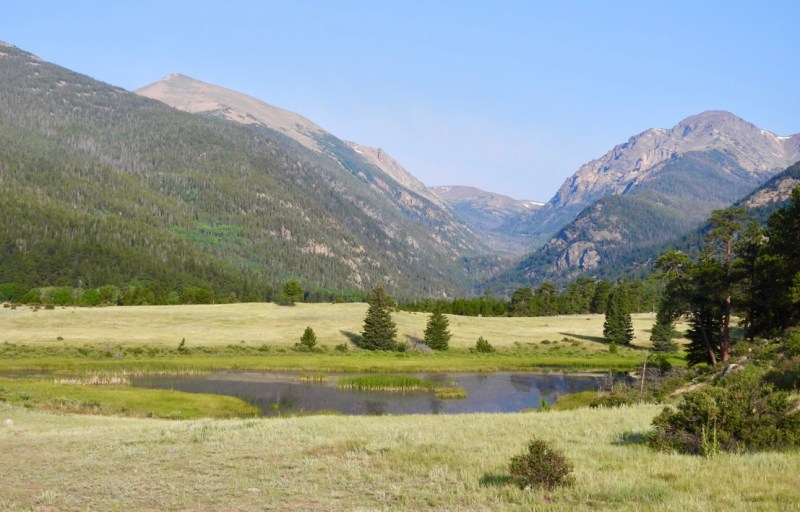
Our final stop of the night was at the Sheep Lakes, two freshwater ponds situated in a grassy valley in the park’s lower elevations. During late spring and early summer, the Sheep Lakes are an excellent spot to see wild Bighorn Sheep, the area’s namesake animal. My mom and I were unfortunately a little late in the season to see the bighorns, but there was still a good chance of spotting other large mammals like Moose, Elk, and Mule Deer. In fact, on this particular evening, we’d just missed a bull Moose that had visited one of the lakes a few minutes prior to our arrival.
After waiting around for a little while, seeing if the Moose would reappear, we decided to call it a night and headed back to Estes Park. Before checking out for the night, we stocked up on water, snacks, and lunches for the next few days in the Rockies. Neither of us slept particularly well that night, possibly due to the altitude, and we were off to the national park again by 7:00 AM.
We stopped once again at the Sheep Lakes to do some wildlife viewing. The morning was sunny and beautiful, and the valley surrounding the Sheep Lakes was full of life. Two Mule Deer bucks, Wyoming Ground Squirrels, Mallards, Mountain Bluebirds, swallows, magpies, and even a striking male Western Tanager made an appearance while we were there.
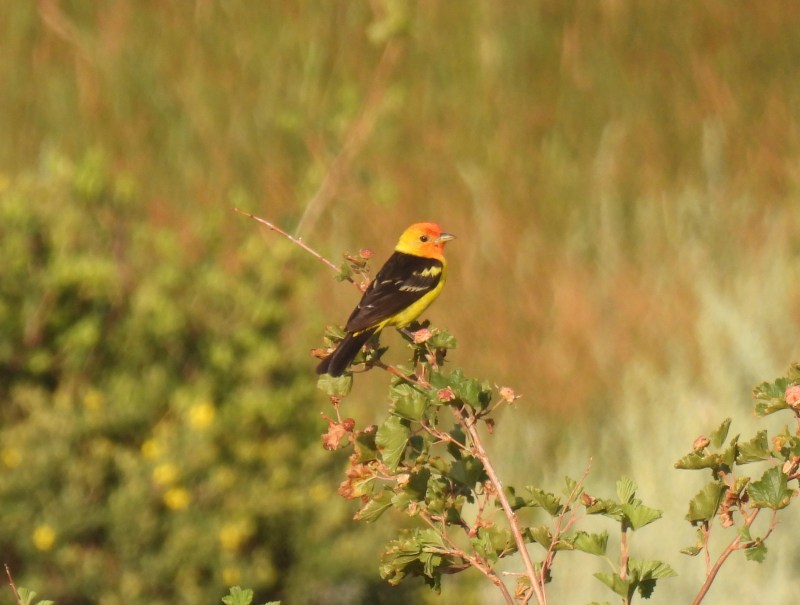


Mountain Bluebirds
One of the friendly volunteers at the Sheep Lakes overlook recommended we drive up Old Fall River Road, a winding dirt track that leads up a steep-sided forested gorge to the Alpine Visitor Center at 11,796 ft (3,594 m) above sea level. We took his advice and began the rather long journey up the road.
At the start of Old Fall River Road, Ponderosa Pine (Pinus ponderosa) forest was the dominant habitat, and Golden-mantled Ground Squirrels were found in abundance. As we increased in elevation, the vegetation quickly transitioned to lofty spruce forest dominated by Blue Spruce (Picea pungens), Engelmann Spruce (Picea engelmannii), Lodgepole Pine (Pinus contorta), and Subalpine Fir (Abies lasiocarpa).
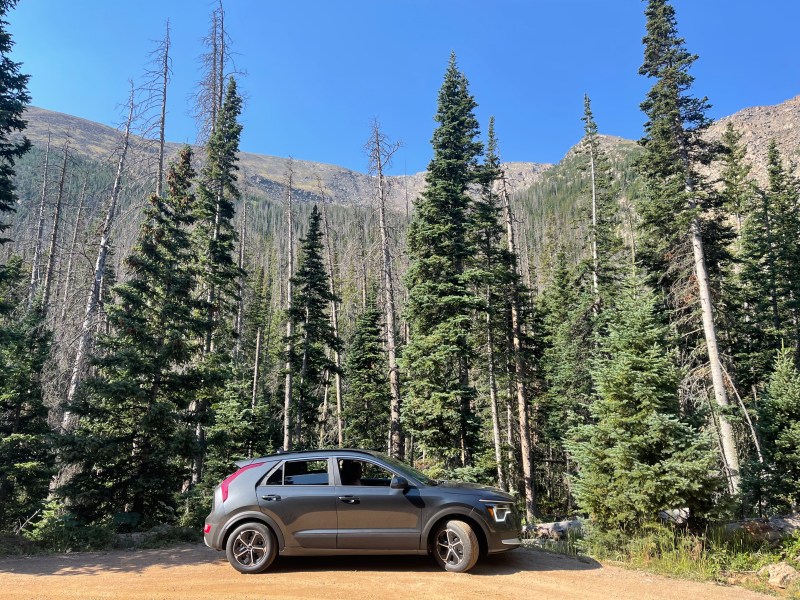
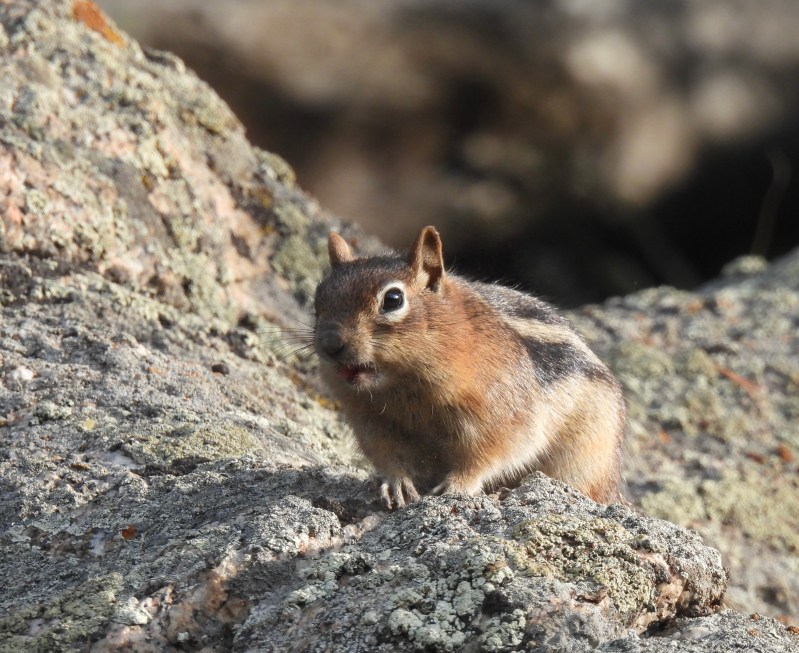
I had my mom stop the car a couple times on the way up Old Fall River Road so I could do some birding & mammal-watching in the subalpine forest. There were plenty of small songbirds around, but they were mostly too fast to photograph or ID. The most vocal & obvious bird in the area was the Mountain Chickadee, which I saw in abundance among the spruces. We also spotted numerous Least Chipmunks & American Red Squirrels as we were driving, and even a young cow Moose resting in a thicket about 30-50 feet (10-15m) from the road.
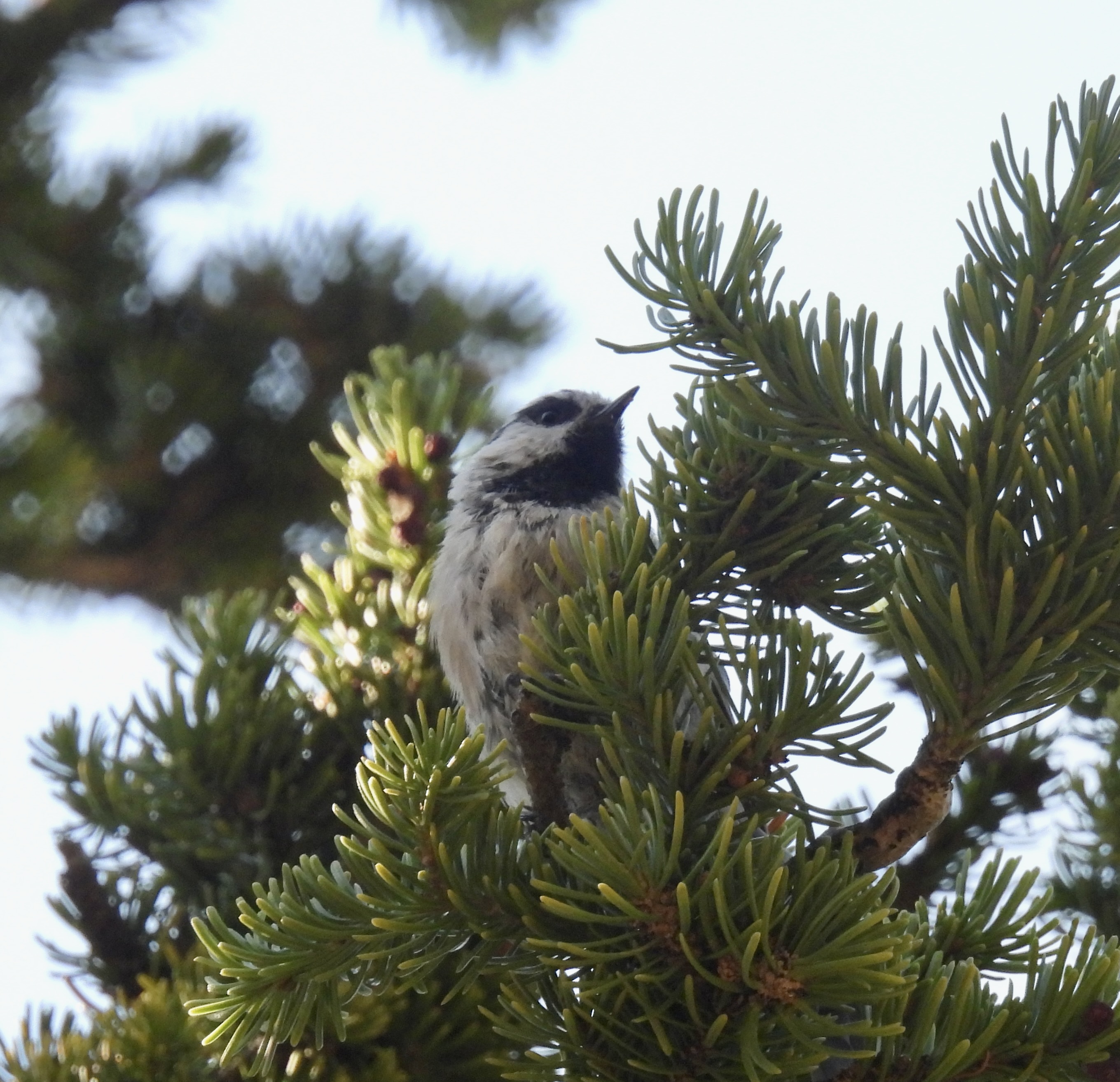

Mountain Chickadee (left) and Least Chipmunk (right)
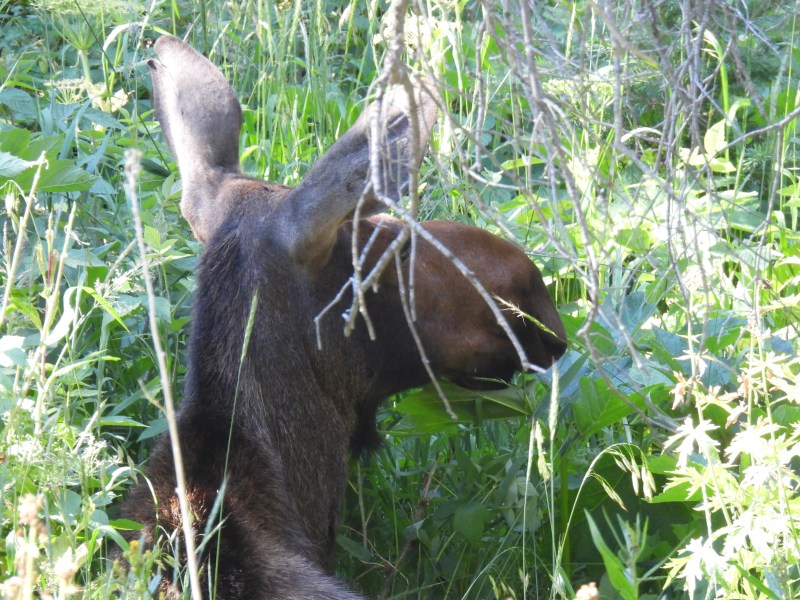
Old Fall River Road is narrow and crowded, and likewise whenever someone spotted an animal along the road, there ended up being a huge traffic jam. Luckily, everyone was respectful of both the wildlife and one another, and refrained from honking their horns or aggressively maneuvering around the stopped cars.
At around 10:15 AM, we arrived at the bustling Alpine Visitor Center. The alpine tundra was sunnier and much warmer than the day prior, and the views were just as arresting. A group of fearless Common Ravens greeted us as we exited the car.
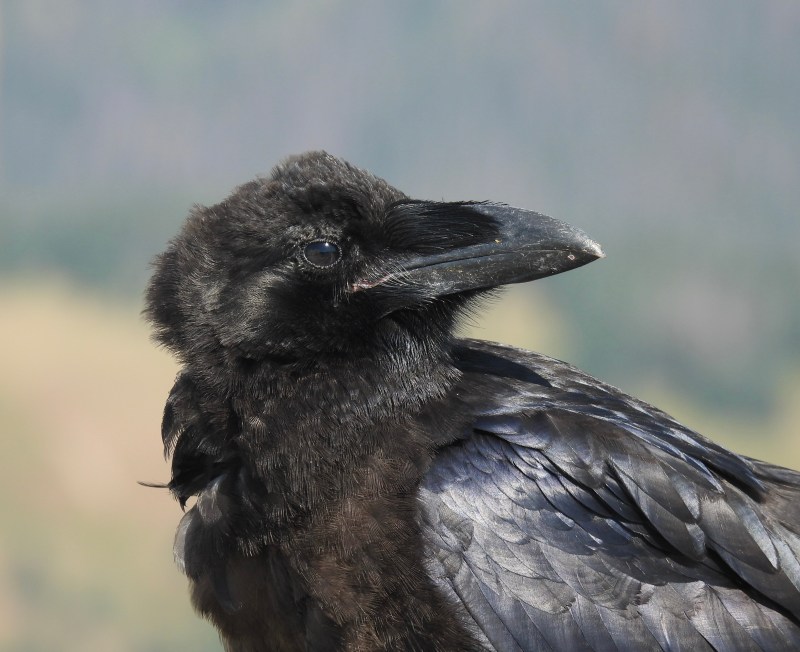
The visitor center was more crowded than Disney World on a Saturday, so after a quick dash to the toilets and a look at the exhibits, we took off. I wanted to take another walk up the Tundra Communities Trail to try and spot the ptarmigans & rosy-finches I missed the day prior, along with any Elk or Bighorn Sheep that were grazing the highlands.
I didn’t spot any of my target species, though watching the local pikas and marmots go about their daily feeding rituals was a lot of fun. The mountain vistas in the sunny weather were also spectacular.
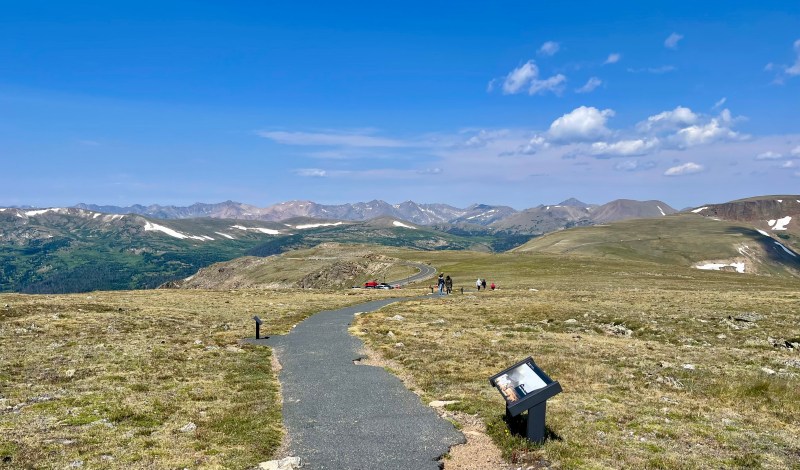
Towards noon, my mom and I began driving toward the Grand Lake entrance of Rocky Mountain National Park. We gradually descended into the treeline below the tundra, down to the foot of Kawuneeche Valley where we ate lunch.
A little ways down the valley, we explored the Holzwarth Historic Site, an abandoned guest ranch that is maintained and preserved by the National Park Service. I was more interested in the local wildlife than the site itself, so I let my mom stroll through the historic site at her own pace while I followed birds & squirrels into the woods (a typical Bennett moment).
Within a short while I’d spotted Dusky Flycatchers, swallows, White-crowned Sparrows, Ruby-crowned Kinglets, Mountain Bluebirds, a Northern Flicker, Red-winged Blackbirds, Pine Siskins, and American Crows. I also saw chipmunks, ground squirrels, and what was probably an American Red Squirrel, but could’ve also been a Fremont’s Squirrel. Both squirrels are members of the genus Tamiasciurus and look extremely similar to one another.
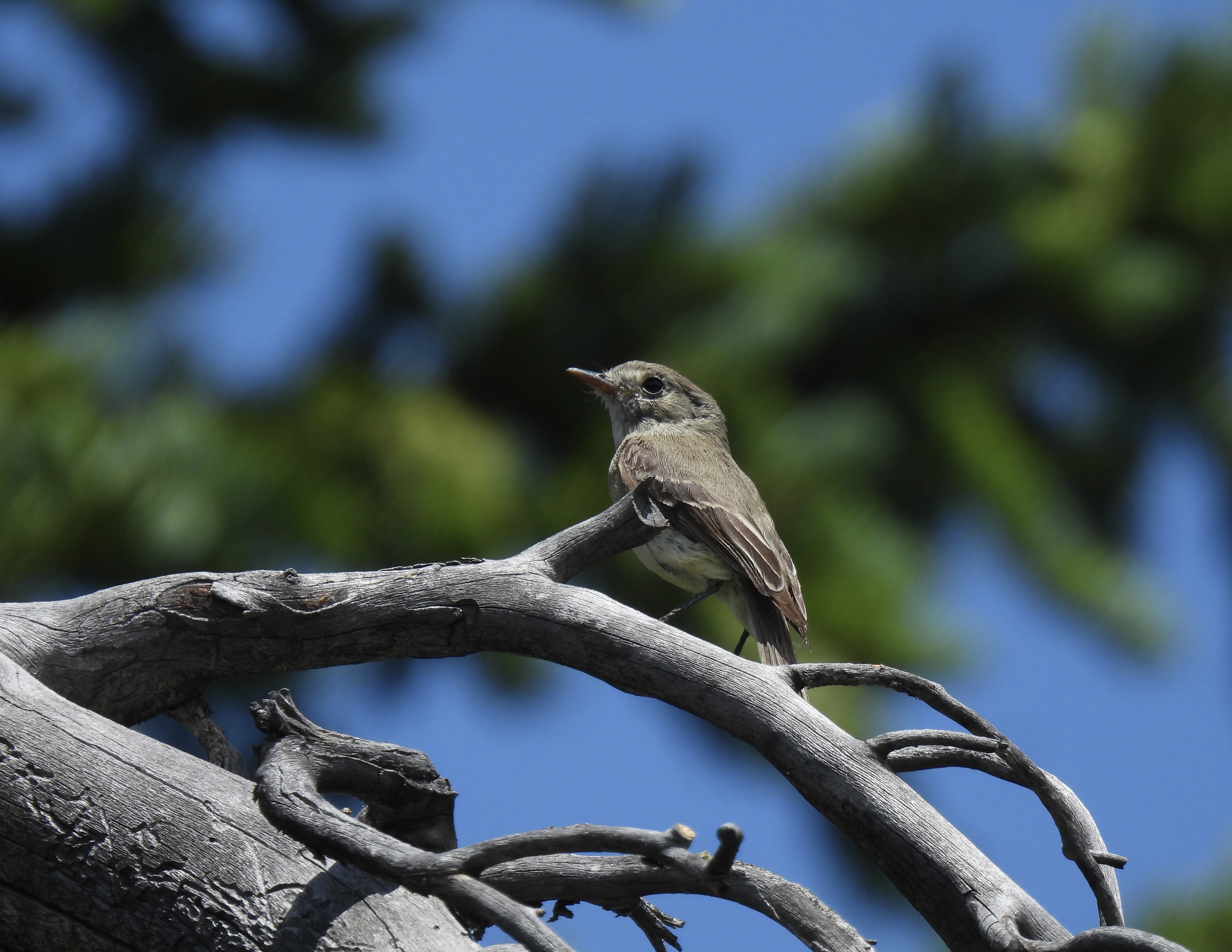

Dusky Flycatcher (left) and probable American Red Squirrel (right)
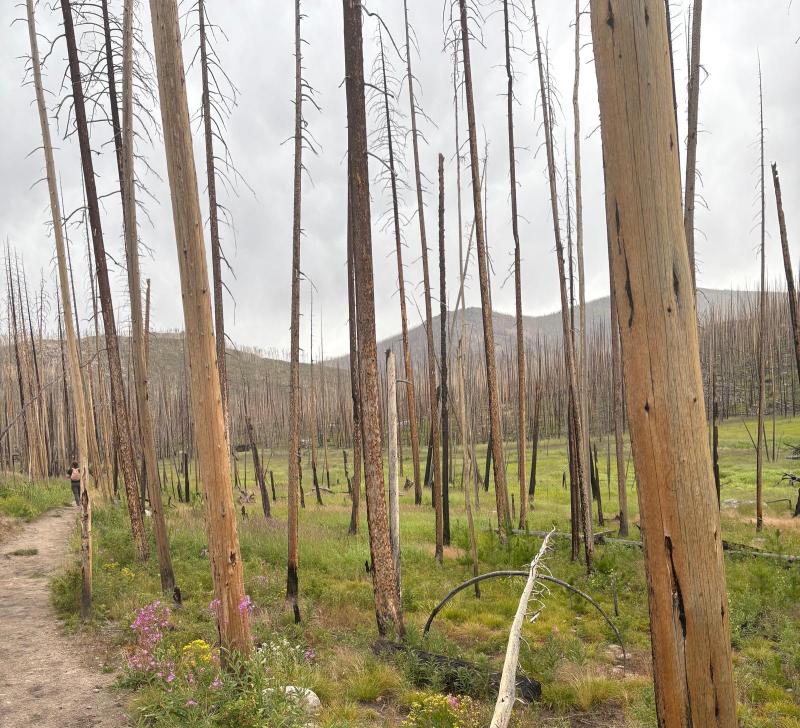
An isolated afternoon thunderstorm had swept into the area by the time we made it back to the car. It proceeded to downpour for the following two hours, and we decided to wait out the majority of the rain in the nearby town of Grand Lake. After the deluge turned to a drizzle, we re-entered the national park and started hiking up the Green Mountain Trail, which despite its name meanders through a recently burned area of forest.
It was actually quite depressing to see just how much of Rocky Mountain National Park went up in flames in recent years. These wildfires stemmed from both human ignorance (lighting unconfined fires in the woods), and outbreaks of Spruce Boring Beetles (Dendroctonus rufipennis), which are native to Colorado but kill large numbers of trees annually that later become fire-susceptible deadwood.
As we were hiking, another thunderstorm rolled in, and we decided to turn back about a mile in. Though it was now 4:00 PM, and we had an hour-plus drive to our next accommodation in Winter Park, I didn’t want to leave the national park without having seen any wild Elk. So we drove back through Kawuneeche Valley, scanning the nearby forests and meadows for hoofed denizens.
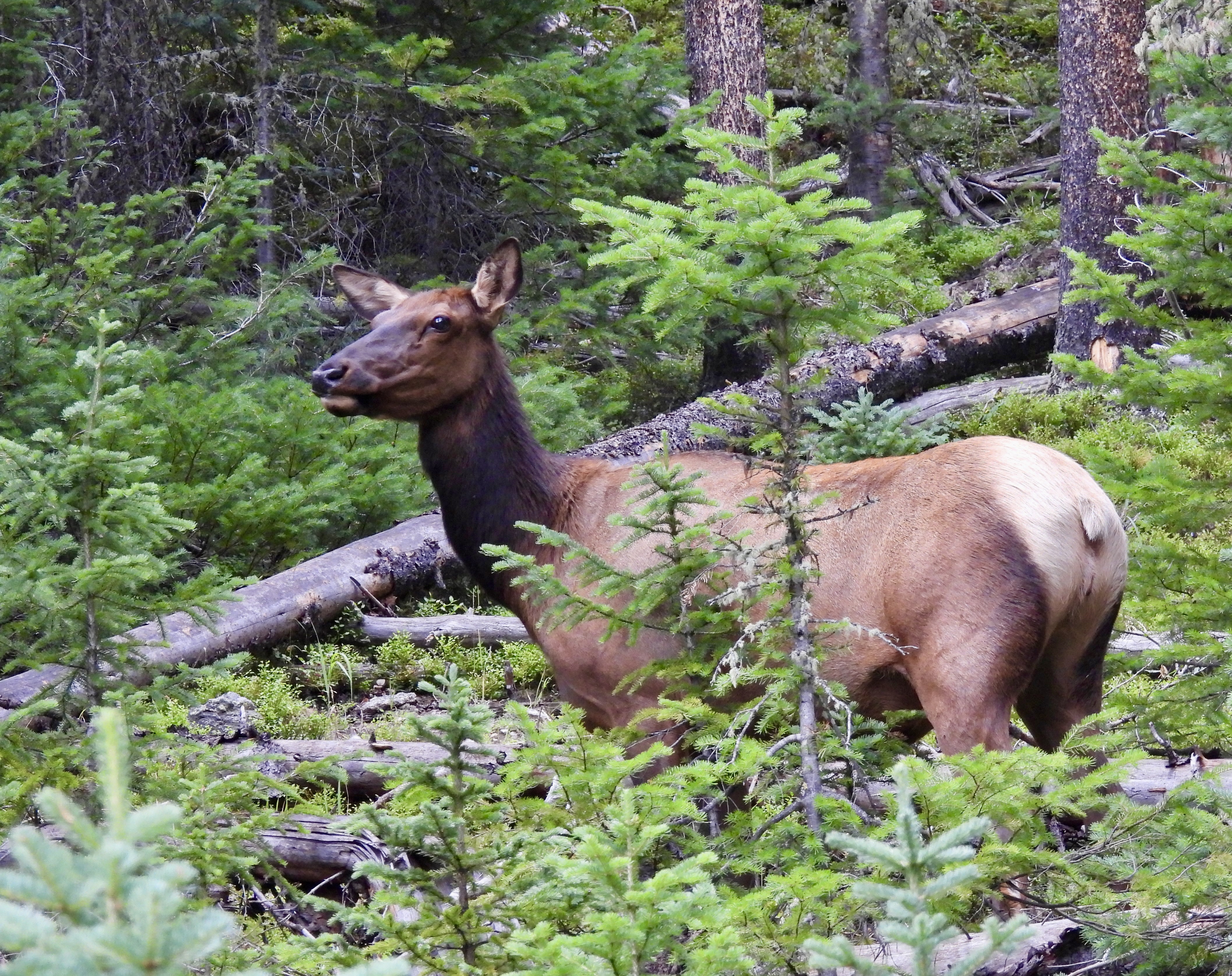
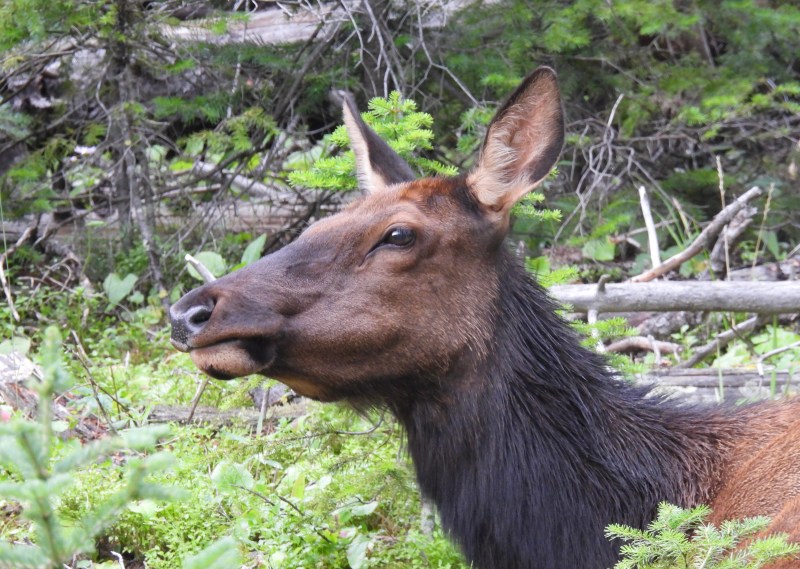
Not far up the road, there was a traffic jam, which meant only one thing—someone had spotted an animal. I got out of the car and walked across the road to a small gully that led into a pine forest. Several groups of people had cameras pointed at something in the shrubbery below, and it took me no time to spot the herd of four Rocky Mountain Elk (Cervus canadensis ssp. nelsoni) cows browsing among the conifers.
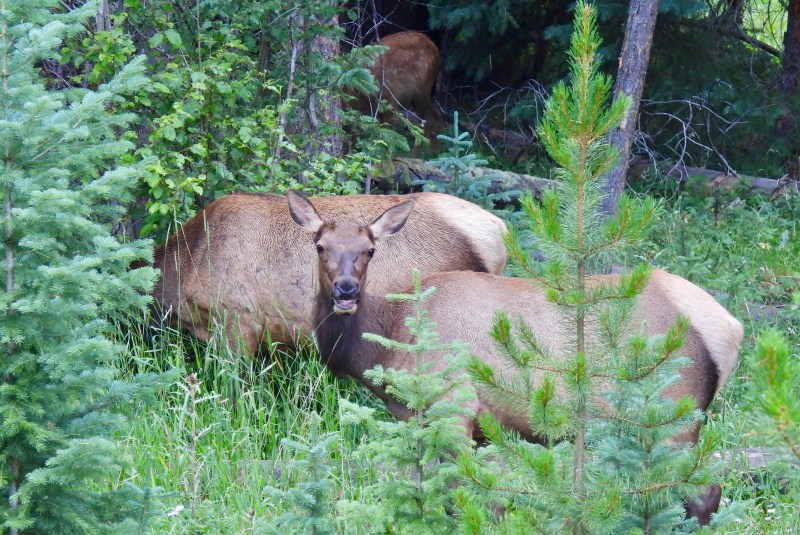
A closer look at the massive and majestic deer revealed a much larger number of animals present than what was visible initially. Scattered below the trees on both sides of the road was a herd of at least 20 Elk, including multiple calves. My mom and I obtained even better views of the herd as we drove back toward the park entrance.
Though there was no herd of antlered bull Elk nearby as I’d hoped, seeing this species in the wild for the first time was plenty satisfying to me.
We departed Rocky Mountain National Park shortly after seeing the Elk, and proceeded to drive to the town of Winter Park. The town, as the name suggests, is a haven for snow-sports enthusiasts from mid-November to late April. Though it didn’t snow during our time there, it did rain for essentially the rest of the afternoon, causing Winter Park to be unseasonably cold even for its high elevation (9,200 ft or 2,800 m above sea level).
As in Estes Park neither of us got much sleep, probably due to the altitude. The next morning, I planned to hike up 13,125-foot-high (4,000 m) Mount Flora in the nearby section of the Front Range of the Rocky Mountains. My starting point for the hike would be Berthoud Pass at 11,305 ft (3,446 m) on the Continental Divide. My mom was feeling too tired to accompany me, but agreed to drop me off and pick me up at the mountain pass.
The hike itself was very moderate, with good trails, beautiful weather, and mostly moderate incline. The only component that was difficult for me was the altitude. This was my first proper hike above 11,000 ft (3,353m), and I wasn’t used to the thinner air. Correspondingly, I panted like a dog throughout the hike and sucked in air like a vacuum cleaner on tougher sections of the trail. Otherwise, though, the hike was not bad at all. The views were similarly breathtaking as those in Rocky Mountain National Park (pun intended).
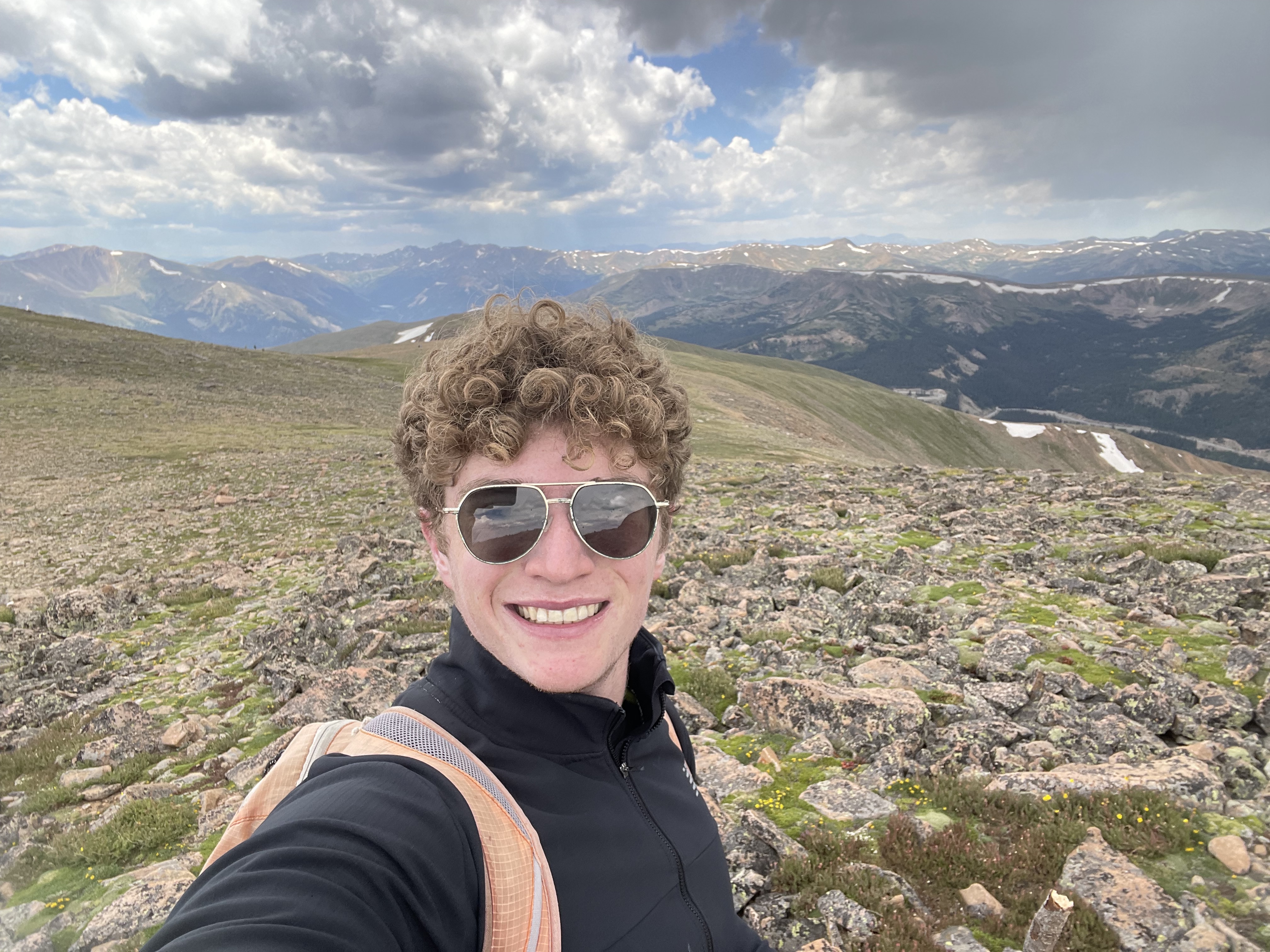
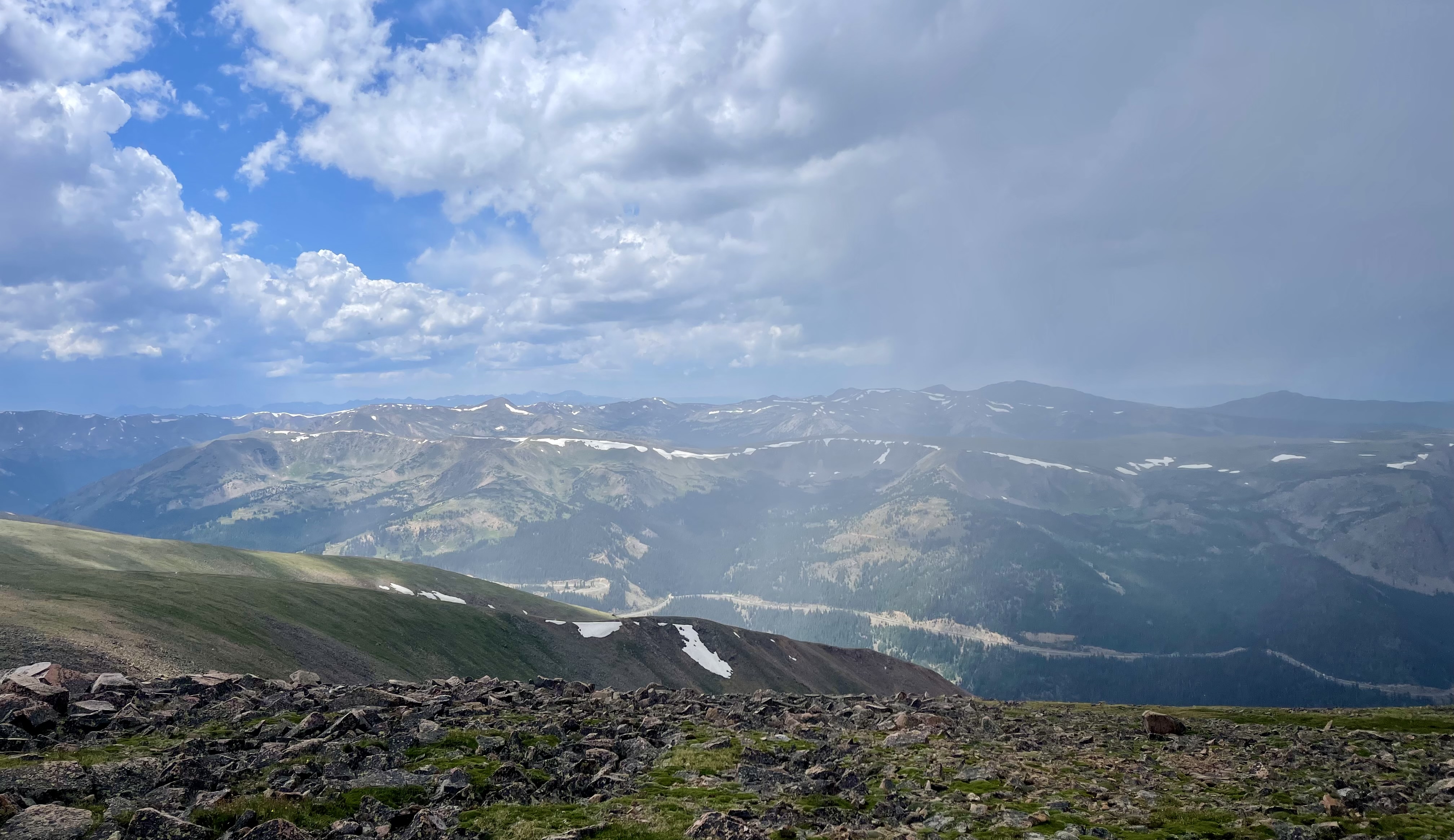
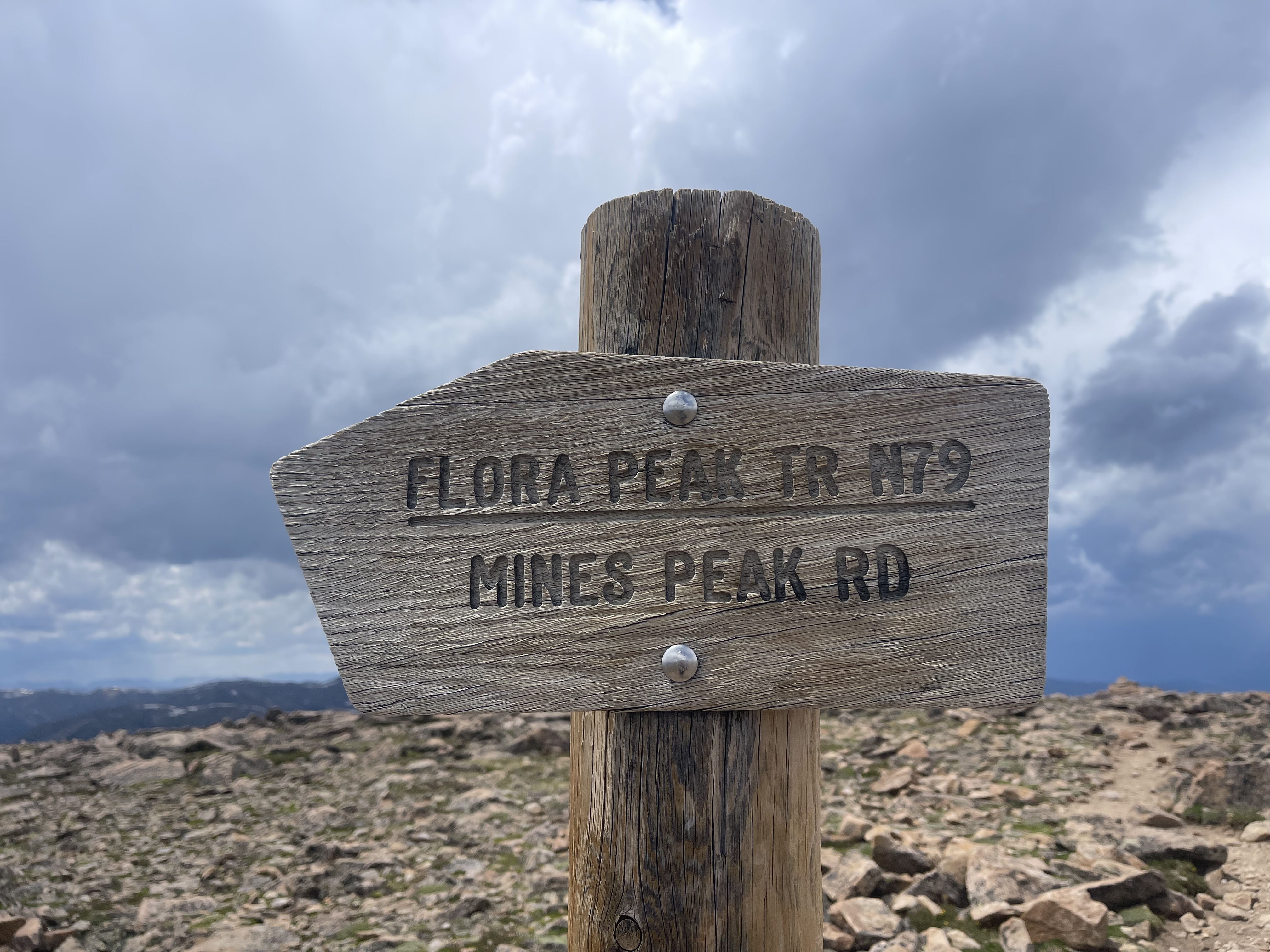
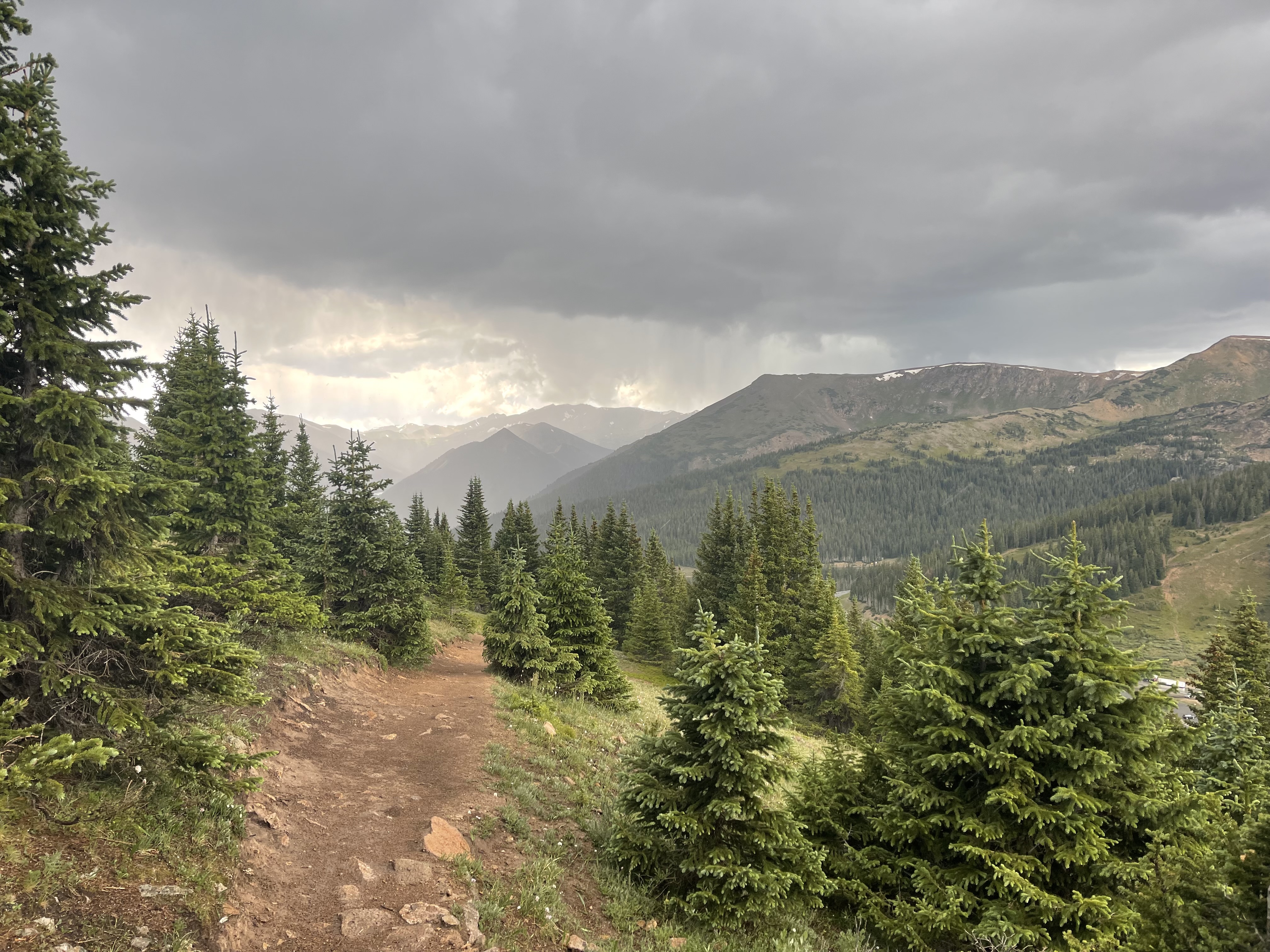
Summiting Mount Flora was a novel experience for me. It was the highest above sea level I’d ever hiked to, the highest mountain I’d ever summited, and my first Thirteener (a summited peak between 13,000 and 13,999 feet high).
As I stood atop the mountain, one of Colorado’s impromptu summer thunderstorms engulfed me. Standing on the exposed, high-elevation ridgeline, I was asking for a stray lighting bolt to sear my body like steak on a grill. Once I realized this, I scurried down the trail like a marmot.
On the way down, a barrage of hailstones started pelting me like BB’s from an airsoft gun. I was more anxious about the lighting, though, and managed to ignore the hail long enough to descend into the forest at the start of the trail which provided some shelter. From there, I walked to the visitor center at the trailhead where I waited for my mom to pick me up. Soaked and cold, but unharmed and delighted, I loved my hike up Mount Flora. It was an adventure suited for a crazy nature guy on the hunt for thrilling outdoor experiences.
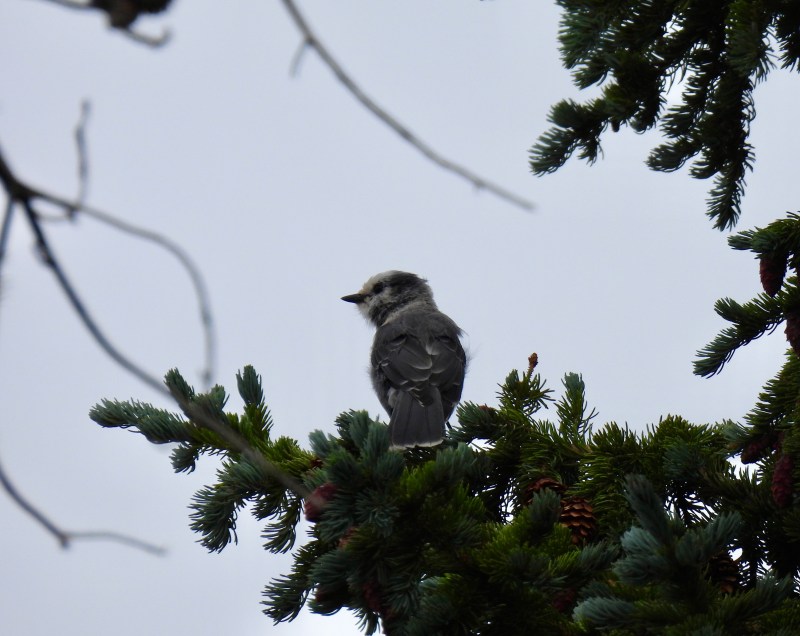
Later that afternoon, after the rain had ceased, my mom and I took the Winter Park Gondola to the restaurant at the top of the ski runs, a popular spot for mountain biking in the summer. I spotted two Canada Jays while walking down one of the trails near the restaurant.
We spent the night in Winter Park, and the next morning drove off to Fort Collins in the northeast. This would be our final day in the Rocky Mountains proper, and my mom found a scenic route for us to take along beautiful Colorado Route 14 that passes through the mountains, eventually leading us to Fort Collins on the high plains.
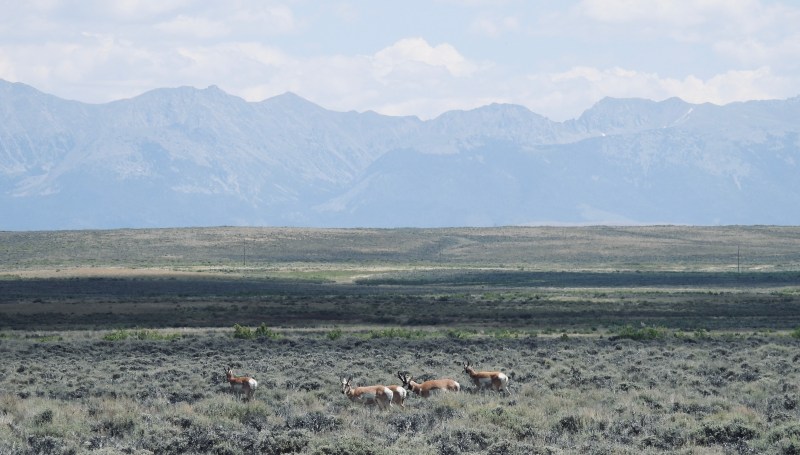
The first part of the drive was rather uneventful, and remained that way until we passed through scenic Routt National Forest which led into the dramatic North Park basin, a broad, high valley rimmed on all sides by craggy peaks. The vegetation and climate of North Park differed markedly from what we had experienced elsewhere in Colorado over the previous days, characterized by a semi-arid, high-altitude sagebrush steppe.
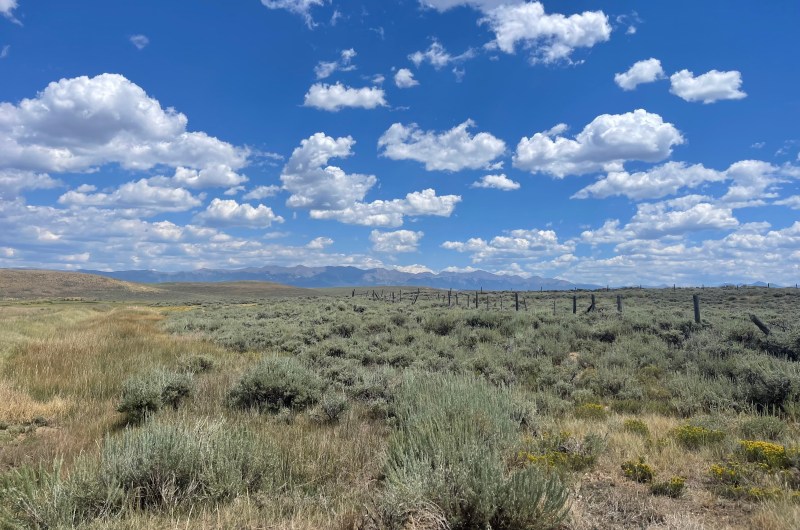
North Park basin
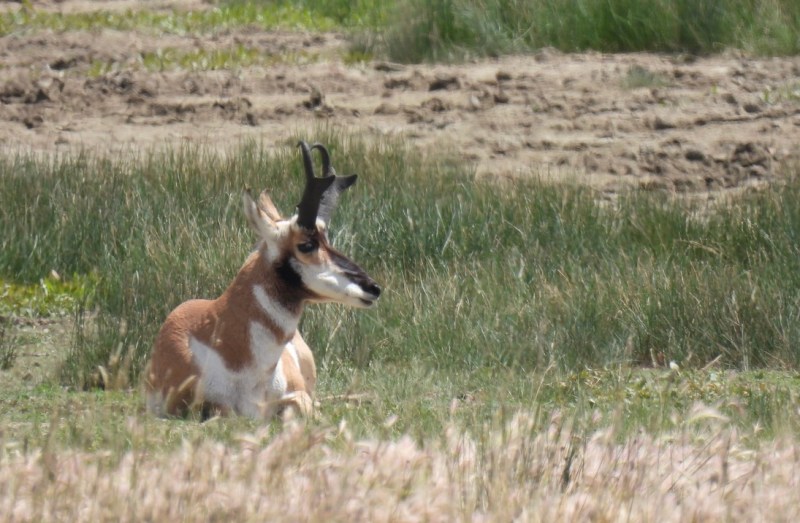
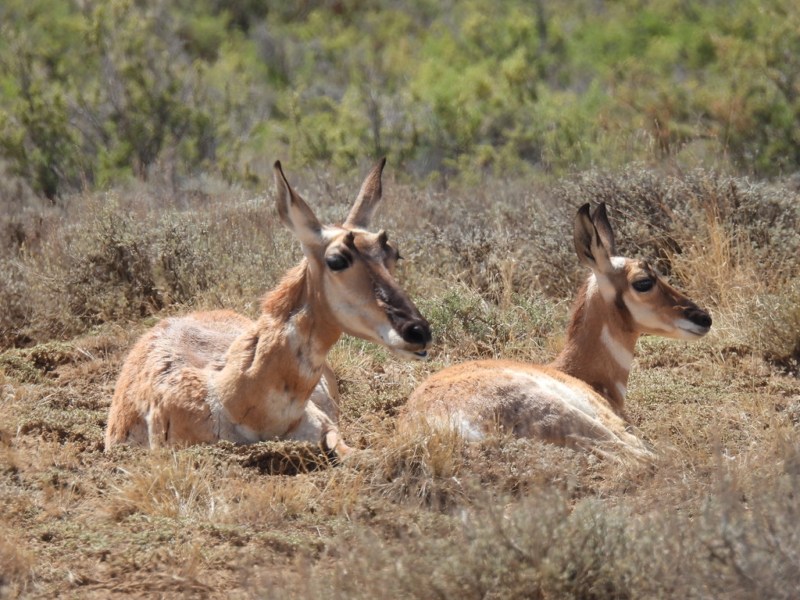
As we were driving, my mom spotted an animal out of her window that she thought was a deer. I took one look and yelled ‘Pronghorns! Stop the car!’ She pulled over and I bolted to the side of the road. Sure enough, a herd of about eight or ten Pronghorns grazed in the rangeland below—until they saw me and quickly bounded away.
Flighty behavior is only natural from the fastest land animal in the Western Hemisphere, after all.
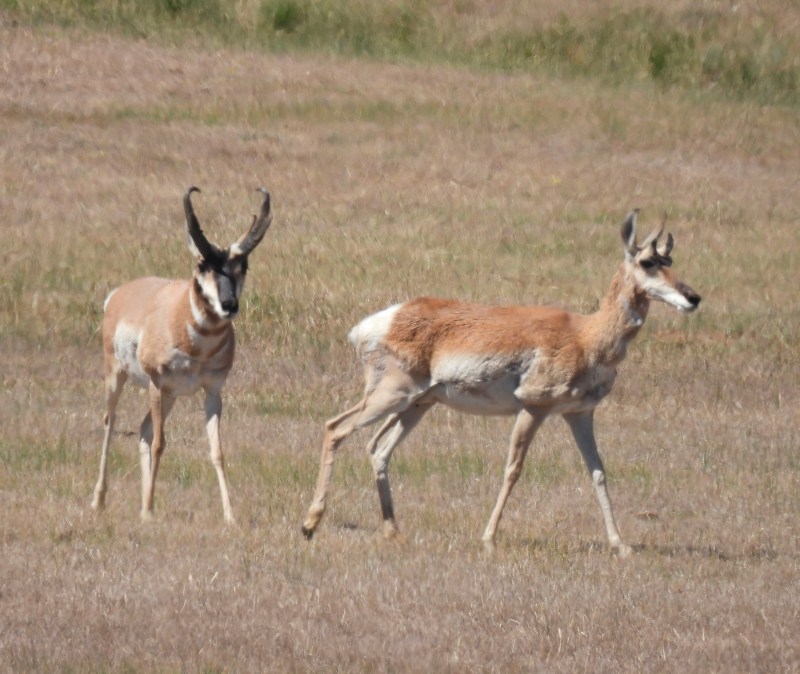
Pronghorn may look like African antelope, but they are actually the last living member of their family Antilocapridae, which is unique to North America. I was beyond excited to see these fascinating mammals in the wild in Colorado.
My mom and I continued driving for a short while until we came to the entrance of Arapaho National Wildlife Refuge in the center of the North Park basin. After seeing the Pronghorns, we were both intrigued to explore the area more thoroughly, and decided to drive into the refuge.
This ended up being one of the best decisions of the trip—Arapaho turned out to be a hidden gem of a wildlife refuge, containing a huge number of wild mammals and migratory waterbirds.
We first stopped at the refuge visitor center, where numerous taxidermied animals from the area were on display. A friendly lady working there gave us multiple suggestions for hikes and drives to do in the 24,804-acre (10,087-hectare) refuge to maximize our chances of seeing wildlife.
While my mom talked with the lady, I scanned the open fields around the visitor center for mammals. It didn’t take me long to find the lively local colony of White-tailed Prairie Dogs, one of many in the area.

White-tailed Prairie Dog
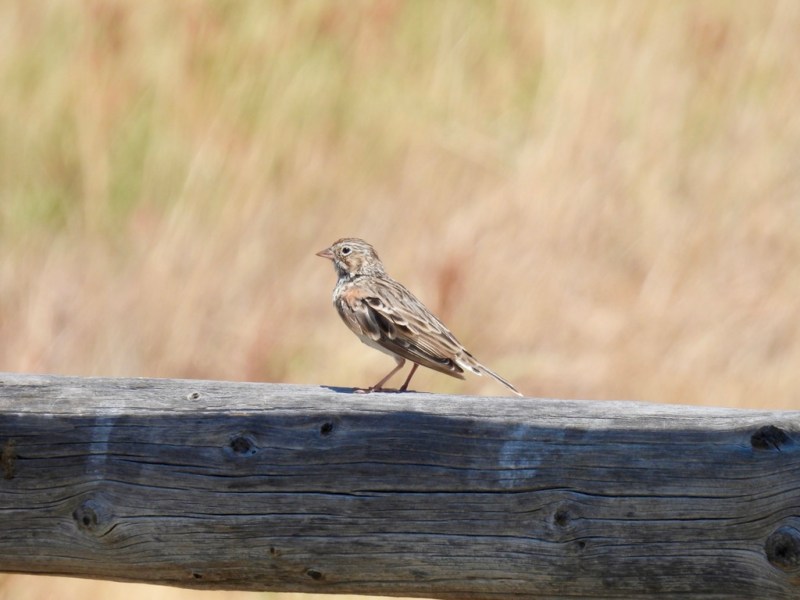
After the visitor center, my mom and I made our way to the Moose-Goose Nature Trail, a boardwalk leading through willow thickets along the Illinois River where Moose, American Beaver, & Muskrat are sometimes seen, but we didn’t see much of any wildlife in the middle of the day there besides a couple Vesper Sparrows.
Our next stop in the refuge was the 6-mile (10 km) Wildlife Drive, which was much more productive for wildlife sightings than the boardwalk. The drive is similar to the one in Rocky Mountain Arsenal NWR, but in a more wild setting.
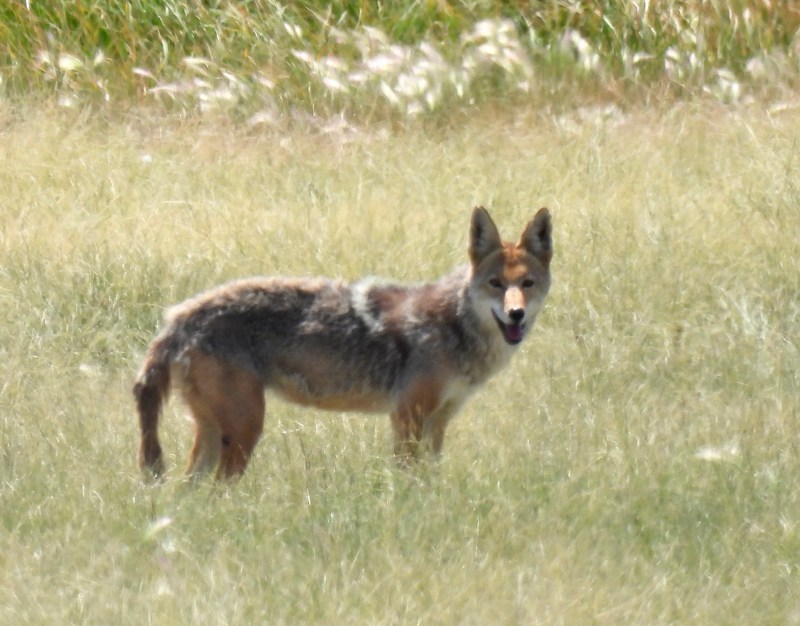
Mammal sightings were excellent, with over 10 Pronghorns, both male & female, identified, along with numerous White-tailed Prairie Dog towns, Wyoming Ground Squirrels, a Long-tailed Weasel, and even a lone Coyote pacing through a distant field. The weasel was a new species for me, but moved far too quickly for a record shot or even a good glimpse of its body.
Bird sightings were also quite good, especially around the different man-made lakes that dot the refuge. There was an abundance of migratory waders & waterfowl around one of the lakes in particular, which I stopped at for some time to observe & photograph everything I could.
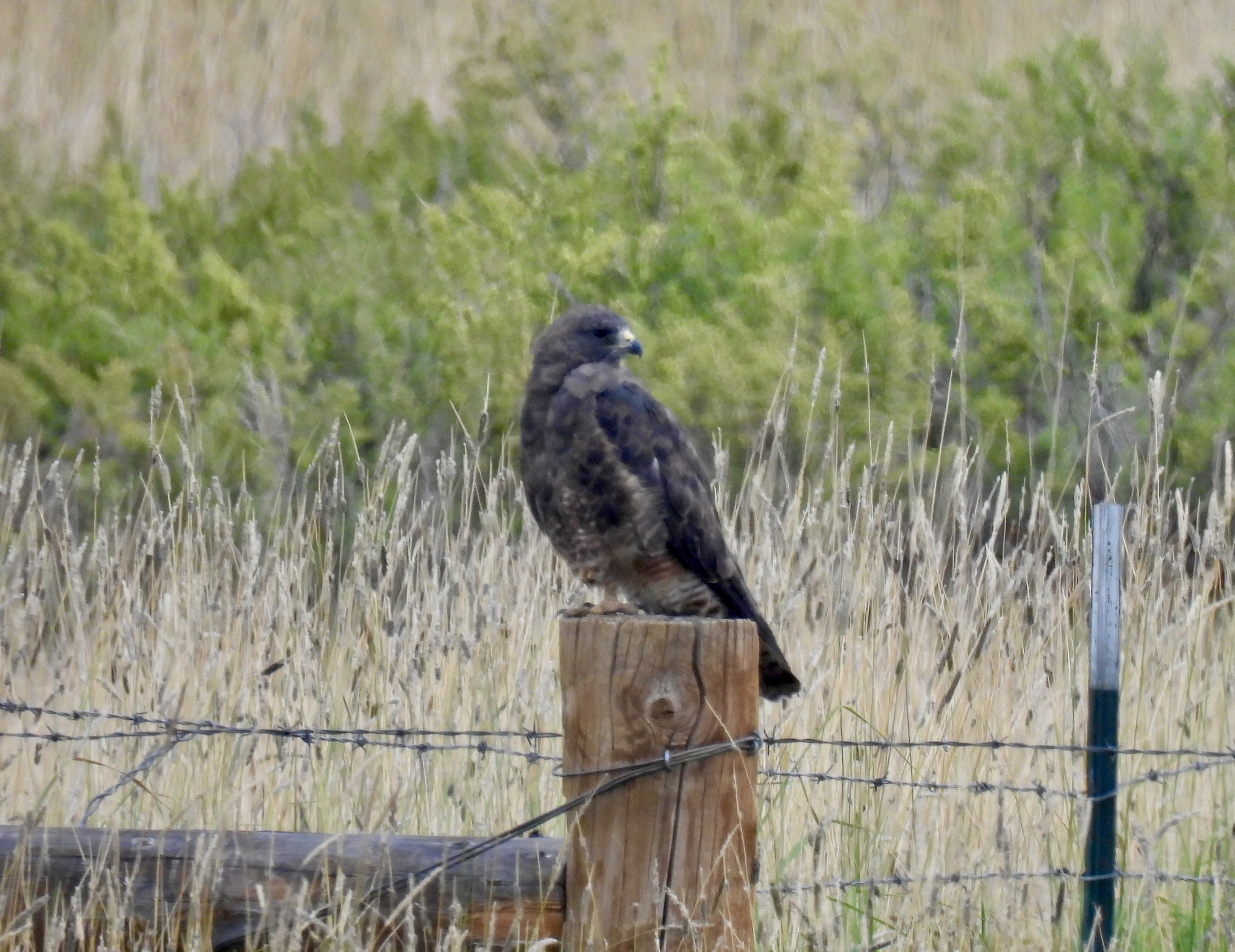
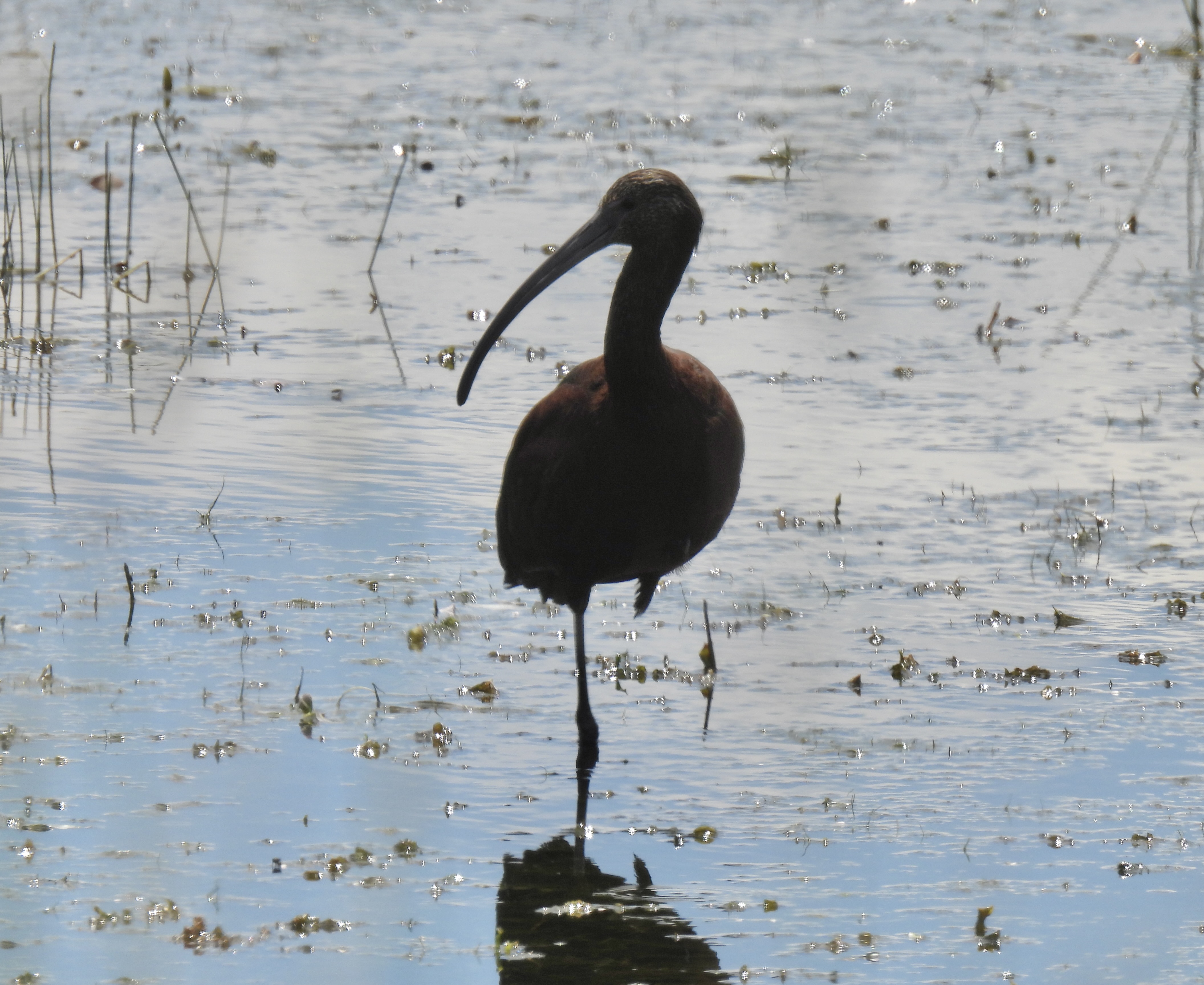
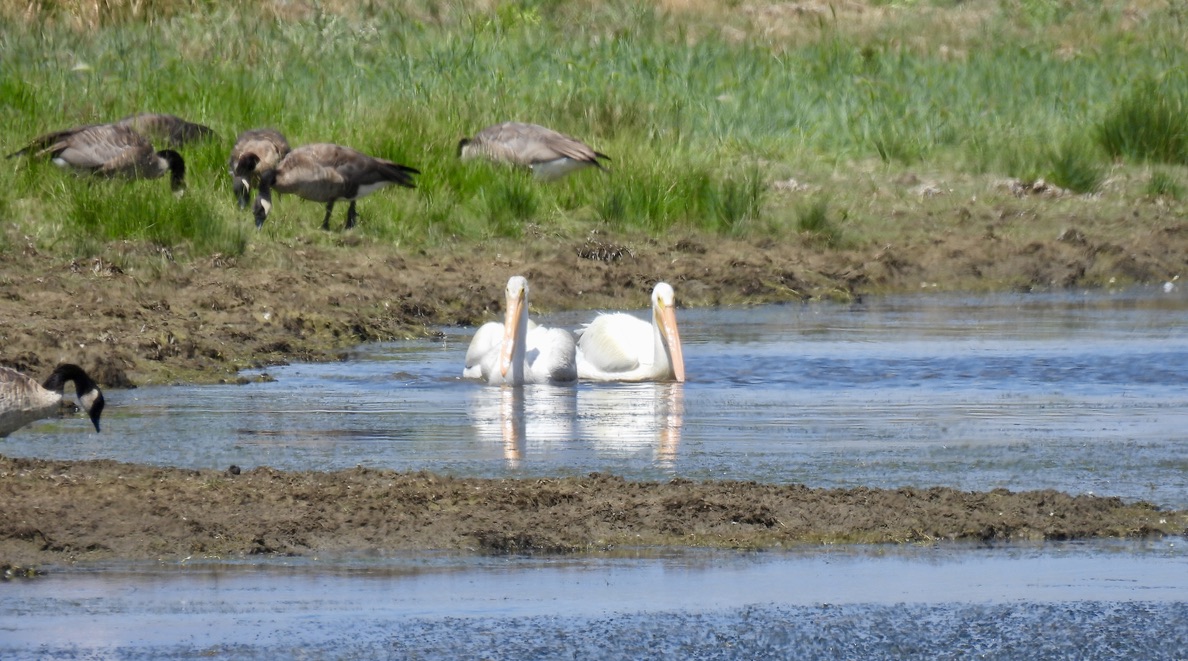
Among the birds I saw were American White Pelicans, American Avocets, White-faced Ibis, Long-billed Dowitchers, Gadwalls, Greater Yellowlegs, Canada Geese, Pied-billed Grebes, Northern Shovelers, Great Blue Herons, and a Swainson’s Hawk.
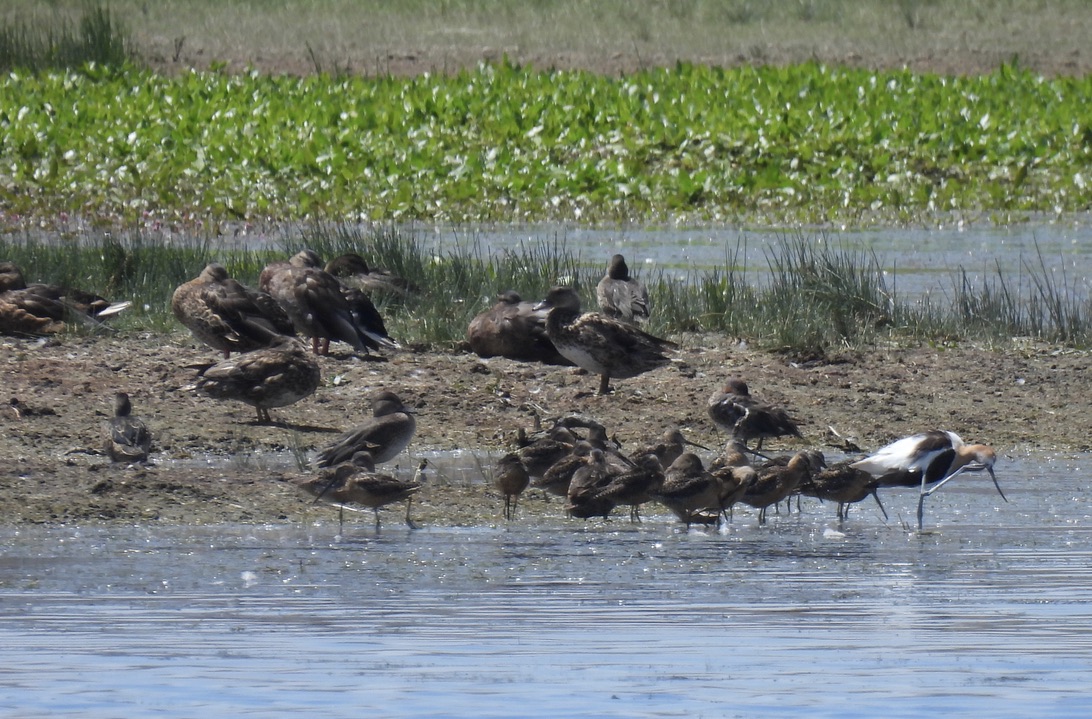
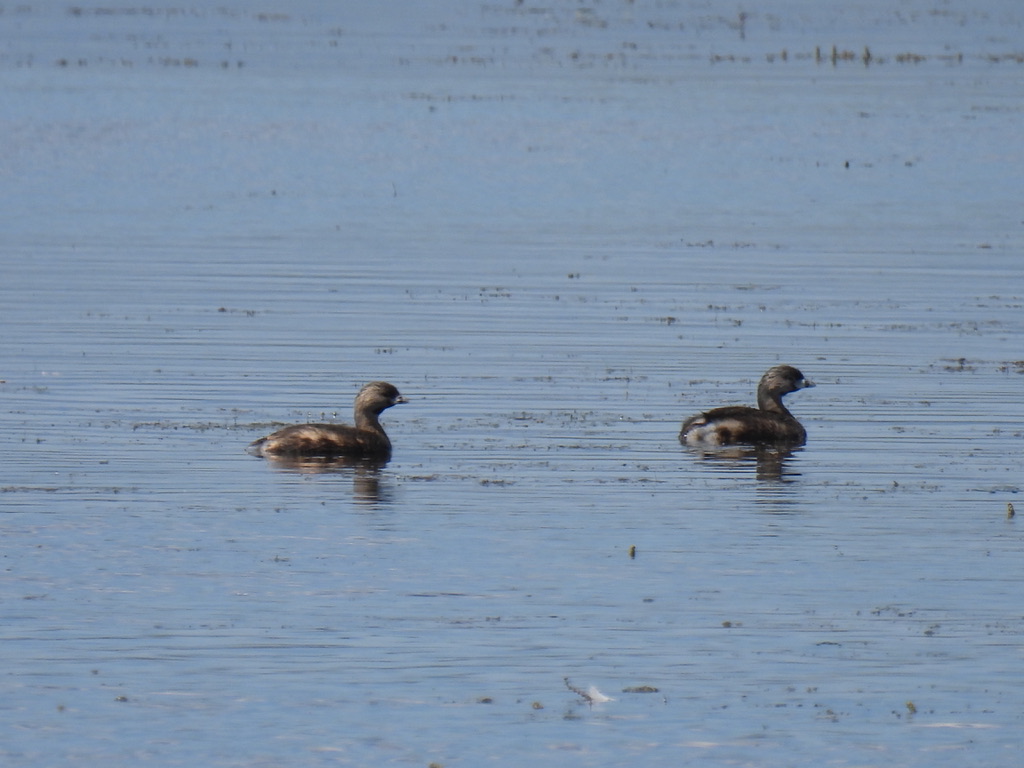
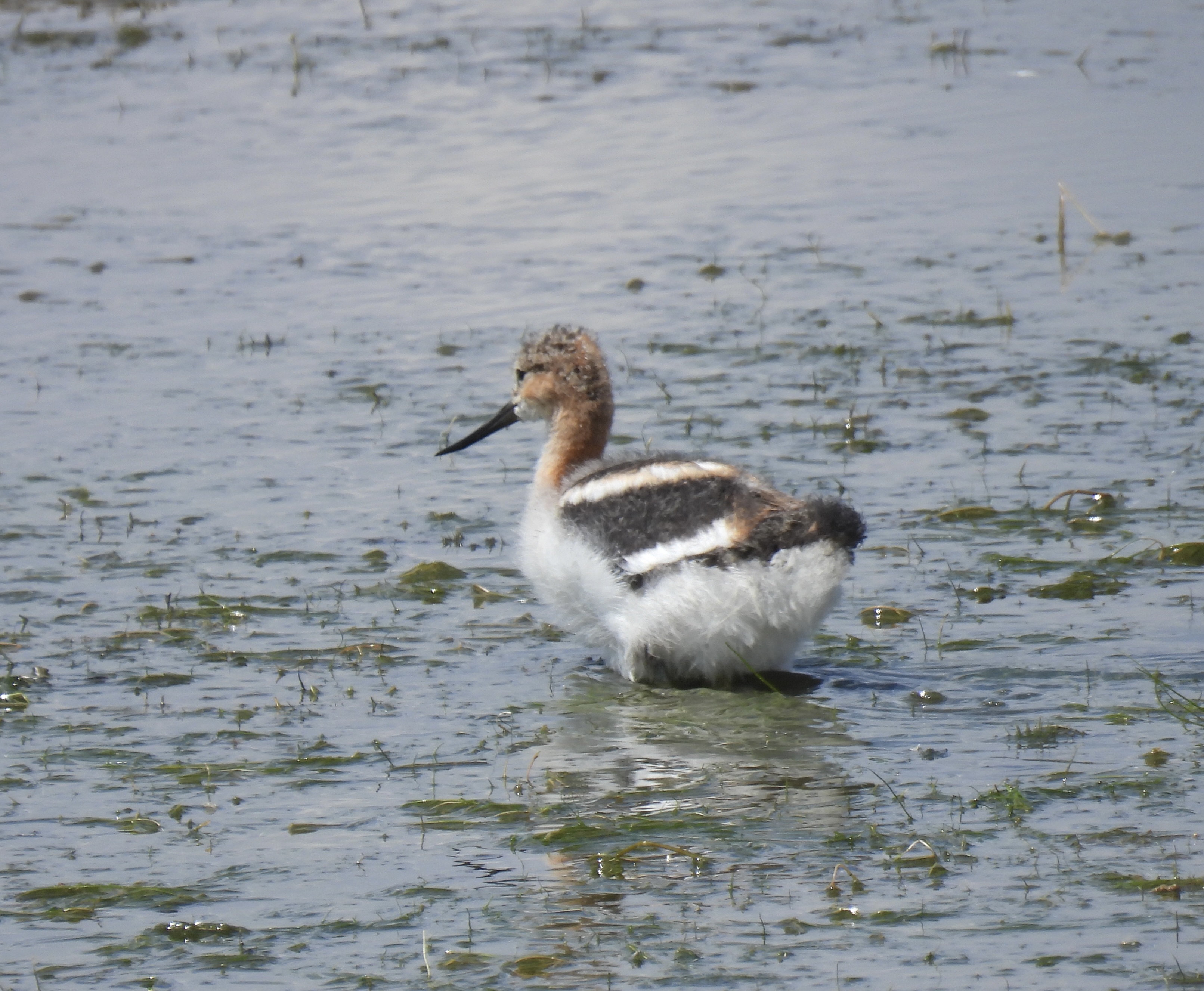
Top Row: Gadwalls, Mallards, American Avocets & Long-billed Dowitchers (left), Pied-billed Grebes (top right), and juvenile American Avocet (bottom right)
Bottom Row: Swainson’s Hawk (left), White-faced Ibis (center), and American White Pelicans (right)
Arapaho National Wildlife Refuge was well worth the detour, but it was now time for us to get back on track and head up Colorado Route 14 toward Fort Collins. About fifteen minutes after leaving the refuge and passing by the town of Walden, we had driven out of the North Park basin and into the subalpine forests of State Forest State Park, our next stop on our itinerary.
This particular state park is one of the most reliable spots on Earth to see wild Moose, the primary reason we stopped there. Moose are, interestingly enough, not actually native to Colorado, but were introduced by hunters in 1978. The population has since exploded to more than 3,000 animals, which invariably has put a lot of strain on the local ecosystems to support such physically large invaders.
We didn’t see any Moose that day—it was too early in the afternoon—but it was still fun to watch Broad-tailed & Rufous Hummingbirds fight amongst themselves for a spot at the hummingbird feeder outside the Moose Visitor Center. There were also Dark-eyed Juncos, Pine Siskins, and Cassin’s Finches at the regular bird feeders nearby.
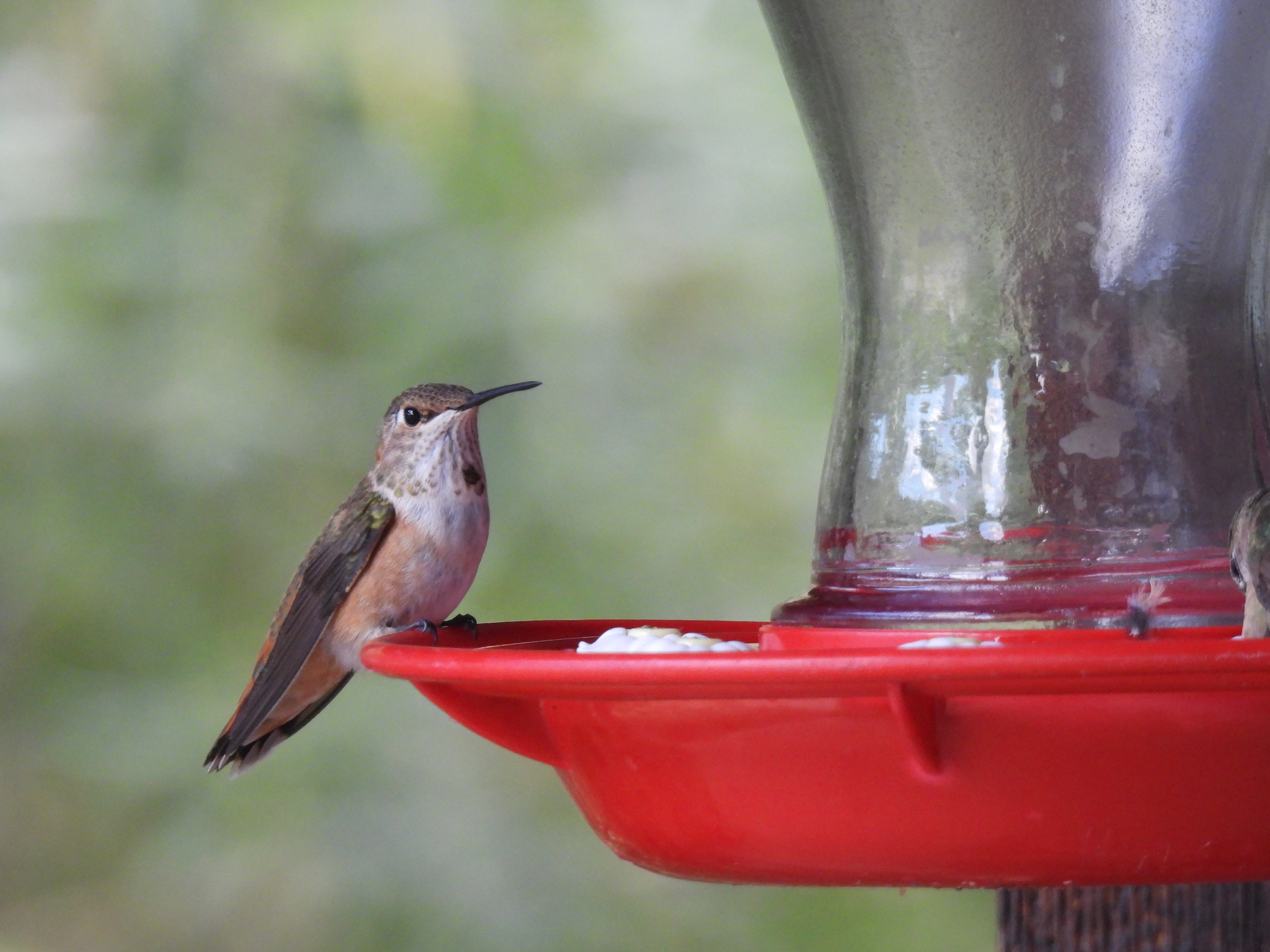
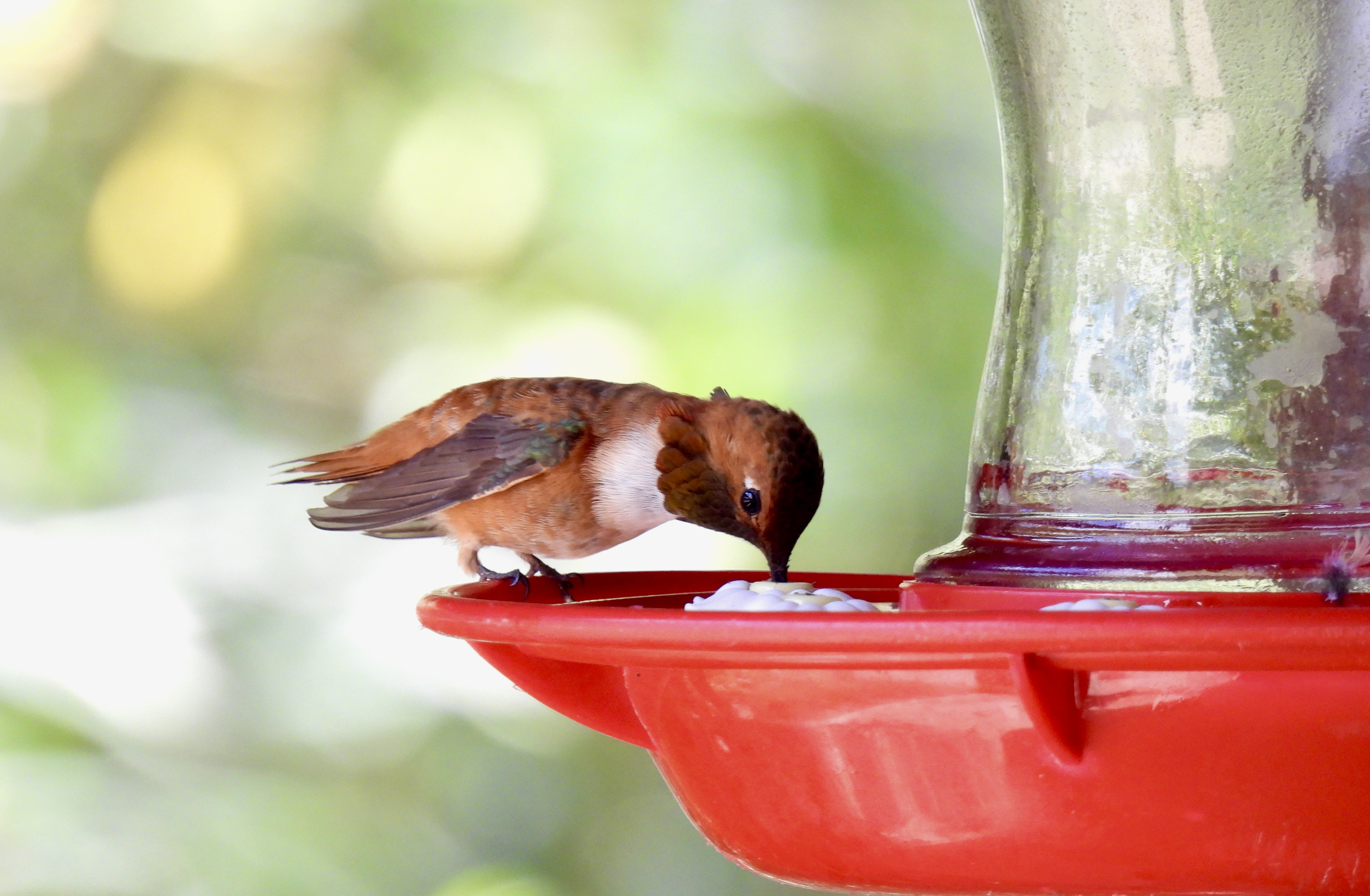
Broad-tailed Hummingbird (left) & Rufous Hummingbird (right)

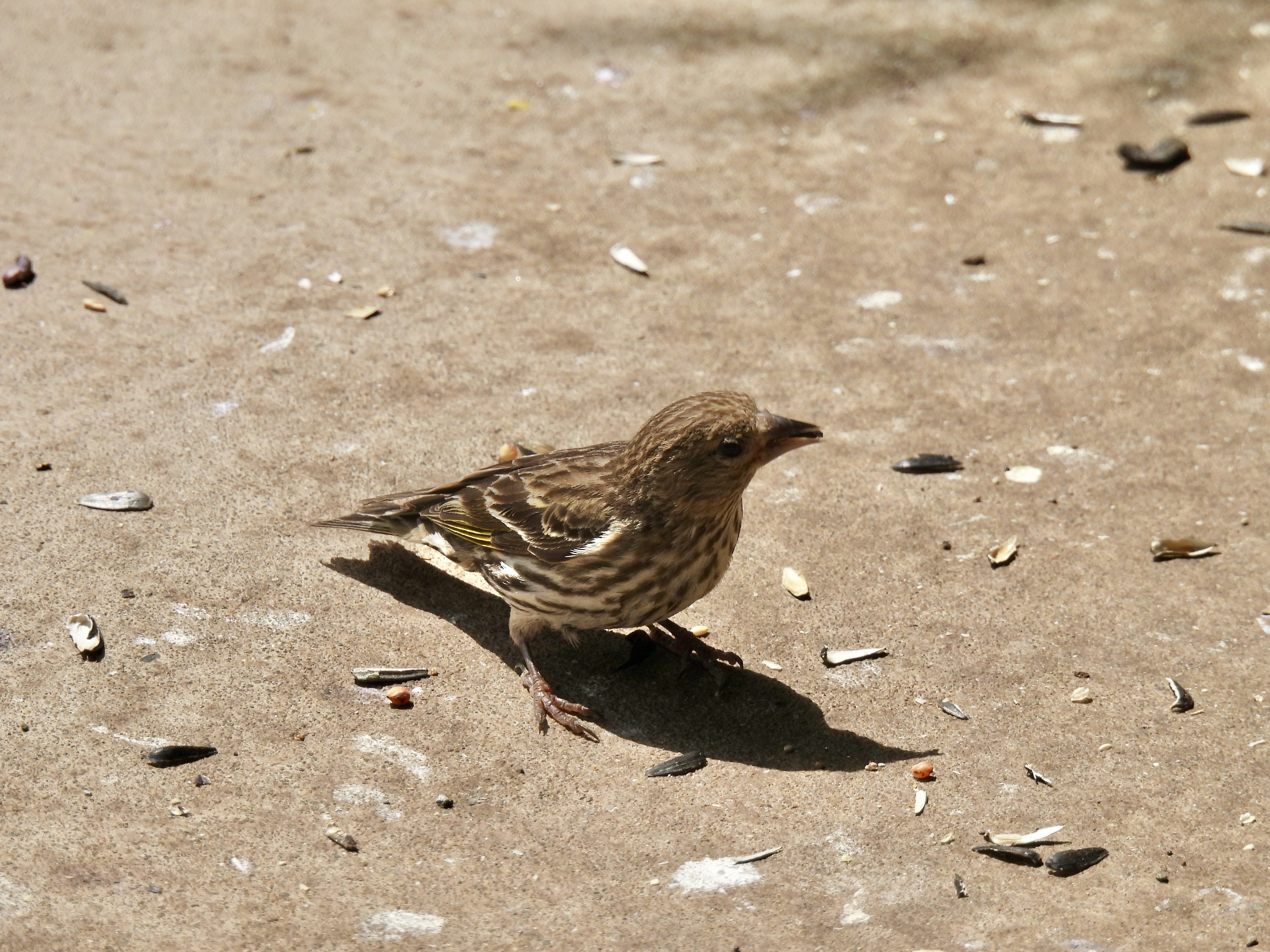
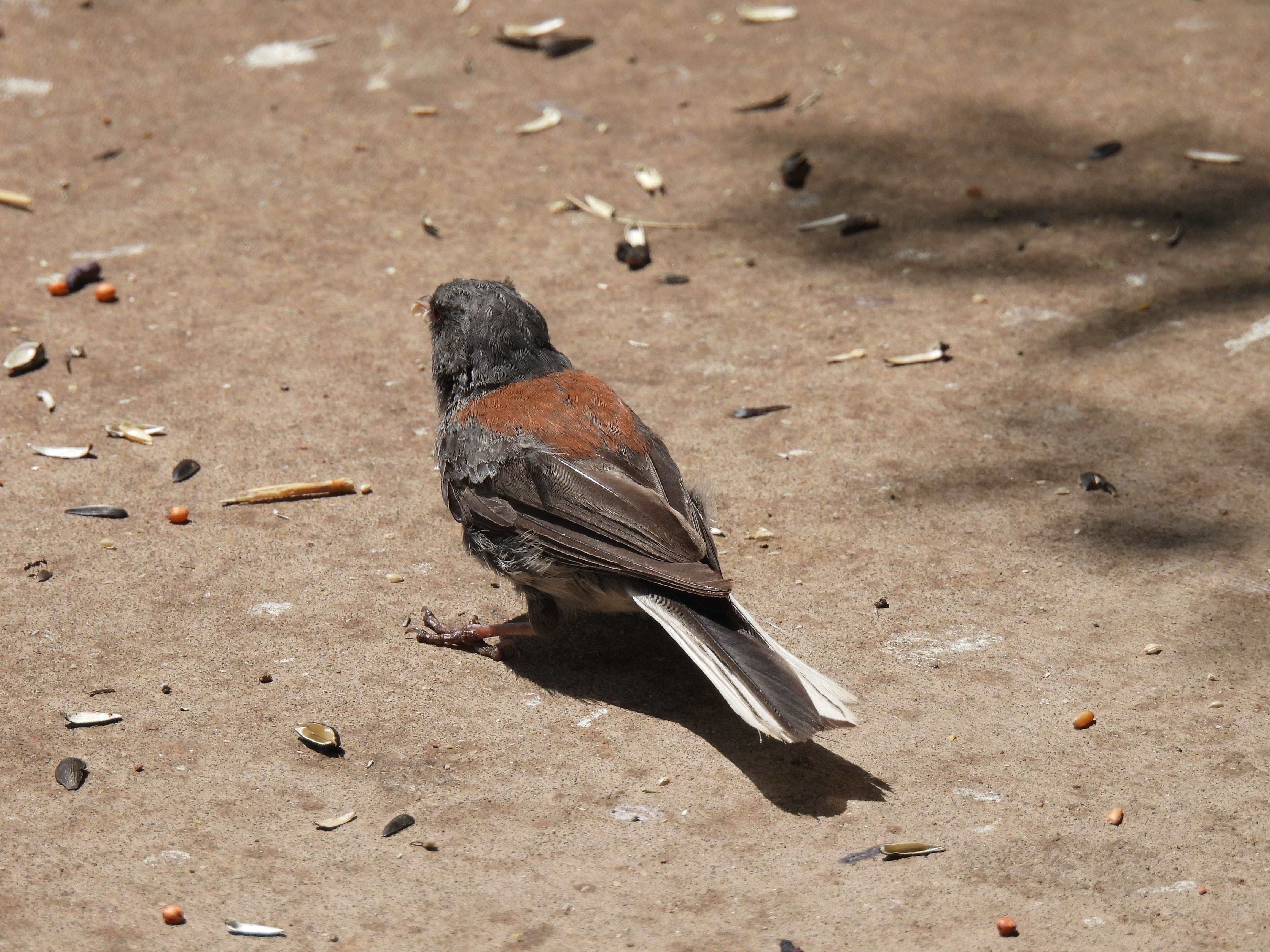
Cassin’s Finch (left), Pine Siskin (top right) & Dark-eyed Junco (bottom right)
We proceeded to drive through the scenic Cache la Poudre Canyon along Colorado Route 14, which got quite narrow and steep-sided in places.
In the late afternoon, we arrived at our accommodation in Fort Collins. We’d chosen to stay in Fort Collins as we were planning to do a tour of Colorado State University (CSU) the next morning, but after seeing the campus myself that afternoon and reading more about the college online, I decided to rule CSU out as a choice of university and cancelled my tour. In my eyes though, the beautiful drive over to Fort Collins made it worth it to stay the night there after all.
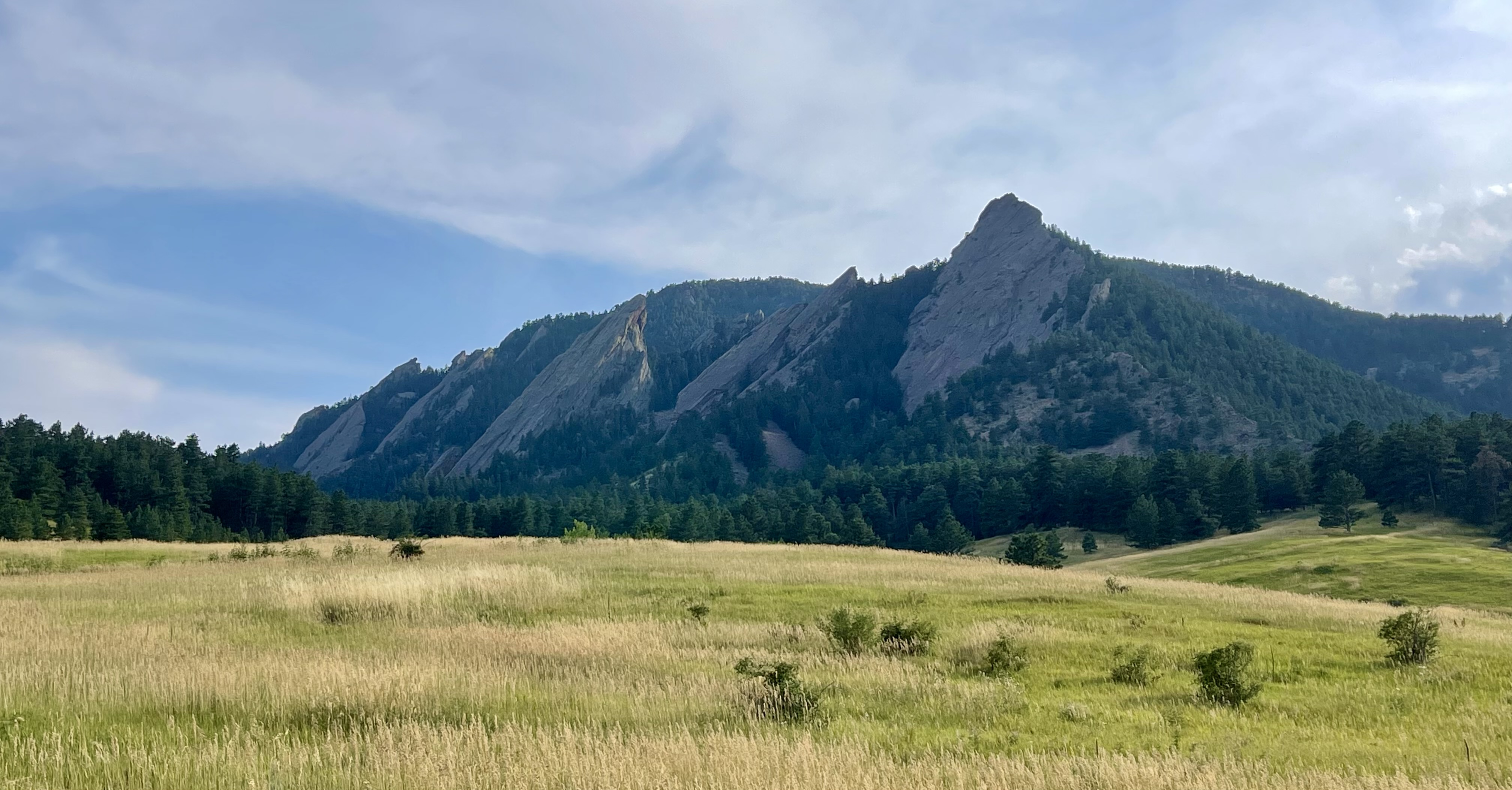
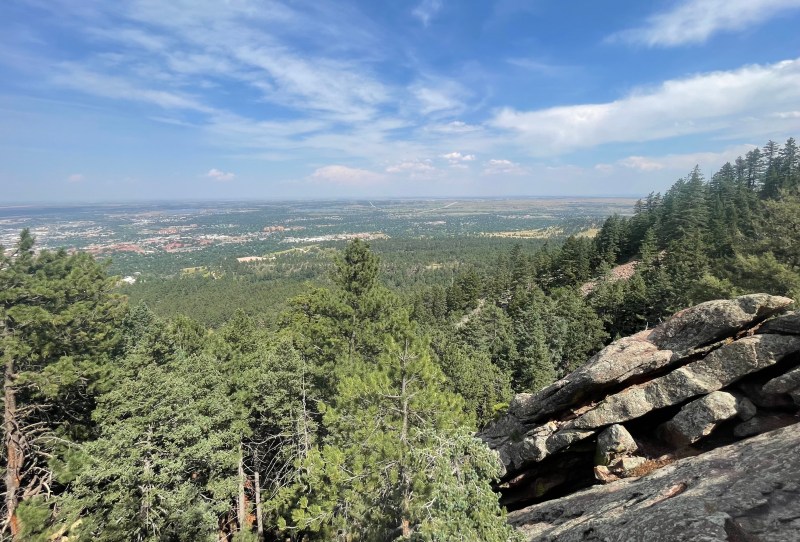
My mom and I got up early the next morning (the 4th of August), and drove to Boulder, where we spent our final night in Colorado. My mom and I split up for the day—I went off to hike to Flatirons, while she went shopping at Pearl Street Mall.
The Flatirons ended up being kind of brutal in the hot weather that day, which was surprising to me given how comparatively easy it was to hike Mount Flora at a higher elevation. It was still a great hike, with beautiful views.
The next morning, my mom and I were off the airport in Denver for our flight back to JFK, New York and then Singapore. Both of us agreed that we had a superb six days exploring the many natural wonders of the Centennial State. In total, I amassed 47 bird and 18 mammal species across different part of Colorado, including lifelong North American target species like Pronghorn, American Pika, and Rocky Mountain Elk.
To conclude, I am extremely grateful to have had the chance to thoroughly scope out Colorado and CU Boulder, and decide whether the university and the state itself will be a good fit for me. While I am hesitant to speak too soon, especially after the bad experience I had in Australia, it seems like CU Boulder is a promising university option for me in the near-future. I also really liked Colorado, and found it appealing to nearly all my passions and interests.
As I said before, I’m not going to rush into any decisions before I fully weigh out the pros and cons, but I am excited to have the option of moving to, and attending school in Colorado. The nature here is simply outstanding!
Anyway, thank you for reading as always—and stay wild.
-Bennett
Colorado Mammals: (Lifers bolded)
| Common Name: | Scientific Name: |
| 1. Pronghorn | Antilocapra americana |
| 2. American Pika | Ochotona princeps |
| 3. Long-tailed Weasel | Mustela frenata |
| 4. Rocky Mountain Elk | Cervus canadensis nelsoni |
| 5. Black-tailed Prairie Dog | Cynomys ludovicianus |
| 6. White-tailed Prairie Dog | Cynomys leucurus |
| 7. Wyoming Ground Squirrel | Urocitellus elegans |
| 8. Least Chipmunk | Neotamias minimus |
| 9. Plains Bison* | Bison bison bison |
| 10. Eastern Fox Squirrel** | Sciurus niger |
| 11. Yellow-bellied Marmot | Marmota flaviventris |
| 12. Coyote | Canis latrans |
| 13. Rocky Mountain Mule Deer | Odocoileus hemionus hemionus |
| 14. Uinta Chipmunk | Neotamias umbrinus |
| 15. Desert Cottontail | Sylvilagus audubonii |
| 16. American Red Squirrel | Tamiasciurus hudsonicus |
| 17. Moose | Alces alces |
| 18. Golden-mantled Ground Squirrel | Callospermophilus lateralis |
*New species for me, and native to Colorado, however bison are considered only semi-wild there (fenced-in conservation herds), and I only add fully wild species to my life list
**New species for me, found in wild populations across eastern Colorado, however these populations are non-native, and I don’t include introduced species in my life list
Colorado Birds: (Lifers bolded)
| Common Name: | Scientific Name: |
| 1. American Kestrel | Falco sparverius |
| 2. Swainson’s Hawk | Buteo swainsoni |
| 3. Lark Bunting | Calamospiza melanocorys |
| 4. Rufous Hummingbird | Selasphorus rufus |
| 5. Broad-tailed Hummingbird | Selasphorus platycercus |
| 6. Horned Lark | Eremophila alpestris |
| 7. Mountain Chickadee | Poecile gambeli |
| 8. American Pipit | Anthus rubescens |
| 9. Canada Jay | Perisoreus canadensis capitalis |
| 10. Vesper Sparrow | Pooecetes gramineus |
| 11. Dark-eyed Junco | Junco hyemalis |
| 12. Cassin’s Finch | Haemorhous cassinii |
| 13. Pine Siskin | Spinus pinus |
| 14. Dusky Flycatcher | Empidonax oberholseri |
| 15. American Avocet | Recurvirostra americana |
| 16. White-faced Ibis | Plegadis chihi |
| 17. Long-billed Dowitcher | Limnodromus scolopaceus |
| 18. Greater Yellowlegs | Tringa melanoleuca |
| 19. Gadwall | Mareca strepera |
| 20. White-crowned Sparrow | Zonotrichia leucophrys |
| 21. Violet-green Swallow | Tachycineta thalassina |
| 22. Northern Flicker | Colaptes auratus |
| 23. Western Kingbird | Tyrannus verticalis |
| 24. American White Pelican | Pelecanus erythrorhynchos |
| 25. Western Tanager | Piranga ludoviciana |
| 26. Mountain Bluebird | Sialia currucoides |
| 27. Turkey Vulture | Cathartes aura |
| 28. Wild Turkey | Meleagris gallopavo |
| 29. White-breasted Nuthatch | Sitta carolinensis |
| 30. Common Raven | Corvus corax |
| 31. American Crow | Corvus brachyrhynchos |
| 32. Canada Goose | Branta canadensis |
| 33. American Robin | Turdus migratorius |
| 34. Red-winged Blackbird | Agelaius phoeniceus |
| 35. Great Blue Heron | Ardea herodias |
| 36. Mourning Dove | Zenaida macroura |
| 37. Downy Woodpecker | Dryobates pubescens |
| 38. Mallard | Anas platyrhynchos |
| 39. Rock Pigeon | Columba livia |
| 40. Northern Shoveler | Spatula clypeata |
| 41. Pied-billed Grebe | Podilymbus podiceps |
| 42. Black-billed Magpie | Pica hudsonia |
| 43. European Starling | Sturnus vulgaris |
| 44. Ruby-crowned Kinglet | Corthylio calendula |
| 45. House Sparrow | Passer domesticus |
| 46. Spotted Towhee | Pipilo maculatus |

 Bennett Gardner Wildlife Watching
Leave a comment