
2025 was a rough year for me— a roller coaster of ups and downs that rocked me to my core. After leaving the University of Queensland in late April and scrapping my former dream of becoming a zoologist in Australia, it took me awhile to get back on my feet and feel confident in myself and my future again. During this period, I was less motivated to pursue my passion for nature and the outdoors.
This belated blog post is a recount of a six-day trip I took with my mother to Geelong in Victoria, Australia in December of 2024. She was at a work conference and invited me to tag along in order to explore the country I was planning on moving to for university. With all that happened last year, I honestly forgot I even went on this trip. But after looking through my old photos recently, I felt I should recap my first ever excursion to Australia and the continent of Oceania. So here goes….
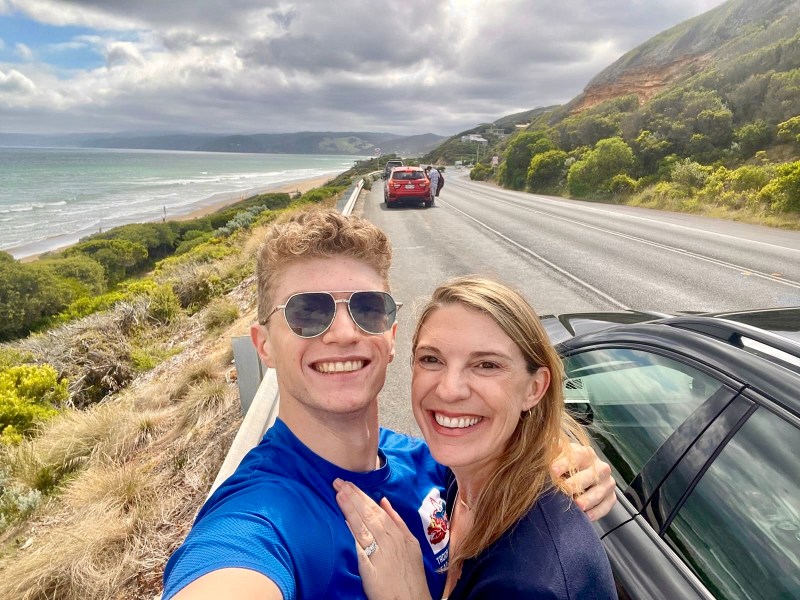
We began our trip to Australia on December 6th, 2024 after a redeye flight from Singapore to Melbourne on Qantas Airlines (my new least favorite airline). We picked up our rental car at the airport, grabbed a quick lunch in the town of Werribee and began the hourlong drive to Geelong where my mom’s work conference was located.
We had to meet my mom’s colleague for dinner starting around 4pm, but I convinced her to stop at You Yangs Regional Park just outside Geelong for a quick hike. The You Yangs are a very low, granite mountain range that rises abruptly from the surrounding flat plains. The mountain range is carpeted in dry, temperate Eucalyptus forest that is home to Koalas, wallabies, echidnas and 200 bird species—very tempting for the odd wildlife enthusiast like myself.
It was overcast and about to rain when we began our short hike in the You Yangs, and wildlife activity was rather low. That didn’t curb my enthusiasm. It was exciting to step foot in the wildlands of my sixth and newest continent. Australia is loaded with endemic species and with 80% of its plants and vertebrates found nowhere else, it was only a matter of time before I spotted a lifer bird or mammal.
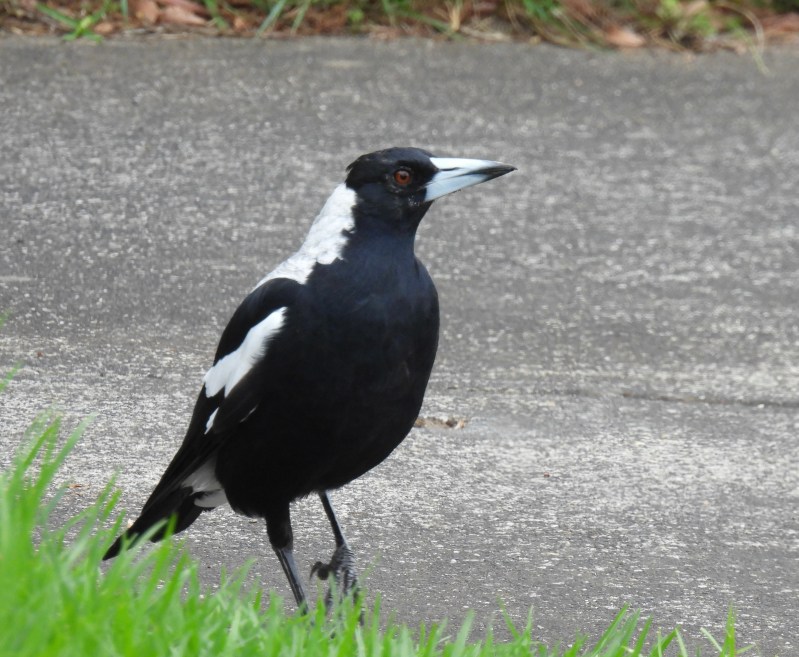
The first animals to greet me were noisy, brazen Australian Magpies— notorious in Australia for their aggression toward humans during the nesting season. I find Aussie magpies quite interesting due to their striking pied appearance and bold, intelligent nature.
We continued along the trail into a Eucalypt woodland, where the crisp, fragrant scent of Eucalyptus was overpowering.
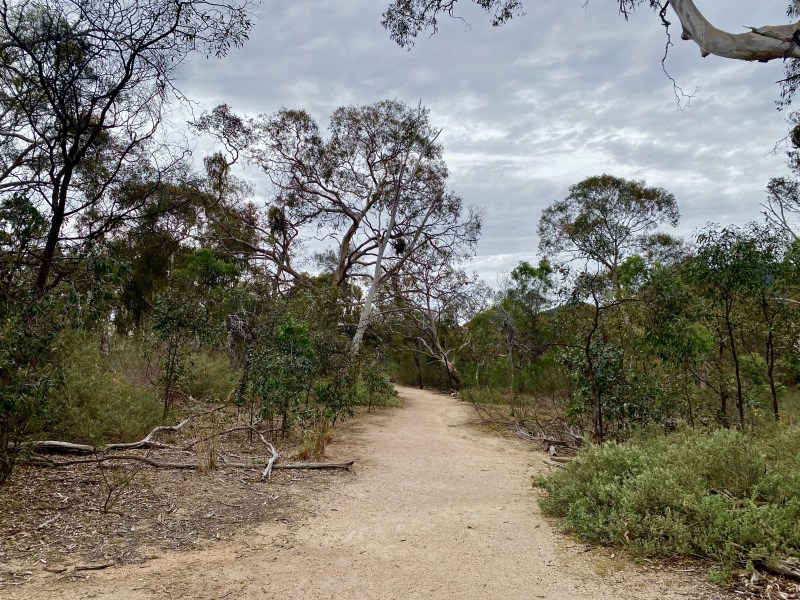
Apart from the magpies, few creatures stirred in the ominous weather conditions. I scanned the trees for birds and Koalas, and the forest floor for macropods and echidnas but none were to be found.
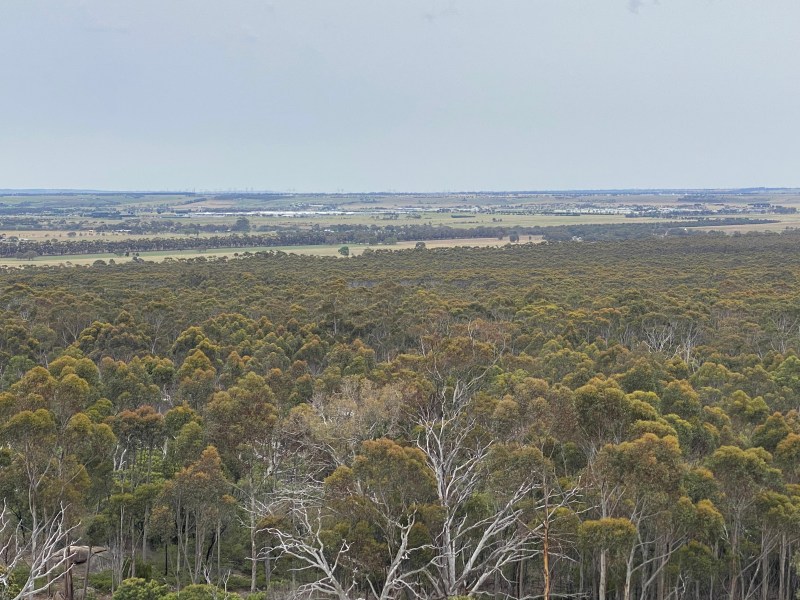
My mom and I hiked up to Big Rock Viewing Area, which overlooked part of the forest and nearby agricultural land. After several minutes at the viewing area, it began to rain and my mom was antsy to get back to the car, so we started walking back. Along the way I spotted some distant Sulphur-crested Cockatoos and Galahs.
As we neared the parking lot, I stumbled upon several Black-scaped Bull Ants (Myrmecia nigriscapa) defending the entrances to their nests along the trail. Even though this wasn’t a lifer bird or mammal, I was still genuinely excited to encounter ants of the genus Myrmecia in their native range. That excitement came from the fact that Myrmecia ants are veritable living fossils—among the most primitive ants on Earth—as well as being exceptionally large, highly distinctive, and notoriously aggressive. Essentially, they’re the Tyrannosaurus rex of modern ants.
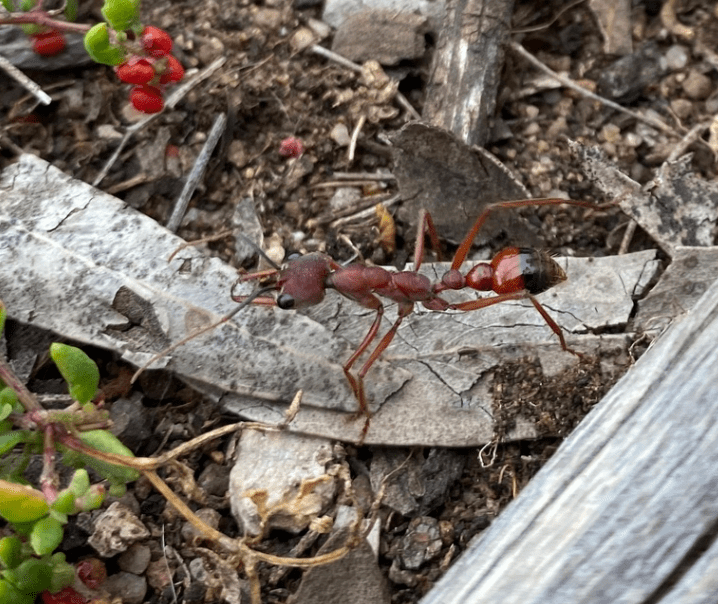
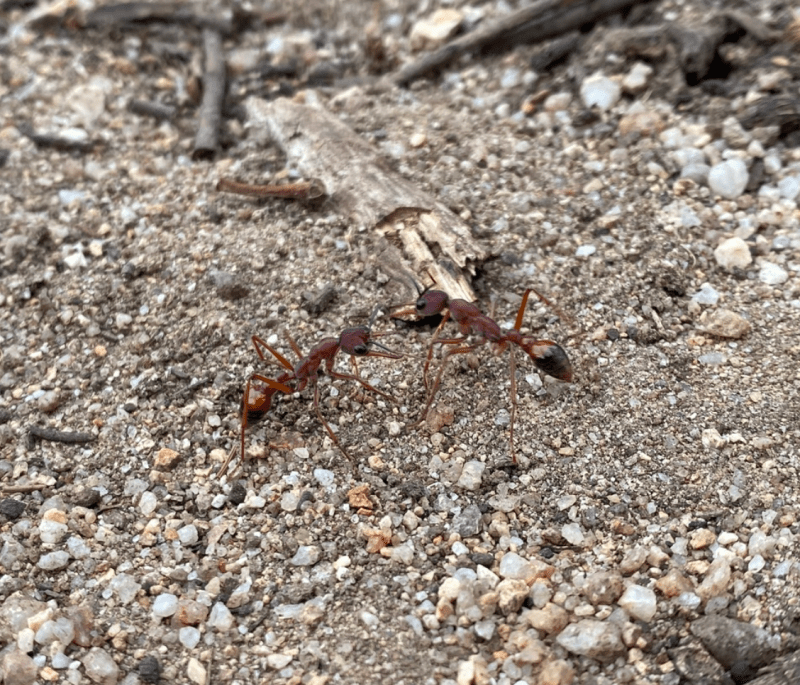
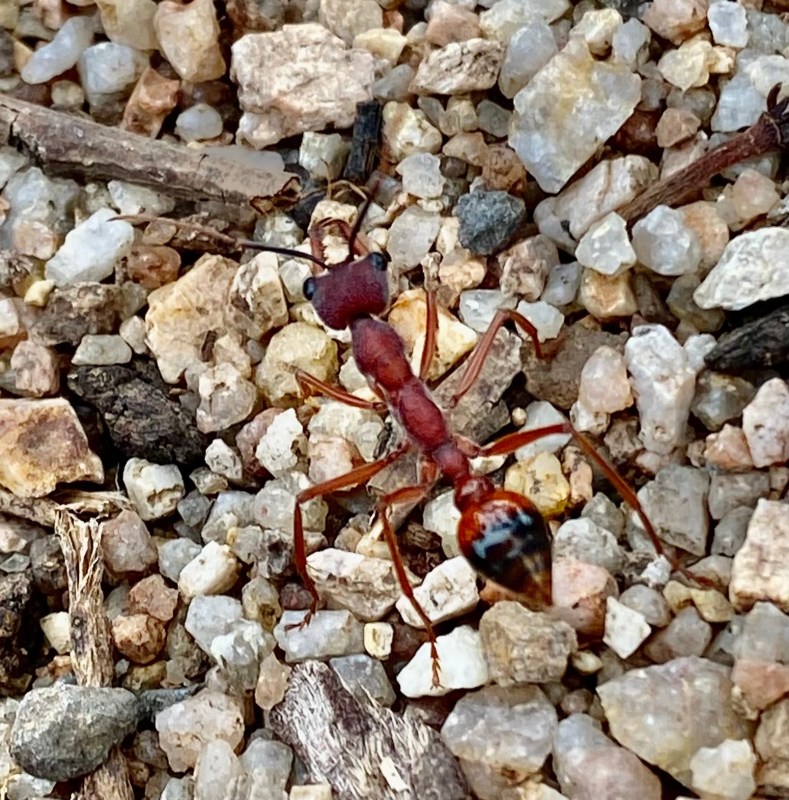
Black-scaped Bull Ants (Myrmecia nigriscapa)
Shortly after finishing our hike, my mom and I drove to Geelong where we met with her colleague for dinner.
Afterwards, we drove to our AirBnb, which was situated on a hill above the Barwon River (the principal river of Geelong). The location was quite beautiful, and provided easy access to local green spaces & parks in the area that were filled with native birds and mammals during my visit.
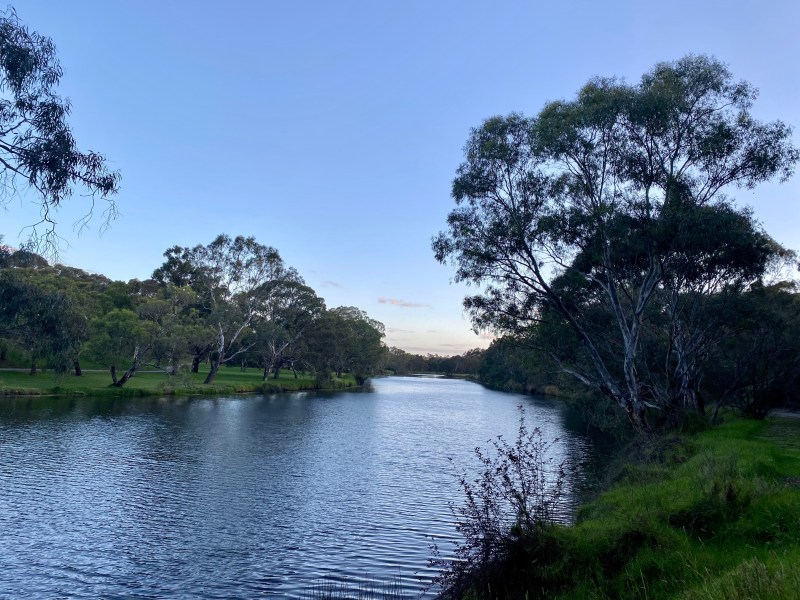
The next morning (December 7th), my mom worked while I went birding at Balyang Sanctuary in the city center. I was impressed with the abundance of birdlife in this lush city park—in just thirty minutes I spotted numerous Silver Gulls, Australasian Darters, Sulphur-crested Cockatoos, Australasian Swamphens, Eurasian Coots, Pacific Black Ducks, Willy Wagtails, Dusky Moorhens, Magpie-Larks, Red Wattlebirds, and Crested Pigeons.
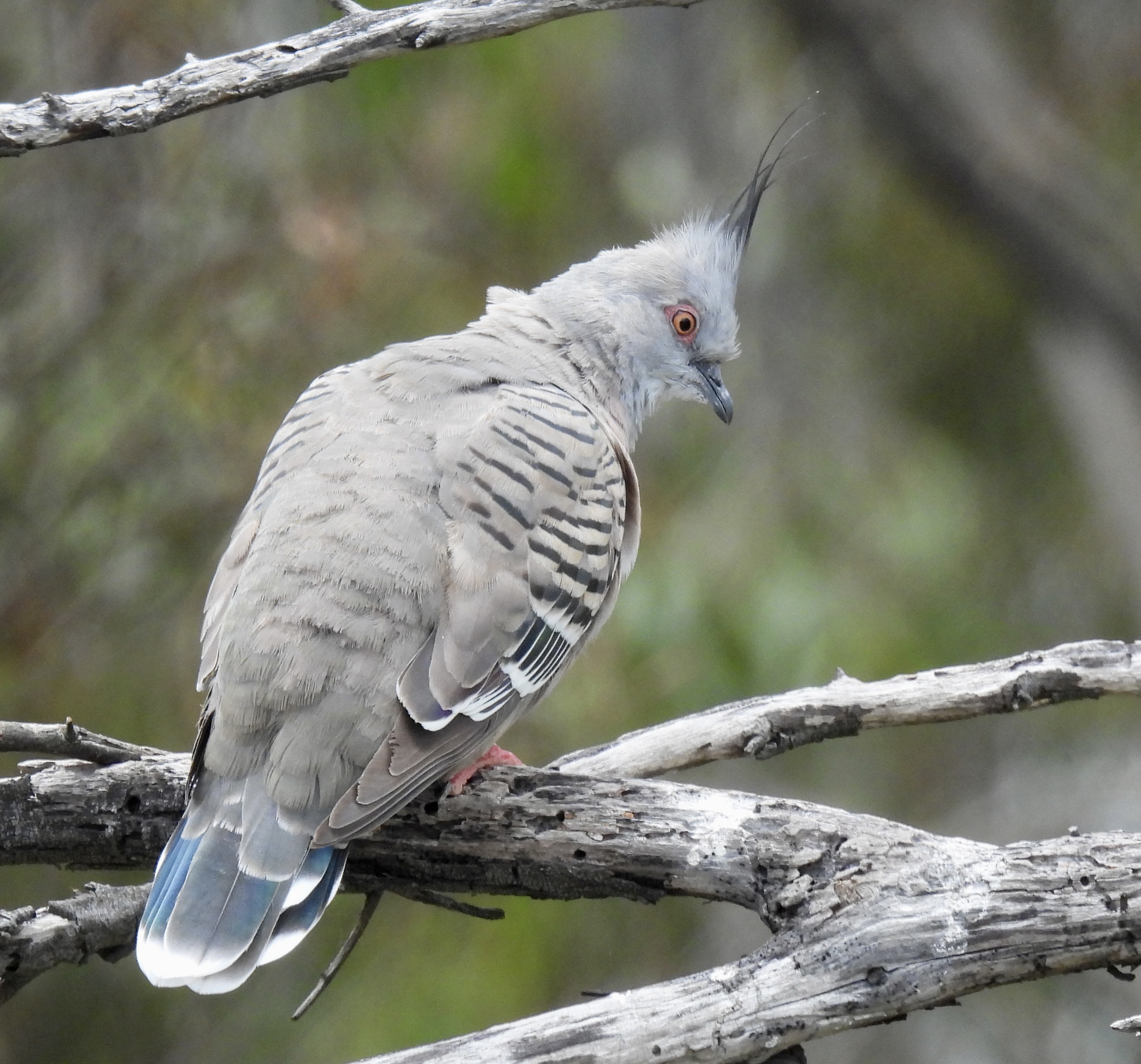
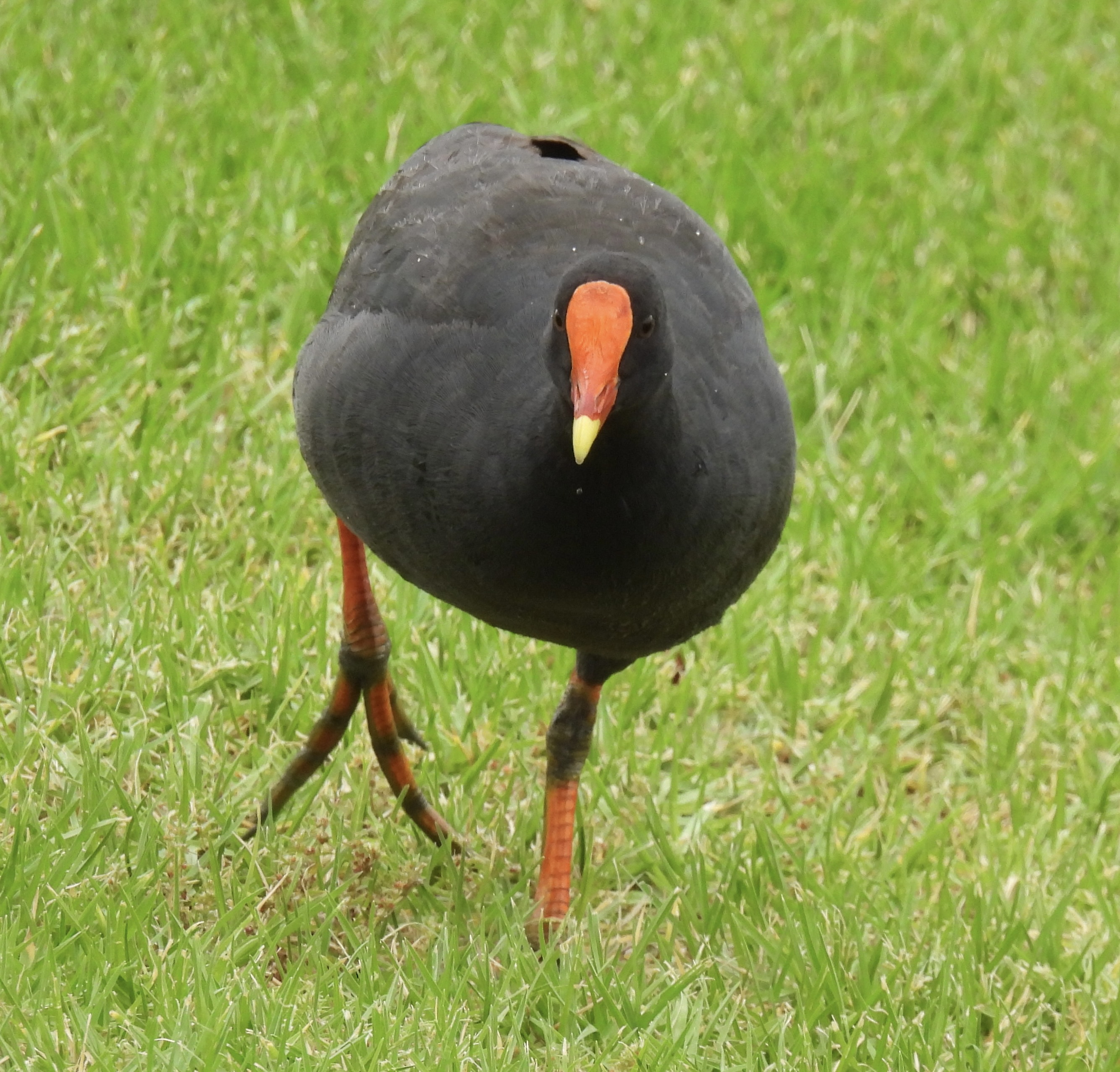
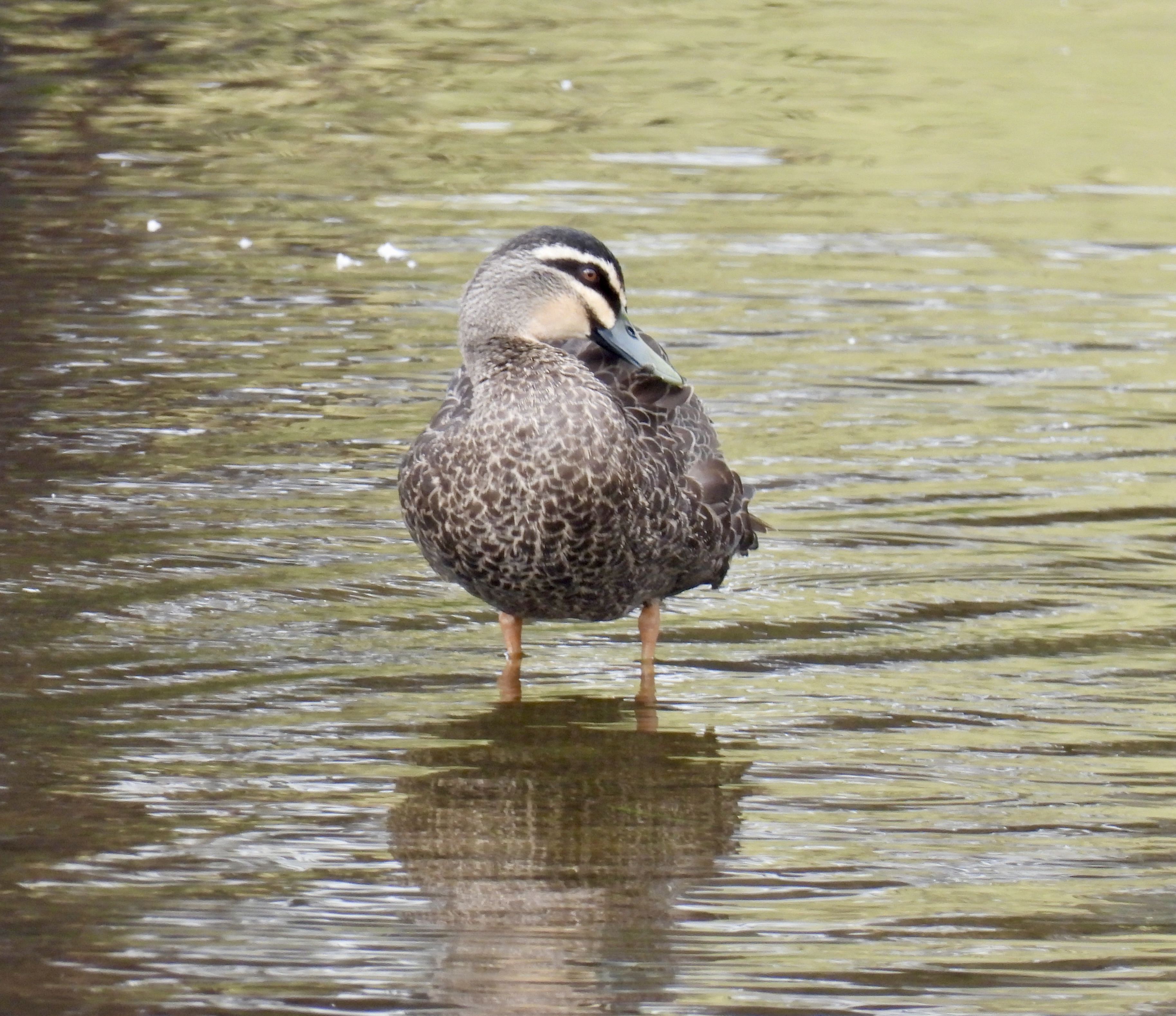
Crested Pigeon (left), Dusky Moorhen (top right), and Pacific Black Duck (bottom right)
That afternoon, my mom and I decided—on the recommendation of her colleague—to take a drive down the world-famous Great Ocean Road, from the coastal town of Anglesea south to Maits Rest in Great Otway National Park. This route traverses some of the most rugged and beautiful coastline on the Australian mainland. We made quite a few stops along the way, both for photos of the scenery and for wildlife viewing.
Our first stop along Great Ocean Road was Anglesea Golf Club, about a 40-minute drive from Geelong in the coastal town of Anglesea. Surprisingly enough, this unassuming golf course is one of the most reliable and accessible places to see wild kangaroos (specifically Eastern Gray Kangaroos) in Australia. The golf club offers kangaroo tours every 30 minutes between 11am and 3pm on weekdays, but we opted to look for the kangaroos ourselves along the road skirting the golf course.
It didn’t take us long to spot our first mob of adult female Eastern Gray Kangaroos and their young grazing out on the fairway.
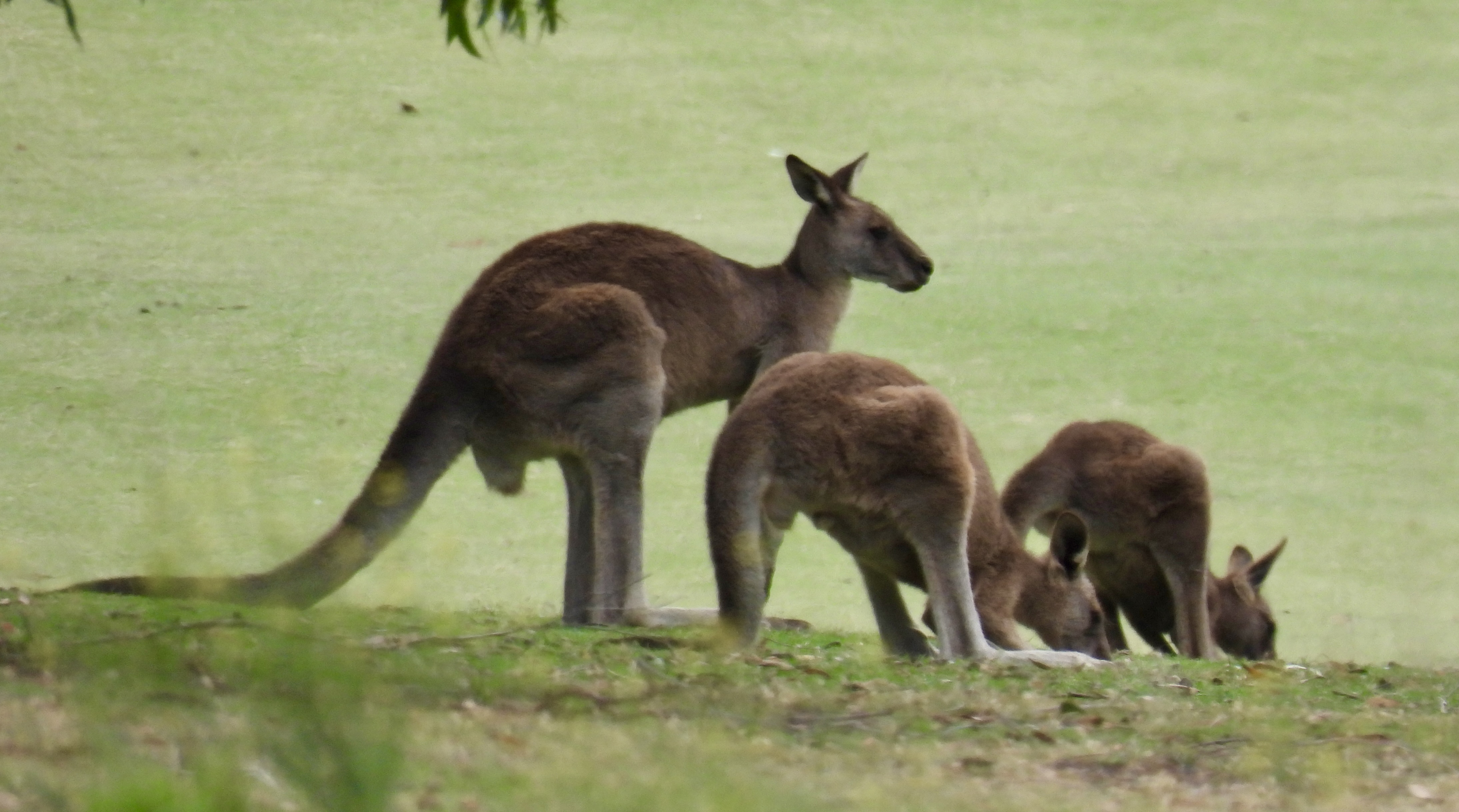
Though the kangaroos were quite a distance away from us (at least 50m or 165ft), it was cool to observe these iconic Australian mammals in the wild for the very first time.
After several minutes of watching the first group of roos, we drove to the clubhouse at the center of the golf course for more kangaroo viewing. Since access to the course is restricted to golfers and those on guided kangaroo tours, my mom and I remained near the parking lot, where we still had a good view of the fairways and their furry denizens.
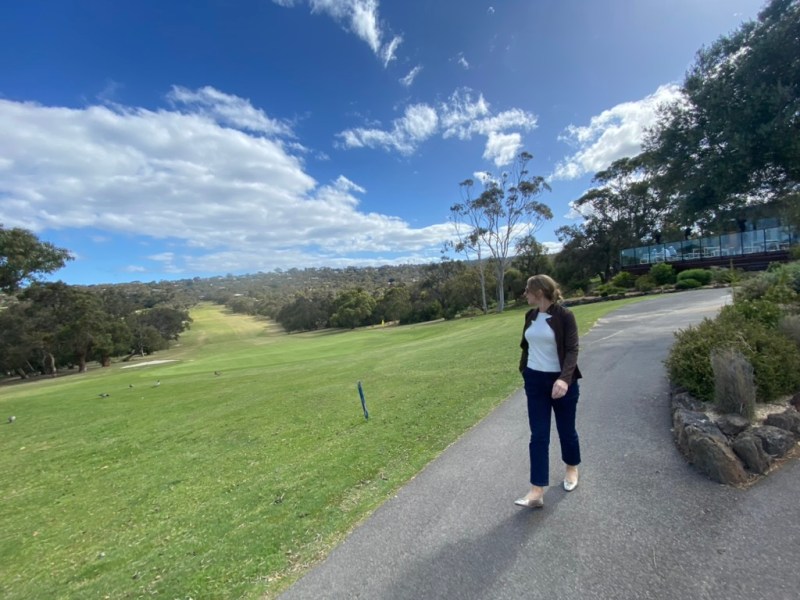
We spotted our second batch of roos from the parking lot, this time about twenty meters closer. Like the first mob, they were grazing on the succulent green grasses carpeting the fairway, which made them easy to photograph. The kangaroos were accompanied by goose-like Australian Wood Ducks.
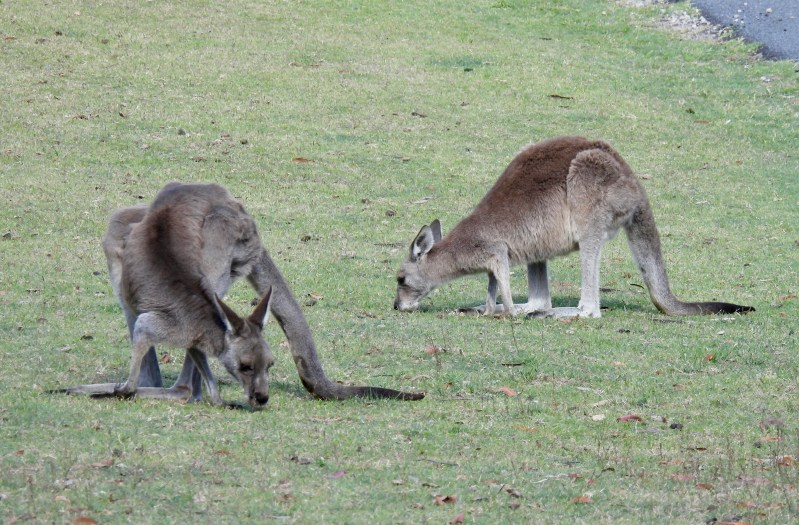
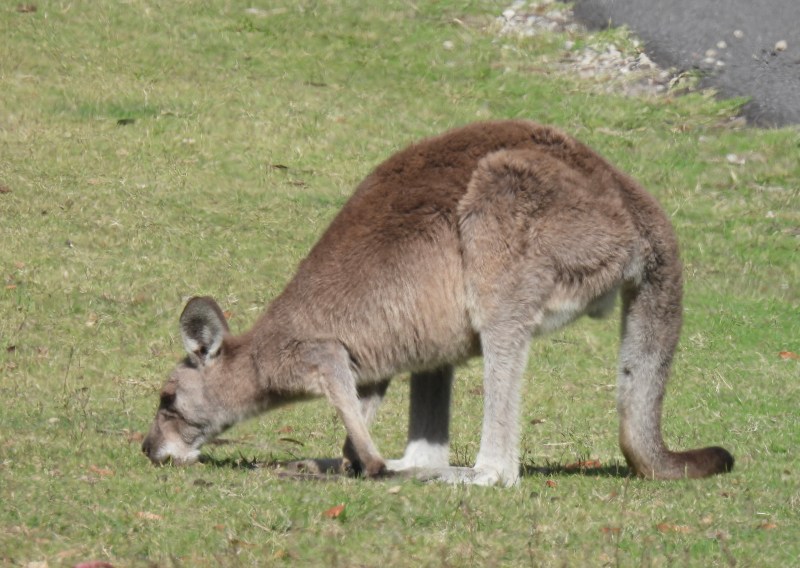
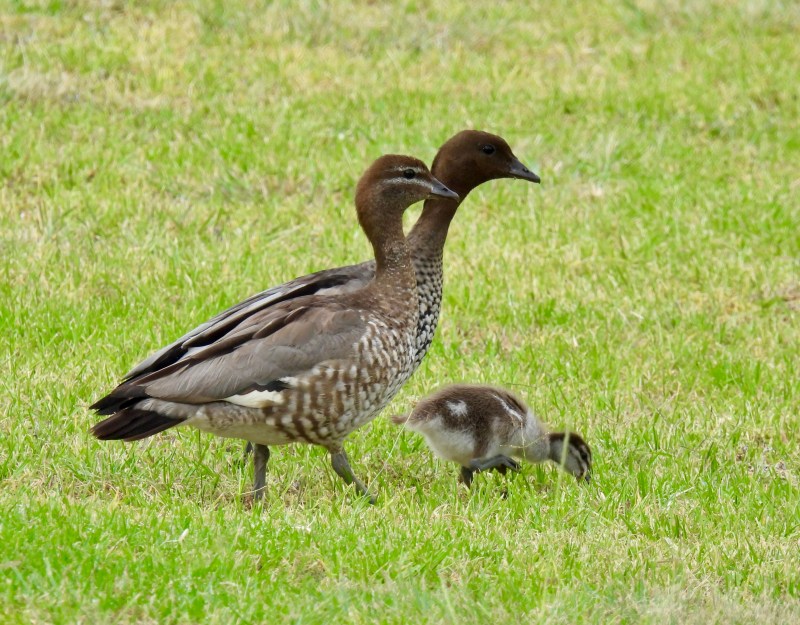
After a bit more time at the golf course, we drove into the town of Anglesea to grab coffee for the trip ahead. We then drove a short distance down the road to Lions Park Reserve to observe some Galahs that I’d spotted foraging on the ground.
These rosey-pink cockatoos may be widespread and common across the Australian continent, but their abundance makes them no less beautiful or interesting to observe.
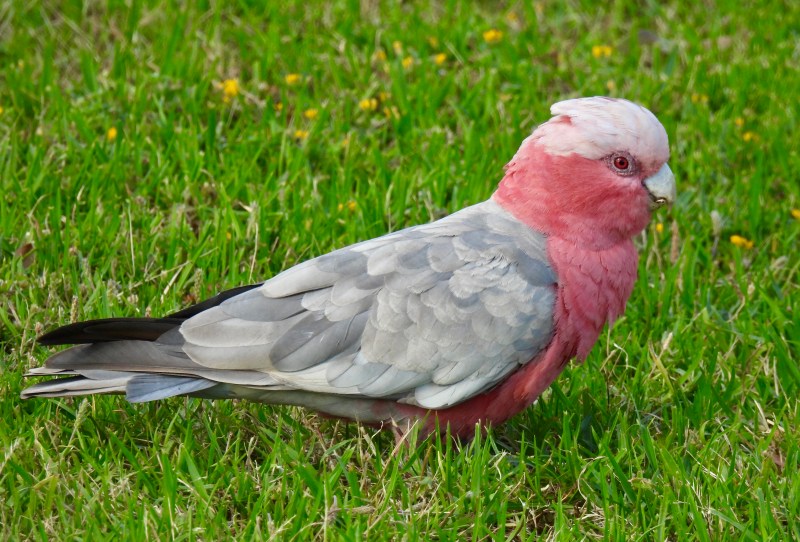
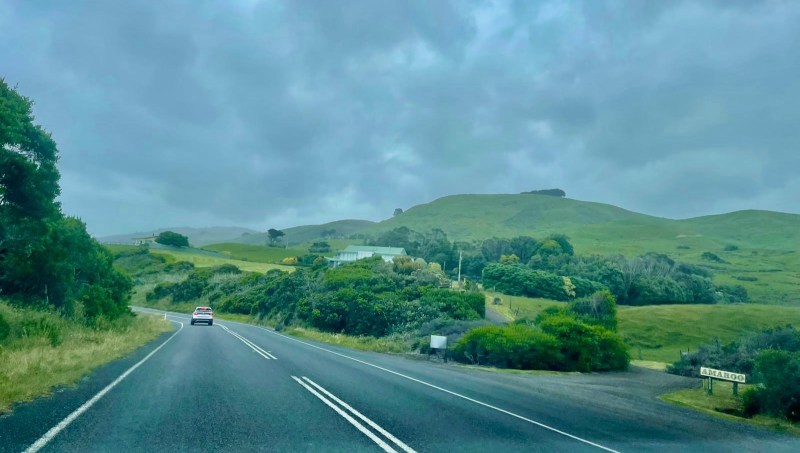
Over the next hour and a half or so it took to drive down Great Ocean Road from Anglesea to the town of Apollo Bay near Maits Rest, we made a couple short stops for photos of the scenery. The coastline was beautiful and much of it unscathed by human activity.
As we drove southwards along the Otway Ranges, the weather shifted rapidly, with warm bright sunshine around Anglesea replaced with cooler foggy overcast conditions in Apollo Bay. This wasn’t surprising given that the section of Otway National Park near Apollo Bay houses the westernmost temperate rainforests in all of Australia.
I had my mom park at the Apollo Bay breakwater, which shelters boats from the harsh conditions at sea and hosts large numbers of seabirds. Due to the fog, clouds, and gusty sea breezes it was significantly cooler than in Geelong or Anglesea and I was happy I brought my windbreaker. As I strolled down the breakwater, I observed and photographed several types of seabird including Silver Gulls, Great Crested Terns and Little Black Cormorants.
I was more interested in the local colony of Australian Fur Seals (Arctocephalus pusillus doriferus) that frequents the area, but none were around on this particular afternoon. The colony is most frequently observed several miles south of Apollo Bay in the town of Marengo, where they can be spotted foraging for food on an offshore sandstone reef. We didn’t have time to stop there.
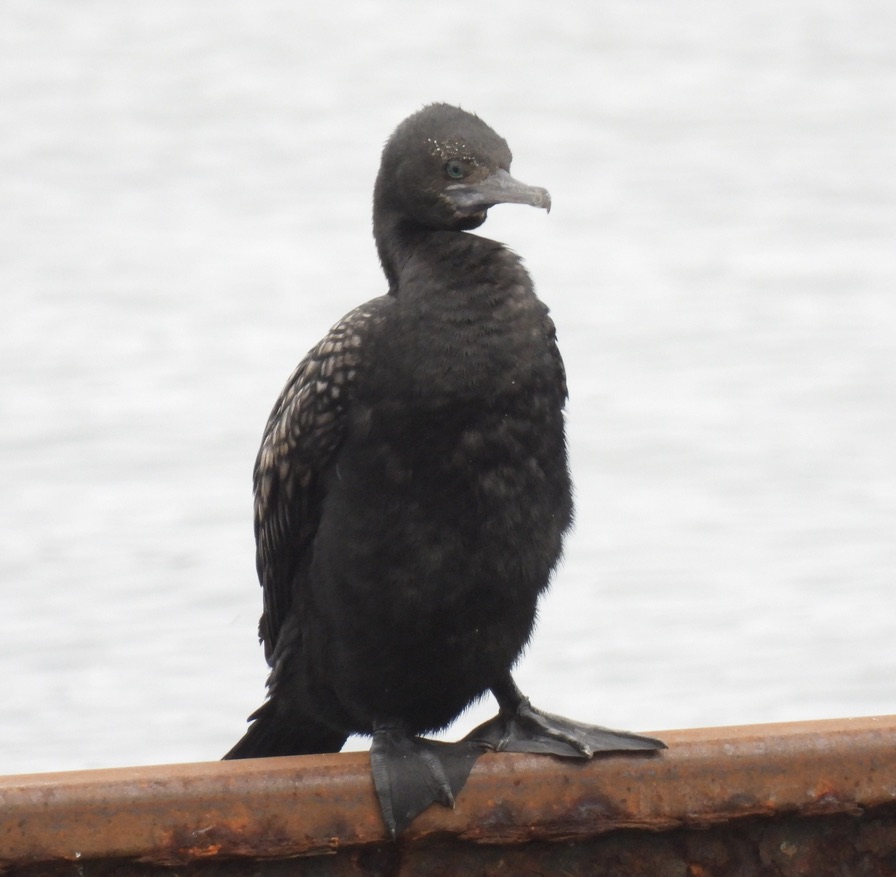
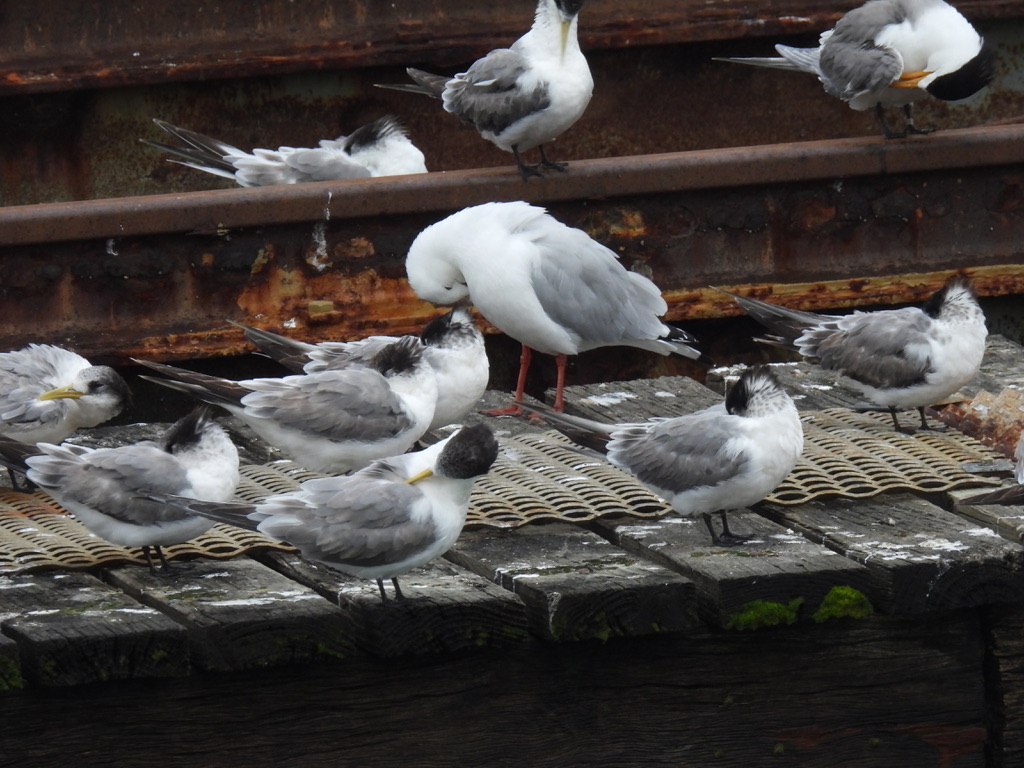
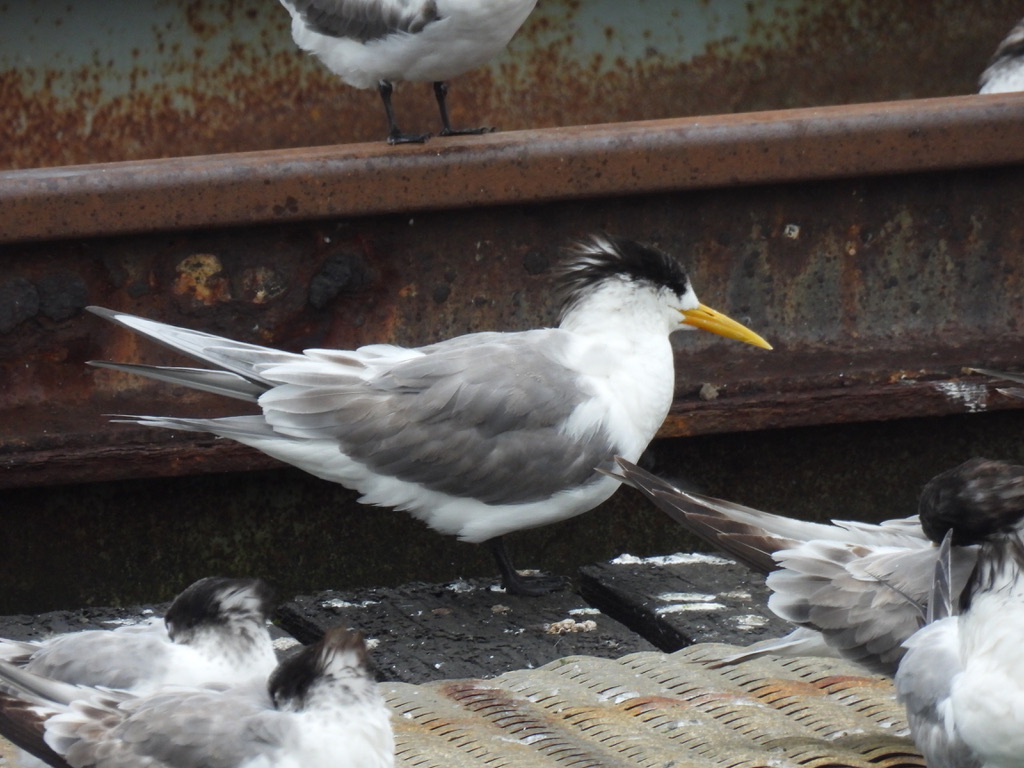
Little Black Cormorant (left) and Great Crested Terns with a lone Silver Gull (top & bottom right)
Our final destination on our trip down Great Ocean Road was Maits Rest, a short loop trail situated in the primeval old-growth temperate rainforest of Great Otway National Park. The trail is accessible from an inland portion of Great Ocean Road that snakes its way through the national park.
It was drizzling and a rather chilly 55 degrees Fahrenheit (13°C) by the time we made it to Maits Rest at around 6pm. The dreary weather did little to distract me from the mythical and spectacular rainforest around us. Enormous Myrtle Beech (Nothofagus cunninghamii) trees, some of which predate European colonization of Australia, towered above us, while dense thickets of tree ferns enclosed us in a wall of vegetation.
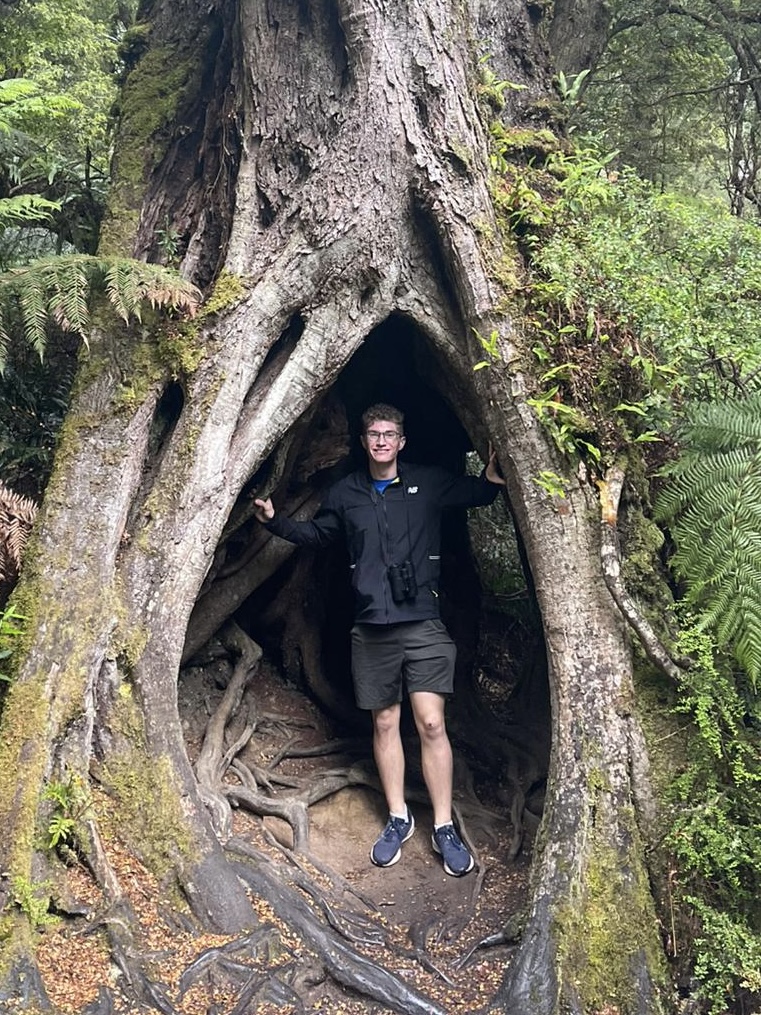
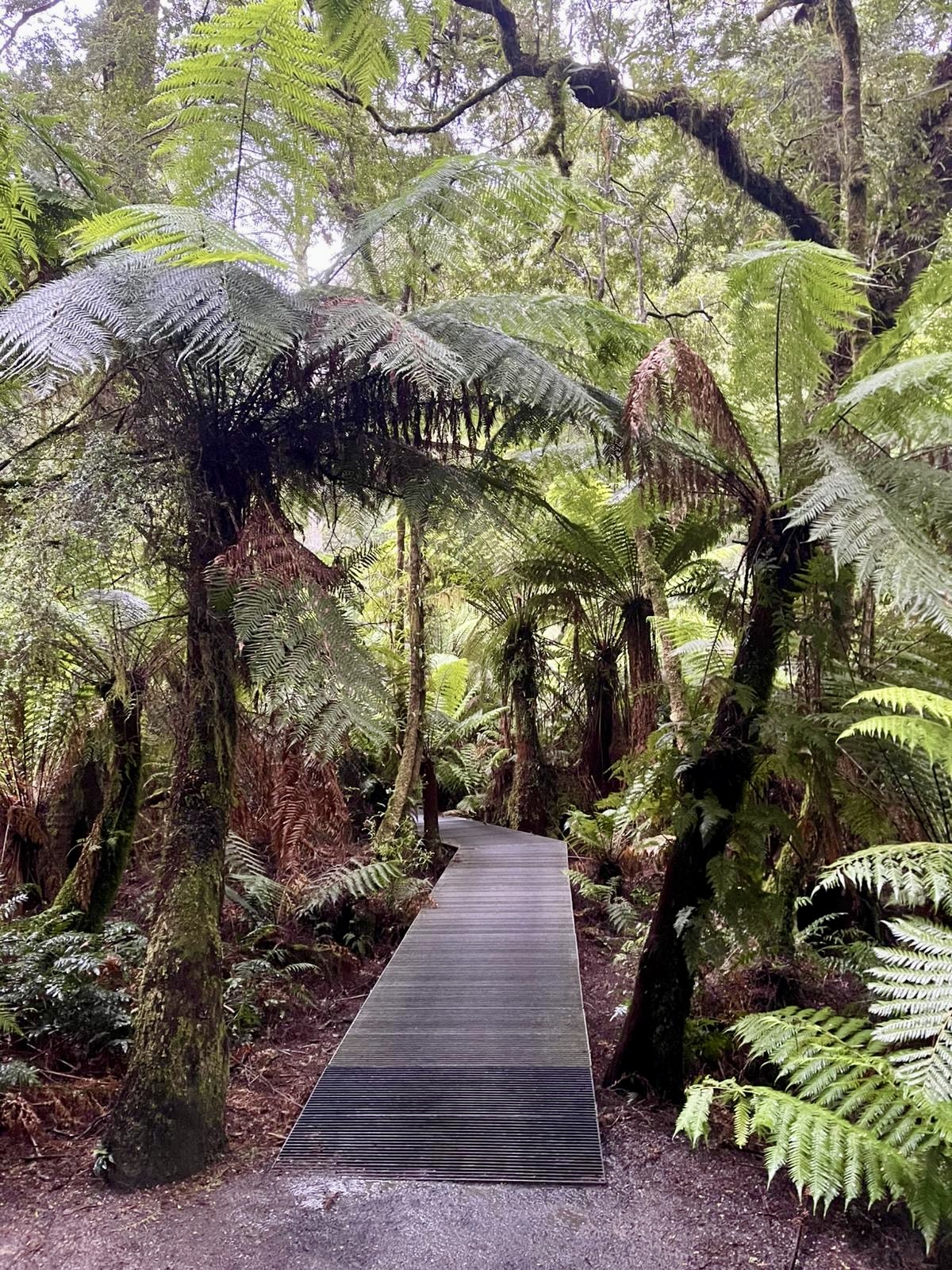
Huge hollowed-out Myrtle Beech (left) and dense groves of tree ferns along the trail (right)
As we walked along the trail, the cool weather and abundance of moisture, mosses, ferns and lichens reminded me of montane cloud forests I’ve visited in tropical countries like Malaysia and Costa Rica, though the trees of cloud forests are significantly smaller than those of temperate rainforests.
While we were walking, I kept my eyes peeled for rainforest birds like Bassian Thrushes, Olive Whistlers, and especially the gorgeous Pink Robin, but the mist and thick vegetation made it hard to spot any birds around me. Besides birds, I also searched for the endangered Otway Black Snail (Victaphanta compacta), a carnivorous land snail endemic to the Otway Ranges, but no luck.
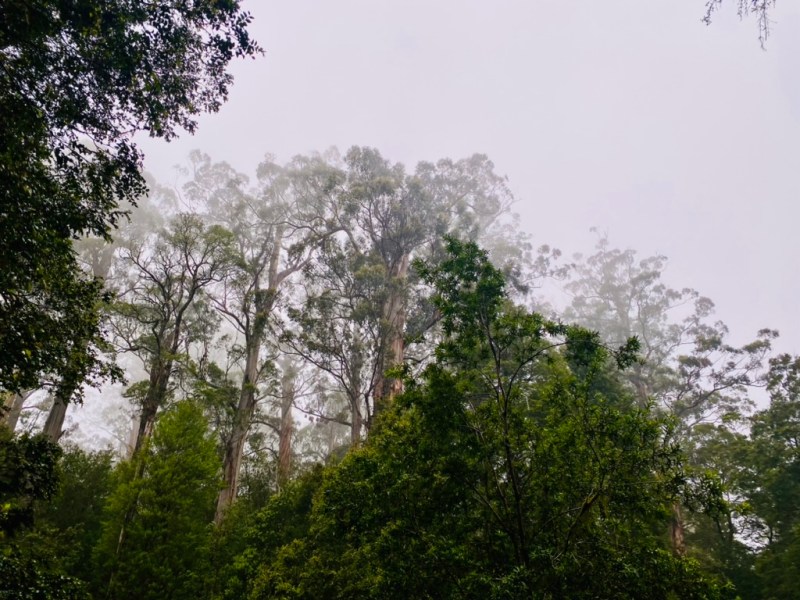
We finished the trail in about 25 minutes and drove back towards Apollo Bay before turning onto Skenes Creek Rd which took us onto Princes Highway toward Geelong. Our short road trip concluded at around 9pm, and my mom fell asleep as soon as we arrived at our AirBnb. She had a full day of work to prepare for and was exhausted from the drive.
I however, had other plans for that night. After we got back to Geelong, I charged up my spotlight and camera, and in the meantime ate some dinner. I then walked down to Zillah Crawcour Park on the banks of the Barwon River and began spotlighting for nocturnal mammals and birds.
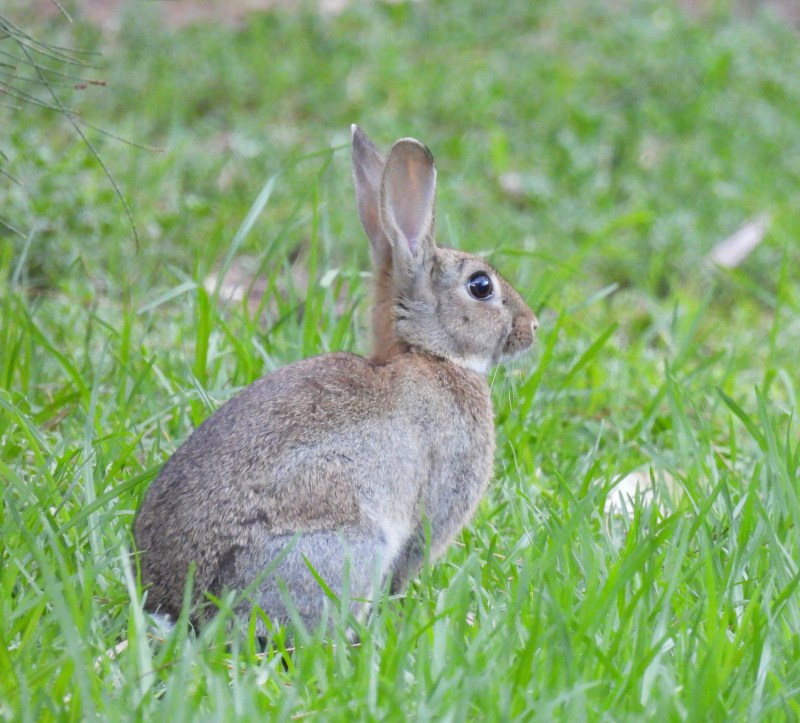
For the first twenty or so minutes of walking, the only animals I picked up in the beam of my spotlight were copious numbers of European Rabbits which I wasn’t happy to see due to their status as Australia’s worst-ever invasive species. Rabbits have no natural predators across much of Australia and produce countless offspring. They destroy entire landscapes by overgrazing on native vegetation and burrowing wherever they can, which causes severe soil erosion and starves out native herbivores.
I must’ve spotted at least 8-10 pesky rabbits before my first native mammal of the night.
About half an hour through my night walk I ended up Fyansford Common, an open field speckled with trees. I picked up the eyeshine of a mammal from across the field but couldn’t make it out. Upon closer examination, I could see the furry body of my first-ever Common Ring-tailed Possum, my target species for the night. The individual I spotted was not skittish and allowed me to approach for a record shot.
I was beyond excited to spot my second wild Australian marsupial species, though ring-tailed possums are common in Eastern Australia and I would later see many more during my there.
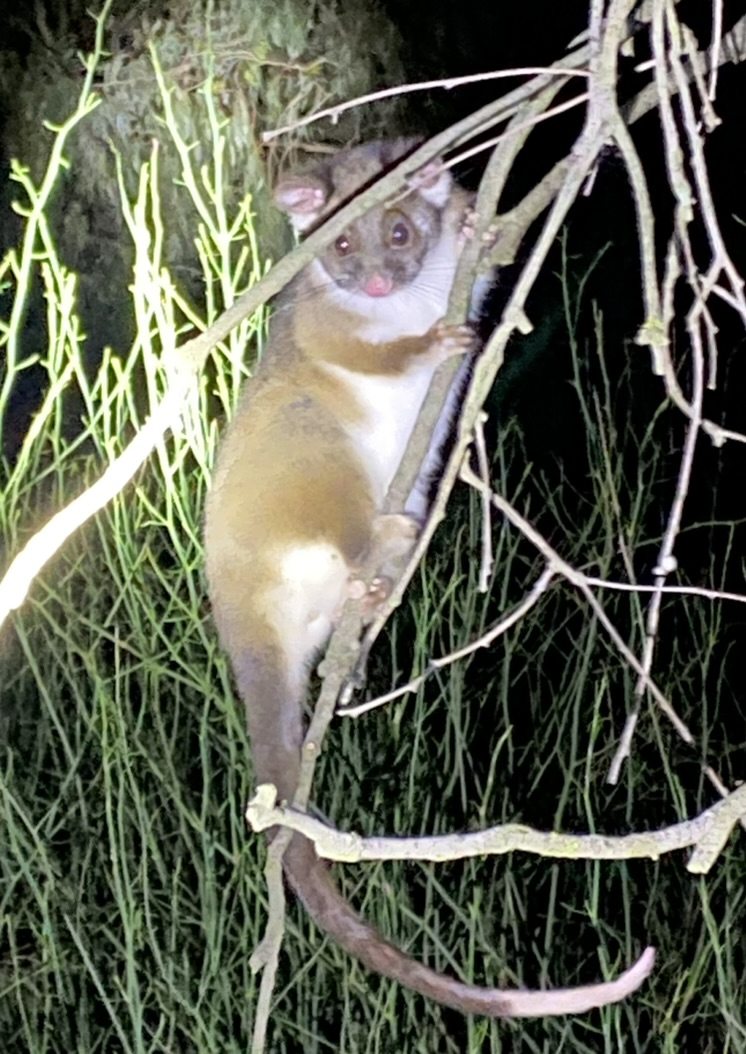
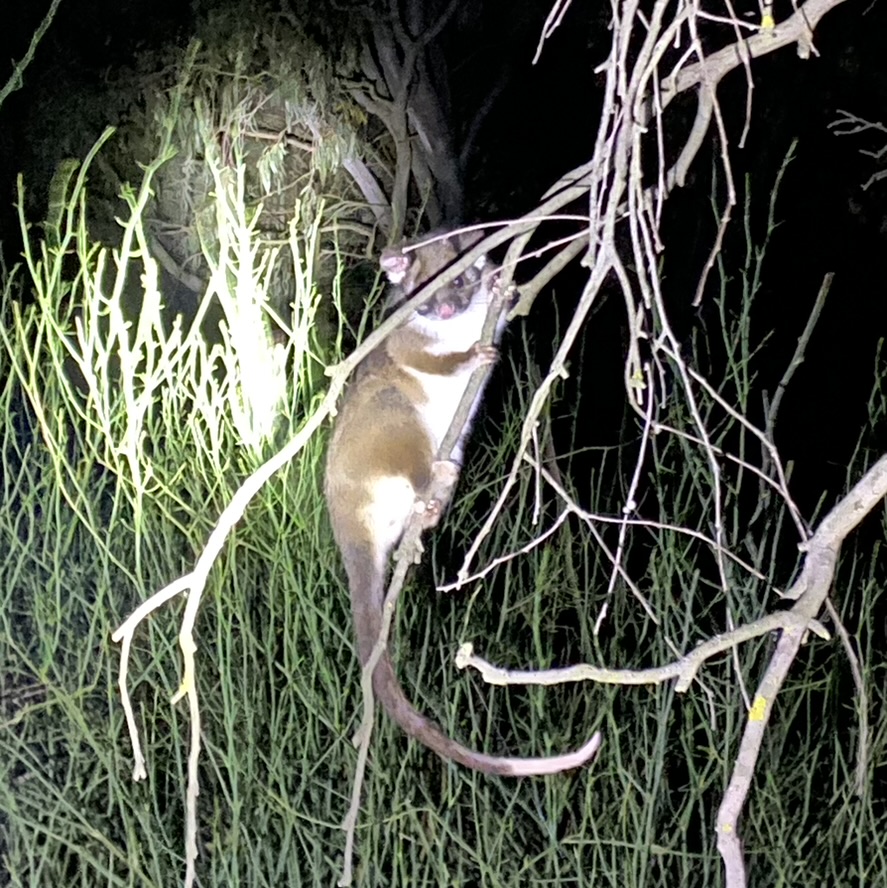
Common Ring-tailed Possum
I ended my night walk after the possum encounter and walked back to my AirBnb for some much-needed sleep.
The next morning (December 8th), my mom had to work so I stuck around Geelong and did some wildlife-watching around the suburbs. My mom’s colleague informed me of a house with a bird feeder that is frequented by Rainbow Lorikeets, one of my target birds. Upon arriving at the house, it took me less than a second to spot the noisy, colorful lorikeets around the feeder and in the trees above me.
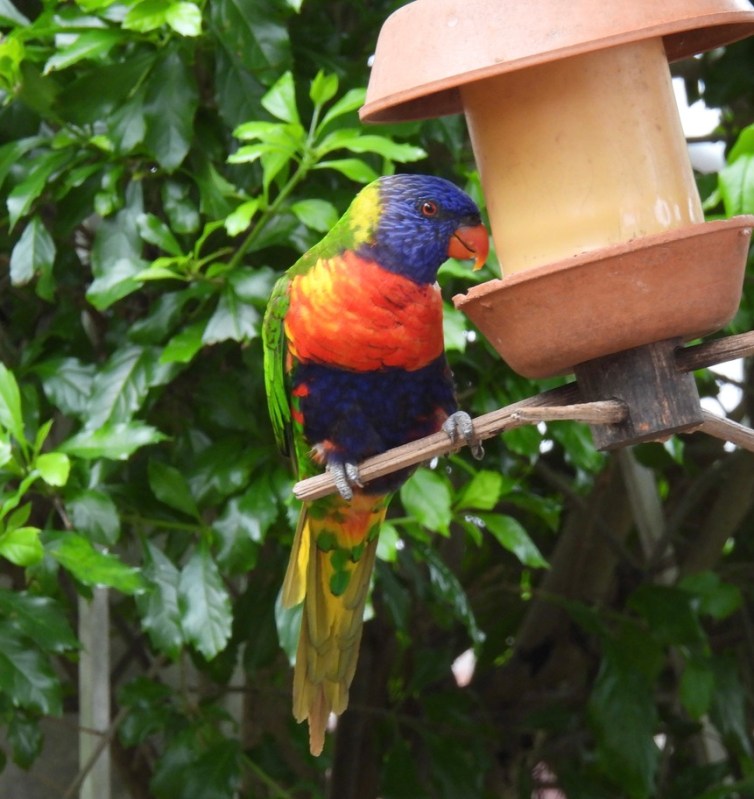
A bit more birding around the surburban part of Geelong produced Gray & Pied Currawongs, White-winged Choughs, Australian Ravens, Gray Butcherbirds, and birds I’d already recorded such as Red Wattlebirds and Magpie-Larks.
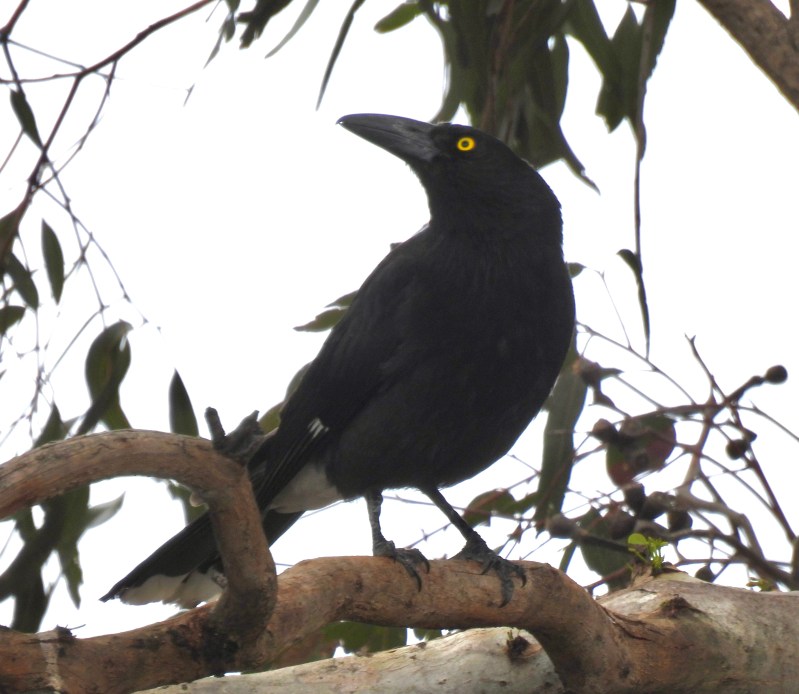
In the evening, just before sunset, I took a second walk along the Barwon River, this time on The Stan Lewis Walk which brought me through an area where wallabies and other mammals are spotted frequently. I scanned the steep, lush embankment on the side of the track facing away from the river, where I hoped a wallaby might be grazing.
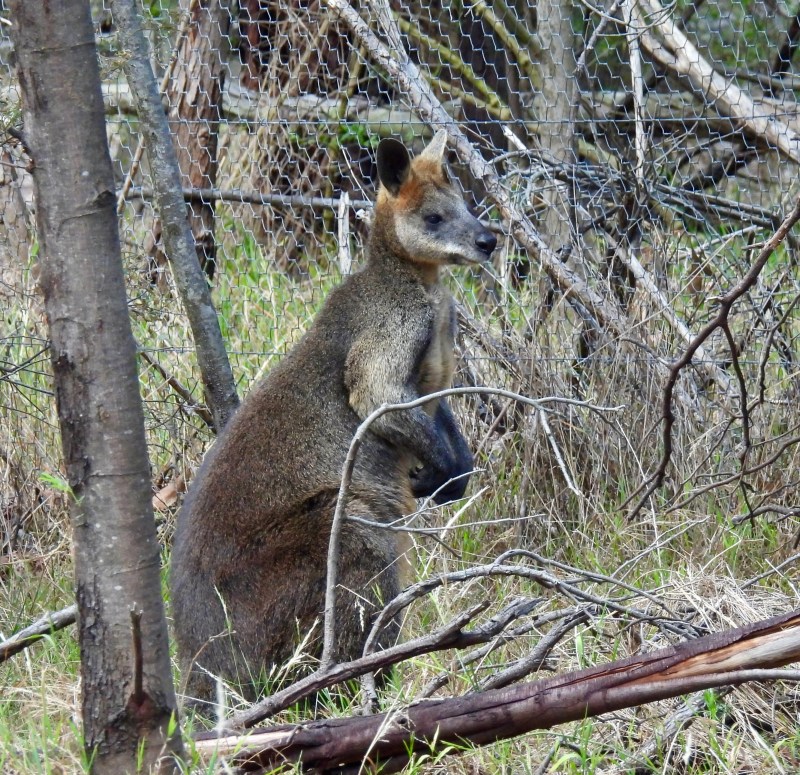
I was in luck—about fifteen minutes into my walk I spotted a Swamp Wallaby about halfway up the embankment which stayed in place long enough for me to take some good record shots and enjoy the encounter. Swamp Wallabies are so-named due to their apparently ‘swampy’ odor, which I was lucky to be out of range of!
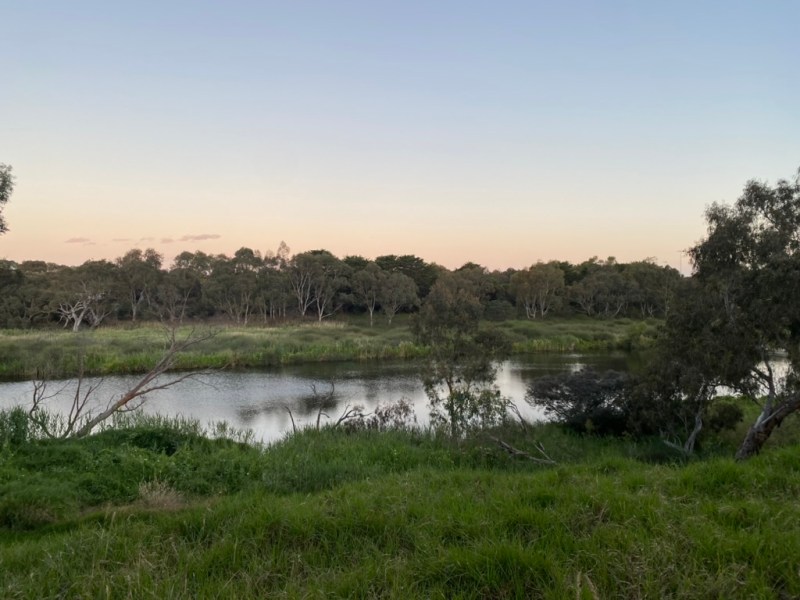
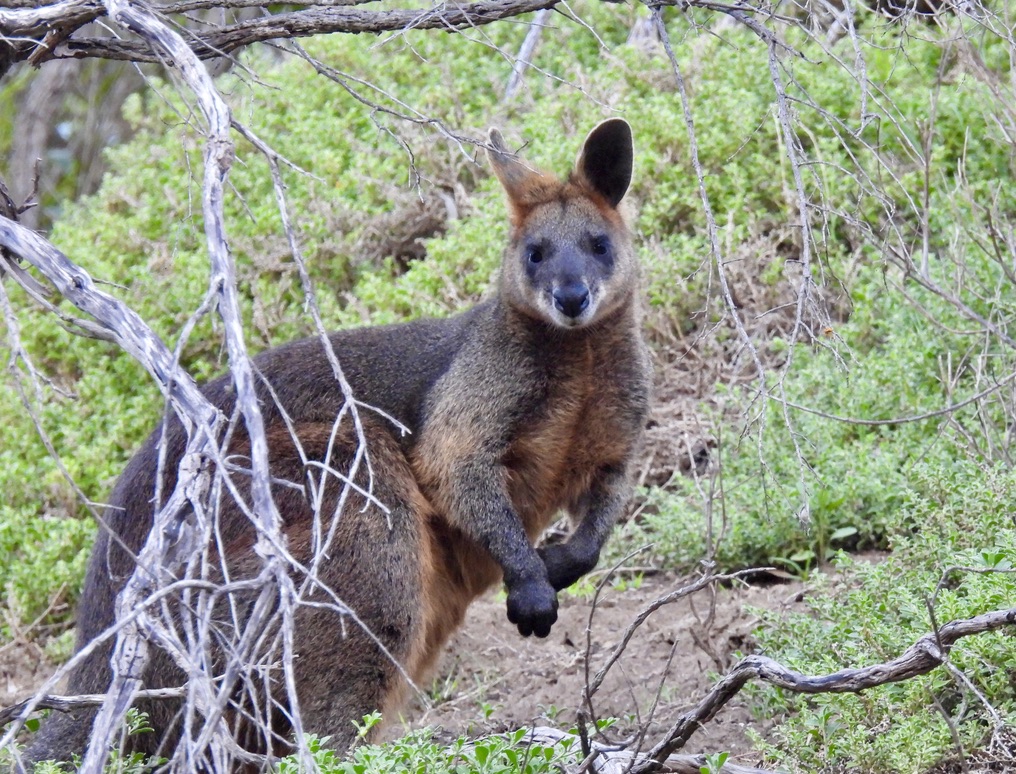
Swamp Wallaby along the Barwon River
After the wallaby sighting, I spent the next hour walking along the river, searching for additional birds and mammals. Other than some Red Wattlebirds and Pied Currawongs, I saw no other animals. Afterwards, I walked back to the AirBnb and unwound for the night.
I can’t remember most of what I did the next day (December 9th). The only thing I can recall is taking a brief drive to Moorabool River Reserve, a small bushland reserve near Geelong, around noon. It was my mom’s lunch break and she wanted a quick escape into nature with me. We only spent about twenty minutes in the reserve, but it was certainly productive.
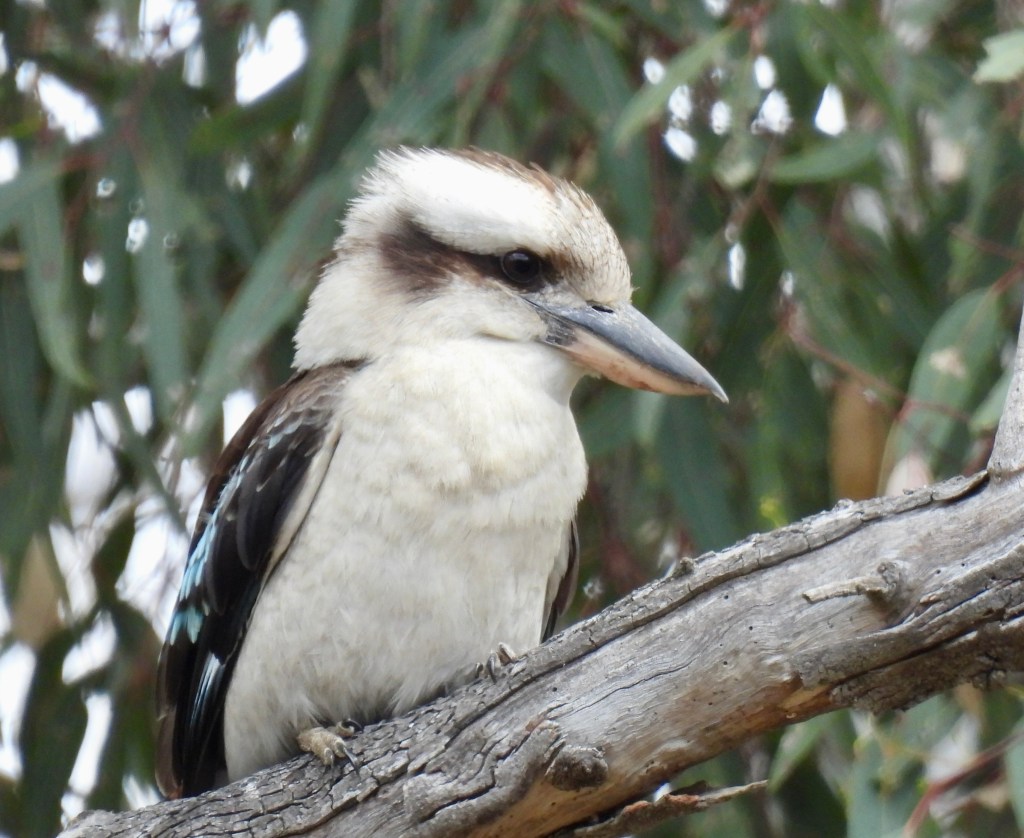
Almost as soon as we arrived, the unmistakeable territorial calls of the iconic Laughing Kookaburra erupted in the trees around us. I was sure we were in the territory of a family group of this giant kingfisher, and after frantically scanning the surroundings for the source of the raucous calls, I spotted my first kookaburra perched on a branch above me. Definitely my highlight bird of this trip.
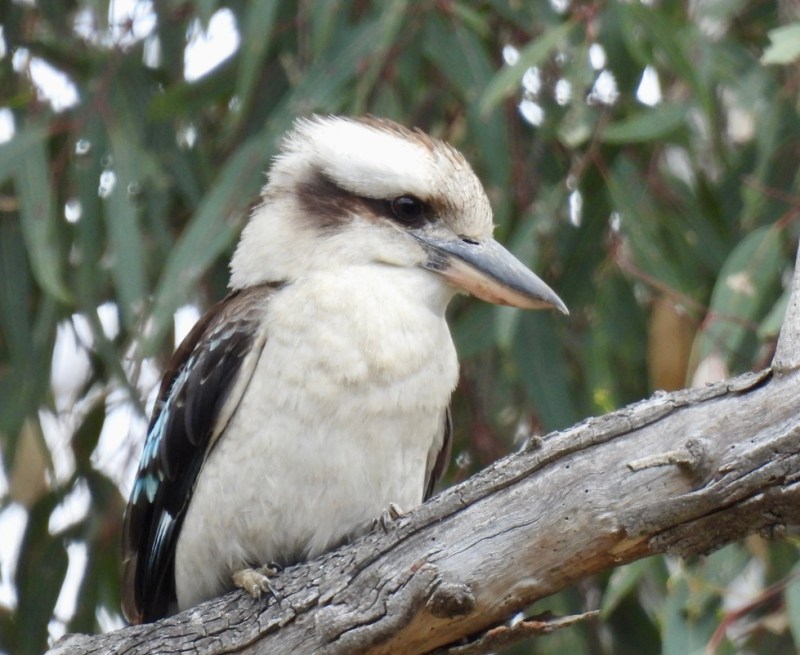
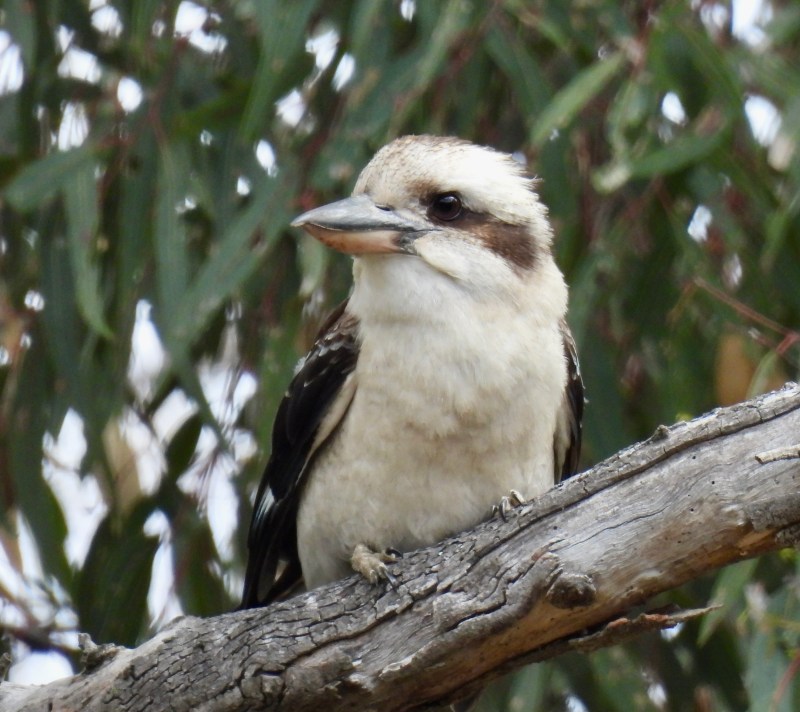
After the kookaburra flew off, I scanned the surroundings for additional birds. A short while later, I happened upon an active little Red-browed Finch, another lifer. This one was too quick for a record shot.
I did some log flipping in the hopes of finding an endemic snake, lizard or interesting arthropod but all I found after ten minutes was a darkling beetle of the genus Adelium.
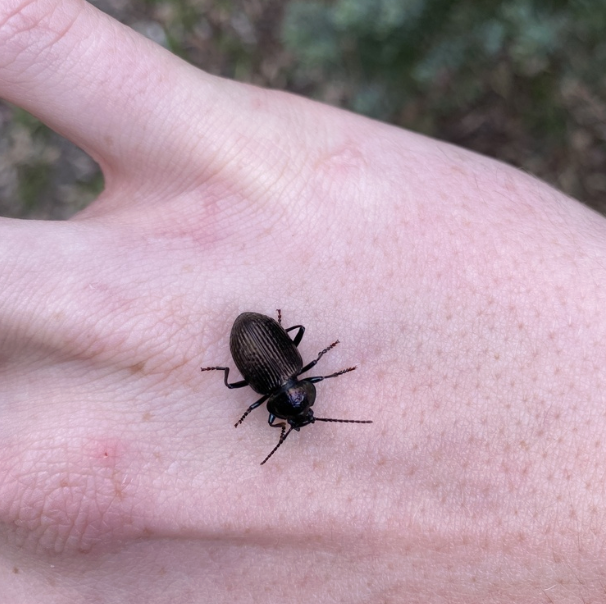
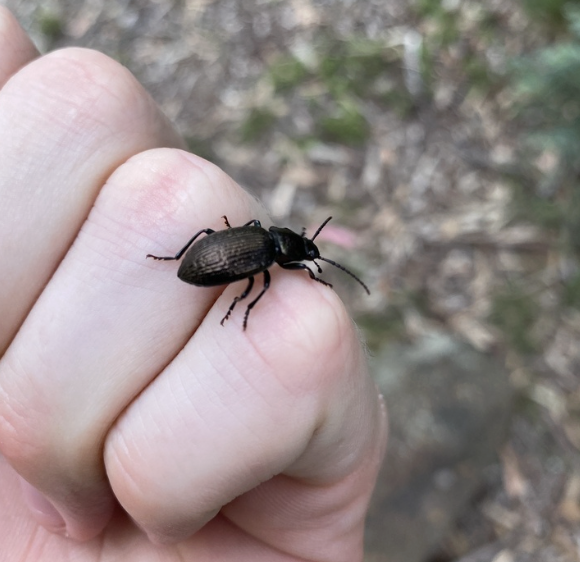
Adelium sp. darkling beetle
We drove back to Geelong shortly after, which concludes the wildlife-watching activities I can remember doing on December 9th.
December 10th was the second-to-last day of the trip, and a productive one in terms of wildlife encounters. My mom once again had work in the morning but in the afternoon, to my surprise, her colleague generously offered to take me on a hike in the Brisbane Ranges National Park northwest of Geelong to look for Koalas. This gave my mom a much-needed break from driving me around Victoria to look for wildlife!
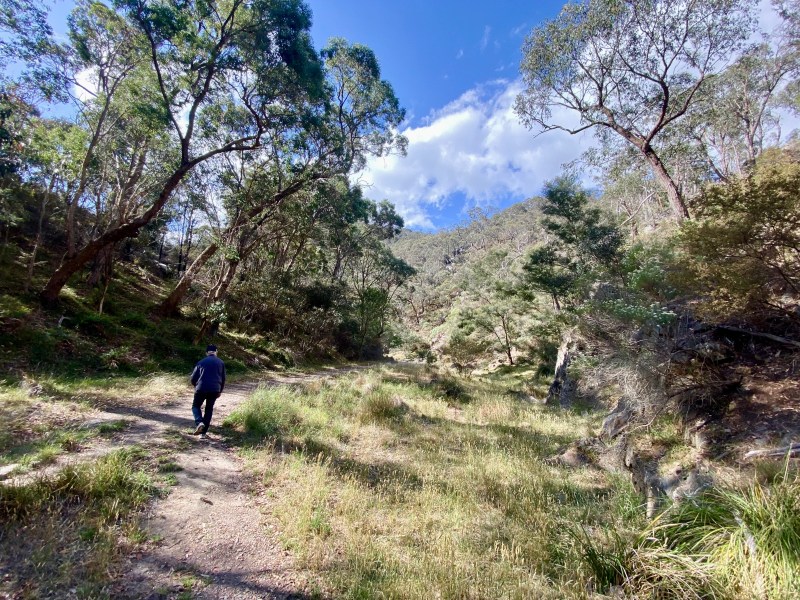
My mom’s colleague brought me to scenic Anakie Gorge, where he’d had luck spotting wild Koalas in past years. We arrived in the late afternoon, around 4:30pm, when Koalas would be more active. The Eucalypt-lined road leading to the parking area at the Anakie Gorge trailhead is apparently one of the better spots to look for Koalas, but we didn’t see any there.
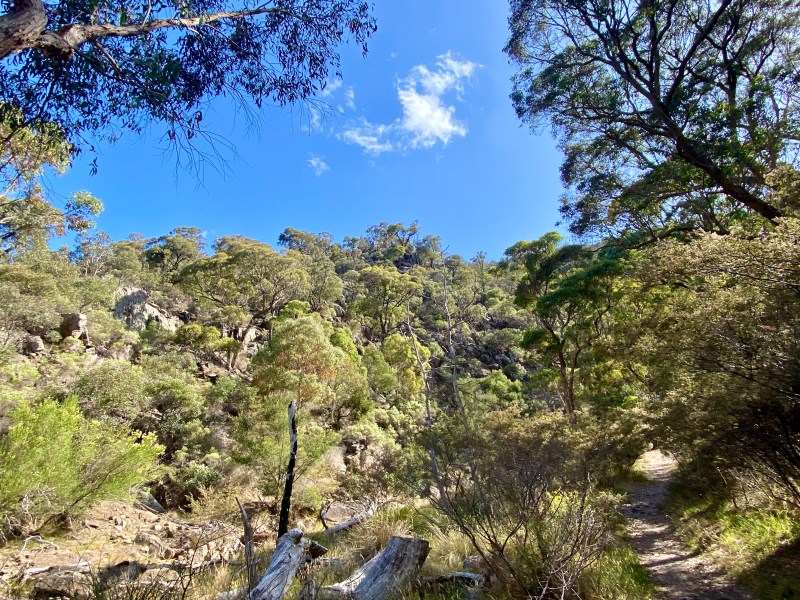
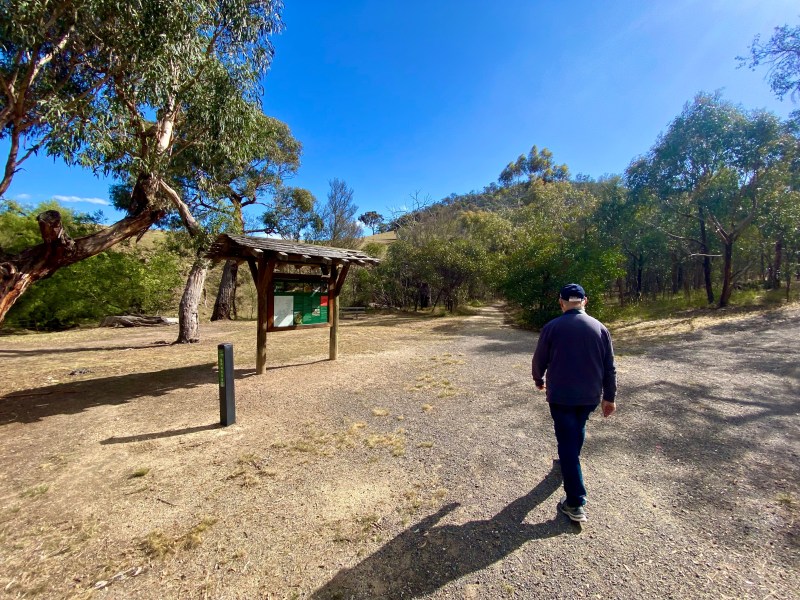
Around the trailhead, we spotted several notable animals including a Swamp Wallaby, currawongs, and two lifer birds; a Rufous Whistler in the trees above and a pair of beautiful Superb Fairywrens hopping around an open meadow. The brilliant-blue of the male fairywren contrasted with the comparatively dull hues of the female.
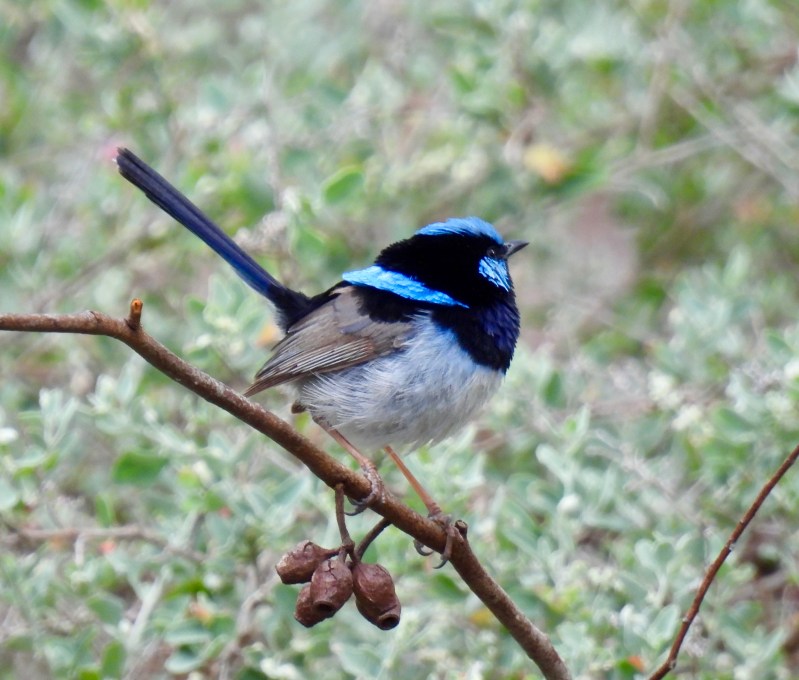
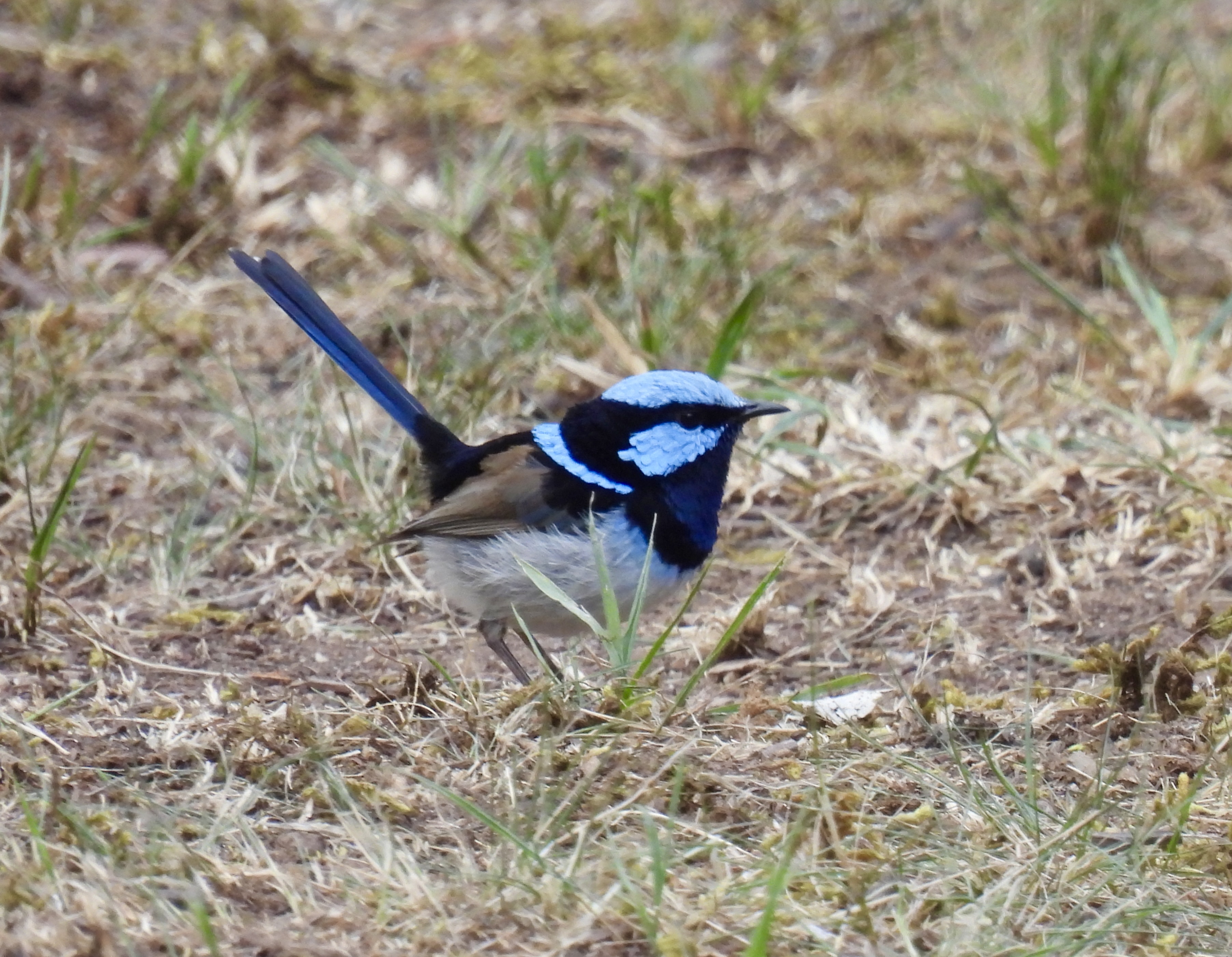
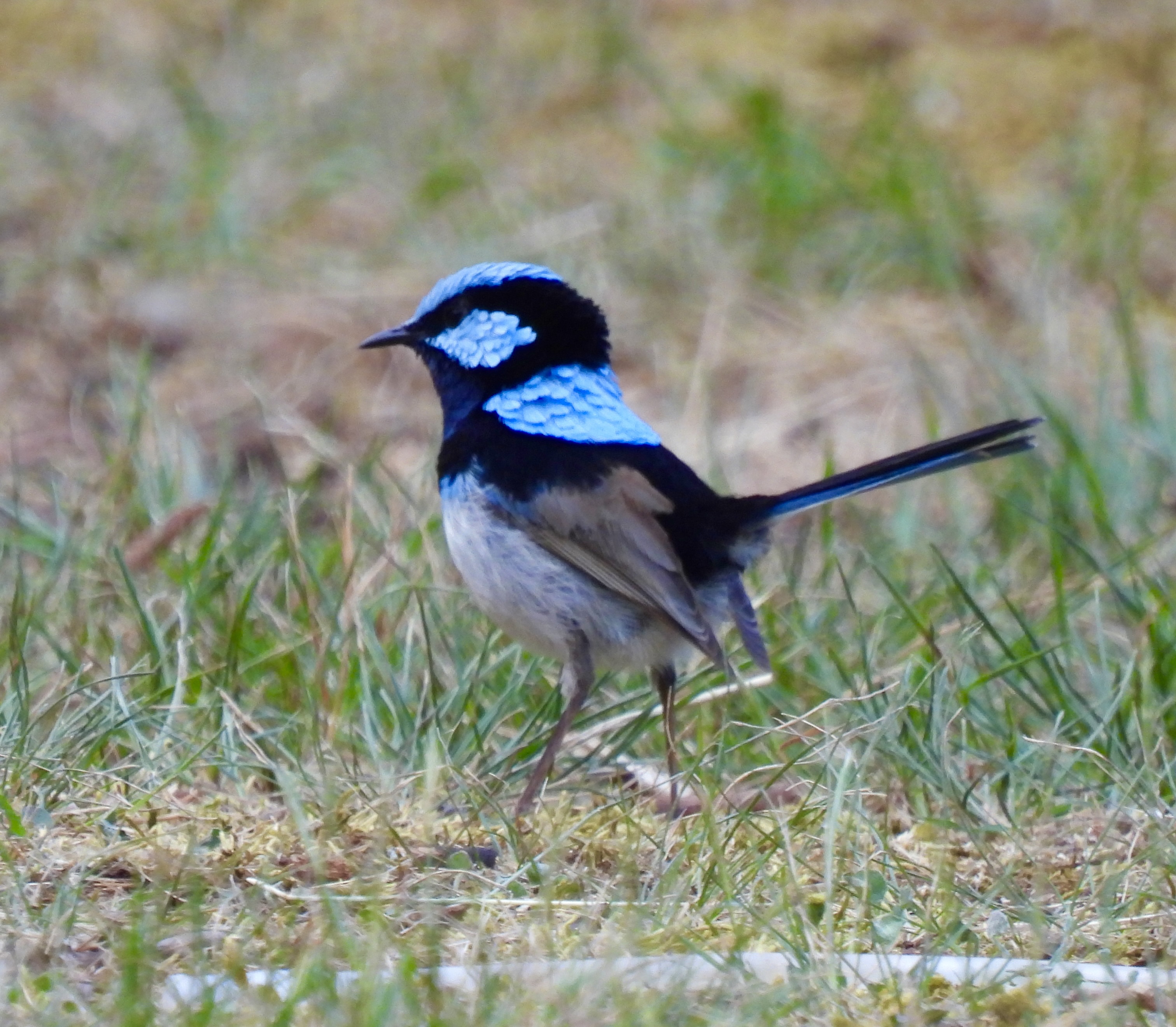
Fairywrens are one of my favorite Australian birds
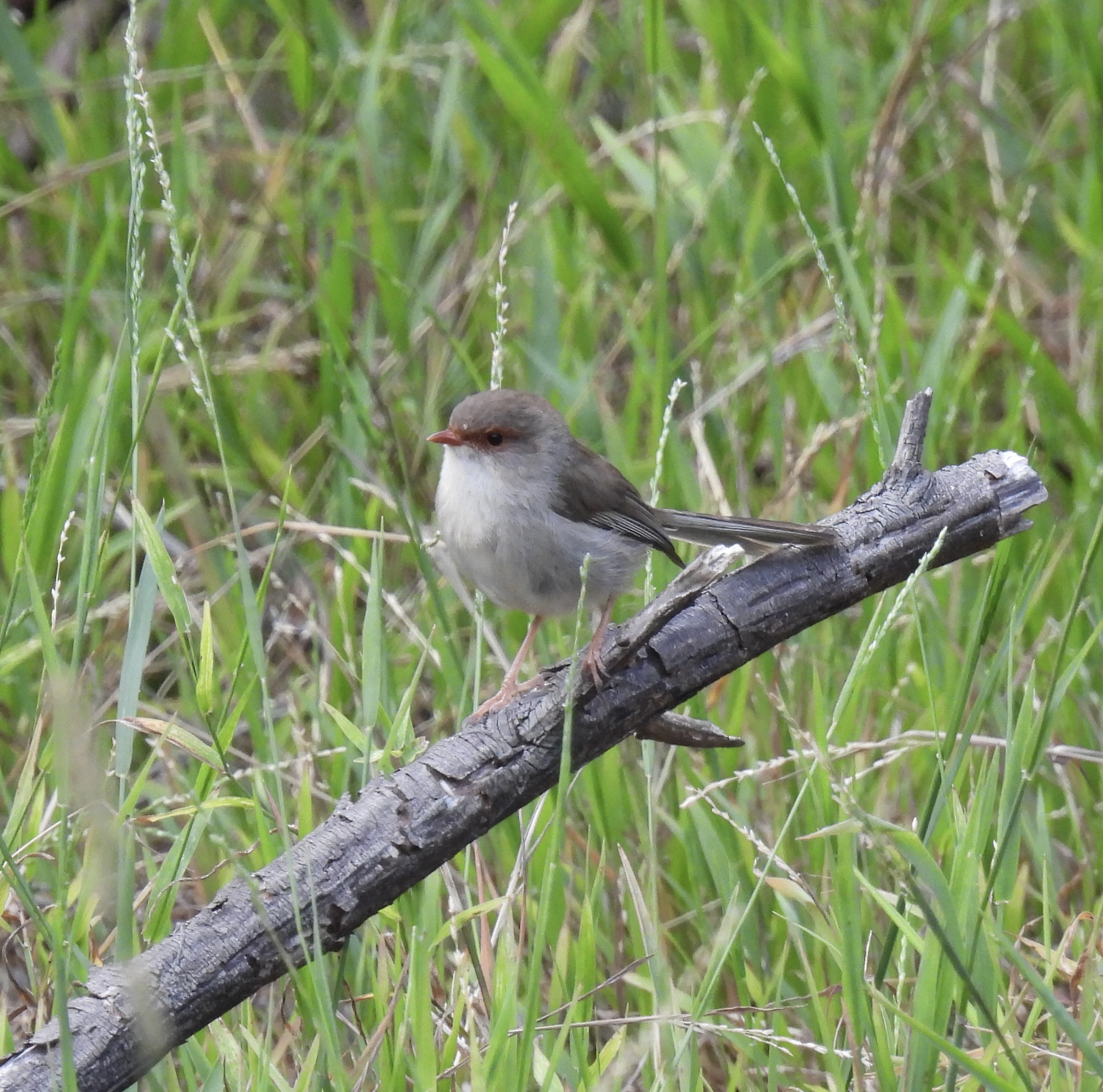
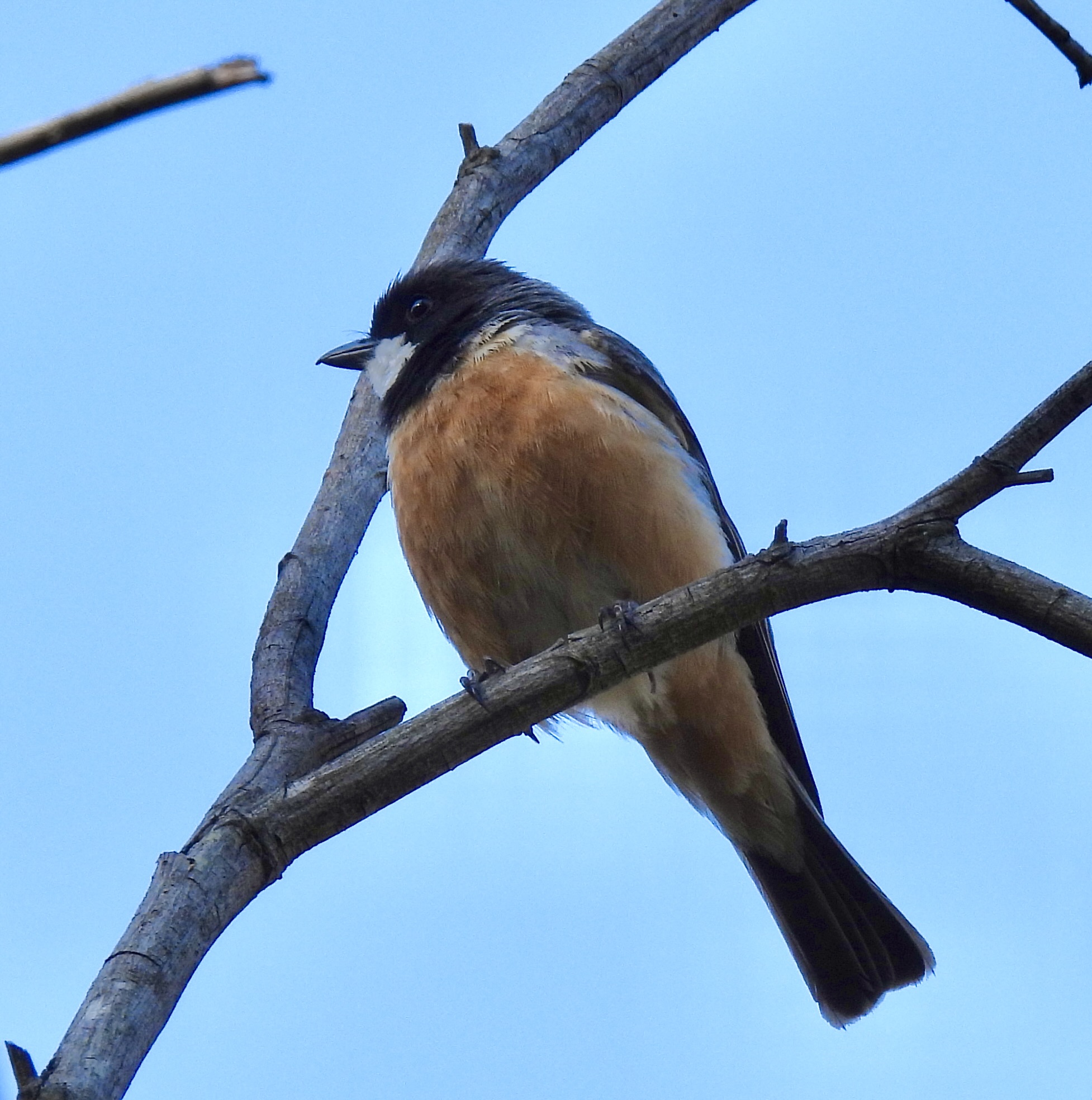
Comparatively bland female Superb Fairywren (left) and Rufous Whistler (right)
My mom’s colleague and I spent about an hour and a half hiking Anakie Gorge, stopping occasionally to scan the surrounding Eucalypt forest for Koalas. Though we didn’t see any Koalas, I enjoyed the walk and managed to spot some additional birds, including a Common Bronzewing, many squawking Sulphur-crested Cockatoos, and a soaring Wedge-tailed Eagle (one of the highlights of our outing). I would’ve probably recorded more bird species had we not been pressed for time (but when am I not?).
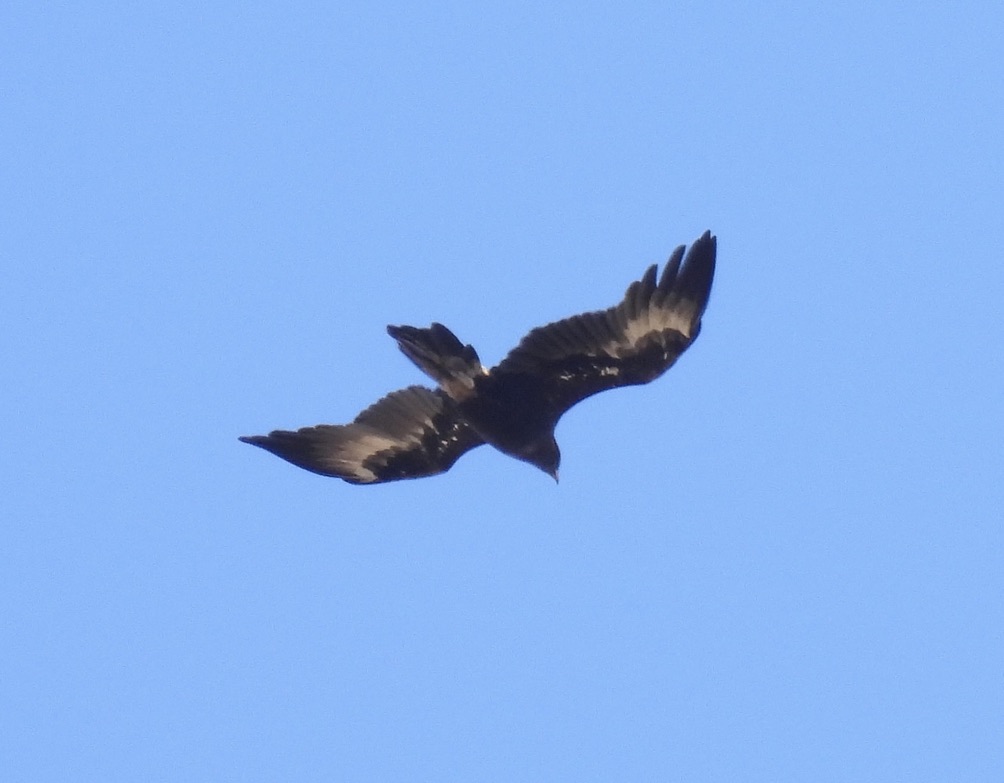
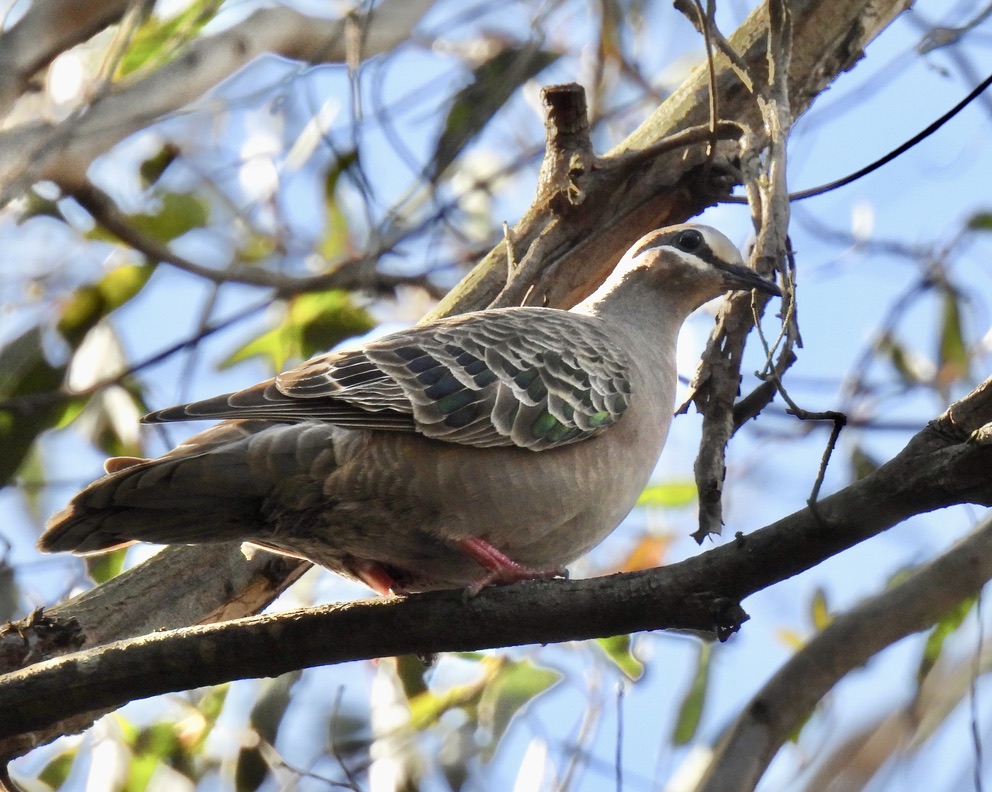
Wedge-tailed Eagle (left) and Common Bronzewing (right)
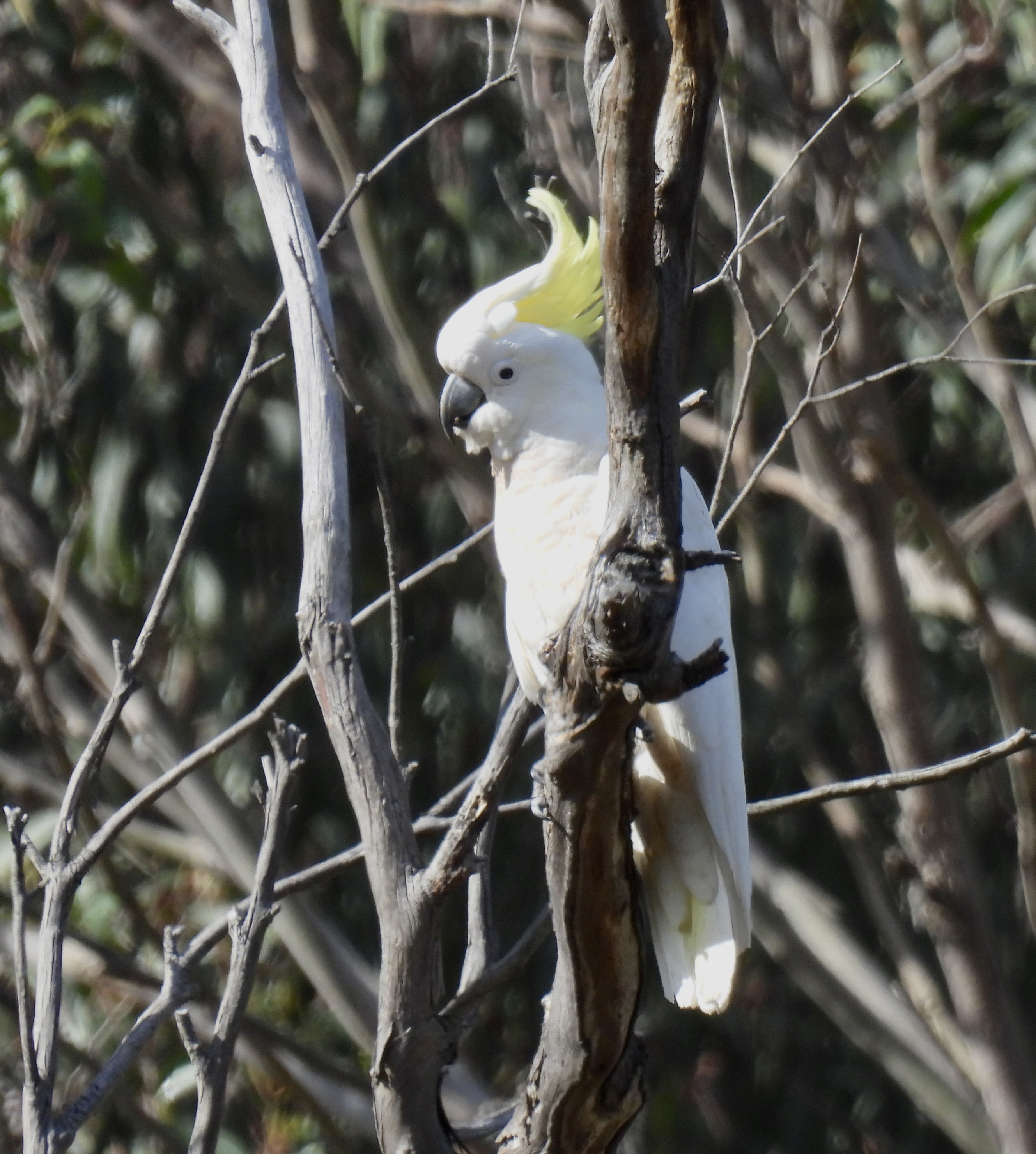
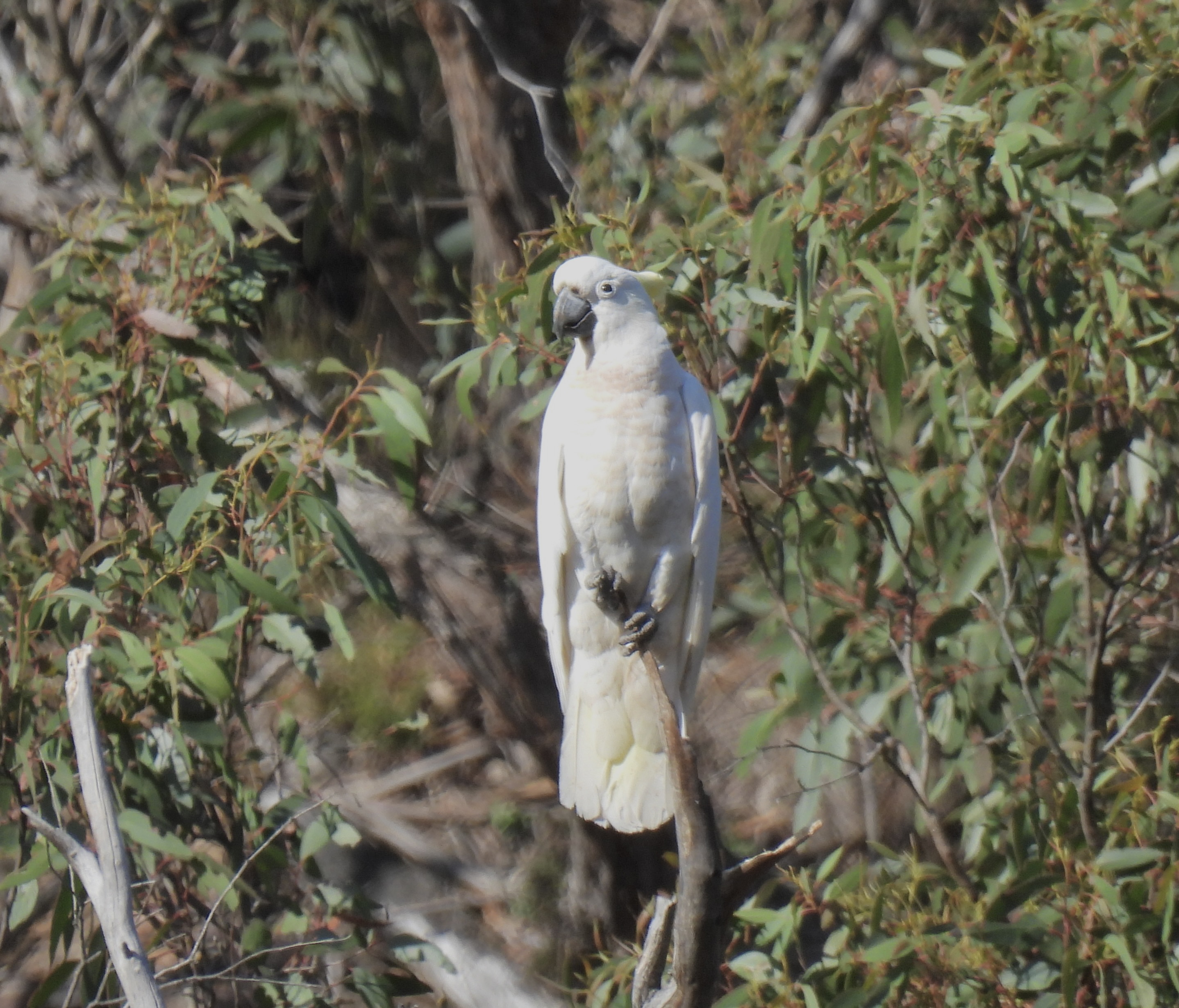
Sulphur-crested Cockatoos
I also spotted my second species of Myrmecia ant on our hike—the infamous Jack Jumper Ant (Myrmecia pilosula). My mom’s colleague still remembers all too well his experience being stung by one of these ants as a kid. He describes the pain as something out of a horror story and that it lasted for days.
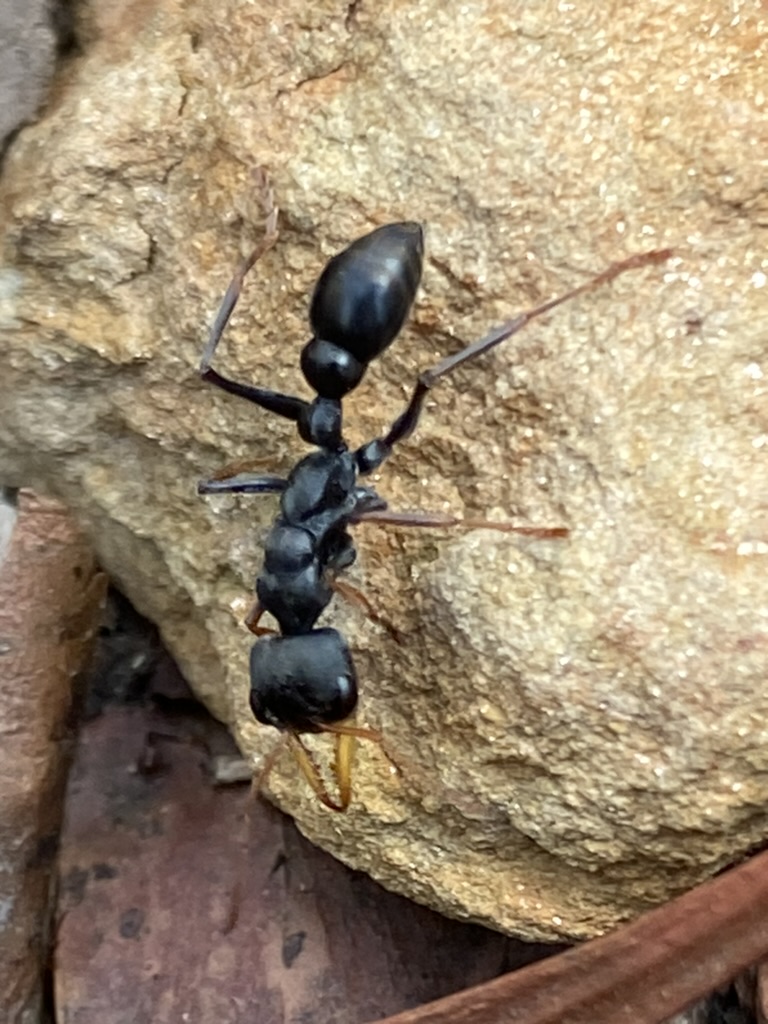
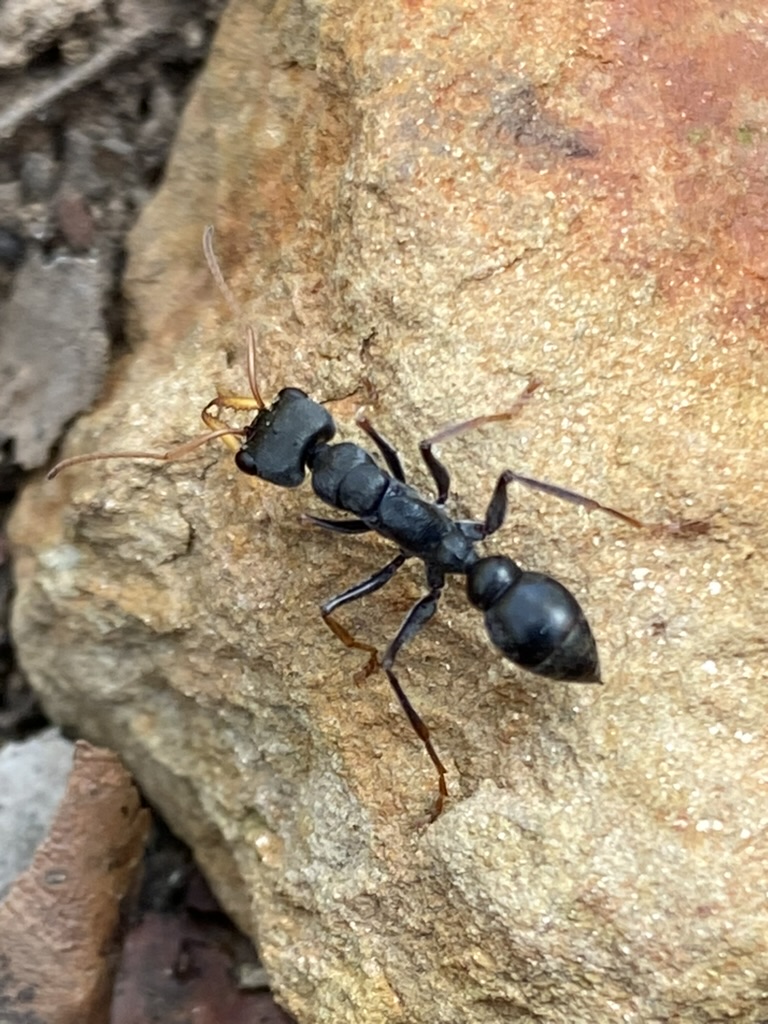
Jack Jumper Ant (Myrmecia pilosula)
We wrapped up the hike by around 6pm. After checking the trees around the trailhead and nearby road once again for Koalas (there were none), we drove back to Geelong.
About fifteen minutes into the drive, we spotted a mob of Eastern Gray Kangaroos in the middle of an open field. We stopped to observe from a distance and take photos. Unlike the roos I saw at Anglesea with my mom, this mob was led by a dominant male (also known as a ‘boomer’).
Given that male Eastern Gray Kangaroos can stand 2 meters tall (6.5 ft) on their hindlegs and reach a muscular 90kg (200lbs), I was grateful that there was a good bit of distance between us and him.
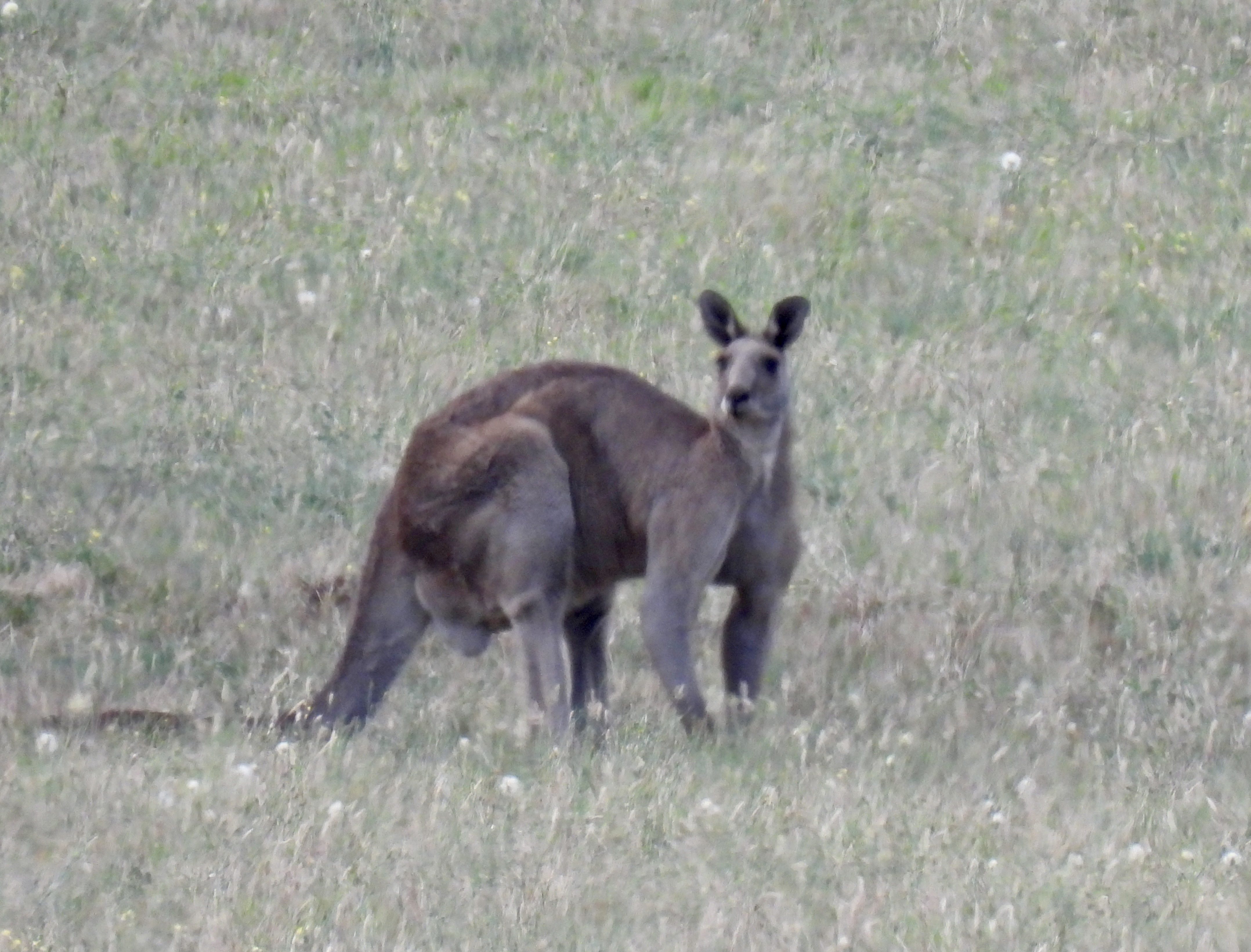
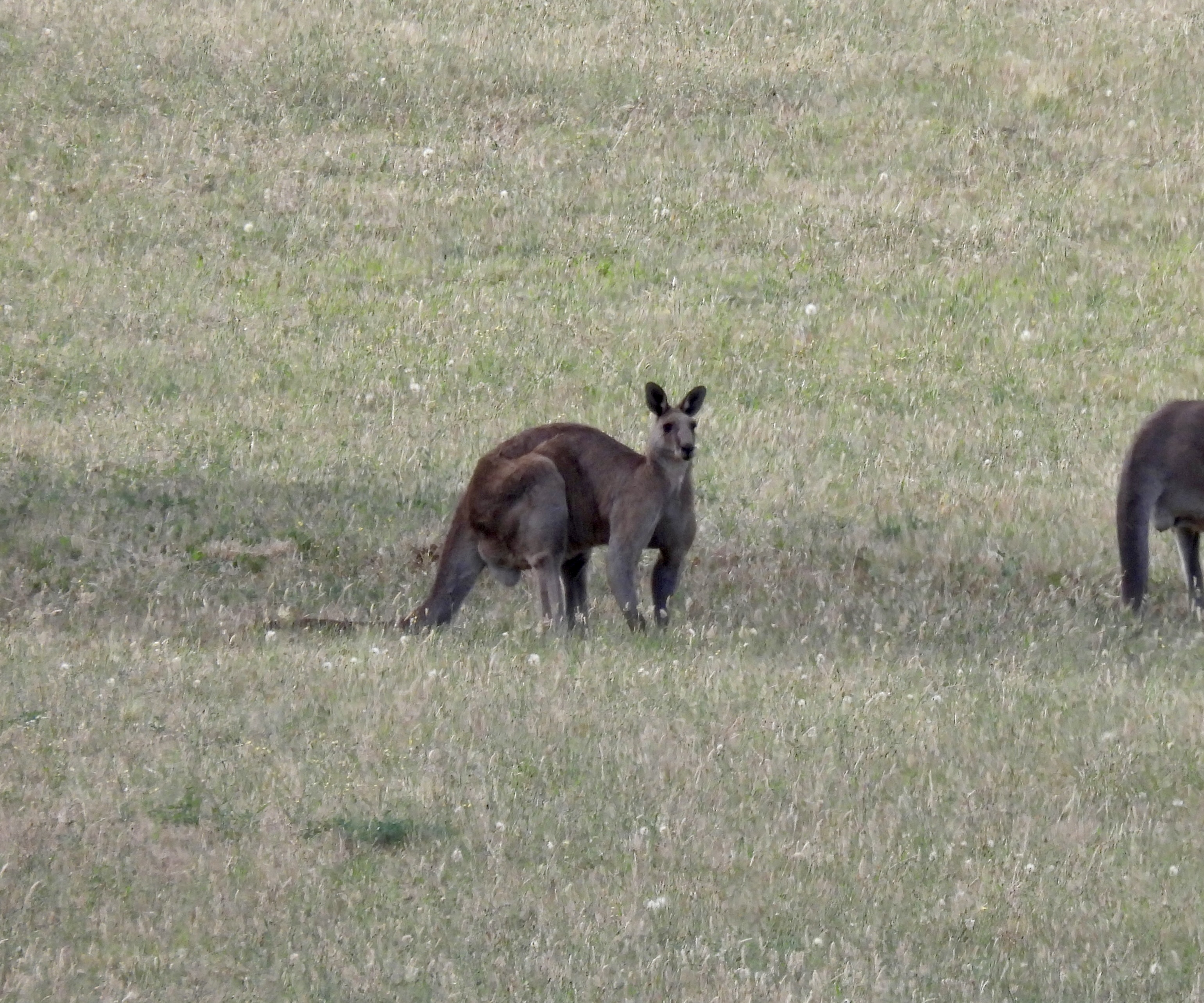
The dominant male kangaroo or ‘boomer’. Not an animal you want to square up with!
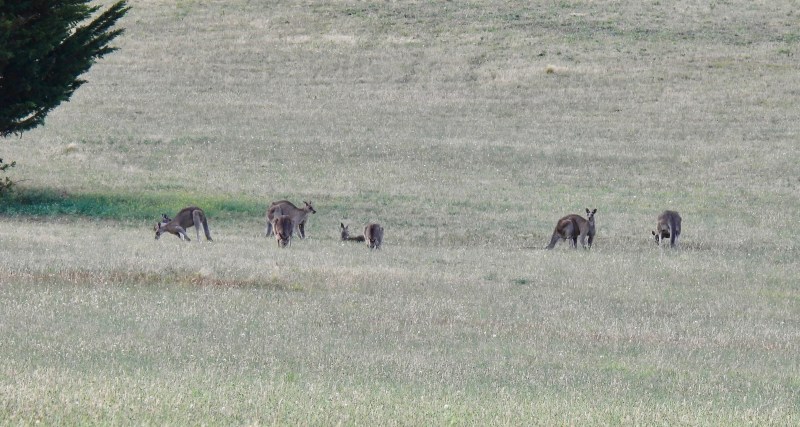
We arrived in Geelong at around 8pm. I met up with my mom and we bid farewell to her colleague and his wife who had hosted us on several occasions.
That night, after my mom went to sleep, I embarked on a final night walk in the suburbs of Geelong with the hopes of recording any additional species of nocturnal mammals or birds. I was in luck, as just down the road from our AirBnb I spotted a Common Brushtail Possum, a lifer for me. I caught him in the beam of my spotlight climbing in a Eucalyptus tree and he stayed put while I took a couple record shots.
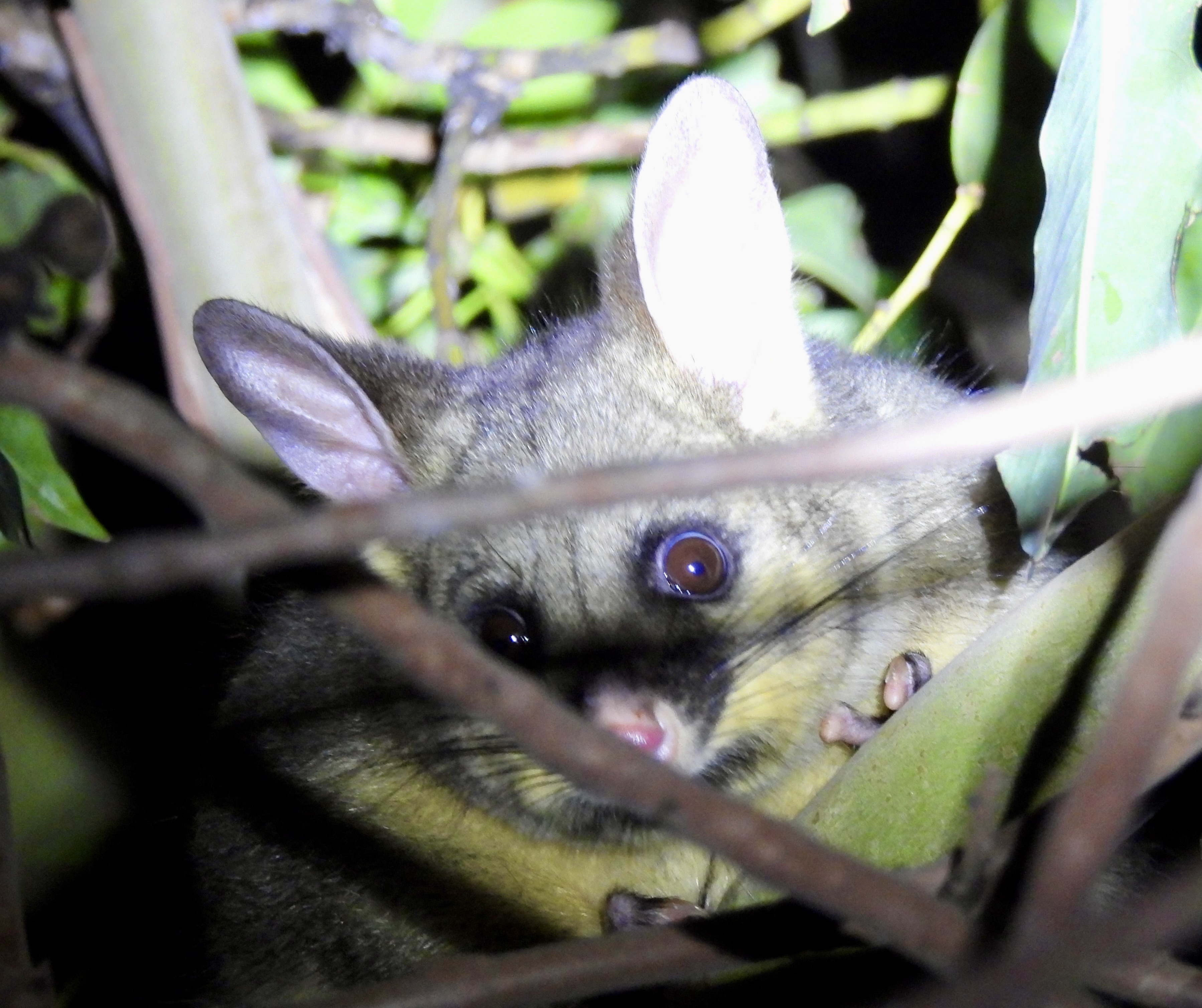
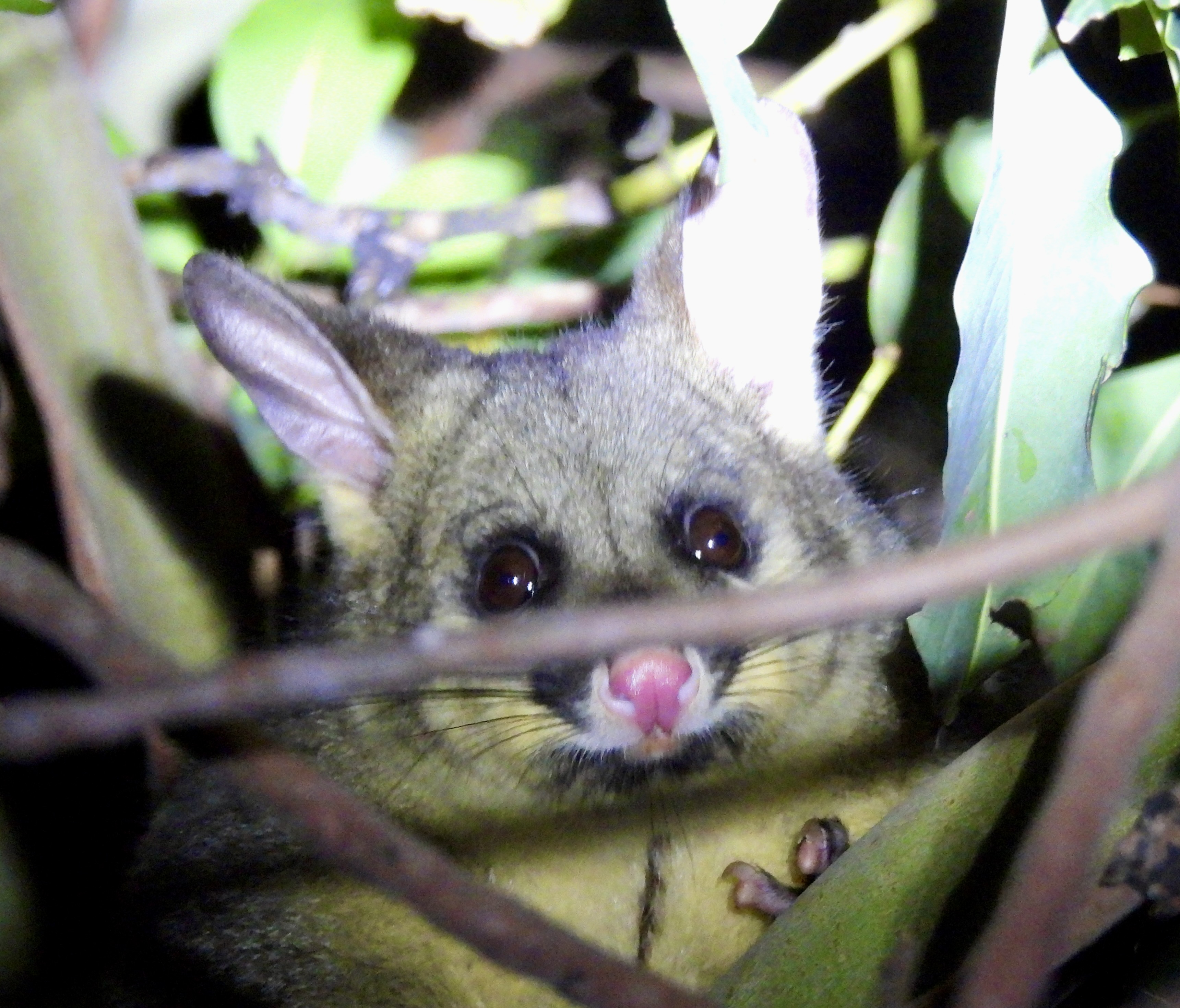
Common Brushtail Possum
The following day, December 11th, was the final full day of the trip. We had an early flight scheduled out of Melbourne on December 12th and spent the night at an airport hotel in the city. We also had plans to meet some old friends at a restaurant across from the Royal Botanical Gardens in the evening.
For the morning and afternoon, we had a bit of spare time to do a few quick nature outings. Our first stop on the way out of Geelong was the Geelong Botanical Gardens, where there is a well-known and easily accessed flying fox roosting site. I spotted the tree while driving through the gardens and my mom pulled over for me to take some photos before we moved along.
The trees at the roosting site, to my delight, were filled with wild Gray-headed Flying Foxes. This particular megabat species is unfortunately vulnerable to extinction from habitat loss, urbanization, and climate change. It was a privilege to see a large colony of them in the wild.
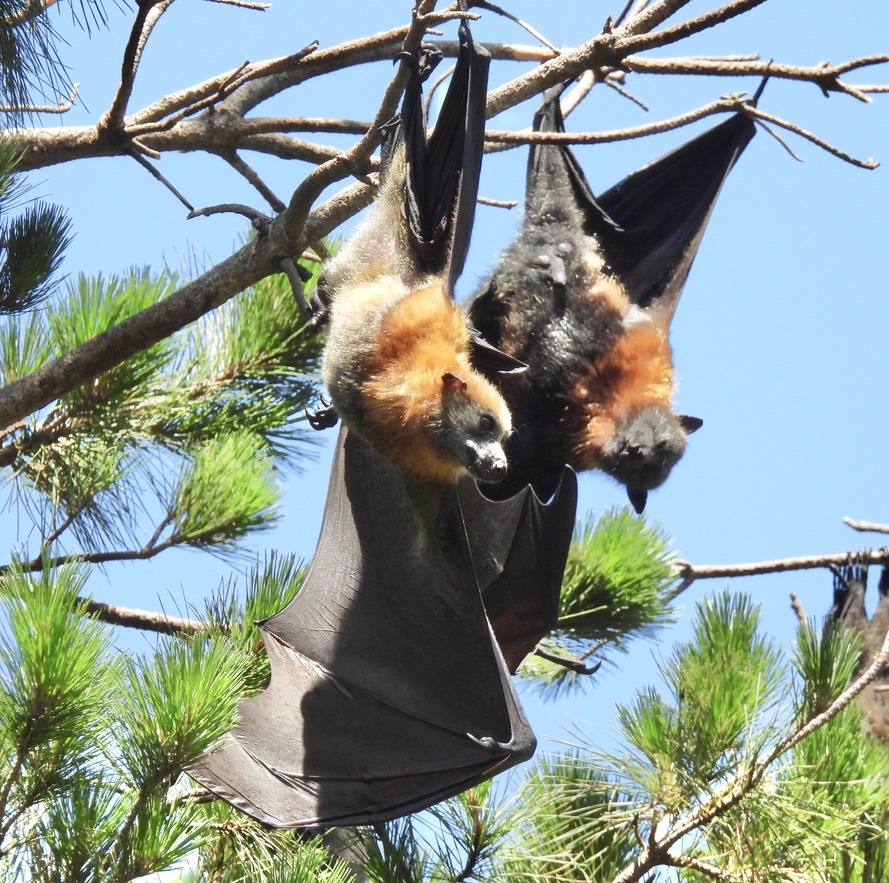
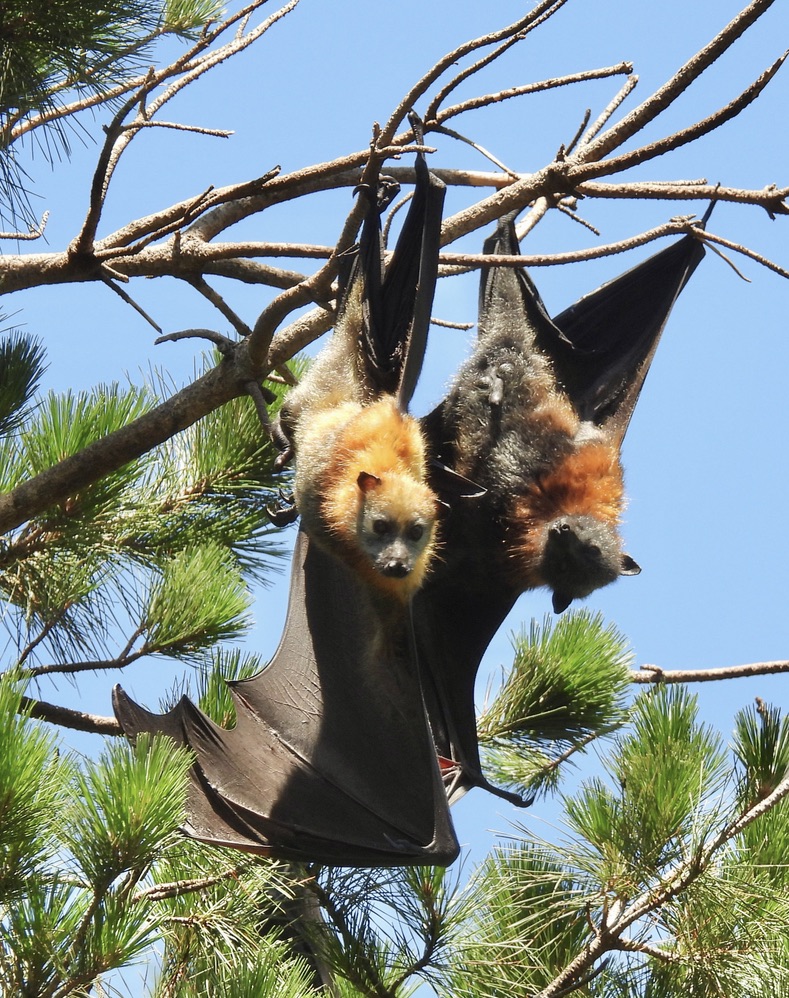
Gray-headed Flying Foxes
Following the flying fox roost, we drove out of the city of Geelong and ended up at Point Cook Coastal Park on the shoreline of Port Phillip Bay. I wanted to do some last-minute birding before we left Australia, though it was around midday and the bird activity wasn’t terribly high. We also didn’t spend much time at the park.
I spotted a Silvereye, Pied Oystercatchers and a group of Black Swans along the shoreline. It was cool to observe the Black Swan—a common ornamental bird in Eurasia and North America— in its native range.
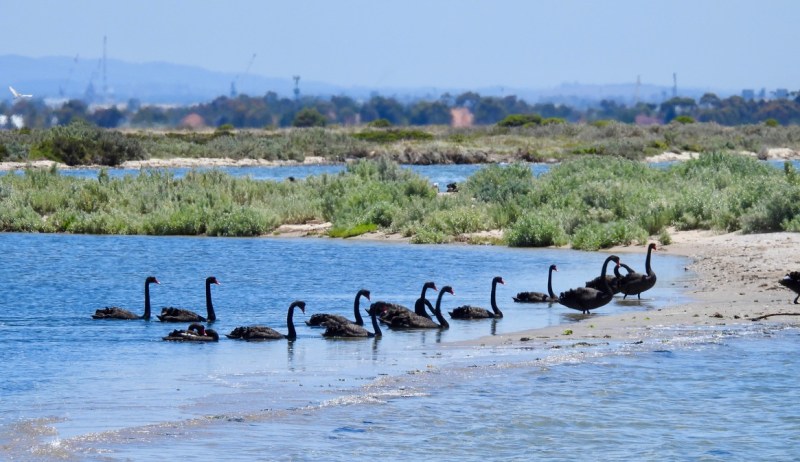
Our very last nature outing of the trip was a return trip to You Yangs Regional Park for a hike up 350-meter-high (1,150 ft) Flinders Peak, the high point of the park. The trail was fairly crowded and there wasn’t much wildlife activity. But the surrounding forests and vistas were pretty and the hike was enjoyable for both of us. It was a nice way to end my first-ever trip to Australia.
After the hike, we drove into downtown Melbourne to meet with our old friends for dinner and later to the airport to return our rental car. The next evening, after a long and tedious commute back to Singapore, we arrived home, exhausted yet satisfied with our trip.
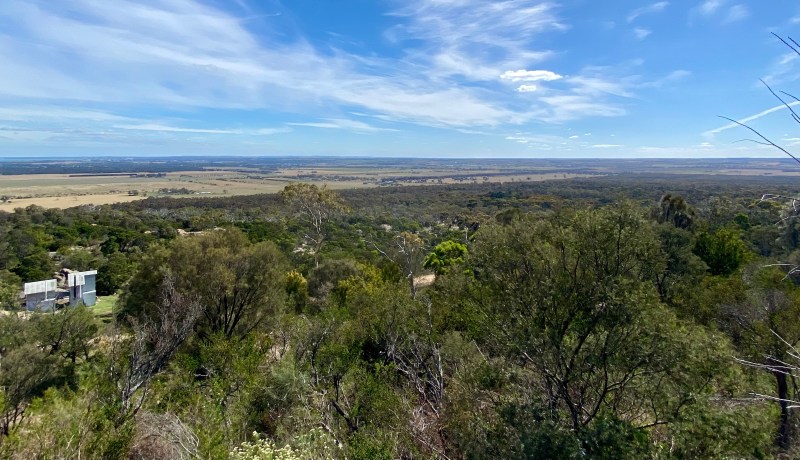
Overall, I enjoyed my exploration of Southern Victoria and my first-ever adventure in Australia. I’m grateful to my mom for inviting me along and, despite her busy work schedule, making time for various nature outings. I’m also thankful to her colleague for his recommendations on where to see local wildlife and for the guided hike through Anakie Gorge.
Though I had a terrible university experience in Australia and still have mixed feelings about the country, I do think the biodiversity of Oz is fascinating and well worth a return trip someday to explore further.
Thank you for reading as always—and stay wild.
-Bennett
Mammal Species Recorded: (Lifers bolded)
| Common Name: | Scientific Name: |
| 1. Swamp Wallaby | Wallabia bicolor |
| 2. Eastern Gray Kangaroo | Macropus giganteus |
| 3. Common Ringtail Possum | Pseudocheirus peregrinus |
| 4. Common Brushtail Possum | Trichosurus vulpecula |
| 5. Gray-headed Flying Fox | Pteropus poliocephalus |
| 6. European Rabbit | Oryctolagus cuniculus |
Bird Species Recorded: (Lifers bolded)
| Common Name: | Scientific Name: |
| 1. Laughing Kookaburra | Dacelo novaeguineae |
| 2. Wedge-tailed Eagle | Aquila audax |
| 3. Rainbow Lorikeet | Trichoglossus moluccanus |
| 4. Galah | Eolophus roseicapilla |
| 5. Sulphur-crested Cockatoo | Cacatua galerita |
| 6. Australian Magpie | Gymnorhina tibicen |
| 7. Black Swan | Cygnus atratus |
| 8. Superb Fairywren | Malurus cyaneus |
| 9. Rufous Whistler | Pachycephala rufiventris |
| 10. Gray Currawong | Strepera versicolor |
| 11. Pied Currawong | Strepera graculina |
| 12. Magpie-lark | Grallina cyanoleuca |
| 13. Red Wattlebird | Anthochaera carunculata |
| 14. Australian Wood Duck | Chenonetta jubata |
| 15. Crested Pigeon | Ocyphaps lophotes |
| 16. Common Bronzewing | Phaps chalcoptera |
| 17. Australasian Darter | Anhinga novaehollandiae |
| 18. Silver Gull | Chroicocephalus novaehollandiae |
| 19. Great Crested Tern | Thalasseus bergii |
| 20. Pied Oystercatcher | Haematopus longirostris |
| 21. Australasian Swamphen | Porphyrio melanotus |
| 22. Australian Ibis | Threskiornis molucca |
| 23. Red-browed Finch | Neochmia temporalis |
| 24. Silvereye | Zosterops lateralis |
| 25. Gray Shrikethrush | Colluricincla harmonica |
| 26. Australian Raven | Corvus coronoides |
| 27. White-winged Chough | Corcorax melanorhamphos |
| 28. Gray Butcherbird | Cracticus torquatus |
| 29. Dusky Moorhen | Gallinula tenebrosa |
| 30. Pacific Black Duck | Anas superciliosa |
| 31. Willie Wagtail | Rhipidura leucophrys |
| 32. Little Pied Cormorant | Microcarbo melanoleucos |
| 33. Masked Lapwing | Vanellus miles |
| 34. Common Myna | Acridotheres tristis |
| 35. House Sparrow | Passer domesticus |
| 36. Spotted Dove | Spilopelia chinensis |
| 37. Eurasian Blackbird | Turdus merula |
 Bennett Gardner Wildlife Watching
Leave a comment