

To start my recounting of my recent trip to Sabah, Borneo (March 18th-24th, 2023), I’ll recite an excerpt from my journal:
“When you love a place without having ever truly explored it, and finally get a chance to see it for yourself, you will almost certainly face disappointments and enchantments beyond anything you could’ve pieced together through imagination. This is what I’ve learned thus far from Borneo.” -Myself
After spending a week exploring this spectacular island with my family, I can definitely attest to what I wrote in my journal. However, I must say that the enchantments I encountered outweighed the disappointments tenfold! More certain than ever before, I know that Borneo and Southeast Asia is where I will work someday soon as a zoologist/conservationist.
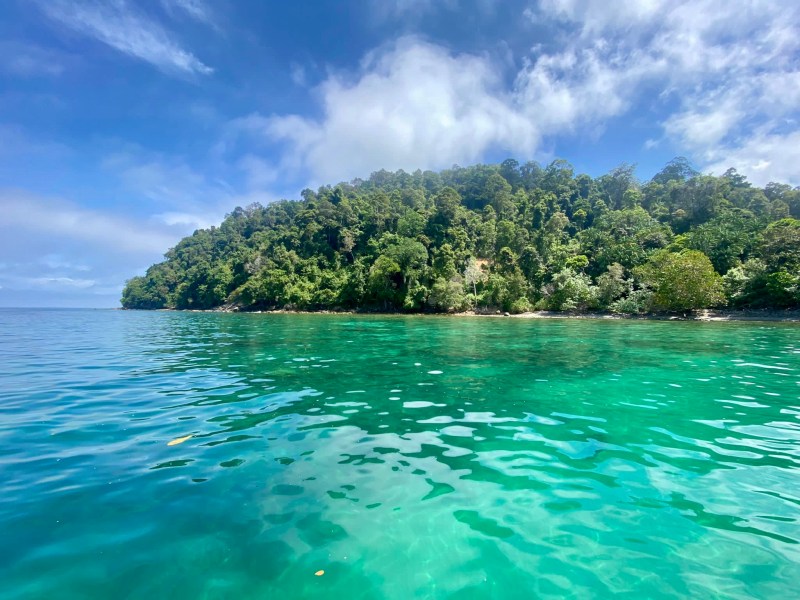
Needless to say, the sheer quantity of wildlife-watching I did and the amount of unforgettable experiences had on this trip make it impossible to sum up in a single blog post. Additionally, Borneo has been not only a dream destination of mine to travel to, but one I’ve wanted to work in for years. So, I’m going to divy the trip up into several blog posts, with an additional blog post at the end where I discuss my views on the conservation of wildlife and resources on the island and my future there. A lot of time and effort goes into all my posts, so there probably will be some lag time between them, perhaps a week or two. Onto part 1 of my 2023 Sabah, Malaysian Borneo adventure.
I first experienced Northern Borneo (Sabah) when I was 9. Even though my family embarked on very few outings outside our large, lavish resort—Shangri La’s Rasa Ria—the amount of biodiversity my young self experienced first-hand while searching through the resort’s private nature reserve, and during a wildlife-spotting boat cruise through the Klias Wetlands, made me vow to return someday. Exotic, unique flora and fauna like the orangutan, pygmy elephant, Rafflesia flower and Proboscis Monkey captivated me.
I didn’t know then what had happened and was happening to Borneo’s precious rainforests (the tallest and 2nd-oldest tropical forests on Earth), which were and are being logged mercilessly for valuable hardwood and to clear land up for palm oil, rubber and pulpwood plantations.
It’s been in the past couple years that I’ve chosen Borneo as the place where I want to dedicate part of my life to protecting and studying. Now that I am educated on the fate of the island’s forests, I am determined to stop their destruction and restore them to an extent.
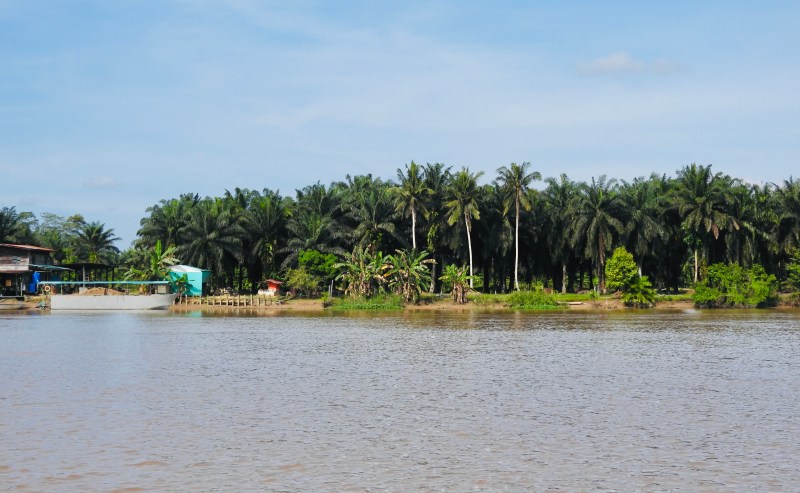
I’d been begging my parents to take me back to Borneo for a long time, but all such queries were answered with a resounding “no” before this year. However, to celebrate the milestone of Eagle Scout upon my completion of the Boy Scout rank, my parents decided to allow me to plan a trip to Borneo. After earning Eagle Scout on September 19th, 2022, I was ecstatic (not just for the trip; it was a big deal for me!) and immediately set out planning our next family vacation (really the first since before COVID).
They say you learn through mistakes, and that’s definitely true here, because instead of planning the trip so our family would be in control of the itinerary, I booked it through the tour company Borneo Eco Tours. I chose this particular tour company because it was owned by the same entity as the renowned Sukau Rainforest Lodge–an eco-lodge on the banks of Borneo’s wildlife-rich Kinabatangan River. After doing my research on the lodge and comparing it to other such lodges in the area, I knew I had to stay there for a couple nights with my family! I’ll go into much more detail about Sukau Rainforest Lodge in the next few posts, but in short, it was amazing.
What wasn’t quite as superb was Borneo Eco Tours. Especially for the ridiculous rates they were charging for what turned out to be pretty basic experiences we could’ve done on our own. Borneo Eco Tours offers dozens of different tour packages at varying lengths, many of which involve several days at Sukau Rainforest Lodge and seem to cater toward the eco-tourist. I originally wanted to book a package that included 8 days at 3 of Borneo’s premier wildlife-watching destinations, but the price was absurd and my mom sent me back to find a cheaper option.
Doing some more research, I found what looked to be a totally decent package: 7 days, including time on Borneo’s west coast, the unique Turtle Islands Marine Park, Sepilok Forest Reserve, and the Kinabatangan River, all for a (more) reasonable price. We booked it in November. At the time, I thought the tour company would make transfers and accommodation easier and would maximize our wildlife viewing experiences. I thought wrong!
Now, for the most part, our guides were great. If we ever decide to visit Borneo again, Shah and Jonathan are my top choices for who I’d hire to help me navigate the island’s wilderness. My family got both of their contacts so we could stay in touch and perhaps plan a return trip. But the tour itself was poorly executed and did not provide bang for buck. I want to clarify though that the experiences we had were amazing, and this is only the tour and its itinerary I’m talking about. For the $1,000 USD my parents paid per person, they weren’t happy!
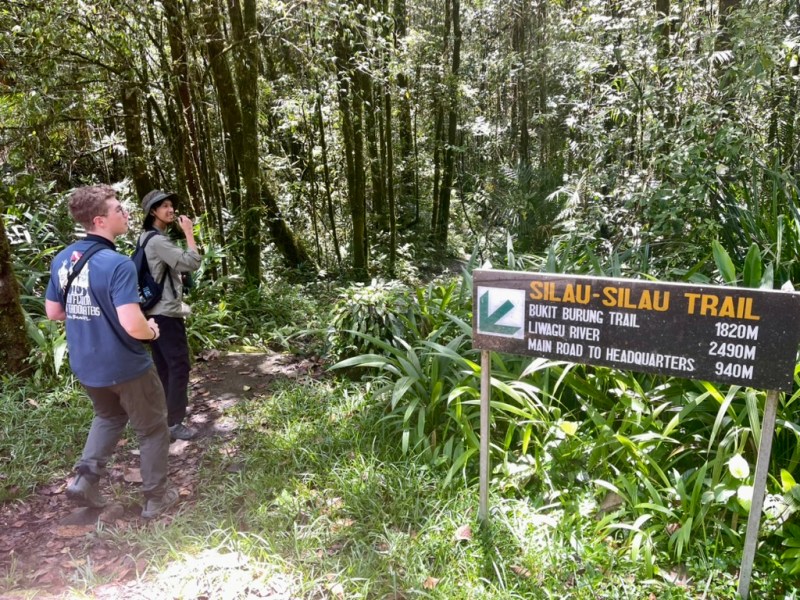
We departed for the trip on the morning of March 18th. At the time my family was in the process of moving out of our house in Woodlands, Singapore so packing was slightly chaotic, but we all managed. I threw all my essentials (camera, binoculars, journal) into a smallish orange backpack, which remained by my side for the entirety of the trip. I left my phone at home as I wanted a detox and more time to think and journal my observations and experiences. I honestly hate iPhones and the amount of time and brainpower they waste, and if I could I would probably purge mine from my life!
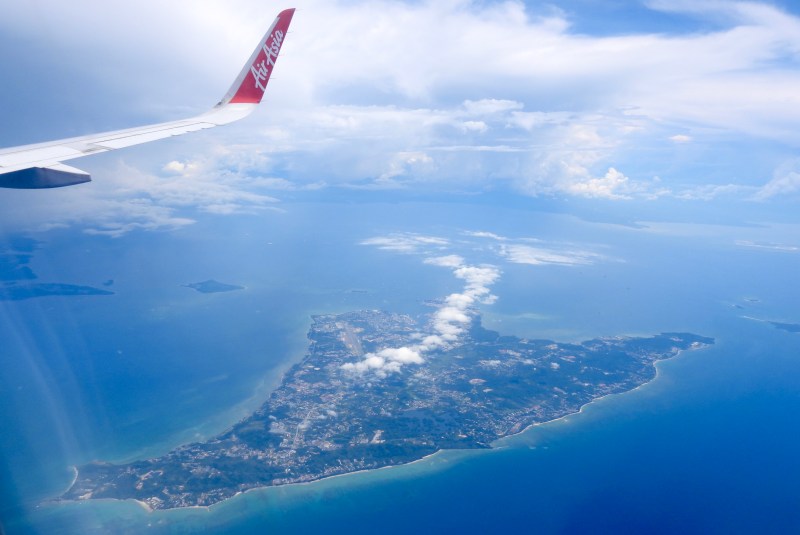
After a relaxing Grab drive to Changi, we navigated the ever-so-pleasant Singapore airport, chowed down a quick noodle lunch (my little sister went with Burger King), and located our terminal just as the plane started boarding. My parents sat toward the middle of the plane; my sister and I were squished into more discounted seats. The cheapest seats on an AirAsia flight are in the far back of the plane, and they don’t recline. In fact, I think they were designed to have an inhumane amount of leg room. My 6-foot frame was compressed into an area barely large enough to operate my limbs. Needless to say, it wasn’t a very fun flight. 2 hours in, as we edged closer the the coast of Borneo, I inquisitively looked out the window. We flew over Brunei, then Malaysia’s Labuan Island, which provided some nice photo-ops.
Shortly after, we made our descent into Kota Kinabalu, the largest city in Borneo and the capital of the Malaysian state of Sabah. It felt surreal to be in the place I’d been dreaming of returning to for 8 years, and my future career base! I fixed the crick in my neck and back upon exiting the plane: stretching out was nothing short of wonderful after that flight! Thrift shops throughout the airport vending Proboscis Monkey plushies and Rafflesia paintings reminded me of where I now was, and I became filled with childish excitement. After getting our luggage and some Malay Ringgit from an ATM, we located our driver from Borneo Eco Tours. He was a really nice guy who didn’t speak much English, just enough so we could communicate with him. Outside was Borneo Eco Tour’s private van, decorated with pictures of Borneo’s famous flora and fauna.

We entered the van, taking our favored seats before zooming off toward our first hotel: the Dreamtel. Kota Kinabalu is still obviously a developing city, with trashy billboards plastered all over and run-down architecture at every turn. It does have its nice sides, though, as I would find out.
The weather was muggy and overcast. It had rained earlier but any precipitation ceased before our arrival, luckily. As we drove along, I noted many invasive and non-native trees planted on the nearby hillsides for erosion prevention including Ear-Leaf Acacia and African Tulip Tree. I’m sure that 50 years ago these hills were covered in rich primary rainforest but Borneo’s destructive timber industry and sea of development began hitting areas close to population centers hard. There were expanses of degraded native forest left on the drive, which gave me some slight hope for this area’s ecosystems.
On arrival at our not-so-dreamy Dreamtel at 3:30 pm, the start of our issues with Borneo Eco Tours began. They’d given us no communication on when we’d be picked up for our evening tour of the city listed on the itinerary, and put us in quite possibly one of the nastiest hotels in Kota Kinabalu. We found hair in our showers, cigarette stains on our beds, and a mildewy aroma in both rooms. The TV was basically broken and had 3 English channels. After a very long time waiting, we got a message from the tour company at around 6 pm that we were getting picked up for our tour, so we headed downstairs and greeted our first guide, Shah.
5 minutes up a paved road through shrubby secondary forest, and we were near the summit of 100-meter-high Signal Hill. The clouds had broken enough so the rays of the setting sun burst through and showered the city in golden light. Shah guided us to the guardrails on one side of the road so we could enjoy the view. Signal Hill, which overlooks virtually the entirety of downtown Kota Kinabalu, has some interesting history behind it. In 1905, the Atkinson Clock Tower was erected by the mother of Francis George Atkinson, the first district officer of Kota Kinabalu (then Jesselton). Today, it stands as the oldest surviving structure in the city, and one of only three buildings that survived the WWII bombardment of the city by the Japanese. Shah pointed the other two buildings out to us, as well as explaining the history, geography and the current situation of Kota Kinabalu.
Most of the downtown area of the city today is located on reclaimed land. As someone who’s lived in both Hong Kong and Singapore (cities composed of swathes of reclaimed land), it didn’t surprise me. The view was okay, though nothing like Hong Kong’s Victoria Peak in the evening, which the site reminded me of.
Kota Kinabalu is primarily composed of short to medium-height buildings and skyscrapers, and the downtown area is quite nice. In the distance, out toward the South China Sea, were the forested islands of Tunku Abdul Rahman Marine Park, a place we visited in the coming days. After telling Shah about my interest in birding and wildlife watching, and my desire to nab some beautiful Bornean birds on the trip, I was stoked to hear that he himself is an experienced birder! He helped point out some common birds on Signal Hill like a soaring Brahminy Kite and a Little Egret flying overhead. Shah’s knowledge of Bornean birds would prove invaluable the next day at Kinabalu Park—more on that later.

We departed Signal Hill and embarked on a short drive to a Chinese-Malay fusion restaurant for dinner. The atmosphere was similar to basically any hole-in-the-wall restaurant in Hong Kong, which that restaurant and similar restaurants in the area reminded me of. Shah informed us that this is no coincidence.
Sabah actually has a very high number of Hongkongese residents; many of which were employed by the British when they governed Northern Borneo before WWII, and decided to settle there. A lot of the areas around Kota Kinabalu, and later Sandakan on the East Coast of Sabah reminded me of Hong Kong. Especially the awesome food! Borneo is a melting pot of different cultures and cooking, and it’s here that some of the world’s best cuisines meld together. Malay-Chinese, Chinese-Cantonese, Malay-Indian— you name it!
I was famished after barely eating all day and finished all 5-6 plates of veggies, meats and rice that was served to us family-style. Specialties included a spicy fish curry which my dad said was the best he’s ever had.
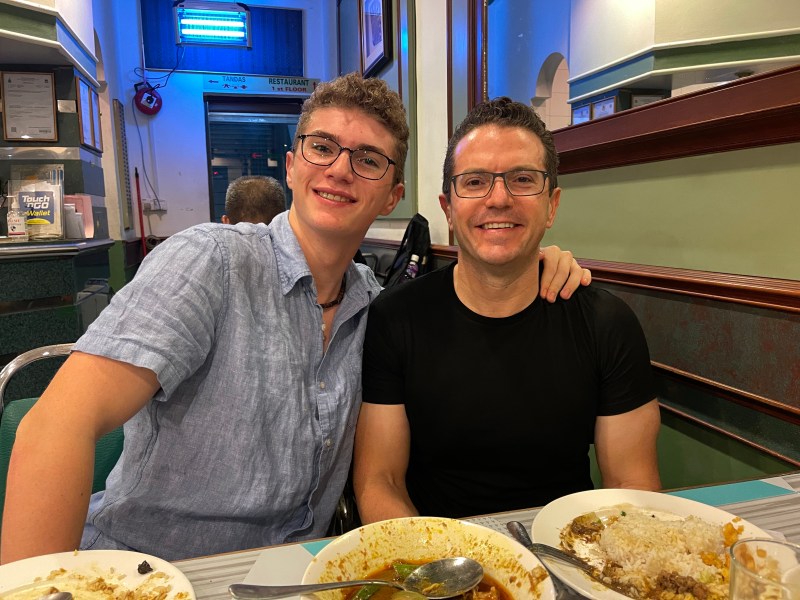
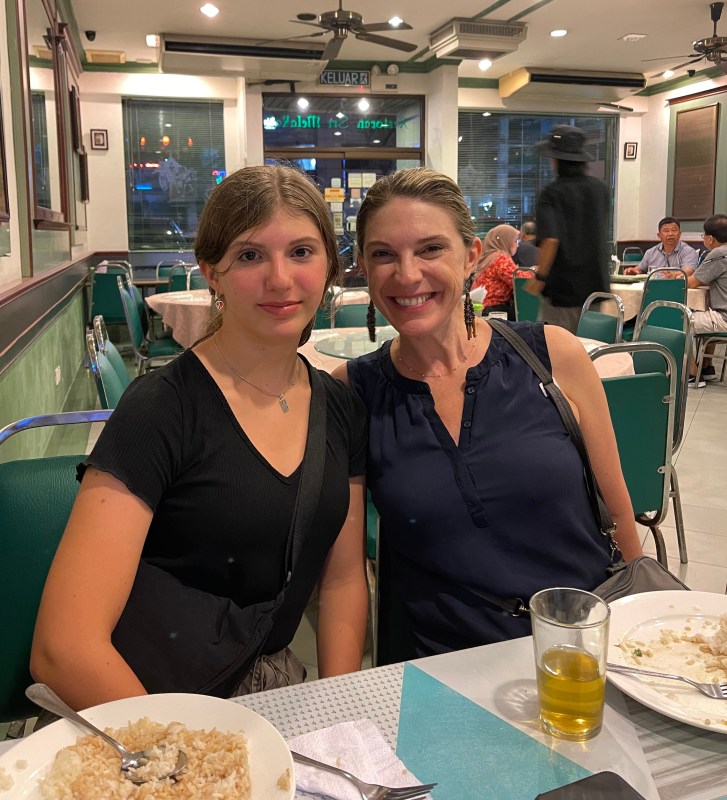
Afterwards, Shah took us on a tour through Kota Kinabalu’s outdoor wet market, the true heart and soul of the city.
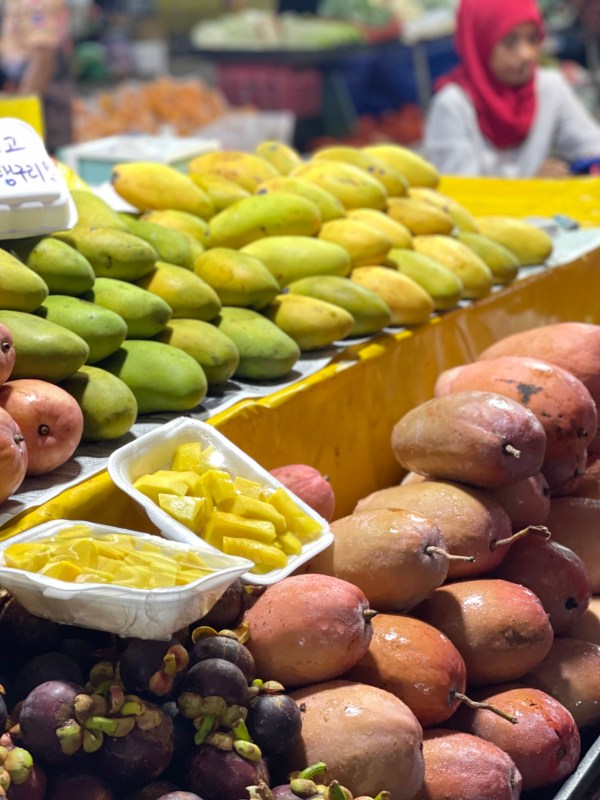
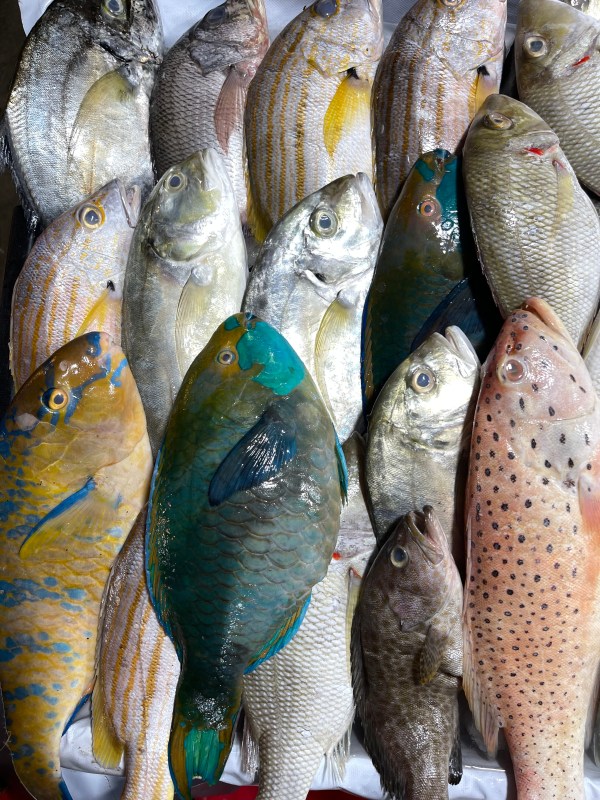
It’s a colorful, hot, loud and vibrant place, bustling with hundreds upon hundreds of venders and customers. It’s here that Borneo’s many cultures and livelihoods converge into one spot for their collective need for monetary profit. More varieties of fruits, vegetables and seafood than I’d seen in my entire life were stacked in tall piles and lined in rows hundreds of feet long under the market’s canvas roof and florescent lights. Everyone, from farmers to fisherman to handicrafts makers to food venders were making a living there.

We would’ve gotten lost in the chaos if it wasn’t for Shah guiding us through. Our first stop was the fruit section of the market where we purchased some sweet Thai red mango. A first for all of us. We were introduced to an endemic Bornean cash crop, Terap, a species closely related to and resembling jackfruit. It grows only on Borneo and on a couple neighboring islands in the Philippines. There were some other interesting fruits we observed and sampled as well.

We explored the seafood section of the market and all of its freshly-caught tropical reef fish, including some very large lobsters and grouper. We moved onto the dried seafood section of the market. Piles of dried krill, squid and small fish were presented to potential customers. Interestingly, the most expensive product in the entire market lies here, selling for well over $200 USD. This curious commodity is a valued species of sea cumber, sold dried, in packs of 2-6. Hopefully the local fishery for this species is well-managed; it would be a shame if sheer scarcity was the reason for its heavy price tag.
Shah let us sample some popular Malay snacks, though I didn’t particularly enjoy any of them. It’s probably just my taste buds, which are accustomed to snacks of a more ‘refined’ category—potato chips, cheese puffs and candy bars.

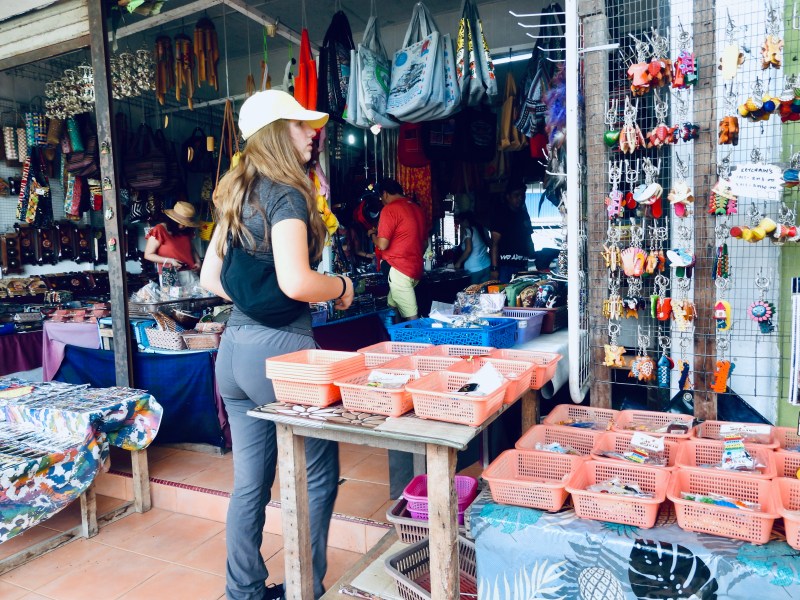
We then ventured into the local handicrafts and souvenir market with Shah still leading us. The place was indoor, lacked AC, and was a maze of hallways covered–no, plastered–top to bottom, with handicrafts, magnets, jewelery, instruments, paintings, toys and more. The rest of my family looked around at souvenirs. The only thing I purchased in there was a cool new leather bracelet to go along with my shark’s-tooth necklace (my look, I guess?). My sister, who has a tradition everywhere she travels to, of collecting a keychain, scoured the market for one that fit her tastes.
What was interesting to me was the amount of eco-tourism directed souvenirs being sold. Magnets with photos of Mt. Kinabalu among furry orangutans; postcards overlaid with Rafflesia flowers and Rhinoceros Hornbills; and a mind-numbing number of Proboscis Monkey stuffed animals absolutely everywhere. I think when most people in other countries around the globe hear about ‘deforestation’ and ‘palm oil’ destroying the rainforest and killing the unique animals of this region, they may feel bad but don’t contemplate the true scale of Bornean rainforests when it comes to fostering the economy of the island. You aren’t just pushing species to extinction and destroying rainforests— you’re putting the majority of people in Borneo out of their jobs, especially those in the cities, like here in Kota Kinabalu. People selling wildlife souvenirs, guides like Shah, and so many more.
Trust me, if Borneo’s forests are destroyed and all the wildlife is poached; if the island becomes one giant palm oil plantation, absolutely no one is going to travel here. And why should they?
_____________________________________________________________________________
We departed the market shortly after and were dropped off at our hotel. We spent a relatively uncomfortable night at the Dreamtel and in the morning decided to skip on the hotel’s buffet of hot dogs floating in a pot of warm water, green cornflakes, and other such delicacies. We went to Starbucks instead for our morning meal and checked out of the hotel, deciding to switch to the Hilton for our next few nights in Kota Kinabalu.
The (luckily) clear weather was a good indication of the view we’d get of Mt. Kinabalu later in the day. We proceeded to drive several hours across the countryside surrounding Kota Kinabalu toward Kinabalu Park Headquarters, the gateway to Mt. Kinabalu. The park, designated in 1964, is around the same size as Singapore. It contains not only some of the world’s highest concentrations and diversities of plant species (over 6,000!), but also extreme levels of endemism in both plants and animals due to the isolation of Mt. Kinabalu’s montane habitats. This has led to its distinction as an UNESCO World Heritage Site in 2000—Malaysia’s first. The sheer quantity of montane endemic birds was one primary reason I was so excited to explore this amazing preserve with Shah!
Most of the land encountered on our drive consisted of patchy agricultural land, ugly industrial developments and scrub jungle. As we headed into the Crocker Range (Sabah’s primary mountain range, running down the entirety of the West Coast), the landscape changed into a wilder complex of plantation forests, terraced agriculture, and small fragments of native rainforest.
We caught our first views from the road of the awe-inspiring, highly distinct and landscape-dominating 2.5-mile-high summit of Mt. Kinabalu. We were over 50 miles away and still felt the mountain’s enormous presence! I can’t think of anywhere else on Earth where a single nonvolcanic mountain, absent of any peaks of even comparable height, dominates a landscape as much as Mt. Kinabalu does. The mountain’s distinctive shape and unique profile has made it an icon of Borneo. At 4,095 meters or 13,435 feet, it’s the highest mountain in Asia between the Himalayas and New Guinea and the 20th most prominent in the world.
Kinabalu is basically a giant massif of granite thrust up from Borneo’s crust a million years ago through tectonic forces, making it one of the world’s youngest mountains. The range of climates and habitats present from the peak’s base to its summit plateau represents an extreme array of vegetation types. In fact, in terms of flora you’d encounter, hiking from sea level to Low’s Peak (Kinabalu’s highest point) is the equivalent of walking from the Amazon rainforest to Northern Canada!
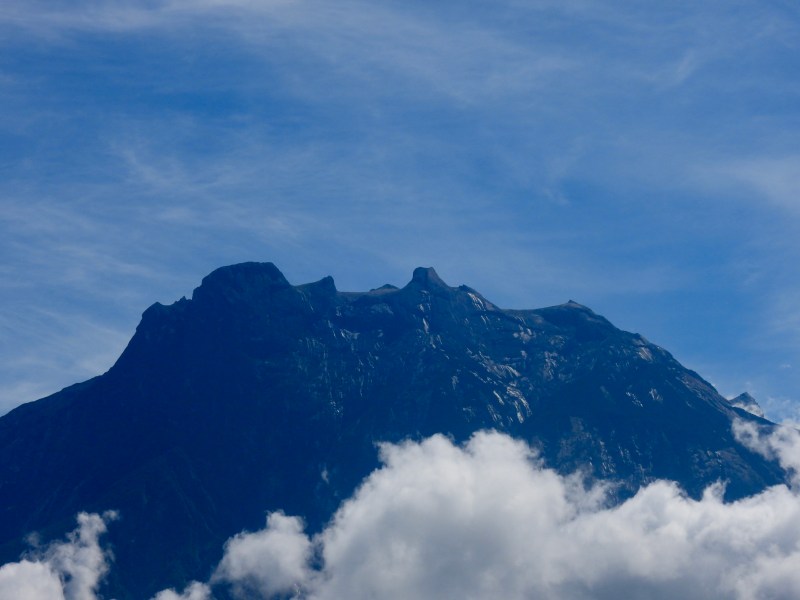
We stopped at a famous (and quite touristy) lookout spot in the village of Nabalu, 30 minutes down the road from park HQ. At this point I’d been staring out the window for the past 2 hours, watching the enormous mountain grow steadily larger, but it was here that we got our first truly amazing view of Kinabalu. We walked from the parking lot, through a market selling handicrafts and fresh fruit, to the lookout spot. There was a flat plateau of grass situated above a vegetated hill, and past that the great peak jutted vertically upwards over 10,000 feet (we were at around 3,500 feet above sea level).
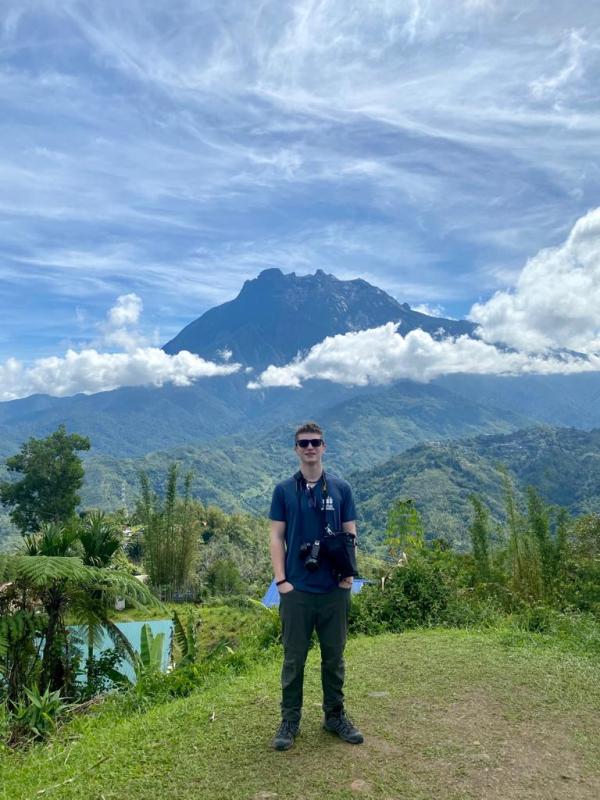
I’ve been to and have hiked countless mountains–living in Hong Kong, hiking was and still is one of my favorite hobbies–but there are few that come to mind that took my breath away as much as Kinabalu did! Maybe it’s the fact that I was falling in love with Borneo at the time, or the fact I was a bit dehydrated, or both, but I felt dizzy with excitement staring up at Kinabalu’s summit plateau. Minus some clouds near the mountain’s middle elevations, we got a perfectly clear view of Southeast Asia’s grandest peak.
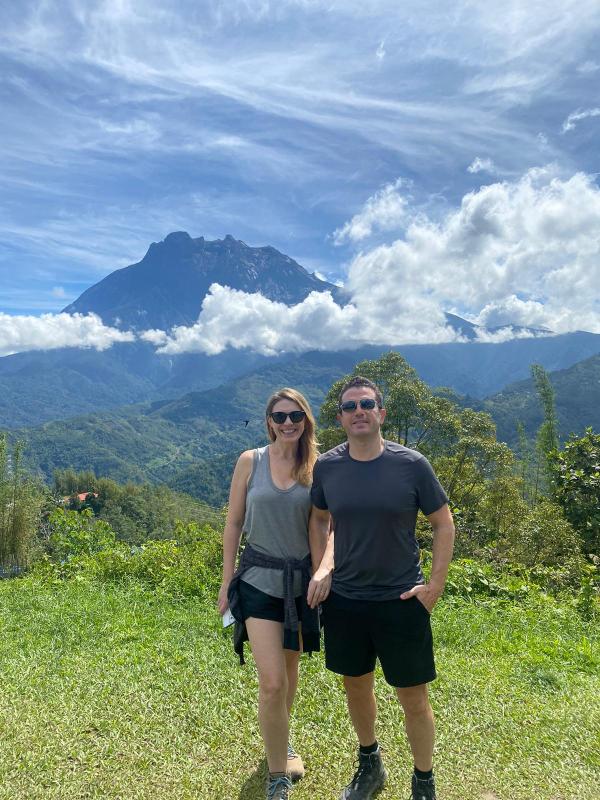
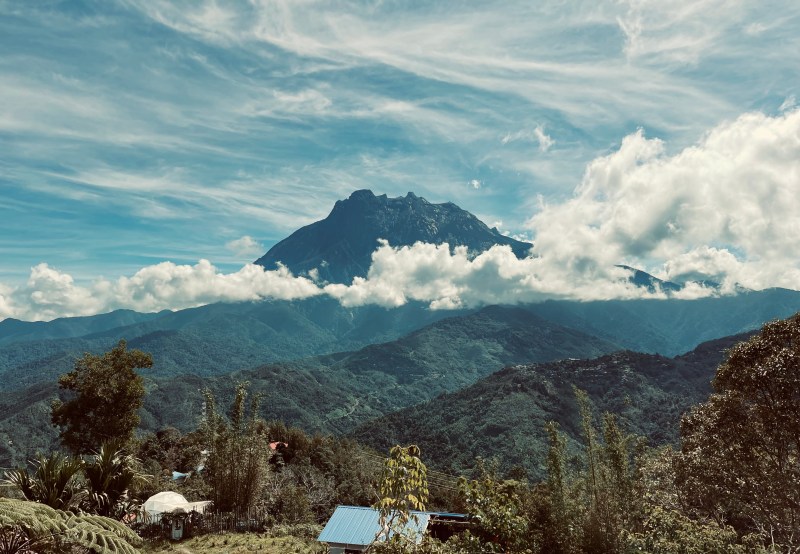
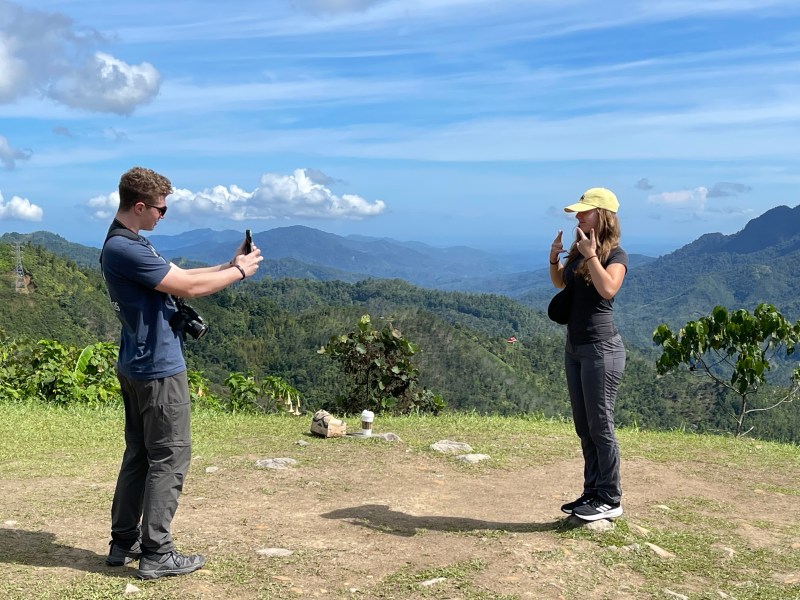
After enjoying the view of the mountain, my mom and sister took a half-hour to explore the local market for souvenirs. I borrowed some Ringgit and purchased delicious local fruits for the ride over to Kinabalu Park. My favorite has to be Honey Pineapple grown directly in the hills surrounding Nabalu.
Around the park, we entered pristine submontane cloud forest as we drove up the elevated road leading toward park HQ. We saw the sign marking the site’s designation as an UNESCO-listed area, and continued a bit farther up by car. The van parked in front of a concrete trail located at 5,000 feet above sea level. The weather was simply perfect at this elevation: partly cloudy, 72 degrees and windy. Shah explained we were hiking to a dirt cloud forest trail that leads down into Kinabalu’s famous Botanical Garden, an area where rare native and endemic plants from around the park are kept to educate and interest visitors. He also gave us some background information on the park and mountain.
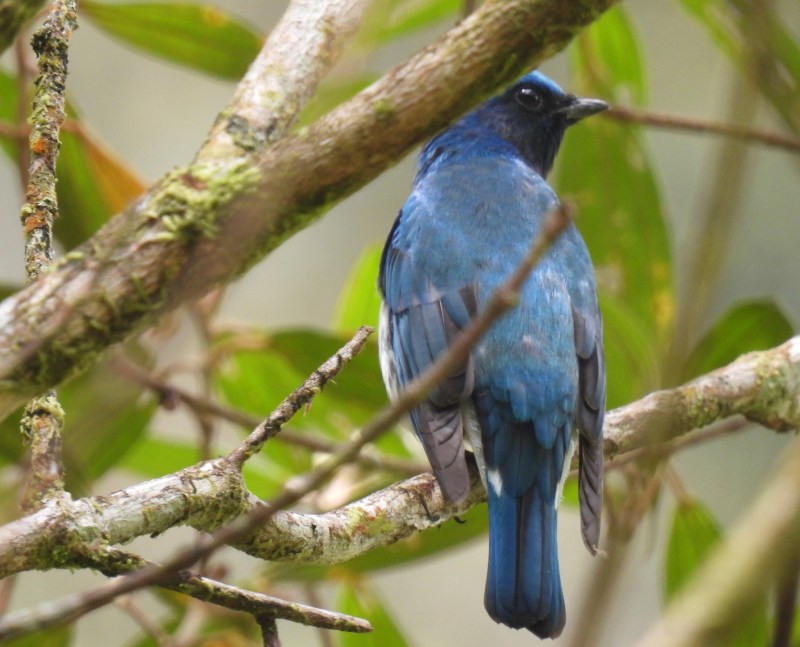
My family went at their own pace ahead of Shah and I, as we were birding. Kinabalu Park HQ is noted worldwide not just for its bird diversity (300+ sp), but primarily because of how many Bornean endemics it supports (over half the endemics on the island are found here). I was really excited to birdwatch with a professional guide at my aid. Just past the carpark, Shah nabbed our first bird, a Blue-and-White Flycatcher, on a stunted tree. While not an endemic, this was a lifer for me and is uncommon in the cloud forest. The bird’s dull blue definitely caught my eye.
As we continued along and searched the forest for its avian residents, I remarked on the highly unique blend of plants, many of which reach their peak diversity in areas north or south of Malesia (the biogeographic region of flora encompassing Malaysia, Indonesia, Brunei, and the Philippines). These plants are found regionally only here on Kinabalu’s slopes. Species of oaks tend to dominate the cloud forests of Kinabalu, alongside eucalyptus, rhodedendrons, conifers and chestnuts. This strange array of flora isolated in one spot effectively makes the mountain an ‘island on an island!’

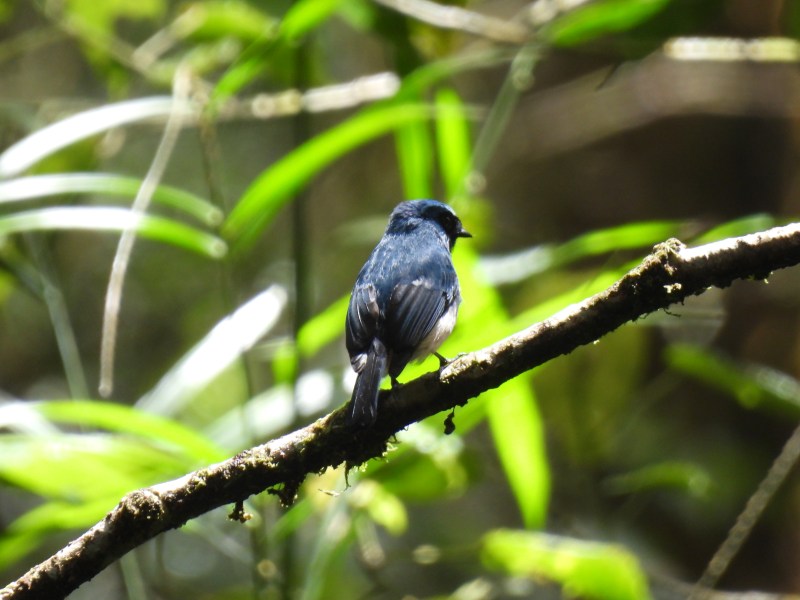
Our next bird was a lively one, a lifer, and a very common species locally–the Indigo Flycatcher. Shah’s sharp eye was once again the reason we got to observe the bird. The cloud forest’s dense foliage makes birding quite difficult.
The Indigo Flycatcher was similar to the Blue-and-White Flycatcher we’d just seen, apart from its smaller size and slightly differing coloration. During our 2 hours at Kinabalu Park HQ, we probably spotted 6 of them.
Our next bird I had trouble seeing as its view was obscured by a thick coat of moss and a large tree, but Shah noted a Velvet-Fronted Nuthatch amongst the greenery. I’d seen this bird in the wild before in Tai Po Kau forest in Hong Kong, but it was from a naturalized rather than a native population.
Past that, apart from an Indigo Flycatcher and some distant birdsongs, we saw nothing else on the walk up to the dirt trail. We caught up to the rest of my family and started the stroll down the track, which cut alongside a gurgling brook. I entered the cloud forest fully this time—an eerie, temperate, wooded habitat carpeted in mosses and draped in lianas and epiphytes, with a greater volume of foliage than your brain can take in at once.
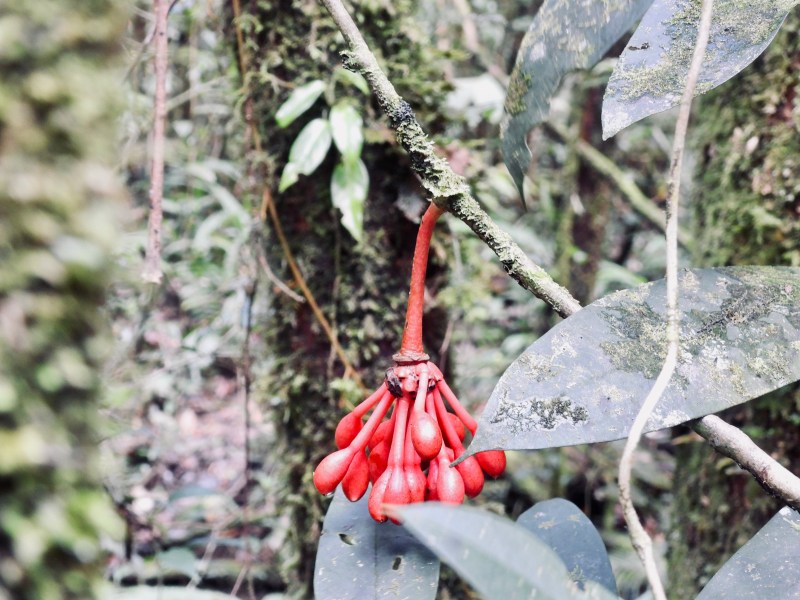
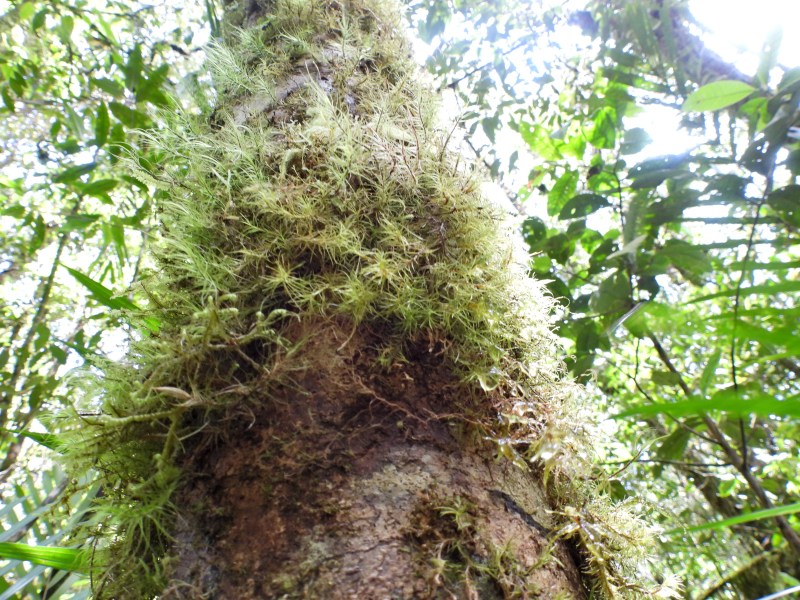
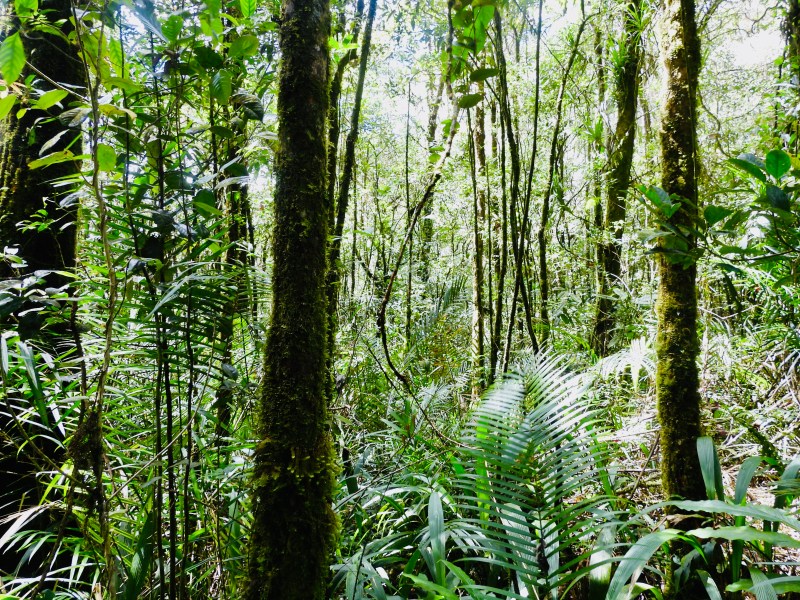
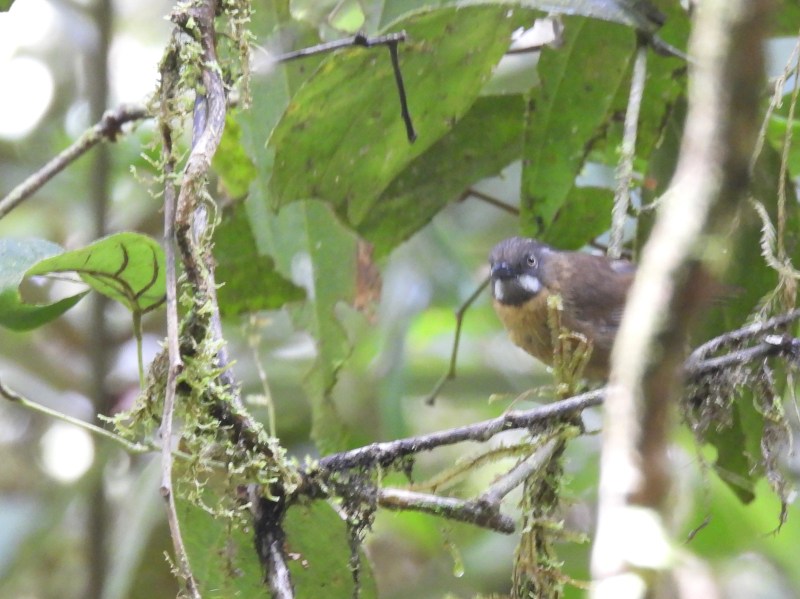
The birding here was much better than the road. In the 45 minutes it took to walk from the trailhead to the garden, Shah and I nabbed 6 bird species, 5 of which were lifers for me! The first species I spotted was a lively Chestnut-Hooded Laughingthrush high in the crown of a tree, alongside its flock, a Bornean montane endemic and a lifer. It took a blurry series of photographs for us to positively ID the bird.
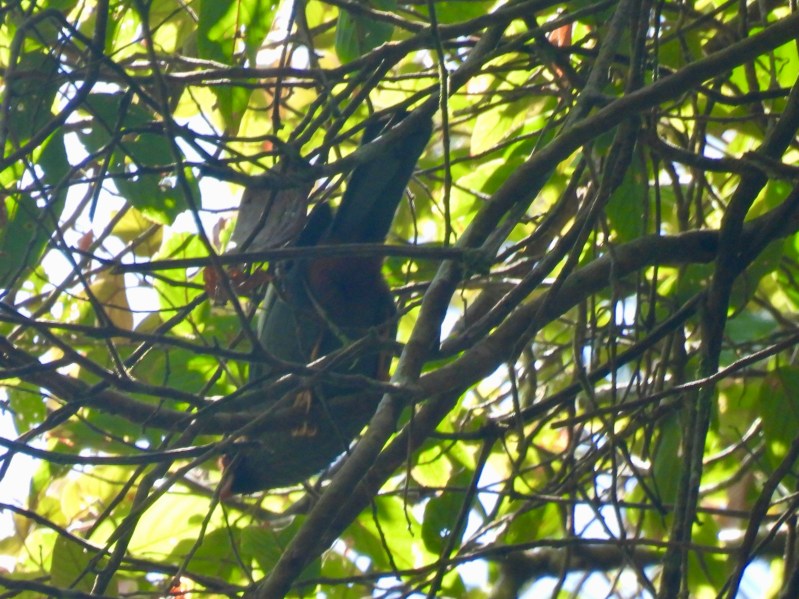
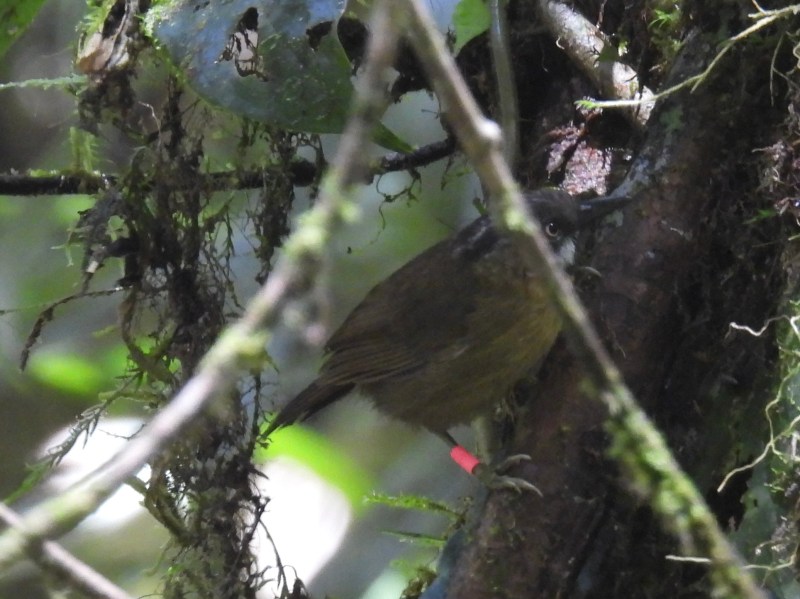
Our next species was an active, nesting Gray-Throated Babbler, a lifer and another montane specialty. This individual was known to birders and had been tagged by rangers to keep tabs on the populations of different species in the park.
Our specialty species of the day was a Bornean Forktail, a lifer and elusive endemic confined to the cloud forests of Borneo. Though I failed to snap a picture of the speedy little forktail, Shah reassured me that very few birders have been able to capture the species with their cameras! The bird’s shy disposition, restricted range and speed make it a tough targets for wildlife photographers.
Afterwards, we came across a mixed-species flock of Ochraceous Bulbuls and Hair-Crested Drongos, which were both too far back into the forest for a clear record shot. We’d already exceeded Shah’s expectation for the number of species we’d see at this time of day (nearly noon) here. But there were a few common targets left to see, namely, Whitehead’s Spiderhunter, a spectacular endemic, and the bright-red Temminck’s Sunbird, both easily spotted during the day.
John Whitehead, a British zoologist who discovered and described much of the fauna of Mt. Kinabalu in the late 1800s, made two of his greatest avian discoveries here. The Whitehead’s Trogon and Whitehead’s Spiderhunter, both distinctive montane Bornean endemics, are primary targets here in the park for birders. We unfortunately failed to spot either. Though someone did ask Shah if a trogon seen a few days prior was still up the trail.
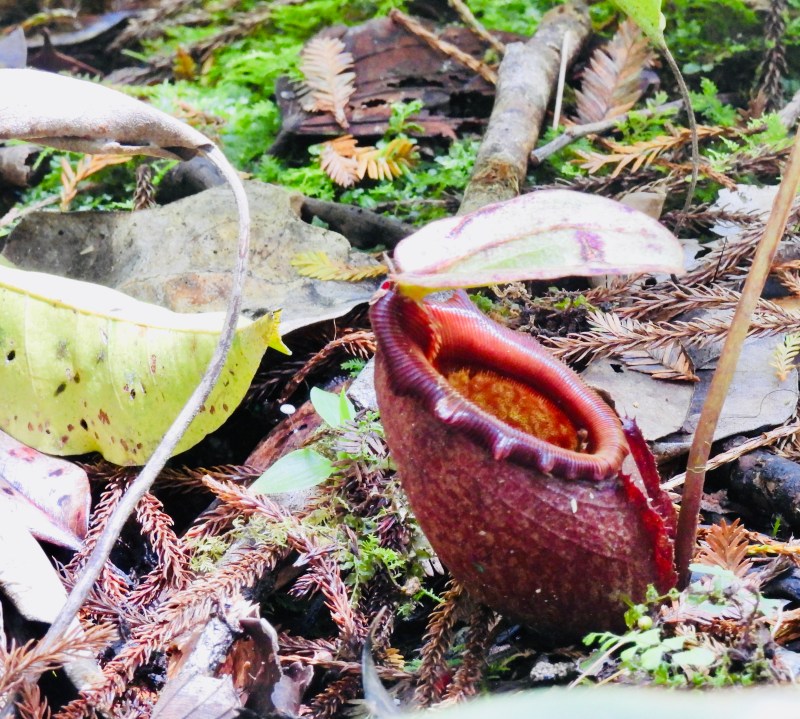
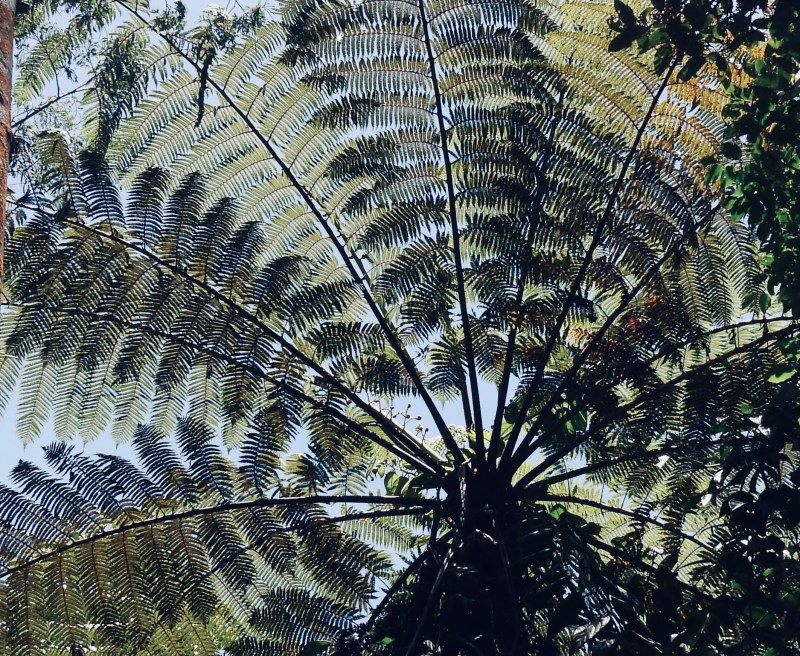
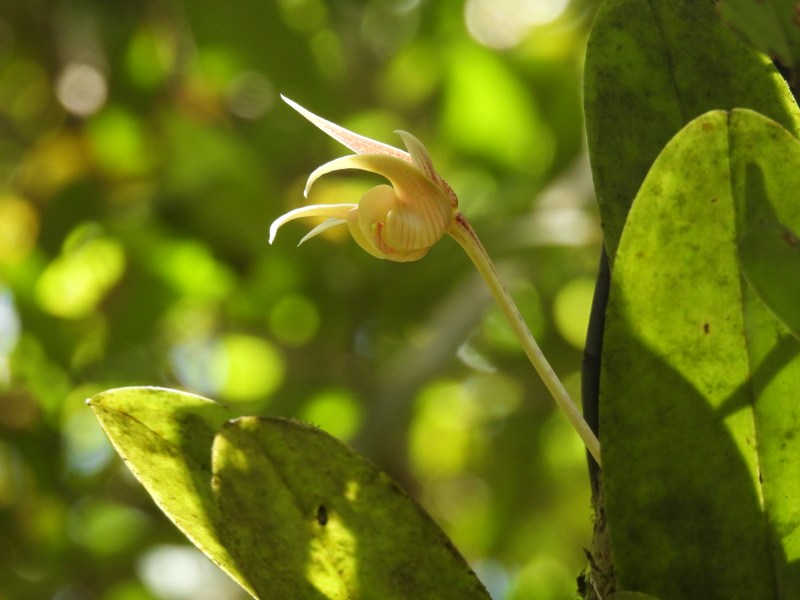
Shah pointed out some plants with medicinal and economic value as we walked. We arrived at the Kinabalu Botanical Garden, and took some time to explore and photograph the rich flora of the region. Among notable finds included pitcher plants, rhododendrons and orchids.



We exited the botanical garden after around 30 minutes or so, and proceeded to trek to the nearby parking lot for transfer to the park gallery, basically a museum. By this point, most of us were either hungry or tired, and we were ready to go for lunch. We learned some more about Kinabalu Park; its history, geology, flora and fauna from within the gallery. Shah listened for the calls of the endemic Golden-crowned Barbet, which is often active around park HQ outside, but to no avail. We did spot some Bornean Swiftlets in the skies around the gallery, my third endemic species, though not quite as spectacular as a barbet.

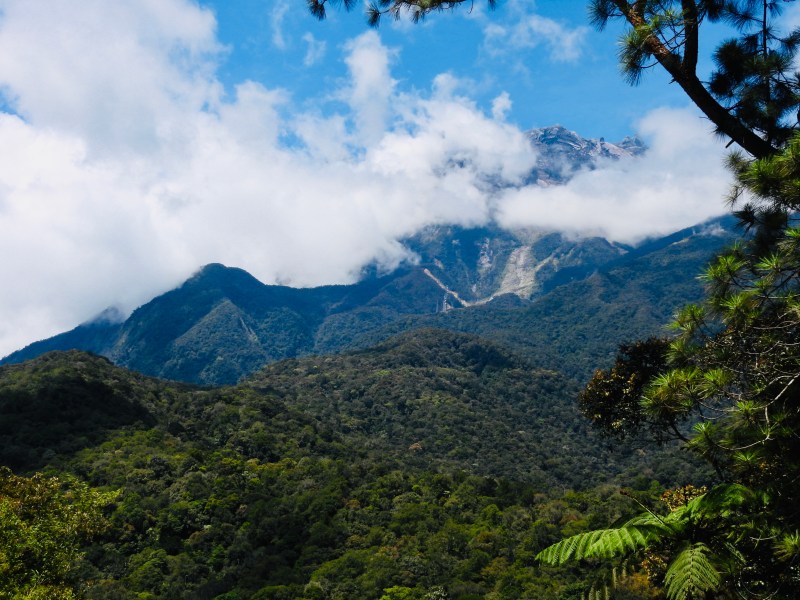
We transferred outside the park to a local restaurant after a refreshing few hours of hiking and birding. Definitely a worthwhile experience–I wish I could’ve spent a few days birding here with Shah! And I also wish we had the opportunity to climb Mt. Kinabalu, as it’s a pretty easy summit and seems like an epic adventure. Clouds had obscured the breathtaking view of the summit plateau by this time, the early afternoon.
The rather rustic Mt. Borneo restaurant we arrived at served some decent Chinese. As we were eating, Shah noticed some bird activity from outside. I rushed over to the restaurant’s outdoor balcony, where there was a Chestnut-Hooded Laughingthrush, as well as an endemic race of the Ashy Drongo, a lifer. There had been a Rafflesia flower that had bloomed a couple hours away, however, it was too far away to visit. Next time.
After lunch was a bumpy, 3-hour drive back to Kota Kinabalu, from the cool highlands to the muggy lowlands. In the city, we stopped at a local bookstore that Shah recommended so I could purchase guides to the mammals and birds of Borneo. Both guidebooks are great and highly informative about everything Borneo nature-related, not just mammals and birds. We checked into the Hilton and removed all our luggage from the van. Unfortunately, this meant saying goodbye to Shah, who’d been an excellent guide the past few days. After bidding farewell to him, we settled into our (finally clean) rooms, and went up to the pool for swimming, sunset views, and dinner.
The next morning we were up early for our boat trip to Tunku Abdul Rahman Marine Park, a cluster of lush, coral-fringed islands 20 minutes from Kota Kinabalu by boat. Borneo has some of the nicest reefs and best diving on Earth, and that was apparent even in the coral reefs of the park! They were quite intact for such a fragile ecosystem located right next to a city of half a million. My dad, sister and I, who are all SCUBA-certified, made a pact to return to one of Borneo’s better diving sites next time we visit the island. Throughout the day, my sister took underwater photos with her Nikon Coolpix, but the camera is currently misplaced. If I get an opportunity to download some photos from the camera, I’ll put them here.
We loaded onto a dive boat that had been arranged for us by the tour company, through no diving would occur today. Our guide was a PADI Divemaster, and provided good knowledge of the marine life of the area throughout the day. The way over was a fun, windy experience that somewhat reminded me of a more tropical Hong Kong. We used to take ferries from the mainland to offshore islands all the time there. In the distance, my sister and I caught views of the looming Mt. Kinabalu.
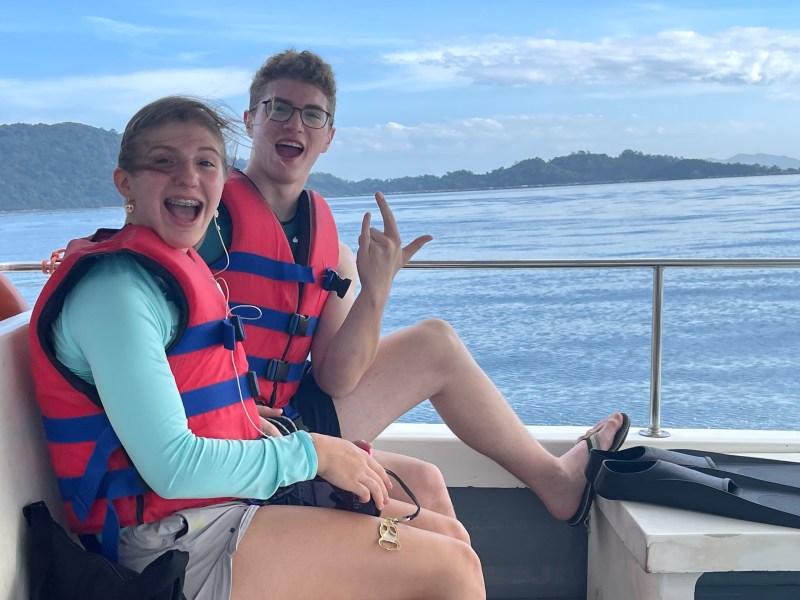
Borneo Eco Tours didn’t come through though, as they skimped on providing snorkelling gear on board the diving boat they arranged to take us to some of the islands. This seemed like a basic thing to provide to visitors paying to explore the reefs of the park! In addition, they put together an itinerary which prevented us from going to any quieter snorkelling sites, which we were more than capable of visiting on our private diving boat. Many of the islands get super crowded with European and Chinese tourists after 10am, and during low tide many of the reefs accessible from the beaches get closed to prevent visitors damaging corals or getting injured in the shallow waters.
Our first island was called Manukan, and we arrived before the crowds, giving us ample opportunities for snorkelling off the beach. I brought my own snorkelling gear from home, mostly recycled from my old spearfishing kit from Hong Kong. My parents and sister rented gear from a shop on the island. Though marine biology currently isn’t on my career path, I still love exploring underwater ecosystems and their colorful arrays of marine life. My dad and I split off from my mom and sister while snorkelling, going at our own place to explore the reefs. Here, we got pretty lucky, sighting Blacktip Reef Sharks, 3 species of anemonefish, a giant grouper, an endless shoal of bream, and multiple massive giant clams. The corals here were undamaged for the most part and simply beautiful, bursting with all sorts of colors.
As we got farther out, toward the swimming zone limit where dive boats can moor, the damage to the reef was upsetting to say the least. And throughout our whole time here, it disgusted me the amount of plastic trash floating in the water and lodged between corals. I picked up and filled my pockets with as much as I could, my dad doing the same. Most of the trash is probably sourced from the nearby village of illegal Filippino immigrants on Gaya Island (the largest island in the marine park) that lacks waste disposal facilities. It appals me that the government here does nothing to give the villagers garbage disposal facilities to protect the valuable ecosystems of the marine park next-door!
Once Manukan got crowded, sunny and hot, we left and made our way to Sapi, a small islet nestled next to the much larger Gaya Island. It’s also often a more crowded place than Manukan (thanks, Borneo Eco Tours). We’d visited Sapi last time we travelled to Borneo, 8 years ago, and weren’t fans. And due to the low tide, we weren’t allowed to snorkel the reefs around the island! Needless to say, we were all a bit upset, as we expected a full day of snorkelling. Luckily, our guide is a cool dude and decided to make the tour company’s poor organization right by taking us to a secret, sheltered cove for a private snorkelling tour.
We saw a distant sea turtle from the boat. The water was far deeper here than around Manukan, probably 13 feet, and the corals were spaced out more. During the hour we spent here, our guide helped point out more anemonefish, parrotfish, Moorish Idols, large sea snails and the highlight for me, a feather star. Once we got back to the boat, we took turns jumping off the top.
Afterwards, it was noon and everyone was hungry. We headed to Gaya Island for a hearty lunch and some relaxation time. I’d read that Gaya’s jungle was great for Bearded Pig sightings, and that it held populations of a Bornean bird endemic, the White-crowned Shama. There was a jungle trail leading from the island’s bathrooms to a nearby resort. I hiked for about 25 minutes with my dad, but other than a couple skinks and a large monitor lizard, there weren’t any animals stirring in the heat of the day.
My dad returned to the restaurant while I checked out a beach in our vicinity. Under some Sea Poison trees was a troop of cheeky Long-tailed Macaques, which I observed from a safe distance. I saw some Bearded Pig tracks on the beach, but these were most likely from earlier in the day. I reunited with my family, and we took a quick family photo on the dock at Gaya.

By now, it was 2:30 pm and was time to depart the island. Taking my spot at the bow of the boat, we travelled to Manukan to return my family’s snorkelling gear, then back to the mainland. It had been another day of great weather! Though Borneo Eco Tours provided a less-than-satisfactory itinerary on that day, with less-than-satisfactory planning, we managed to have an excellent experience exploring and snorkelling through the reefs of this miniature Bornean archipelago. We even got the contact of our dive guide in case we wanted to plan future diving trips here.
We transferred back to the Hilton and packed our bags, excited for tomorrow’s very early morning flight to Sandakan and our tour to Turtle Islands Marine Park, a place famed for its extremely high volume of egg-laying mother sea turtles. Our two-and-a-half days on Sabah’s West Coast gave an introduction to the incredible, unmatched biodiversity–both land and sea, huge range of habitats, and unique verdant landscapes of Borneo. As far as mammals, we didn’t see any endemics as I’d hoped we would at Kinabalu park, and the list was very low for this part of the trip. For birds, I was not disappointed with 25 species logged in total including 11 lifers and 3 Bornean endemics.
If my interest in the island was high before the trip, now it was growing exponentially. Stay tuned for the next chapter of our Borneo adventure, coming soon.
Bird Species Recorded: (25 total, including 11 lifers and 3 Bornean endemics)
Bornean Forktail (Lifer) (Endemic)
Chestnut-Hooded Laughingthrush (Lifer) (Endemic)
Bornean Swiftlet (Lifer) (Endemic)
Blue-and-White Flycatcher (Lifer)
Indigo Flycatcher (Lifer)
Gray-Throated Babbler (Lifer)
Ochraceous Bulbul (Lifer)
Hair-Crested Drongo (Lifer)
Ashy Drongo (Lifer)
Plume-Toed Swiftlet (Lifer)
Chestnut Munia (Lifer)
Velvet-Fronted Nuthatch
Brown Shrike
Brahminy Kite
White-Bellied Sea Eagle
Pacific Reef Heron
Little Egret
Great Egret
Oriental Magpie-Robin
Eurasian Tree Sparrow
House Swift
Spotted Dove
Zebra Dove
Rock Dove
Yellow-Vented Bulbul


Leave a Reply