

Nepal. A country that inspires thoughts of jagged Himalayan peaks, prayer flags, and cosmopolitan adventurers prepared to tackle the world’s highest and deadliest mountains. But this small, trapezoidal nation nestled along the Himalaya range is much more than icy summits and tough treks. Nepal possesses an incredible amount of culture, history, and biodiversity. In fact, it’s the 8th most biodiverse country on Earth relative to its land area, home to Bengal Tigers, Snow Leopards, Indian Rhinoceroses, Asiatic Black Bears, Gharials, hundreds of birds, and 6,000 vascular plant species (4 times as many as the UK).
I recently returned from a 7-day school trip there on February 23rd. I was honestly surprised just how many cool birds and mammals I saw there in a short period of time with such a large group. In addition, I left all my birding/wildlife watching equipment at home as I hadn’t realized how rich and varied Nepal’s biota was, and therefore didn’t expect to see much. Later on, I would most definitely regret not bringing either my camera or my binoculars–not just for spying creatures, but for observing and photographing the Himalayas from afar.
Before I recount my experience in Nepal, a bit of background. My school has something called ‘interim semester’, where both students and teachers embark on a one week adventure in any one of a variety of locations around Asia and Oceania, which students can select based on availability. I chose Nepal for the prospect of spending significant time trekking in the Himalayan foothills, which are wonderfully dry and cool this time of year.
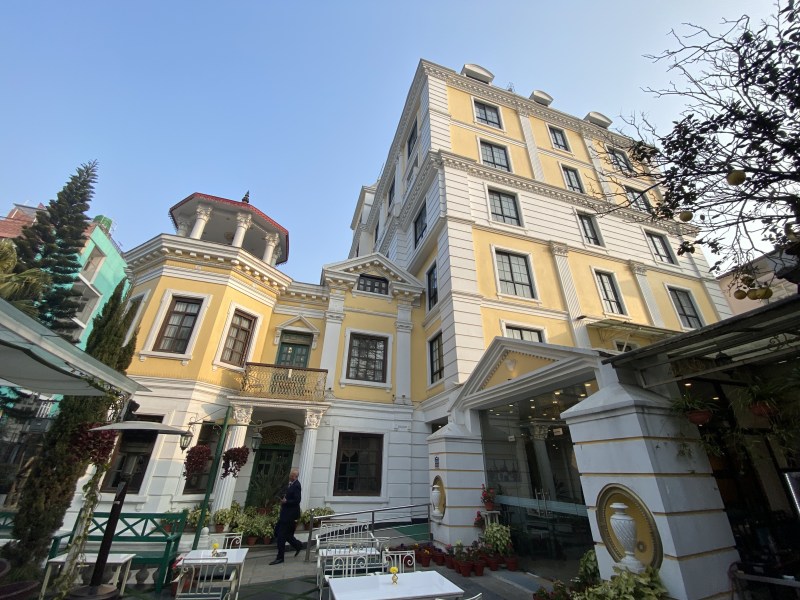
We arrived late on the 16th to Kathmandu, and were transferred to our first hotel, the centrally-located Maya Manor Hotel. I was up early to enjoy the chilly weather and do a bit of birding around the hotel before we headed out on an all-day city tour. The climactic difference between Nepal and Singapore was stark and much appreciated. Though I had a sweater on, I was still shivering in the 45-degree (8 Celsius) morning air. I took a moment to observe the plant life of the area: a mixture of temperate and tropical ornamentals coexisting in the same climate which was interesting to see.
At over 1,200 meters (4,000 feet) in elevation in the Himalayan foothills, with a monsoonal subtropical climate, Kathmandu and its surroundings are a biological transition zone between the alpine forests of the Himalayas and the tropical plains of the Indian Subcontinent. This ecoregion is called the mid-hills of Nepal.
Not just in Kathmandu, but throughout the trip, I was able to observe how the mid-hills support vegetation and animal life from both the tropical lowlands to the south, and also from colder temperate climates like that of the Himalayas above 3,000 meters (10,000 feet).
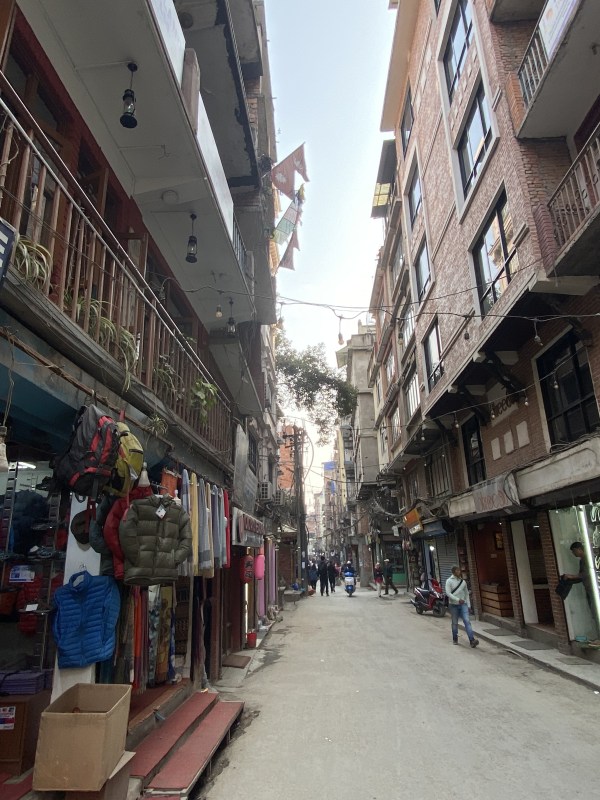
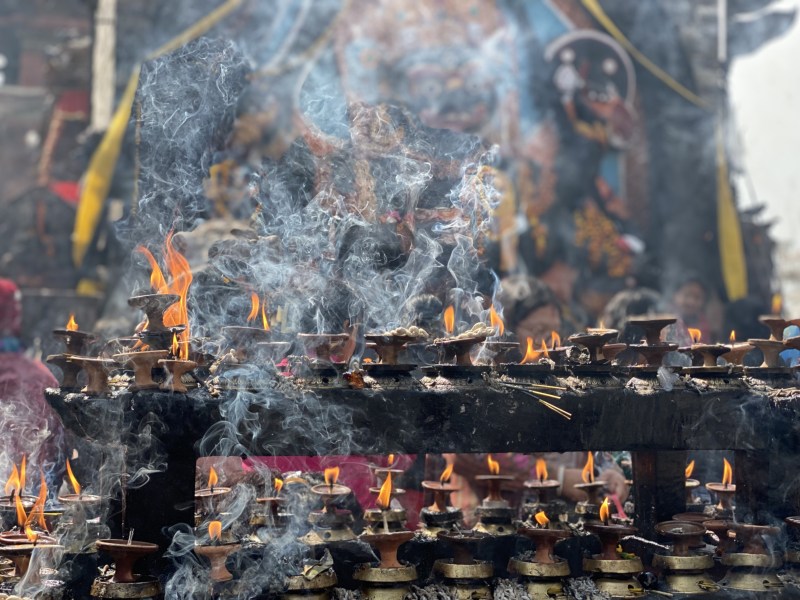
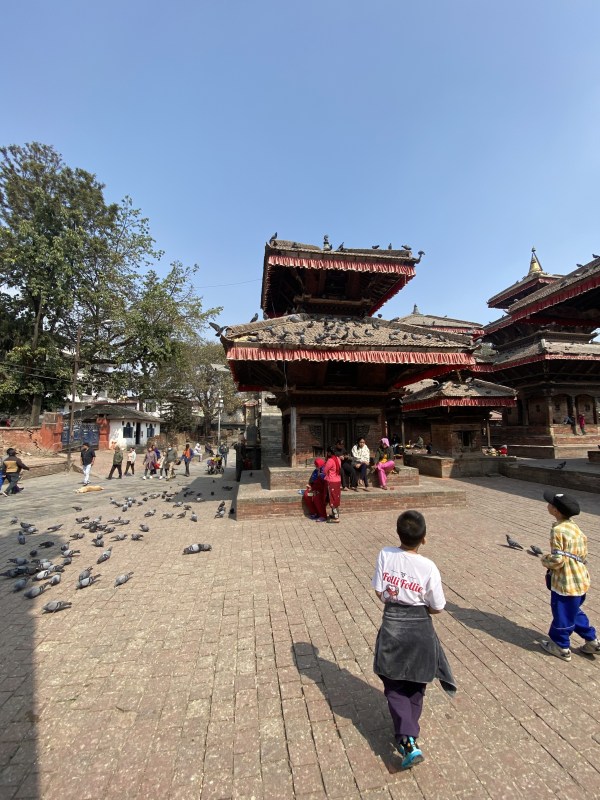
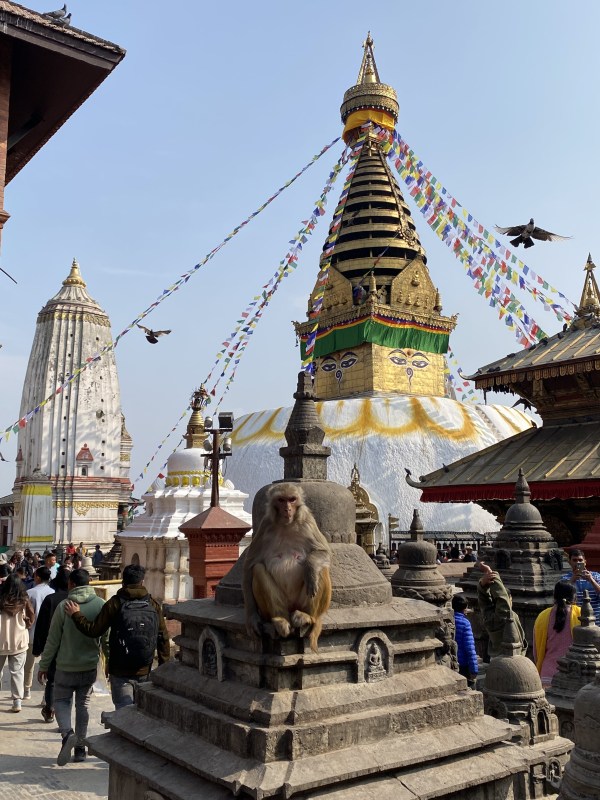
Over the course of day 2 and day 3 in Nepal, we whisked around the chaotic, colorful city in tour vans, moving between historic sites. Our guides Kiroj and Ben gave engaging and detailed narrations on Nepalese history as they brought us around different areas of the city. We got a chance to see several UNESCO sites, including the the old palace of the kings of Kathmandu, and quite a few medieval and early modern-era temples and stupas erected by Bhuddists and Hindus. By far the grandest one we visited was Bhuddah Stupa.
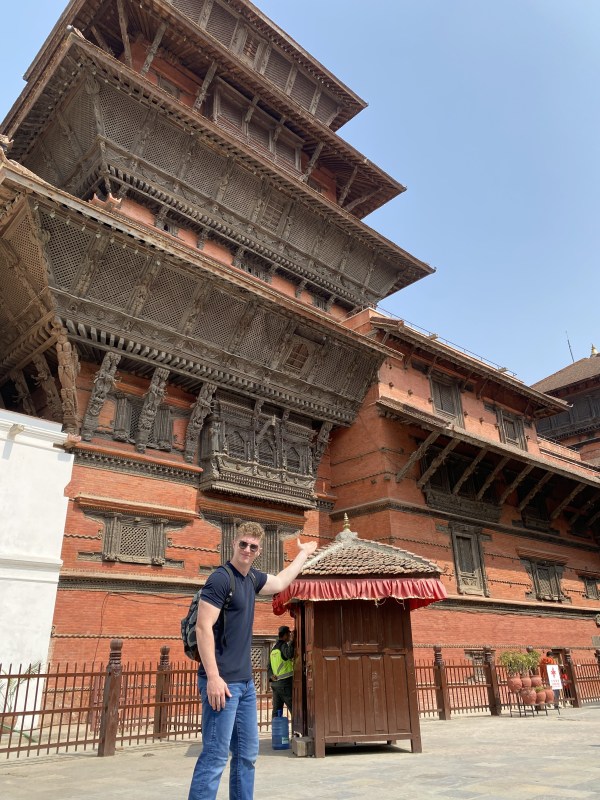
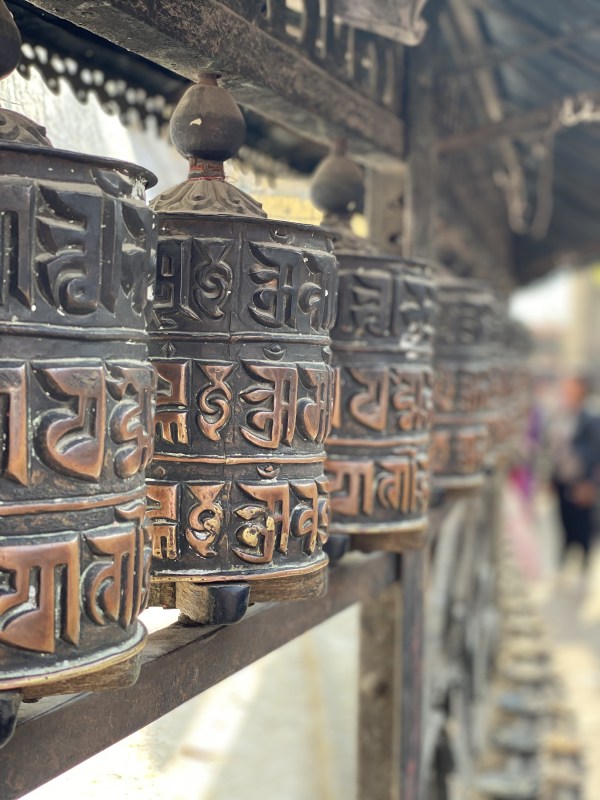
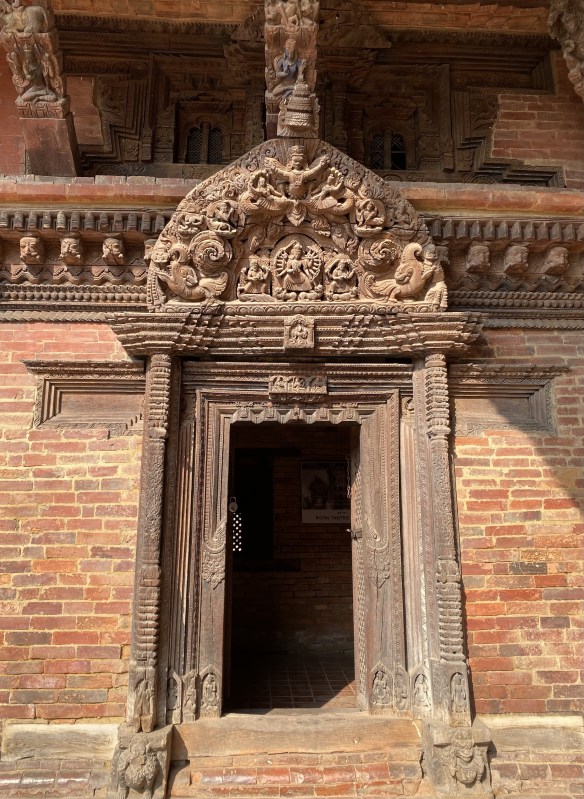

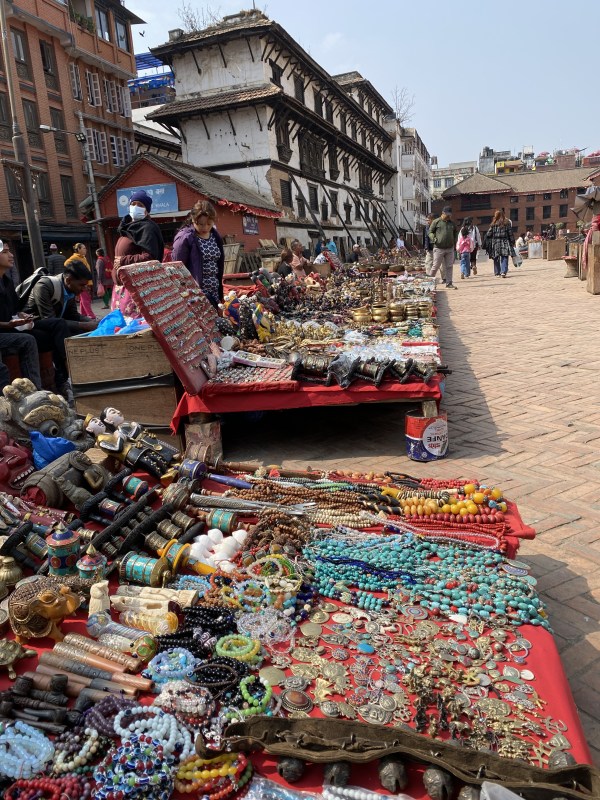
We also had a chance to do some bargaining in the famous Durbar square on our first day in Kathmandu; I got myself some trinkets and a rhino carving.
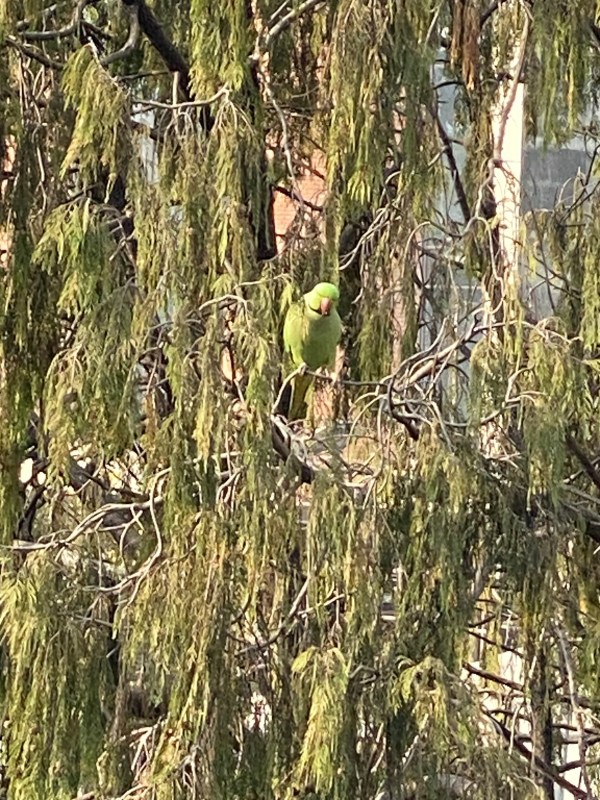
Some birds I saw around the hotel and Kathmandu on day 2 and 3 included Rose-Ringed Parakeets, Indian White-Eyes, House Crows and Black Kites.
While I’m not counting them in my Nepal bird list as they aren’t truly wild birds, the gargantuan population of pigeons in Kathmandu was omnipresent. Though pigeons are found in just about every other city on Earth, Kathmandu’s particularly high ‘winged rat’ population is attributed to a local decline in the numbers of predators like falcons that feed on the pigeons. In addition, the fact that pigeons are sacred in Nepal and are fed by locals only adds to the problem. Their huge flocks stink up and dirty a lot of the ancient historic sites around the city, making it highly unpleasant to walk through certain areas….they also terrified some members of my Interim group.
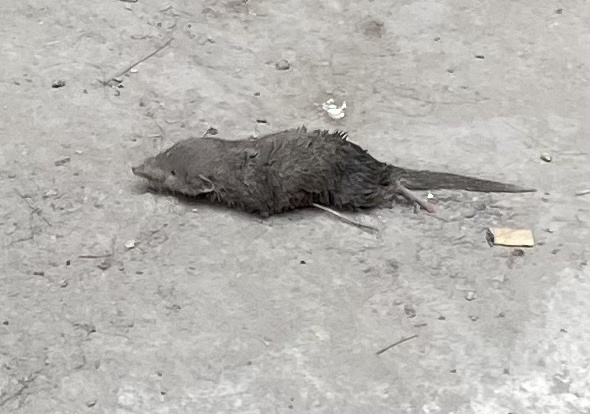
Aside from birds, I was surprisingly able to nab some mammal lifers from downtown Kathmandu. On day 2, as we were walking through a Bhuddist temple, I noticed at first what I thought was a rat crawling along the roadside, but upon farther inspection it turned out to be an Asian House Shrew, a lifer for me. I wasn’t sure what the ravenous little insectivore was doing out in broad daylight in a crowded area– maybe it was searching for a place to rest?
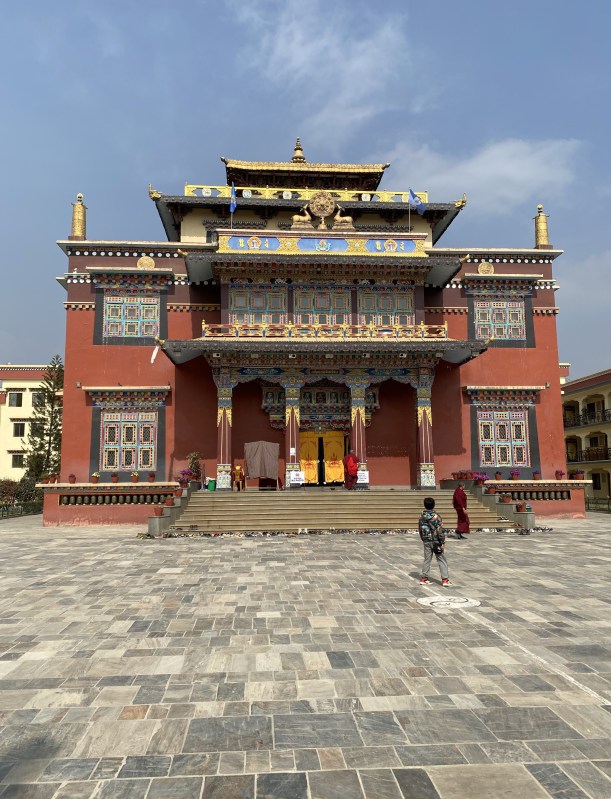
Outside Shechen Monastery on day 2 I saw my second mammal lifer of the trip, the Five-Striped Palm Squirrel.
After visiting Shechen Monastery, we drove up a small hill in the middle of the city with a large and highly sacred Bhuddist temple atop its summit nicknamed ‘Monkey Temple’. And believe me, the places lives up to it’s name! There’s a large and very well fed troop of Rhesus Macaques there, who, unlike other macaques in different parts of Asia, are quite docile toward visitors.
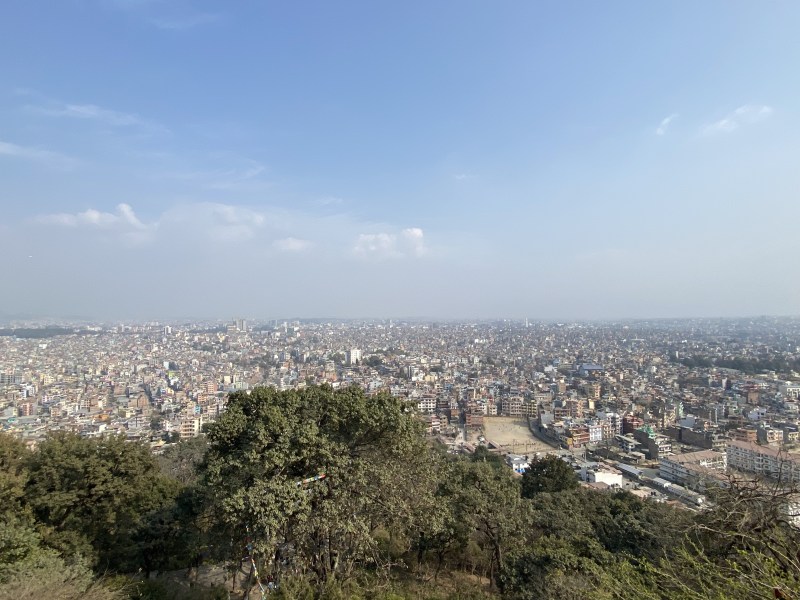
In all, though spending two full days in such an overstimulating and large city wasn’t ideal for me, I still enjoyed exploring Nepal’s capital. I even saw some cool critters along the way. However, the next part of our Nepal trip, the trekking portion, gave me an idea of the amount of natural splendor offered in this small country.
Our trek began early on the morning of day 4, after a 30 minute drive to the border of Kathmandu’s most important protected area: Shivapuri Nagarjun National Park. At a mere 159 square kilometers (61 square miles), the same size as Staten Island in New York City, the park holds much importance to the biodiversity and people of Kathmandu. The extensive old-growth forest within the park collects and filters rainwater and is a critical watershed for the city. Hence, it was first protected as a watershed reserve, and later gazetted as a national park in 2002.
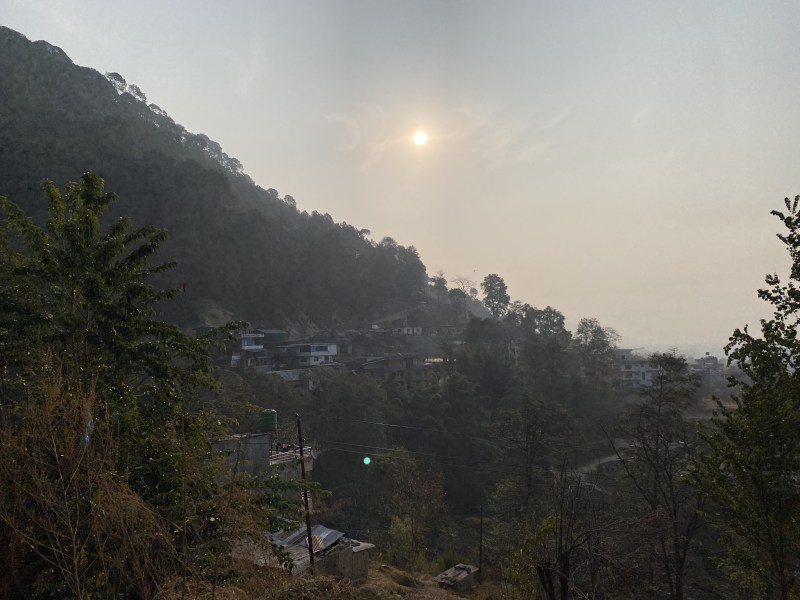
As for its biodiversity, the park ranges from 1,200-2,700 meters (4,000-9,000 feet) in elevation, and contains several major bioclimatic zones, including subtropical broadleaf forests on the lower slopes and temperate mixed broadleaf forests higher up. There are over 300 bird species here, and several threatened large mammals like Leopards, Himalayan Gorals, and Asiatic Black Bears. Being mostly untouched barring a few villages within its borders, I was able to experience a rare type of habitat at Shivapuri Nagarjun that is quickly disappearing around the globe–old-growth temperate forest.
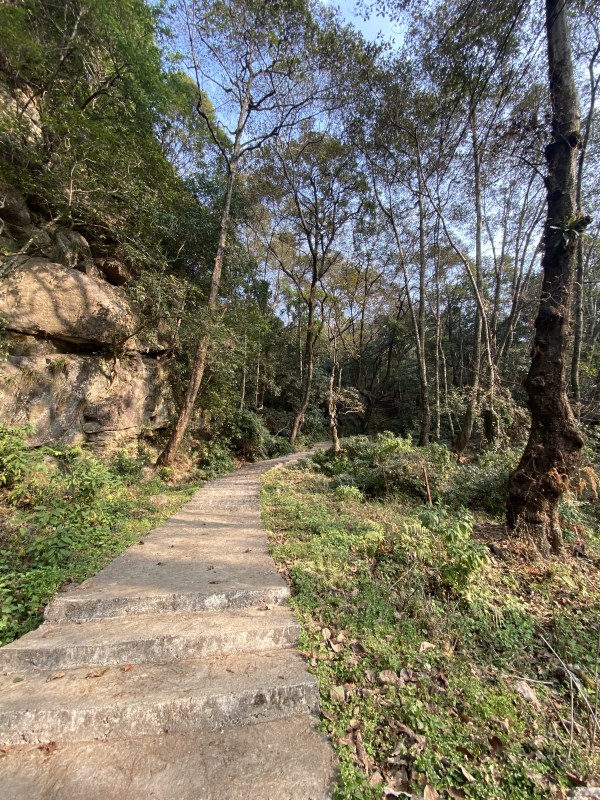
After obtaining permits to enter the park, we began our 15-km uphill trek toward the village of Chisapani, through a mountainous mosaic of forest, scrub and agricultural land. Trucks transported our personal duffel bags between lodges.
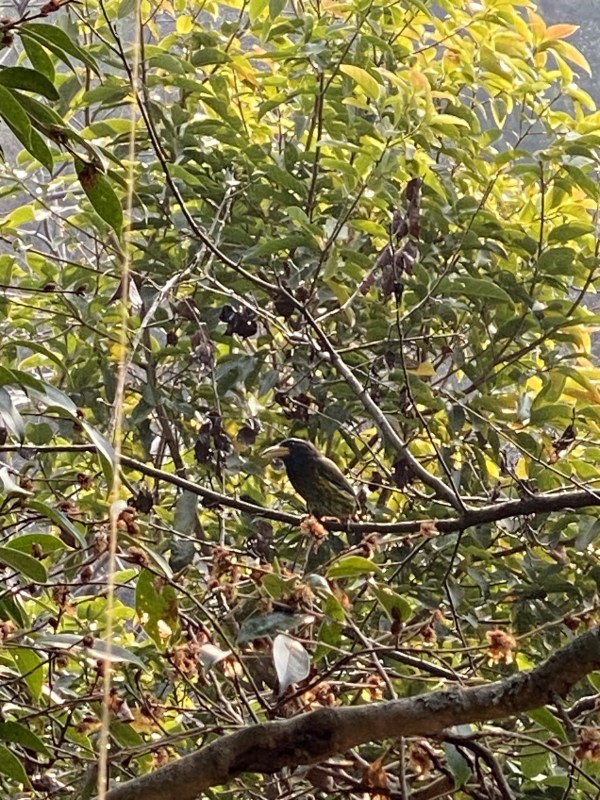
As we waited to gather our permits, I spotted a lively Great Barbet feeding on some berries in a nearby tree, a lifer. Barbets are charismatic, colorful birds, and I love spotting them wherever I go in the tropics and subtropics. Several minutes later, I found a flock of pretty Blue-Throated Barbets, another lifer. There were tons of Blue Whistling Thrushes in the valley at the beginning of the trek. Our guides said we were likely to spot Nepal Gray Langurs within the park, but the only primate (and the only wild mammal) I saw up until day 6 was a lone Rhesus Macaque.
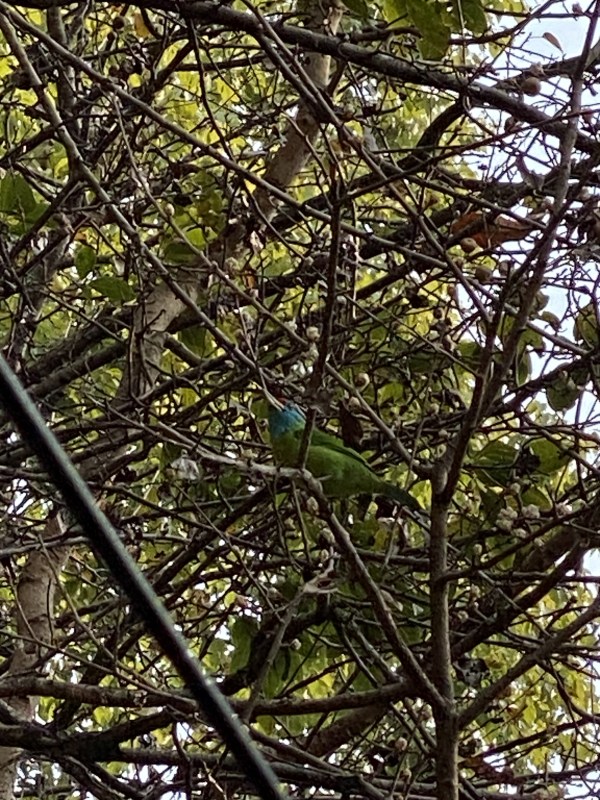
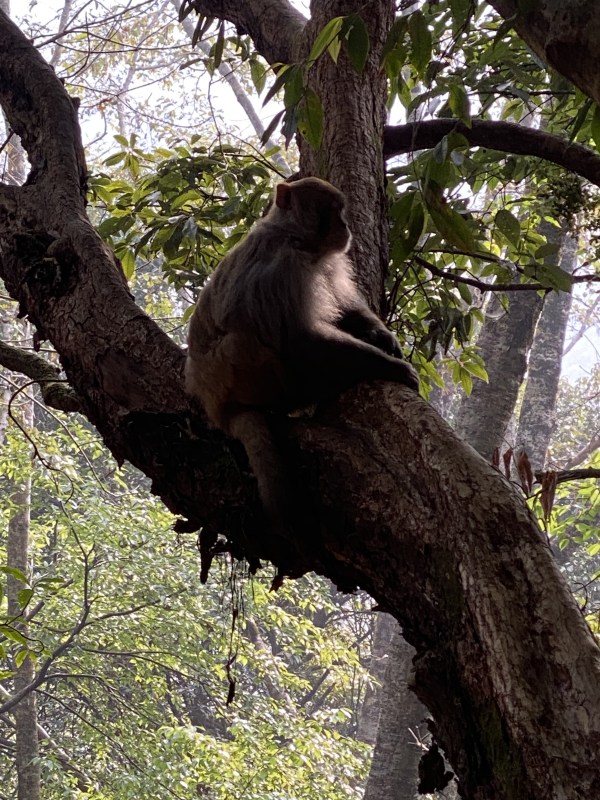
I was unsurprisingly ahead of my entire group the whole day, and struck up some conservations with our guides about the wildlife of the region (they were impressed with my knowledge and interest in the subject). After hiking up 600m (2,000ft) in elevation (I kept track with my altimeter app), we stopped for lunch at a small resort in a village at the center of the park.
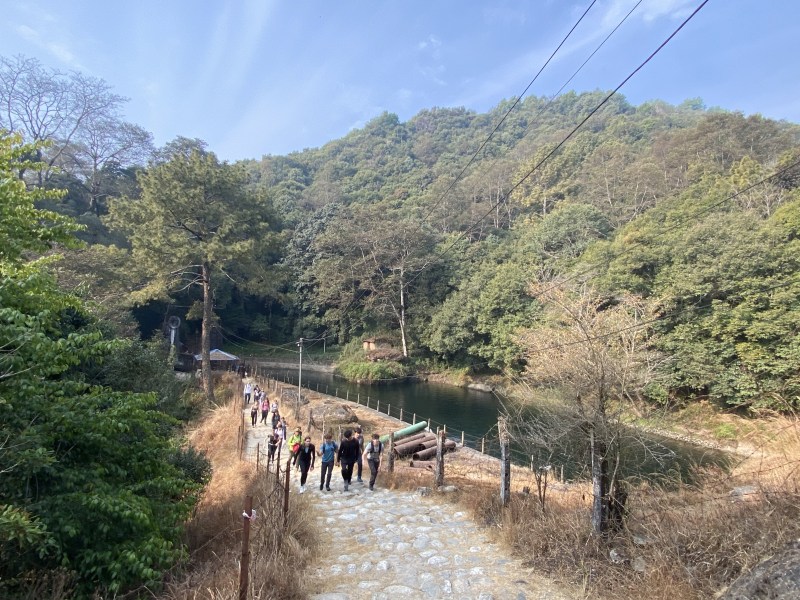
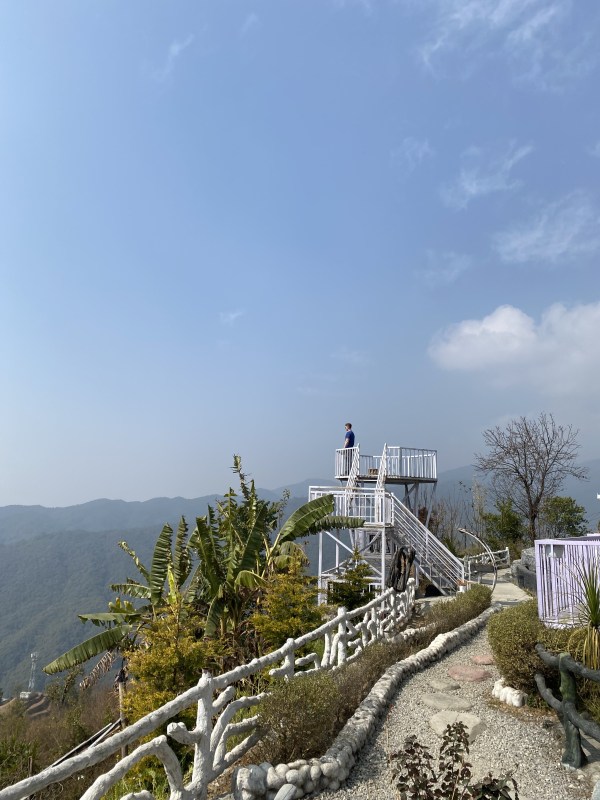
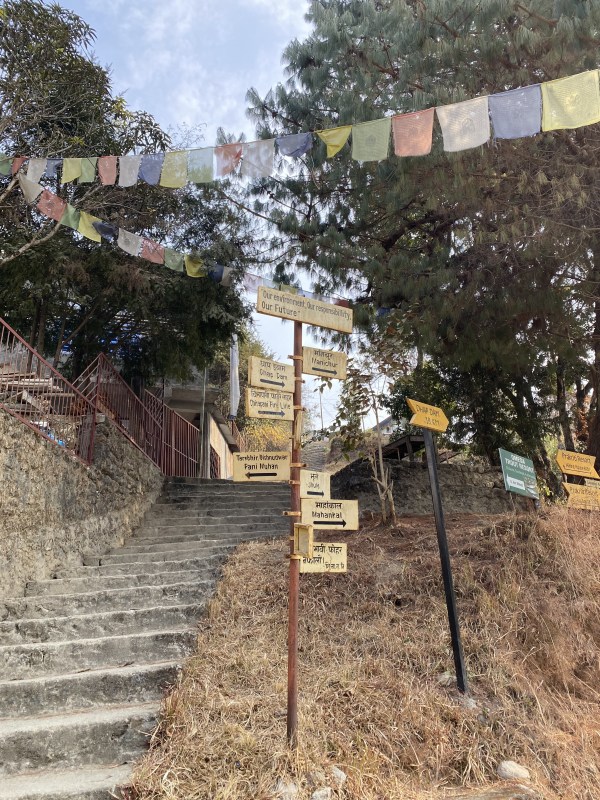
There are several villages within Shivapuri Nagarjun, and they provide an interesting scenario into conservation and balancing human and wildlife needs.
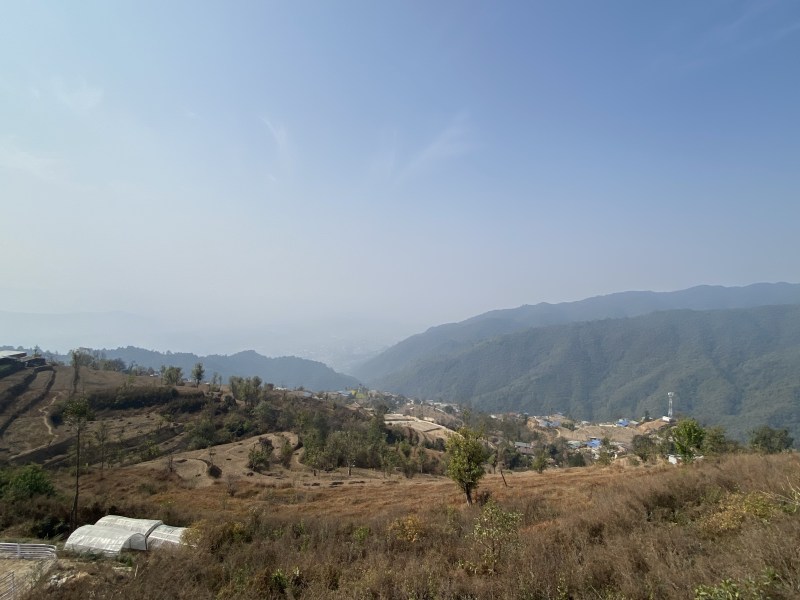
Because the villages were present before the park’s designation, the villagers were allowed to stay and carry on their way of life (terraced agriculture and animal husbandry). I wonder what conservation practices are put in place to make sure the forest isn’t being damaged or encroached upon, and to manage human-wildlife conflict. With predatory Leopards in the vicinity, and with so much livestock in the villages, I can only imagine there being some conflicts occurring.
We continued our trek after lunch, ascending an additional 500m (1,500 ft) to almost 2,500m (8,000 ft), which would be our highest elevation for the duration of our trip in Nepal. The vegetation had changed drastically, from tall broadleaf forest to moss-festooned rhododendron/oak woodland and patches of thorny scrub full of birds. I was walking too fast to identify all of them, but I did make out Himalayan Bulbuls, Himalayan Black-Lored Tits, Cinereous Tits, Scarlet Minivets, Red-Vented Bulbuls and Long-Tailed Shrikes. The bird diversity was indeed quite impressive, way more than I was expecting!
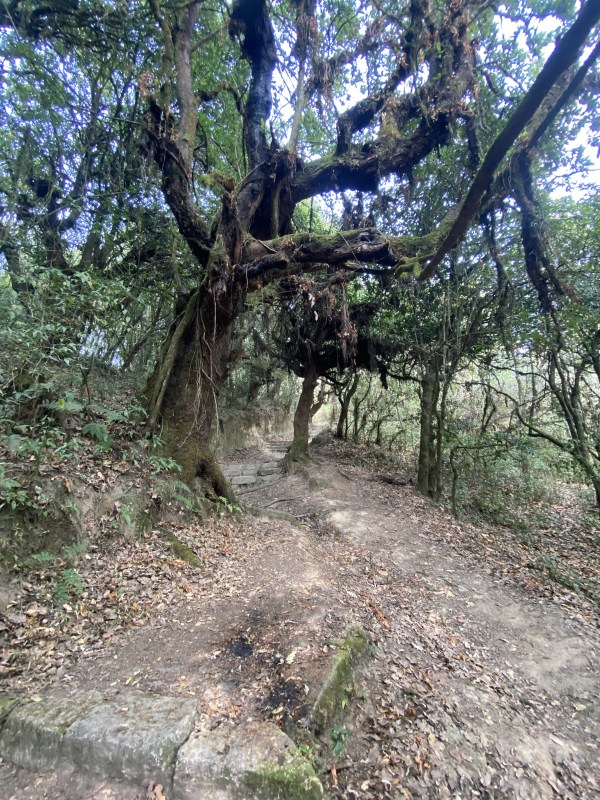
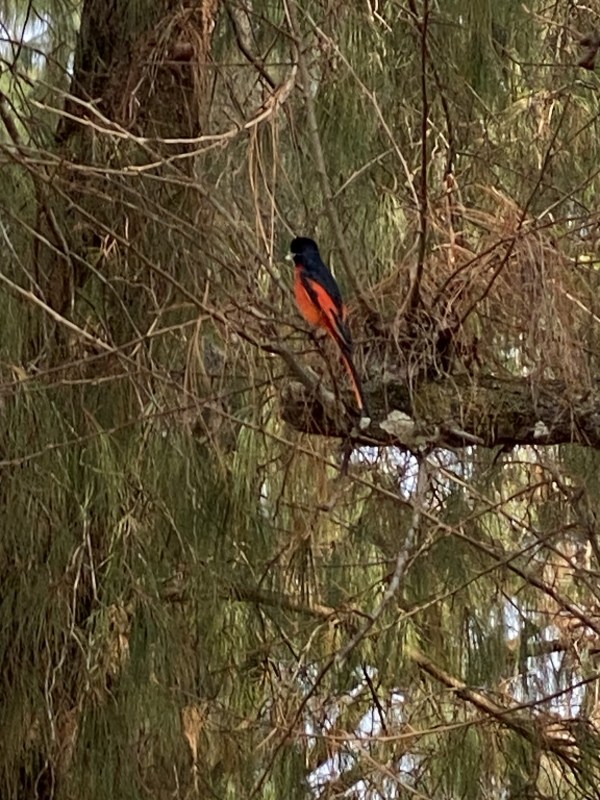
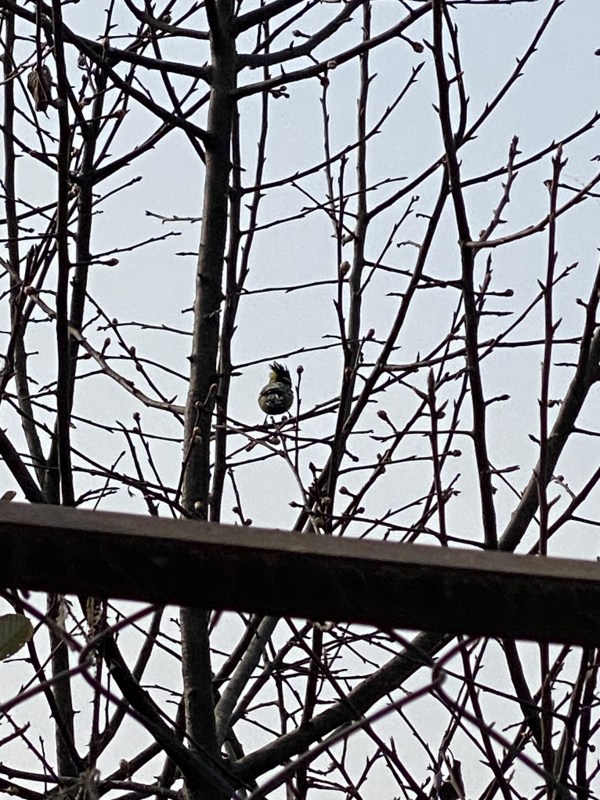
By the time we’d exited the national park and had reached Chisapani in the late afternoon, I was exhausted, cold, and dehydrated but happy. People were impressed I had quite literally jogged the entire trek route (not because I like showing off, I’m just a fast hiker and like to be alone in nature!). Though the trek itself was pretty easy, the altitude in addition to the speed I was going wiped me of energy. During dinner, I donned the puffer jacket the tour company had provided each of us and drank probably 5 cups of Nepalese tea to warm myself up. Because Chisapani is a lot higher in elevation than Kathmandu, it was quite a bit colder in the evening and morning.
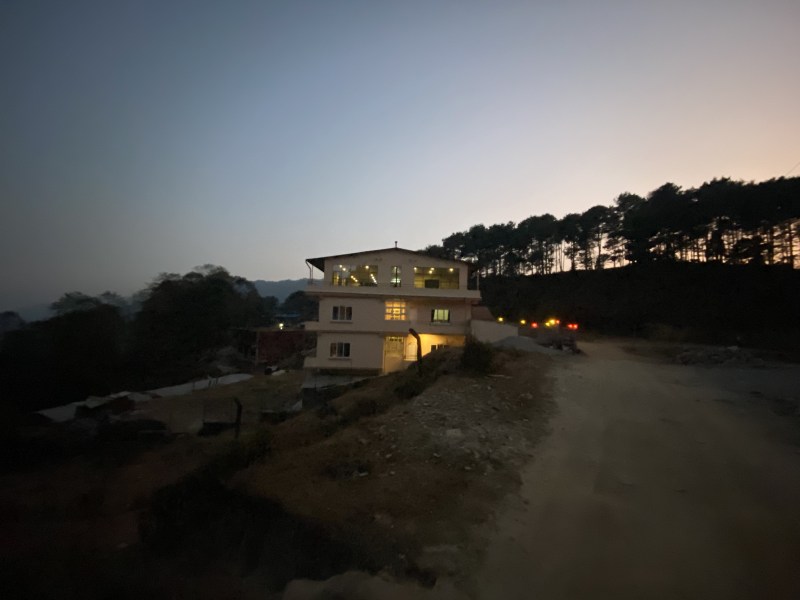

After a hearty dinner, I slept hard, waking up apprehensively to see views of the Himalayas, which were not granted to us the morning of day 5 due to haze. Still got a nice sunrise, though.
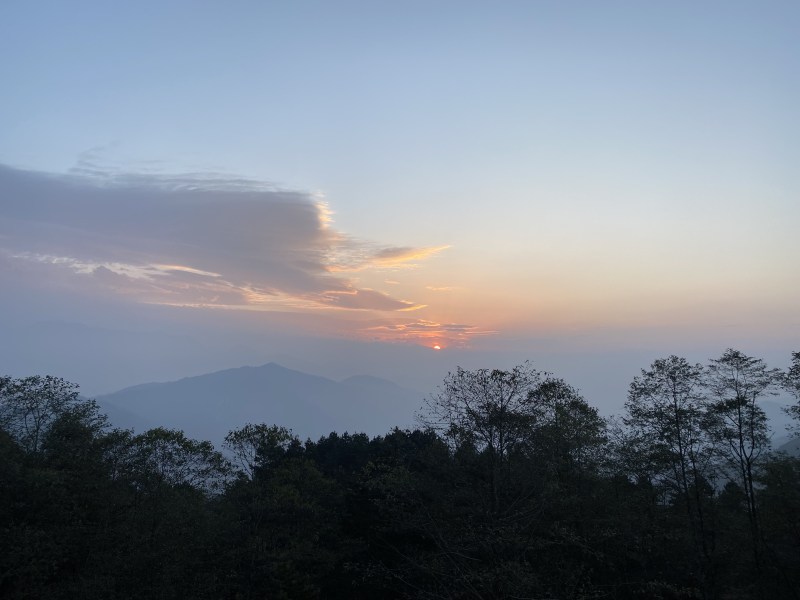
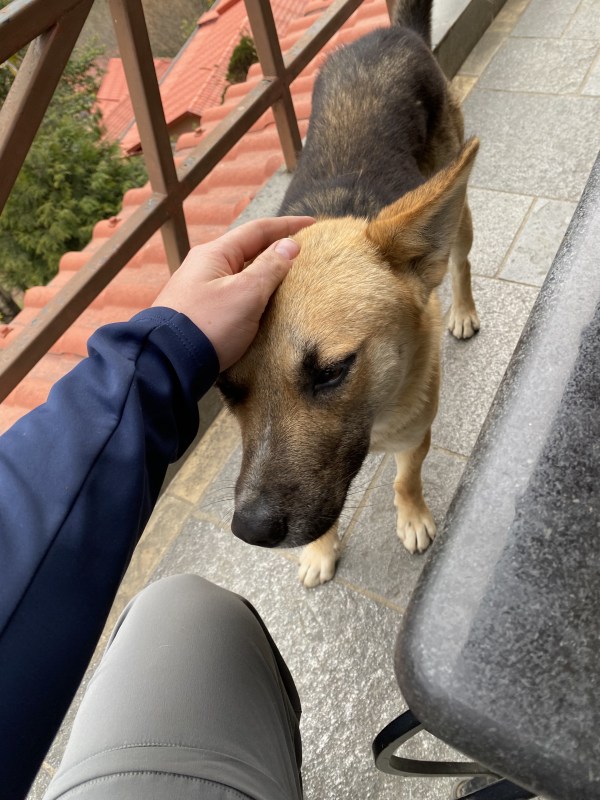
Today, we trekked an easy 12km on mostly flat dirt roads to our next lodge in Jhule. I saw few wild animals today, and spent much of the time enjoying my surroundings. The views were a lot better than the day before, and packs of friendly stray dogs accompanied us on our journey. It took about 4 hours to reach Jhule.
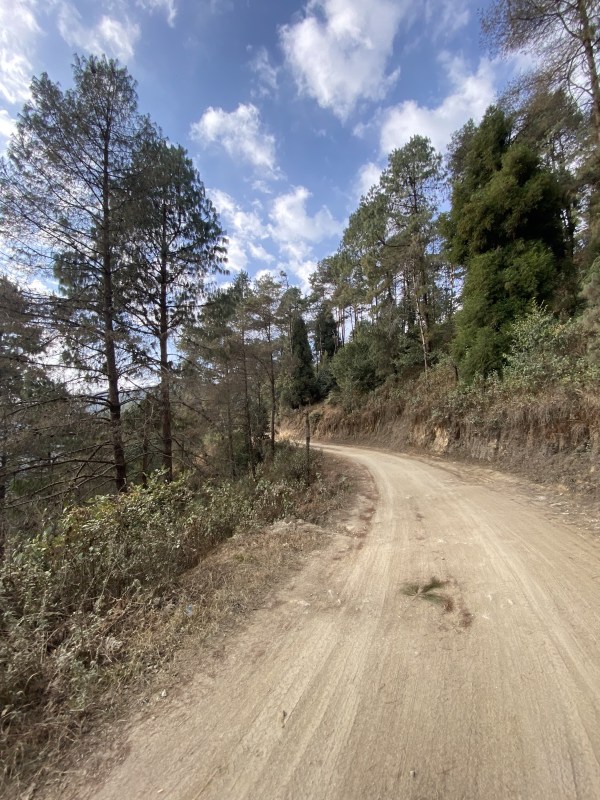
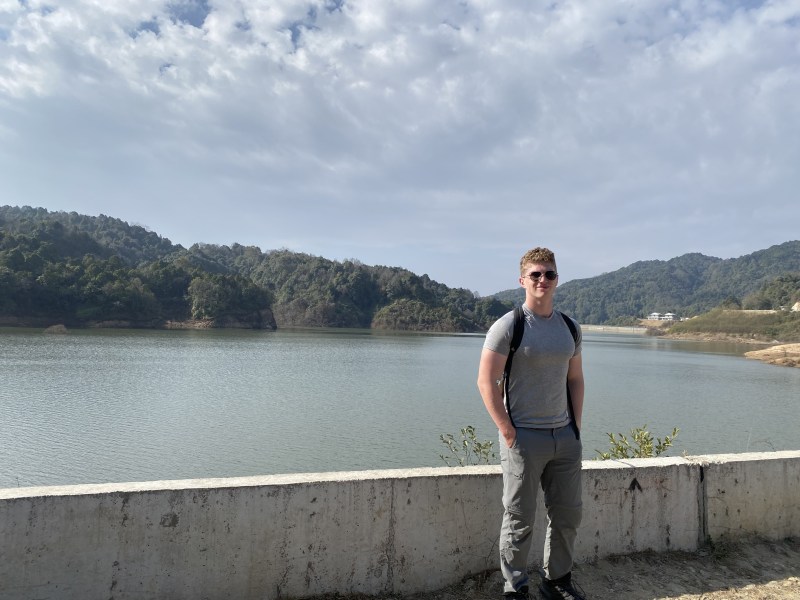
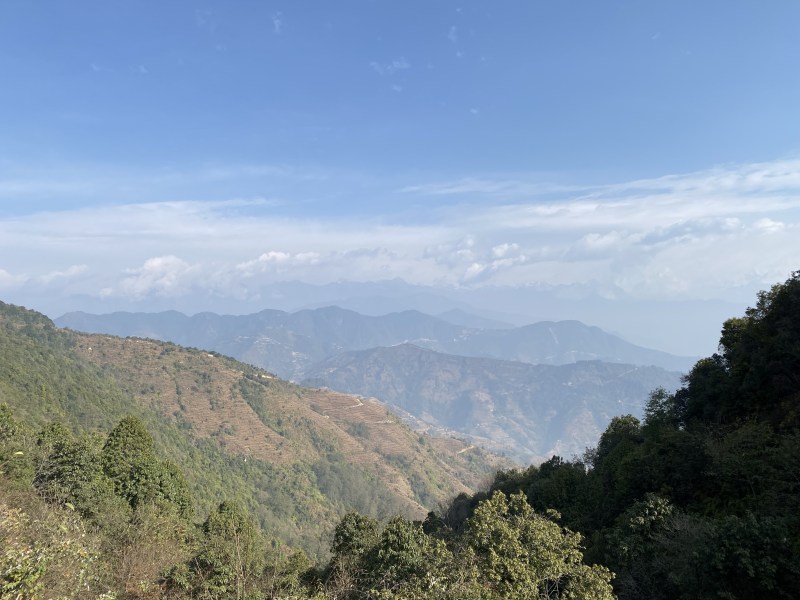
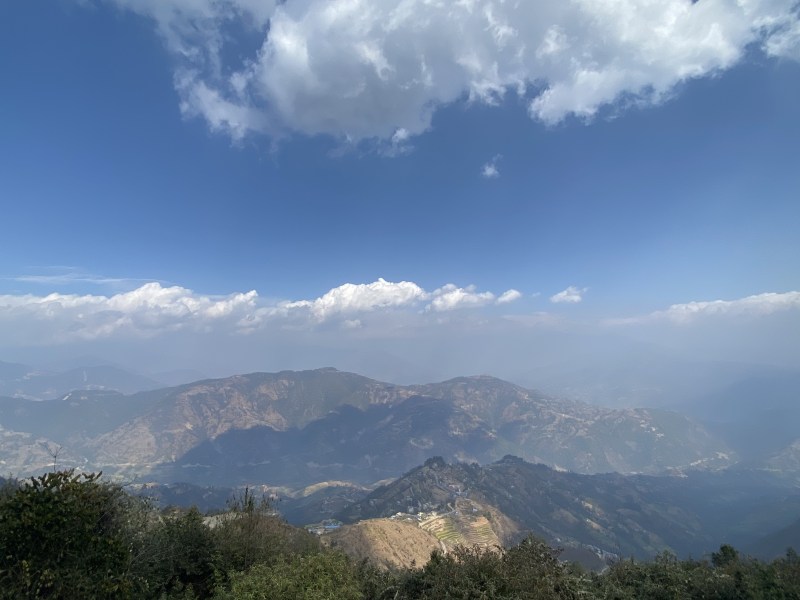
Our lodge in Jhule was situated on a slope, with chalets built in a staircase fashion, each one higher than the previous one, leading up to a main dining area at the very top. My chalet was at the very bottom of the hill, and after two days of trekking, climbing 20 flights of stairs to get dinner wasn’t fun. I had the entire afternoon free, and after lunch went on a short walk around the nearby village with one of my teacher sponsors. We saw some Himalayan Bulbuls and a lone Siberian Stonechat as we were chatting.
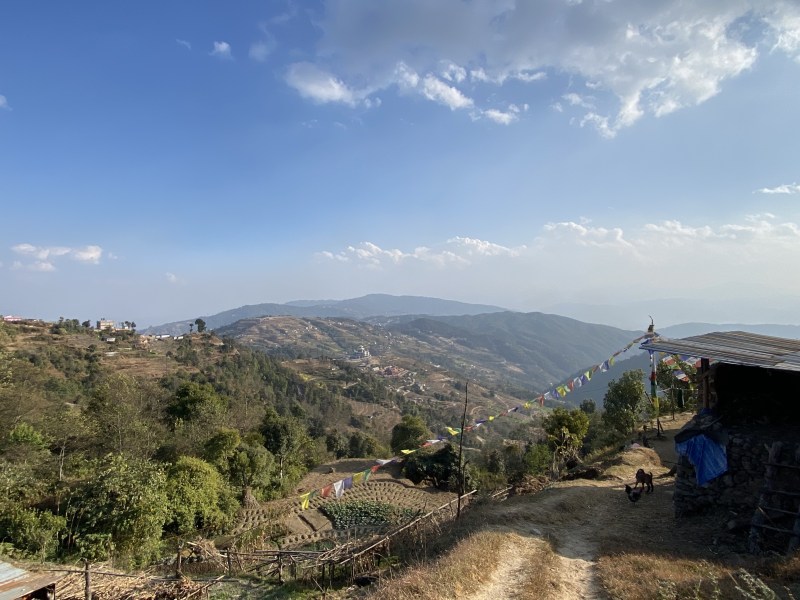
Afterwards, I waited a bit until late afternoon to embark on my own little adventure. I left the lodge, walking a bit up the road to a hill that was partially logged and partially forested. Since there was no trail, I was forced to climb up the hill using all four limbs. Once at the top, I got a beautiful view of the Nepalese countryside.
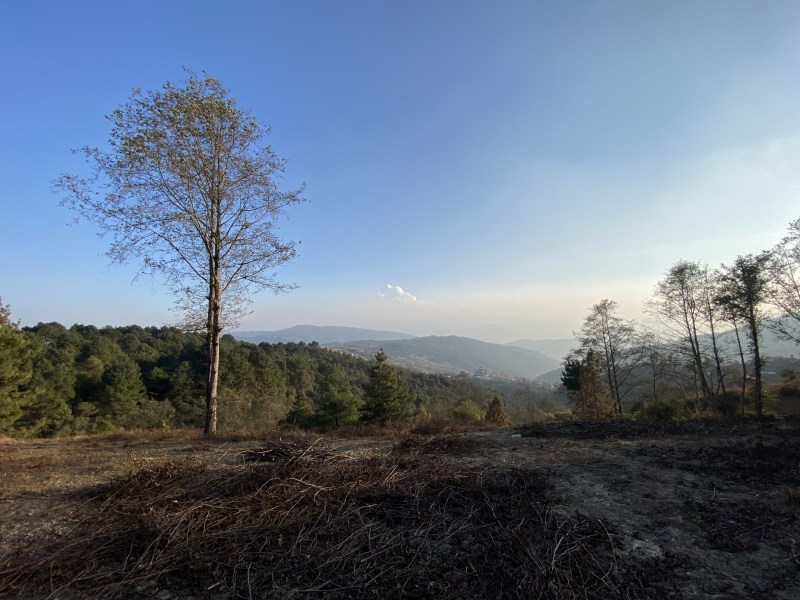
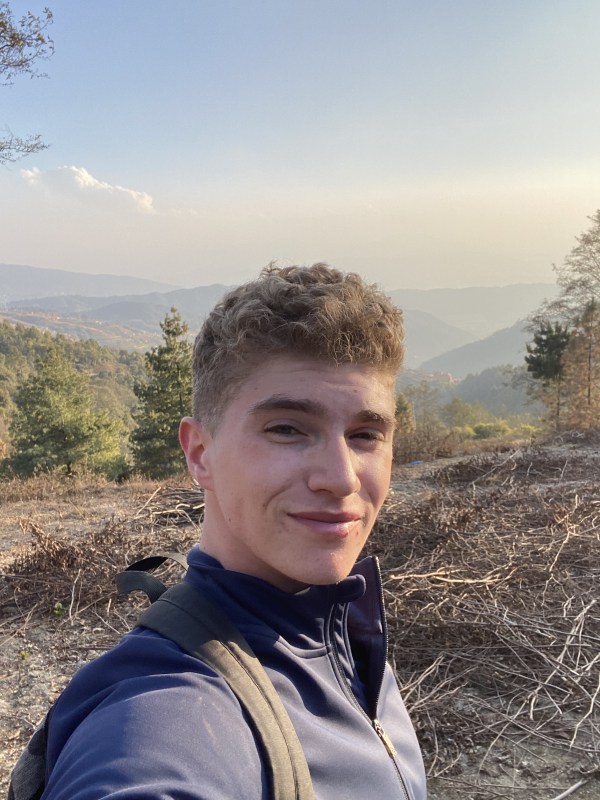
The cleared patches of forest were piled with dead wood, probably firewood. This land I’m sure would later be used for agriculture and possibly burnt beforehand to fertilize the soil (an example of slash-and-burn agriculture). I continued off-trail, into a mixed conifer forest which led me downhill. There were game trails and ungulate scat there, possibly wild boar, and the remnants of a bird that had been taken by a mammalian carnivore, likely a felid. I made my way back to the road, and just as I’d started walking I noticed a well-marked trail through the forest. Given my curious and adventurous personality, I knew I had to explore at least a bit of the trail. About 200m (600ft) later, I arrived in a Nepal Alder (Alnus nepalensis) forest on a hillside. I was about to turn back as it was nearly dinner time, when I spotted a huge number of caterpillars climbing in unison up one of the alder trees.
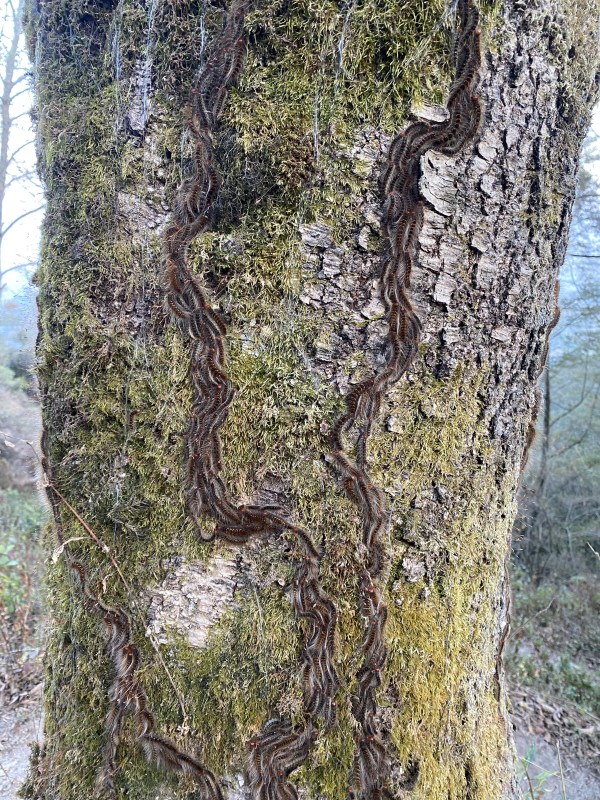
These were likely a species of Processionary Moth (Thaumetopoea genus) caterpillar. The caterpillars crawl in massive single-file lines between food trees (in this case alder), scale the trees in unison, then devour the leaves. After a time, the caterpillars form large nests of silk in the canopy of the tree where they develop into mature moths. If the tree dies or there isn’t enough food, Processionary Moth caterpillars will move together to another tree.
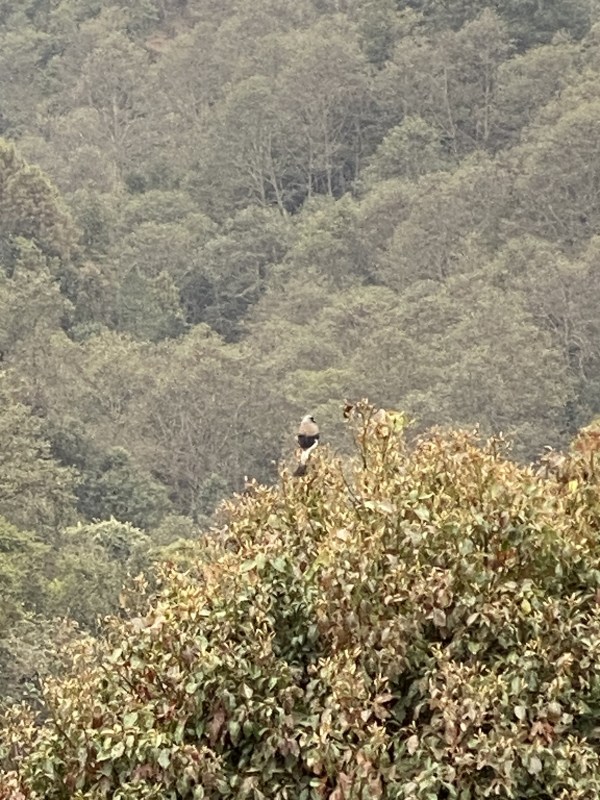
I made my way back to the lodge afterwards, ate dinner, and settled in for the night. In the morning, we got unlucky again with no views of the snow-capped Himalayas. We started on a downhill course toward Nagarkot, our final destination. Before leaving the lodge, myself and one of my teacher sponsors did a bit of birding, spotting a distant Gray Treepie.
The forest around the road quickly transitioned into terraced farmland and small homes. Though I tried chasing away territorial dogs that kept attacking the sweet pup that followed our group from the lodge, eventually so many dogs went after him there was nothing I could do about him getting chased away.
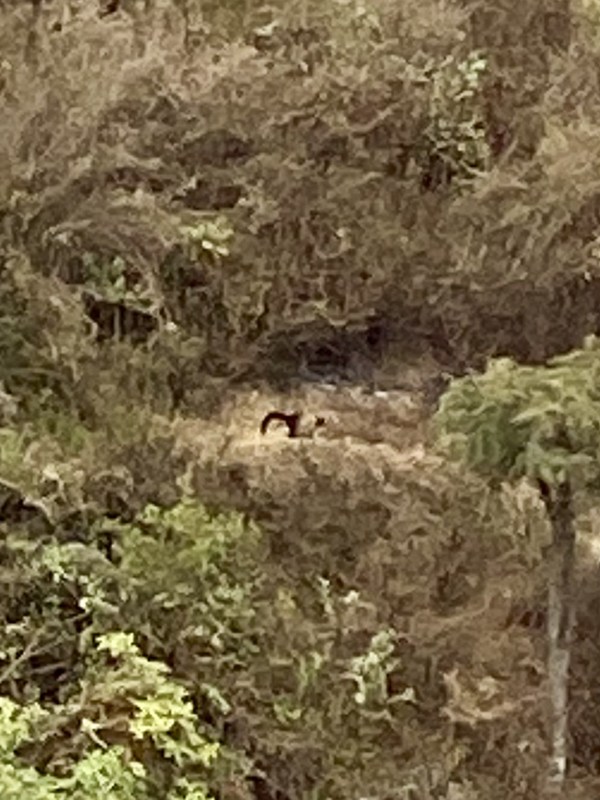
Apart from a few common open-country birds, there wasn’t too much wildlife around. However, at our lunch stop, I was in for a surprise. As I talked with my teacher sponsors and guides, looking out on the nearby fields, I saw a catlike black and yellow animal out of the corner of my eye. Suddenly I lit up realizing what it was I had spotted–a Yellow-Throated Marten! These fearless predators are larger, semi-arboreal cousins of weasels, and a target species of mine. My iPhone camera only managed a grainy, crappy photo of the distant mammal, but it was nevertheless still a record shot.
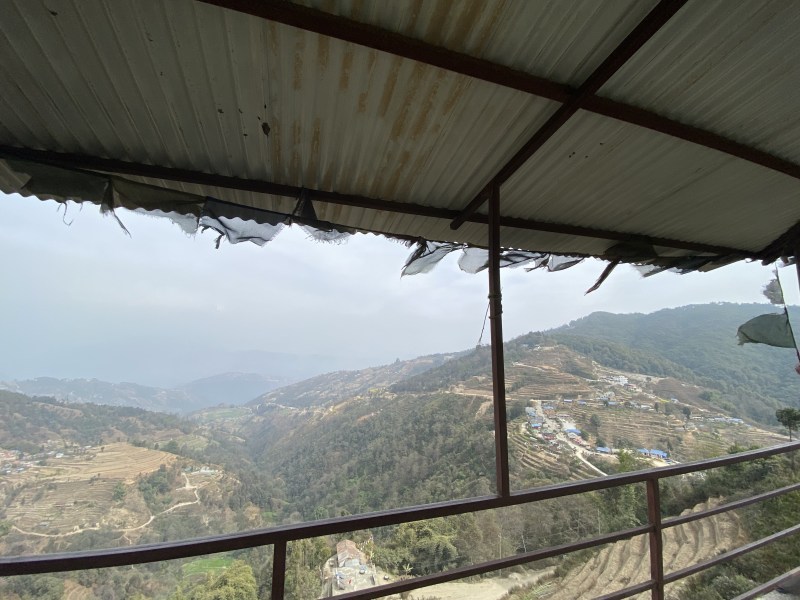
Our group continued on to our pickup point by van, about 40km away from our starting point two days earlier! We then drove to our final hotel of the trip in the hillside town of Nagarkot. While the trek wasn’t really challenging for me, the wildlife and scenery I saw along the way is incentive for me to come back to Nepal to explore it’s other national parks and harder trekking routes.
The hotel we stayed at for our last night in Nepal, Mystic Mountain Resort, was quite a bit more luxurious than the others.
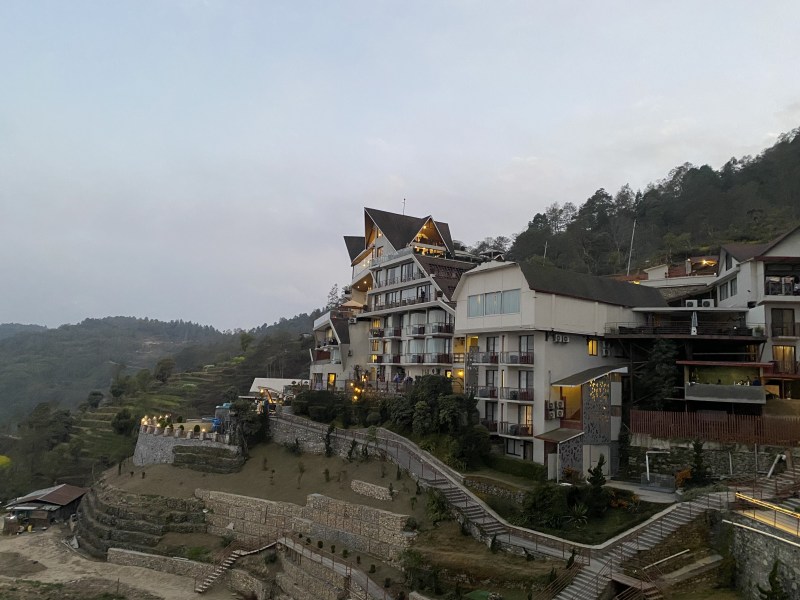
In the morning, I woke up very early, hopeful for Himalayan views. To my disappointment, the morning started off cloudy, and not a single mountain could be seen. I headed up to breakfast, watching the clouds intently and they peeled away from the mountains. Slowly, bit by bit, the forms of the great peaks began to show, and the sun began illuminating a mountainous amphitheater.
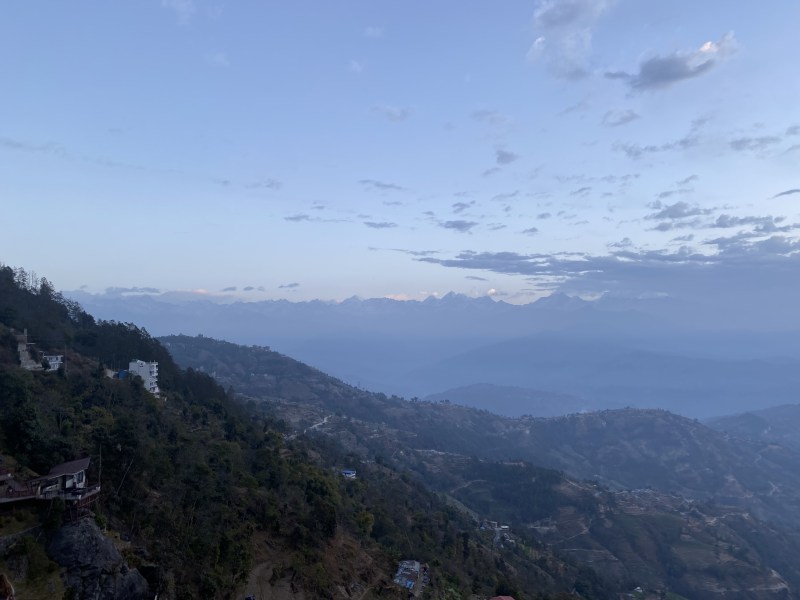
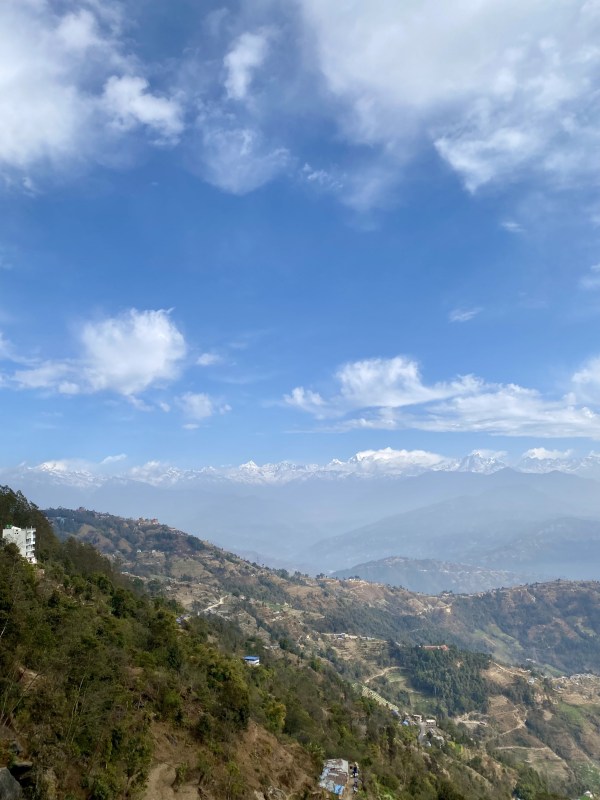
I left for about an hour to do a workout at the hotel’s gym and when I got back an incredible sight beheld me. Great peaks, cloaked in snow and ice, forming a towering wall across the entire horizon. This barricade of mountains, blinding to look at in the bright sunshine, some 23,000 feet high (7,000m), was like something out of a movie. Though we got no views of Everest like many had hoped, the sight was pretty incredible on its own.
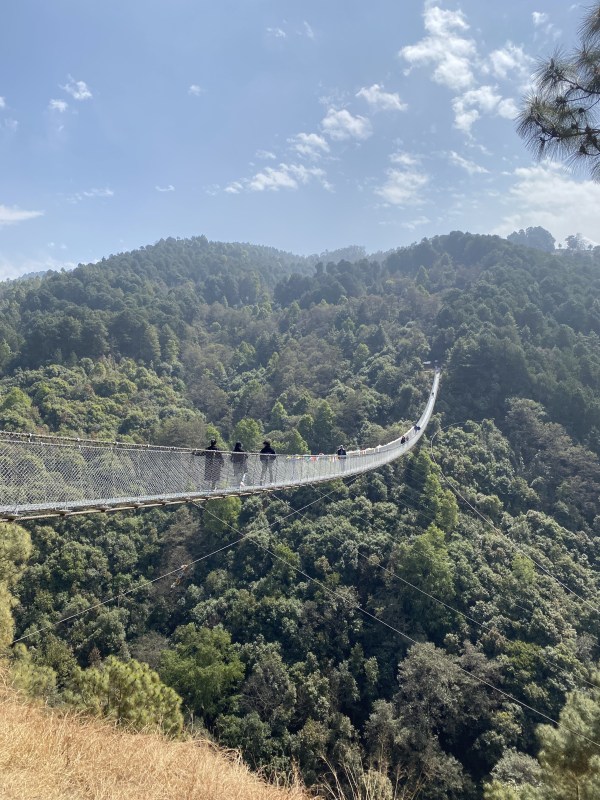
We checked out of Mystic Mountain Resort around 11am and drove down toward the city. Along the way, we stopped at a cool spot our guide Kiroj knew–a suspension bridge above a deep, vegetated gully.
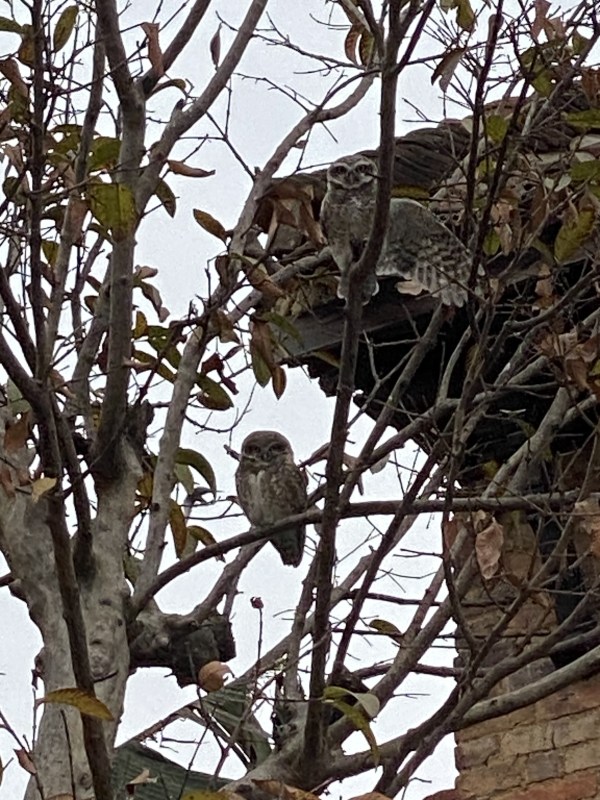
We had lunch in Bhatakpur, a historically significant city adjacent to Kathmandu. It had begun to rain as we were eating, for the first time throughout the entire trip, and the temperature immediately plummeted. It went from a pleasant 17 Celsius (62F) to a chilly 12 Celsius (53F) within an hour. I don’t think we would’ve been as cold as we were if not for the walking tour we did during the downpour! My last sighting of the trip turned out to be quite awesome, brightening up a dreary day. A pair of Spotted Owlets staring right at us from their day roost! These tiny owls were a delight to see in the middle of the city, and a great way to close of my trip to Nepal.
After a final pizza dinner, a farewell to our guides, and a (very) unpleasant airport experience, in one of the smallest and most cramped terminals I’ve ever been in, we got onto our red-eye flight back to Singapore which I gladly slept through. I want to give a special shout-out to our guides Kiroj and Ben, whose enthusiasm and knowledge of Nepal made them great companions throughout the entire trip. I cannot recommend them higher to anyone planning a trip around Kathmandu!
In all, I really enjoyed all the naturalistic aspects of my school trip to Nepal, and the icing on the cake was recording some cool species along the way. I will definitely be back here in the future. Thanks for reading!
-Bennett
Bird Species Recorded: (19 total, 9 lifers)
- Spotted Owlet (Lifer)
- Great Barbet (Lifer)
- Blue-Throated Barbet (Lifer)
- Gray Treepie (Lifer)
- Himalayan Black-Lored Tit (Lifer)
- Indian White-Eye (Lifer)
- Himalayan Bulbul (Lifer)
- Red-Vented Bulbul (Lifer)
- Siberian Stonechat (Lifer)
- Spotted Dove
- Long-Tailed Shrike
- Scarlet Minivet
- Rose-Ringed Parakeet
- Blue Whistling Thrush
- Cinereous Tit
- House Crow
- Eurasian Tree Sparrow
- Black Kite
- Common Myna
Mammals: 5 total, 3 lifers
- Yellow-Throated Marten (Lifer)
- Five-Striped Palm Squirrel (Lifer)
- Asian House Shrew (Lifer)
- Rhesus Macaque
- Brown Rat


Leave a Reply