
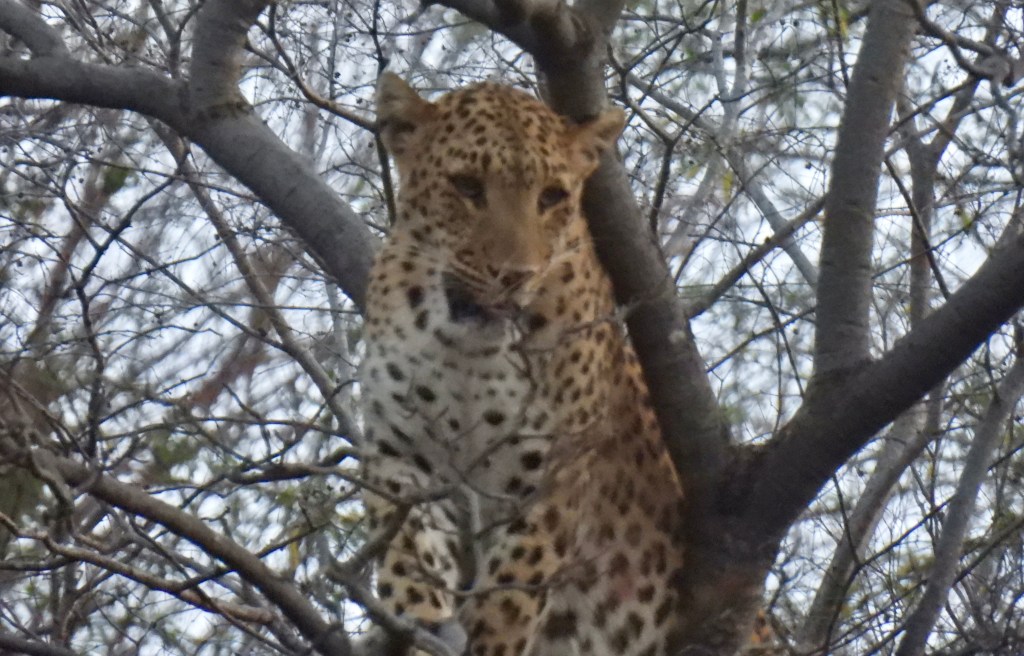
When most people think of Jaipur, the capital city of the Indian state of Rajasthan, they imagine unique cultural sites like the fabulous Amber Palace or the vibrant, pink buildings of the city center. But there is a completely different side of Jaipur worth experiencing—an important piece of heritage that isn’t known to many but should be. I’m referring to the 60 wild Leopards that stalk the forested hills just outside the city! I’m embarrassed to admit I had no idea that some of the finest and most reliable Leopard sightings in all of Asia occur in Jaipur prior to actually visiting the city!
But how can a large and thriving Leopard population exist here—a metropolis that 4.3 million people also call home? The answer is a combination of economic incentives in the form of safari-based tourism, good government policy around wildlife conservation, and the tolerance of wildlife by locals. Over the past ten years, the Indian government has launched Project Leopard to protect and increase the country’s 14,000-strong Leopard population. This led to two Leopard reserves being gazetted in the Aravalli hills near Jaipur, the first of their kind in India, to protect valuable habitat for Leopards and other wildlife. This conservation strategy has worked for the Tiger across India, where the 52 Tiger reserves across the country support increasing populations of the endangered striped cats.
The first, largest, and best-known of Jaipur’s Leopard reserves is Jhalana Leopard Reserve, which opened to the public in 2017. Jhalana is fairly well-known for reliable, frequent sightings of its 40 Leopards, a population that has doubled since its establishment! The second, smaller, reserve, opening just two years ago in 2022, is Amagarh Leopard Reserve. Amagarh is not yet known to many and is little-trafficked despite having a dense concentration of Leopards, estimated at 16-20 individuals.
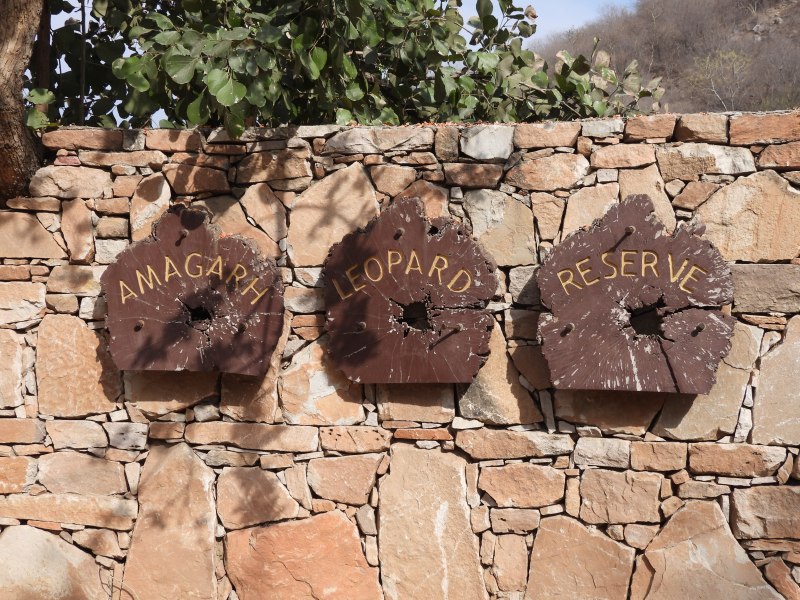
As doing a Leopard safari in Jaipur wasn’t on my family’s original itinerary, and we only decided on going a day in advance, we weren’t able to schedule one in the more popular Jhalana as it was fully booked. Instead, our hotel made a booking for an evening safari in Amagarh, reassuring me that the sightings there were as reliable as in Jhalana. Pumped with anticipation, we set off the next day.
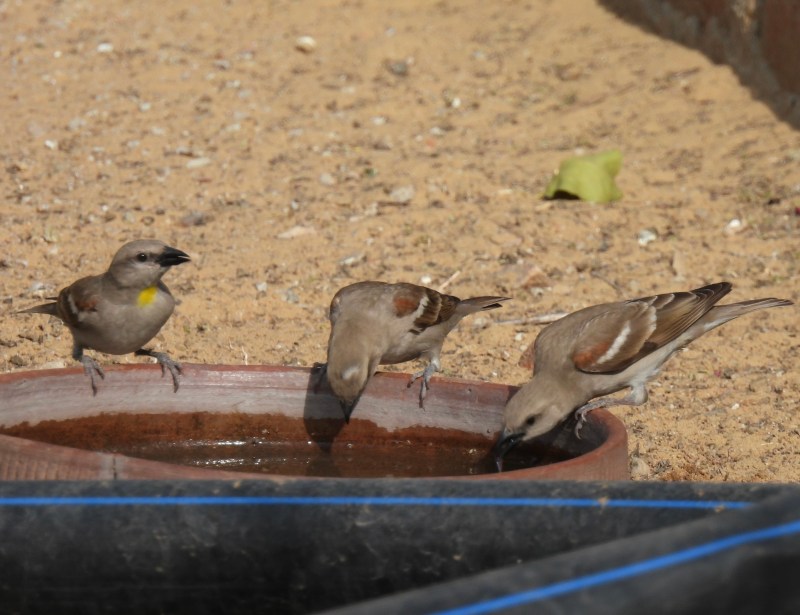
A bumpy, noisy, 45-minute drive from our hotel brought us into the quiet backroads of the Jaipur Aravallis. I spotted a couple Northern Plains Gray Langurs on the way to the reserve, which I was sadly unable to stop for or photograph. We arrived at the reserve entrance about 15 minutes before our scheduled safari at 4:15pm. In the meantime, I spotted some Yellow-Throated Sparrows, a lifer, in the reserve parking lot.
Safaris in Amagarh follow a very tight schedule. There are scheduled morning and afternoon safaris, which can be 2.5 hours long at the absolute maximum. On afternoon safaris, drivers must be at the gate of the reserve at 6:45pm at the latest, and if they stay any longer they can be fined by the Forest Department.
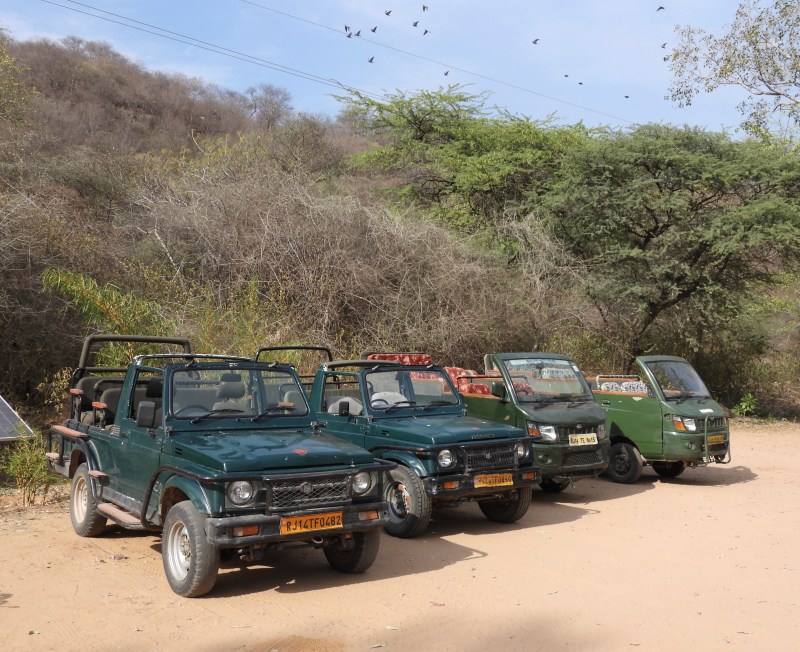
At 4:15, in the blazing, oven-like heat of the late afternoon, we met our driver and guide and loaded into our open-air safari Jeep. The hot air tasted of dust and smoke, an emblem of arid and semi-arid climates everywhere.
Despite the heat of India’s pre-monsoon season, the dryness of the air was a wonderful respite from the miserable, perpetual mugginess of Singapore.
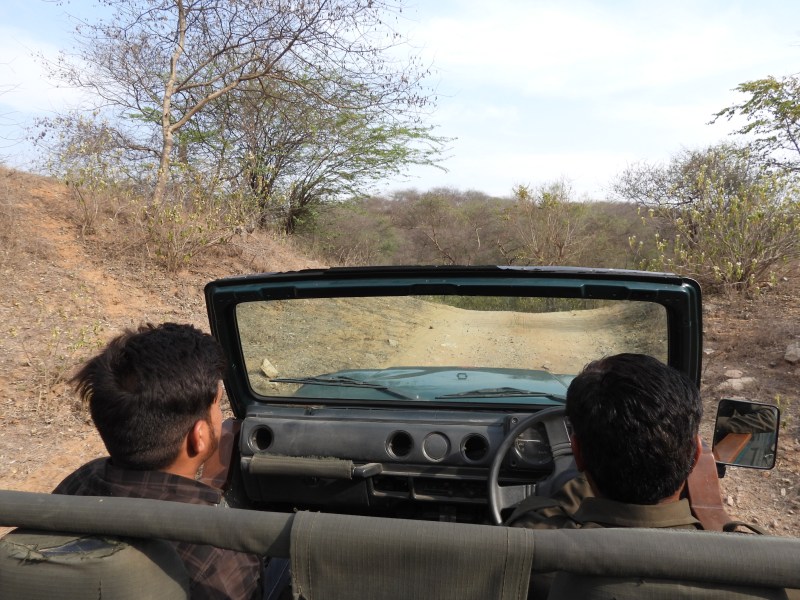
Only 10 vehicles are permitted to enter Amagarh Leopard Reserve at a time, and are partitioned between 3 zones to prevent overcrowding. The exception is when a leopard or other significant animal is spotted in any of the zones, and in that case all the vehicles are called over to view it. I feel that this 10-vehicle policy is ideal for the 1,524-hectare (3,765-acre) reserve.
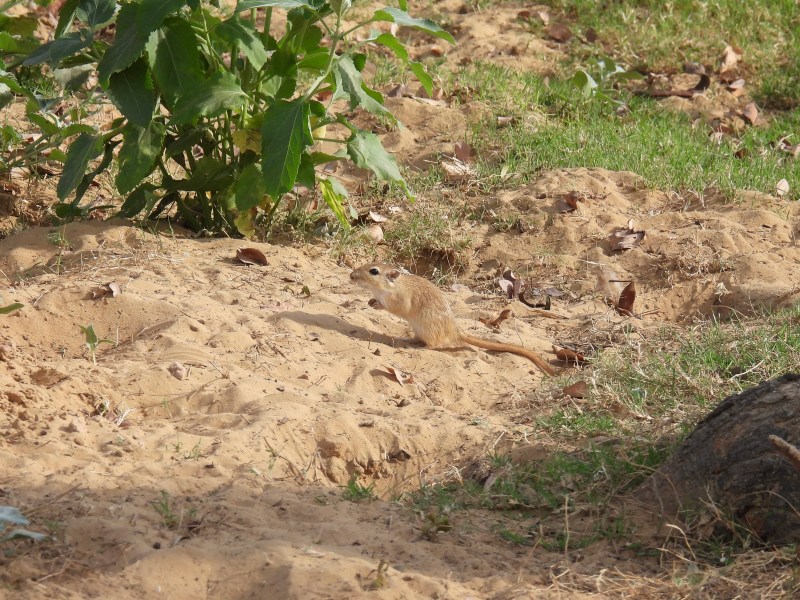
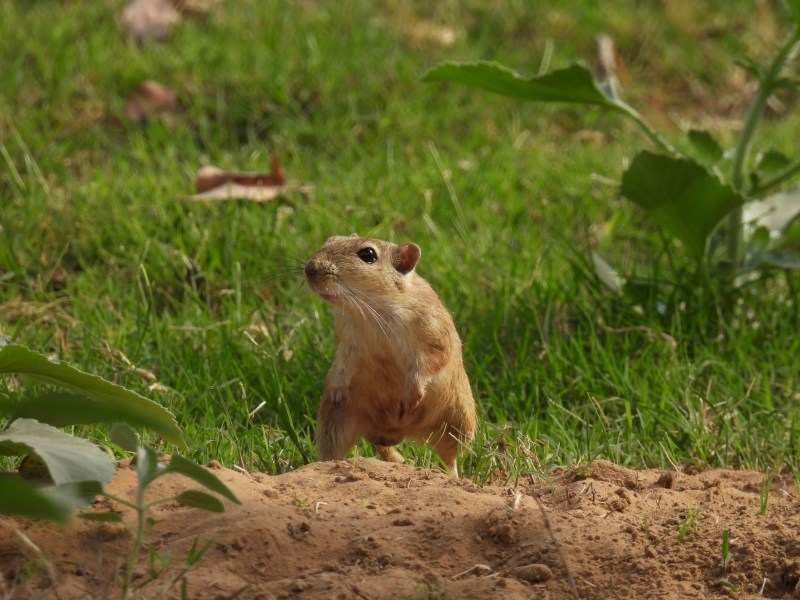
At the entrance to the reserve, I enjoyed watching the antics of a couple Indian Desert Jirds. These rodents are close relatives of gerbils and live in active colonies.
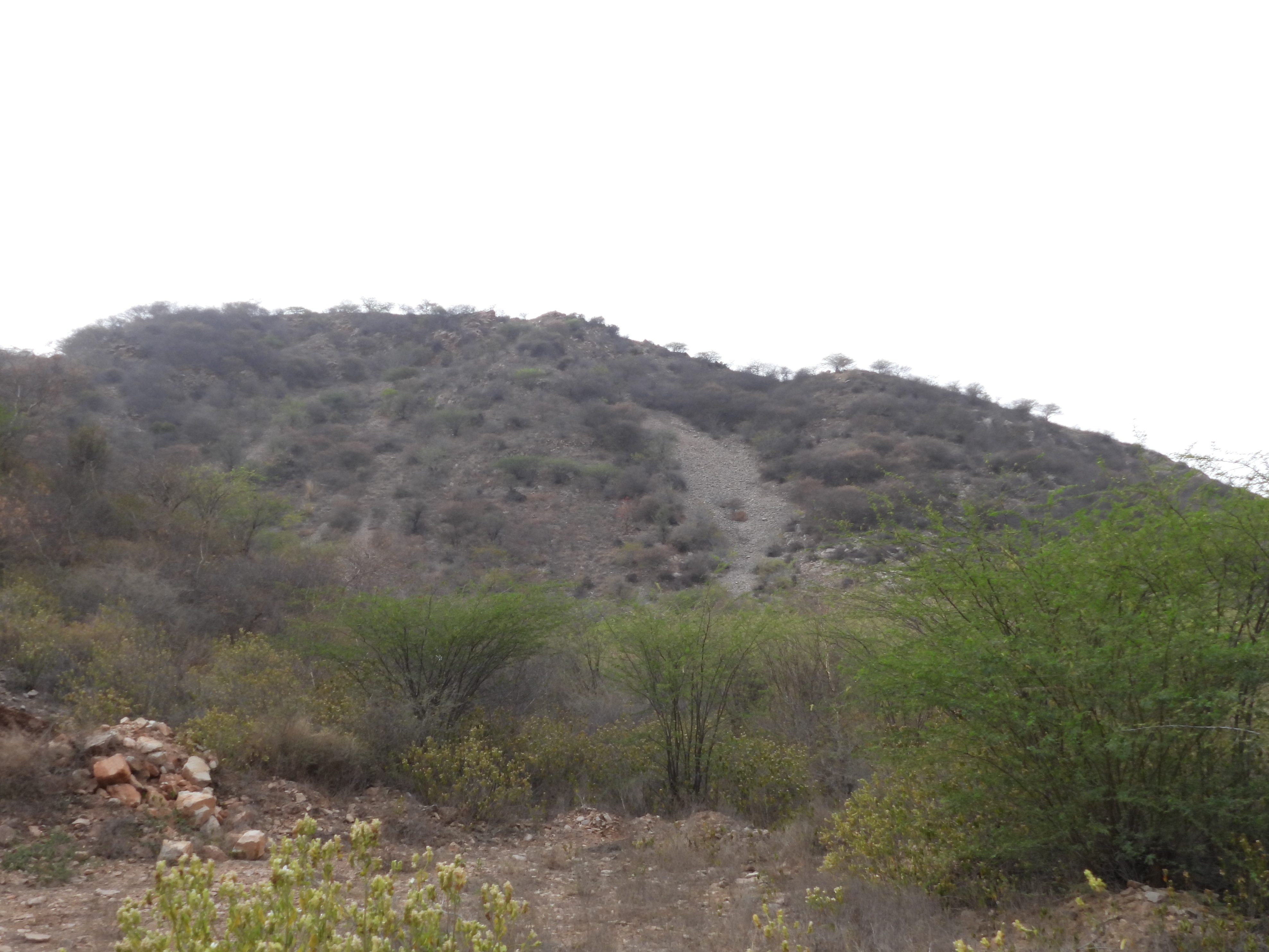
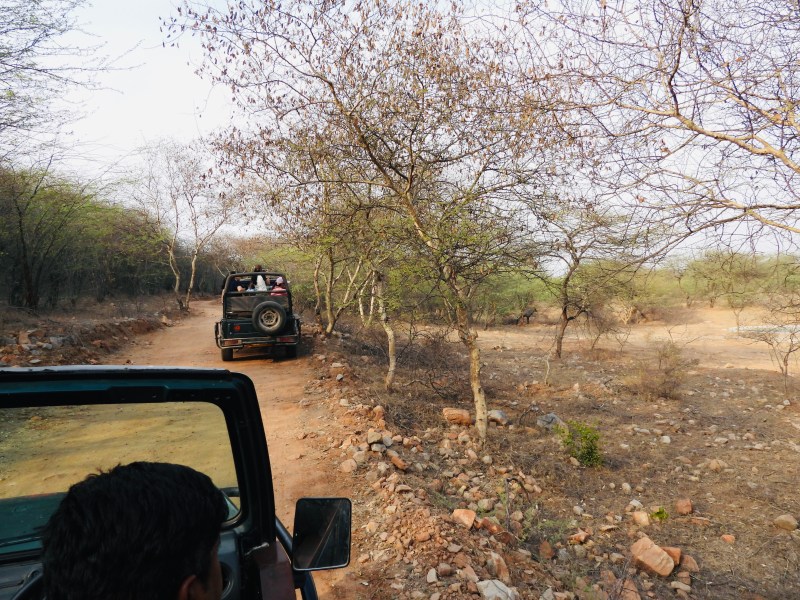
We continued along the twisting dirt tracks of the reserve, keeping an eye out for wildlife. The thorn scrub forest around us, bone-dry from months of virtually no rain, was reminiscent of my time in the South African lowveld in 2019. The climate of the region is rather arid, with rain only consistently falling 3-4 months out of the year during the monsoon. The vegetation is therefore hardy and well-adapted to eight months of scant precipitation.
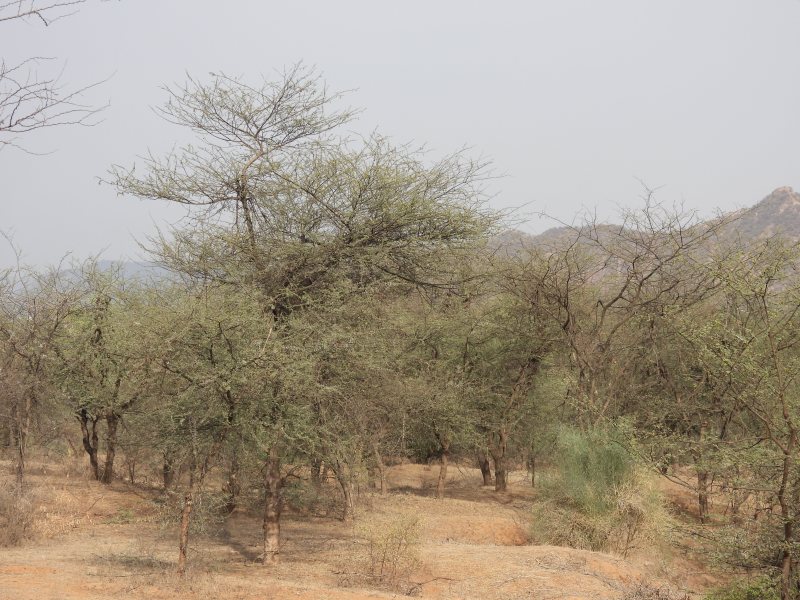
The thorny, dry vegetation of Amagarh, along with its hilly topography and copious animal spoor, gives it an indescribable ‘safari’ feel. This ‘safari feel’ brought back nostalgia from when my family visited South Africa years ago.
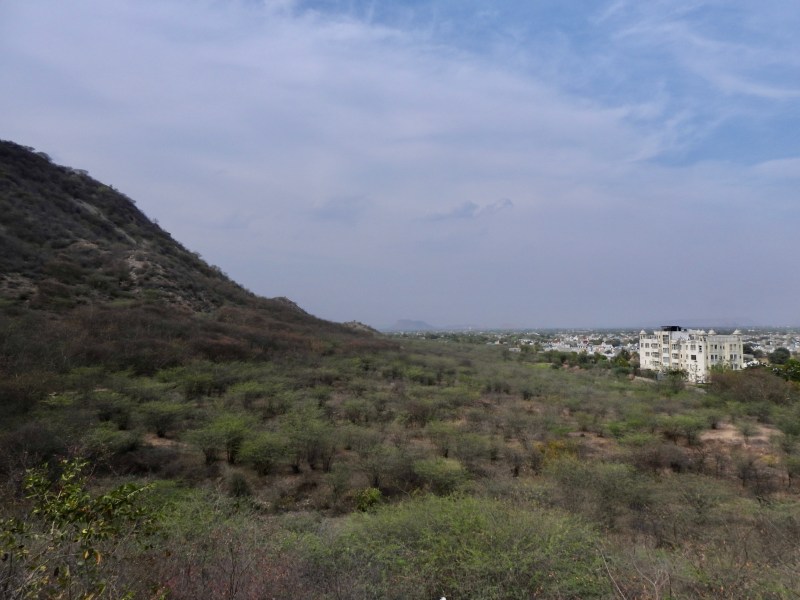
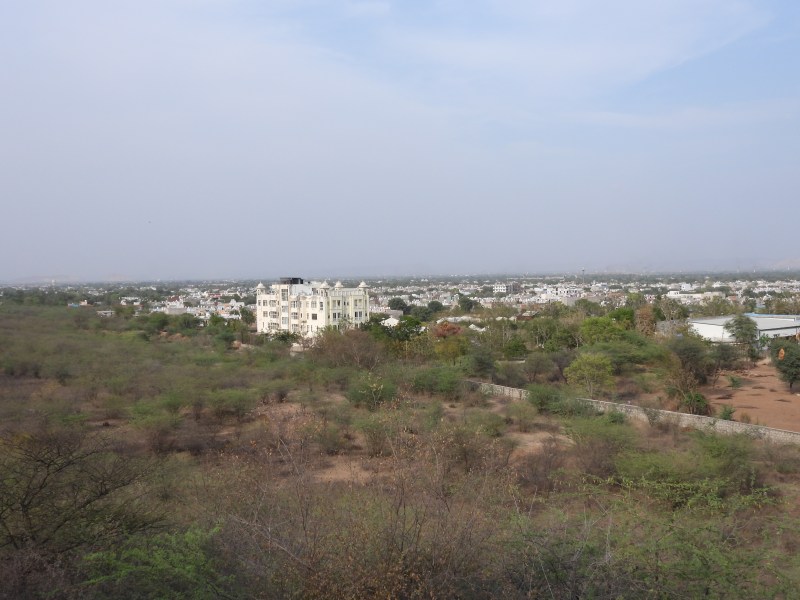
There was one area of the reserve we traversed where there was a visible wall separating forest from development, providing a sudden transition from big game oasis to endless city. It was erected in an attempt to contain Amagarh’s Leopards within the reserve area, but according to our guide they still enter urban areas on a nightly basis to hunt livestock and stray dogs and cats. Hopefully no Leopards are killed out of fear for people’s safety outside the reserve.
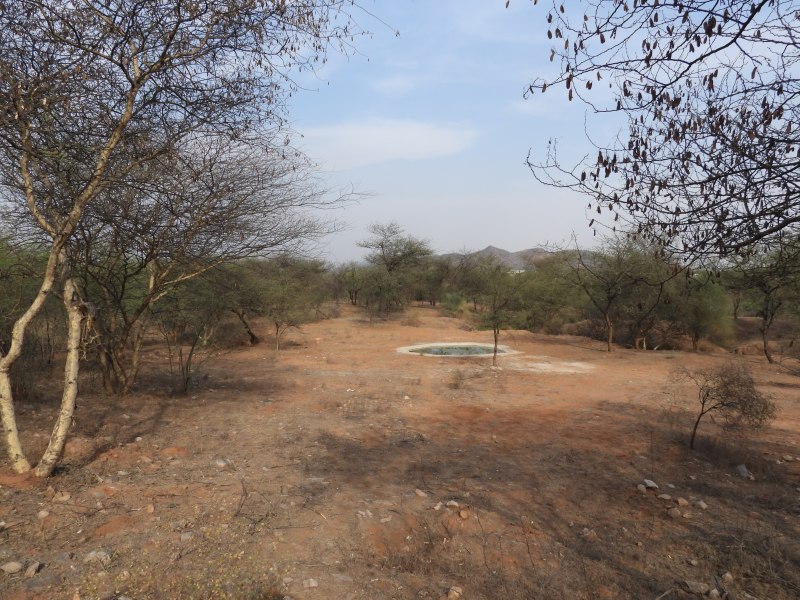
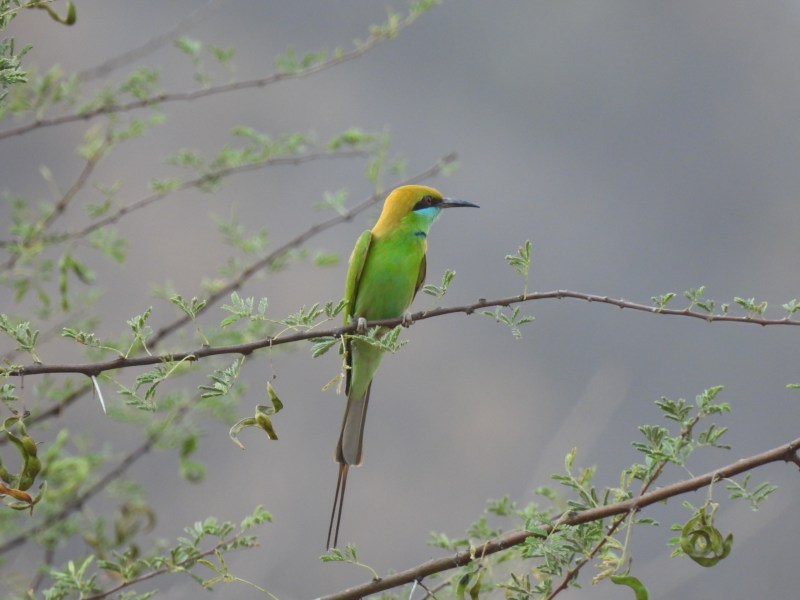
At around 4:30, we stopped near an artificial waterhole built to provide water for the animals of the reserve through the dry months. Our guide explained that in the early morning a Leopard had made an appearance there. The only animal we saw after quite a bit of waiting was an brightly colored Asian Green Bee-Eater. It was still too early for Leopard activity, though.
We drove down the road to a dead end, still having no luck with wildlife sightings beyond some birds. We drove back to the waterhole, and came face-to-face with two huge Nilgai bulls browsing on Acacia shrubs. Nilgai are the largest Asian antelope species, and are widespread around India, though not super conspicuous. Seeing them in the wild as was a real treat.
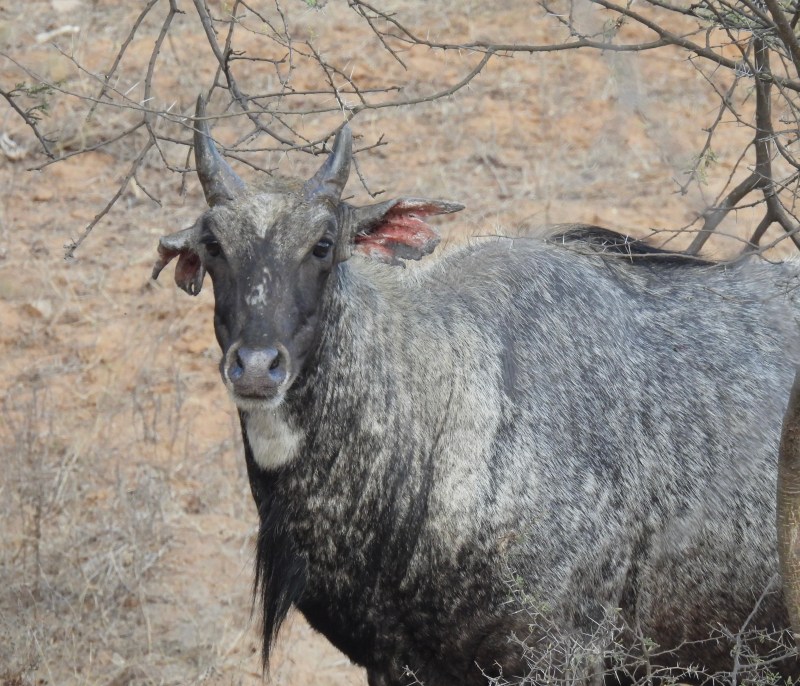
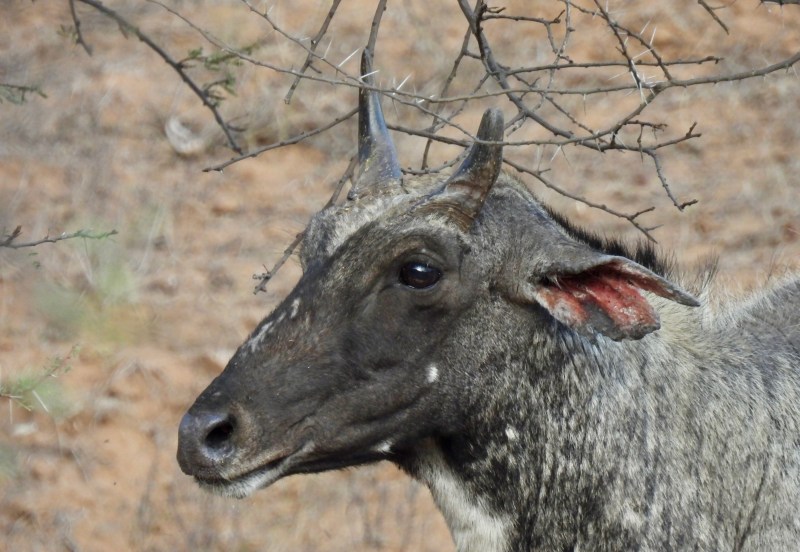
The Nilgai, Indian Desert Jirds, mongoose and Leopards we encountered on our safari are just a few of Amagarh’s diverse assemblage of mammals. The hills of Jaipur, whose blocks of forested habitat are now protected by the two Leopard reserves, are a refuge for elusive, ecologically significant large mammals like civets, Striped Hyena, Jungle Cat, Asiatic Wild Cat, Golden Jackal, Sambar deer, Red Fox, and Chital deer. We narrowly missed seeing a Striped Hyena on our safari which was a real shame!
Amagarh is surprisingly diverse in terms of Carnivorans (carnivores), and Artiodactylans (hoofed mammals). In fact, with the exception of the Indian Gazelle, Blackbuck antelope, Sloth Bear, Dhole, and Tiger (which was present until 1948), Amagarh possesses a nearly intact mammal fauna, astonishing for an peri-urban game reserve. The Leopard, now Jaipur’s apex predator, is more bold and less flighty than Leopards in neighboring Tiger reserves. This is perhaps why sightings are so common here.
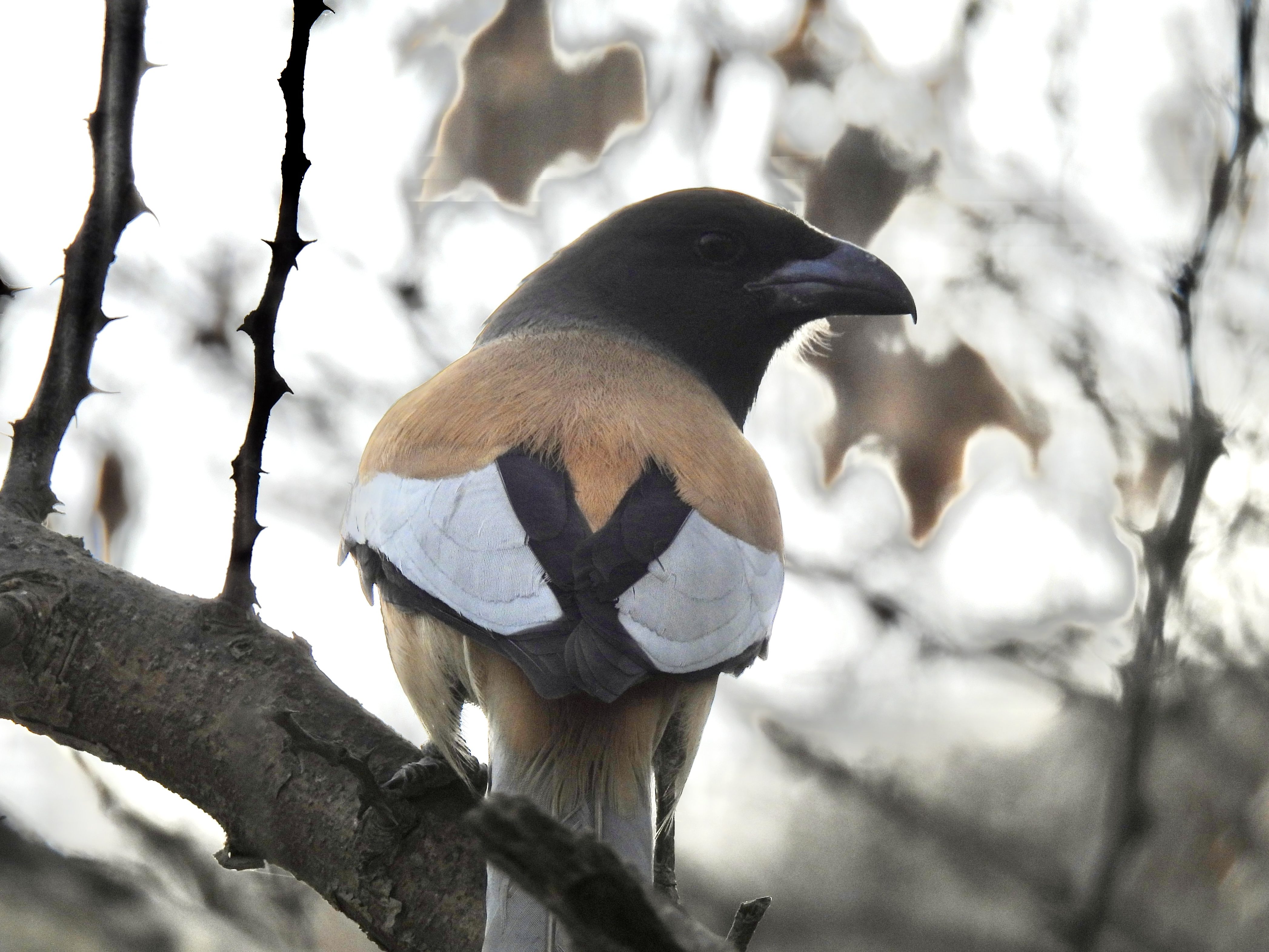
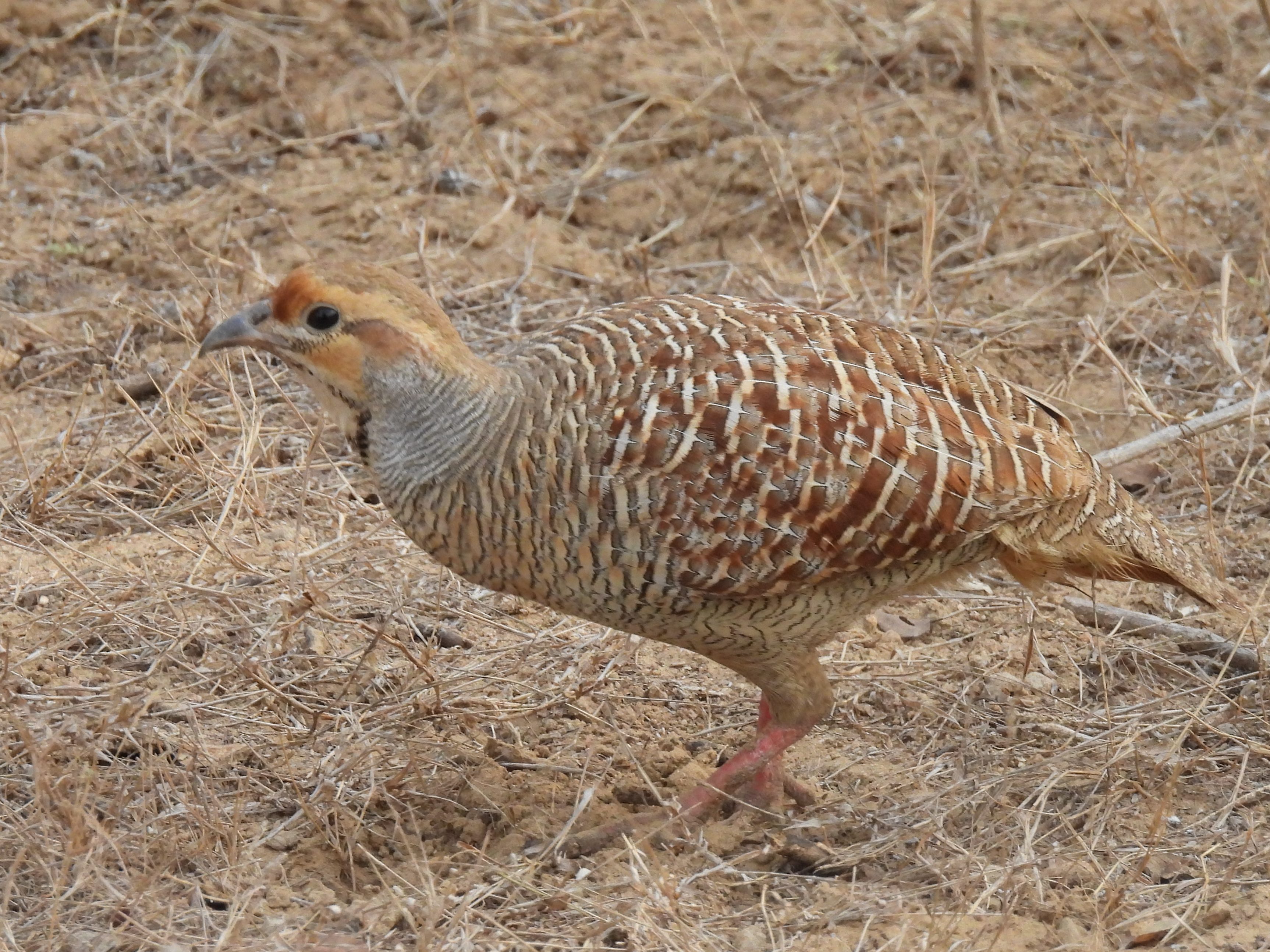
For the next hour or so, as we waited for the Leopards and other big game to come out of hiding, I did a bit of birding with our guide. Amagarh has over 250 bird species, and I was keen on sighting some Indian Subcontinent specialties. There were Gray Francolins, a partridge-like gamebird, in abundance. Several times we almost hit them as they ran across the track! Additionally, we saw a couple flocks of Rufous Treepies, handsomely-adorned relatives of crows and magpies that make a range of raucous calls to communicate with one another.
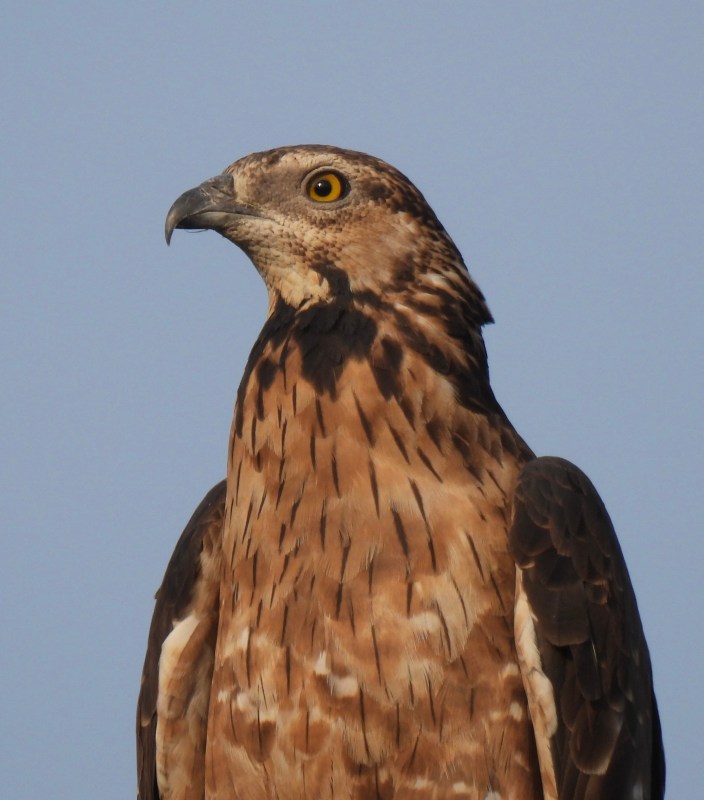
Among my favorite avian find of our safari was a Crested Honey-Buzzard perched in a tall, dead tree, who provided me with great photo-ops. Our guide misidentified it as a White-eyed Buzzard, which would’ve been a lifer for me, and I later had to re-identify the raptor using the photos I took. Still a cool find.
I was getting slightly antsy as we passed by the waterhole for the 3rd time just to see the same two Nilgai as before. Our driver decided it was time to leave zone 1 and brought us to zone 2 to look for Leopards. By this time, it was around 5:30, and the air was cooling off as the sun set. Still no news of any Leopards. However, this section of the reserve felt more wild than the previous area, and we started seeing more birdlife as we drove farther into the bush. Babblers, lapwings, drongos, doves, and bulbuls were everywhere.
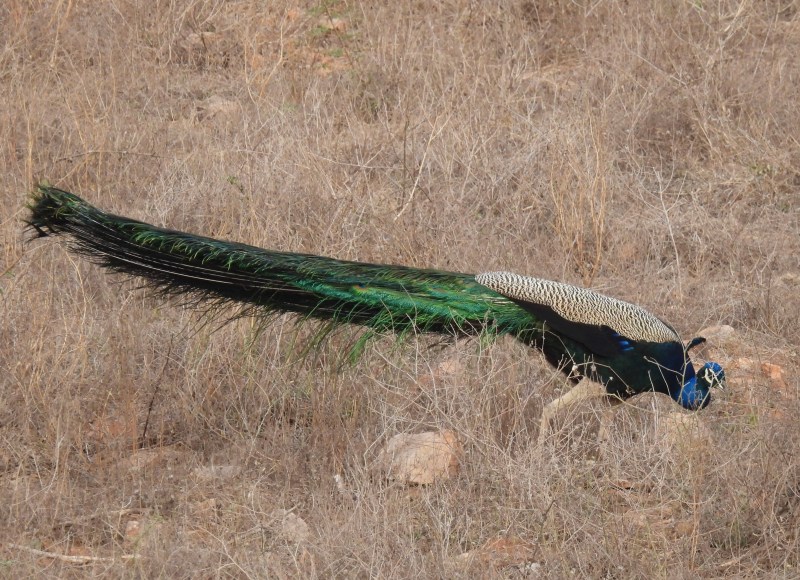
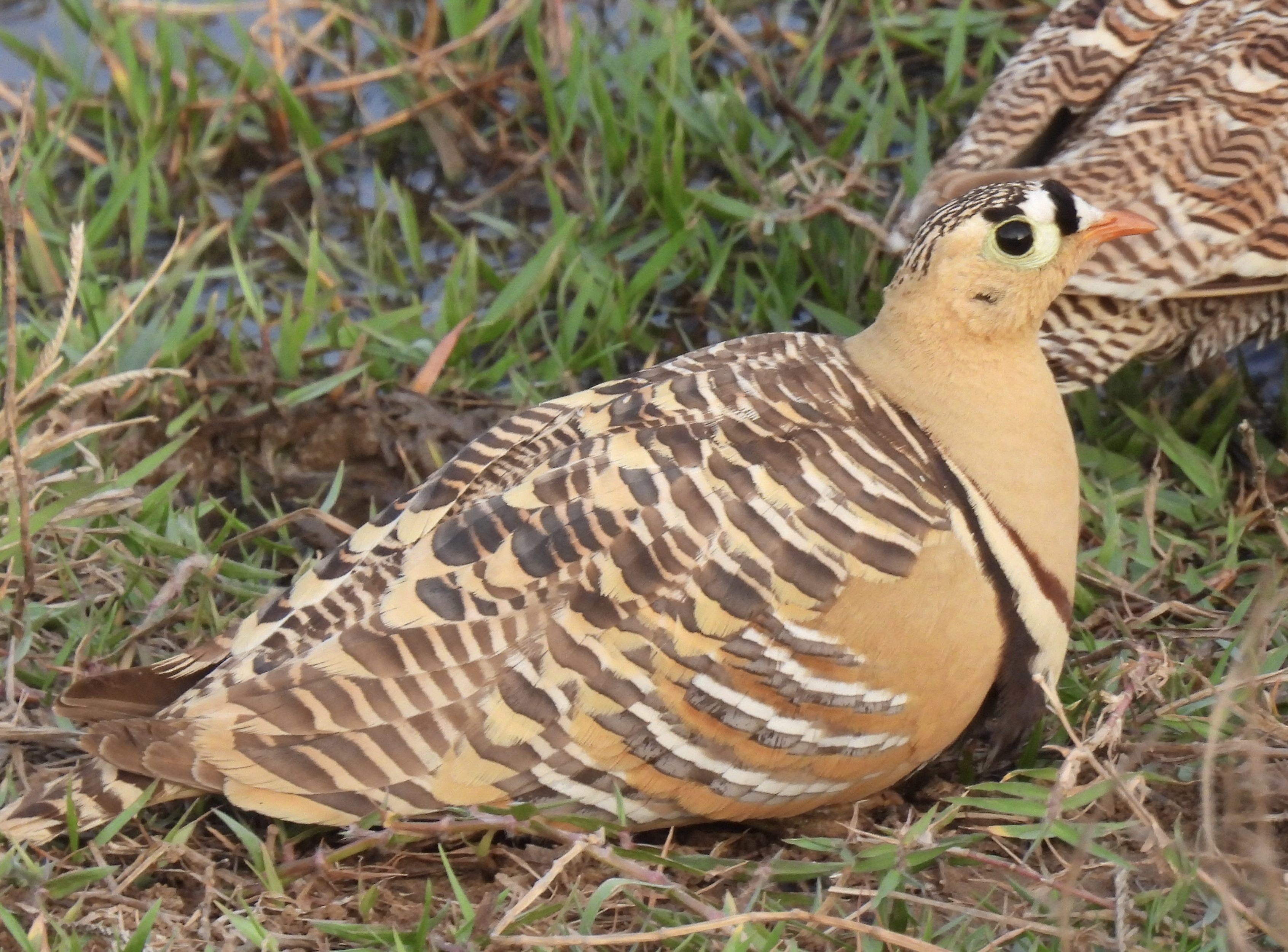
There was a small reservoir dam that we paused near to scan the nearby hillsides for game, and here we saw numerous Indian Peafowl and a pair of beautiful Painted Sandgrouse, a lifer.
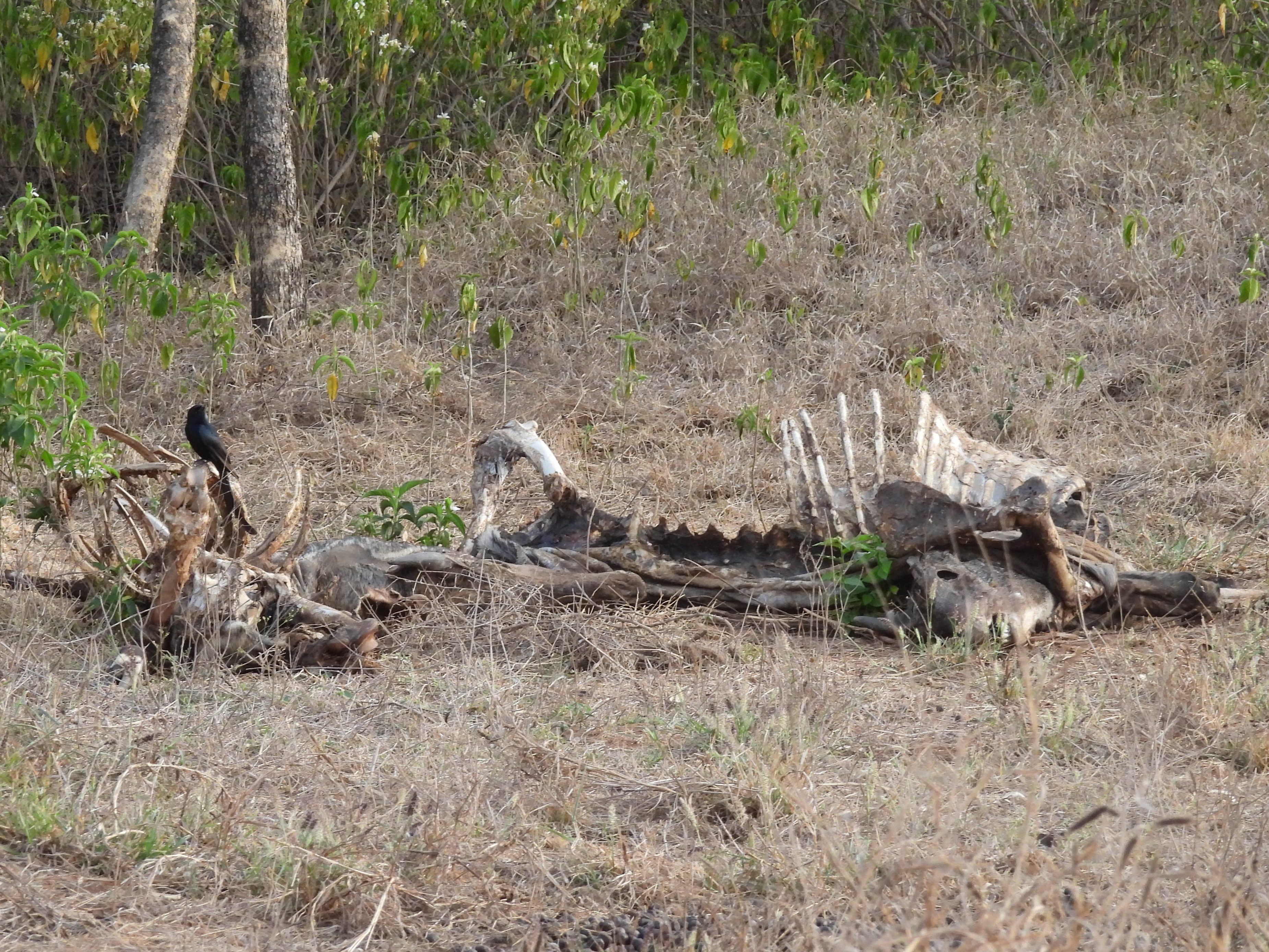
We passed by some pungent Nilgai carcasses in block 2, one of which had an Indian Gray Mongoose feeding on it. The mongoose ran away too quickly to be photographed, and half my family didn’t get a chance to see it.
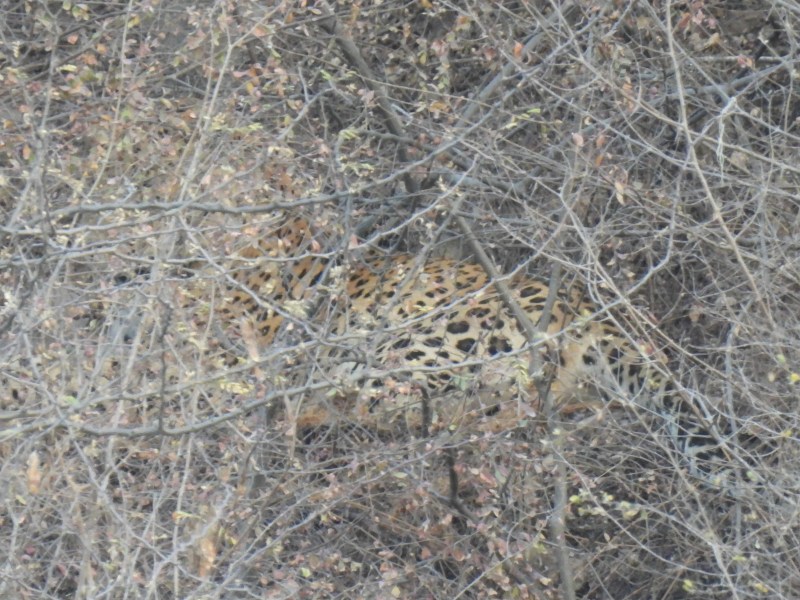
It was about 6:15 at this point, and I was losing hope that we’d see a Leopard. However, just as I was preparing myself for disappointment, our guide got a call about a Leopard hidden in dense vegetation in block 3. I was flooded with cortisol as we raced to the spot where the big cat had been seen. There was a line of Jeeps pointing at an area of the hill across from us where they said the Leopard was hiding. Our guide located the Leopard easily, and helped point it out to myself and my family. It took me a surprising amount of effort to locate the animal, but I eventually did and could see the outline of its body and its characteristic rosettes (spots).
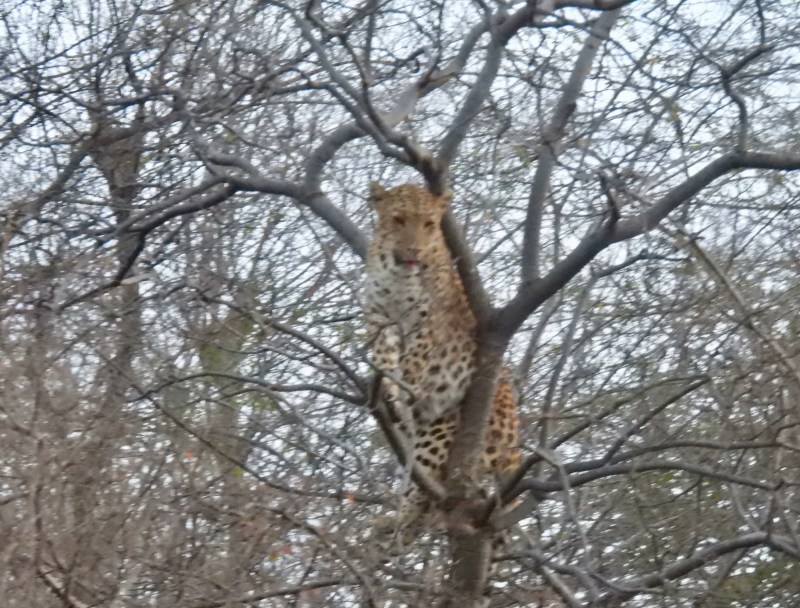
At around 6:30, our guide received two more calls from where we were viewing the Leopard—one about a hyena just up the road, and another about two Leopards in trees next to each other in block 2. Both our driver and guide made the call to leave the first Leopard in an attempt to give us a more quality encounter with the ones up the road. Our driver and guide had a mere 15 minutes to get across the reserve and locate the Leopards before closing time, which was quite an undertaking! After inching past the supposed location of the hyena—which unfortunately we missed seeing by a hair—we braced ourselves for a speedy and exhilarating drive.
For the next ten minutes, we ripped across the reserve, on what my mom described as a ‘theme park ride’. At 6:43, our Jeep suddenly halted and our guide pointed frantically toward the trees across from us, where two Leopards were resting in clear view! I could hardly contain my excitement as I whipped out my camera to take photos of one of them. I didn’t even have a chance to take a clear shot of it before our guide said we had to return to the gate. Probably my most disappointing end to a wildlife encounter ever!!
But hey, I can’t complain about three Leopards on one safari, and I gotta hand it to our driver and guide for allowing us to experience the two big cats at the end. And to think the entire time we were within walking distance from a major city!
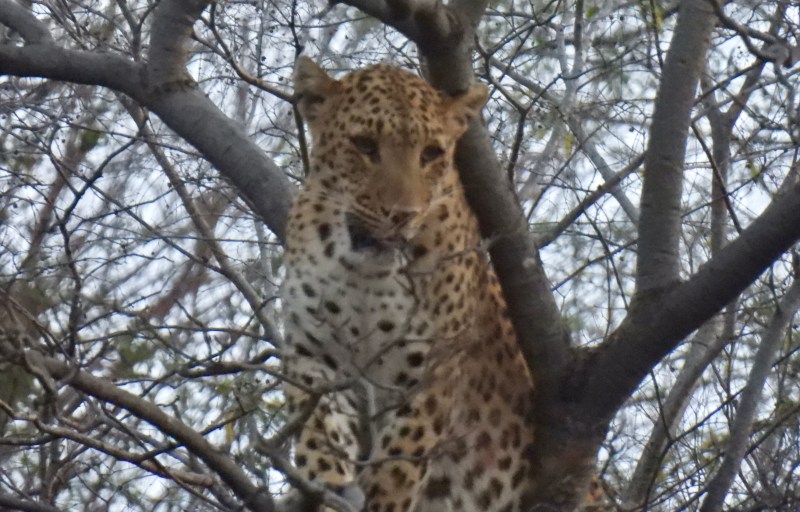
After thanking our driver and guide, we drove back to our hotel, more than satisfied with our safari. I’m grateful to have had the opportunity to explore and document a brand-new and highly underrated game reserve located right next to a major city. I’m also happy I could give a detailed account of my experiences and observations to hopefully entice more nature-lovers to pay it a visit. If you are interested in booking a safari at Amagarh, check out this link: https://www.amagarhleopardreserve.co.in/amagarh-leopard-safari-booking/.
I wish we had more time for another safari at Amagarh or in Jhalana! But I walked away from this experience knowing that I have to return to India someday to see more of its incredible wildlife and natural areas. Stay tuned for my third and final India post and thanks for reading as always,
-Bennett
Mammals Species Recorded: (5 total, 3 lifers)
- Leopard
- Nilgai (Lifer)
- Indian Desert Jird (Lifer)
- Northern Plains Gray Langur (Lifer)
- Indian Gray Mongoose
Bird Species Recorded: (27 total, 3 lifers)
- Painted Sandgrouse (Lifer)
- Yellow-Throated Sparrow (Lifer)
- Rufous Treepie (Lifer)
- Crested Honey-Buzzard
- White-Browed Fantail
- Brahminy Starling
- Purple Sunbird
- Indian Robin
- Ashy Prinia
- Jungle Babbler
- Large Gray Babbler
- Laughing Dove
- Gray Francolin
- Red-Vented Bulbul
- House Crow
- House Sparrow
- Black Kite
- Red-Wattled Lapwing
- Indian Peafowl
- Black Drongo
- Oriental Magpie-Robin
- Greater Coucal
- Asian Green Bee-Eater
- Common Tailorbird
- White-Throated Kingfisher
- Common Myna
- Rock Dove


 Bennett Gardner Wildlife Watching
Leave a reply to Eileen Malec Cancel reply