
Part 2 of my June 2024 Costa Rica adventure with Seba and Celia takes place in Monteverde, a famous montane cloud rainforest situated 4,364 feet (1,330m) above sea level in the ethereal, misty highlands of the Cordillera de Tilarán. We spent two nights (Days 5-7) in Santa Elena, a town bordering the expansive cloud forest, and made sure to maximize our wildlife-watching time while there. Additionally, we did a stopover hiking trip at Tenorio Volcano National Park on the way to Monteverde, and spent an adrenaline-filled morning at 100% Aventura Adventure Park, which contains the longest ziplines in Latin America and sends visitors flying over a deep, mile-wide valley!

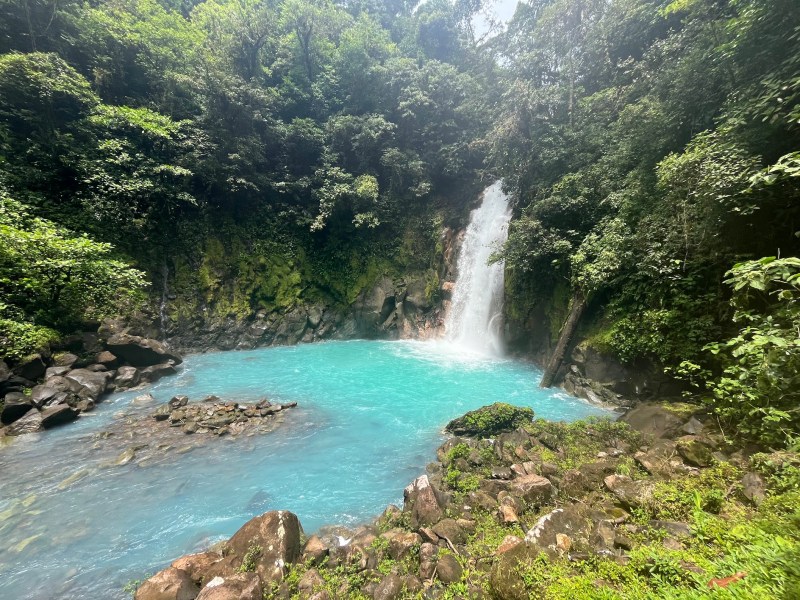
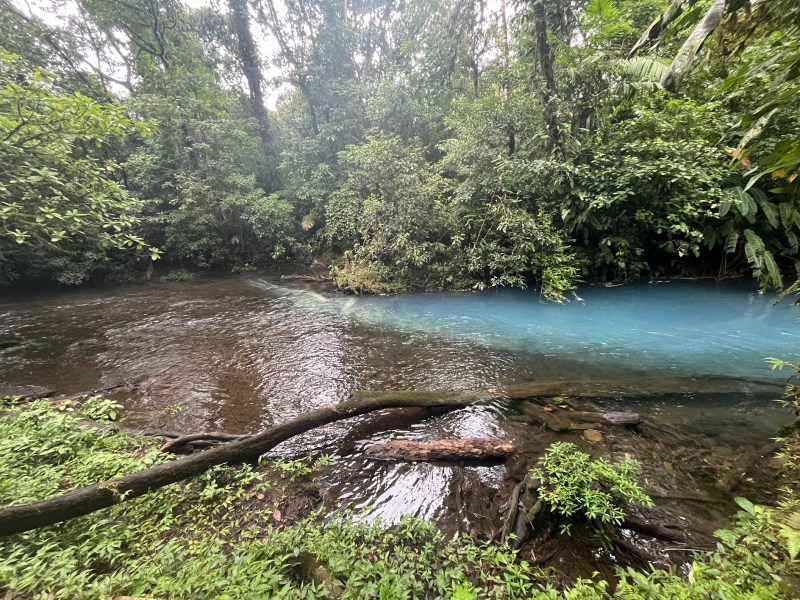
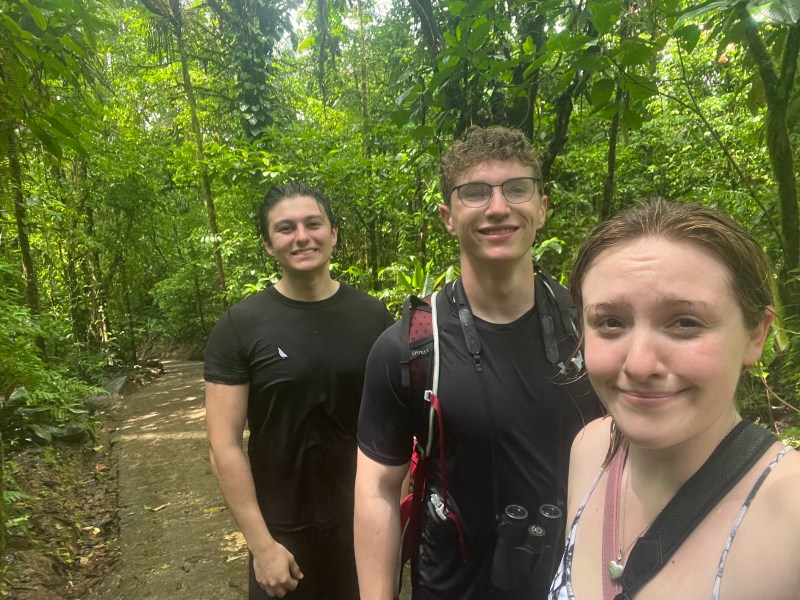
Day 5 started off with us leaving La Fortuna and taking a detour to Tenorio Volcano National Park, a geologically interesting 31,000-acre (12,867-hectare) reserve on the slopes of 6,286-foot-high (1,916m) Tenorio Volcano. Tenorio Volcano National Park contains the dramatic Celeste Waterfall, which unfortunately can only be seen from a crowded viewing platform, along with some natural hot springs, a bright blue river, and El Teñidero, where two differently colored rivers converge. We all agreed that though Tenorio provided some scenic rainforest trails and geological sites, the crowded nature of the park and the congestion of the relatively short hiking trails was fairly unenjoyable. It also poured on us through the last hour of our hike, an unavoidable part of the Costa Rican wet season.
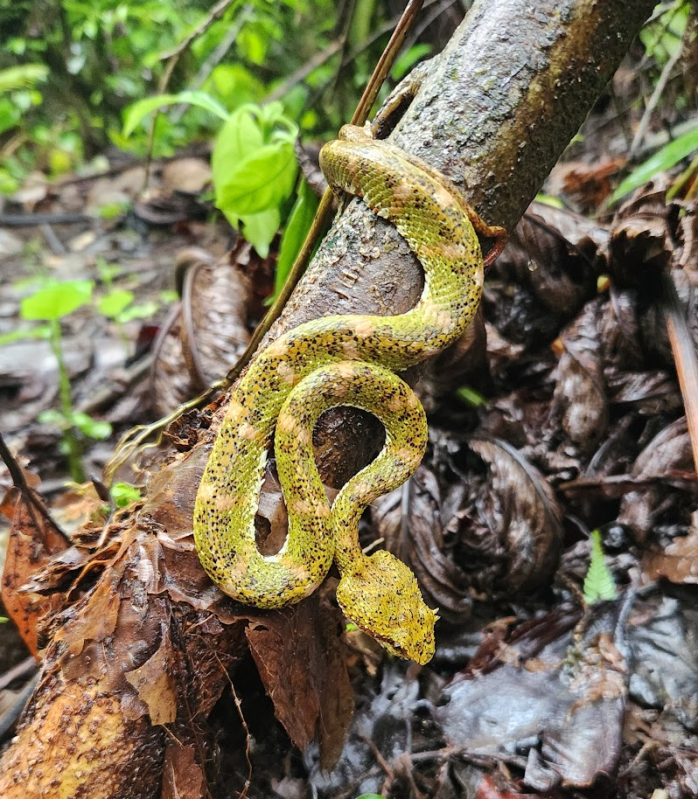
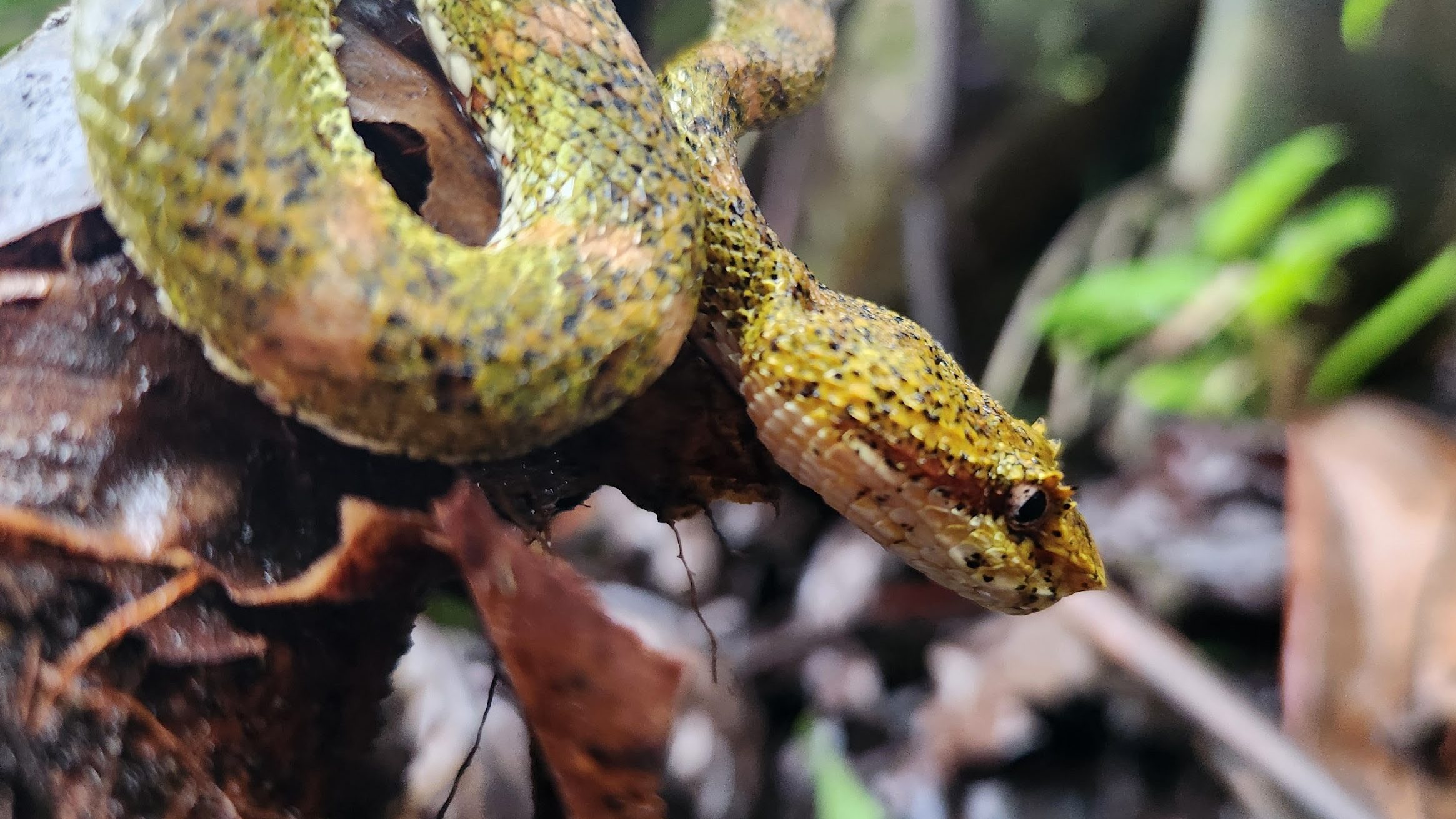
After hiking through the park for several hours, scouring understory shrubbery and questioning locals about wildlife whereabouts, Seba and I got to see a dream species of ours: the Eyelash Viper (Bothriechis schlegelii). Tenorio Volcano National Park is one of the best places in Costa Rica to see these beautiful snakes, and we lucked out finding a yellowish-green individual on the trail back to the park entrance. Though it wasn’t the bright, banana-yellow color morph I was hoping to see, the viper was tolerant enough to allow us to observe it for quite a while within close proximity, making the encounter all the more memorable.
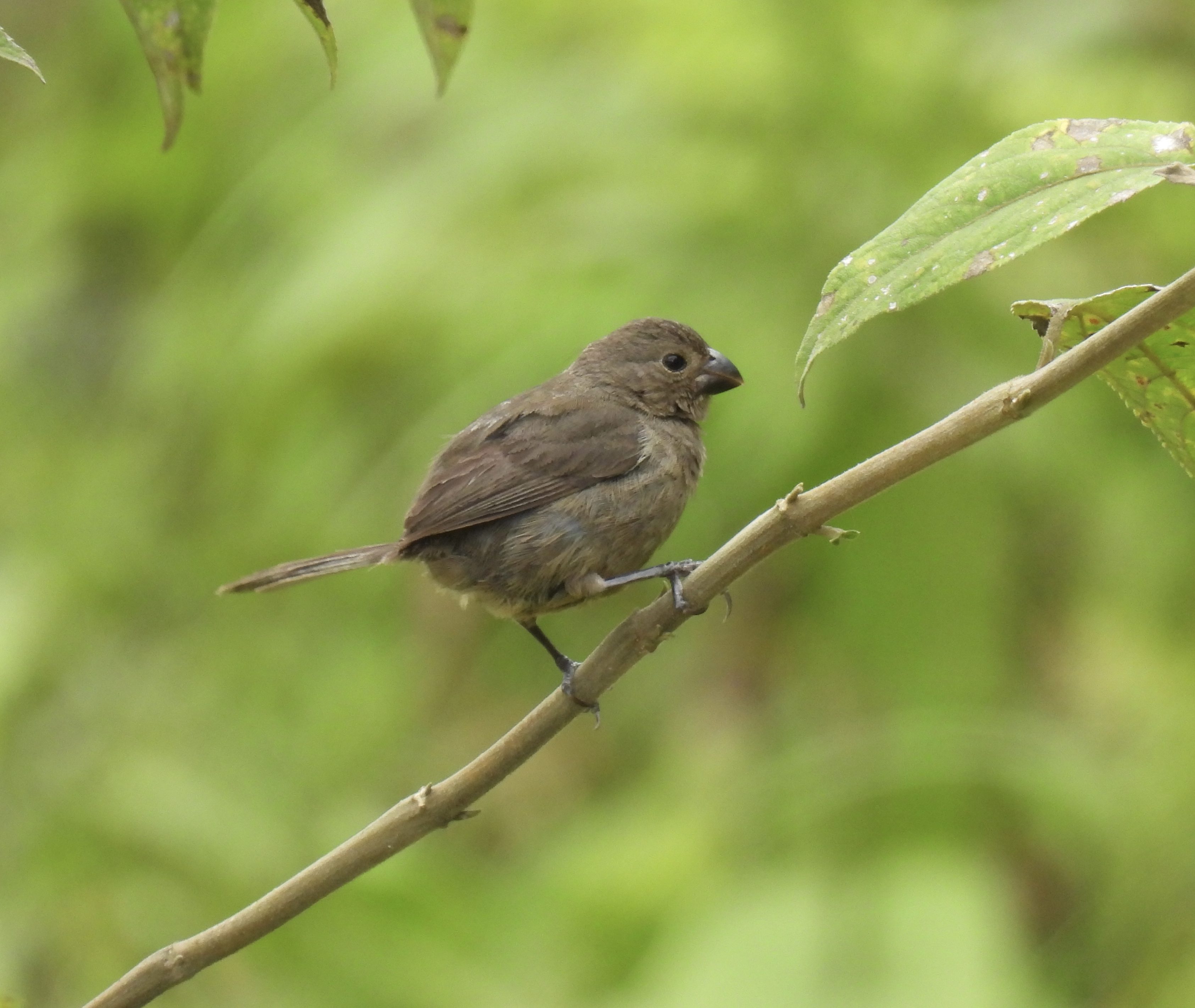
We spent about four hours at Tenorio, which included a walk to the azure Rio Celeste for a quick dip, located just outside the park. It was about a mile trek along a paved road through some farmland to reach the Rio Celeste. Here I noted a variety of open-country and forest edge birds like Morelet’s and Variable Seedeaters, Thick-Billed Seed Finch, Scarlet-Rumped Tanager, and Yellow-Throated Euphonia.

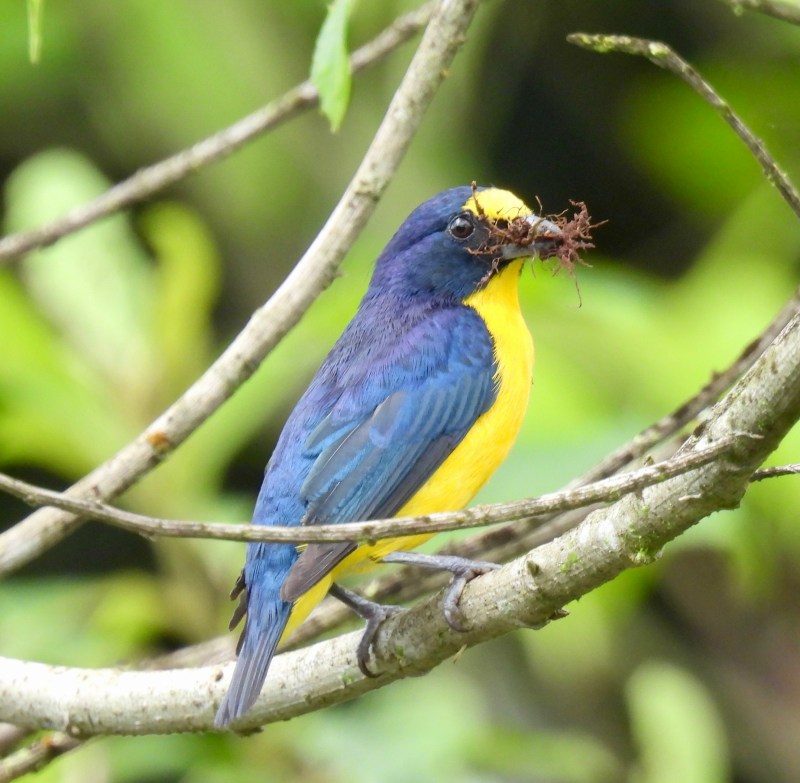
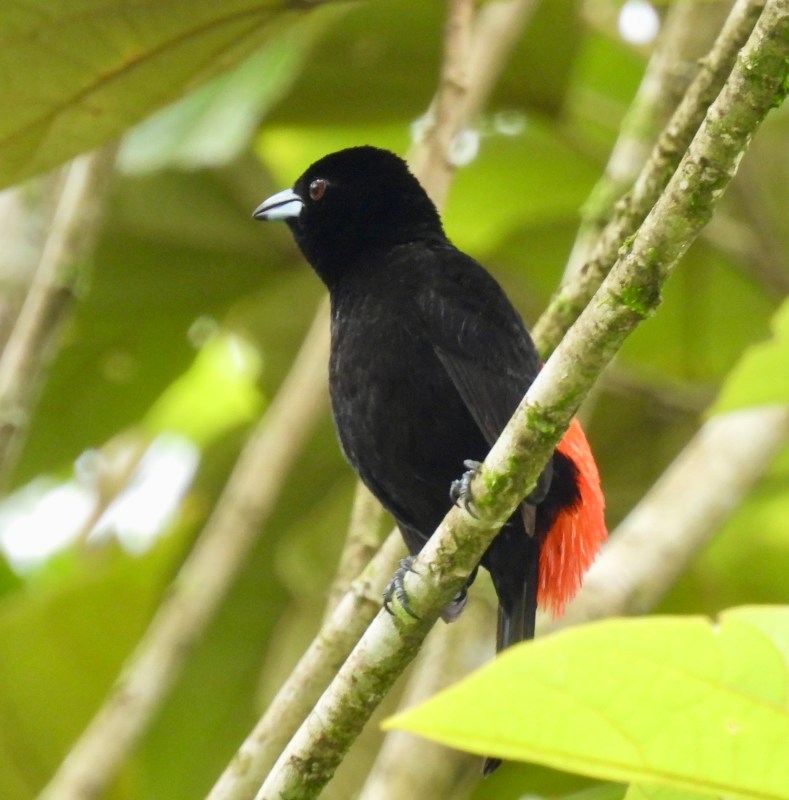
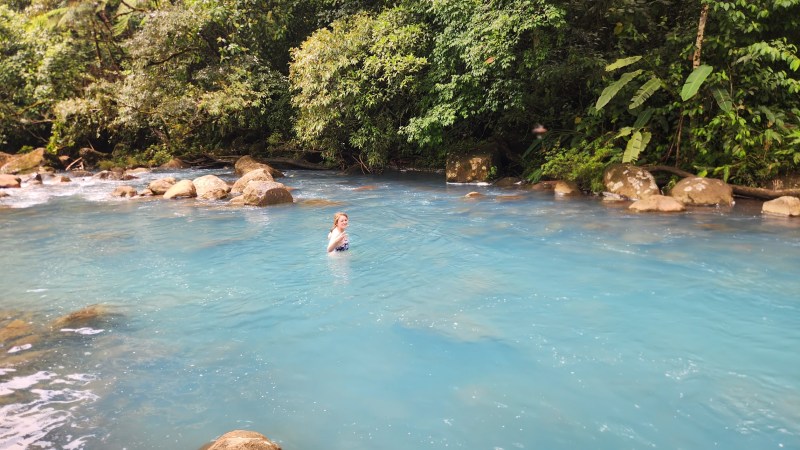
Our swim in the Rio Celeste was enjoyable, the hike through Tenorio Volcano National Park was decent, and the Eyelash Viper was an awesome find. We still had a ways to go to Monteverde, and we had to depart Tenorio quickly after finishing our hike to make it to our Monteverde night tour on time.
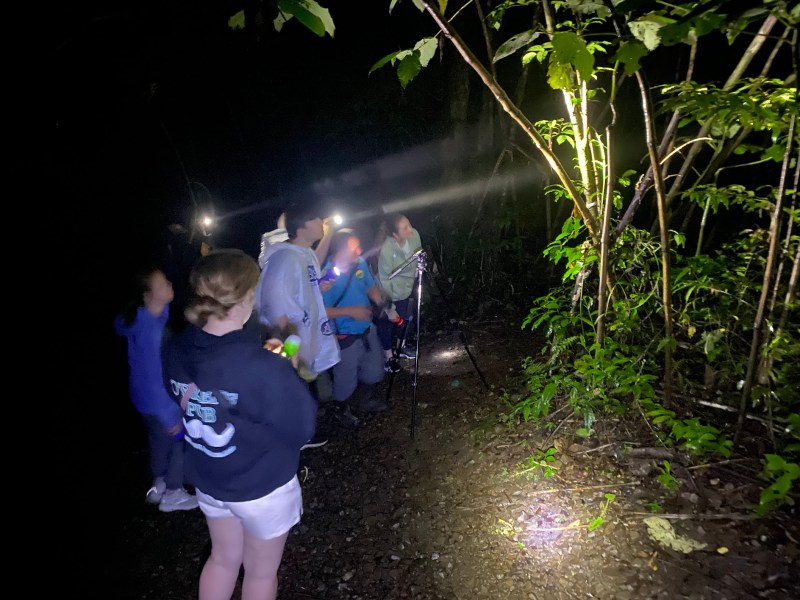
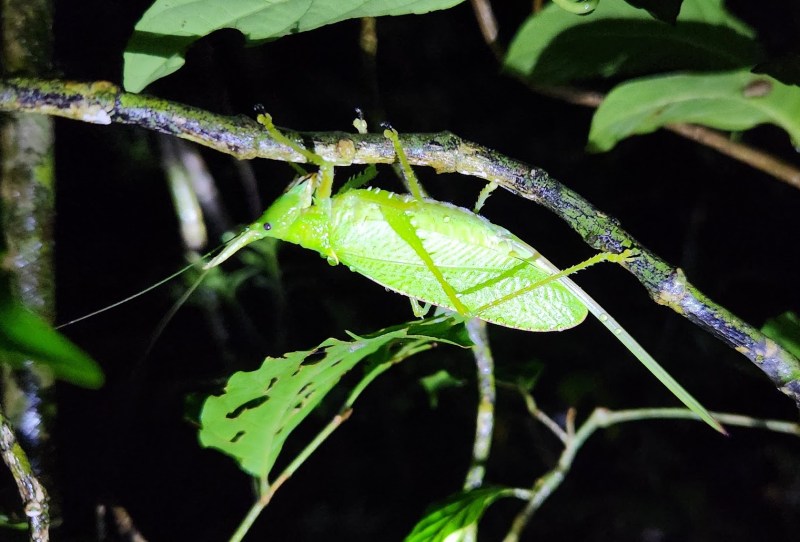
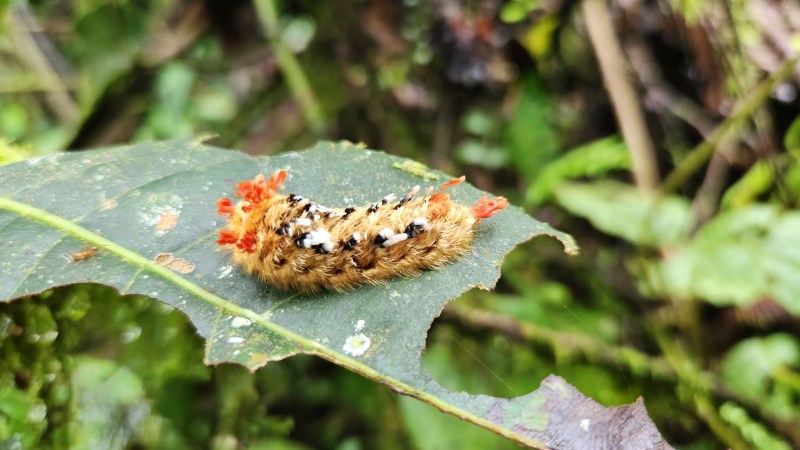
A two hours of elevation gain later and we arrived in the cool, humid highlands of the Cordillera de Tilarán, just outside the town of Santa Elena. Our night tour took place in the private Refugio de Vida Silvestre Monteverde (Wildlife Refuge Monteverde in English), and the tour was quite good, with plenty of insects, herps, and mammals seen. We had multiple guides with our group of about 10, and were given our own flashlights to search for nocturnal wildlife within the cloud forest. Our guides were equipped with telescopes and laser pointers to aid visitors in spotting creatures. Our highlights of the night included an endemic Costa Rican Orange-Kneed Tarantula (Megaphobema mesomelas), a Fleishmann’s Glass Frog (Hyalinobatrachium fleischmanni), a Side-Striped Palm Pit Viper (Bothriechis lateralis), 2 Kinkajous, a distant and heavily obscured Mexican Hairy Dwarf Porcupine, katydids, phasmids, and an Ogre (Net-Throwing) Spider (Deinopidae sp).
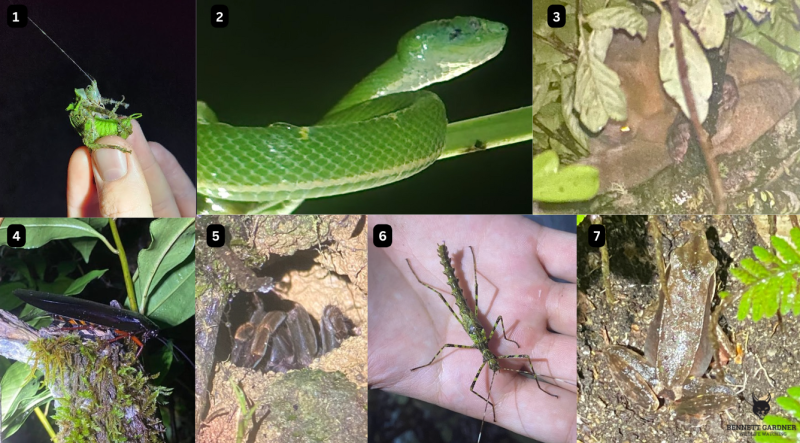
1. Katydid (Clepsydronotus sp),
2. Side-Striped Palm Pit Viper (Bothriechis lateralis),
3. Kinkajou (Potos flavus),
4. Costa Rican Giant Cockroach (Megaloblatta blaberoides),
5. Costa Rican Orange-Kneed Tarantula (Megaphobema mesomelas),
6. Phasmid (Stratocles sp),
7. Brilliant Forest Frog (Lithobates warszewitschii)
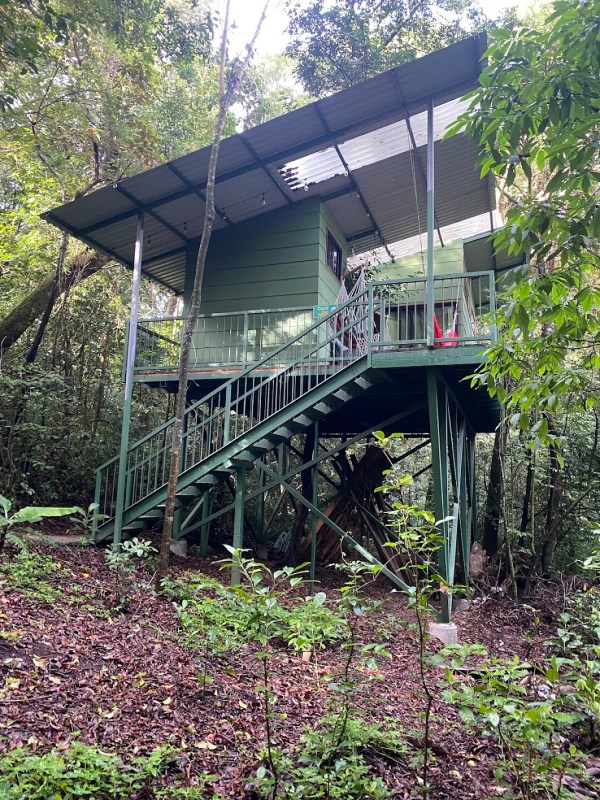
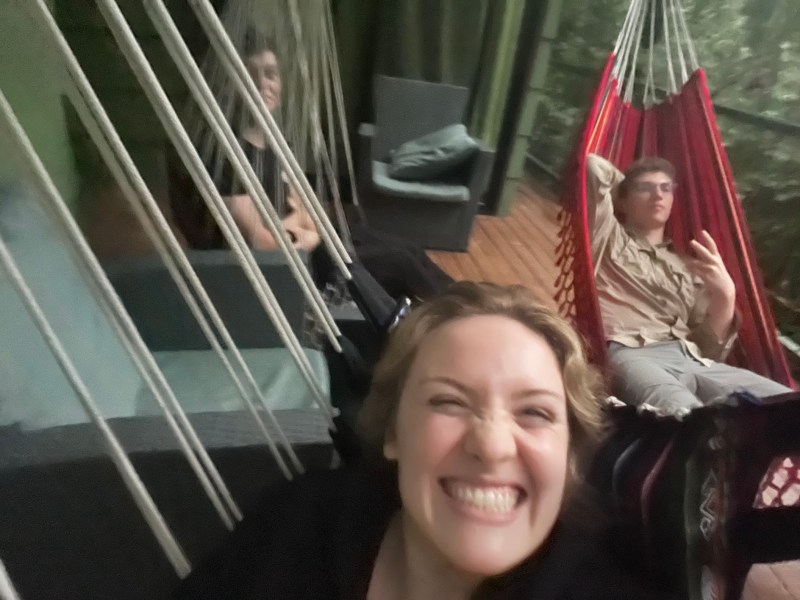
After the night tour, we checked into our AirBnb, the Coati Treehouse. Like Treehouse Hotel in La Fortuna, our accommodation was a stilt-elevated villa in a forest, though it wasn’t as charming nor as wild as Treehouse Hotel.
We were up early to get breakfast in a café in Santa Elena before heading to our focal point of Monteverde; the Monteverde Cloud Forest Reserve, a 26,000-acre (10,500-hectare) swathe of virgin cloud forest that attracts visitors from around the world to its plethora of biodiversity. There are more orchid species here (500) than any other place of comparable size on Earth, along with over 2,000 additional vascular plant species. Monteverde’s vertebrate diversity is no less impressive, with 400 birds, 100 mammals, and 120 reptiles and amphibians calling the reserve home. This includes the now-extinct endemic Golden Toad (Incilius periglenes), which disappeared a mere 25 years after its 1964 discovery as a result of a deadly Chytrid fungus outbreak.
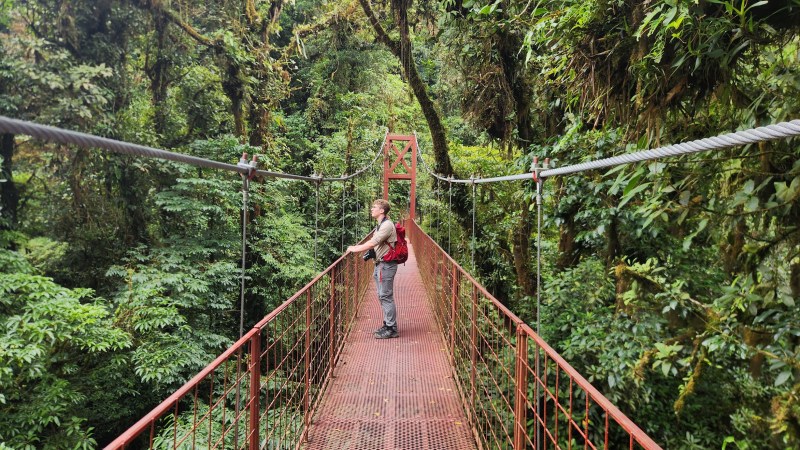
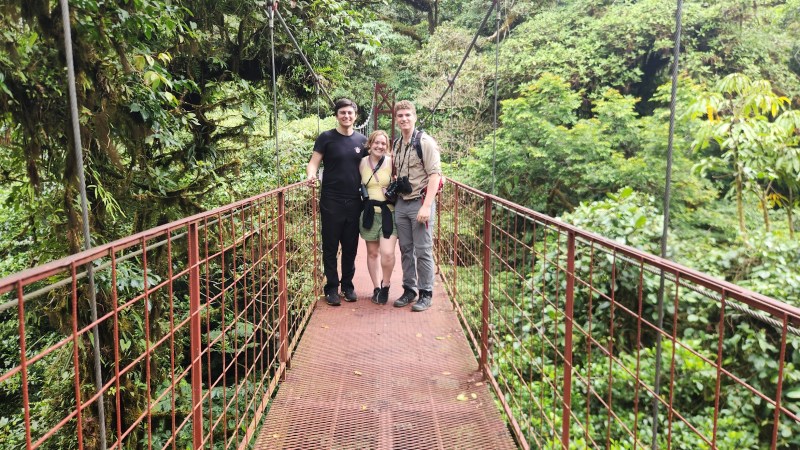
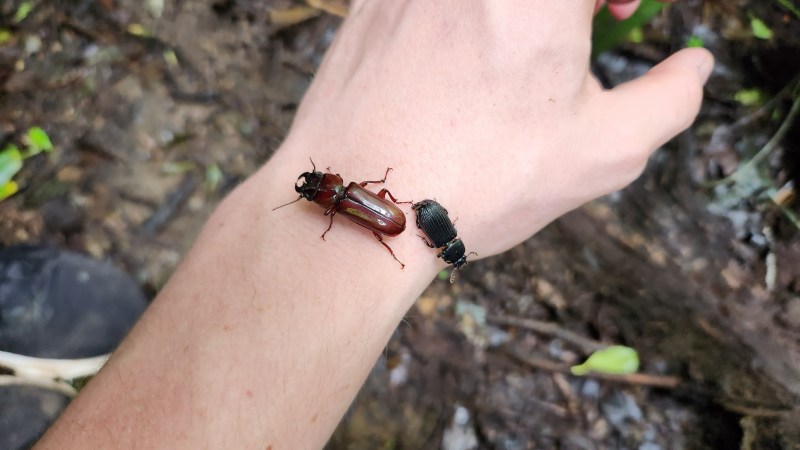
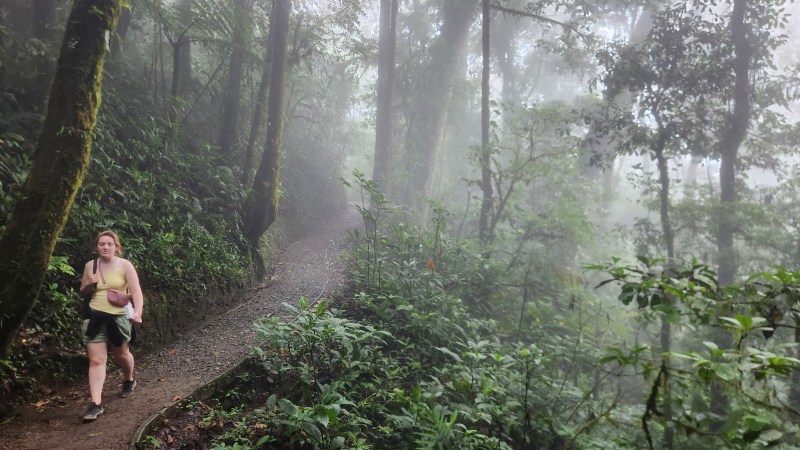
I wanted to see as many montane-restricted bird species as possible, with my sights set on seeing a mystical Resplendent Quetzal in the wild for the second time (I’d seen one briefly in Monteverde the first time I visited Costa Rica). Similar to Fraser’s Hill in Malaysia which I had visited last year, Monteverde is a birder’s haven, with a long list of gorgeous species restricted to cool, montane cloud forest.
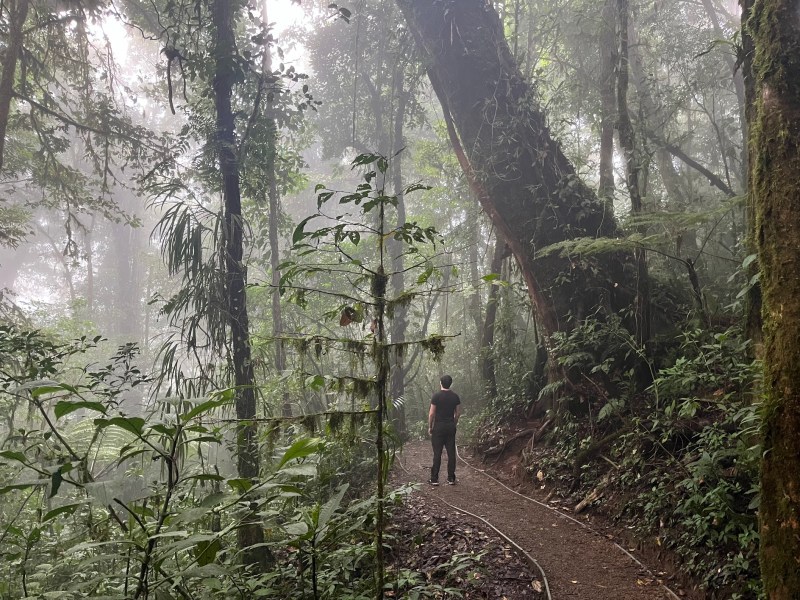
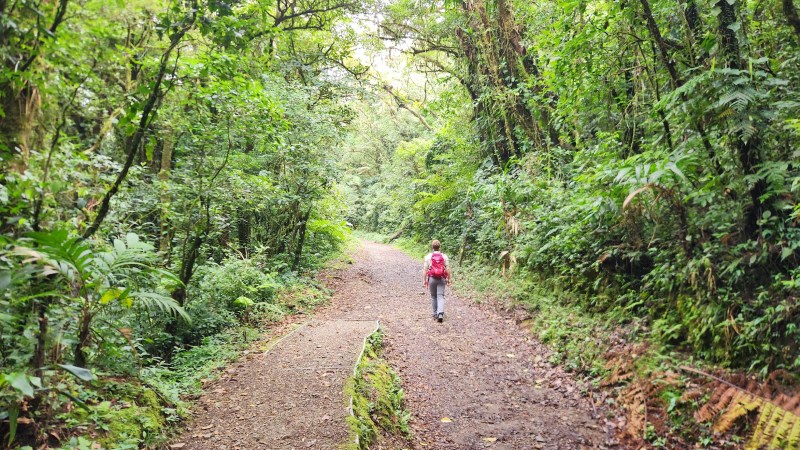
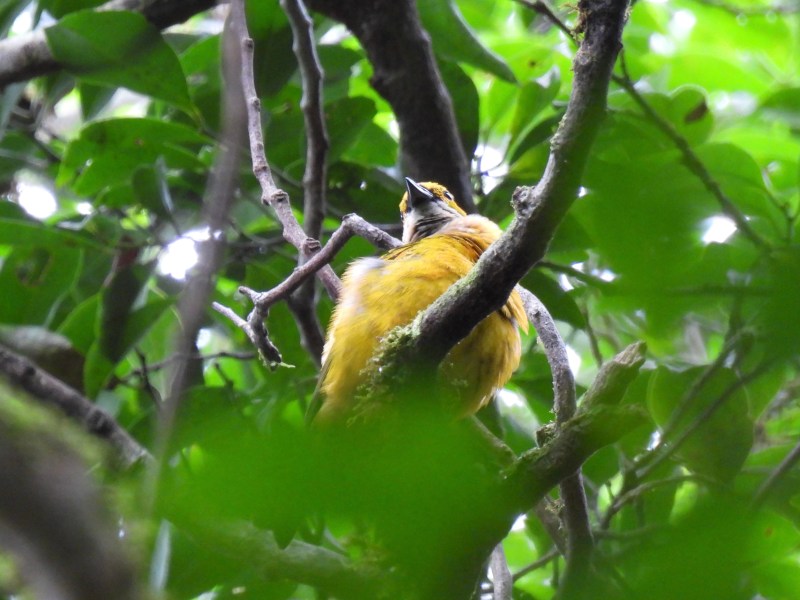
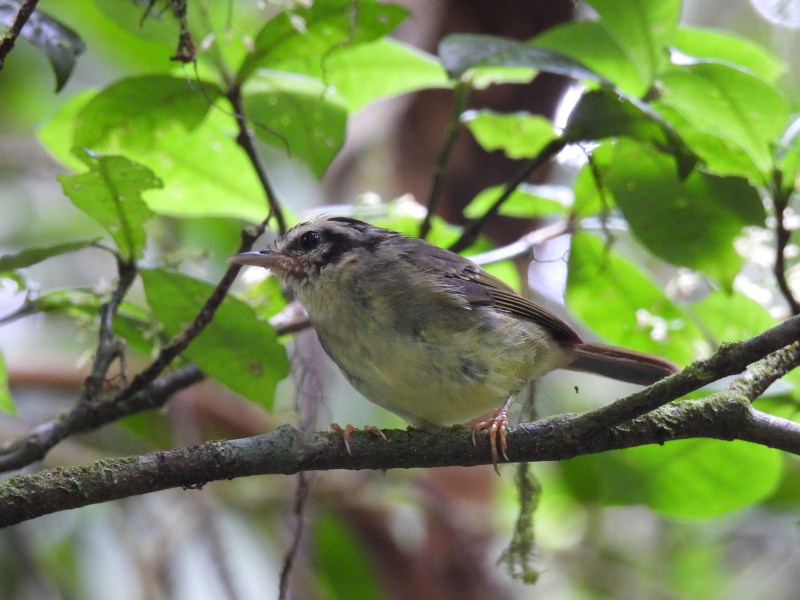
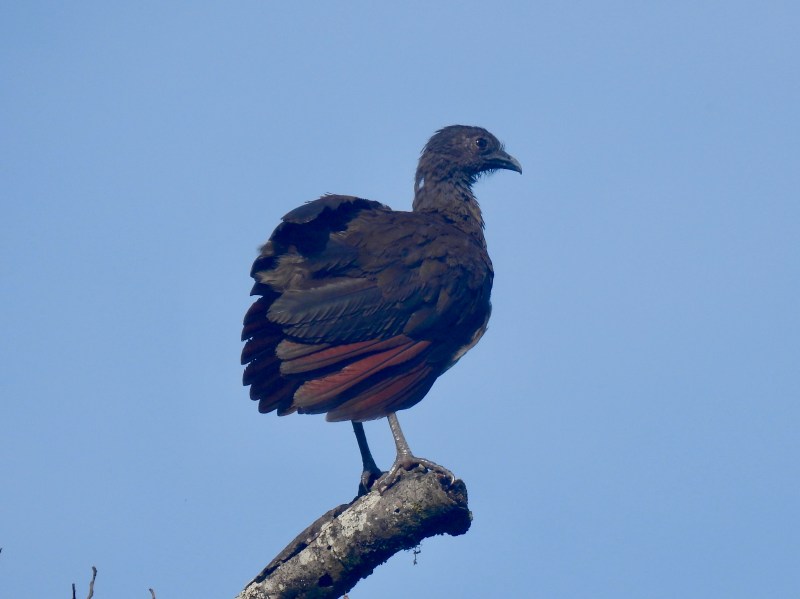
Despite the difficulty of bird and mammal spotting in the dizzying lushness of Monteverde’s cloud forest, we managed to spot over 20 bird species, including my target, the Resplendent Quetzal, at its nesting hole. As we walked through the dense cloud forest I recorded Gray-Headed Chachalacas, Green Hermits, Emerald Toucanets, White-Throated Thrushes, Common Chlorospingus, Black-Faced Solitaires, Black-Headed Nightingale-Thrushes, a Silver-Throated Tanager, Costa Rican Warblers, White-Eared Ground Sparrows, and Yellowish Flycatchers among others. Towards the end of our hike, thick fog rolled in, turning the formerly green forest into an eerie wonderland of giant trees and mist-cloaked views and made wildlife viewing even harder.



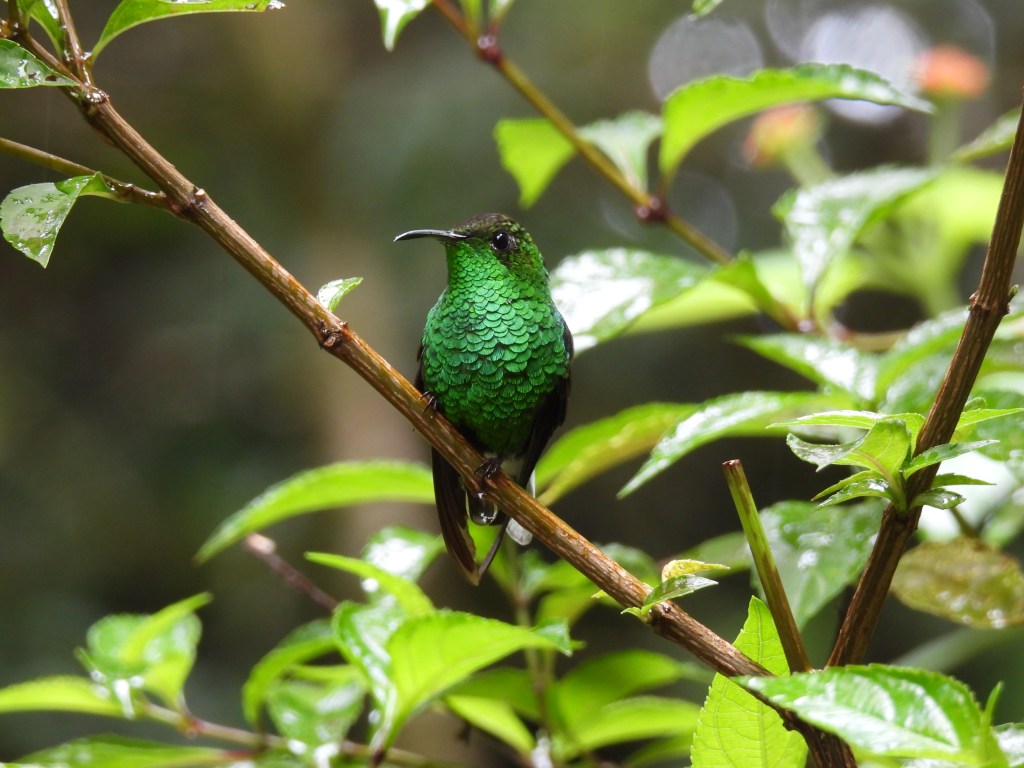
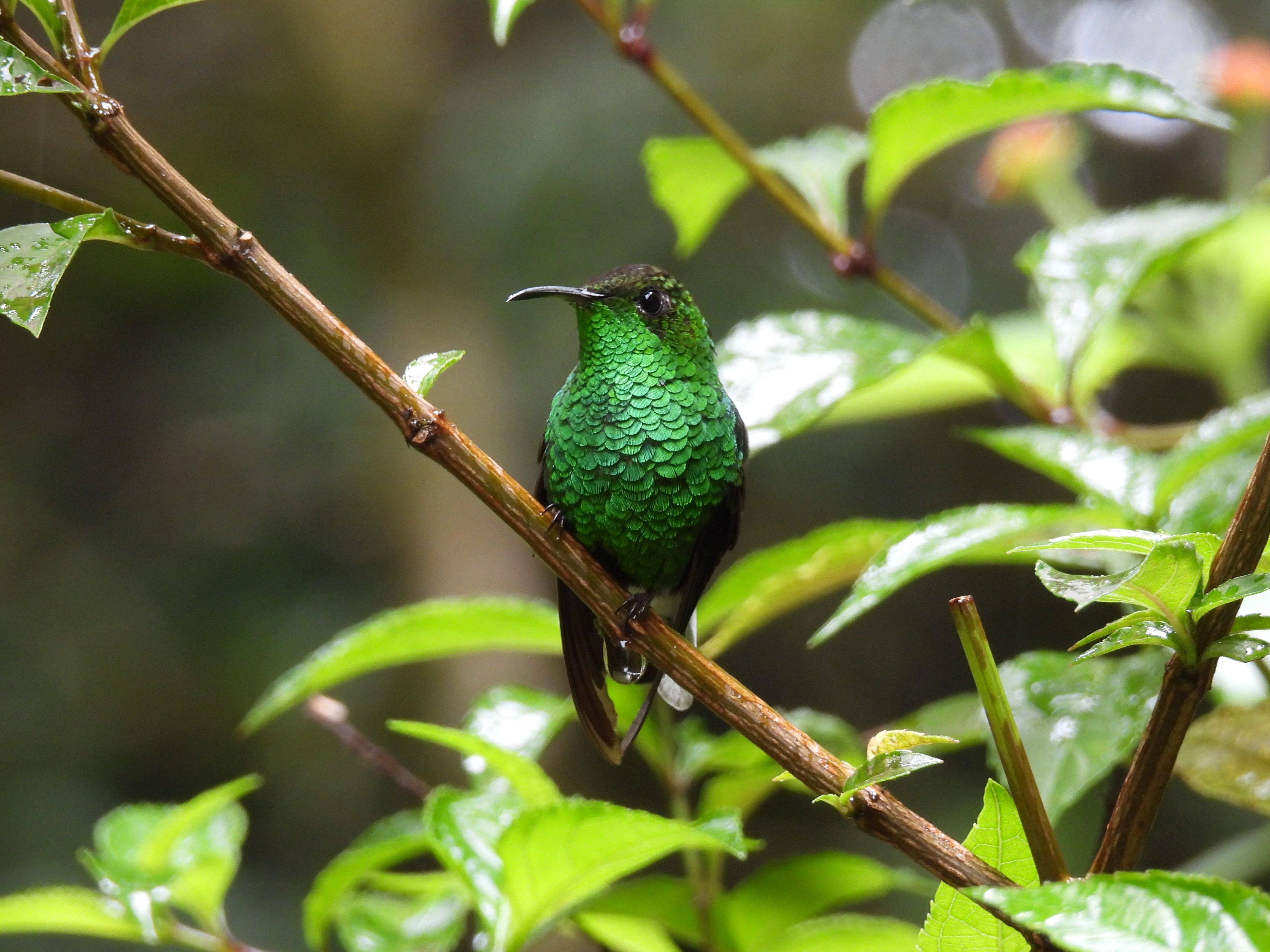
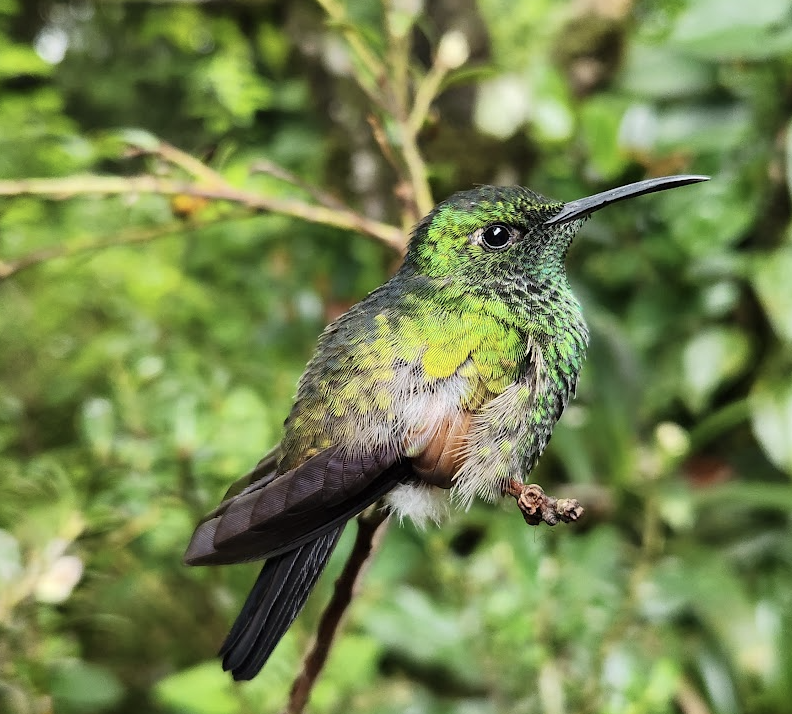
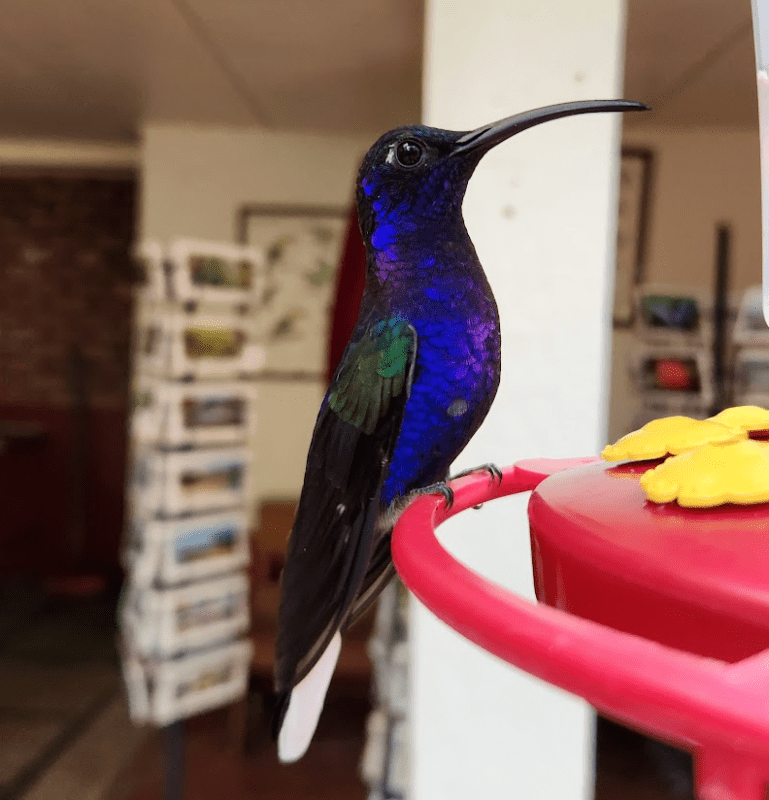
Before and after our hike, we paid a visit to the Hummingbird Garden along the entrance road to the reserve where a large number of hummingbird feeders attract a variety of hummingbirds from the nearby cloud forest to feed. These particular ‘hummers’ are quite tame, and allow humans to get fairly close to them while feeding, making it a unique place to observe these normally shy, darting birds. Violet Sabrewings, Green-Crowned Brilliants, Stripe-Tailed Hummingbirds, Lesser Violet-Ears, Purple-Throated Mountain Gems, and endemic Coppery-Headed Emeralds.
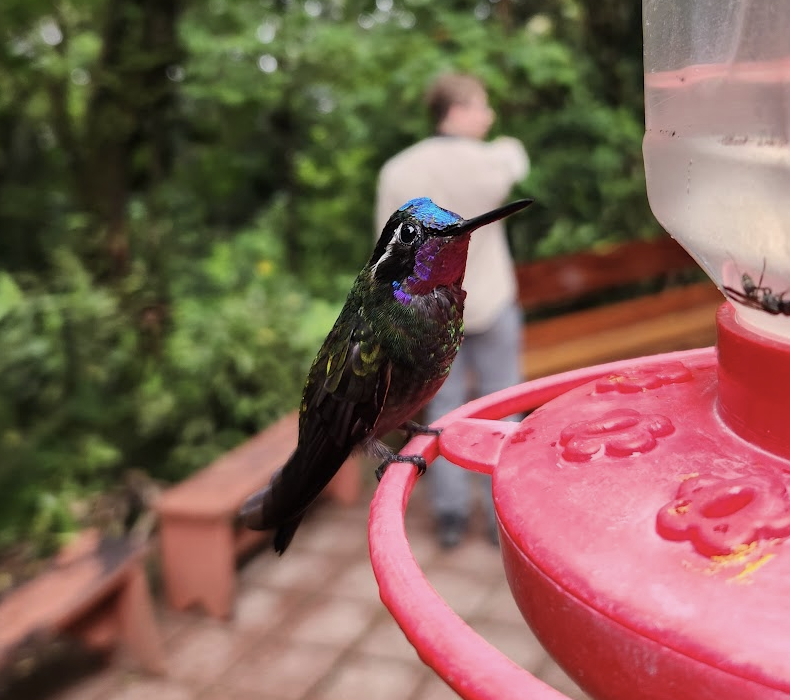
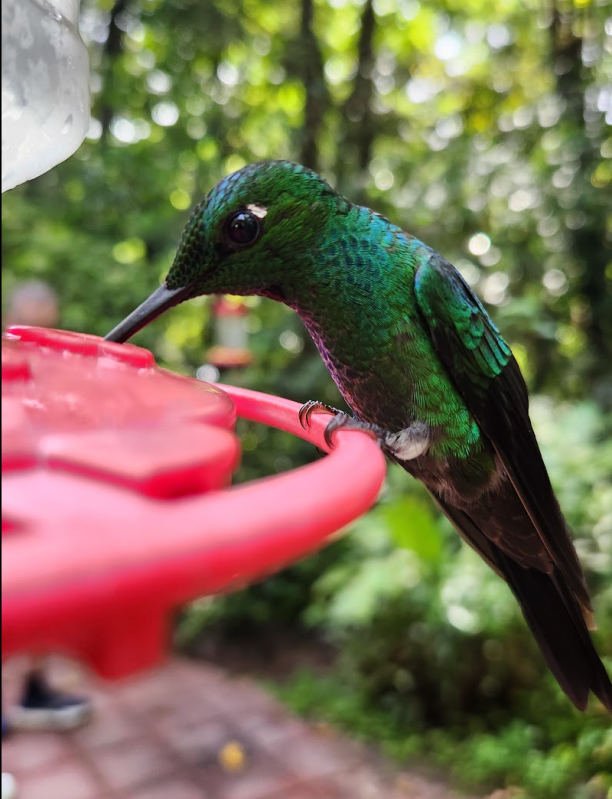

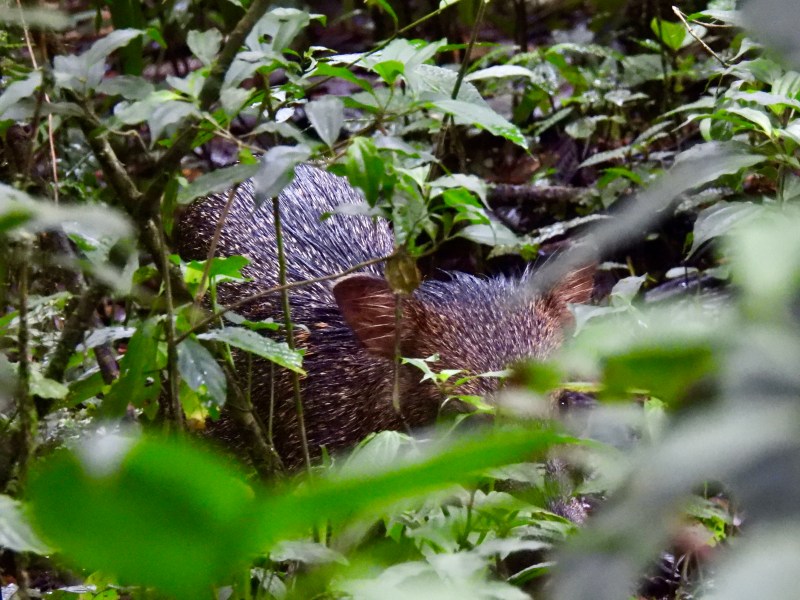
In addition to the wealth of birds we saw in Monteverde, we got lucky and came across several mammals. Seba and I spotted a Central American Agouti at the Coati Treehouse, and while in the reserve we got a fleeting glimpse of a Geoffroy’s Spider Monkey in the treetops, a White-Nosed Coati just off the side of the trail, and most notably a lone Collared Peccary in a secluded section of the reserve.
After a productive and mystical day at Monteverde Cloud Forest Reserve, we decided to call it a night, but not before eating dinner at a soda in Santa Elena and trying some (pretty nasty) Costa Rican shaved ice, or Copo, at a roadside shack.
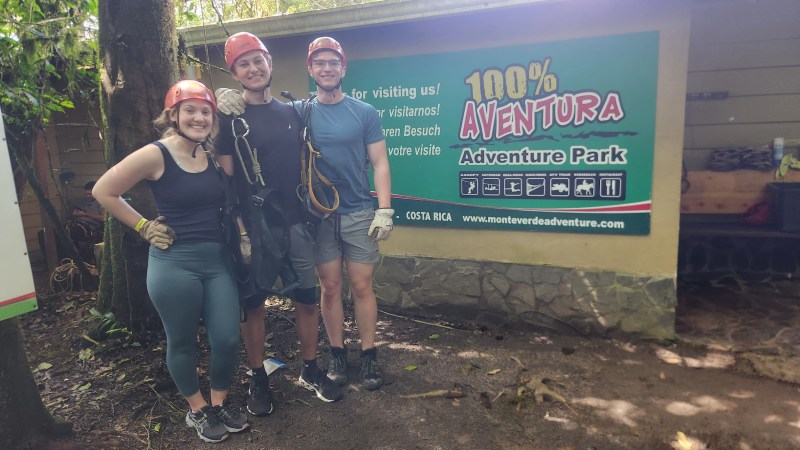
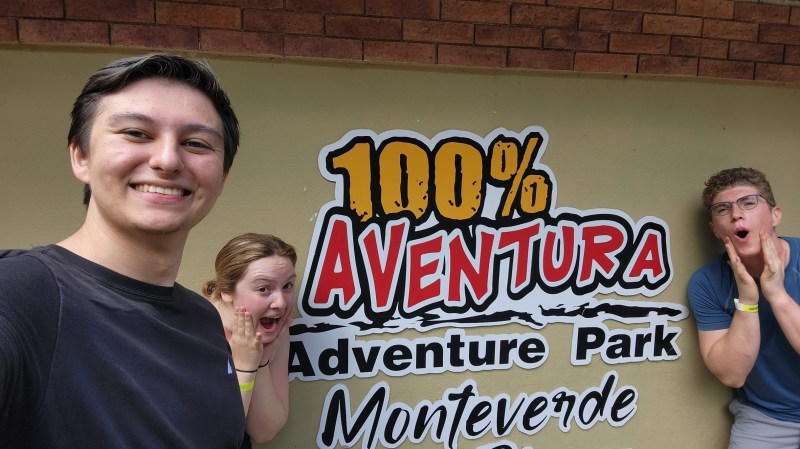
On Day 7 (June 10th), we were off to 100% Aventura Adventure Park to try out their famously long ziplines before departing Monteverde for Quepos. The adventure park is located on a private plot of cloud forest, making for some beautiful scenery as we flew along the zipline routes.
The first few ziplines were short and relatively tame, but that was about to change with the last few zip routes. Especially the one where we careened across a mile-wide valley, strapped into a harnesses that sent us down the zipline face-first! The most exhilarating ride at the adventure park was easily the Tarzan Swing, which sends you plummeting down a 150-foot (50-meter) free fall off a tower until the rubber line you’re attached to catches your fall and sends you swinging through the trees! I can’t recall doing a more extreme or fun ride anywhere else I’ve been to!
After visiting the adventure park, we drove down to Quepos on the Pacific Coast, where we spent our last three days of the trip. Stay tuned for the final chapter of my Costa Rica adventure with Seba and Celia! Thanks for reading as always and make sure to check out my other two Costa Rica posts!
-Bennett
Costa Rica (2024) Mammal Species Recorded: (23 total, 17 lifers)
- Northern Tamandua (Lifer)
- Geoffroy’s Spider Monkey (Lifer)
- Collared Peccary (Lifer)
- Kinkajou (Lifer)
- Hoffmann’s Two-Toed Sloth (Lifer)
- Brown-Throated Three-Toed Sloth (Lifer)
- Gray Four-Eyed Opossum (Lifer)
- Derby’s Woolly Opossum (Lifer)
- Common Opossum (Lifer)
- Mexican Hairy Dwarf Porcupine (Lifer)
- Central American Squirrel Monkey (Lifer)
- Fishing Bat (Lifer)
- Proboscis Bat (Lifer)
- Lesser White-Lined Bat (Lifer)
- Tent-Making Bat (Lifer)
- Variegated Squirrel (Lifer)
- Tapeti (Lifer)
- White-Nosed Coati
- White-Faced Capuchin
- Mantled Howler Monkey
- Central American Agouti
- White-Tailed Deer
- Common Raccoon
Costa Rica (2024) Bird Species Recorded: ( 71 total, 56 lifers)
- Scarlet Macaw (Lifer)
- Resplendent Quetzal
- Great-Tailed Grackle (Lifer)
- White-Winged Dove (Lifer)
- Clay-Colored Thrush (Lifer)
- Rufous-Tailed Hummingbird (Lifer)
- White-Necked Jacobin (Lifer)
- Keel-Billed Toucan (Lifer)
- Yellow-Throated Toucan
- Montezuma Oropendola
- Red-Lored Parrot (Lifer)
- Orange-Billed Sparrow (Lifer)
- Red-Throated Ant Tanager (Lifer)
- Spectacled Owl (Lifer)
- Collared Aracari (Lifer)
- Blue-Gray Tanager
- Hoffmann’s Woodpecker (Lifer)
- Great Kiskadee
- Scarlet-Rumped Tanager
- Black Vulture
- Red-Winged Blackbird
- Common Pauraque (Lifer)
- Lesson’s Motmot (Lifer)
- Crested Guan (Lifer)
- Bicolored Antbird (Lifer)
- Turkey Vulture
- Violet-Headed Hummingbird (Lifer)
- Rufous Motmot (Lifer)
- Crowned Wood-Nymph (Lifer)
- Tawny-Faced Gnatwren (Lifer)
- Blue-Backed Grosbeak (Lifer)
- Crested Caracara (Lifer)
- Great Curassow (Lifer)
- Western Cattle Egret
- Swallow-Tailed Kite (Lifer)
- Lesser Violet-Ear (Lifer)
- Purple-Throated Mountain Gem (Lifer)
- Green-Crowned Brilliant (Lifer)
- Violet Sabrewing (Lifer)
- Green Hermit (Lifer)
- Stripe-Tailed Hummingbird (Lifer)
- Emerald Toucanet
- White-Throated Thrush (Lifer)
- Black-Faced Solitaire (Lifer)
- Common Chlorospingus (Lifer)
- Black-Headed Nightingale-Thrush (Lifer)
- Coppery-Headed Emerald (Lifer)
- Gray-Breasted Wood Wren (Lifer)
- Yellow-Throated Euphonia (Lifer)
- White-Eared Ground Sparrow (Lifer)
- Yellowish Flycatcher (Lifer)
- Costa Rican Warbler (Lifer)
- Bananaquit (Lifer)
- House Wren (Lifer)
- Morelet’s Seedeater (Lifer)
- Variable Seedeater (Lifer)
- Thick-Billed Seed Finch (Lifer)
- Tropical Kingbird (Lifer)
- Yellow-Headed Caracara (Lifer)
- Gray-Cowled Wood Rail (Lifer)
- Brown Pelican
- White Ibis
- American Pygmy Kingfisher (Lifer)
- Black-Hooded Antshrike (Lifer)
- Plain Xenops (Lifer)
- Ochre-Bellied Flycatcher (Lifer)
- Black-Throated Trogon (Lifer)
- Purple Gallinule (Lifer)
- Northern Rough-Winged Swallow (Lifer)
- Gray-Headed Chachalaca (Lifer)
- Silver-Throated Tanager (Lifer)
Costa Rica (2024) Reptile and Amphibian Species Recorded: (34 total)
- Eyelash Pit Viper– small, beautiful individual spotted (after searching for quite some time), on the side of the trail at Tenorio Volcano NP coiled around a tree branch. Charismatic snake and a bucket-list species for Seba and Bennett
- Central American Tree Boa– medium-sized (4.5ft) individual of this beautiful species spotted on a tree branch about quite close to our boat in Rio Cotos tributary on night boat tour
- Boa Constrictor– juvenile spotted by our guide coiled around a mangrove stilt root along the Rio Cotos on night boat tour
- Side-Striped Palm-Pit Viper– pretty snake pointed out by our guides coiled around a branch on night tour at Monteverde Cloud Forest Biological Reserve
- Cope’s False Coral Snake– beautiful snake; we watched it slither into the leaf litter on side of jungle trail during our night walk at La Selva Biological Station
- Ornate Cat-Eyed Snake– juvenile seen first night coiled around a tree branch at Treehouse Hotel; another individual resting on a palm frond at Mistico Hanging Bridges
- Mangrove Cat-Eyed Snake– got an up-close observation of this cute little species along the banks of Rio Cotos tributary on night boat tour
- Blunt-Headed Tree Snake– spotted by Octavio in a tree next to a suspension bridge during night walk at La Selva Biological Station
- Red-Eyed Tree Frog– we saw both Pacific and Caribbean morphs on this trip; male adolescent Caribbean morph with eggs in frog garden at Treehouse Hotel; adult Pacific morph perched on a banana leaf on final night tour near Quepos; a colorful and distinctive target species for Bennett and Seba
- Yellow-Spotted Night Lizard– spotted by Octavio on side of jungle trail during night walk at La Selva Biological Station
- Border Anole– Treehouse Hotel on first night during tour; many other locations including Mistico Hanging Bridges and Tenorio Volcano NP
- Green Iguana– common in trees and in open areas in La Fortuna and Quepos; saw a large one in a tree along Rio Cotos tributary on night boat tour
- Black Spiny-Tailed Iguana– we saw many in trees and in open areas in La Fortuna and Quepos
- Middle American Ameiva– one seen briefly at Don Olivo chocolate plantation, many at Mistico Hanging Bridges
- Common House Gecko– on the wall of research building at La Selva Biological Station during night walk, also Casa de Tucan in La Fortuna and many other locations
- Decorated Anole– observed a male on a tree trunk in close proximity to the trail at Mistico Hanging Bridges performing a mating display with his dewlap
- American Crocodile-saw a couple basking on a riverbank along the Tarcoles River
- Common Basilisk– 3 individuals spotted along Rio Cotos tributary on night boat tour
- Yellow-Headed Gecko– one individual seen briefly at Hotel Nova
- Mourning Gecko-tons of this species on the walls of Hotel Nova in Quepos; caught a bunch and were able to observe them for awhile before releasing
- Green Basilisk– one female basking on a boulder near Rio Celeste Waterfall, Tenorio Volcano NP
- Siderolamprus haylaius– one individual of this elusive galliwasp species seen in the crown of a palm at Mistico Hanging Bridges
- Giant Toad– several large individuals at Treehouse Hotel, final night tour near Quepos, and at La Selva Biological Station during night walks
- Savage’s Thin-Toed Frog– Large and distinctive; saw many at Treehouse Hotel at night and near pond on final night tour near Quepos
- Nicaragua Cross-Banded Tree Frog– seen on first night on guided tour of Treehouse Hotel property
- Common Tink Frog– seen on first night on guided tour of Treehouse Hotel property; also at La Selva Biological Station during our night walk and on night tour at Monteverde Cloud Forest Biological Reserve
- Blue Jeans (Strawberry) Dart Frog– many around at Treehouse Hotel, spotted mainly at night; two at Mistico Hanging Bridges
- Olive-Snout Treefrog– spotted by Octavio on side of jungle trail during night walk at La Selva Biological Station
- Pygmy Rain Frog– spotted by Octavio on side of jungle tail during night walk at La Selva Biological Station
- Wet Forest Toad– near research building at La Selva Biological Station during night walk
- Fleishmann’s Glass Frog– pointed out by our guides sitting on a leaf on night tour at Monteverde Cloud Forest Biological Reserve
- Brilliant Forest Frog– seen at El Salto Rope Swing along the river and on night tour at Monteverde Cloud Forest Biological Reserve
- Boulenger’s Snouted Tree Frog– many spotlighted on final night tour near Quepos
- Hourglass Tree Frog– one found by our guide on a leaf near a pond on final night tour near Quepos


 Bennett Gardner Wildlife Watching
Leave a reply to Seba Gonzalez Cancel reply