
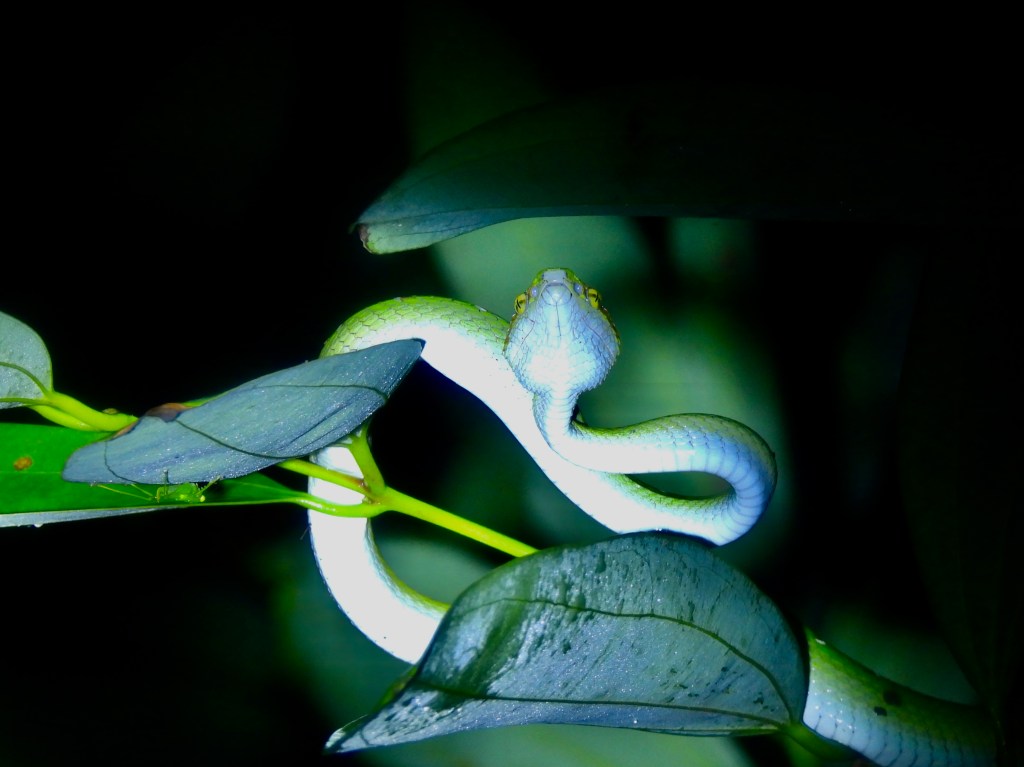
It’s been great to be back in Singapore after almost four months of working and visiting relatives in the United States. Even though I was born in the US, I’ve just always felt more at home on the other side of the world in Asia, so I’m grateful to still be able to live in Singapore with my immediate family.
It is now my final three-month stretch of living in Singapore full-time before I head off to university in Australia. Over the past month or so since I’ve returned from the US, I’ve gotten back into my hobbies full-swing, while at the same time working on a calculus prerequisite course for college. With the course finally out of the way (as of 28th October), my goal now is to make the most of all the free time I have by eagerly pursuing my passion for nature. I look forward to writing many exciting blog posts about all the adventures I have in store over the next few months!
This post chronicles my wildlife-watching expeditions—namely, spotlighting at night for mammals, reptiles, and arthropods—around Singapore between October 3rd (my return date from the US) and October 16th, 2024. I will cover my overnight wildlife expedition to Pulau Ubin (October 17th-18th, 2024) in the next post.
My first wildlife adventure of October 2024 was not a night walk, but rather a brief jaunt to Pasir Ris Park in northeast Singapore on October 8th to try my luck at finding the elusive and handsome Spotted Wood Owl, a target bird of mine that had evaded me the last time I visited the park in early 2023.
This time, I reached out to some local birders about the location of the resident Spotted Wood Owls at Pasir Ris beforehand. Two of the birders were kind enough to send me a pinned Google Maps location of where they’d last seen the owls for my reference. I waited until just before dusk to visit the park, when the owls were apparently most active, and walked to the exact pinned spot the birders had sent me.
After a frustrating ten or so minutes of scanning each and every tree in the vicinity with my binoculars, searching intently for an owl-shaped mass, I spied my target species high up in the crown of the tree right above me! The Spotted Wood Owl I happened upon was just waking up after a day of slumber. Though it was forty-something feet (12m) above me, and concealed by branches, watching the huge owl as it slowly awoke was an unforgettable sight!
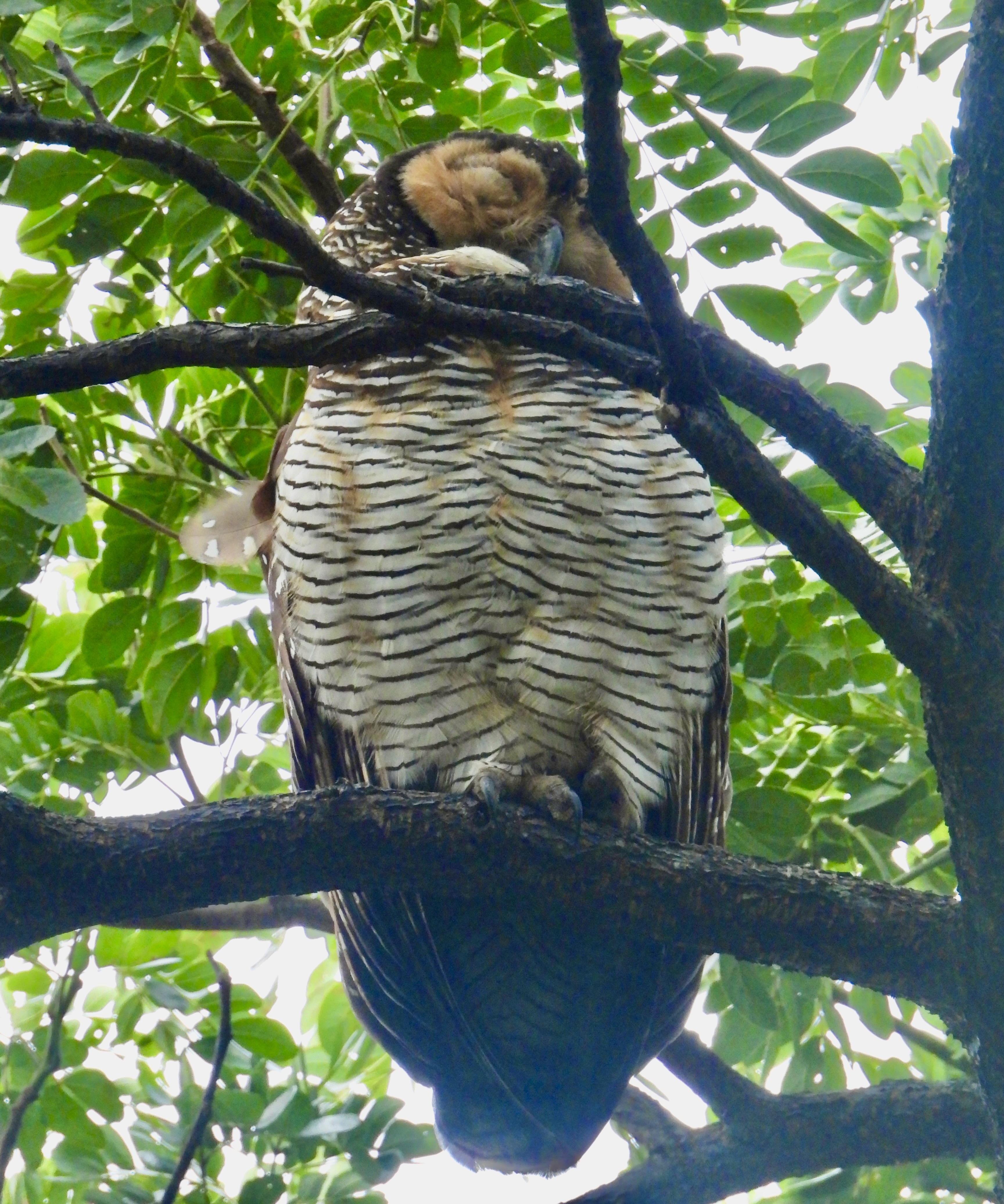

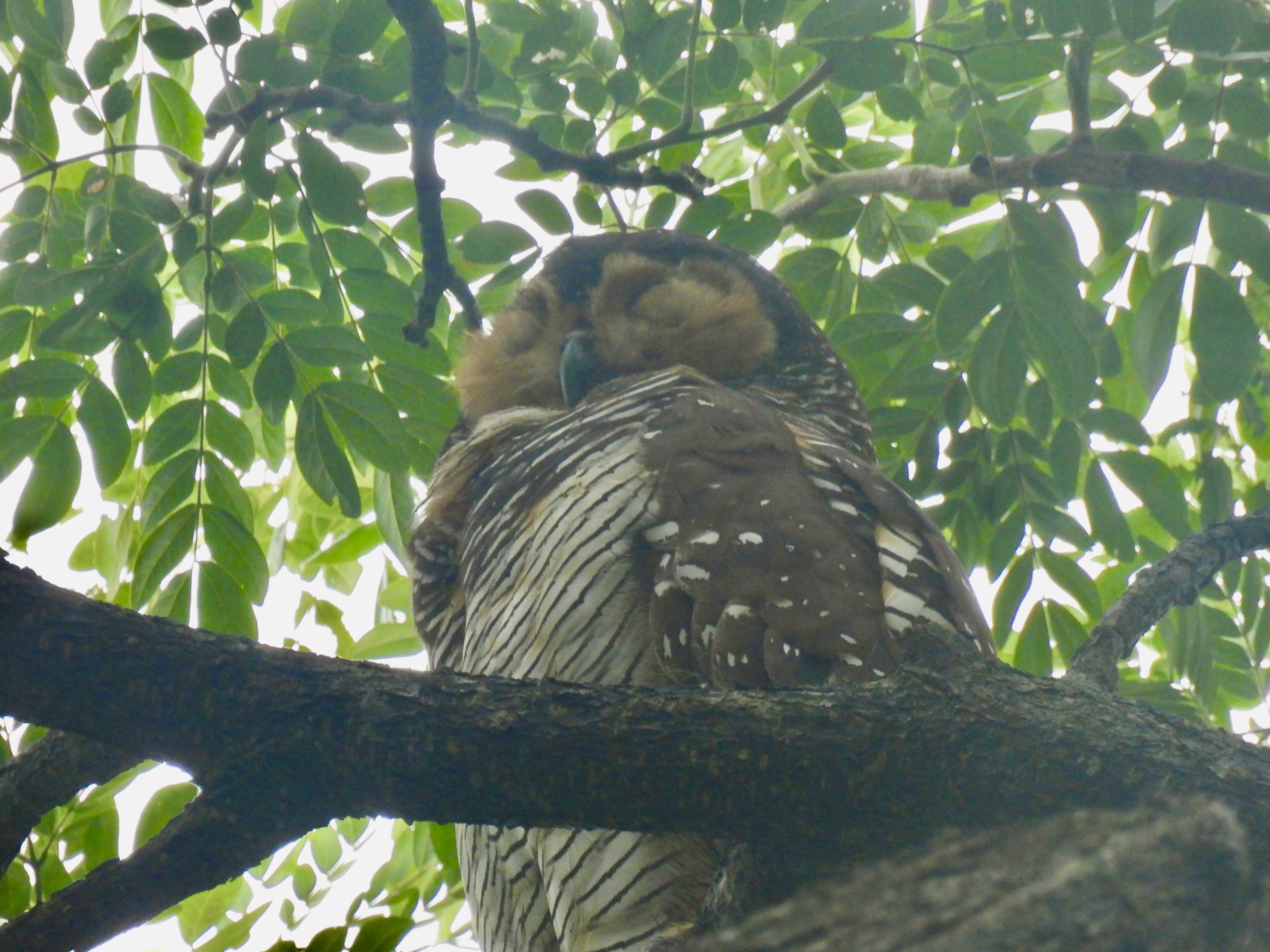
Spotted Wood Owl in Pasir Ris Park on October 8th, 2024
After my fruitful October 8th owl outing, my math course more or less prevented me from embarking on outdoor wildlife expeditions during daylight hours. Therefore, most of my adventures for the rest of October took place after dark.
As of late, I’ve invested in a powerful, handheld spotlight to aid me with mammal spotting on my night walks. It’s been a game-changer for me—where once I relied on the weak beams of my camping headlamps to seek out nocturnal creatures, I’m now able to illuminate the jungle at night and spot animals on distant trees. The number of mammals I’ve noted on night walks around Singapore in October 2024 has more than doubled from before due to my increased ability to find them in their dense, vegetated habitat.
At the same time, having such a powerful spotlight requires extra responsibility when observing nocturnal animals, especially mammals, whose eyes are often extremely light-sensitive. Shining bright lights on such creatures for extended periods of time can impair their night vision, disorientate them, and make them more vulnerable to predation. Therefore, I only keep the light pointed at animals I spot for a few seconds; enough to identify them and snap some quick record shots before leaving them to their business.
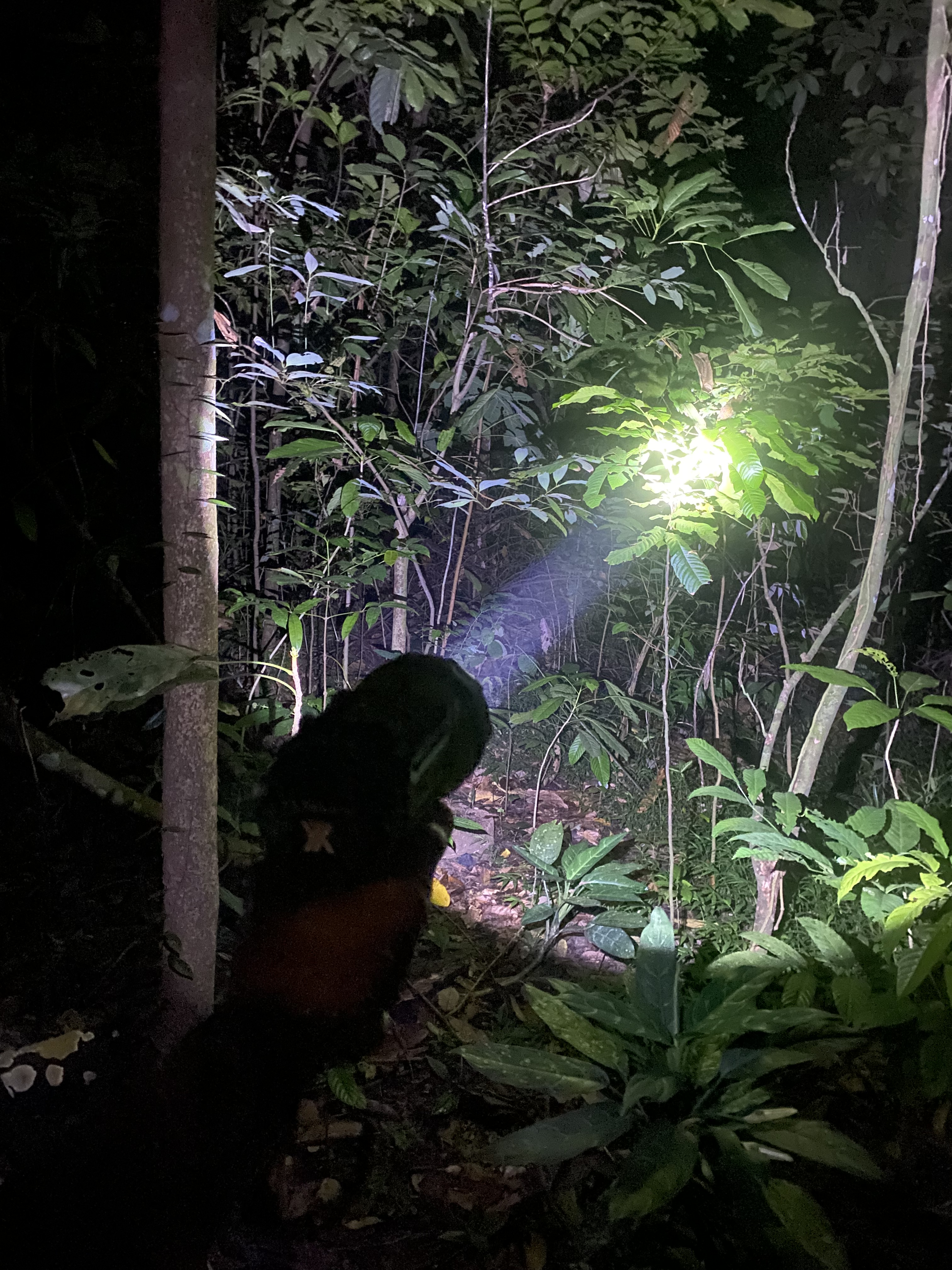
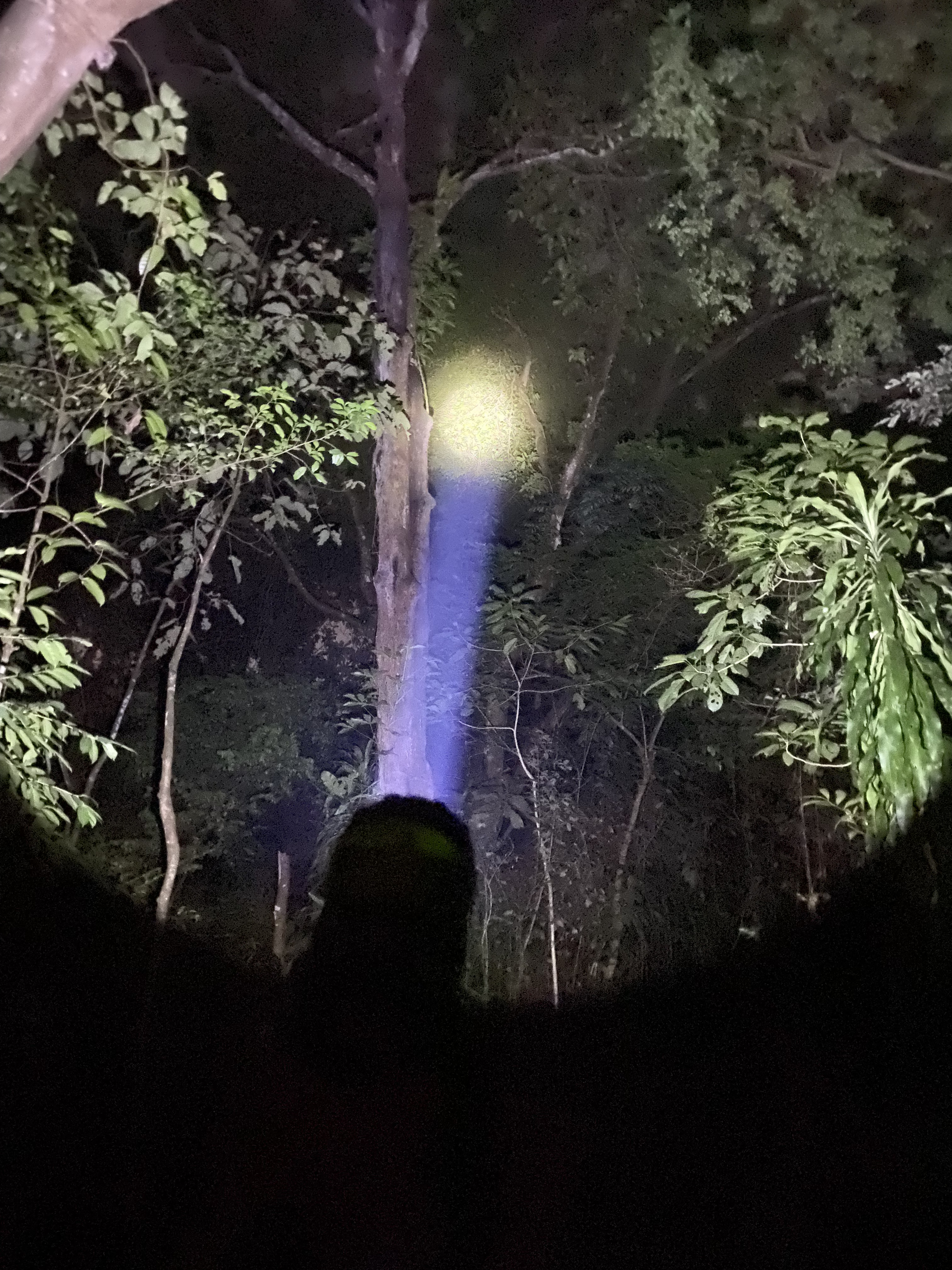
Spotlighting the rainforest at night is an exhilarating experience
My first night walk of the season was on October 10th just outside Bukit Timah Nature Reserve from 10:00pm-11:30pm. My goal was to nab some lifer mammals and test out my new spotlight. Many of Singapore’s native mammals are restricted to primary and mature secondary Dipterocarp forests like those carpeting Bukit Timah; a sufficient motivator to me to explore these normally nocturnally-inaccessible forests after dark.
As Bukit Timah Nature Reserve is fully closed to the public after 7pm, I was forced to circumvent the reserve’s primary forest area (where most of the wildlife is located) by following a mountain bike trail. Unfortunately, there’s just no practical legal way to enter Bukit Timah NR at night without joining up with an official group performing scientific research.
I still managed to spot a couple interesting mammal species on my walk, including three Malayan Colugos and a large and active colony of rodents in a tree at the reserve entrance from the genus Rattus, which I believe to have been Malayan Field Rats (Rattus tiomanicus). They are widespread, nocturnal, partially arboreal rodents common on forest fringes and plantations, which fits the description of the rats I saw. However, I cannot confirm their ID as of yet.
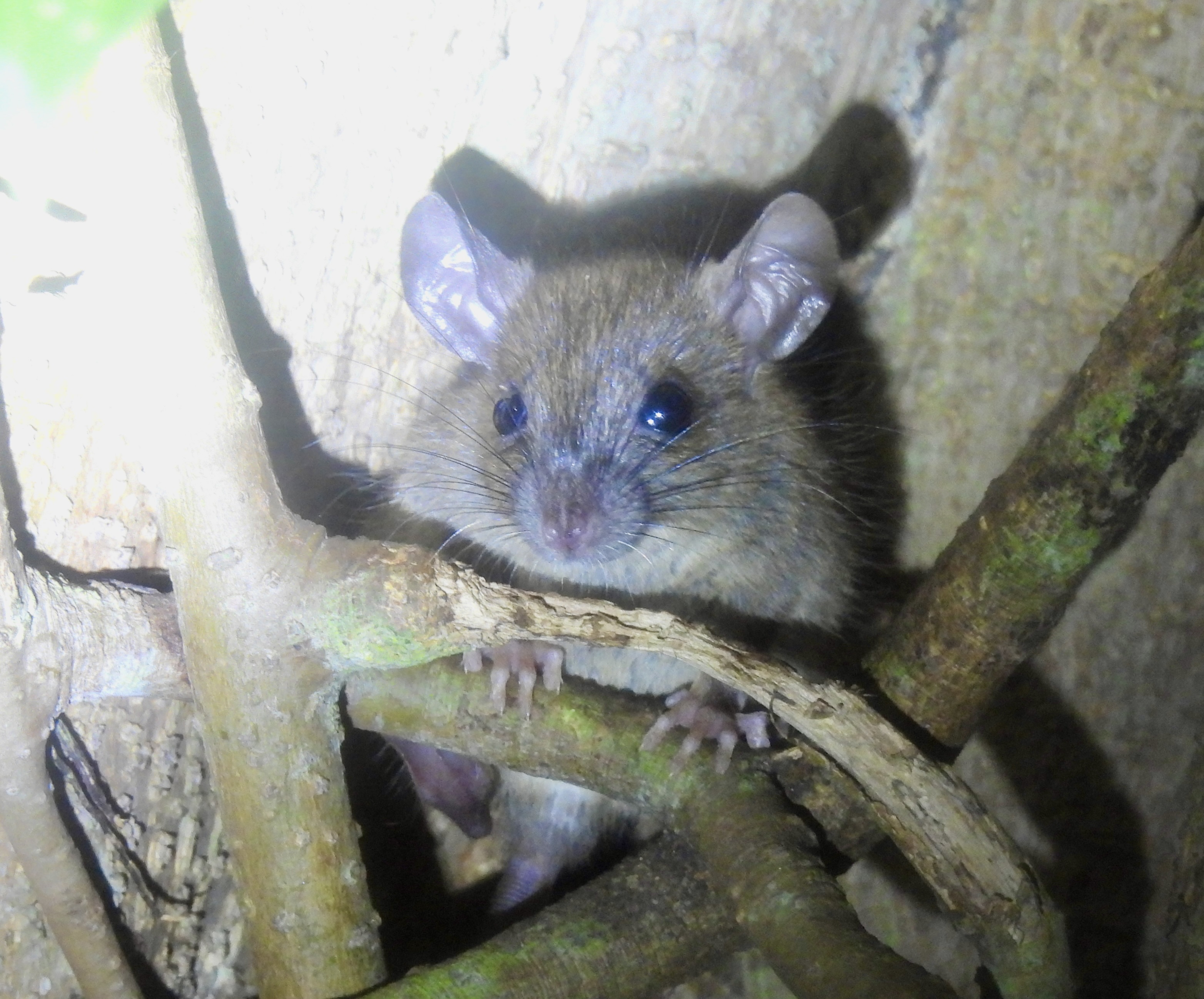
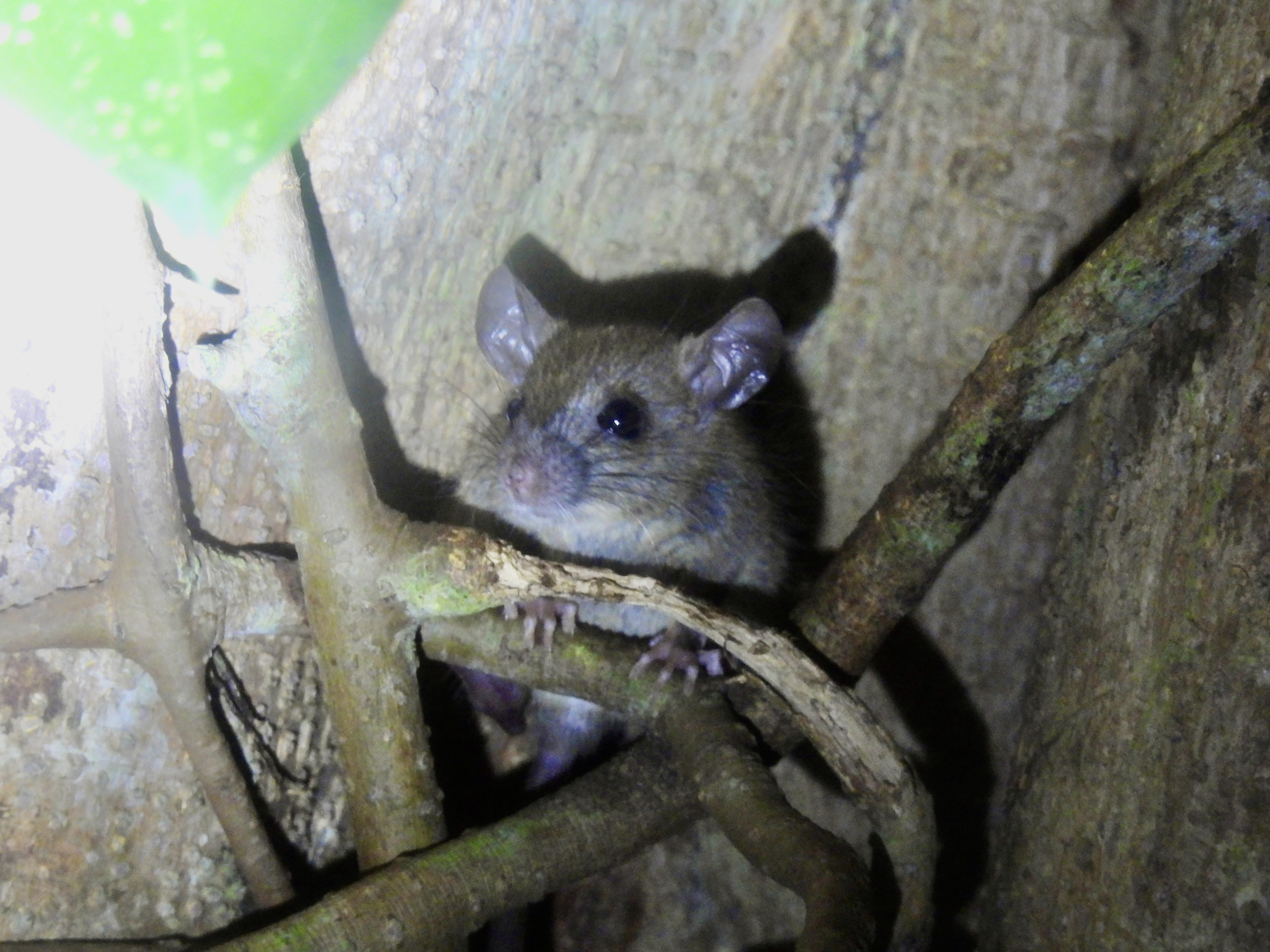
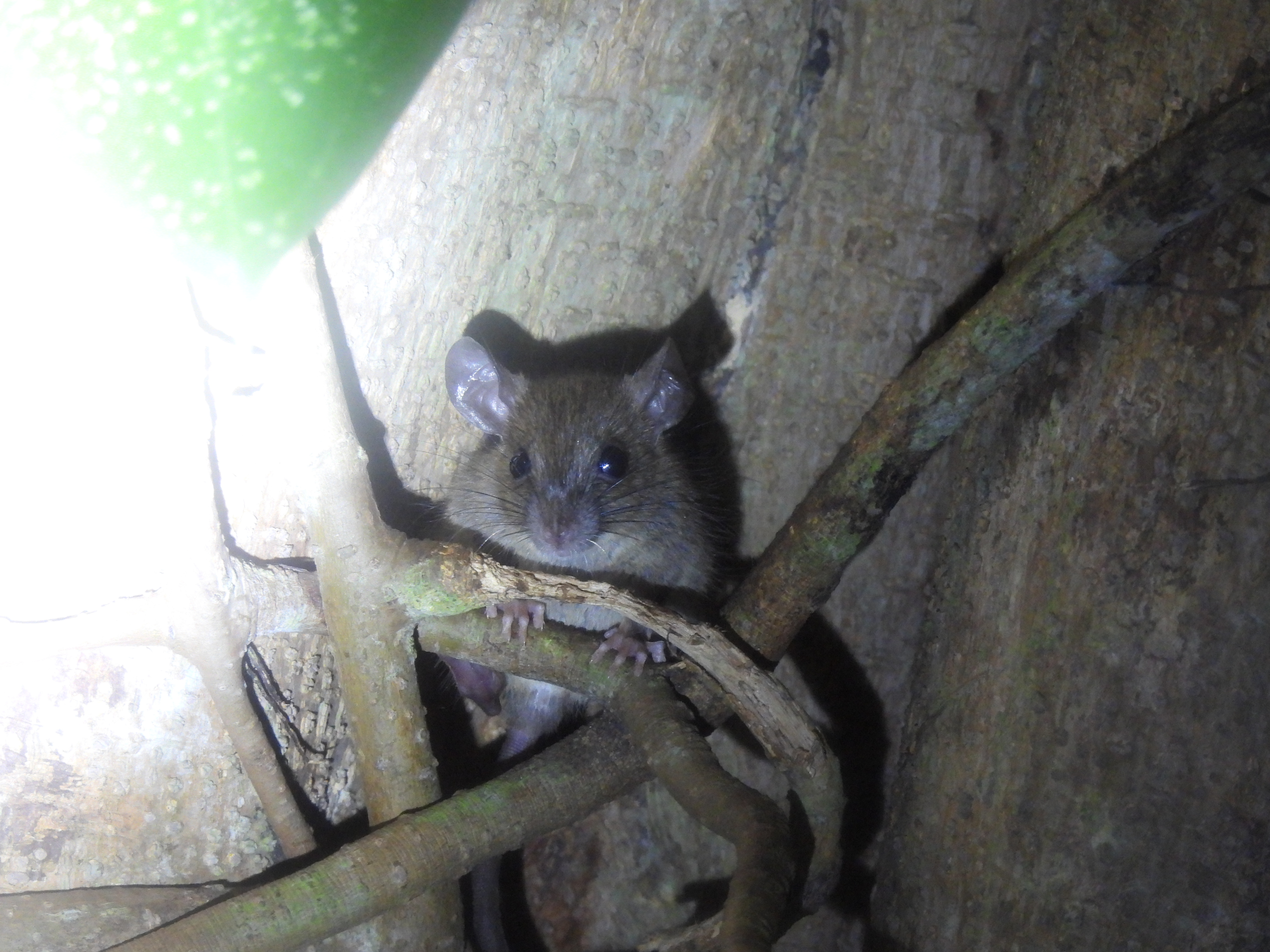
Lucky for me, this little rat (possibly a Malayan Field Rat) posed for some good, clear record shots
My next night walk took place the following evening on October 11th. I was slightly disappointed about the general lack of wildlife the previous night barring the rats and colugos. Especially since I had biked the sweaty 12km from my apartment to Bukit Timah late at night with all my gear. For my next night walk, I wanted to give myself the best chance of success with spotting mammals and other wildlife.
Therefore, on October 11th, I made sure to choose a spot that allowed public access into old secondary/primary rainforest after dark, was lightly crowded, and yielded consistently good sightings of mammals and other nocturnal wildlife. Only one place in mainland Singapore came to mind— the Mandai T15 Trail.
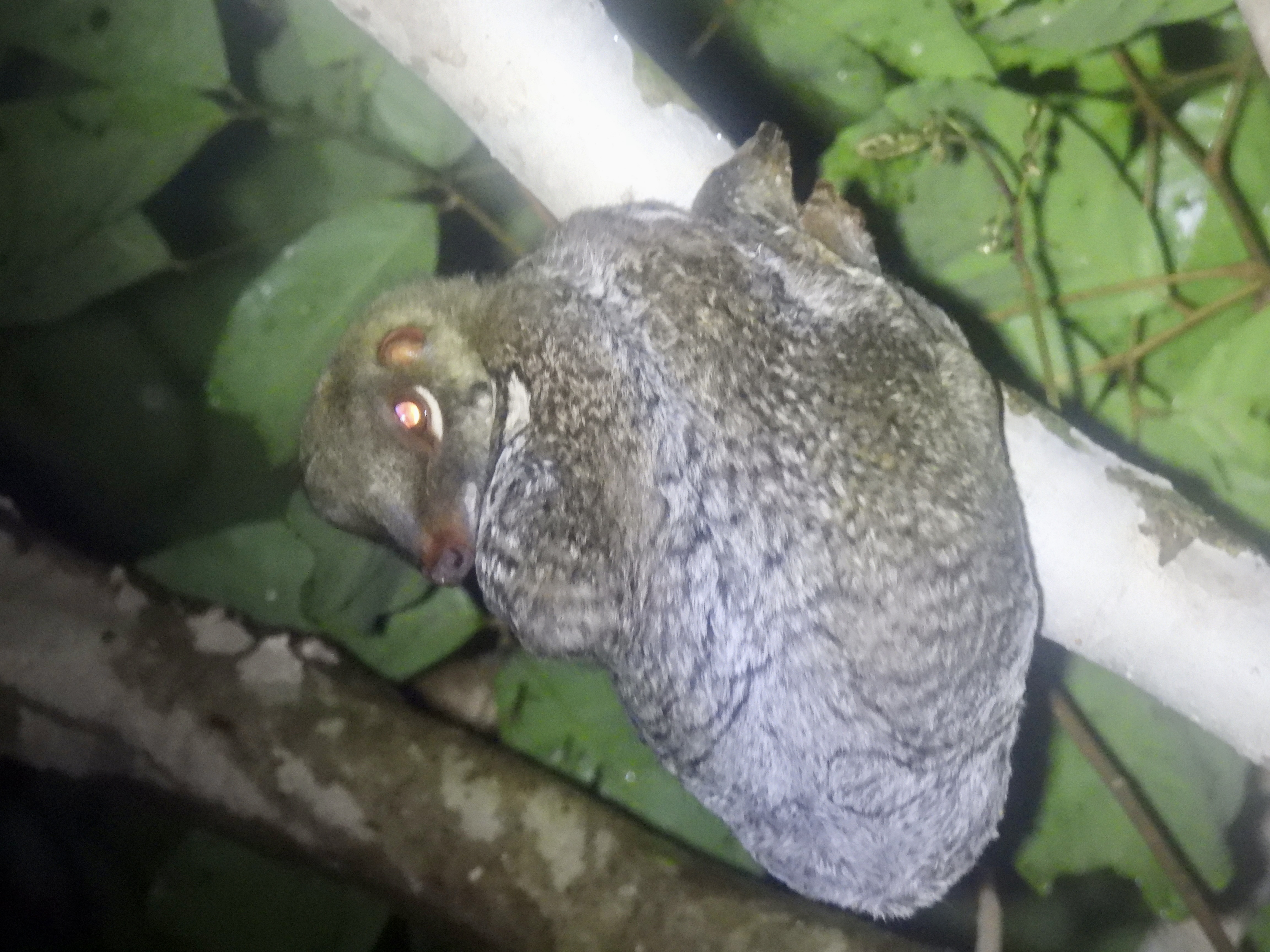
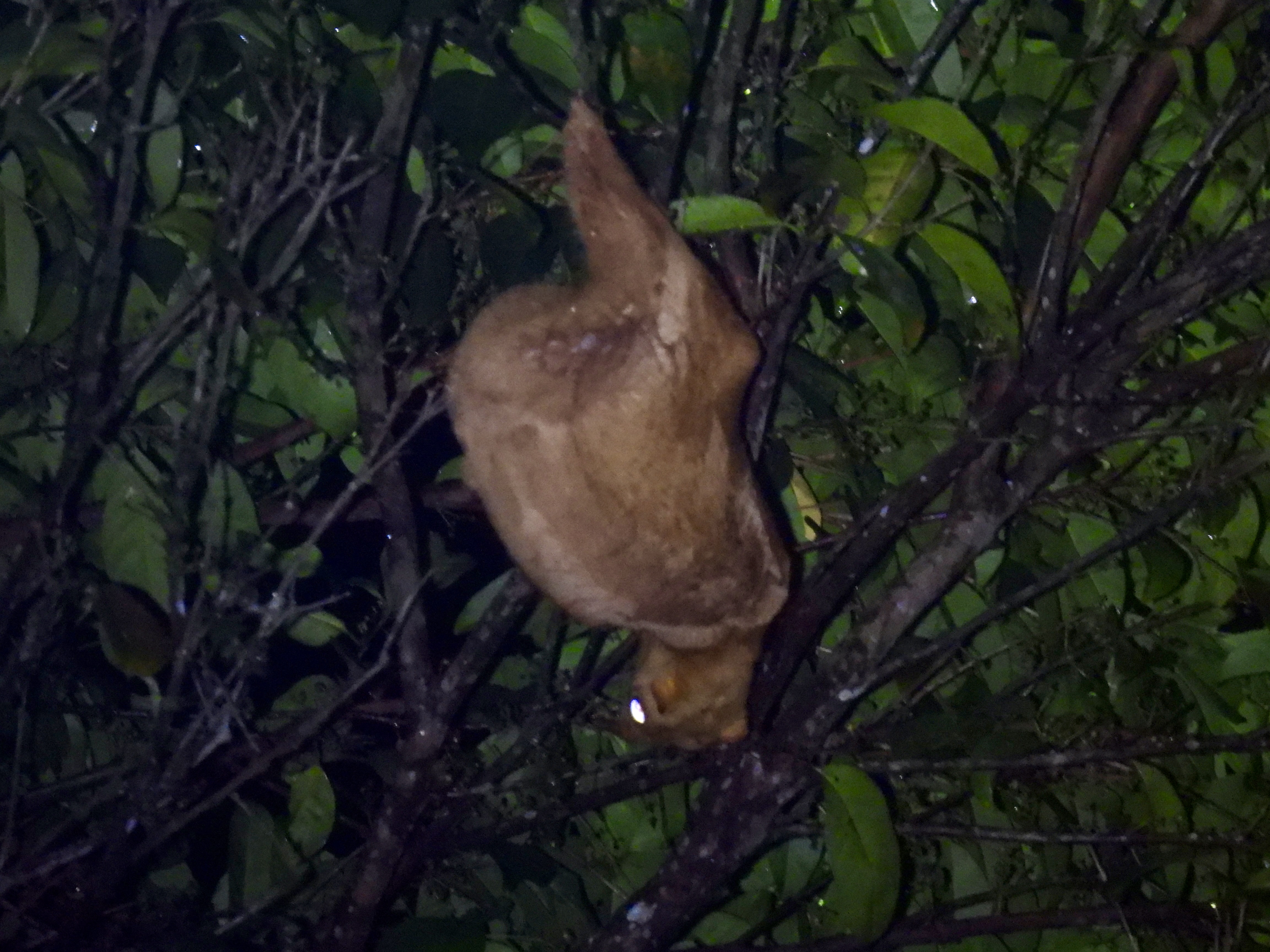
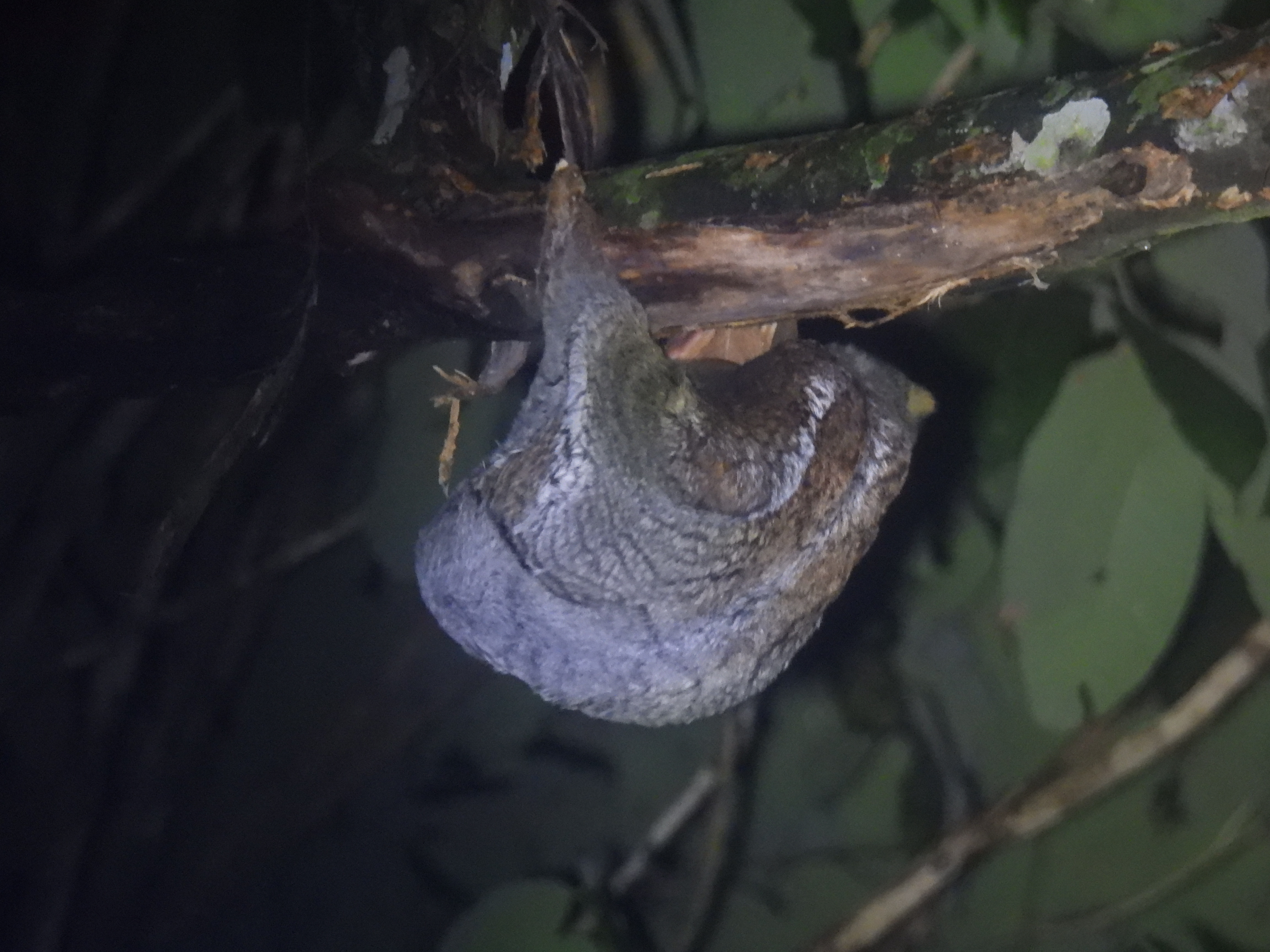
Colugos #1, #2, and #3 seen along the Mandai Trail on October 11th
From my arrival at the trailhead via cab at 9:15pm, I spent the next two and a half hours strolling through the thick, pitch-black rainforest of the Central Catchment, with nothing but my spotlight illuminating the trees above me and the path in front of me as I scanned for wildlife. It was a mesmerising, exhilarating, almost therapeutic experience.
Well, besides the suffocating humidity and biting ants. Those were no fun. When people talk about ‘steamy’ jungles, they really aren’t kidding. The humidity is so oppressive in the rainforest (nearing 100% at night), that you just pour with sweat constantly until your clothes stick to your body and every square inch of your skin is drenched. In addition, the biting ants I mentioned crawl up your shoes and viciously attack any bare skin on your lower legs every time you stop in one place on the trail longer than five seconds. I do love the rainforest though, and the biting insects and stifling humidity are just part of the overall experience.
I was decently lucky on this particular night walk, and saw three mammal species along with a surprise herp and even a noteworthy bird. I ended the night with two Lesser Mouse-Deer—ungulates the size of rabbits—along with three Malayan Colugos and many Lesser Short-Nosed Fruit Bats. A herping group I passed on the trail pointed out a male and female Wagler’s Pit Viper (Tropidolaemus wagleri) in the same tree as one another. I was even treated to views of a sleeping Blue-Winged Pitta, a bird I never thought I’d encounter at night in the middle of the rainforest.
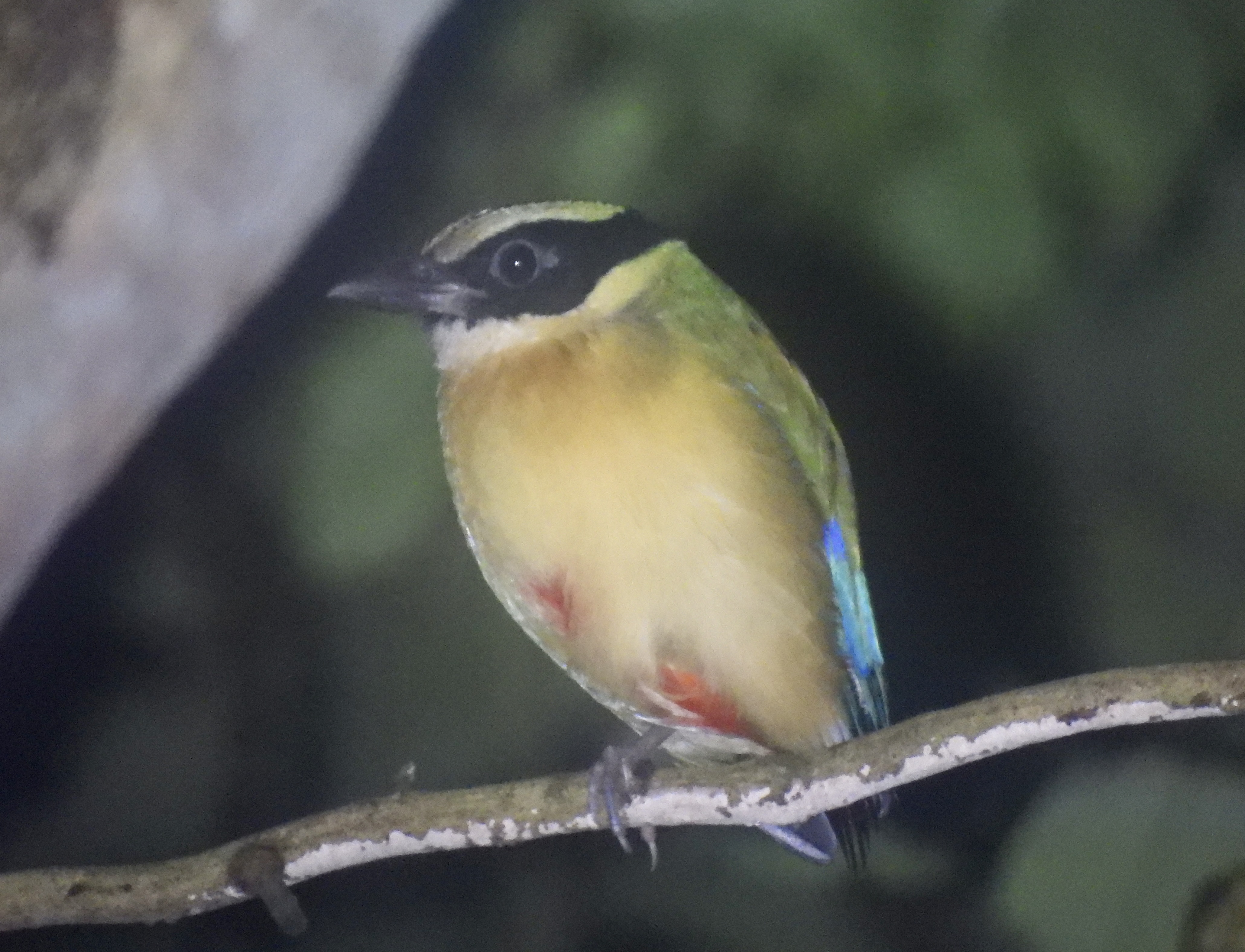


Notable species of my October 11th night walk: Blue-Winged Pitta (left), Lesser Short-Nosed Fruit Bat (top right) and Lesser Mouse-Deer (bottom right)
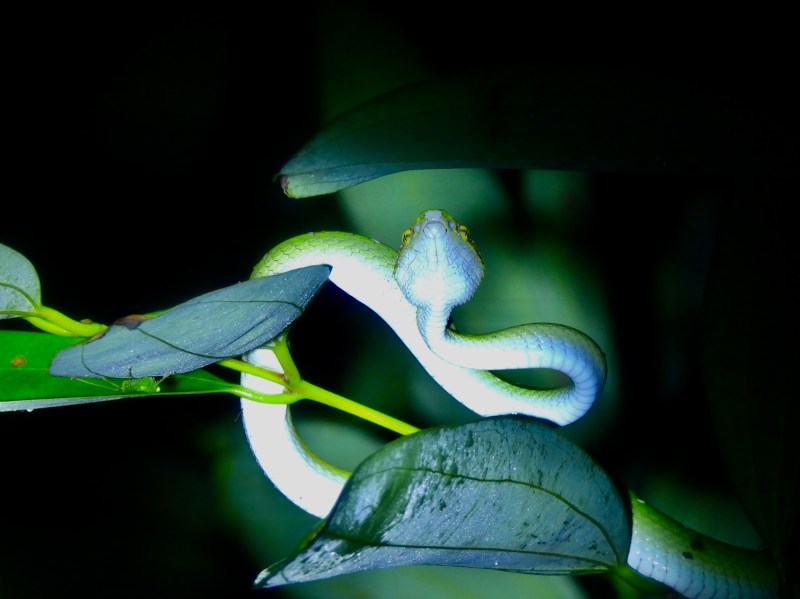

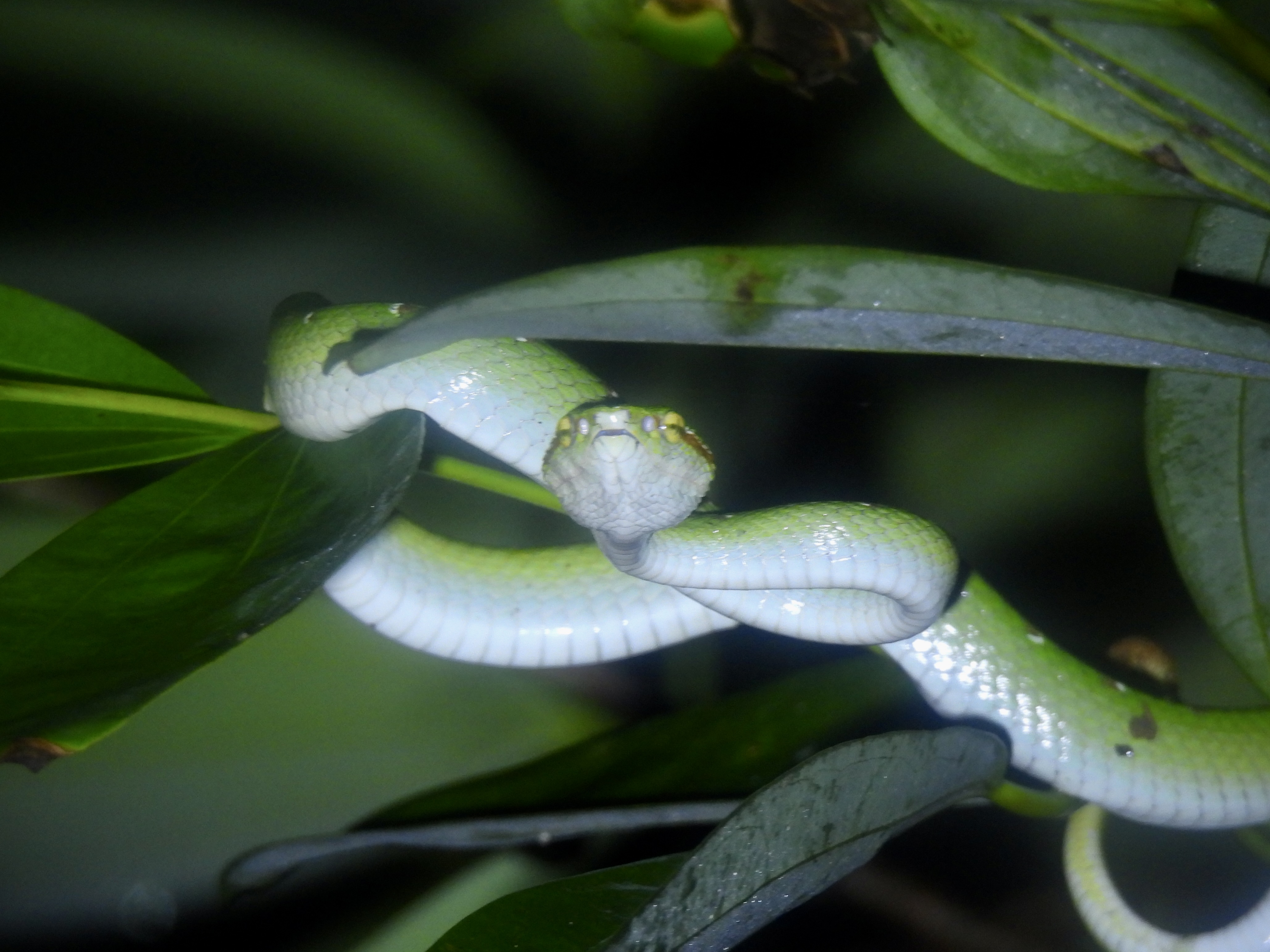
Female (left) and Male (right) Wagler’s Pit Vipers.
I had forgotten to charge my spotlight from the night before, and having no backup light, I was thrown into sudden, total darkness for the final half-hour of my walk after my spotlight ran out of battery. My phone light was sufficient to speedwalk the last bit of the Mandai Trail to Bukit Panjang, where I was able to exit the trail and get a bus back home around midnight. Not something I want to repeat in the future!
The next night, October 12th, I brought my mom with me on the Mandai Trail for what she initially wanted to be a ‘brief’ night walk. I had wanted to show her some of the awesome critters hiding in the Singapore backwoods to help her understand why her 18 year-old son was spending his nights after studying in the jungle looking for wild animals. I’m really happy she came with on this particular night!
My mom was understandably nervous during the first part of the walk. The jungle is eerie at night. All she could see was my spotlight beam dancing around the trees and foliage surrounding the trail. The first leg of our walk revealed fruit bats, moths, and numerous Pantropical Huntsman Spiders (Heteropoda venatoria)—not exactly the kind of animals that would sell most people on visiting the rainforest; my mom included.
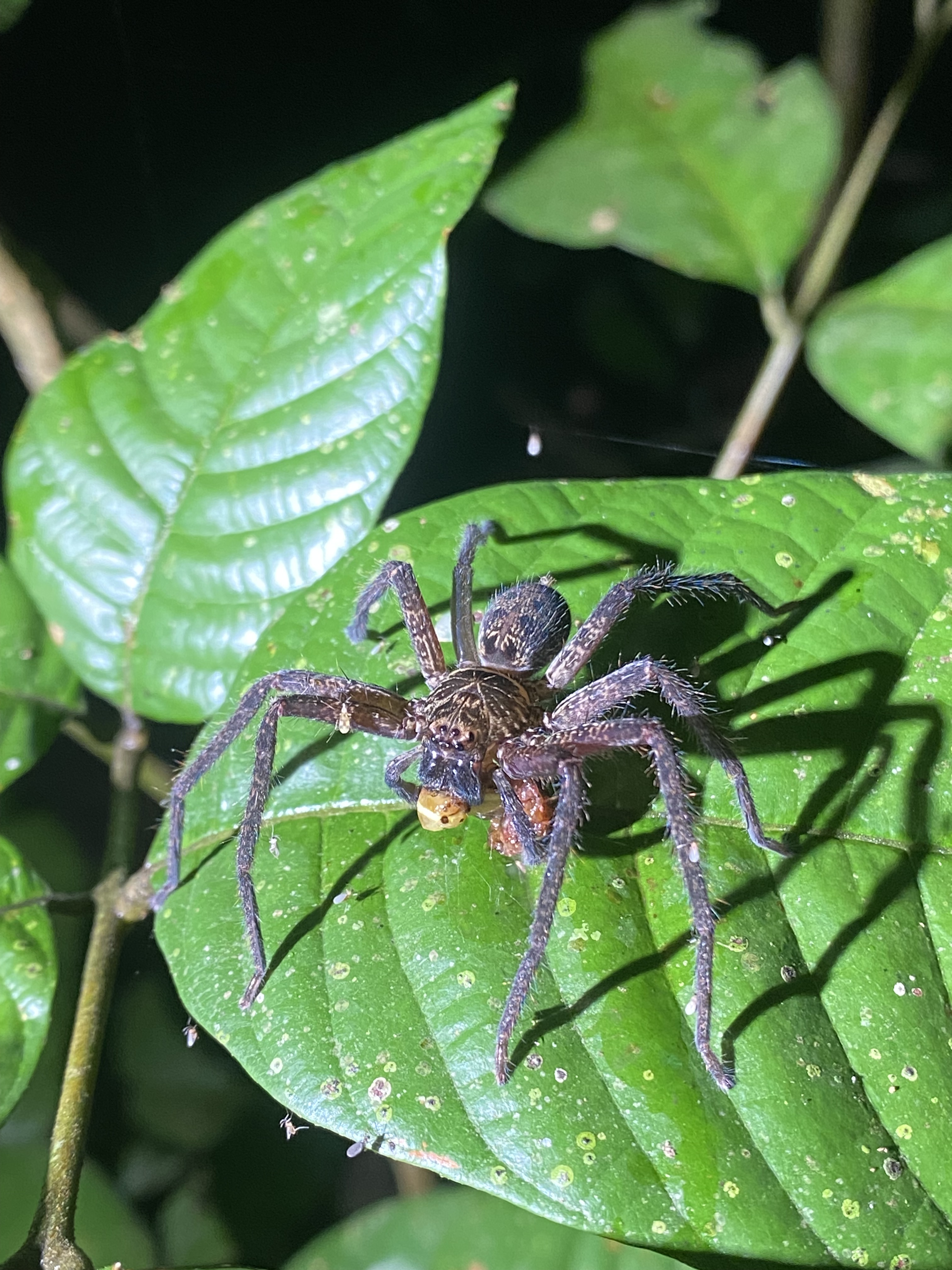
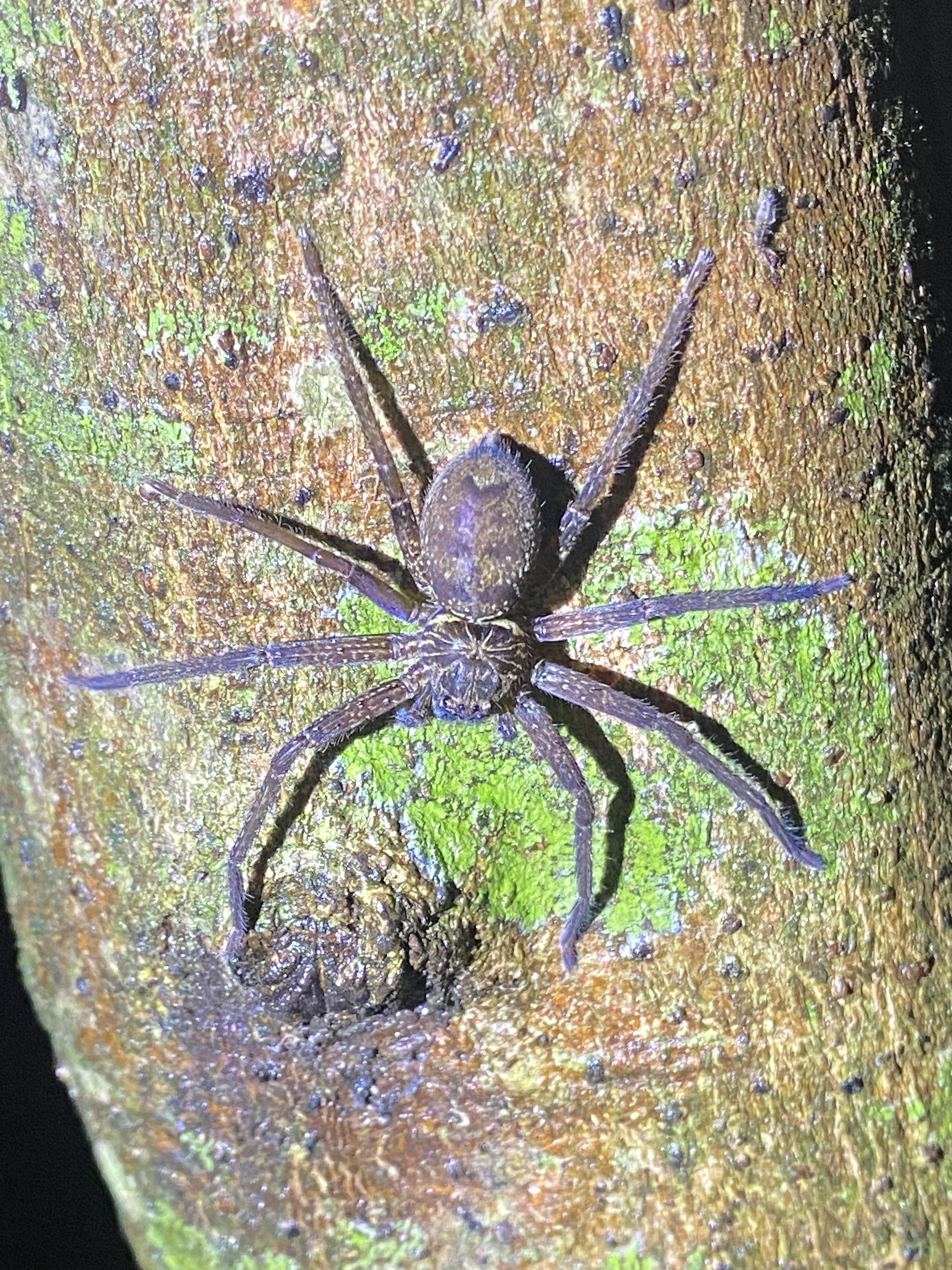
Pantropical Huntsman Spiders are the most common spiders I see in Singapore’s forests at night. They are large, distinctive and easy to locate via eye shine.
The whole course of the night changed when we started up a conversation with a group of college students on the hunt for cool arthropods and fungi, joined by local nature enthusiast and Singapore Navy engineer, Kwang. As I would quickly find out, Kwang is an enthusiastic, erudite nature hobbyist, and we immediately hit it off. He offered to let us join him and the students on their walk down the Mandai Trail, and my mom and I accepted the invitation.
Throughout the next two hours, Kwang impressed both myself and my mom with his breadth of knowledge regarding Singaporean biodiversity, and I learned a ton from him about different arthropods in the forest. He also has incredibly sharp eyes, and his ability to spot animals in the jungle at night is second-to-none! He talked quite a bit with my mom as well, and both Kwang and I did our best to make sure her experience was enjoyable. The college students we were with did their own thing, and stayed ahead of us for most of the walk.
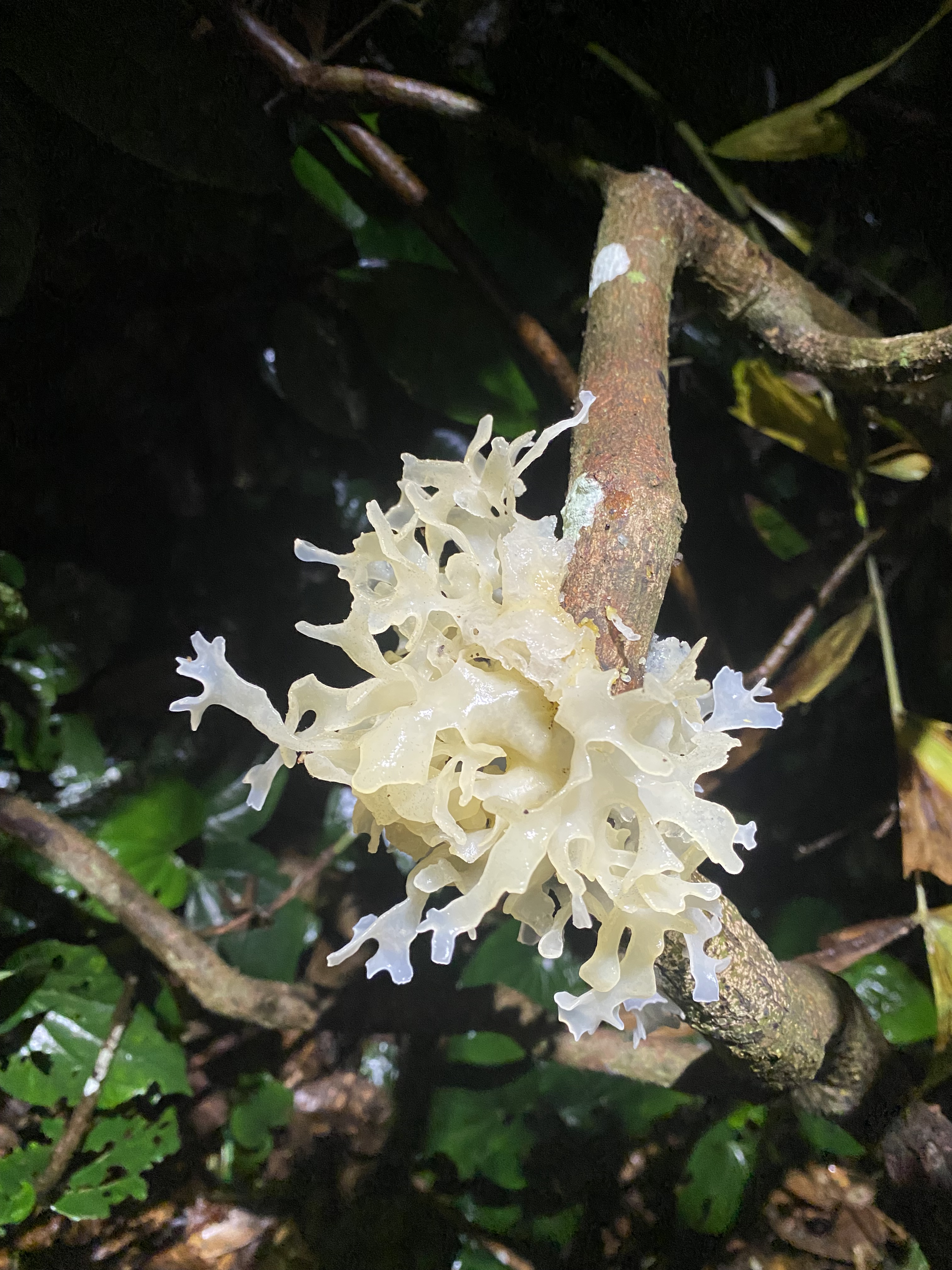
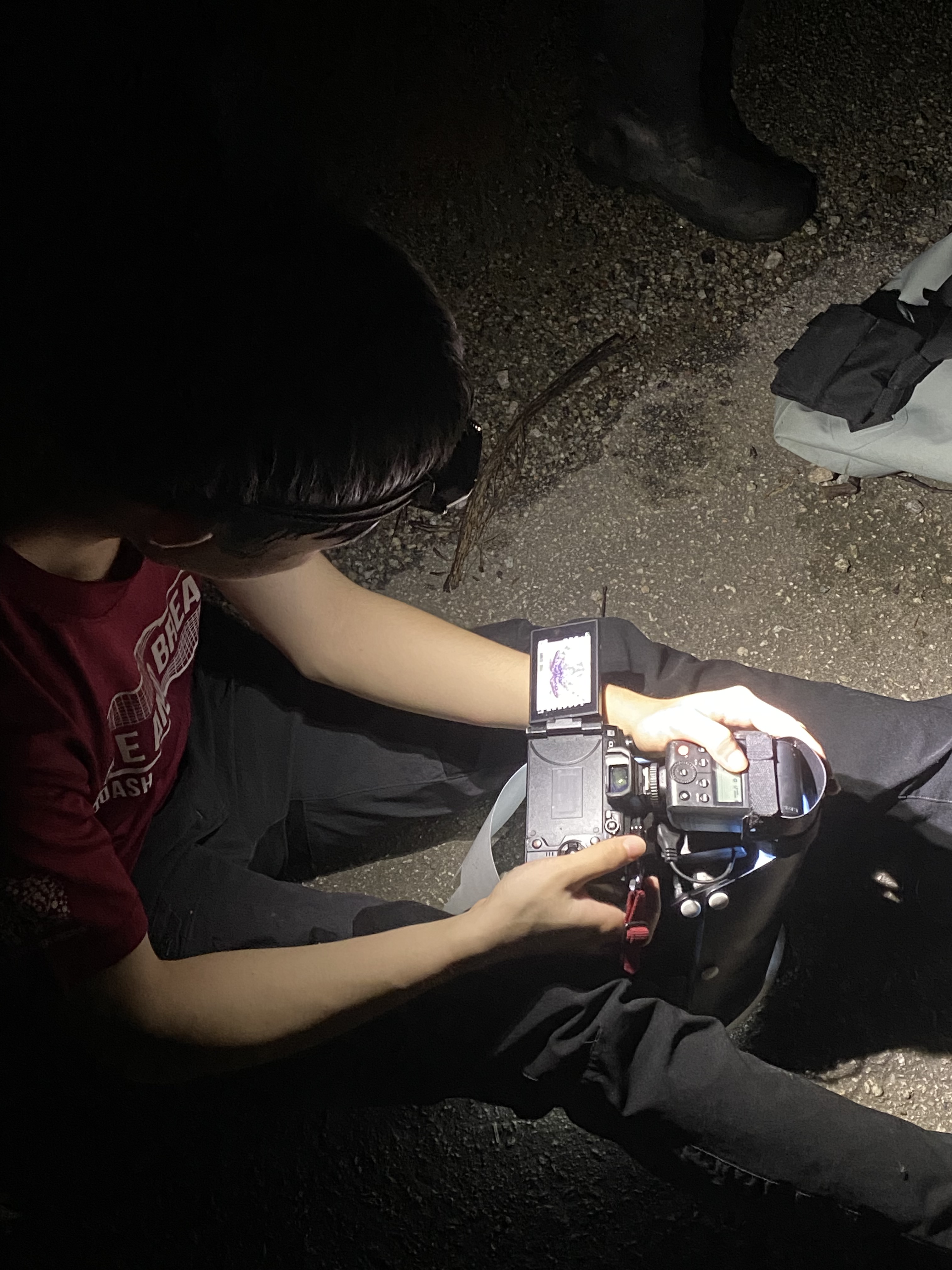
An edible Snow Fungus (Tremella fuciformis) just off the Mandai Trail (left), and a local nature enthusiast taking macrophotography shots of a whip scorpion (right)
With Kwang and I spotting wildlife alongside my mom, we saw no fewer than 6 Lesser Mouse-Deer, glimpses of a herd of Sambar, three Wagler’s Pit Vipers, a Singapore Bark Scorpion (Lychas scutilus) feeding on a cicada, two endangered and endemic Singapore Green Tree Snails (Amphidromus atricallosus temasek), orb-weaver spiders, assassin bugs, moths, frogs, and fungus beetles. My mom enjoyed the mouse-deer encounters, and even found the vipers and scorpion quite interesting. I’m glad I have an awesome mom who does this kind of stuff with me!
My favorite find of the night besides the scorpion was a David Bowie Spider (Heteropoda davidbowie) that Kwang pointed out. This good-looking and rather uncommon arachnid was named for its diagnostic hair dew which is apparently reminiscent of late singer-songwriter, David Bowie. I’m personally a fan of David Bowie, but to me the spider named after him looks more like an eight-legged orangutan than anything else!
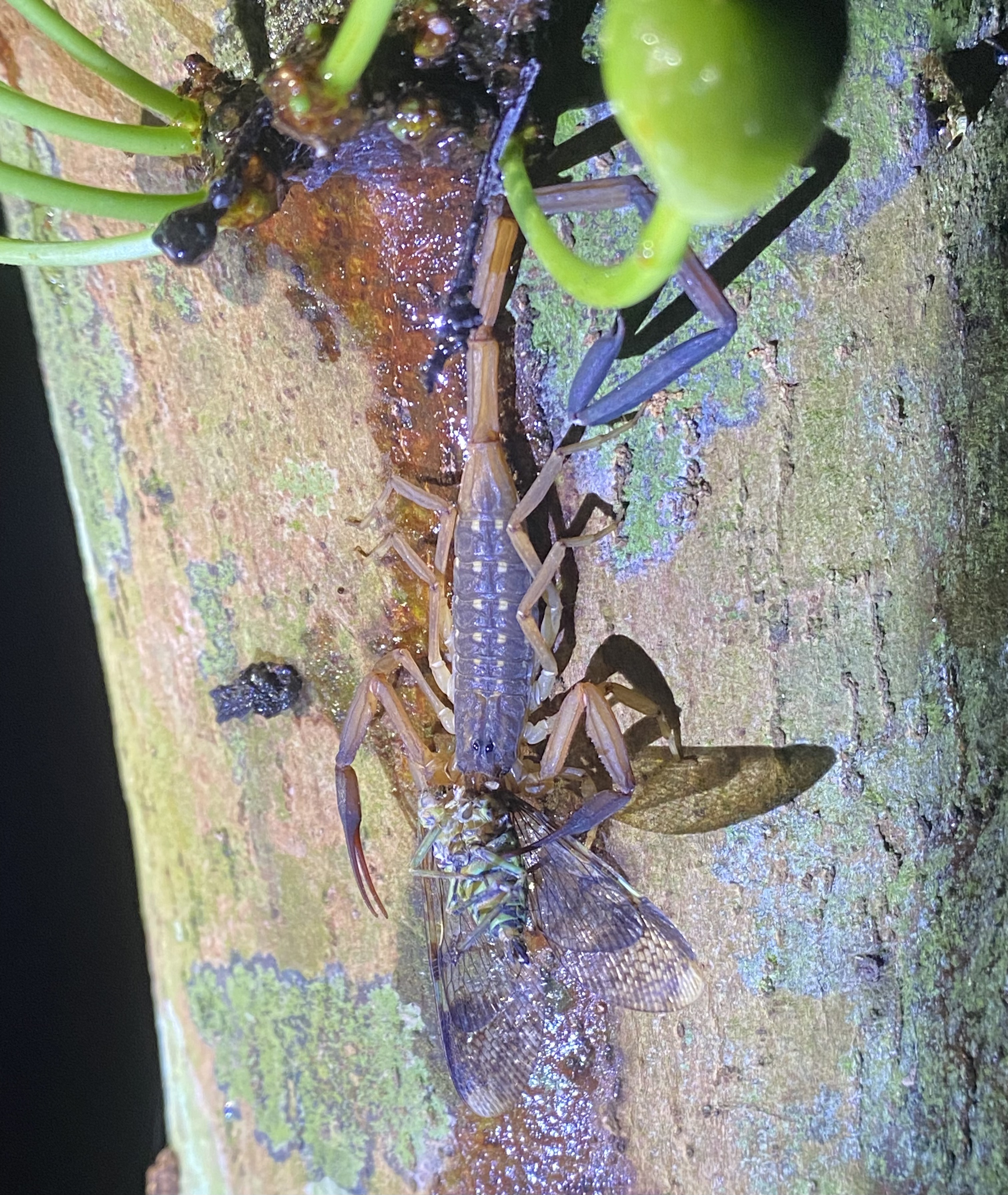
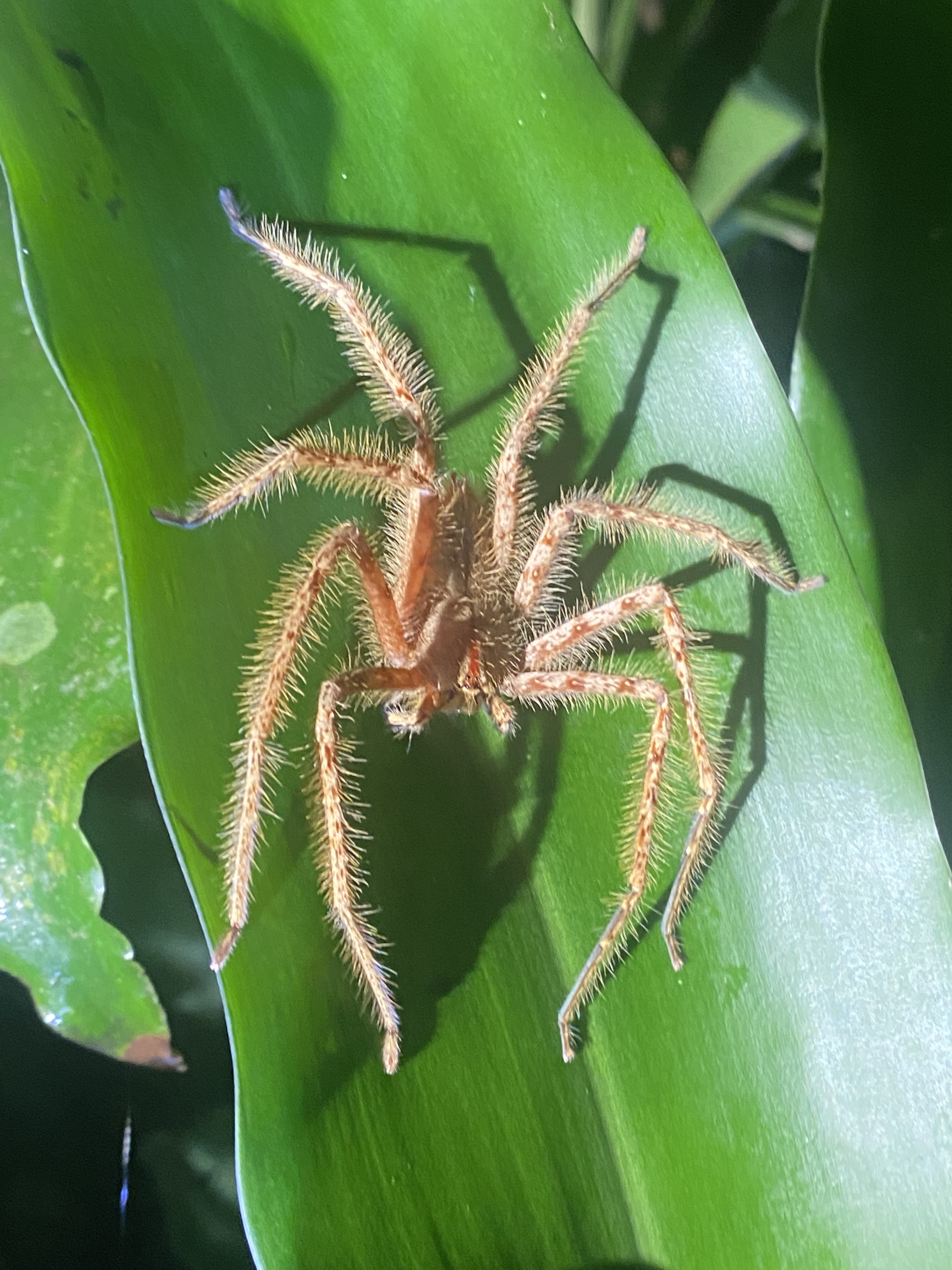
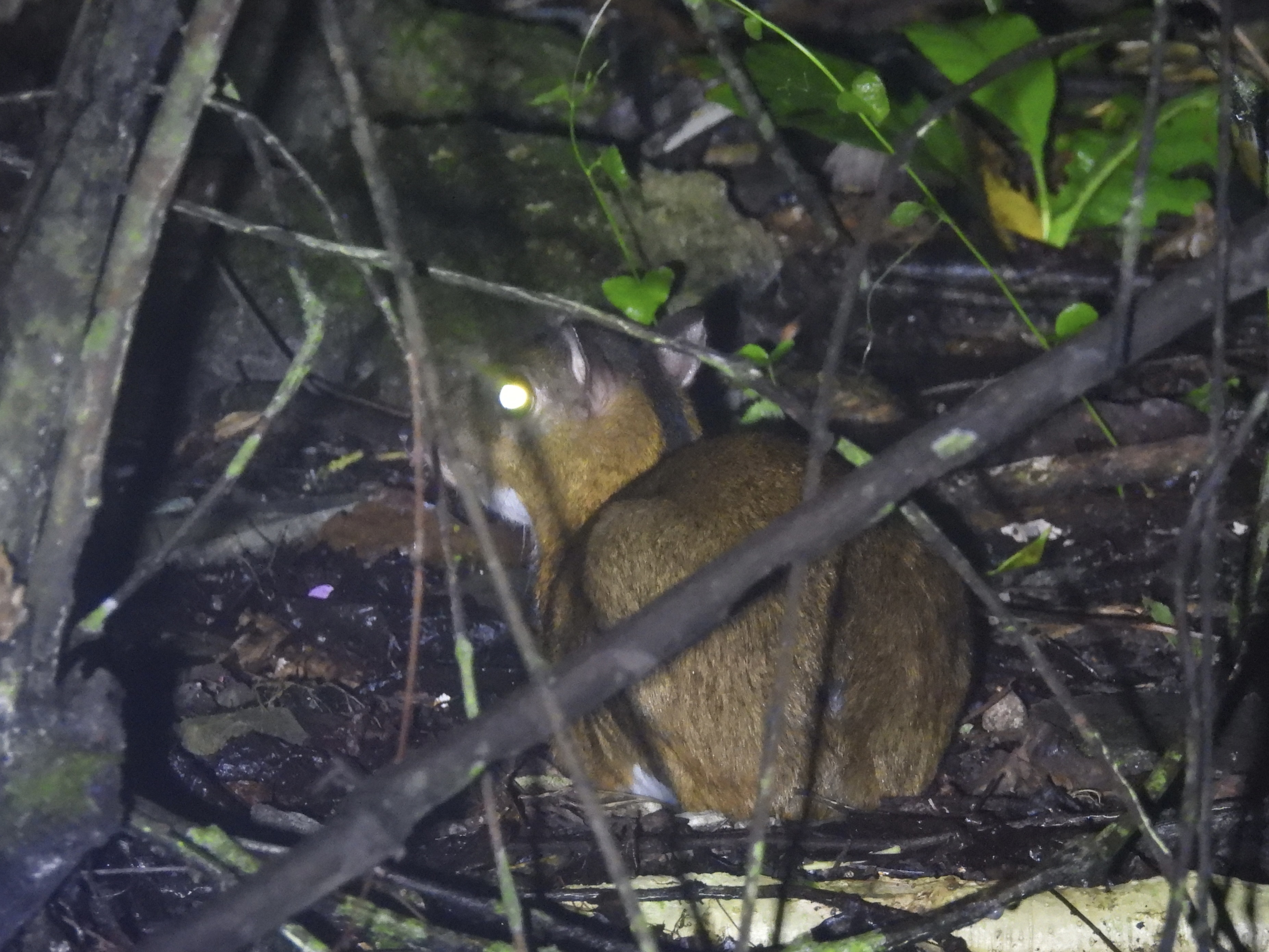
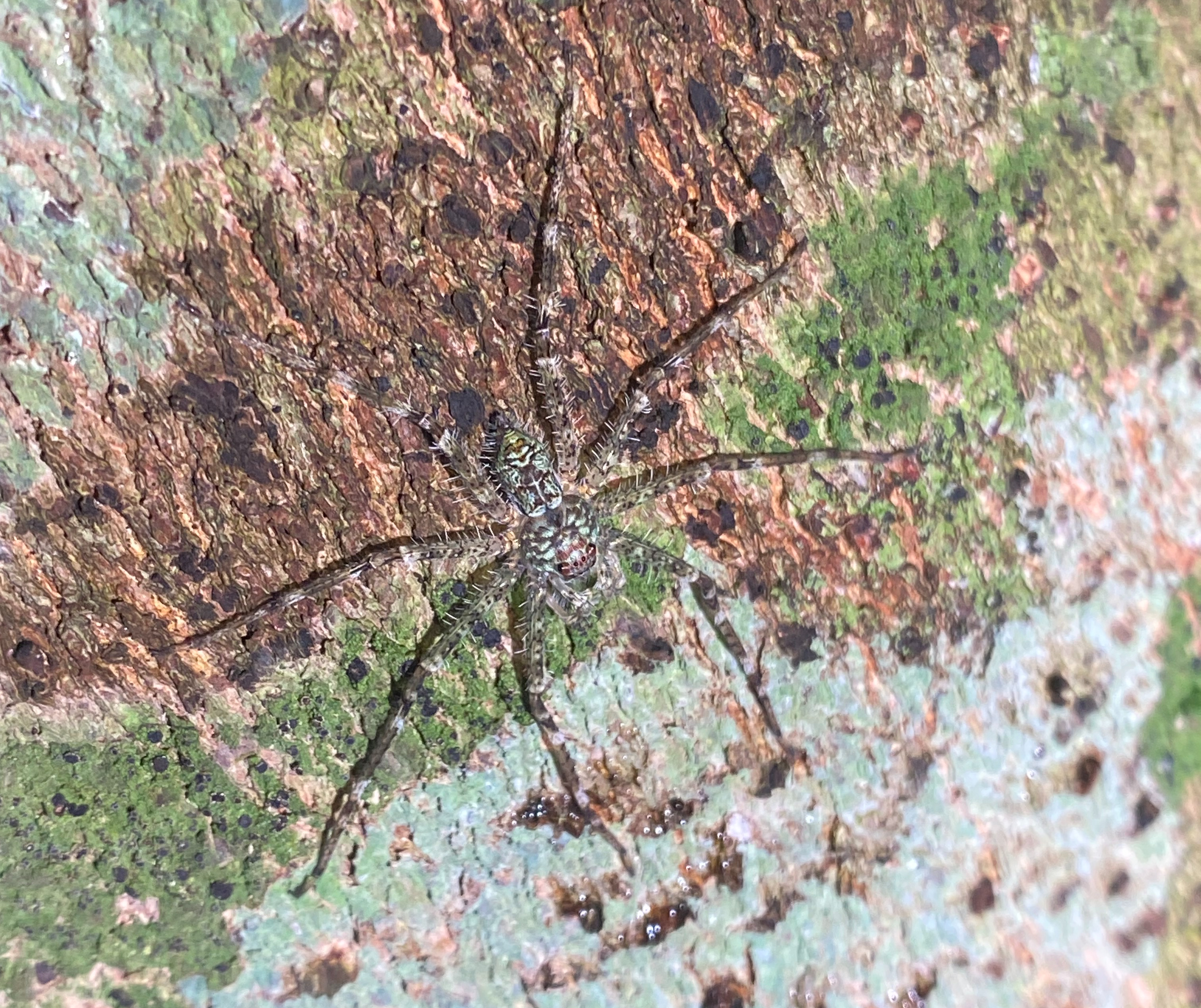
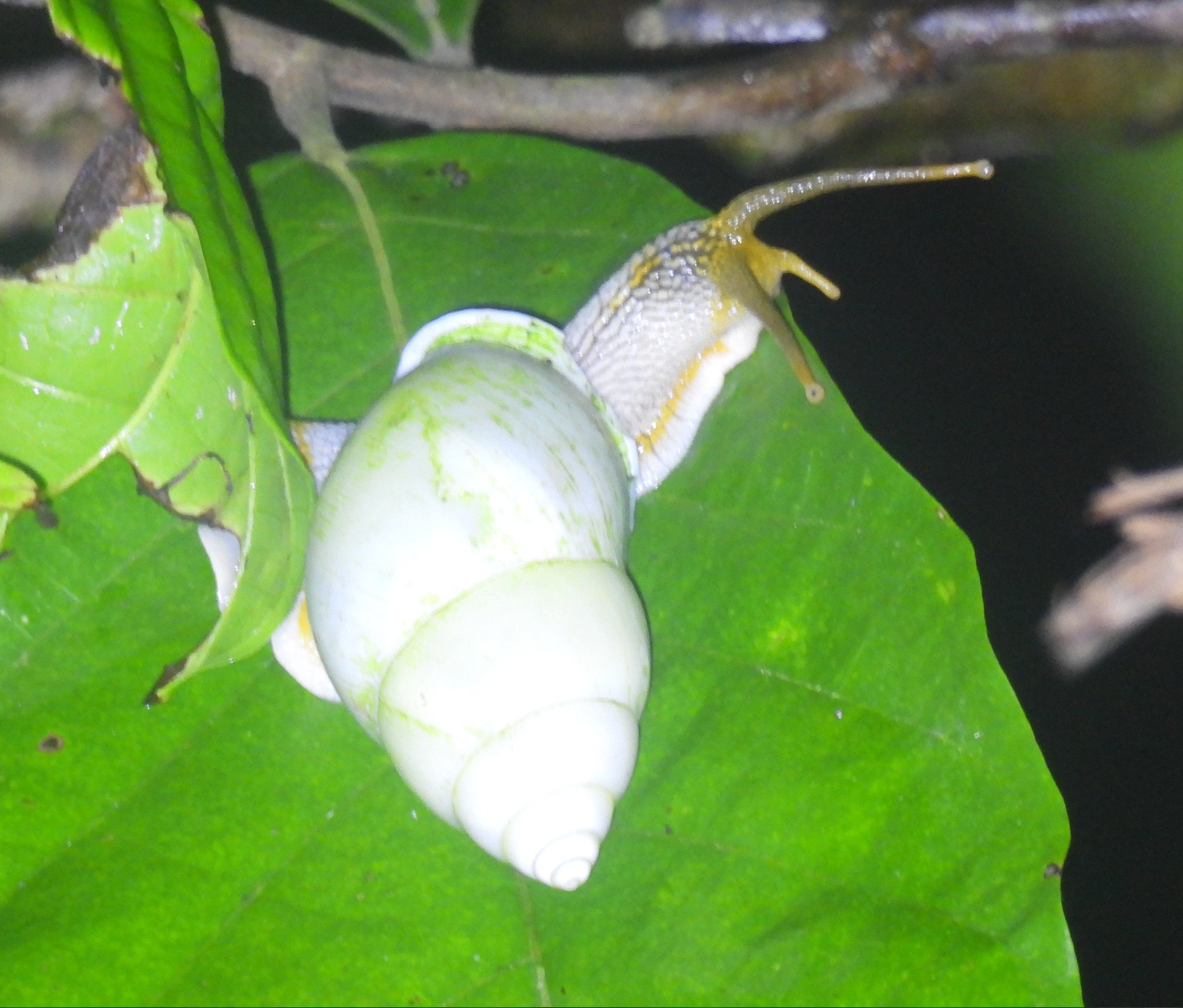
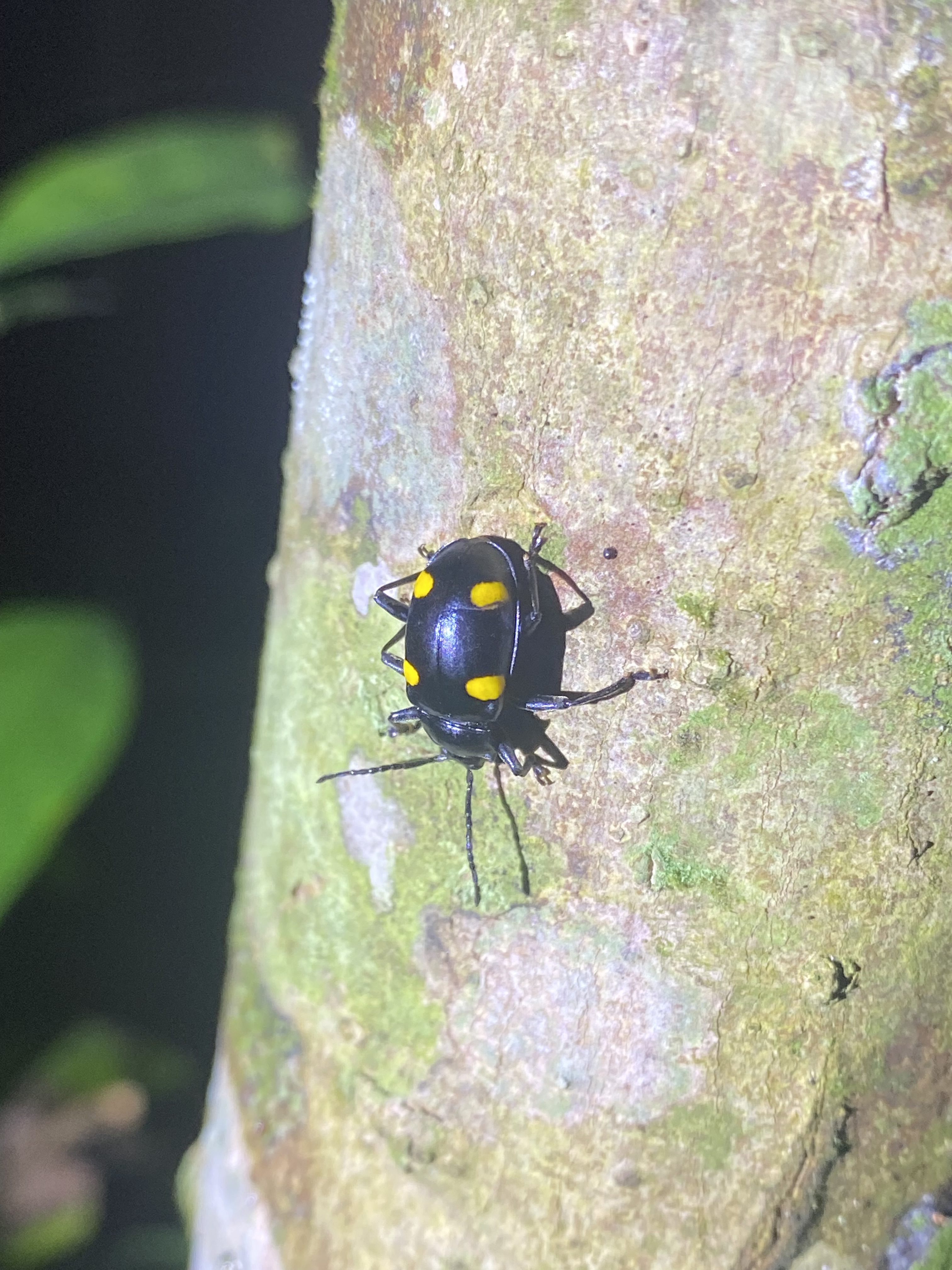
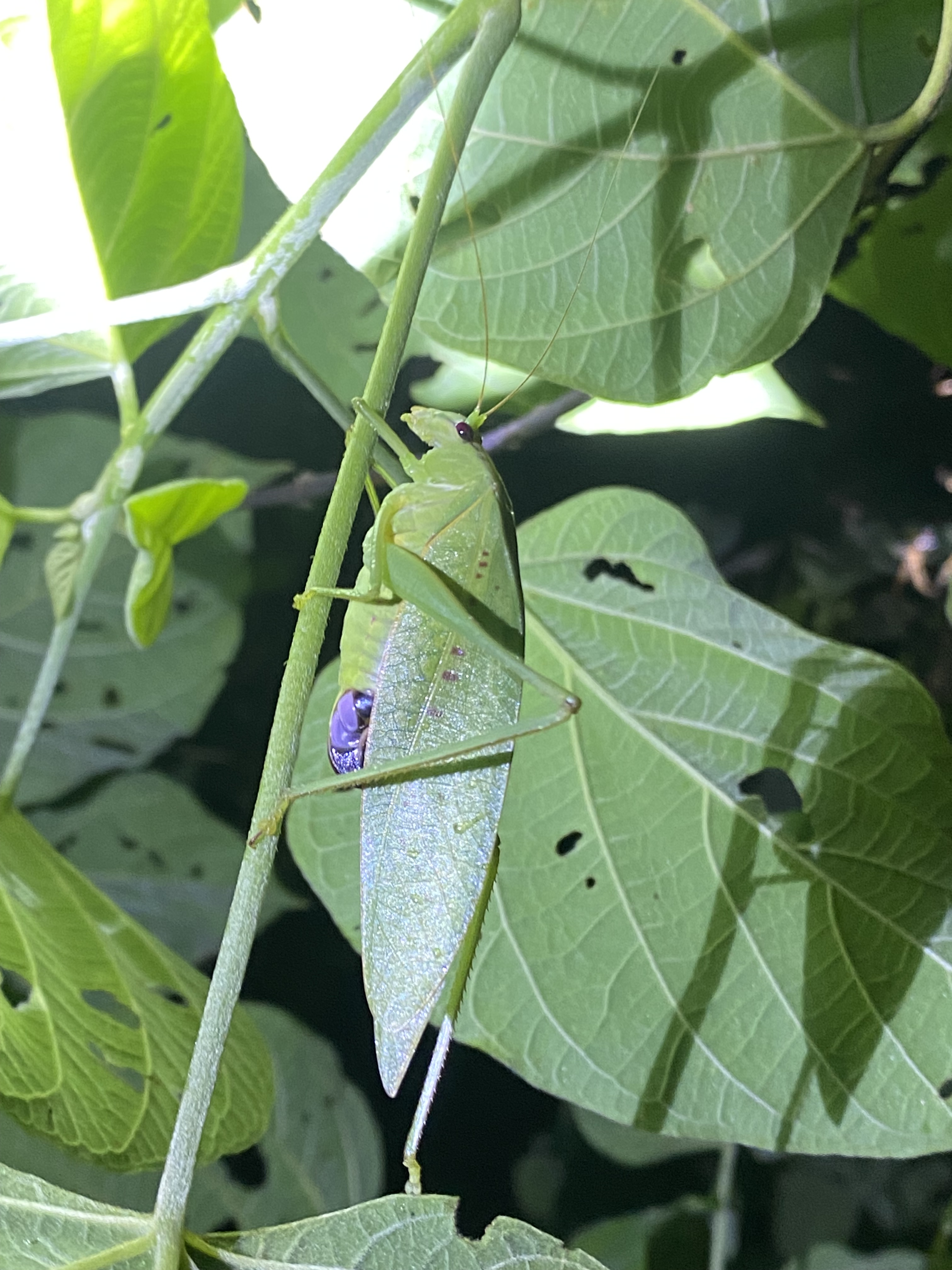
Top row (left to right in order): Singapore Bark Scorpion with dinner, David Bowie Spider, and Lesser Mouse-Deer Bottom row (left to right in order): Lichen Huntsman (Pandercetes sp.), Singapore Green Tree Snail, Fungus Beetle (Eumorphus sp.), and Leaf Katydid (Rectimarginalis ensis)
We ended up staying out later than my mom originally wanted to, but she thoroughly enjoyed the walk with Kwang and I. My October 12th walk down the Mandai Trail was easily my most successful outing to the trail yet! I’m glad I got to share it with my mom! Following this outing, I took a few days off to focus on studying.
The next time I got out on a night walk was on October 15th, when I spotlighted the entirety of forest-lined Old Upper Thomson Road in an attempt to spot the endangered and captivating Sunda Slow Loris, a bucket-list mammal species of mine. Kwang had informed me that he’d had the most reliable sightings of these venomous, nocturnal primates on Old Upper Thomson late at night, so I headed off there the first chance I got with high hopes and low expectations.
Though I didn’t get my slow loris sighting, I did see a couple other mammals: four Malayan Colugos, including a mother and baby, a Lesser Mouse-Deer, and a Common Palm Civet high up in a fig tree. I wasn’t a huge fan of night-walking Old Upper Thomson due to the number of streetlamps lighting up the road and its surroundings. The light scares nocturnal wildlife away and makes it quite hard to spot animals deeper in the forest
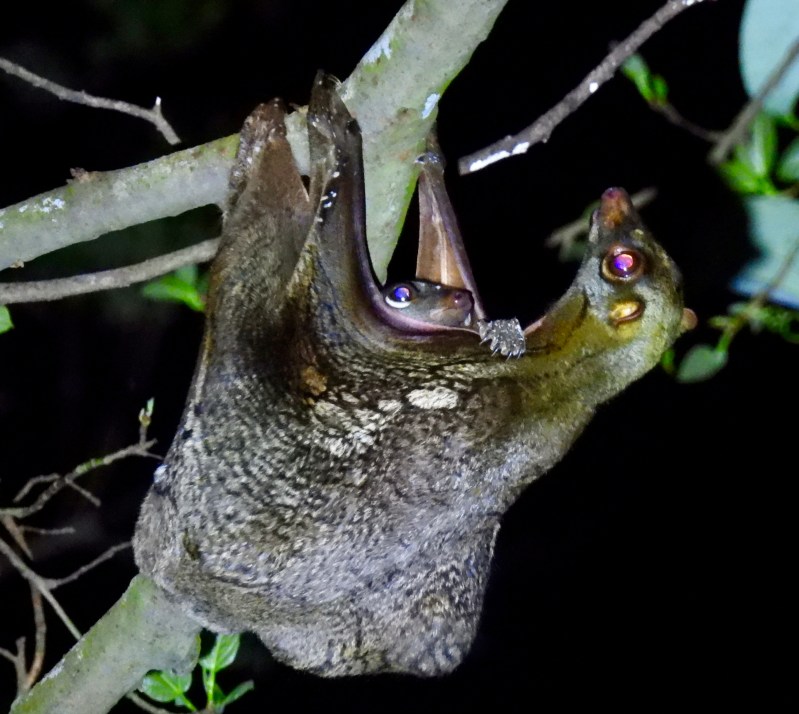
Malayan Colugos are easily one of the most unique, bizzare, and adorable mammals out there. I never get bored of seeing these doe-eyed, leaf-eating gliders in the wild.
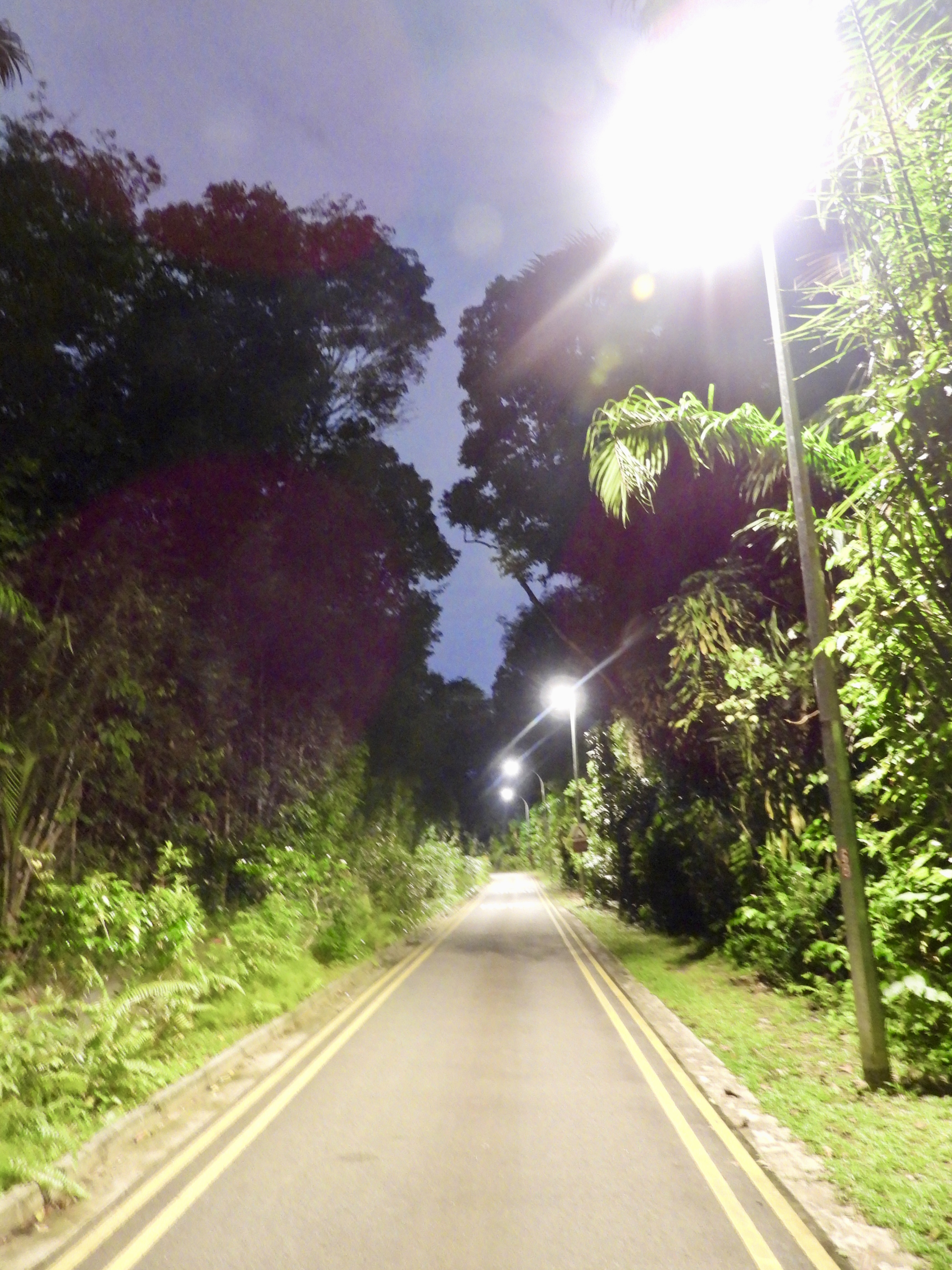

Brightly-lit Old Upper Thomson Road at night (left), and the brown morph of the Malayan Colugo (right), my personal favorite of the two colugo morphs (gray/brown).
The final night walk I’ll cover in this post was with my new friend Kwang on October 16th. He’d invited me several days prior to go herping with him in the mangroves of Pasir Ris Park after dark. I enthusiastically accepted, and met up with him at the entrance to the park just before 9:00pm. Our goal was to seek out mangrove-dwelling snakes like the Banded File Snake (Acrochordus granulatus), Dog-Faced Water Snake (Cerberus schneiderii), and the hard-to-spot and locally endangered Mangrove Pit-Viper (Trimeresurus purpureomaculatus). The latter species was one I had sought after since moving to Singapore, but had no luck finding. This was despite numerous outings to Sungei Buloh Wetland Reserve in 2022 and 2023, a primary haunt of the Mangrove Pit-Viper in Singapore.
My luck was about to change on this particular night walk. With Kwang’s sharp eyes and his years of experience herping around Singapore, we were able to nab four snake species over the course of two hours in Pasir Ris, including two Mangrove Pit-Vipers, three Dog-Faced Water Snakes, an Oriental Whip Snake (Ahaetulla prasina), and even our rarest target, the striking Banded File Snake. A cute little Four-Lined Tree Frog (Polypedates leucomystax) perched on the stem of a sapling at the end of our walk topped off our herp list for the night.

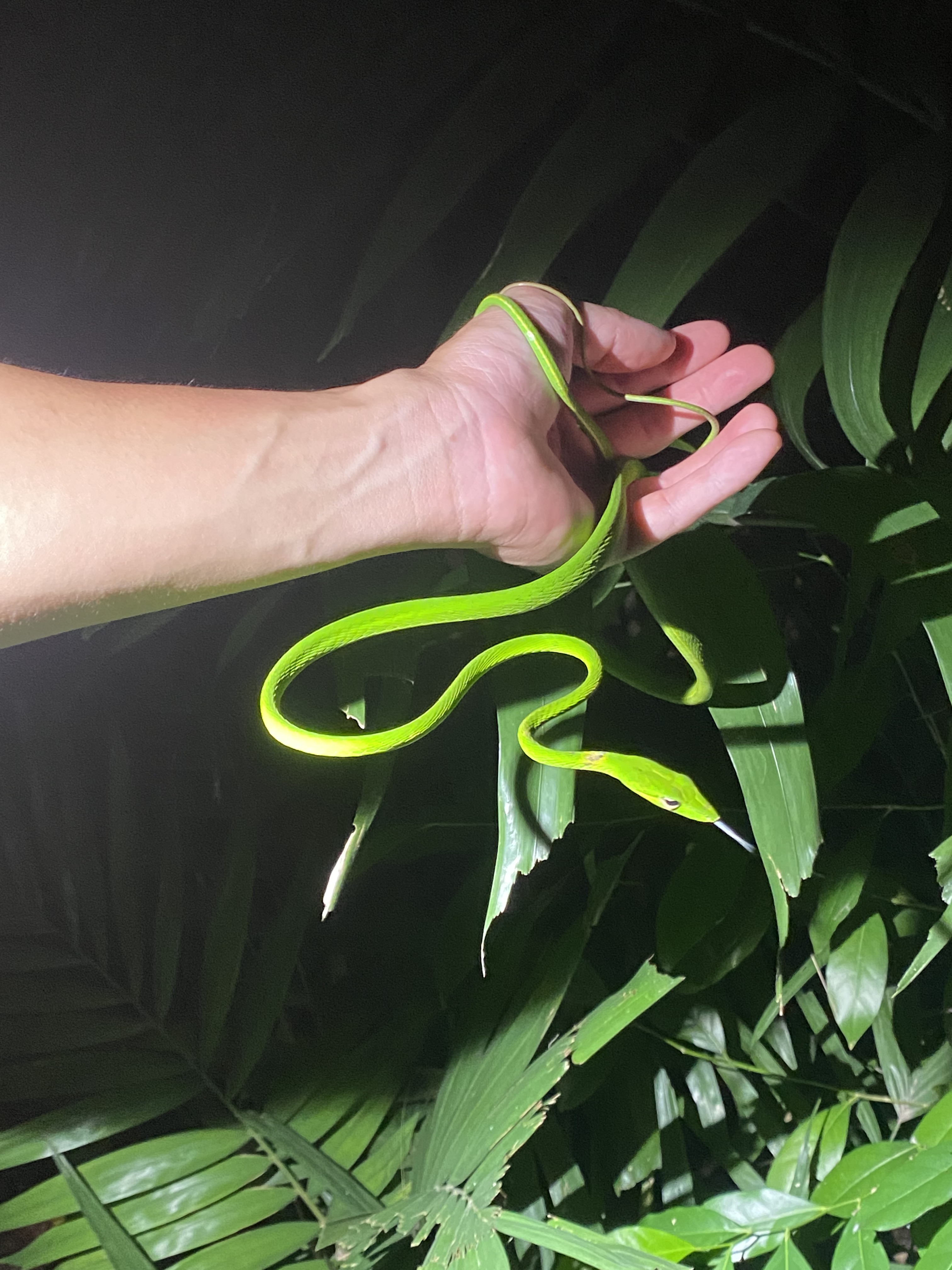

Banded File Snake (left), Oriental Whip Snake held by Kwang (center), and Four-Lined Tree Frog (right)
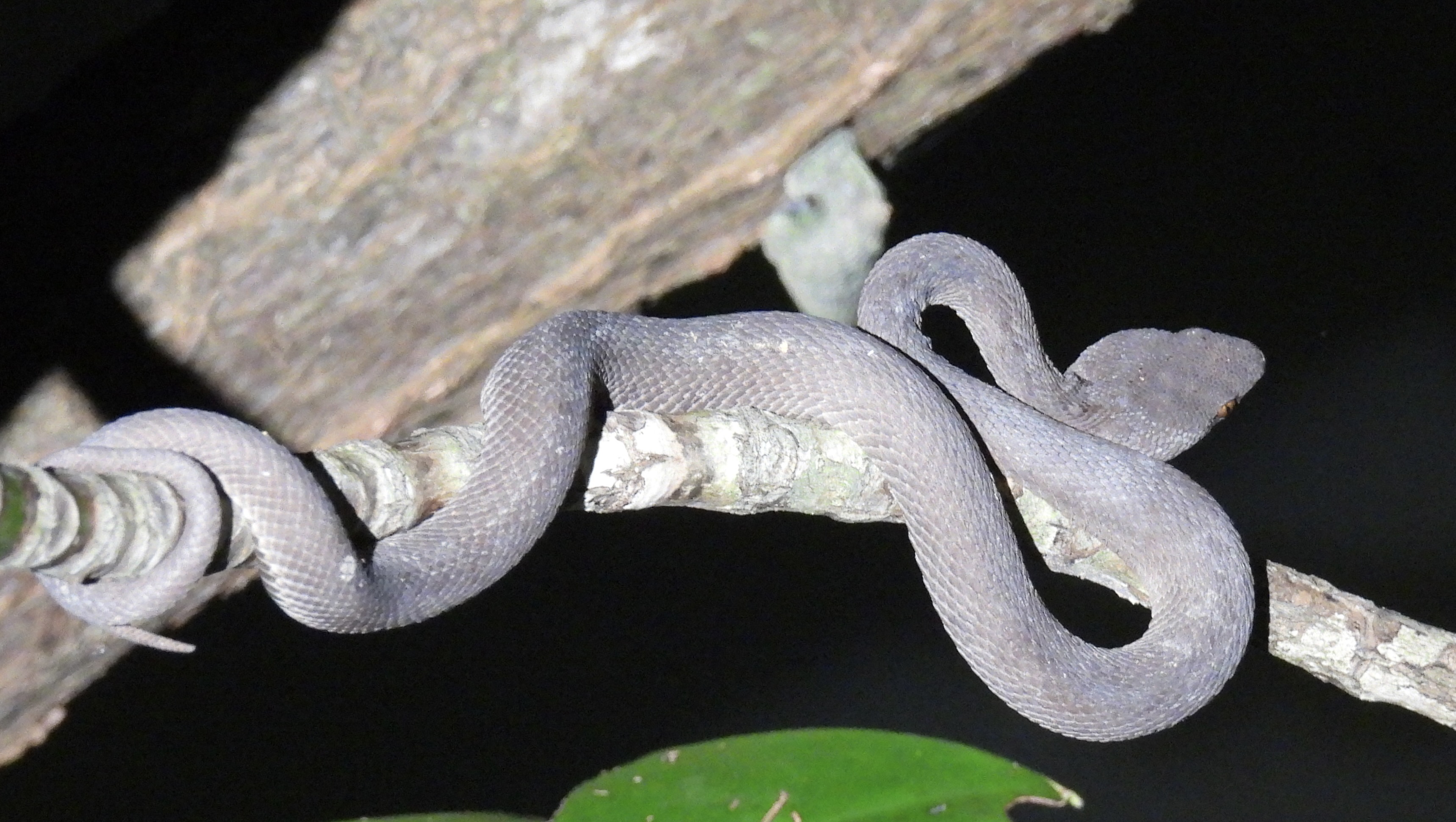
Mangrove Pit-Vipers are masters of camouflage and hiding, yet can be surprisingly aggressive if cornered or handled
In addition to all the great snakes and other herps on our walk, we scored a couple neat arthropod finds. At the start of the trail leading into the mangroves, Kwang pointed out some vibrant Sunda Blue-Banded Digger Bees (Amegilla andrewsi) clinging onto vines, and brought me to a spot overlooking a small tree, where we had a decent chance of spotting one of Singapore’s most spectacular arthropods: the Chris Ang’s Leaf Insect (Cryptophyllium chrisangi).
We got exceptionally lucky that night and saw individual after individual of this amazing arthropod in the tree Kwang had told me was their preferred haunt. We saw both leaf-like, bright green females, and slimmer, darker green males hanging upside-down from foliage. They decorated their home tree like ornaments!
Overall, I had a great and productive outing with Kwang at Pasir Ris, and I look forward to doing more night walks with him in the future before I head off to university.

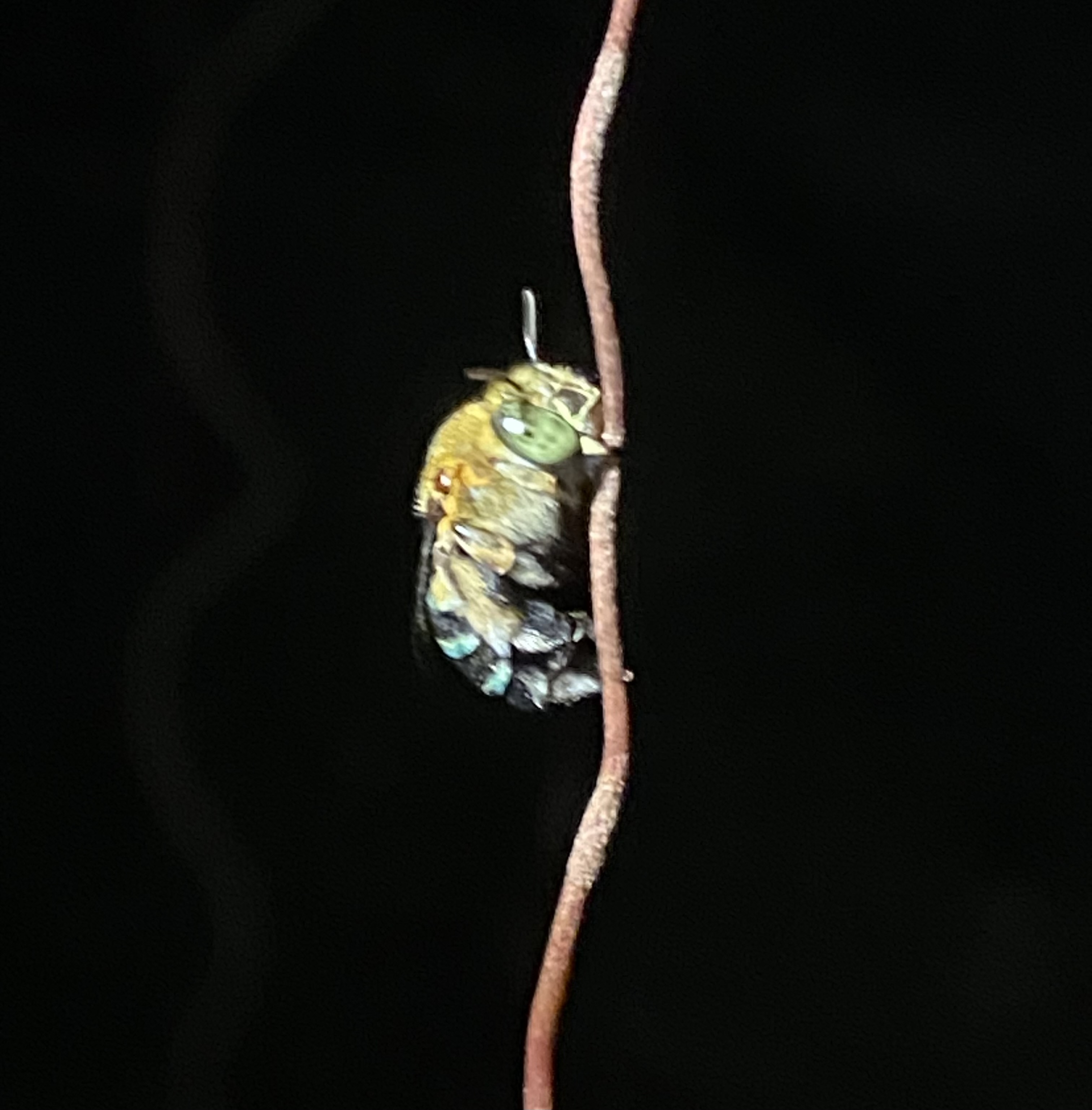
Dead Mangrove Horseshoe Crab (Carcinoscorpius rotundicauda) (left) and Sunda Blue-Banded Digger Bee (right)

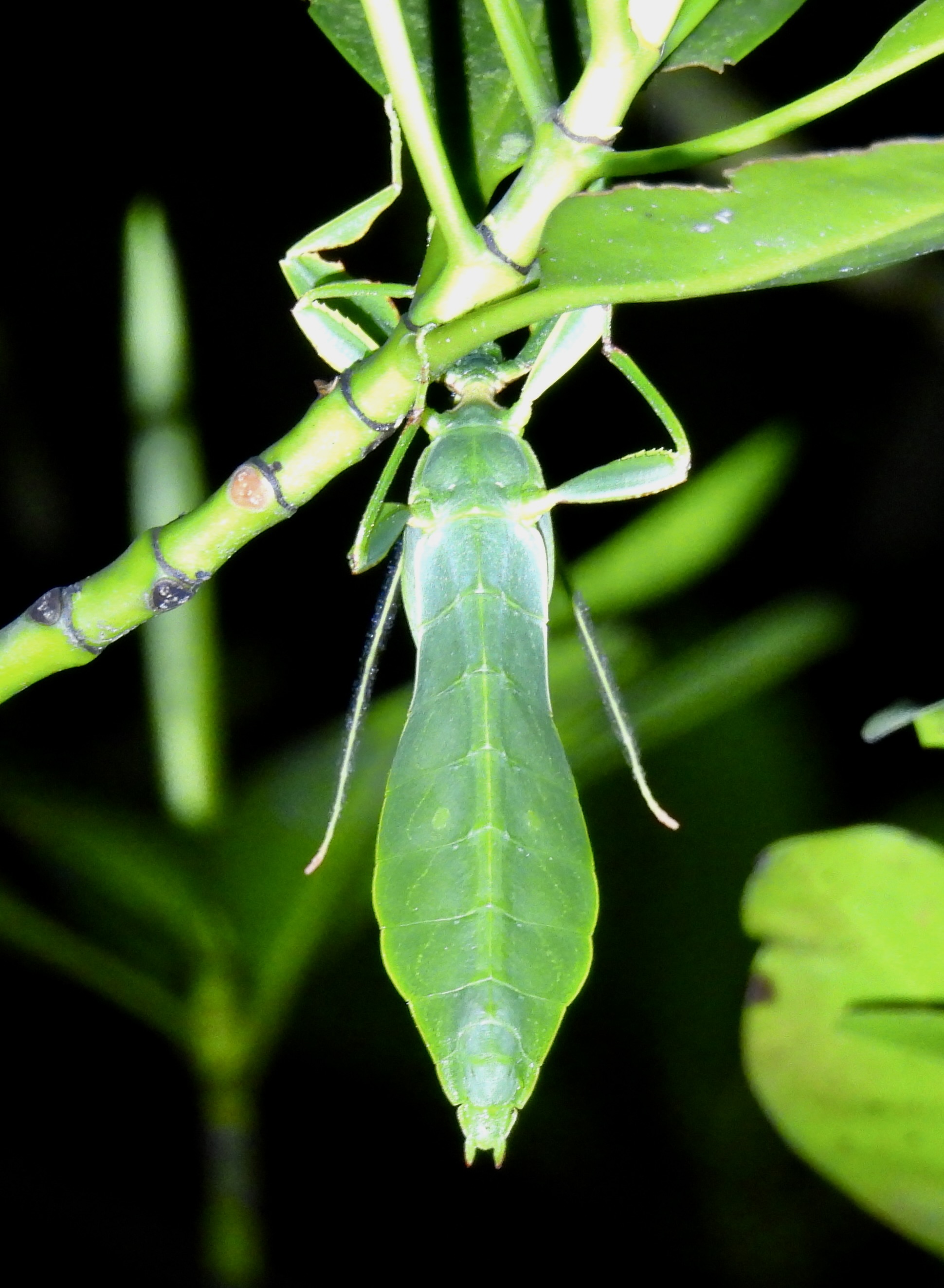
Female (left) and Male (right) Chris Ang’s Leaf Insects. Spectacular insects indeed!
That about wraps up my wildlife-watching adventures between October 3rd and October 16th, 2024, including almost two weeks of highly productive night walks around Singapore. From mouse-deer to Mangrove Pit-Vipers; scorpions to Spotted Wood Owls, I’m grateful to have experienced such a large range of rather reclusive, nocturnal species in such a short time.
It’s been truly awesome to re-immerse myself into my passions fully this past month, and I can’t wait to keep this momentum going for the next three months! Thank you for reading, and I hope you enjoyed hearing about my most recent wildlife-watching adventures. Stay tuned for more,
-Bennett
Mammal Species Recorded: (Lifers bolded)
- Malayan Field Rat (?)
- Malayan Colugo
- Lesser Mouse-Deer
- Common Palm Civet
- Sambar
- Lesser Short-Nosed Fruit Bat
Bird Species Recorded: (Lifers bolded)
- Spotted Wood Owl
- Blue-Winged Pitta
- Red Junglefowl
- Javan Myna
- Ornate Sunbird
- White-Breasted Waterhen
- Sunda Scops Owl (heard only)
Reptile & Amphibian Species Recorded:
- Mangrove Pit-Viper
- Banded File Snake
- Dog-Faced Water Snake
- Wagler’s Pit Viper
- Oriental Whipsnake
- Spotted House Gecko
- Asian House Gecko
- Mourning Gecko
- Four-Lined Tree Frog
- Dark-Sided Chorus Frog
- Asian Common Toad


 Bennett Gardner Wildlife Watching
Leave a reply to Elizabeth Hess Cancel reply