
The Philippines—a vibrant, tropical nation encompassing over 7,600 islands in the Indo-Pacific—is in my mind Southeast Asia’s most underrated country for wildlife and nature. The SCUBA diving is world-class and affordable, the scenery is spectacularly unique and diverse, and roughly half of the nation’s terrestrial vertebrates are endemic (618 out of 1,238 total species)! As long as you limit your time in the cities and steer clear of the major tourist trap areas, the Philippines is sure to impress nearly any nature-lover out there.
I had the great fortune of spending a full two weeks in the Philippines in August, 2026, in preparation for a marine conservation internship with Blue Corner Marine Research in Bali, Indonesia. For this particular internship, which mainly consisted of scientific SCUBA diving and underwater coral restoration, I needed a minimum of 20 logged dives just to participate. The conditions at the restoration site are known for being volatile, and require experienced divers to navigate potentially extreme currents and sudden, dramatic drops in water temperature (thermoclines). With only nine dives under my belt over the four years since I received my PADI Open Water Diver Certification, I knew I needed some serious practice before my internship!
I could have just flown directly from the US to Bali to complete my required dives, but I wanted to explore a corner of Southeast Asia I hadn’t seen yet. I ultimately settled on the Central Visayas region of the Philippines, specifically the islands of Cebu and Bohol. Affordability was a reason behind my trip to the Philippines— everything besides the SCUBA diving was out of my own pocket—but I mainly wanted to see the country’s rich biodiversity and unique natural attractions that had been on my radar for years.
In retrospect, I’m extremely happy I chose the Philippines over Bali for my 20-logged-dive requirement. Over two weeks, I enjoyed outstanding nature and adventure alongside many awesome people, making for one of the best solo trips of my life. From diving with thresher sharks and massive sardine shoals in Moalboal and Malapascua, to searching for enigmatic birds and mammals in Bohol’s rainforests, I experienced an incredible array of wildlife. My only regret was running out of time to explore other Philippine islands like Palawan, Mindoro, Luzon or Negros! I suppose that’ll have to wait until next time, but at least I have the incentive to return.
This post details all of my diving and wildlife-watching adventures across the Central Visayas in 2026. I hope to share some useful travel advice along with my personal experiences, photographs, and naturalistic observations. Please enjoy!
Mactan Island, Cebu:
I arrived in the Philippines in mid-August, 2026, and had a few days to kill in the Cebu City/Mactan Island area before I island-hopped over to Bohol on the Cebu-Tagbilaran fast ferry.
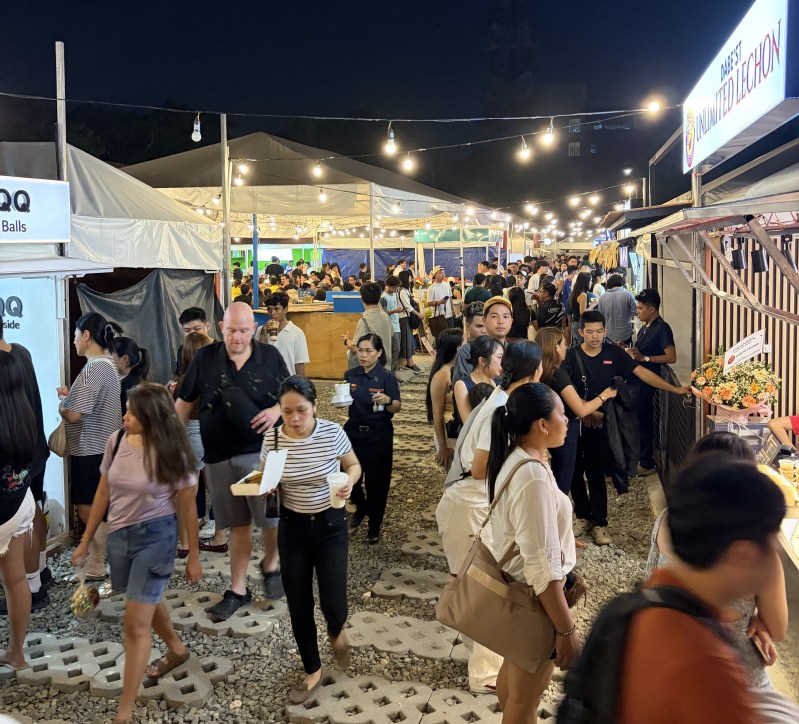
One thing I quickly learned upon arriving in Cebu City is that it is a god-awful, cortisol-inducing cesspool. The incessant and aggressive scams, severe gridlock, extreme population density, crumbling infrastructure, egregiously high prices (relative to Southeast Asia), and constant power outages are enough to drive anyone crazy, even locals. While I loved the Philippines as a whole, I hope to never find myself in Metro Cebu again!
The only saving grace for this congested coastal metropolis is its thriving and affordable local SCUBA diving industry. From the Cebu-Mactan International Airport, one can take a 25-minute Grab ride and be at various popular reef and wall dive sites along the coastline of Mactan Island, many of which are accessible via shore entry. Prices at the local dive shops for shore dives are generally very reasonable, averaging ₱1,500-2,000 ($25-32 USD) for a single dive including gear rental, and roughly ₱3,000 (around $50 USD) for two dives. Boat dives are significantly more expensive.
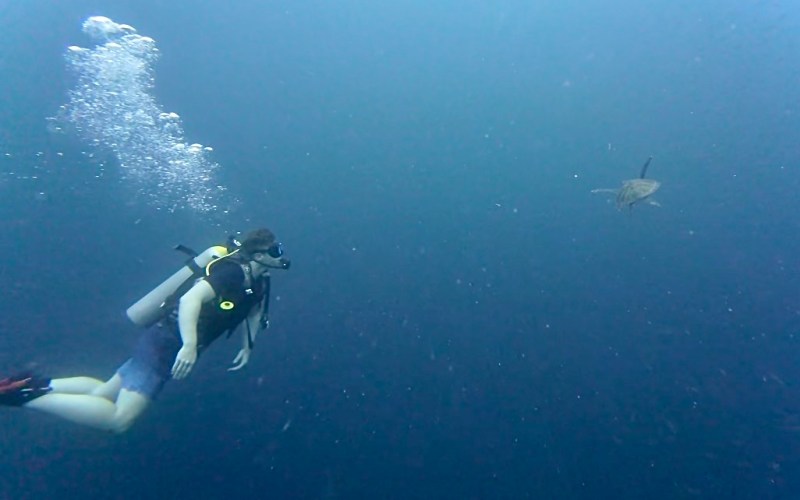
I spent two of my Cebu City days diving at Kontiki Reef, one of the most popular shore-entry dive sites in the area. For the first day, I used Sidive Dive Center and the next day Nalu Dive Center. Both dive operations were solid, but I felt they were more geared toward casual tourists wanting to try out SCUBA for the first time than serious certified divers. Because I was mostly diving at Mactan as a skills refresher, I didn’t mind the more casual aspects of it.
Of the two dive centers I used on Mactan Island, I definitely preferred Nalu Dive. I felt that they were more professional and gave better customer service than Sidive, though the latter operation was still decent. Sidive charged ₱1,500 for one shore dive including BCD, fins, regulator and weight belt, plus an additional ₱1,000 fee for GoPro rental. Nalu on the other hand charged ₱3,000 for two shore dives, with GoPro rental included. My dive guide from Nalu, Alex, was particularly competent and professional.
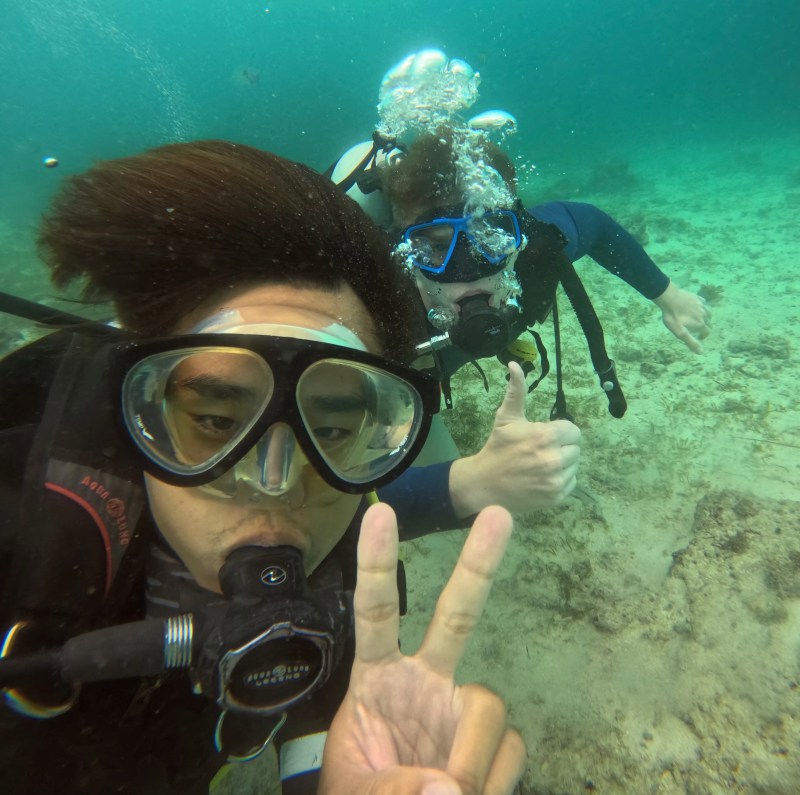
Accessing the Kontiki Reef dive site required walking a short distance from the dive center to a concrete staircase leading down to the ocean. From there, my dive guides and would wade out about 15 meters (50 ft) into deeper water before submerging. Once underwater, we descended down to about 20 meters (66 ft), slowly making our way along a steep coral wall. On the first day, I spotted a Green Sea Turtle (Chelonia mydas), a large shoal of sardines, anemonefish, lionfish, and various other reef fishes along the wall. The second day had poorer visibility and not as many creatures on the reef. The highlight of the second day was a striking Anna’s Chromodoris (Chromodoris annae), a type of nudibranch.
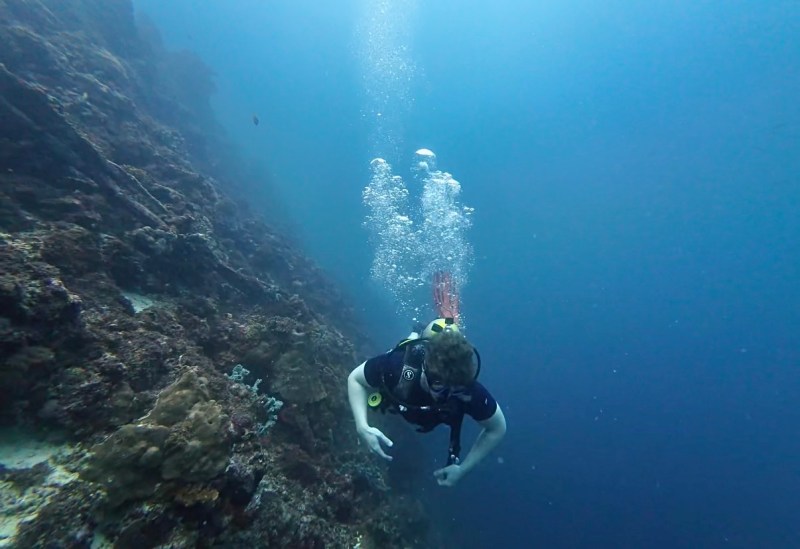
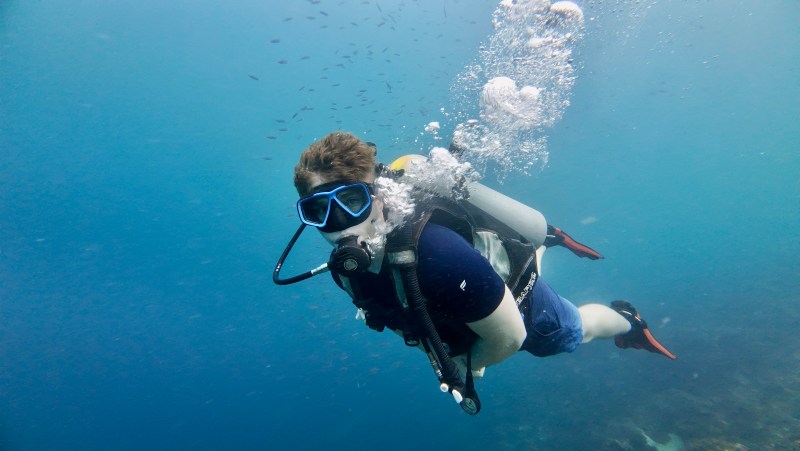
As this was the first time I’d dived in over two years, and given that I needed to build up my experience and logged dives before my marine conservation internship in Bali, I asked my instructors to help me work on my technique. I definitely needed the practice—my buoyancy, trim, air consumption, and movement all left something to be desired. Air consumption in particular was an issue for me, and because of this none of my Mactan dives lasted longer than 33 minutes. This was only the very beginning of my journey as a serious diver, though.
Overall while I really can’t recommend Mactan Island or Cebu City to anyone, if you’re stuck in the area for a day or so definitely try out diving at Kontiki Reef. Nalu Dive Center provides genuine value for your money, and there is a relatively impressive amount of marine life on the reef.
Loboc, Panglao & Anda, Bohol:
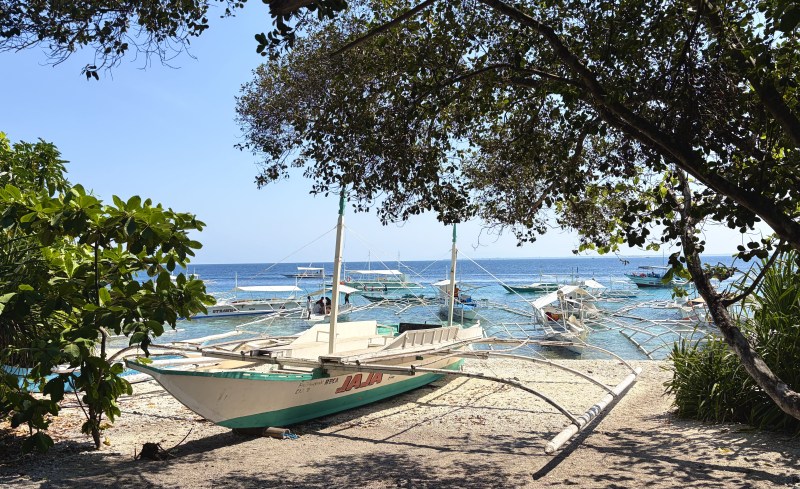
I stayed on the island of Bohol for a total of six nights, from August 16-22, 2026. I spent two nights in Loboc at the lovely Loboc River Resort, two nights in Panglao at Pearl Premier White Sand Resort and two nights in Anda at Solea Reef Resort.
Bohol is a genuinely beautiful island with natural attractions like Rajah Sikatuna Protected Landscape and Balicasag Island that left me highly impressed. At the same time, many of the activities around Loboc and Panglao are overpriced, crowded, and over-commercialized. By steering clear of most of the tourist traps, and sticking to the wilder areas of the island, I maximized my time in this phenomenal corner of the Philippines.
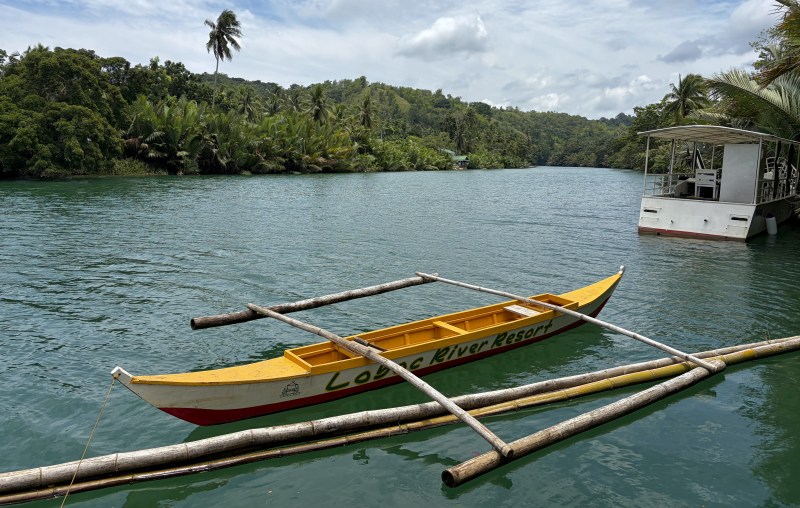
Loboc River Resort, where I spent August 16-18, was definitely my favorite of my three Bohol accommodations. It is charming, rustic, affordable, is situated on a lush property with gorgeous views of the Loboc River, and has cool activities available on-site like firefly boat tours. Additionally, the food at their local restaurant is tasty, cheap and very fresh. In retrospect, I wish I’d spent more nights there as I was away looking for wildlife in Raja Sikatuna Protected Landscape most of the time (see below section).
The grounds of Loboc River Resort are surprisingly good for birding. Endemic birds like Philippine Ducks and Brown-breasted Kingfishers can be spotted at the man-made fish pond near the check-in area, though I saw neither.
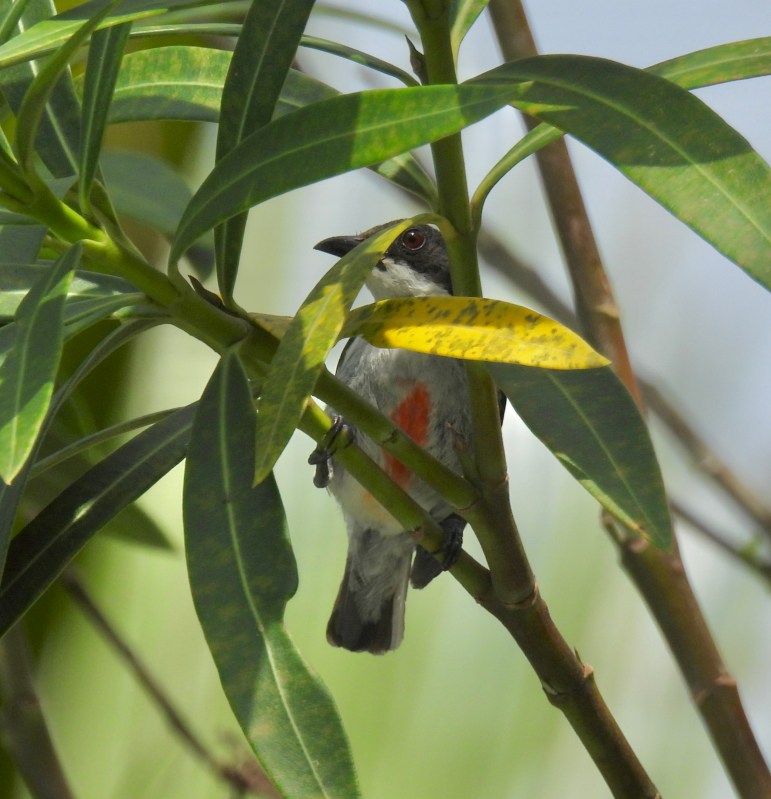
A short walk around the resort grounds on August 18 produced Garden Sunbirds, Red-keeled Flowerpeckers, and a Philippine Pied Fantail.
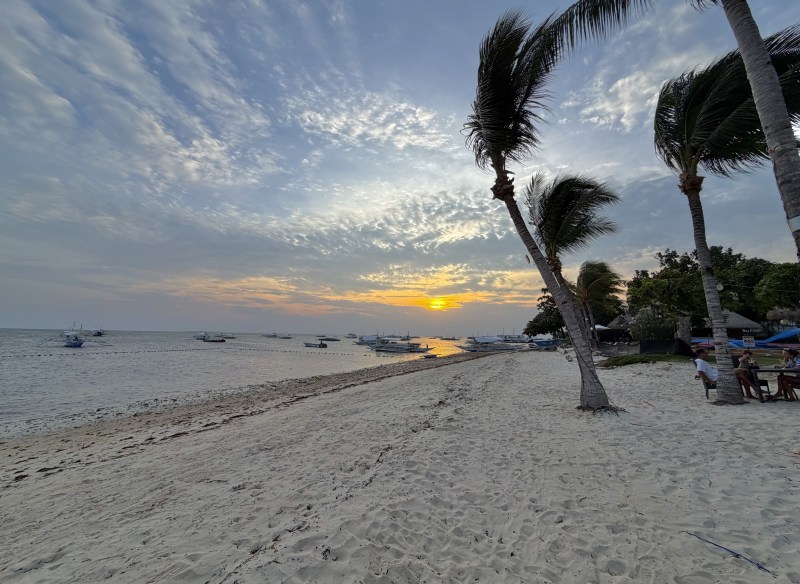
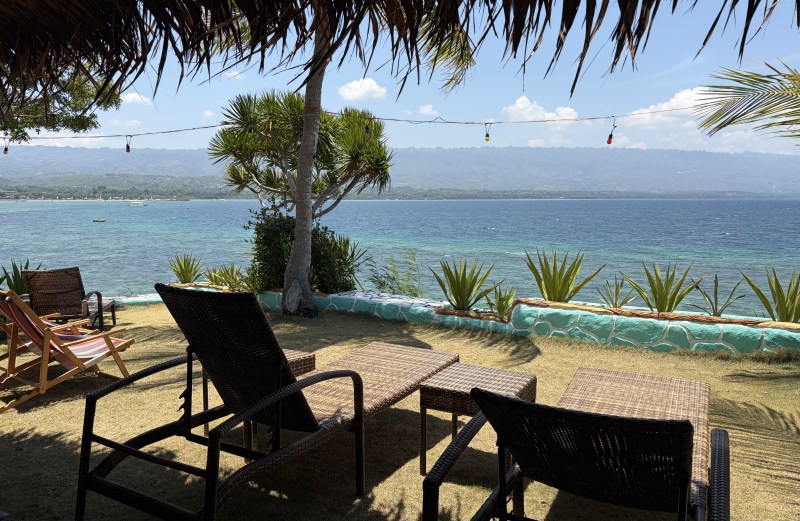
I stayed in Panglao—Bohol’s premier tourist town—from August 18-20. My accommodation, the Pearl Premier White Sand Resort, was very nice and the staff friendly, though the ongoing pool renovations were disruptive. The beach and ocean views there were beautiful.
On August 19, I decided to do the extremely popular Panglao island-hopping tour, Panglao’s signature attraction. There are hundreds of local boat captains offering tours on their traditional bangka boats, and all the tours are centered on three main areas of interest: dolphin watching in the open ocean, snorkeling at Balicasag Island Marine Sanctuary, and walking on the Virgin Island sandbar, which is exposed at low tide.
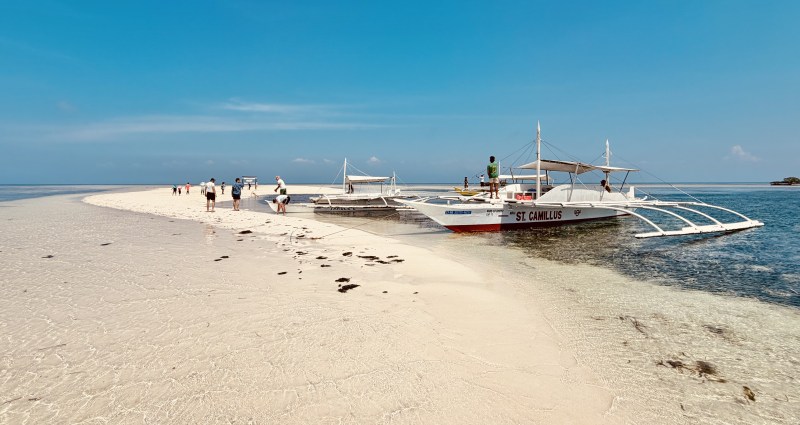
My hotel arranged a local boat captain to take me on a private boat tour for around ₱4,500 ($71 USD), including the ₱300 ($5 USD) Balicasag environmental fee and roughly ₱500 ($8 USD) for snorkel gear rental. I departed the mainland at around 6:50am, and arrived back at my accommodation by 12:00pm.
The tour started off with dolphin-watching as Panglao’s dolphins are only active in the early morning. By about 9:00am they retreat to shallower waters to rest. To catch them, we motored roughly 10 kilometers (6 miles) offshore to the dolphins’ hunting grounds, which took about 40 minutes. Though the area was crowded with dozens of other bangka boats when we arrived, it took us no time to spot our first and only pod of Spinner Dolphins.
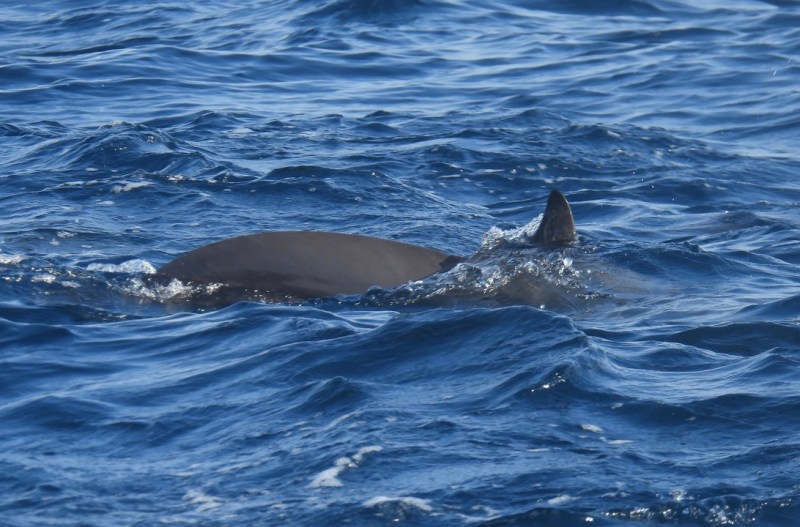
The pod surfaced several times before disappearing below the waves and I was only afforded brief views and a single photograph of the dolphins. I didn’t see any more dolphins that day, possibly owing to the obnoxiously loud diesel engines on all the bangka boats that sounded like dozens of jackhammers going off at once.
My boat captain also rushed my dolphinwatching session so we could race over to Balicasag Island for the snorkelling component of the tour. Apparently, each captain has a designated arrival spot and time at the island to prevent overcrowding, and if they miss their window their clients might not be able to snorkel.
Balicasag was a bit too mass-touristy for my tastes (especially with a mandatory one-hour rule for snorkelling), though I’m happy that the local government strictly regulates eco-tourism in the region. The reefs and coral gardens around the island were in pristine condition, and if you ask me were worth braving the intense crowds of snorkelers to witness. I saw several sea turtles along with various typical reef fish.
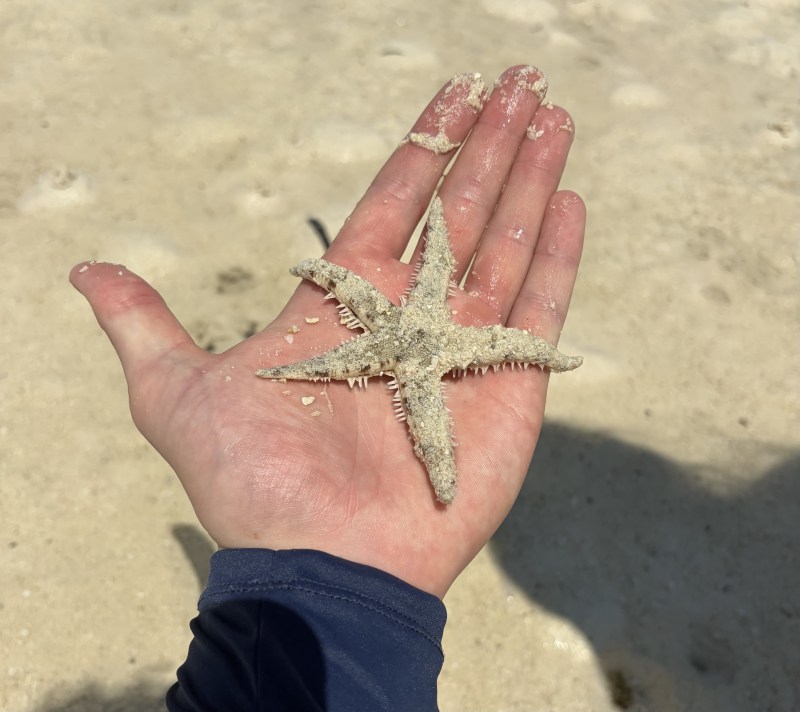
The final stop on the island hopping tour was Virgin Island sandbar, which is just a crowded, roasting-hot strip of exposed sand. Apart from some interesting marine life in the intertidal zone, I could’ve taken a pass on this portion of the trip.
Overall, Panglao’s natural attractions—namely the dolphins and Balicasag Island—are genuinely excellent. However, they are classic examples of pristine wildlife habitats spoilt by overtourism and commercialism. I do recommend the signature tour to travellers in the area, but I advise setting expectations for the large crowds. This was definitely not an off-the-beaten-path excursion!
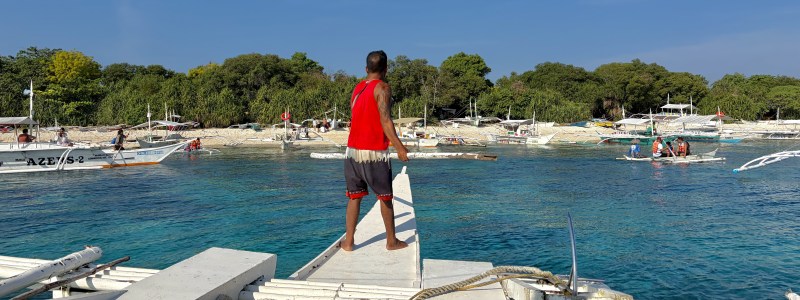
My last stop in Bohol was Anda, a peninsula on the easternmost tip of the island, where I spent August 20-22. Anda is known for quiet stretches of white-sand beach and geologic formations like cenotes, waterfalls, cliffs and sinkholes. The area is far less touristy and more authentic than Panglao, and the scenery is beautiful. Getting there was a bit of a mission, though.
I ended up self-driving across the entire island—my first time driving anywhere outside of the USA. While I was nervous going in due to my experience with chaotic Southeast Asian roads, I found self-driving in Bohol to be remarkably pleasant and convenient.
I rented a small Toyota hatchback from Bohol Car Rental for ₱5,050 ($80 USD), who made the logistics quite easy. I simply inquired about a rental car on WhatsApp, sent them photos of my driver license and passport, and paid a deposit online. They dropped off the car at my accommodation in Panglao on August 20, and I returned the car at the ferry terminal in Tubigon on August 22.
On the way to Anda on August 20, I stopped at the Philippine Tarsier Sanctuary in Corella, Bohol, to see the namesake animals (see below section). I arrived at my Anda accommodation, Solea Reef Resort, around sunset.
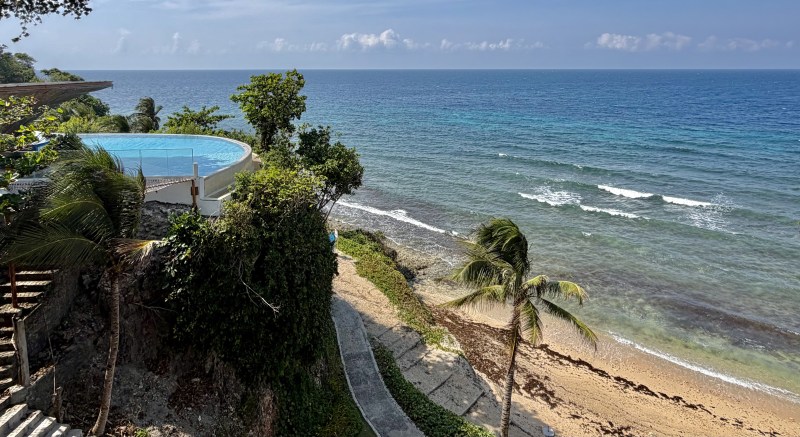
I spent the entire next day exploring Anda. One of the main things I wanted to see, a miniature cenote called Cabagnow Cave Pool, was closed the day I was in Anda. I was slightly disappointed but still tried to make the most of the day. I spent a bit of time at Quinale Beach—the most famous beach in the area—which was quite pleasant.
I also did a snorkelling tour with Anda Scuba Diving as I wanted to mix things up from my usual SCUBA diving. Anda has a pristine barrier reef just offshore that is loaded with sea turtle and various macro life. I saw probably a dozen turtles during my one hour of snorkelling. Additionally, the views of the shoreline from the snorkelling boat were fantastic.
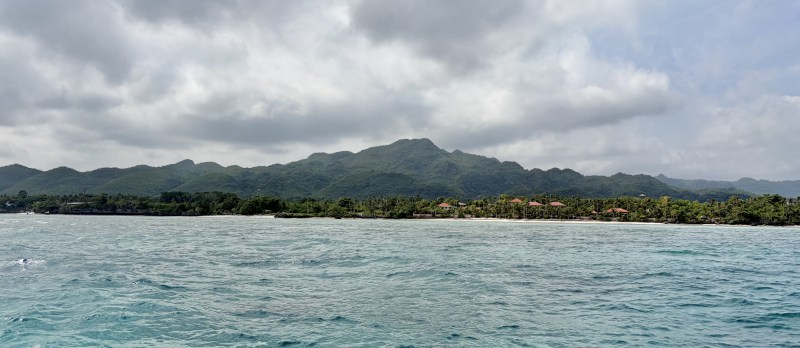
I wish I’d had more time in Anda to explore the area’s geologic formations and do some diving in the barrier reef. The area was still worth visiting, and offered a much more laid-back, quiet, and pristine alternative to bustling Cebu or Panglao. It’s honestly one of Bohol’s best-kept secrets.
I departed Anda on the morning August 22 and drove to Tubigon in northwest Bohol, which took me about two hours and covered 108km (65 miles). I returned my rental car at the ferry terminal and took the 10:30am fast ferry back to Cebu City, where I took a private car transfer directly to Moalboal in southwest Cebu that same day.
Rajah Sikatuna Protected Landscape, Bohol:
Rajah Sikatuna Protected Landsape, a 10,453-hectare (25,830-acre) natural oasis situated in south-central Bohol, is essentially the only remaining intact terrestrial ecosystem on the island. The reserve’s impenetrable, rugged limestone hills created a natural fortress that protected Bohol’s last expanses of native rainforest from intensive land-clearing. Today, it is a final refuge for many birds, mammals, reptiles, insects, and plants that are endemic to the Southeast Philippines. Legendary endemic species like the Philippine Tarsier, Visayan Broadbill, Azure-breasted Pitta, and Northern Silvery-Kingfisher attract birders and wildlife enthusiasts from around the world. And yet, despite its wealth of endemic species and stunning limestone rainforests, Rajah Sikatuna is untouched by commercial tourism and virtually unknown outside of serious birding and mammalwatching circles.
I spent a wildly productive morning at this fantastic preserve on August 17, 2026, nailing almost all of the main Bohol bird and mammal targets. While I technically could’ve visited Rajah Sikatuna independently for a small entrance fee, hiring a local birding guide for the day proved to be an extremely smart move. To have a regional expert by my side that knew the idiosyncrasies, approximate locations, and specific vocalizations of all the various forest birds and mammals was a game-changer.
The most cost-effective yet quality guide for Bohol-specific birding is without a doubt Dean Stauffer of Birding Tours in Bohol. Dean is a personable, hardworking and dedicated individual who went out of his way to ensure I spotted all the regional target species (though of course, it’s never a guarantee). I hired him for the entire day for ₱11,500 ($182 USD). This price included transportation to and from my accommodation, entrance fees for all reserves and attractions we visited, and of course a whole day—5am to 8pm—of private wildlife guiding.
Initially, I was a bit skeptical of booking a birding guide through Facebook and paying beforehand via wire transfer rather than through an official website—Dean’s tour agency currently doesn’t have a web page—but my fears were put to rest completely by the end of the day. I cannot recommend Dean enough to any birders or wildlife enthusiasts visiting Bohol!
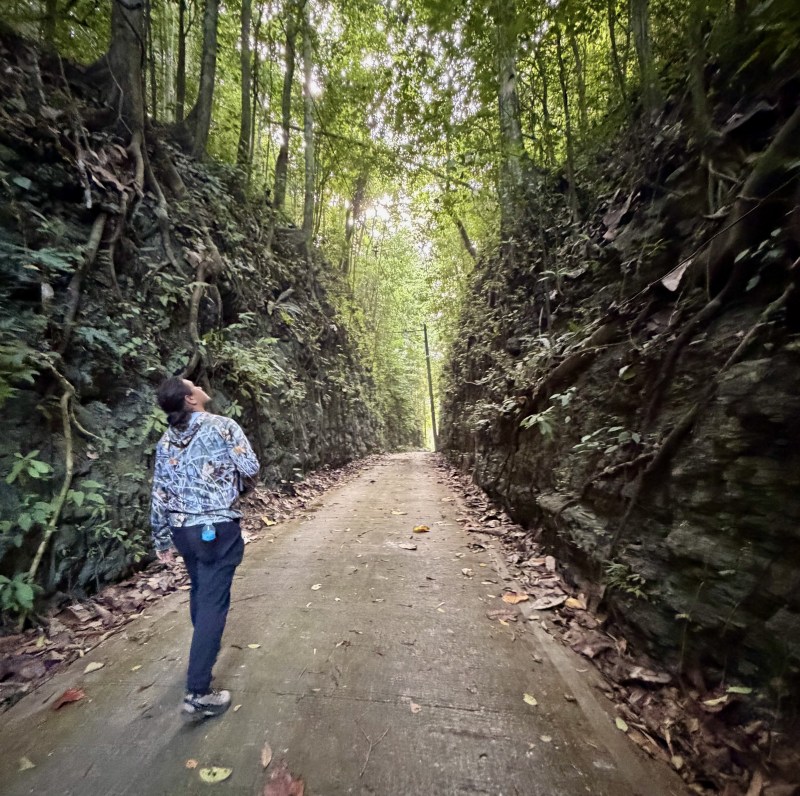
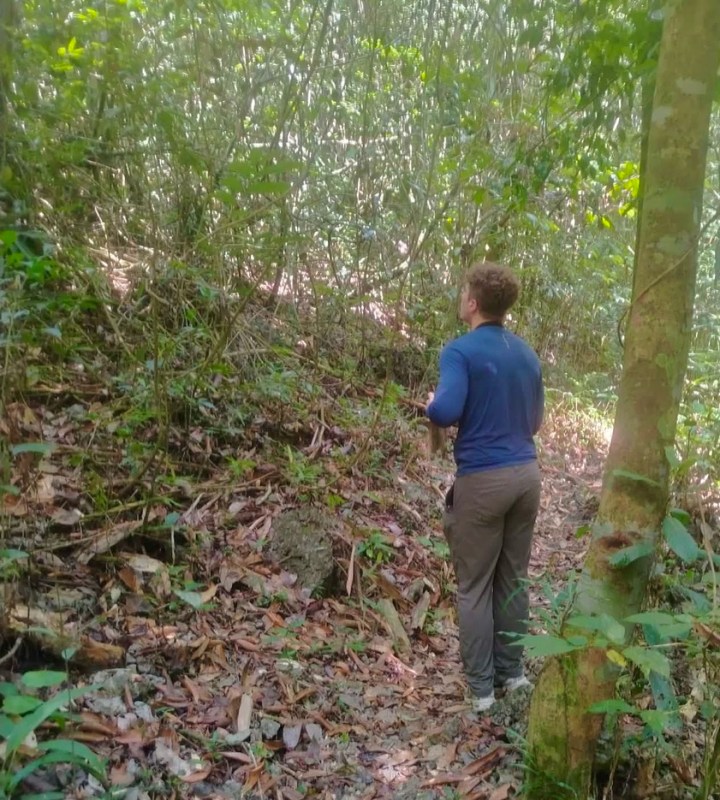
My wildlife outing on August 17 began before dawn. Dean picked me up at my accommodation in Loboc at around 5:00am and we quickly made our way into the interior highlands of Bilar to Rajah Sikatuna Protected Landscape. At the reserve entrance, we met up with local park ranger and wildlife guide Jerry Mejoras, who accompanied Dean and I throughout our time in the reserve. Jerry is a competent spotter who knows the forest like the back of his hand. For travellers who want a guide solely for an outing in Rajah Sikatuna and have transportation pre-arranged, Jerry can be requested directly at the entrance ticket booth for around ₱645 ($10 USD), not including a customary tip.
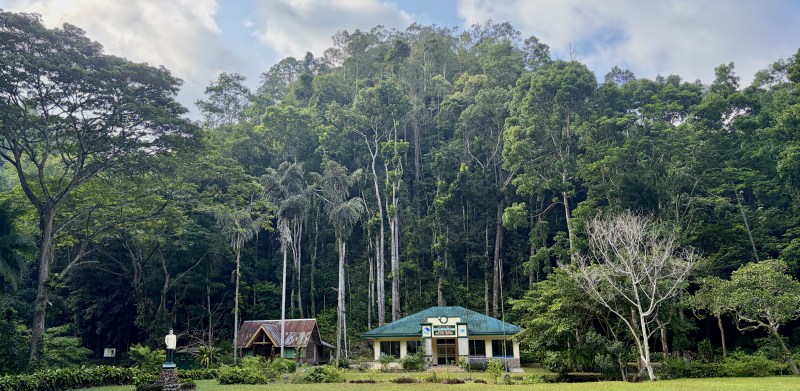
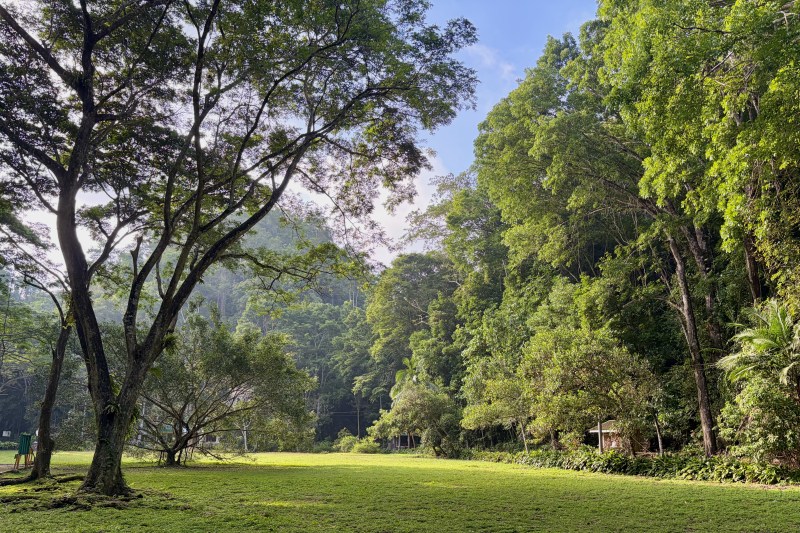
Dean, Jerry and I spent much of our time birding along a dirt track adjacent to the Rajah Sikatuna entrance road and also around Magsaysay Park, a grassy clearing in the reserve with toilets, a campground, educational facilities, and ranger and visitor cottages. Towering Dipterocarp rainforest encircles the clearing, making it an excellent place to spot distant canopy birds and Philippine Colugos. From Magsaysay Park, we could’ve accessed 30 kilometers (18 miles) of marked trails that meander through the heart of the limestone rainforest, though according to Dean wildlife viewing is best along the paved road and edges of the clearing.
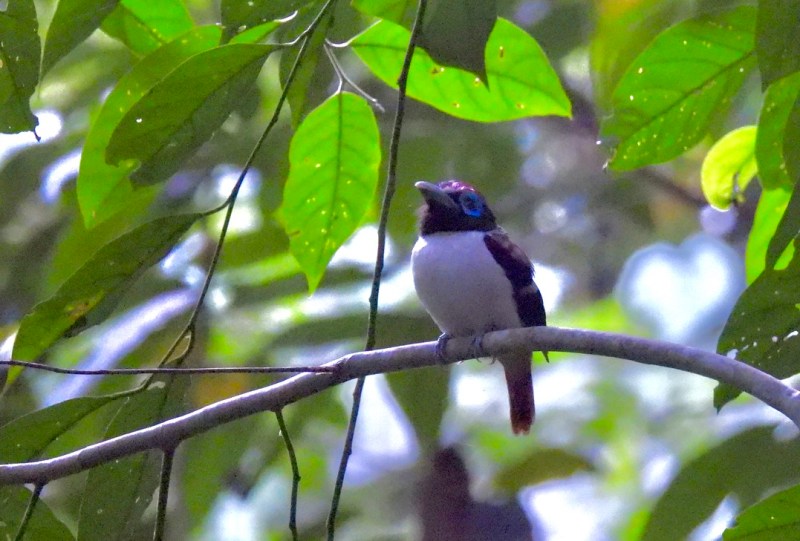
Our first sighting of the day at around 6:00am was incredibly lucky. A female Visayan Broadbill, the veritable holy grail of Bohol’s bird species, alighted on the branch of a sapling not 5 meters (15 feet) from the edge of the roadside dirt trail we were on!
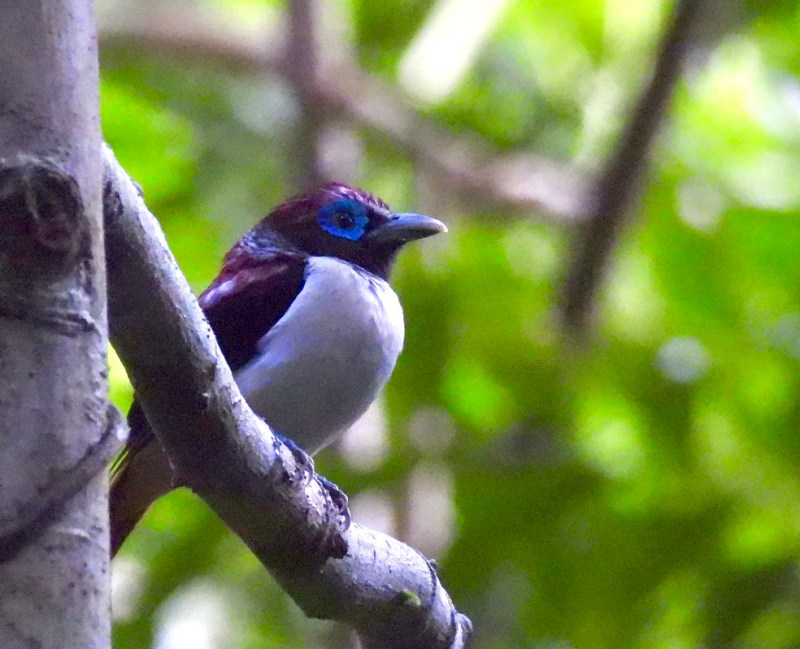
This unique bird is entirely restricted to Bohol and two other neighboring islands, and is threatened with extinction across its range. Like other broadbill species I saw in 2024, Visayan Broadbills are spectacular and distinctive in both coloration and morphology, with their striking wattles, or patches of azure-blue skin around their eyes, being diagnostic.
I was able to enjoy an unusually lengthy encounter with the female broadbill before it flitted away into the dense rainforest. An incredible way to start off my outing!
We continued along the dirt track, listening intently to the pulsing jungle chorus of birdsong and buzzing insects to pick up the calls of any nearby birds.
We quickly located our first few Black-faced Coucals in the forest canopy. These loud, large cuckoos are one of the more easily-spotted inhabitants of the reserve. On one of the nearby dead trees, there was also an endemic Short-tailed Drongo.
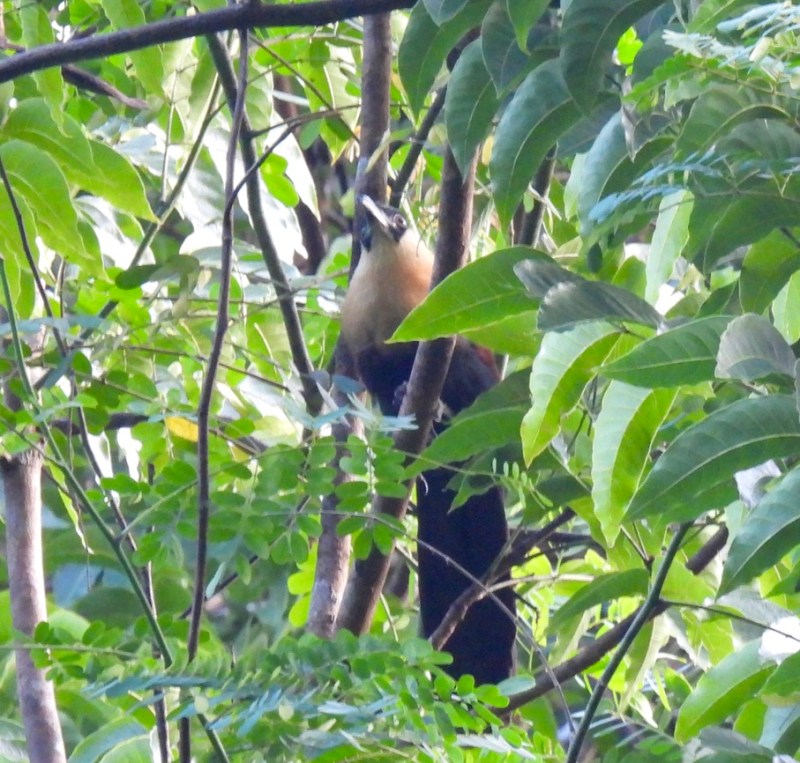
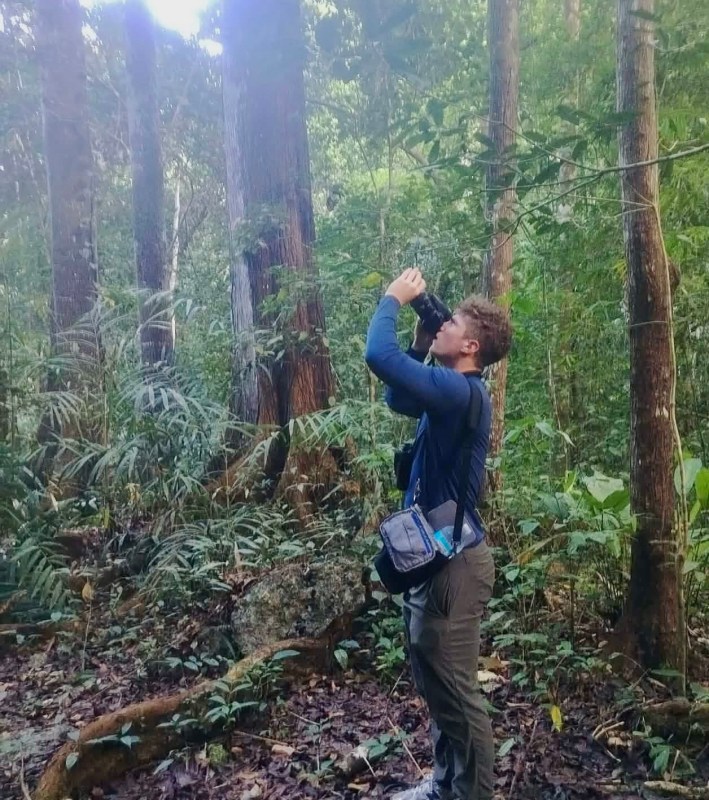
Dean heard the calls of various tiny songbirds in our vicinity, but we didn’t locate any of them due to the dense, impenetrable foliage lining the trail.
Over the course of about thirty minutes, we completed the roadside trail and then hiked up the main road to Magsaysay Park where we had clear, 360-degree views of the surrounding rainforest. Dean and Jerry became deeply engrossed in finding canopy birds in the nearby Dipterocarp trees.
We quickly spotted our fourth endemic bird of the day, a Mindanao Cuckooshrike perched high above us on a horizontal branch. It shared its perch with a non-endemic Whiskered Treeswift, a species I’d already documented in Sumatra in 2024.
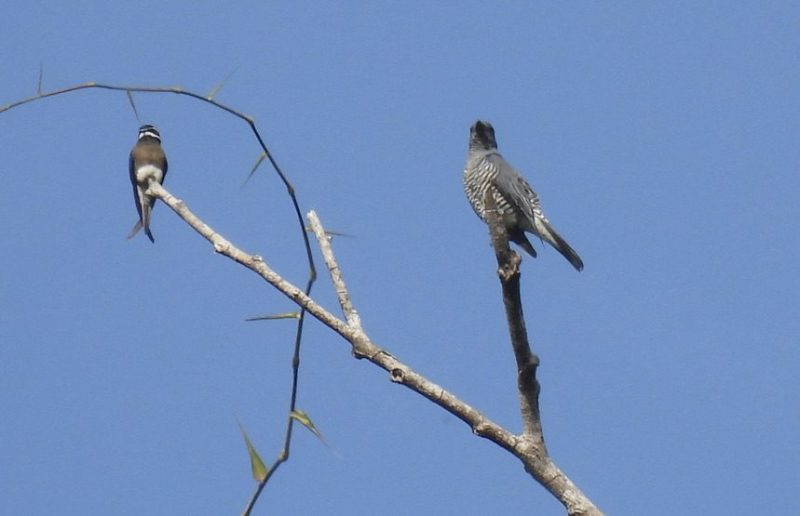
We made our way to the other side of the clearing, near the main trailhead, to get a better view of the canopy. There was nearby troop of noisy Philippine Long-tailed Macaques (Macaca fascicularis ssp. philippinensis) that kept us company. Additionally, Dean heard the song of a Philippine Fairy-Bluebird in the rainforest, but it was too obscured by vegetation to actually pinpoint.
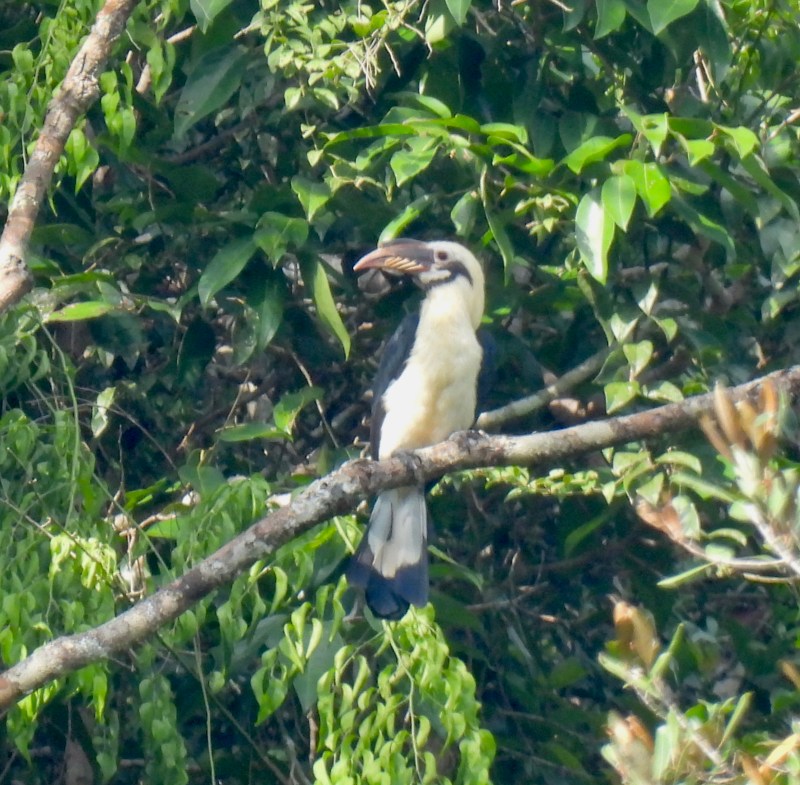
Almost immediately after hearing the fairy-bluebird, Jerry shouted for us to come over to the center of the clearing and look up. I rushed over excitedly and quickly spotted the small, mixed-sex flock of Samar Hornbills that Jerry had found.
The hornbills were foraging for figs in the canopy about 70-90 meters (230-295 ft) from our position and we watched them for about ten minutes before they took off into the rainforest.
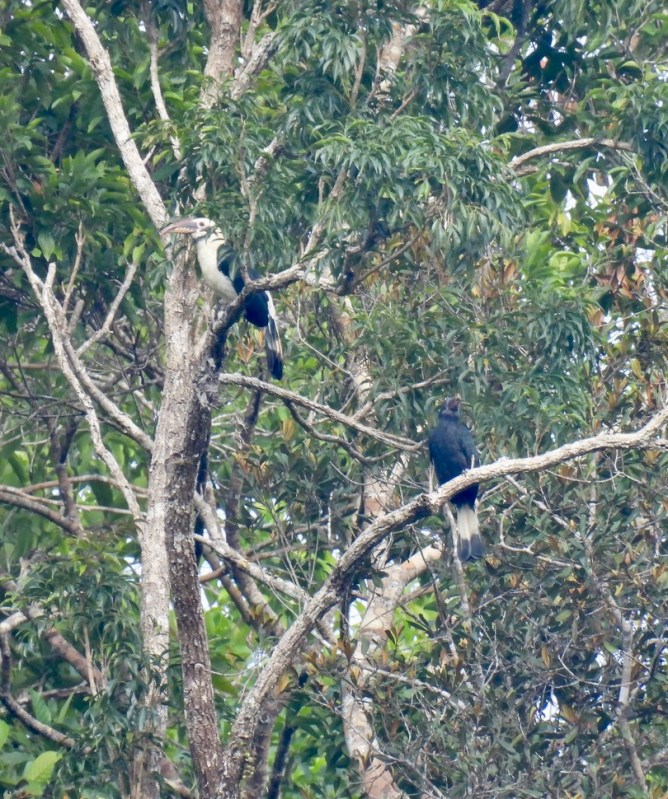
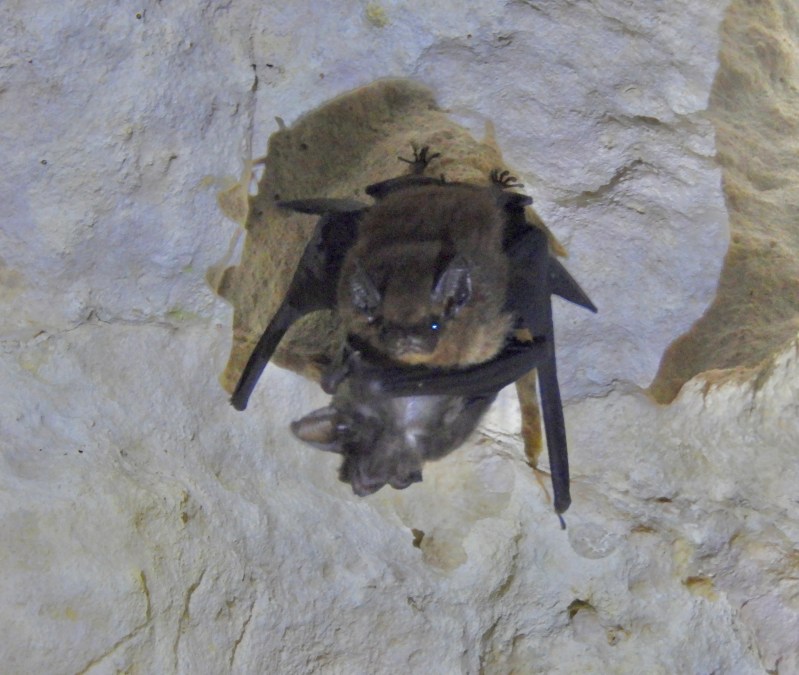
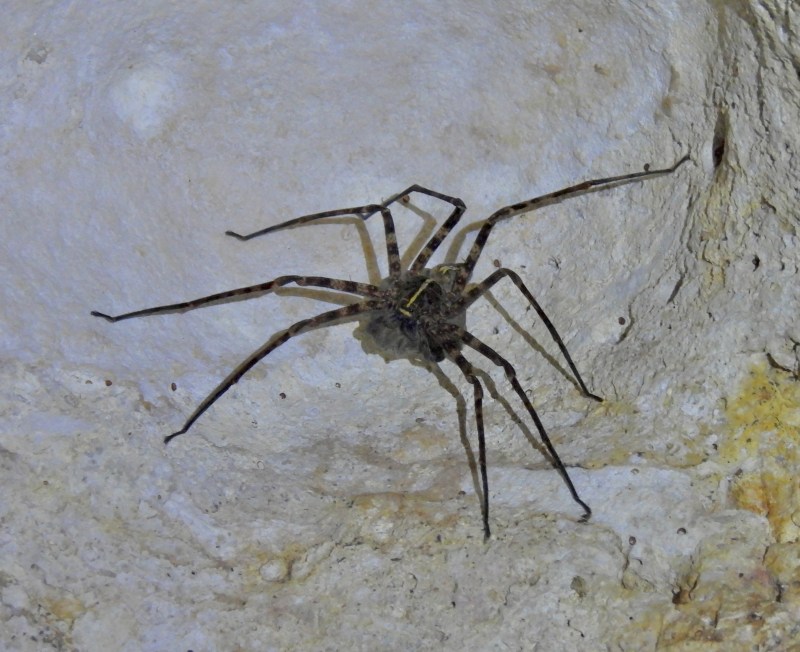
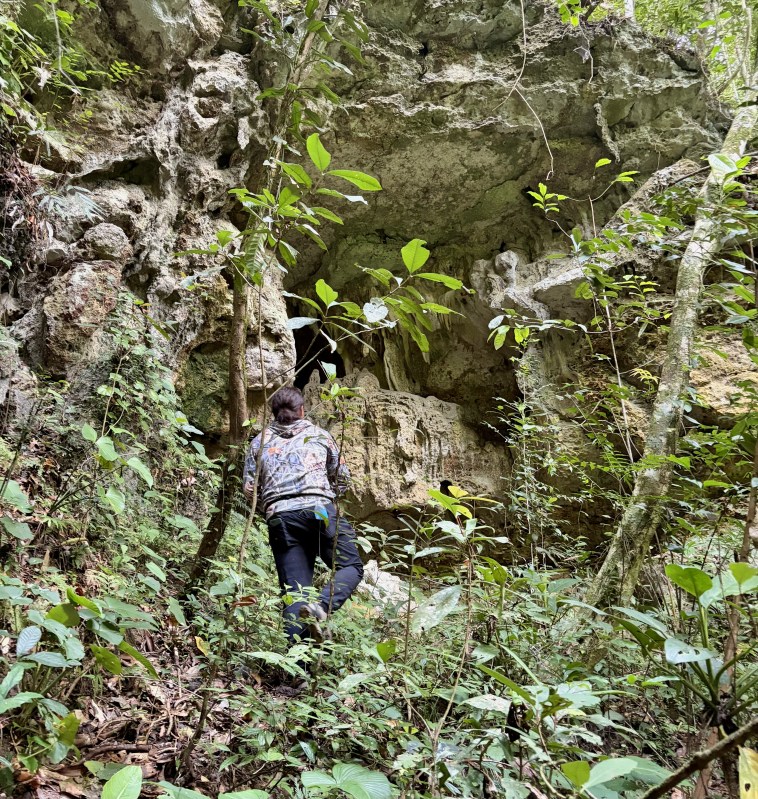
After the hornbills flew off, I followed Dean into the forest to a small limestone cave, where we searched for colonies of insectivorous bats. I’d told him beforehand that I wanted to prioritize both endemic birds and mammals, so we alternated our focus between the two groups throughout the day.
The cave was home to around a dozen Philippine Sheath-tailed Bats (Emballonura alecto). The dental formula of this species is not shared by any other member of its family Emballonuridae.
After exploring the cave, I followed Dean and Jerry back to the fringes of the Magsaysay clearing to search for trogons and colugos. It took Jerry no time to spot two Philippine Colugos for me, clinging to a mid-storey tree trunk.
There are only two living species of colugo, or flying lemur on Earth, and I’d already seen the other—the Malayan Colugo—countless times while living in Singapore. The Philippine Colugo is much rarer and restricted to the southern islands of the Philippines, including Bohol.
The physical differences between the two species to me seemed fairly subtle. Ecologically they are nearly identical, sharing the same herbivorous diet, nocturnal habits, and ability to glide over 100 meters (330 ft) between trees with their specialized patagium (gliding membrane).
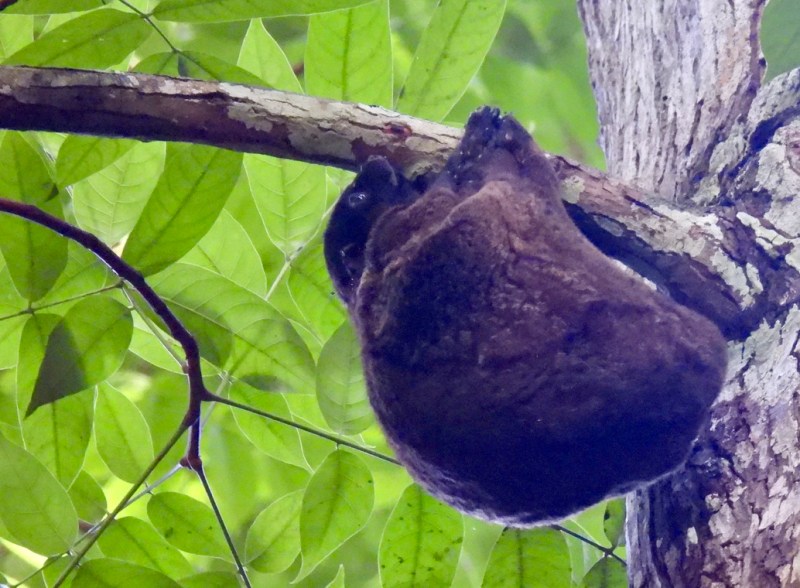
Right underneath the colugos, Dean was attempting to lure a trogon out of the forest while Jerry pointed out some lively endemic Brown Tit-Babblers sifting through the undergrowth.
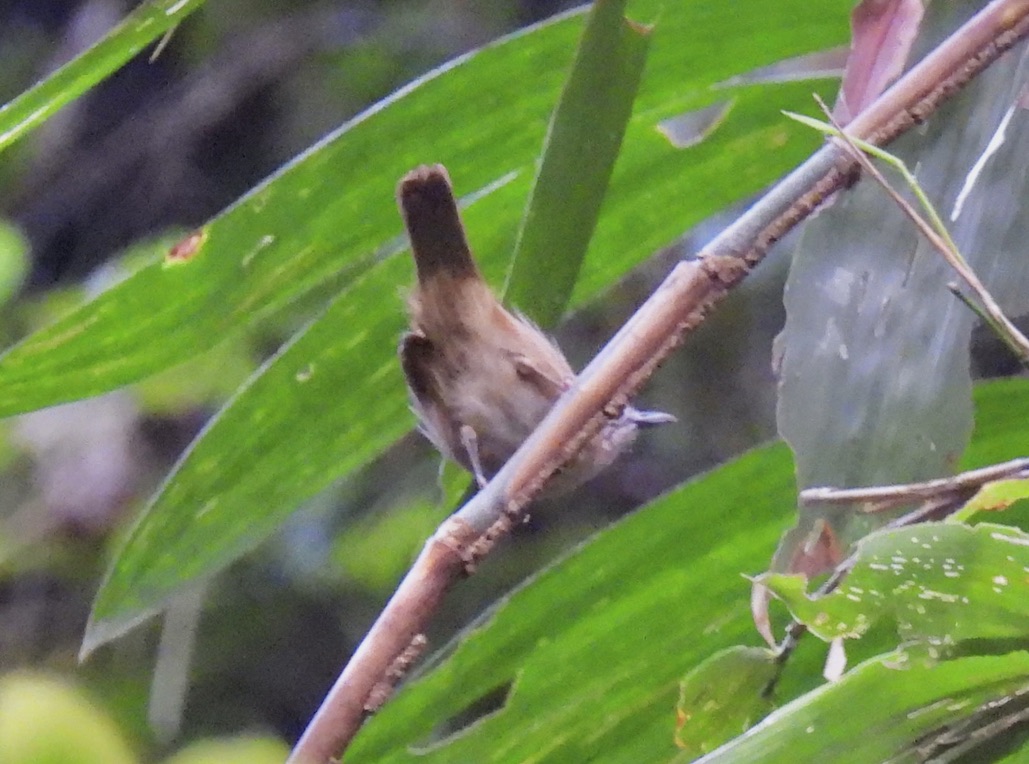
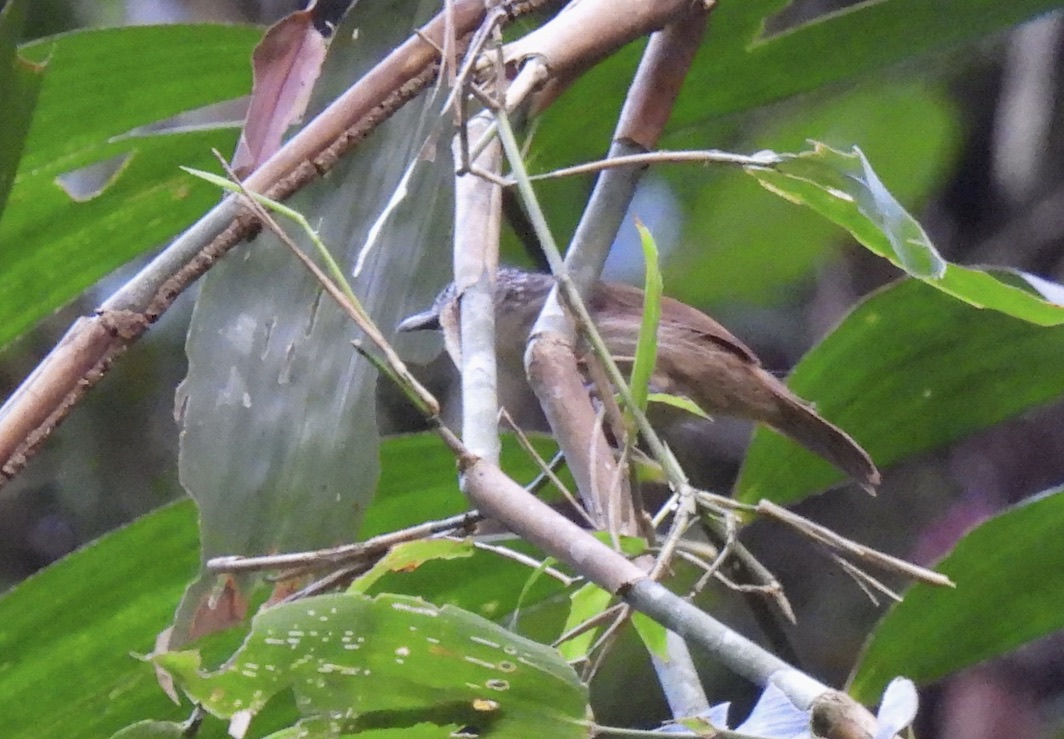
Brown Tit-Babbler
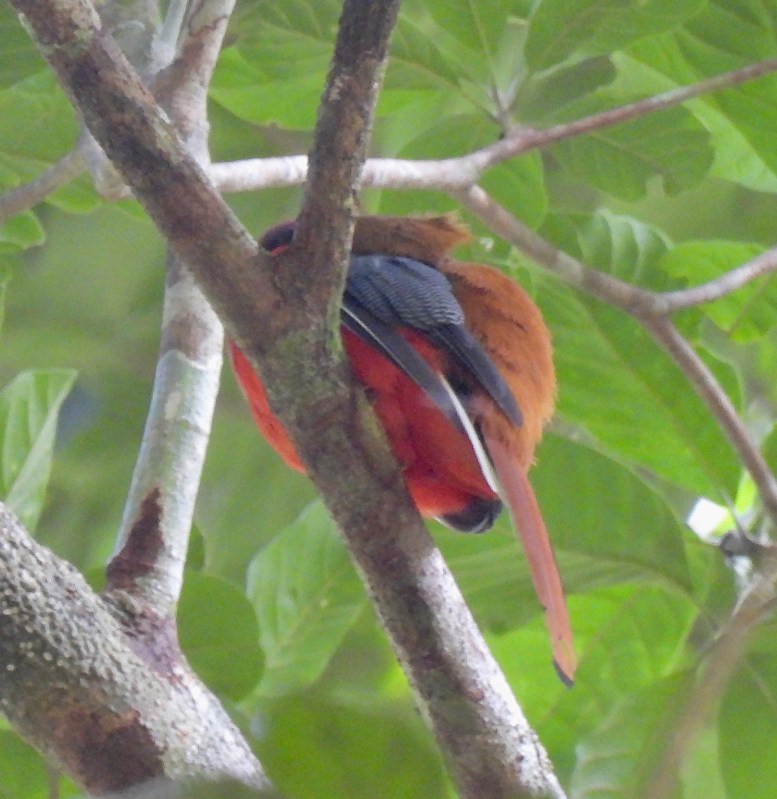
Dean called me over while I was photographing the small songbirds. He’d spotted a pair of Philippine Trogons, one of the most elusive and sought-after birds in the region. Males are particularly gorgeous, with bright blue orbital (eye) rings, pink upper breasts and brilliant scarlet bellies.
I quickly located the comparatively duller-hued female in the low understory. She stuck around long enough for a few mediocre record shots before disappearing into the foliage.
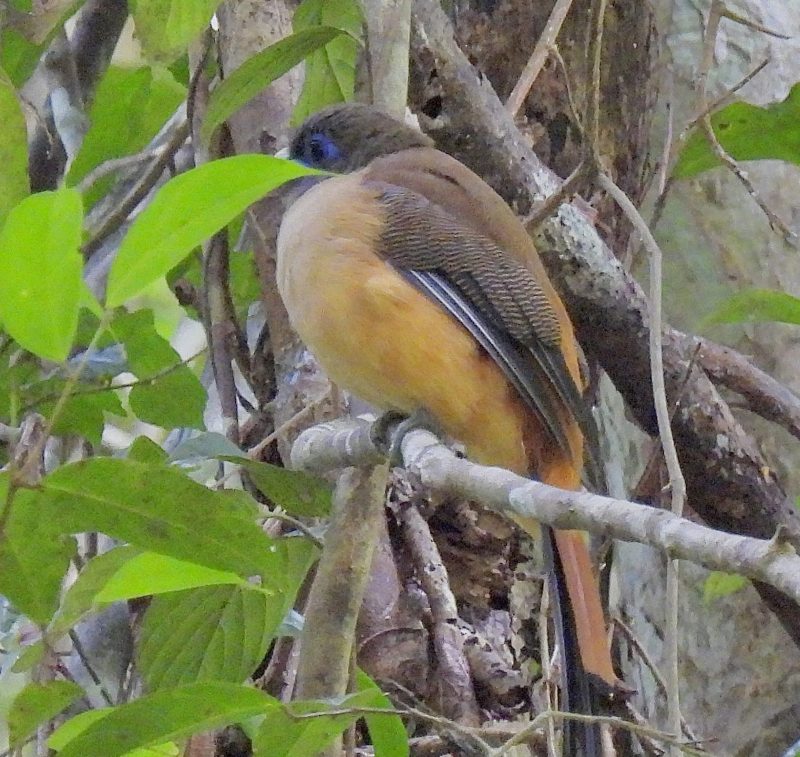
Trogons are notoriously difficult to spot due to their hunting strategy of sitting motionless on a branch until an insect gets within striking distance. They also (frustratingly) hide themselves from birders and predators alike by turning their bodies so only their duller, plain-colored backs are visible, concealing their colorful underparts.
Lucky for me, I had two skilled and knowledgable guides at my disposal. Dean helped point out the bright-red male in the sub-canopy, about 15-20 meters (50-66ft) above the forest floor. Unfortunately, I wasn’t able to view his stunning underparts as he was turned away from me—a classic trogon moment. It was still fantastic to catch a glimpse of this stunning endemic.
Dean and I attempted to get closer to the male trogon and crept slowly towards its perch, but it flew away before I could get a better look at it.
It was around 9:20am by the time the trogons had departed, and bird activity in Magsaysay Park was dying down. We made a round of the entire clearing and didn’t hear or see any new birds. Dean suggested that we target species like the Philippine Frogmouth in a different portion of Rajah Sikatuna, which I agreed to.
We walked down to the ticket booth where Dean’s car was parked and drove a short distance to Logarita Spring, a public, spring-fed swimming pool on the margins of the rainforest. Next to the spring, there is a narrow footpath leading deep into the reserve.
The limestone forest along the footpath seemed a lot denser and more secondary in nature than the more mature growth around Magsaysay. This distinct habitat seemed to likewise support an entirely different cast of birds than we’d encountered earlier in the morning, including many shy, skulking forest species.
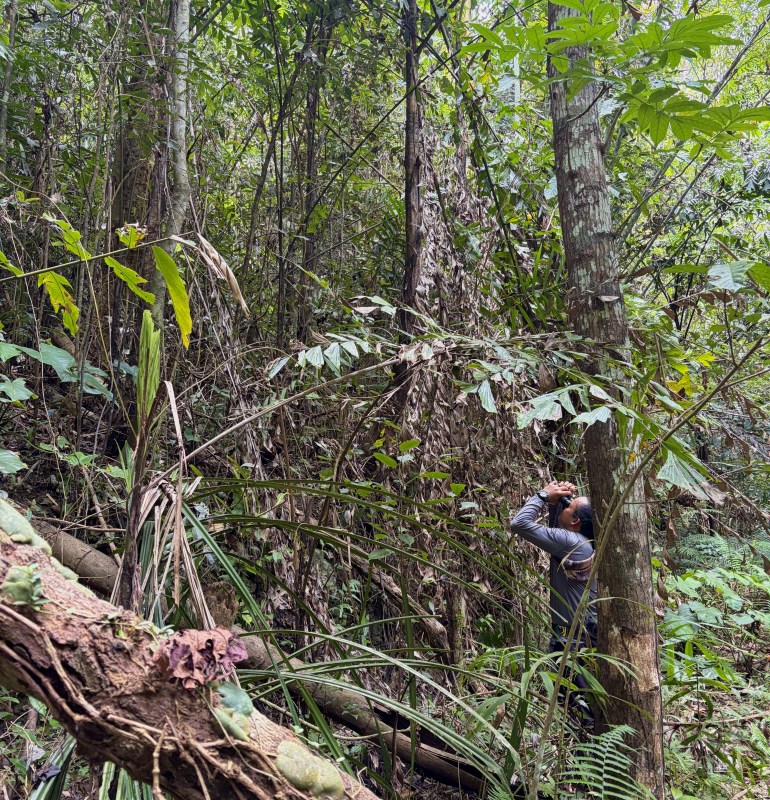
As we hiked the trail, we began spotting new endemic birds, including a fast-moving male Bohol Metallic-winged Sunbird (Aethopyga pulcherrima ssp. decorosa), a Yellow-bellied Whistler, and numerous Philippine Bulbuls.
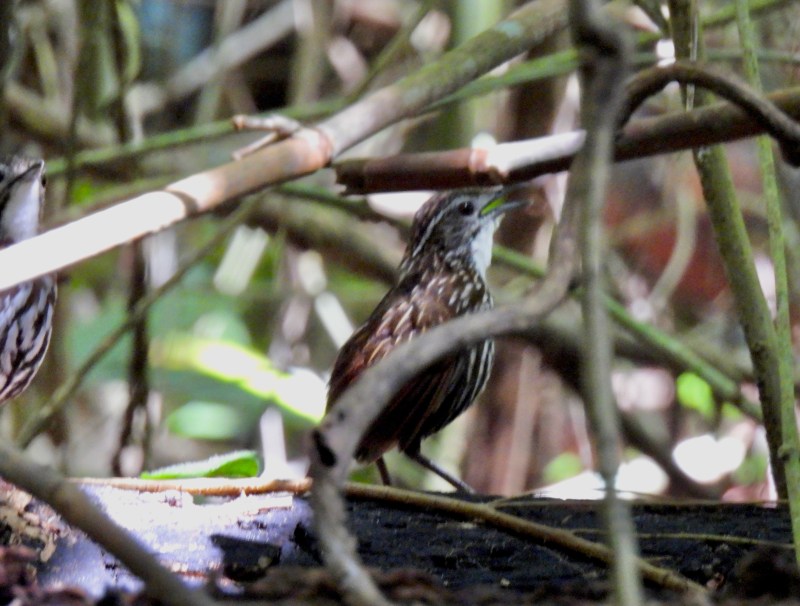
We came to a dense thicket of wild gingers and Dean motioned for me to sit on the side of the trail with my camera ready. Him and Jerry began imitating the song of the highly elusive and endemic Striated Wren-Babbler. Two minutes later a pair of babblers appeared not 4 meters (13 ft) away from us!
I’d stupidly forgotten to fully charge my camera before my outing and the battery was almost dead by the time I tried to photograph the babblers. I was only able to manage a brief, blurry record shot before my camera forcefully shut off to conserve power.
We continued moving along the track until we reached an uphill portion that sloped down to a gully on one side. The vegetation here was dense, but Dean reckoned it was our best possible chance of spotting an Azure-breasted Pitta—easily the most coveted bird in Rajah Sikatuna after the Visayan Broadbill.
Dean told me that during the breeding season, male pittas are incredibly vocal and territorial and readily approach birders imitating their song. However, I was visiting Rajah Sikatuna outside the breeding season, when pittas become highly secretive and elusive. That didn’t deter us from trying, though.
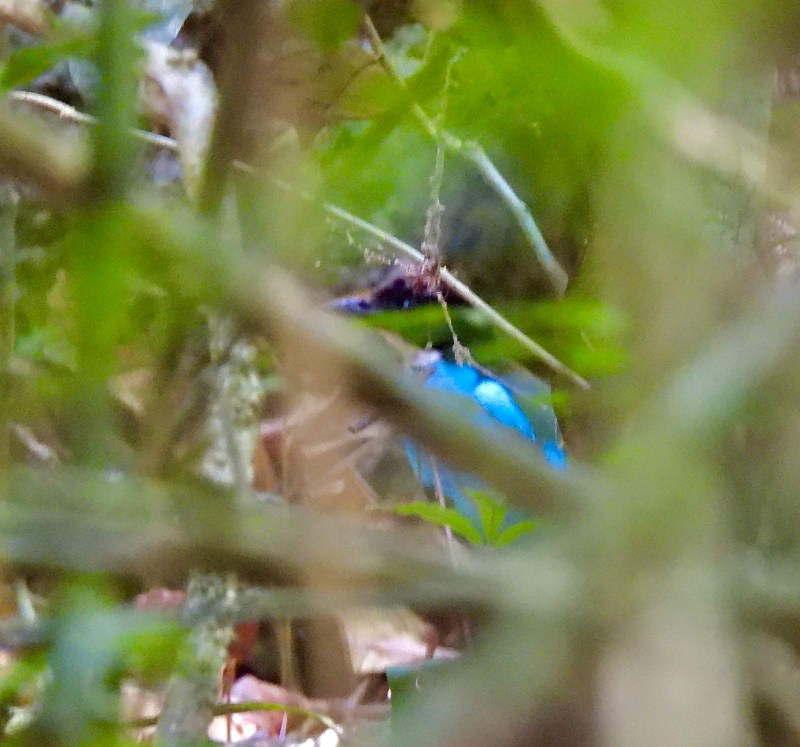
We lied in wait for about forty minutes, imitating the pittas territorial calls and listening for a reply. By 10:40am, it looked like all hope was lost for actually seeing one on that particular morning, but by some absurd stroke of luck a spectacular male Azure-breasted Pitta flew into the vegetation right next to us!
Because my camera battery was basically dead, and because the bird was shy, flighty, and hidden in dense undergrowth, I didn’t get a full view or good record shot of the pitta. But it was still pretty damn magical to see one in the wild.
I thought the birding would’ve died down by 11:00am, but the forest still had one more big surprise in store for me. We turned back toward the start of the trail, listening for any more birds in the vicinity. Besides a Philippine Leaf Warbler that made a very brief appearance, there was seemingly nothing else around.
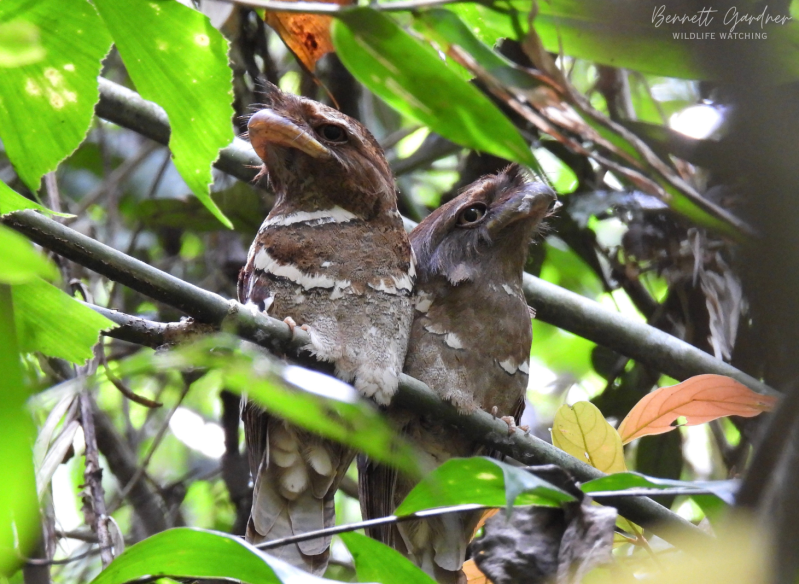
About a five-minute walk from the trailhead, Dean and Jerry suddenly stopped in their tracks and started focusing on the hillside closest to us. Dean said that they heard the faint call of a Philippine Frogmouth in the dense shrubbery. Frogmouths, like trogons, are notorious for staying absolutely motionless. They are superbly camouflaged and it takes a sharp eye to spot one, especially during the daytime when they are sleeping.
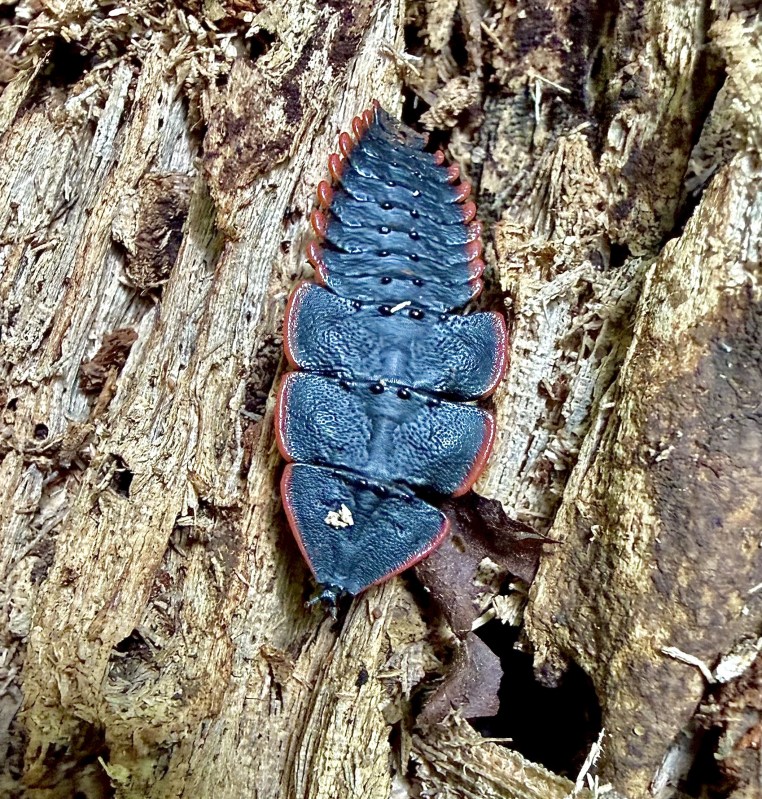
Dean and Jerry slowly crept into the dense hillside rainforest, attempting the pinpoint the frogmouths. I stayed near the trail while they moved deeper into the forest. Jerry kicked over a rotting log while climbing up the hill, and this accidentally led to my discovery of a female Trilobite Beetle (Platerodrilus sp.), one of the most charismatic, rare and unique-looking insects anywhere. These harmless detritivores get their name due to their resemblance of the extinct Trilobites, a group of ancient marine arthropods.
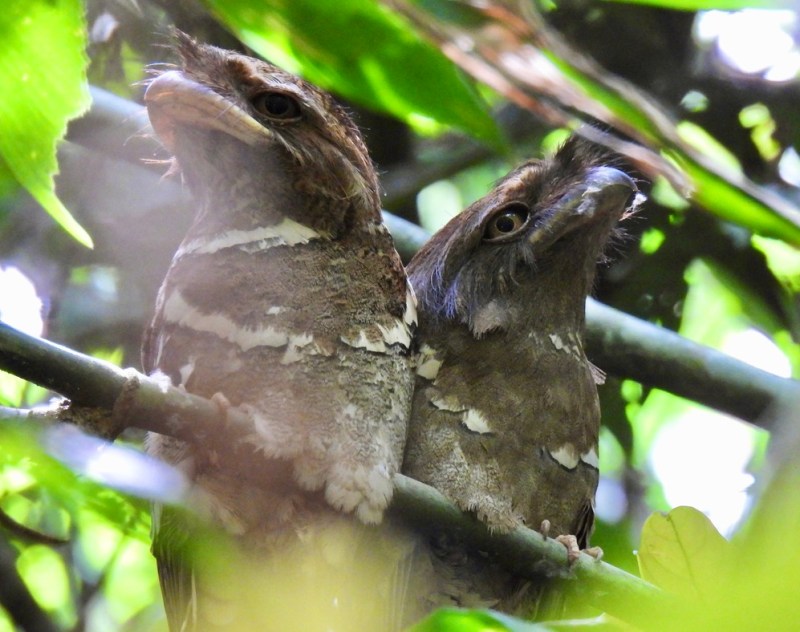
Dean gestured for me to climb up the hill to his and Jerry’s positions. I crept up to Jerry, who was pointing at two small brown shapes in a clump of liana vines. I peered through my binoculars and immediately became ecstatic when I saw the pair of Philippine Frogmouths perched there!
The birds were absolutely motionless, and it was incredible to get extended, close views of them. However, because my camera battery was now fully drained, I couldn’t take a single picture. I asked Dean if he’d let me charge my camera in his car for a few minutes, then rush back to the frogmouths for some quick photographs.
He agreed, and within fifteen minutes my camera had enough battery to take the record shots I wanted. Jerry stayed behind so we wouldn’t lose the location of the birds. I was relieved when we made it back to Jerry that the frogmouths were still there.
That about concludes my insanely productive August 17, 2026 outing to Rajah Sikatuna Protected Landscape, one of my best-ever single-morning wildlife outings.
According to Dean, I’m one of the luckiest clients he’s had in years! Apparently it’s highly unusual to see almost all of the big Bohol avian targets—trogons, pittas, broadbills, frogmouths, and hornbills—in a single morning. Pairing this with sightings of endemic mammals and other elusive rainforest creatures was a special treat. I’m not sure why the universe decided to bless me with such good fortune on this one particular day, but it certainly makes up for all the outings where I failed to see any of my target species…..
While I did get exceptionally lucky with wildlife sightings on my visit, Rajah Sikatuna is in general a fantastic birding and wildlife-watching area, and a well-protected refuge for Bohol’s karst rainforests and endemic fauna. I highly recommend both the reserve and the guiding services of Dean and Jerry to any nature or wildlife enthusiasts visiting Bohol.
Chocolate Hills, Bohol:
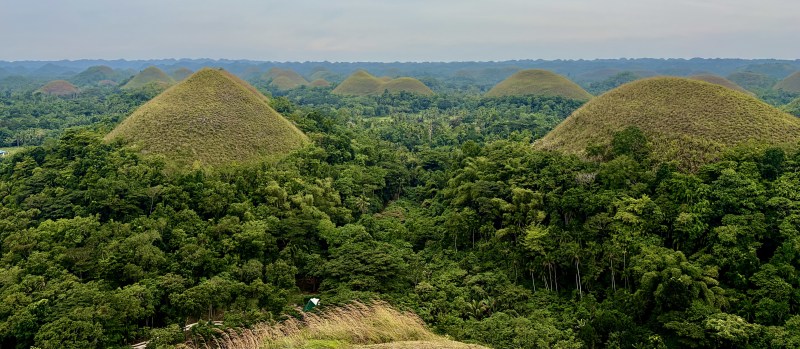
Bohol’s signature landscape was—in my opinion—slightly underwhelming. While Bohol has no shortage of picturesque limestone karst terrain, I personally found the scenery in Anda, Loboc and Bilar more interesting and beautiful than the better-known Chocolate Hills. That being said, the area is still worth visiting for the odd nature or geology aficionado.
I spent the afternoon of August 17 here with my birding guide, Dean, after an incredibly fruitful morning of birding and mammalwatching in Rajah Sikatuna Protected Landscape. There is only one main viewpoint in the entire Chocolate Hills region accessible to visitors (for ₱150 or $2.50 USD per person), and it was likewise highly congested and packed with loud tourists. In general I tend to steer clear of these types of attractions, but my curiosity got the best of me. From the gift shop/vehicle drop-off area it was a short and steep hike up some concrete stairs to the crowded viewpoint.
The hills themselves—a collection of roughly 1,300 perfectly symmetrical, cone-shaped limestone mounds spread across 50 square kilometers (20 square miles)—were interesting, but not necessarily awe-inspiring or dramatic. Maybe I’m a little jaded, but the combination of intense crowds and commercialization at the viewpoint, overcast weather conditions, an absolute lack of hiking trails or any other vistas in the area, the relatively long drive from Loboc, and comparatively lackluster formations altogether didn’t impress me.
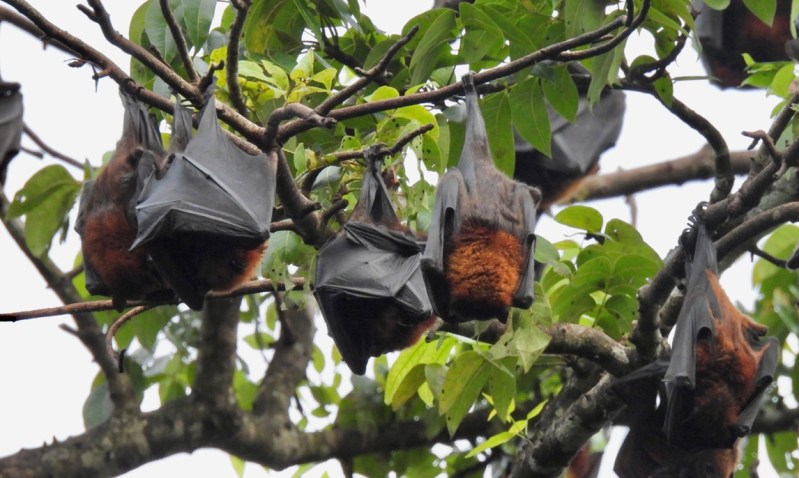
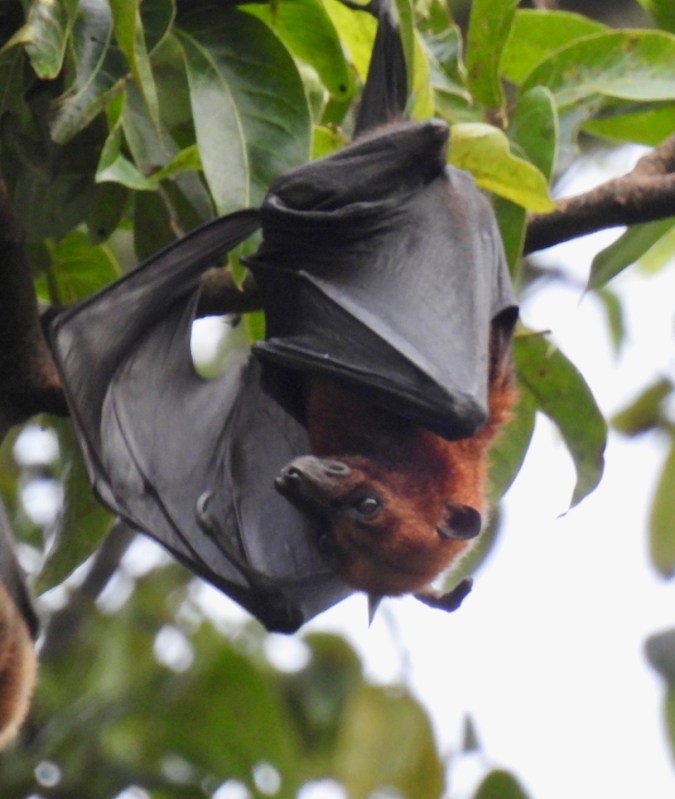
On the drive back to Loboc in the late afternoon, Dean brought me to see one final Bohol wildlife highlight. We stopped abruptly on the side of the road near the town of Corella, with Dean excitedly gesturing for me to see something in one of the nearby trees. I took a look for myself and was giddy when I spotted the large and active colony of Island and Large Flying Foxes (Pteropus hypomelanus and Pteropus vampyrus) he was pointing at. The roughly 5-10 minutes I spent with the fruit-eating megabats made the drive over to the Chocolate Hills worthwhile.
Philippine Tarsier and Wildlife Sanctuary, Bohol:
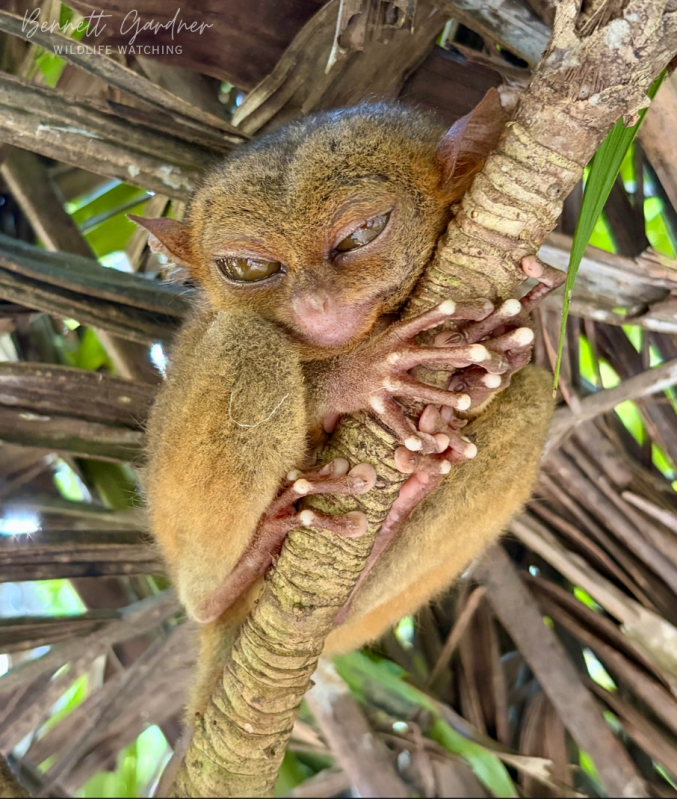
I stopped briefly at this popular tourist attraction and globally important wildlife refuge while self-driving from Panglao to Anda on August 20. Nestled in the verdant hills of Corella in western Bohol, the Philippine Tarsier and Wildlife Sanctuary, has been the global stronghold for the threatened and endemic Philippine Tarsier (Carlito syrichta) since 1996. The sanctuary, which is run by a government-backed nonprofit—the Philippine Tarsier Foundation—encompasses a strictly protected 134-hectare (331-acre) patch of secondary rainforest that has always hosted a resident population of wild tarsiers. Currently, there is a thriving population of up to 250 tarsiers in the forest.
The Philippine Tarsier Sanctuary is essentially the only place in Bohol (and perhaps the entire Philippines) where (semi) wild tarsiers can be seen reliably and ethically. Even in other protected areas in Bohol like Rajah Sikatuna, these miniature primates are now so rare that Dean has never seen one with any of his clients (granted, most of his clients are birders). He informed me about a group of serious mammalwatchers he recently guided who failed to spot a tarsier over multiple nights of deep-jungle trekking with high-tech thermal scopes.
The last mammalwatching report to explicitly mention wild tarsiers on Bohol was from 2018 and they have only gotten rarer since then. Individuals are often illegally captured from the wild and placed into small, filthy enclosures for tourists to photograph, which is why anyone wanting to see tarsiers in Bohol should only visit the ethical Corella sanctuary.
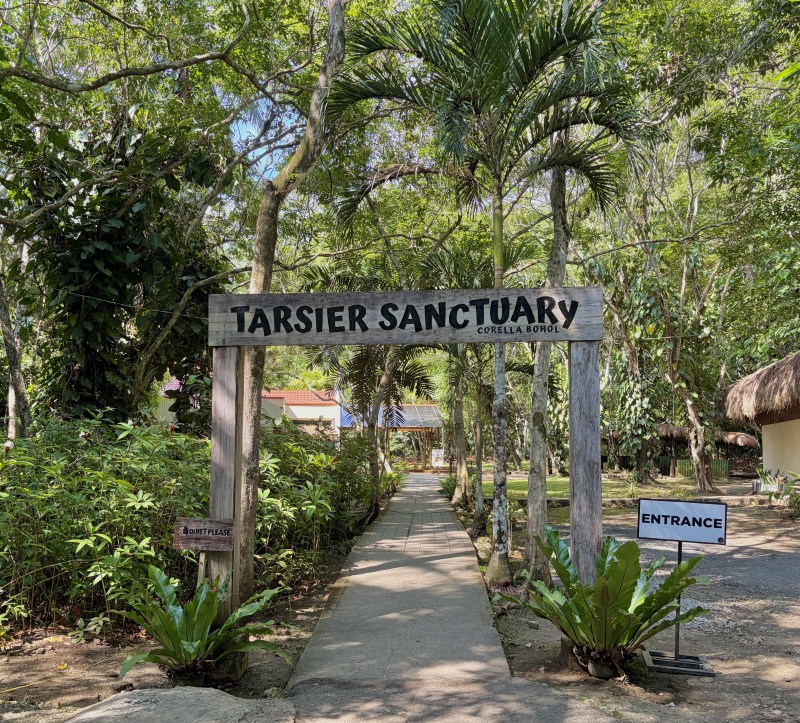
The entire tour of the sanctuary, including encounters with various tarsiers and a short informational video at the entrance, took me only about half an hour. Because visitors are restricted to an small area of the forest, must follow a designated guide at all times, and can only spend five minutes with each tarsier to avoid stressing the animals, the entire experience is intentionally short and sweet.
After paying ₱150 for a ticket and watching the mandatory informational video, I took a short golf cart ride from the sanctuary entrance to the tarsier forest, where I met up with my designated guide. We made our way into the designated visitor area, which is surrounded by a predator proof fence that does not restrict the movement of the tarsiers. We quickly spotted our first few sleeping Philippine Tarsiers in the lower, brushy portion of the understory, which were a thrilling—if not truly wild—series of encounters. Because the sanctuary’s guides track down the tarsiers in the visitor area every morning, my guide knew exactly where they were.
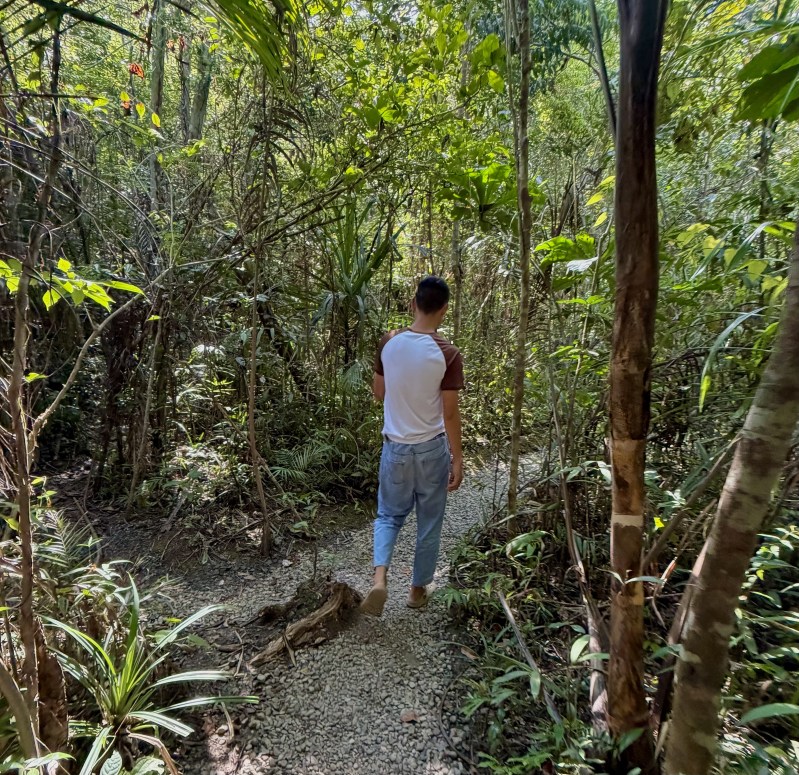
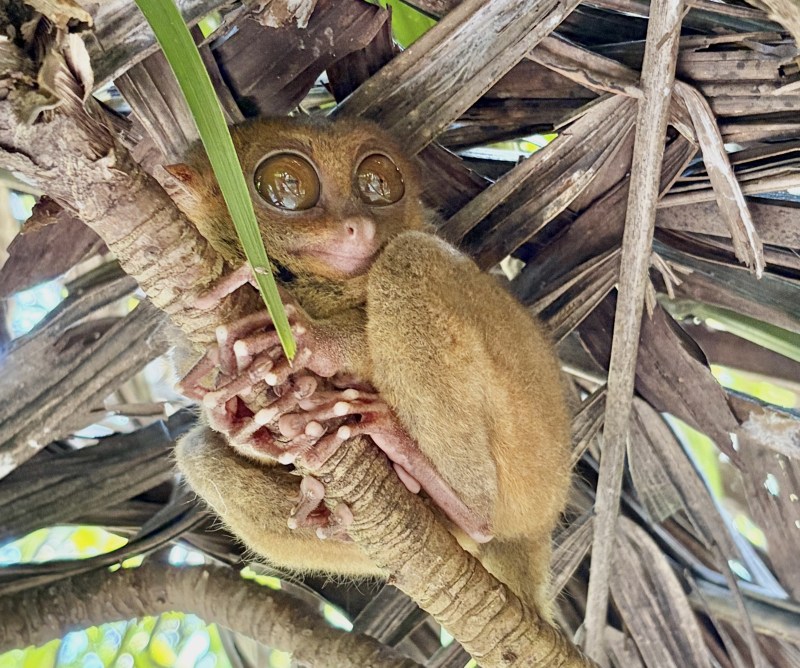
If there was any realistic chance of encountering a truly wild Philippine Tarsier in the dense rainforests of Bohol, even if spotting one required substantial time, grunt-work and sharp eyes, I would’ve elected that option. However, given the elusiveness and overall rarity of these animals in the wild, I was more than happy to trade an authentic, un-manicured tarsier sighting for several up-close, deeply intimate observations of these unique creatures. As a plus, I supported a crucial conservation initiative that is working hard to save the species from regional extinction. Overall, I both enjoyed and recommend visiting the Philippine Tarsier Sanctuary.
Moalboal, Cebu:
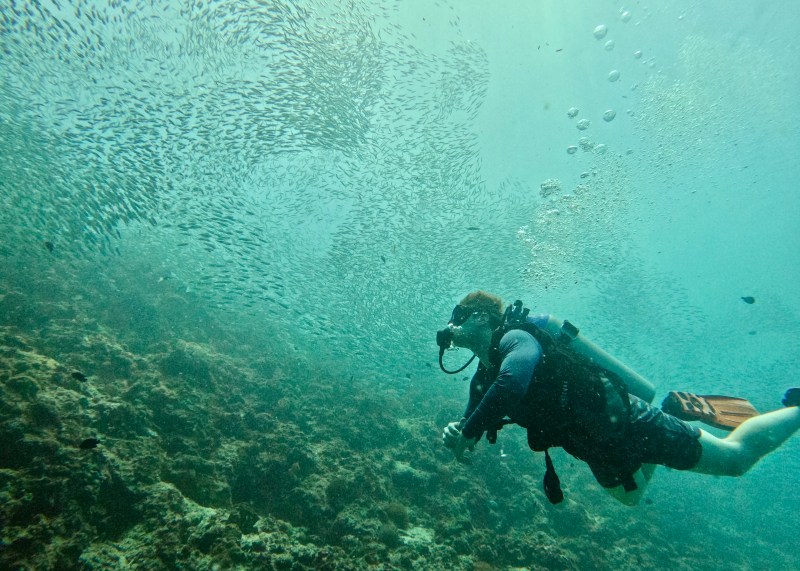
I spent August 22-25, 2026 in Moalboal in southwest Cebu. This coastal town is world-famous among SCUBA divers for its huge, year-round sardine runs, where millions of the small, silvery fish gather in huge shoals just offshore.
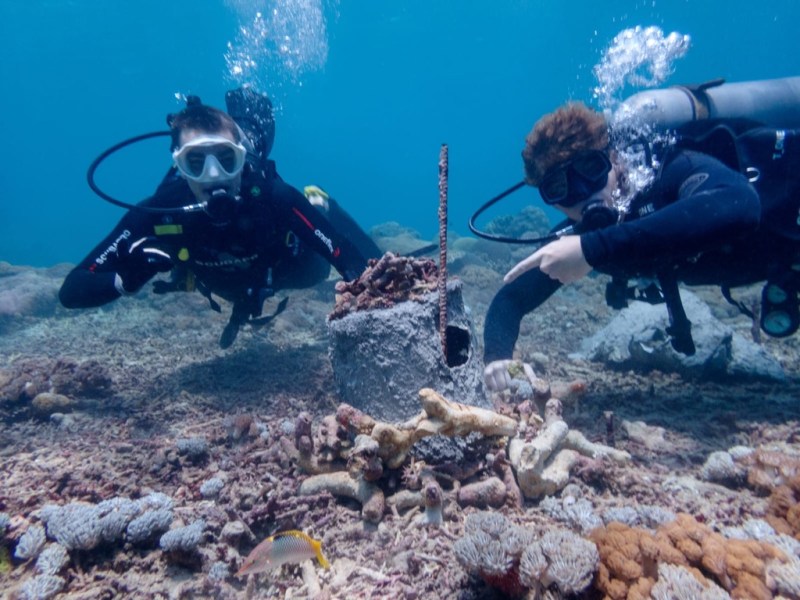
I spent only one of my days in Moalboal diving, completing three dives total around the main Panagsama Beach area of the town. I used Savedra Dive Center and had a great experience with my guide Marlon, who helped me refine my technique underwater. The rest of my time in Moalboal was spent exploring Kawasan Canyon and swimming with the Oslob Whale Sharks—the latter of which I do not recommend visiting due to dubious ethics around the treatment of wildlife.
I stayed at Sambag Hideaway Bungalows, which was a charming—if basic—accommodation. Lisa, the front desk manager, was particularly lovely and extremely helpful in scheduling activities and transportation to and from Cebu City.
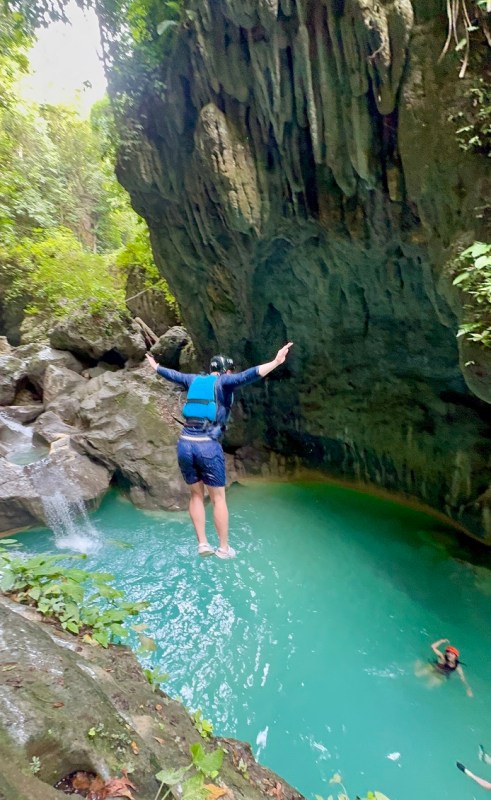
I spent August 23 exploring Kawasan Cayon in Cebu’s rugged mountains. The canyon is famous—and to me rightfully so—for being a stunning and unique landform with a crowded, but admittedly thrilling, series of natural waterpark attractions. Lisa at Sambag Hideaway Bungalows helped me arrange a tour of the canyon for a reasonable price including Jeepney transport to and from the accommodation.
The entire trek down the limestone canyon took around 4 hours and covered about 5.5 km (3.4 miles). Because of local regulations, guided tours are mandatory for all visitors to Kawasan. I was therefore stuck in a large group for the entirety of the canyoneering adventure (and I dislike all things mass-touristy). Luckily, there were enough guides for our group to split up into faster and slower-movers which made the overall experience much more enjoyable.
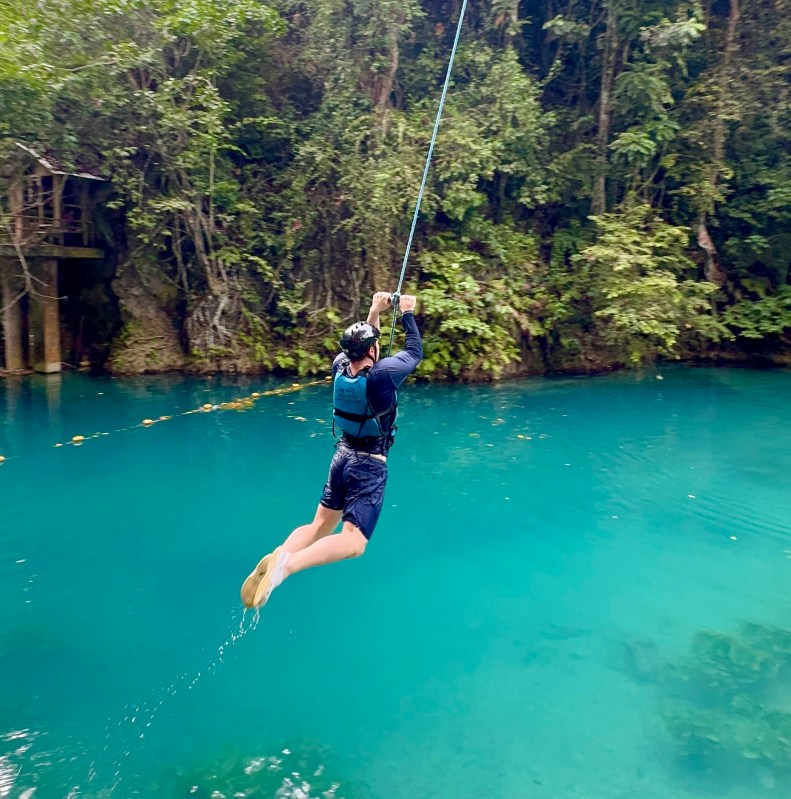
I loved the natural limestone waterslides and adrenaline-inducing leaps from various cliff ledges into deep pools below. The highest jump I did that day was around 8 meters (26 feet). I later tried—in vain—to perform a backflip from the rope swing roughly halfway down the canyon, which left me in pain the rest of the trek. After we passed the rope swing, my group followed the canyon down to the majestic, three-staged Kawasan Falls at its foot. From here, a designated Jeepney brought us back to our accommodation.
Kawasan was overall similar to my experience in Panglao, Bohol, in the sense that it was a fantastic but extremely touristy and congested natural attraction. The canyoneering was a great deal of fun, though, and I definitely recommend the tour I did to any adventurous travellers out there.
I split my next day in Moalboal, August 24, between two different activities—the Oslob Whale Sharks in the early morning, and diving at the sardine run in the afternoon and evening.
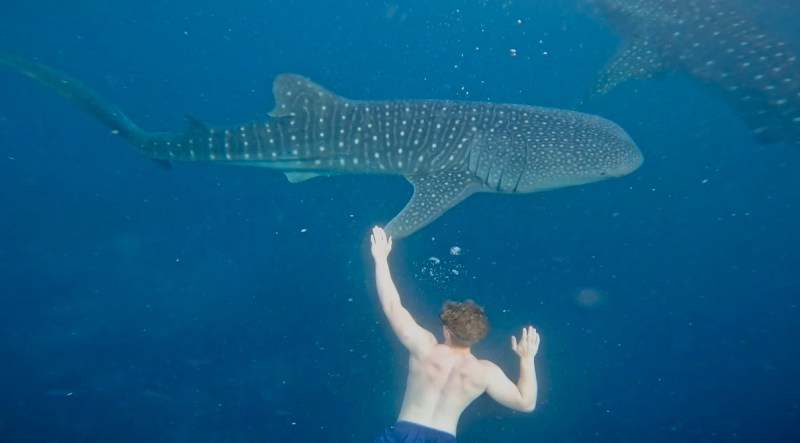
In retrospect, I really wish I hadn’t gone to Oslob. The feeding and harassing of endangered wild Whale Sharks for mass-tourism purposes is a serious ethical dilemma. It was, however, fascinating to witness one of the world’s most polarizing examples of commercialized wildlife exploitation vs the economic growth of a large community firsthand.
The explosion of Oslob’s Whale Shark tourism industry since 2011 lifted the entire community out of poverty and provides a stable source of income to locals. At the same time, feeding endangered marine megafauna daily heavily disrupts their natural foraging and migratory instincts, causing them to be quasi-sedentary and reliant on humans for food handouts. This puts them in extreme danger of boat collisions and poaching.
As I’ve personally witnessed in other areas of the world, feeding wild animals—especially large and endangered ones—is both a foolish and unethical practice. Look what happened when the US federal government used to publicly feed wild Grizzly and Black Bears in Yellowstone National Park!
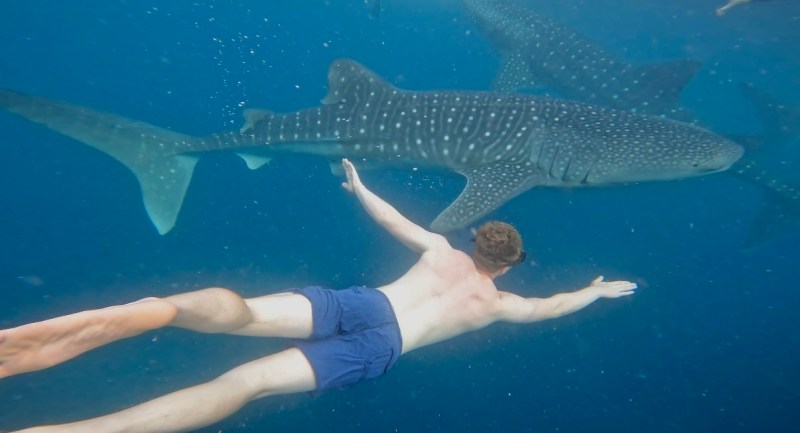
I left Oslob with profoundly mixed feelings. Swimming with Whale Sharks was undeniably epic, but the experience felt morally nuanced. I felt a wave of guilt for supporting the Whale Shark tourism industry mixed with the elation that I was able to observe the majestic animals in the wild.
Ultimately, I’m chalking it up to a valuable learning experience. On future trips, I will definitely do more research on the ethics behind any mass-marketed wildlife encounters before booking.
I spent the afternoon and evening of August 24 diving with Savedra Dive Center in Moalboal. The dive center is positioned less than a one-minute walk from Panagsama Beach, which is the shore-entry site for the famed sardine run. I paid roughly ₱4,500 ($71 USD) for a three-dive package with GoPro rental included.
I was paired with Marlon for all three dives, who was an excellent dive guide and gave me valuable feedback on refining my technique underwater. He also taught me how to assemble and disassemble my SCUBA gear.
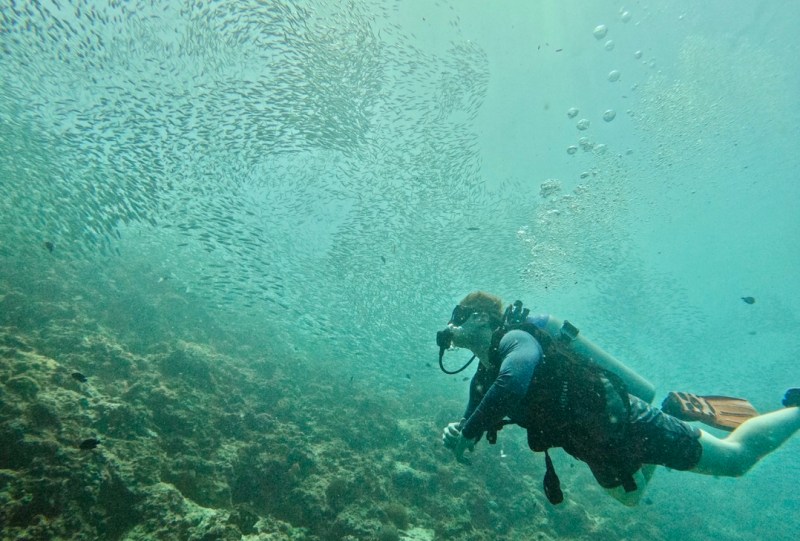
My first dive commenced in the early afternoon. Marlon and I walked with our full gear attached over to Panagsama Beach, waded out about 10 meters (33 ft), and submerged. The dive lasted 32 minutes, which wasn’t great from an air consumption perspective, but it was mostly because my weight belt was too heavy and impacted my buoyancy.
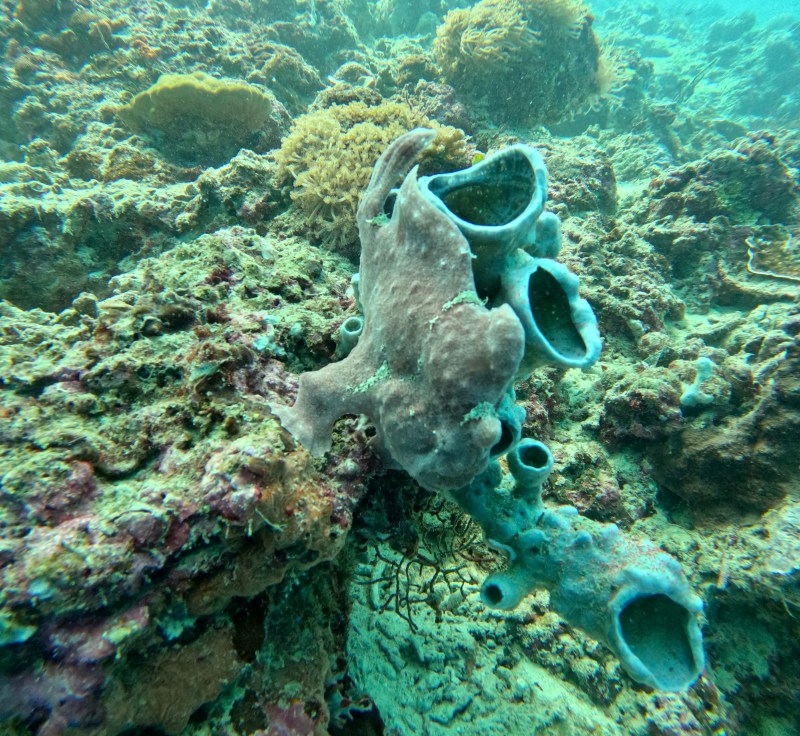
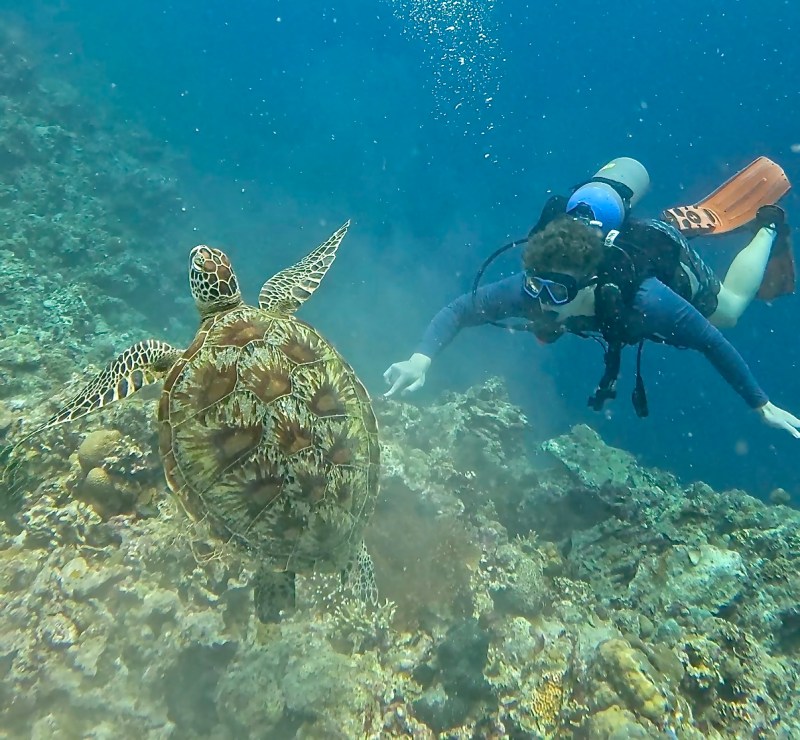
The sardine run was spectacular, and I was able to approach the thousands of shoaling fish very closely. I also observed multiple sea turtles, moray eels, healthy hard corals, and diverse tropical fish. The highlight of the dive was spotting two adult Giant Frogfish (Antennarius commerson) camouflaged perfectly against the reef.
I had a surface interval of around one hour, which I used to eat lunch and log my dive. For the second dive, we took a short bangka ride out to Tuble Marine Sanctuary, a little ways offshore from Panagsama Beach.
My dive time and depth were identical to the first dive as I still wasn’t properly weighted or practicing good breathing technique. Highlights of the dive included moray eels, multiple sea turtles, nudibranchs, numerous species of anemonefish, and beautiful healthy hard corals clinging to the sides of a steep coral wall.
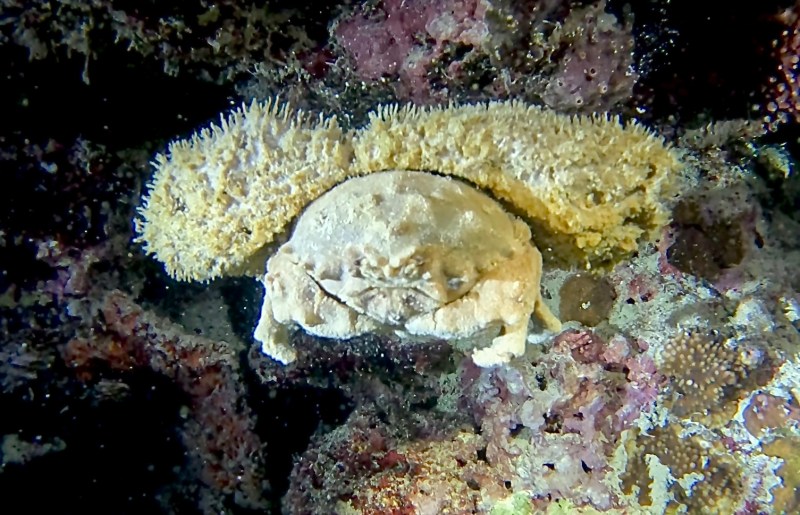
For the night dive, Marlon and I entered at the exact same shore-entry site as the first dive. Armed with underwater flashlights, we discovered an array of nocturnal reef critters including a cuttlefish, various shrimp, sponge crabs, multiple moray eels hunting for food, a scorpionfish, cone snails, and of course the main star of the night: a Longarmed Octopus (Abdopus sp.) that inked us!
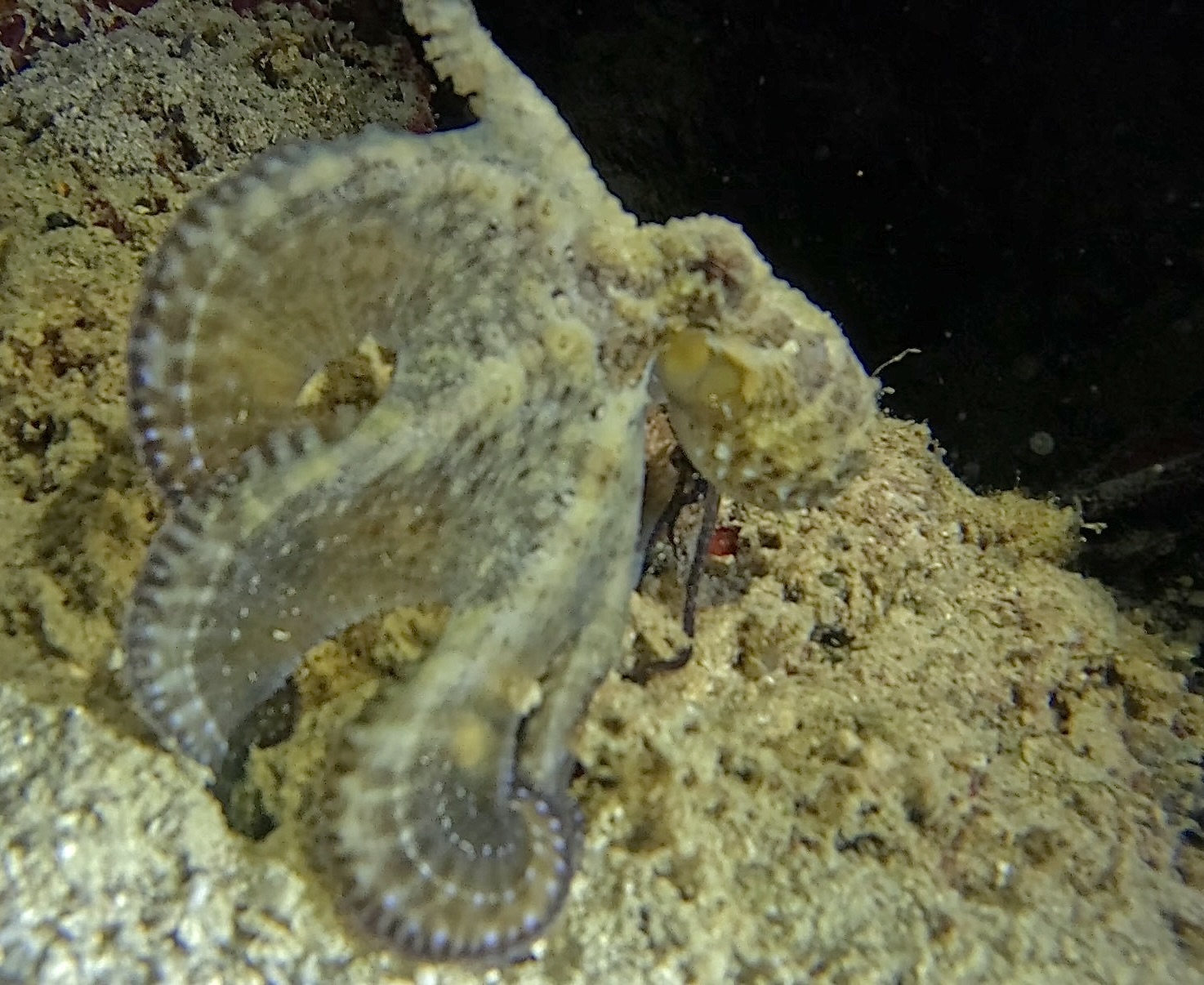
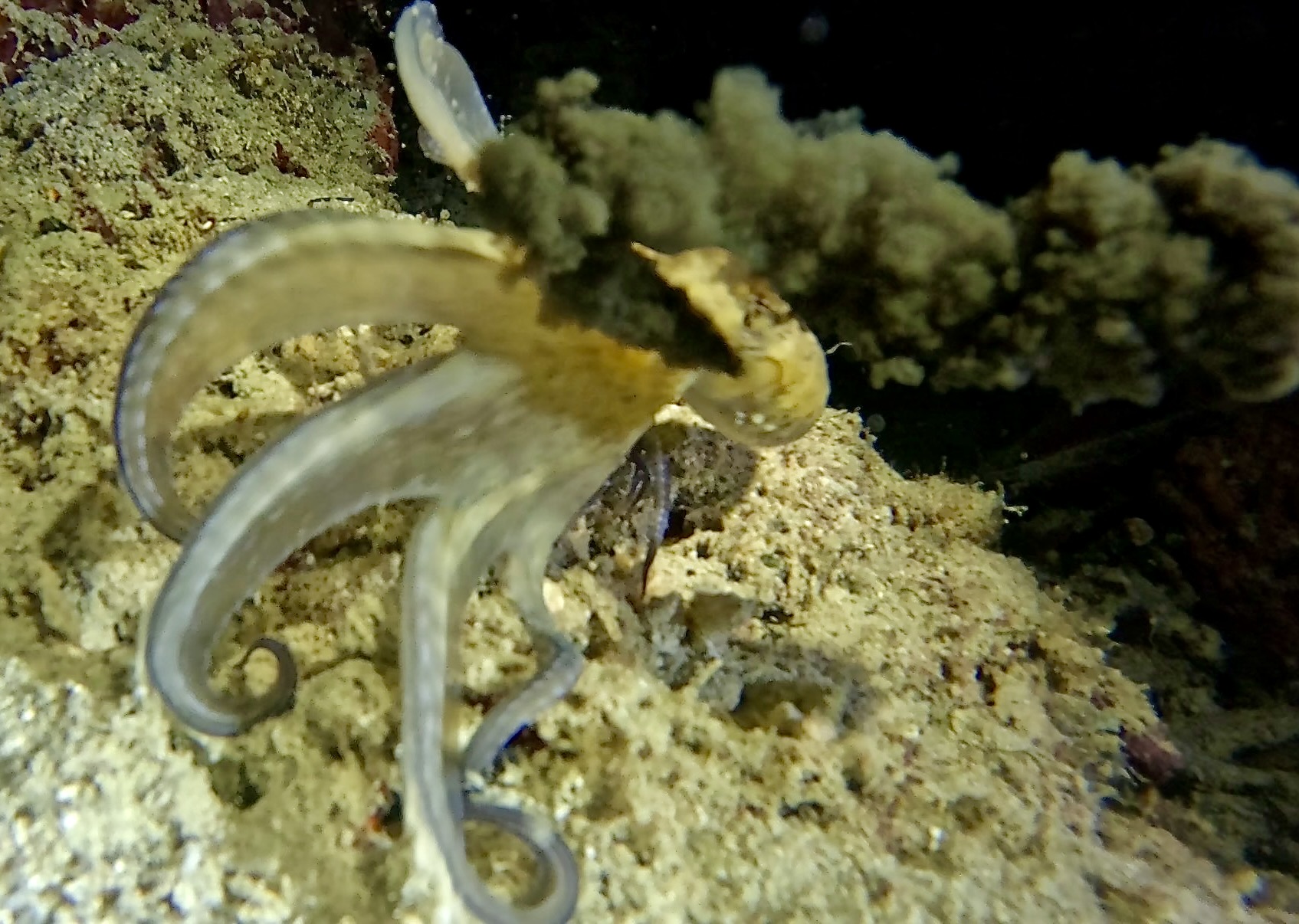
Getting inked by an octopus was a first for me!
The diving in Moalboal is fantastic and very beginner-friendly. It was a shame I did so few dives there, though the quality of the experience more than made up for it. Both Savedra Dive Center and Marlon were excellent and I’d dive with them again if I ever return to Moalboal.
I also must give a special shout-out to Lisa of Sambag Hideaway Bungalows, who was an extraordinary help to me throughout time in Moalboal. She not only scheduled all my activities and transportation during my stay, but also helped me arrange affordable private transfers all the way to Malapascua Island, where I was headed next. Personally, it was worth staying at Sambag just for Lisa!
I departed Moalboal around noon on August 25. I had something to take care of near the Mactan-Cebu Airport and was forced to spend the night of the 25th there, though it did help divide up the eight-hour car ride between Moalboal and Maya Port Ferry Terminal. From Maya Port, I took a ₱200 ($3 USD) public ferry over to Malapascua Island.
Malapascua Island:
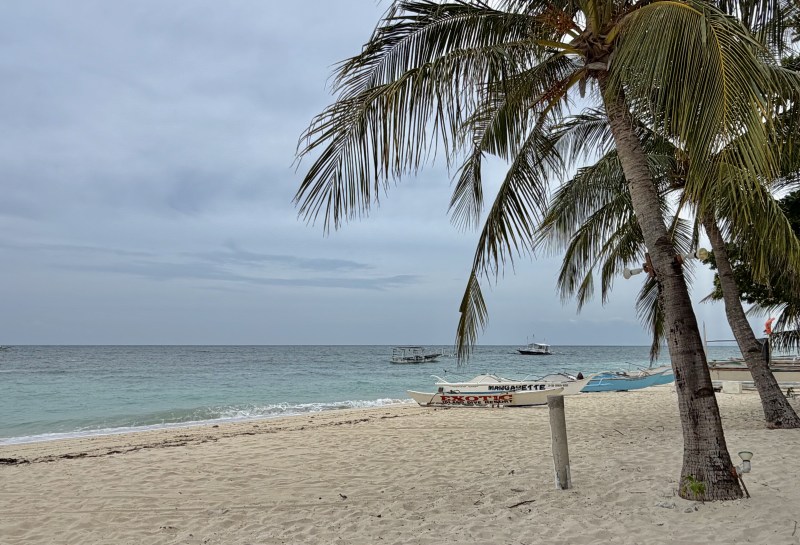
It was a real hike getting out to this remote island off the northern tip of Cebu, but in the end it was the absolute perfect ending to my 2026 Philippines adventure. The diving around Malapascua was simply outstanding, and no other dive sites I’ve visited before or since—aside from Sipadan Island in Malaysia—can compare.
Between August 26 and August 31, I completed the all of the mandatory logged dives for my upcoming internship in Bali, and also continued working on technique refinements. I stayed at Exotic Island Dive Resort which is comparatively inexpensive and has a beautiful beachfront location with a good on-site restaurant.
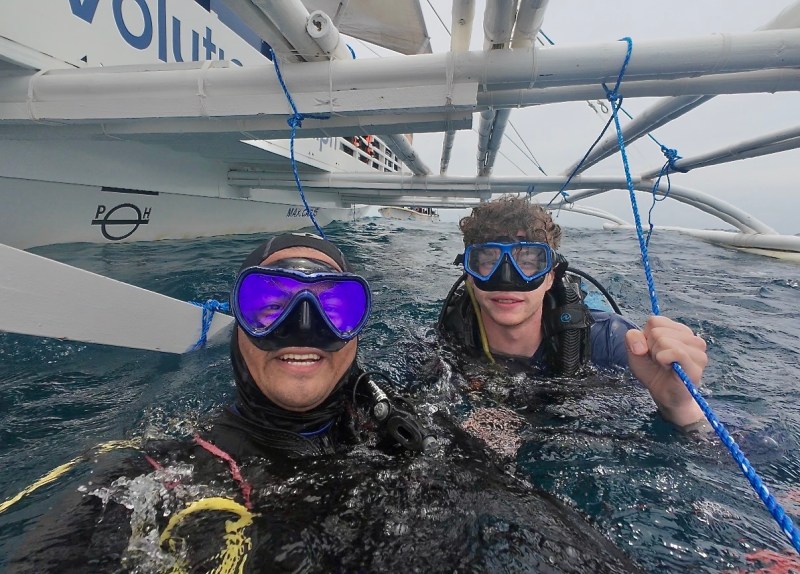
Throughout my time at Malapascua, I dived with Evolution Dive Resort, one of the highest-rated SCUBA operators on the island. I had a phenomenal experience with Evolution, especially with Kevin Say, who was my guide for the four full days I dived at Malapascua.
Having said that, Evolution was easily the most expensive part of my trip, costing around ₱50,000 ($800 USD) for 16 dives, including gear rental, environmental fees, professional instruction, fuel surcharges, and souvenirs I bought.
I was heavily invested in improving my skills as a diver while in Malapascua, and put myself onto a rather intense diving regiment of four dives per day for August 27, 28, 29, and 30. This led to me completing sixteen total dives—all boat dives—with Evolution. Needless to say, I was quite exhausted by the end of my time on the island. While diving, I got to know some cool people like my new buddy Lucas from China.
My guide from Evolution, Kevin, was funny, intelligent, and hardworking, and gave me a boatload of good feedback about my technique. He actually ensured I was weighted and geared properly for all the dives, switching me to a smaller BCD, a 15-liter air tank (as opposed to a standard 12-liter tank), and lightened my weight belt from 5kg to 2kg.
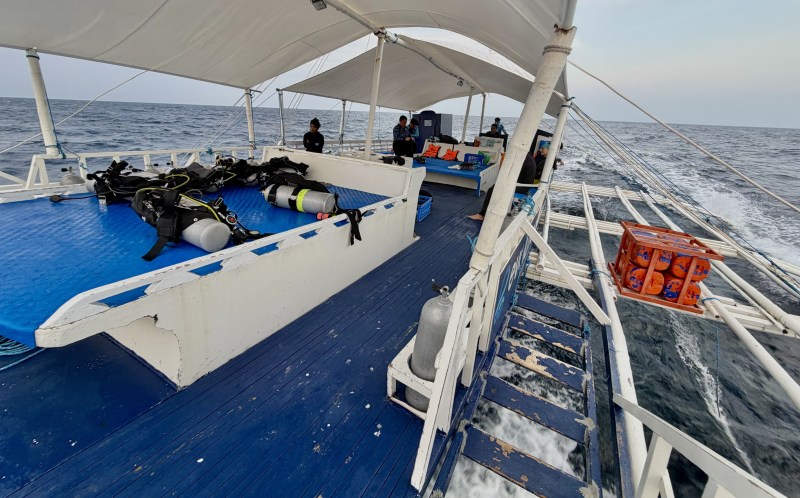
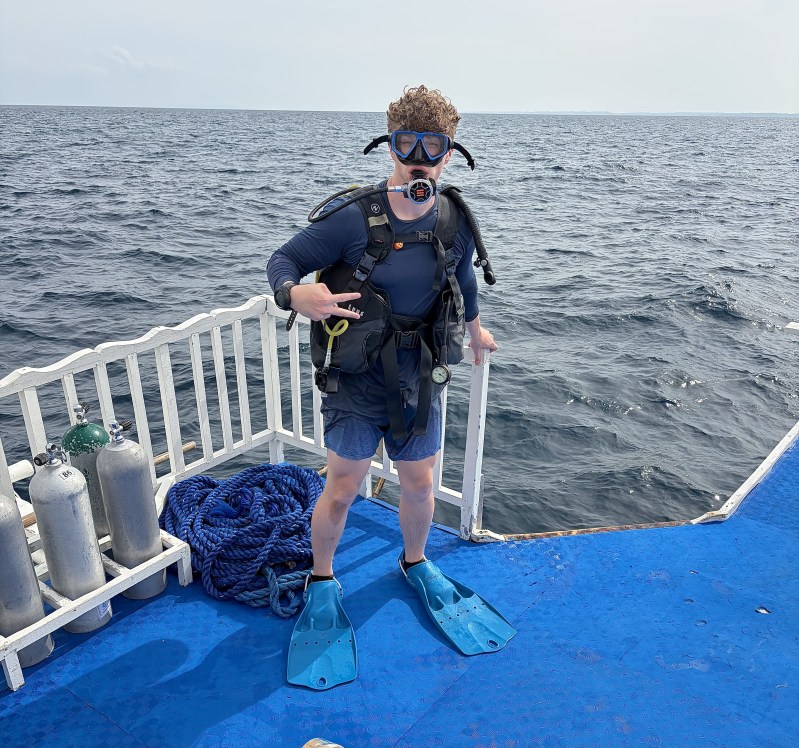
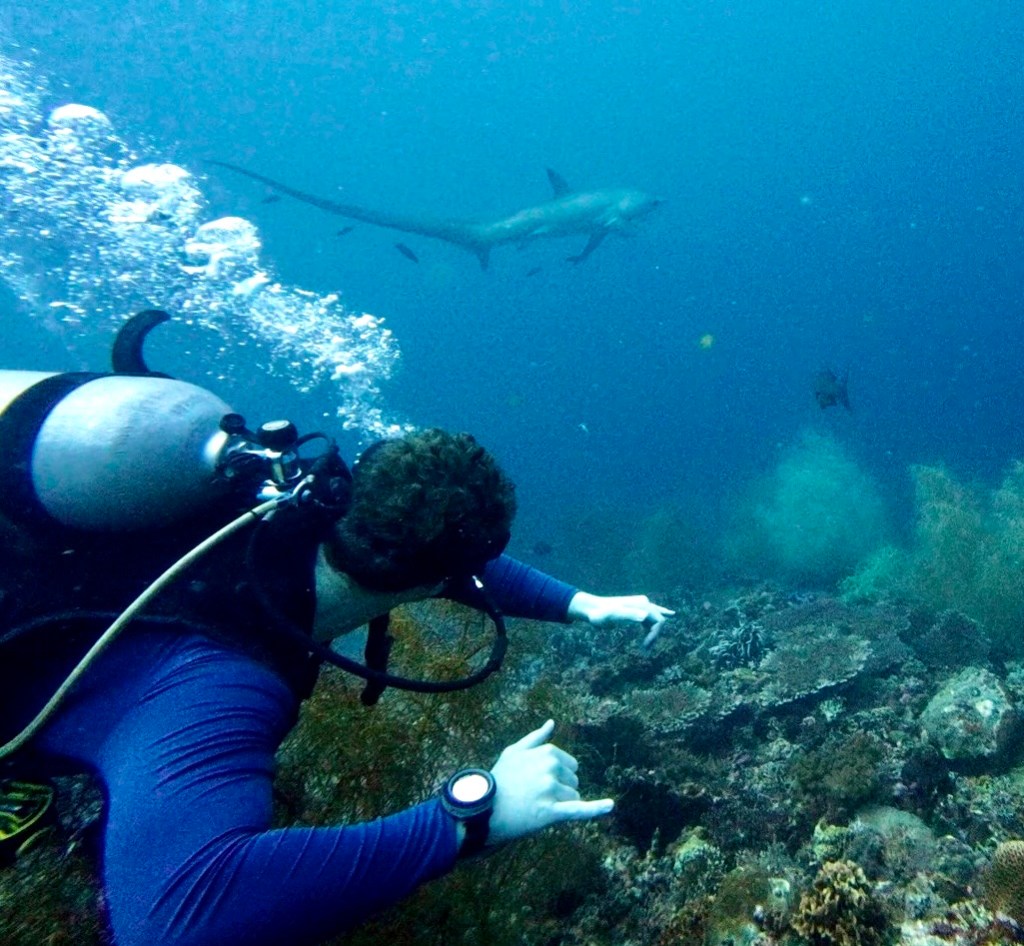
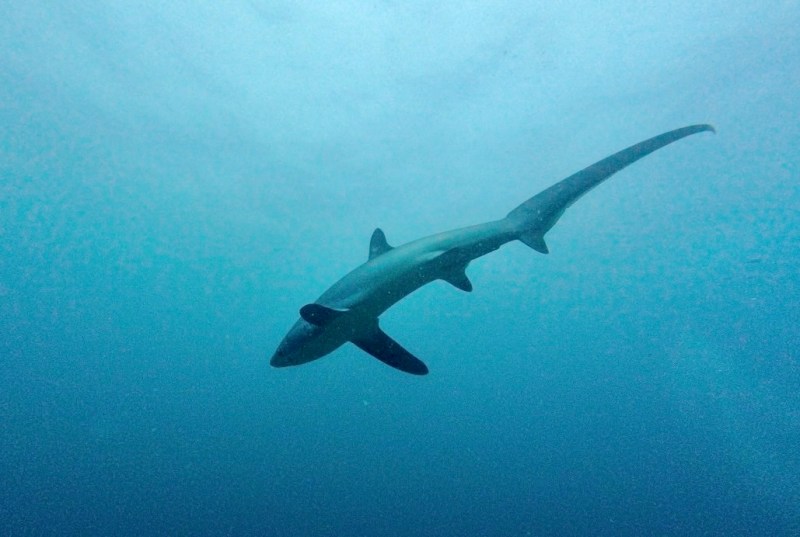
The highlight of diving around Malapascua was, of course, encountering the area’s trademark Pelagic Thresher Sharks (Alopias pelagicus).
Malapascua is renowned for its thresher shark dives—in fact, it is the only place on Earth where these endangered, charismatic sharks can be encountered almost every day of the year. Threshers spend most of their day hunting at depths of 200-300 meters (650-1,000 ft), but congregate around shallow cleaning stations every morning to be picked clean of parasites and dead skin by tiny Bluestreak Cleaner Wrasses (Labroides dimidiatus).
The threshers used to visit two seperate shallow, submarine plateaus near Malapascua—Kimud and Monad Shoals—but today they are only found consistently at Kimud Shoal.
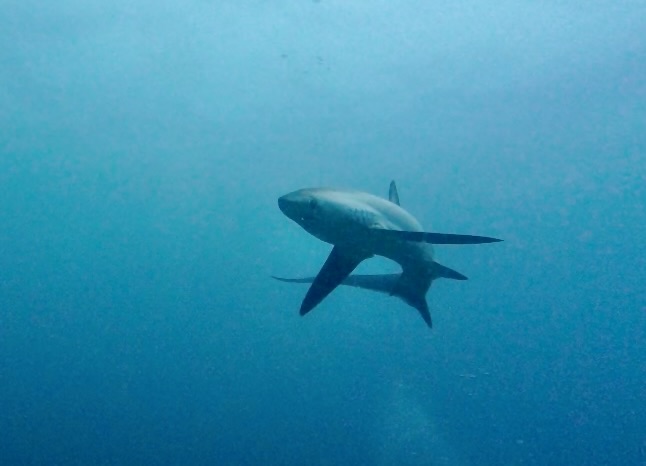
I was immensely grateful to have been able to dive at Kimud Shoal on two separate days of my trip (August 29 and 30). I saw thresher sharks on three separate dives, including four different individuals on my third dive.
Threshers are intelligent and curious animals that—depending on the individual—will swim right up to divers, and by maintaining good buoyancy and trim close to the bottom I was able to observe them in close proximity on two of my dives without scaring them away. The tails of the sharks are so long—almost the same length as their bodies—that they must be observed in real life to be fully appreciated!
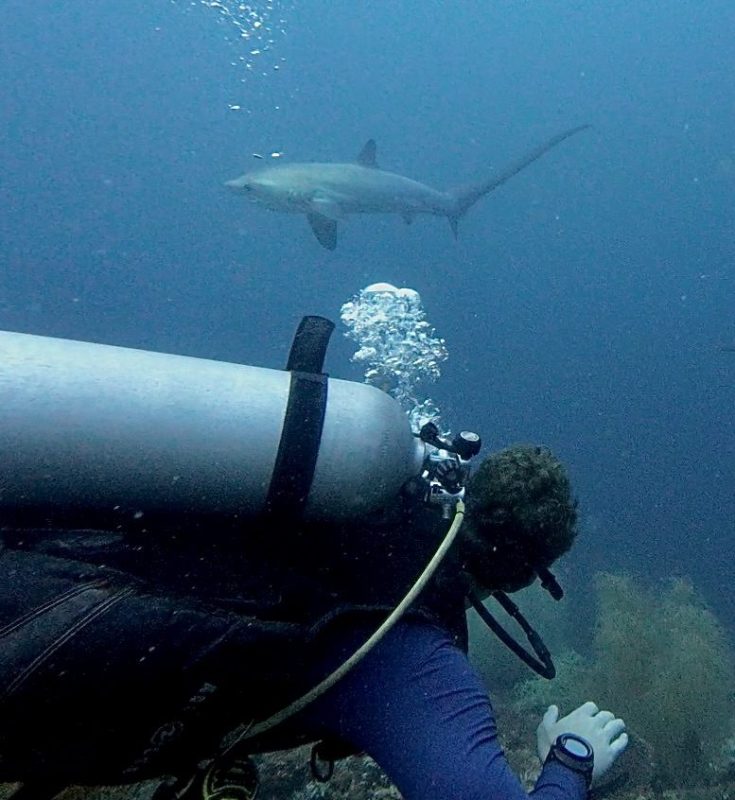
Some other highlights of my time at Malapascua include the vibrant macro life of Gato Island on August 28, a productive night dive at Malapascua House Reef on August 30, and watching the courtship and mating display of the brightly-colored Mandarinfish (Synchiropus splendidus) on the evening of August 27 at Lighthouse Reef.
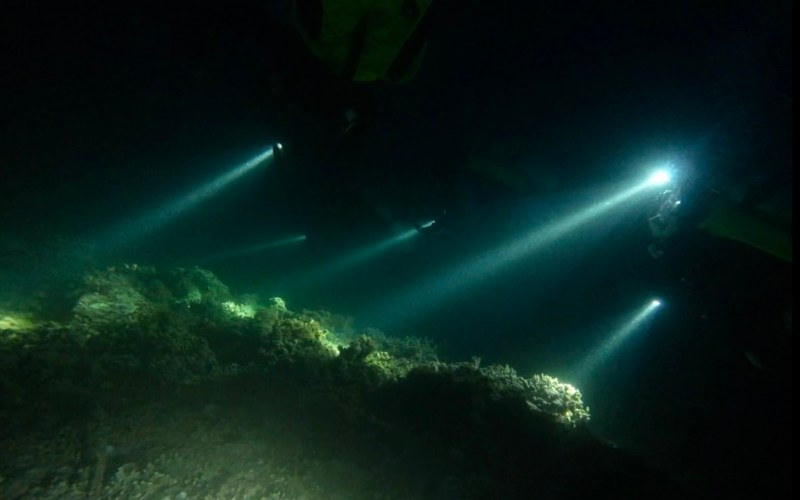
My August 28 outing to Gato Island—a tiny islet 16 km (10 miles) northwest of Malapascua—was particularly enjoyable. The island has beautiful underwater scenery, including an underwater tunnel, large rocky overhangs, vibrant soft coral gardens, and a sloping reef with many hard corals.
Noteworthy sightings across my two Gato Island dives included Bigmouth Mackerel (Rastrelliger kanagurta), Giant Trevallies (Caranx ignobilis) and two sea kraits, along with macro critters like various Phyllidia nudibranchs, a pair of highly unique Dragon Seamoths (Eurypegasus draconis), and an Electric Clam (Ctenoides ales) on one of the coral walls that reflected back Kevin’s torchlight.
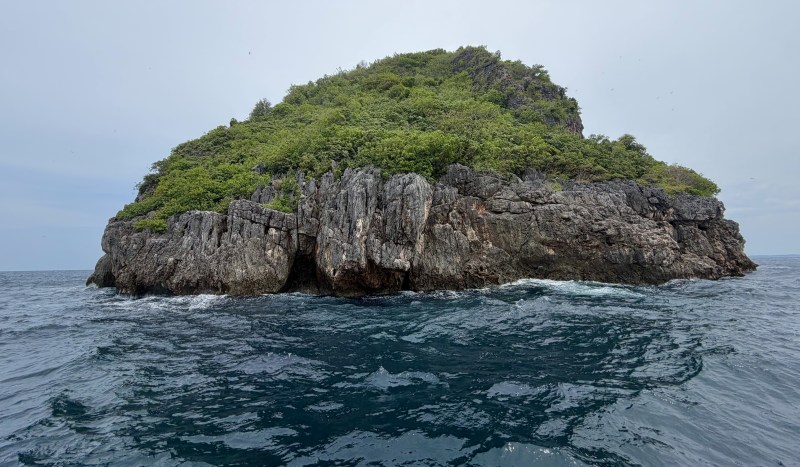
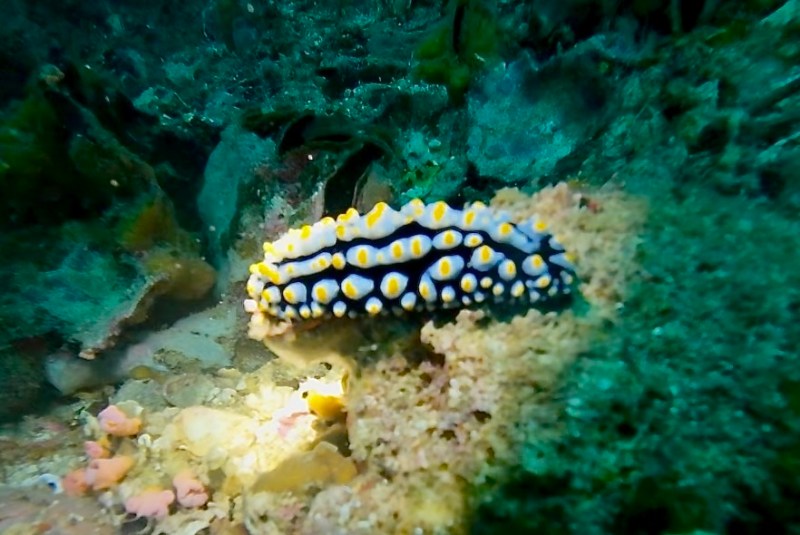
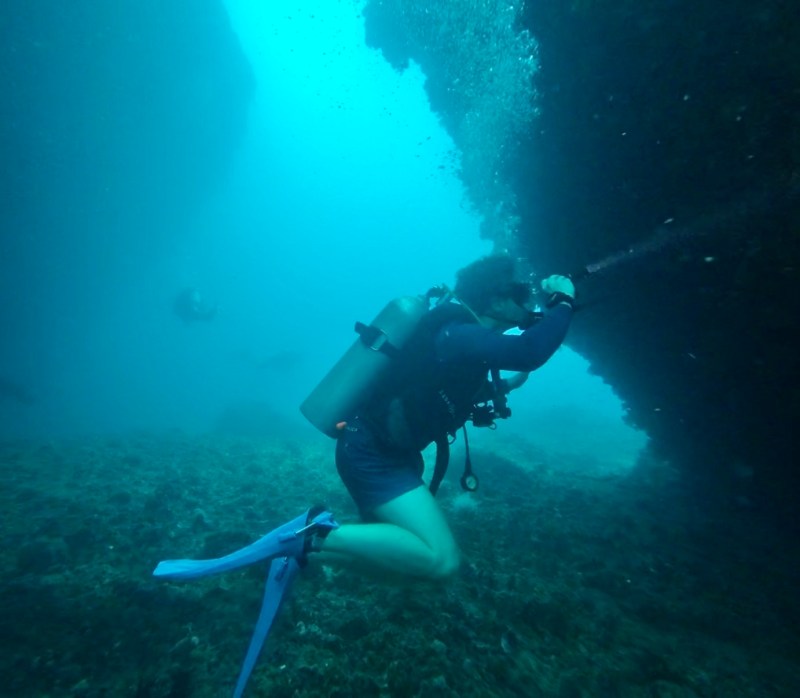
Overall, Malapascua delivered both amazing thresher shark encounters and a whole host of other memorable dives at various nearby spots. Aside from the sharks, I particularly enjoyed the stunning underwater scenery and rich macro life of Gato Island, and also the colorful critters in the House Reef just off the coast of Malapascua Island.
Evolution, as mentioned previously, is a top-tier SCUBA operator, and my guide Kevin was likewise fantastic. Improving my diving technique while simultaneously enjoying some of the best and most unique dive sites in the entire world with my new friends and acquaintances from around the world made my time in Malapascua truly extraordinary and the perfect way to end my trip.
In my opinion, if you had to pick one single diving destination in the Central Visayas for your trip, it should be Malapascua. Hopefully it’ll impress you as thoroughly as it impressed me!
Conclusion & Final Thoughts:
My 2026 solo trip to the Central Visayas region of the Philippines was incredible across the board. Not only was I able to document a plethora of endemic birds and mammals on land, but I also had the rare opportunity to combine the best of both worlds with nearly a week of world-class SCUBA diving. More importantly, I witnessed major real-world examples of the fragile balance between sustainable eco-tourism that funds wildlife conservation and destructive mass-tourism that degrades ecosystems, which is directly relevant to the career I’m currently building.
Solo-travelling on my own dime for weeks around a foreign country kick-started a genuine sense of bold self-assurance about travelling the world and living unassisted internationally, which I suspect will carry over well to my future career. As I begin to seriously pursue professional wildlife guiding and later eco-entrepreneurship over the coming years, I expect to look back on this trip and the marine conservation internship that followed it as sources of deep inspiration.
Thank you for reading as always—and stay wild.
-Bennett
Mammal Species Recorded: (Lifers bolded)
| Common Name: | Scientific Name: |
|---|---|
| 1. Philippine Tarsier* | Carlito syrichta |
| 2. Philippine Colugo | Cynocephalus volans |
| 3. Philippine Sheath-tailed Bat | Emballonura alecto |
| 4. Philippine Long-tailed Macaque | Macaca fascicularis philippinensis |
| 5. Spinner Dolphin | Stenella longirostris |
| 6. Variable Flying Fox | Pteropus hypomelanus |
| 7. Large Flying Fox | Pteropus vampyrus |
*Not counted as a true lifer. Mammalwatching authorities classify the Corella Sanctuary as a fenced, managed enclosure where the resident Philippine Tarsiers are semi-captive rather than truly wild.
Bird Species Recorded: (Lifers bolded)
| Common Name: | Scientific Name: |
|---|---|
| 1. Azure-breasted Pitta | Pitta steerii |
| 2. Philippine Trogon | Harpactes ardens |
| 3. Visayan Broadbill | Sarcophanops samarensis |
| 4. Samar Hornbill | Penelopides samarensis |
| 5. Philippine Frogmouth | Batrachostomus septimus |
| 6. Black-faced Coucal | Centropus melanops |
| 7. Striated Wren-Babbler | Ptilocichla mindanensis |
| 8. Brown Tit-Babbler | Macronus striaticeps |
| 9. Bohol Metallic-winged Sunbird | Aethopyga pulcherrima decorosa |
| 10. Mindanao Cuckooshrike | Coracina kochii |
| 11. Short-tailed Drongo | Dicrurus striatus |
| 12. Philippine Bulbul | Hypsipetes philippinus |
| 13. Yellow-bellied Whistler | Pachycephala philippinensis |
| 14. Philippine Leaf Warbler | Phylloscopus olivaceus |
| 15. Red-keeled Flowerpecker | Dicaeum australe |
| 16. Garden Sunbird | Cinnyris jugularis |
| 17. Philippine Pied Fantail | Rhipidura nigritorquis |
| 18. Whiskered Treeswift | Hemiprocne comata |
| 19. Asian Glossy Starling | Aplonis panayensis |
| 20. Collared Kingfisher | Todiramphus chloris |
| 21. White-breasted Woodswallow | Artamus leucorynchus |
| 22. Zebra Dove | Geopelia striata |
| 23. Spotted Dove | Spilopelia chinensis |
| 24. Pink-necked Green Pigeon | Treron vernans |
| 25. Eurasian Tree Sparrow | Passer montanus |
| 26. Brahminy Kite | Haliastur indus |
| 27. Eastern Cattle Egret | Bubulcus coromandus |
| 28. Yellow-vented Bulbul | Pycnonotus goiavier |
| 29. Little Egret | Egretta garzetta |
| 30. Little Heron | Butorides striata |
| 31. Pacific Swallow | Hirundo tahitica |


Leave a Reply